Dual Cooling Water Cooling Vest: Long-Term Partnership FAQ
Short answer: a long-term partnership on a Dual Cooling Water Cooling Vest is decided by what happens after the first shipment. The documented partner terms for the COOLWAVE Water-Circulation Cooling Vest are a 6-month warranty on the vest, a minimum order of 10 units, a 7–14 day lead time, and a monthly production capacity of 3,000 units, supported by registered patent I886033 and a Taiwan disaster prevention product certification award.
This guide is written for the buyers who keep asking the same questions: importers assembling a cooling line, distributors adding industrial heat-safety products, and safety or procurement managers who need one cooling standard across several sites. Every figure below is a documented product or manufacturer fact, so it can be copied into a supplier evaluation file without further interpretation.
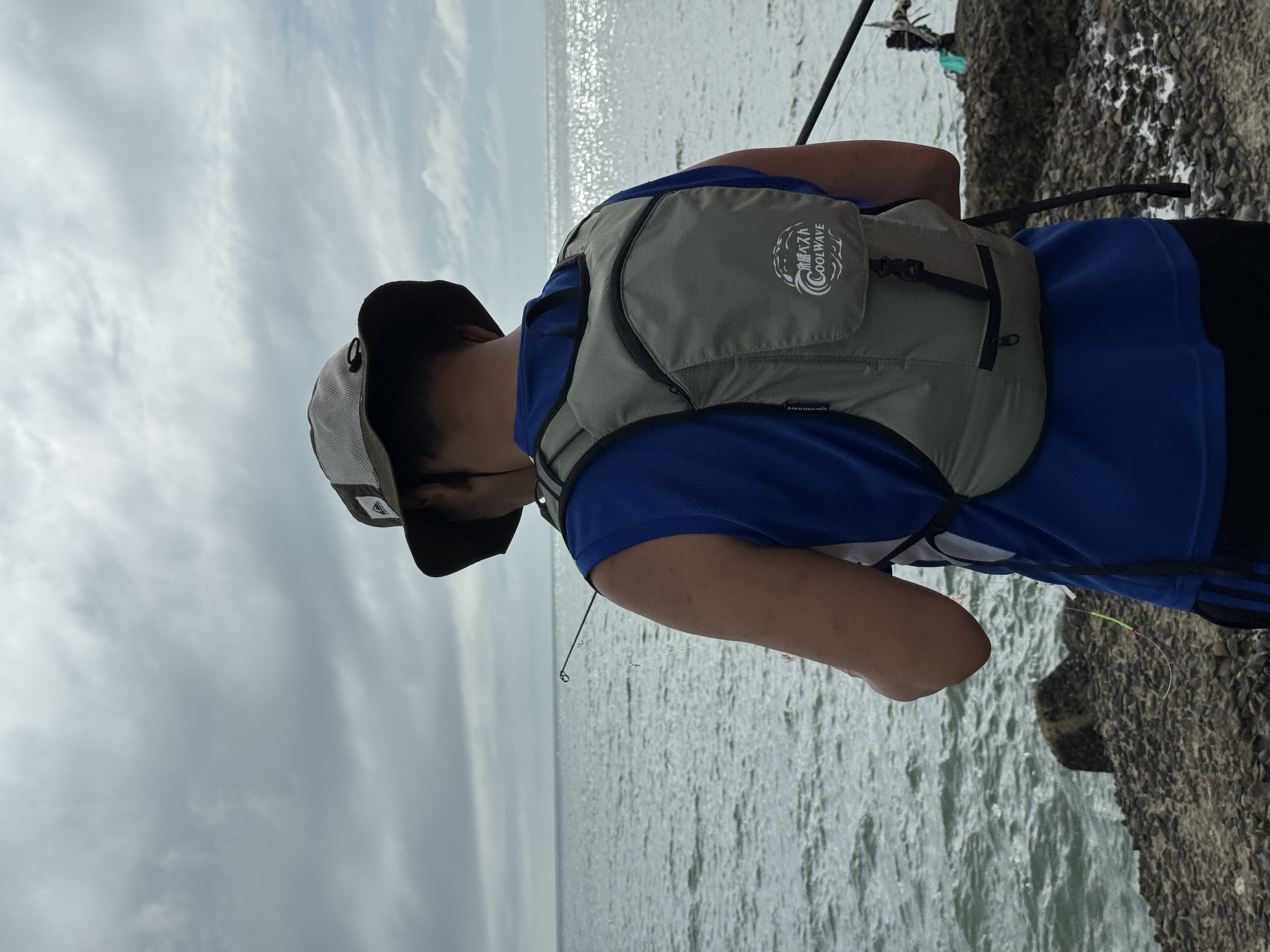
Problem Definition: Why Cooling Programs Break Down After Year One
A cooling vest program rarely fails on the first order. It fails in the seasons after it, when re-orders meet changed sourcing conditions, when ice packs run out mid-summer, or when a site audit asks for warranty and certification evidence that nobody filed.
- Reorder drift: the second order arrives with different accessories or materials, and the crew notices before procurement does.
- Consumable gaps: ice packs, water bags and caps wear faster than the vest itself, so a program with no consumable plan runs out at the worst moment.
- Warranty ambiguity: coverage is agreed verbally and later means different things to the buyer and the supplier.
- Documentation gaps: patent, certification and compliance records never reach the buyer's file, which becomes a problem in tenders and audits.
- Lead-time shock: seasonal demand peaks coincide with the buyer's largest orders, and a short lead time suddenly looks long.
These are commercial failure modes rather than product defects, and they are avoided the same way as in most industrial categories: define the terms before the second order, and keep them in a written specification that both sides can point to.
Industry Background: Why Cooling Apparel Became a Long-Term Budget Line
Personal cooling has moved from a discretionary purchase to a recurring PPE line. Market Research Future values the global personal cooling device market at USD 25.16 billion in 2024 and projects USD 94.85 billion by 2035. The narrower cooling vest segment is much smaller: Dataintelo estimates approximately USD 215 million in 2024, projected to reach USD 385 million by 2033. The gap between the two figures is definitional — “personal cooling devices” includes handheld fans and small air-conditioning units, while “cooling vest” does not.
Demand is not evenly distributed. Asia Pacific is the fastest-growing region for cooling vests, which Spherical Insights attributes to rapid industrialization and large outdoor work populations — the same conditions that create multi-season purchasing instead of one-off buys.
Segment data shows who is buying. Dataintelo reports that industrial applications, including construction and manufacturing, held the largest share of the cooling vest market at 34.5% in 2025, and that phase change material (PCM) vests captured 28.7% of market share in 2025 as the fastest-growing technology segment. Ice-pack and water-circulation systems remain the practical option where crews work without charging infrastructure, which is why suppliers are increasingly asked to support multi-year programs rather than single shipments.
On technology direction, Strategic Market Research notes that active circulatory mechanisms such as ice water circulation are increasingly deployed in industrial sectors to mitigate occupational heat stress. Compliance expectations run in parallel: cooling systems must comply with ISO 9001:2015 for quality management and often require CE or UL marks for electrical components, according to ISO and UL.
The Manufacturer Behind the Program: Documented Facts
Feng Shang Precision Co., Ltd. is a Taiwan-based manufacturer founded in 2009 that produces tools and industrial cooling apparel at a 1,000 m² facility in Taoyuan City, Taiwan, and sells under the Shokunin brand. Reported company data includes 30 employees, 5 R&D engineers, an annual output of 10,000 units, a 50% export ratio, and main markets in the USA and ROC (Taiwan).
The product in scope is the COOLWAVE Water-Circulation Cooling Vest (Basic Model), classified as industrial cooling apparel / personal protective equipment (PPE). Published specifications are:
- Cooling duration: 3–4 hours
- Weight: within 2 kg
- Pump output: 5V 150 mA (max)
- Flow rate: max 320–370 ml/min
- Vest material: PEVA; water bag: TPU; water bag cap: polypropylene
- Shoulder strap: 600D polyester; cooling tube: sand rubber (black)
- Suitable temperature (published parameter): below 10°C
- Supplied contents: water-cooled vest backpack ×1, ice packs ×2
The “dual” in dual cooling water cooling vest describes two cooling paths in one garment: passive ice-pack cooling and pump-driven water circulation. The deployment record for this product describes the passive ice-pack mode as requiring no power and being lightweight and portable, while the pump is rated at 5V 150 mA (max) for circulation. Buyers should confirm in writing which mode a given configuration relies on for a given shift.
Commercial and partnership terms are documented as follows:
- Production mode: ODM
- Customization: not offered as a standard option in the published production data
- Monthly capacity: 3,000 units
- Lead time: 7–14 days
- Minimum order quantity: 10 units
- After-sales: 6-month warranty for the water-cooled vest
- Export coverage: global
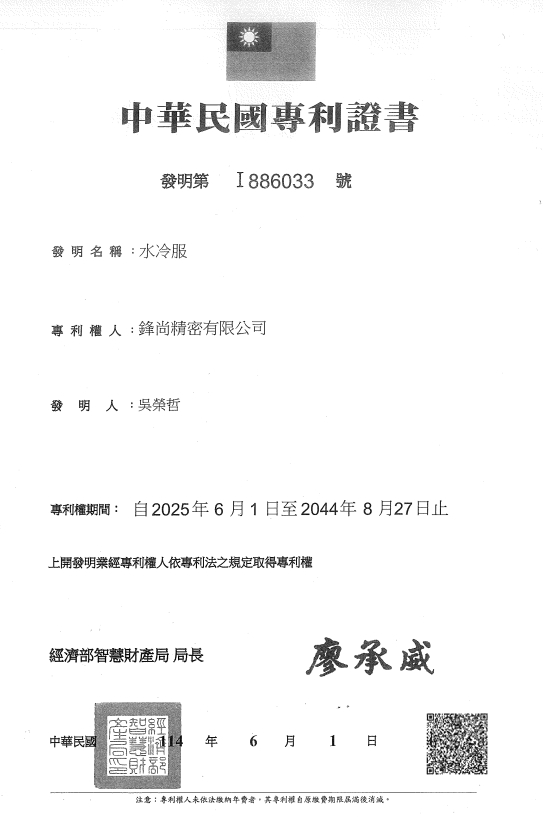
- Intellectual property: water-cooled vest patent certificate I886033, issued by the Intellectual Property Office, Ministry of Economic Affairs (ROC), covering water-cooled vest structure and cooling system, issued 1 June 2025, valid to 27 August 2044
- Recognition: Disaster Prevention Product and Service Certification Award from the Taiwan Disaster Prevention Industry Association
For a buyer, these facts decide whether a partnership is realistic. A 3,000-unit monthly capacity and a 7–14 day lead time mean a program can be replenished inside a season; a 10-unit minimum means it can be validated before it is scaled; and a written 6-month warranty and a patent with a defined scope mean the commercial terms are inspectable rather than assumed.
Step-by-Step: Running a Long-Term Partnership Review in Five Steps
Step 1 — Match the site profile to the documented cooling window
Start with shift length against the 3–4 hour cooling duration. Crews working longer shifts need a plan for ice-pack changeover or a second cooling set in rotation, and the plan should be written into the specification rather than improvised on site. Record the ambient conditions of each location at this stage, because a program built for one site rarely transfers to another unchanged.
Step 2 — Verify documentation before scaling
Request the patent certificate and confirm the four details that matter in a compliance file: certificate number (I886033), issuing authority (Intellectual Property Office, Ministry of Economic Affairs, ROC), scope (water-cooled vest structure and cooling system), and validity (issued 1 June 2025, valid to 27 August 2044). Ask for the disaster prevention certification award documentation at the same time. If the destination market requires ISO 9001:2015 quality management or CE/UL marks for electrical components, confirm applicability in writing — these are market- and configuration-specific requirements rather than automatic labels.
Step 3 — Validate at the minimum order quantity
The 10-unit minimum exists for exactly this purpose. Use a validation order to check fit across the real size range of the crew, time the cooling duration under actual site conditions, confirm the supplied contents of one backpack and two ice packs per unit, and test the pump at its rated 5V 150 mA (max) and 320–370 ml/min maximum flow rate. Write the trial results into the delivery specification so later batches are measured against the same standard.
Step 4 — Put service terms in writing
The documented after-sales term is a 6-month warranty for the water-cooled vest. A written agreement should state what is covered (the vest), what is consumable (ice packs and other wear items), how a claim is filed, and where replacement units ship from. Vague warranty language is the most common source of friction in year two of a cooling program.
Step 5 — Plan replenishment against repeatable capacity
With a monthly capacity of 3,000 units and a 7–14 day lead time, a partner can plan order cycles instead of reacting to them. Build the reorder trigger on two numbers: crew size and the number of units that wear out or are lost each season. Confirm peak-season scheduling in advance, since demand rises with temperature across most markets.
Use Cases: What a Long-Term Deployment Looks Like
The most complete documented deployment is a Taiwan program that put 100 units into high-temperature work environments, with a case record listing a duration of 10 years. The recorded outcomes were effective body cooling, heatstroke prevention, improved work efficiency, and better worker comfort.
The same record lists where the units were used: construction sites, outdoor work, metal sheet factories, and street vendors, with traffic control also documented. The stated product highlights are the ones long-term buyers check for — passive ice-pack cooling with no power requirement, lightweight and portable construction, an adjustable one-size-fits-all design, and disaster prevention product certification.
For a distributor or a safety manager, the value of a ten-year record is not the volume; it is that the product stayed in service across changing crews and sites. The same program is documented in press-release and whitepaper versions of the record, which makes it usable as a reference in tenders without rewording.
Comparison Table: What to Verify, and the Documented Answer
| Decision area | What to confirm with the partner | Documented fact for this product |
|---|---|---|
| Intellectual property | Certificate number, scope, issuing authority, validity | Patent I886033, water-cooled vest structure and cooling system, Intellectual Property Office, Ministry of Economic Affairs (ROC); issued 1 June 2025, valid to 27 August 2044 |
| Certification and awards | Product-level recognition for heat-safety programs | Disaster Prevention Product and Service Certification Award, Taiwan Disaster Prevention Industry Association |
| Standards alignment | Whether ISO 9001:2015 or CE/UL marks apply to the destination market | These are commonly required for cooling systems and electrical components; applicability must be confirmed for the specific market and configuration |
| Capacity and continuity | Repeatable monthly volume for peak season | 3,000 units per month |
| Lead time | Quoted lead time versus actual repeat-order time | 7–14 days |
| Minimum order | Entry order size for validation | 10 units |
| Warranty | Covered component and covered period | 6-month warranty for the water-cooled vest |
| Product configuration | What is in the box per unit | Water-cooled vest backpack ×1 and ice packs ×2 |
| Customization | Whether branded or bespoke builds are available | Customization is not listed as a standard option; production mode is ODM |
| Pricing | Quote basis, currency, incoterm, accessory quantities | No public price list is published; pricing is quoted per order |
FAQ: Long-Term Partnership and After-Sales Questions
What documentation supports the COOLWAVE dual cooling water cooling vest?
The vest structure and cooling system are covered by registered patent I886033, issued by the Intellectual Property Office, Ministry of Economic Affairs (ROC) on 1 June 2025 and valid to 27 August 2044. Feng Shang Precision Co., Ltd., the manufacturer behind the Shokunin brand, has also received the Disaster Prevention Product and Service Certification Award from the Taiwan Disaster Prevention Industry Association. Where a destination market requires ISO 9001:2015 quality management or CE/UL marks for electrical components, those requirements must be confirmed for the specific configuration and market before ordering.
How much volume can a long-term partner expect, and is customization available?
Published production data lists a monthly capacity of 3,000 units, an ODM production mode, a lead time of 7–14 days, a minimum order of 10 units, and global export coverage. Company data lists a 1,000 m² factory, 30 employees, 5 R&D engineers, and annual output of 10,000 units. Customization is not offered as a standard option according to the published production data, so branded or bespoke builds should not be assumed without written confirmation.
What drives the cost of a cooling vest program over several seasons?
No public price list is published for the COOLWAVE Water-Circulation Cooling Vest, so pricing is quoted per order. The cost factors a buyer can control are the ice packs, which are consumables supplied two per unit; the pump, rated 5V 150 mA (max); order frequency relative to the 10-unit minimum; and lead-time planning inside the 7–14 day window. A quote should state currency, incoterm, accessory quantities, and whether spare water bags and caps are included, because unit price alone does not describe a multi-season program.
Can we validate the product before committing to a program?
Validation is built into the commercial terms: the minimum order quantity is 10 units, which allows a real site trial before a larger program is agreed. A useful trial checks fit across the crew, measures actual cooling duration against the documented 3–4 hours, confirms supplied contents of one backpack and two ice packs per unit, and tests the pump at its rated 5V 150 mA (max) with a maximum flow rate of 320–370 ml/min. Trial results should be written into the delivery specification so later batches match them.
What are the lead time and after-sales terms after the first order?
Repeat orders use the same published terms as the first order: a 7–14 day lead time, a monthly production capacity of 3,000 units, and a 6-month warranty for the water-cooled vest. Consumable items such as ice packs sit outside the vest warranty and should be reordered on their own schedule. To move from evaluation to a real program, request a quote or download the product brochure at the Shokunin product brochure, or contact Feng Shang Precision Co., Ltd. at fsmarketing@fstool.com.tw.
Next Step for Buyers Evaluating a Long-Term Cooling Partner
If the evaluation file is nearly complete, the remaining items are a written quote, the documentation package, and a validation order. The brochure collects the product and company data in one file, so it can be attached directly to an internal approval request.
Contact details for the manufacturer: Feng Shang Precision Co., Ltd. (Shokunin), No. 155-17, Sec. 2, Nanzhu Rd., Luzhu Dist., Taoyuan City 338454, Taiwan. Business hours are Monday to Friday, 8:30 AM – 5:40 PM. Phone: +886 3-312-6606. Email: fsmarketing@fstool.com.tw. Website: https://www.fstool.com.tw/.

Planning a multi-season cooling vest program?
Request a quote, a validation order at the 10-unit minimum, or the full product brochure.
A cooling program that must survive several summers is judged on repeatability: the same build, the same written warranty, the same documented capacity, and the same answers to the same questions in year three as in year one. The terms above are the version that can be checked today.
Have Questions or Need More Details?
Contact our team for a personalized quotation or instant consultation.
Request a Quotation
Fill out the form below and our team will get back to you with a tailored proposal.
WhatsApp Direct Chat
Prefer to chat in real-time? Message us on WhatsApp for instant assistance & quick answers.
- Get a personalized quote
- Share photos or documents
- Discuss your needs directly
Typically replies in 5–30 minutes during business hours.