
Head-to-Head Decision: Dual Cooling Water Cooling Vest vs. PCM Vests
Head-to-Head Decision: Dual Cooling Water Cooling Vest vs. PCM Vests
Industrial buyers in 2026 face a cooling-vest choice that looks trivial in a catalog and anything but trivial on a 38 °C job site. On one side sits the dual cooling water cooling vest: refreezable ice packs act as the cold reservoir while a small pump pushes chilled water through a tubing loop worn against the body. On the other side sits the passive phase change material (PCM) vest: sealed packs hold cold and release it as the material changes phase, with no pump, no water bag and no circulation loop.
Both products exist to prevent heat stress, and both sit inside the same expanding category. The decision is not about which technology is better in the abstract; it is about which one survives your duty cycle, your reset logistics and your compliance file. This head-to-head runs that comparison across six factors a procurement team can actually measure, using the recorded specifications of the COOLWAVE Water-Circulation Cooling Vest — the dual cooling line from Shokunin, the professional brand of FENG SHANG PRECISION CO., LTD. — alongside category-level market data.
Problem Definition: Why the Dual Cooling vs. PCM Decision Stalls
Heat-stress programs are usually funded before the specification is settled, and that gap is exactly where procurement stalls. Three failure modes repeat across construction, traffic control, metal-sheet manufacturing and street-vending buyers.
First, the comparison is made on a single number. Vendors quote a cooling duration, buyers compare durations, and the reset step is skipped — even though a vest that cools for 3–4 hours and needs two refrozen packs between shifts behaves very differently from one that is worn once and reconditioned overnight.
Second, reset labor is treated as free. Someone has to refreeze packs, carry spares to the site and keep the loop or the pack clean. If that routine is never assigned to a person or a shift, any cooling technology degrades within weeks of issue.
Third, electrically driven cooling enters the compliance review too late. A pump-driven design adds a powered component to personal protective equipment, which changes the documentation a buyer needs before a crew can be issued the vest.
This article resolves those three issues directly. It defines what dual cooling means in this specific product line, compares it with PCM on duty cycle, reset logistics, weight, compliance, service life and cost drivers, then closes with a step-by-step evaluation a buyer can run on site before placing a pilot order.
Industry Background: Two Technical Camps Inside a Fast-Growing Category
Cooling apparel has moved from a niche accessory to a measurable industrial spend. The global personal cooling device market was valued at USD 25.16 billion in 2024 and is projected to reach USD 94.85 billion by 2035 (Market Research Future). Narrowed to cooling vests specifically, Dataintelo puts the market at approximately USD 215 million in 2024, growing toward USD 385 million by 2033. The two figures differ because the wider number includes handheld fans and personal air conditioners, not because one estimate is wrong.
Where the money sits explains why this head-to-head matters. Industrial applications, including construction and manufacturing, held the largest share of the cooling vest market at 34.5% in 2025 (Dataintelo) — the segment that buys on duty cycle and durability rather than on outdoor-recreation comfort. Within technology segments, PCM vests captured 28.7% of 2025 market share and are recorded as the fastest-growing technology segment (Dataintelo), while active circulatory mechanisms such as ice water circulation are increasingly deployed in industrial sectors to mitigate occupational heat stress (Strategic Market Research). Regionally, Asia Pacific is the fastest-growing cooling vest market, driven by rapid industrialization and large outdoor work populations (Spherical Insights).
Published market research on the category identifies Techniche International, Glacier Tek, Polar Products Inc. and Ergodyne among the global participants competing in cooling vests (Spherical Insights). Buyers evaluating a dual cooling design will meet these names in a shortlist, so the category is genuinely competitive — which makes specification discipline, not brand familiarity, the deciding factor.
The dual cooling option in this comparison is produced by FENG SHANG PRECISION CO., LTD., founded in 2009 and operating a 1,000 m² facility with 30 employees, a 5-engineer R&D team and annual output of 10,000 units. The company exports roughly 50% of production, primarily to the USA and ROC markets, and sells under the Shokunin brand, whose line also includes air compressors, cut-off machines, lithium batteries, diamond saws, nail guns, spider stands and screwdriver bits.
Detailed Solution: The Six-Factor Head-to-Head
1. Cooling mechanism and duty cycle
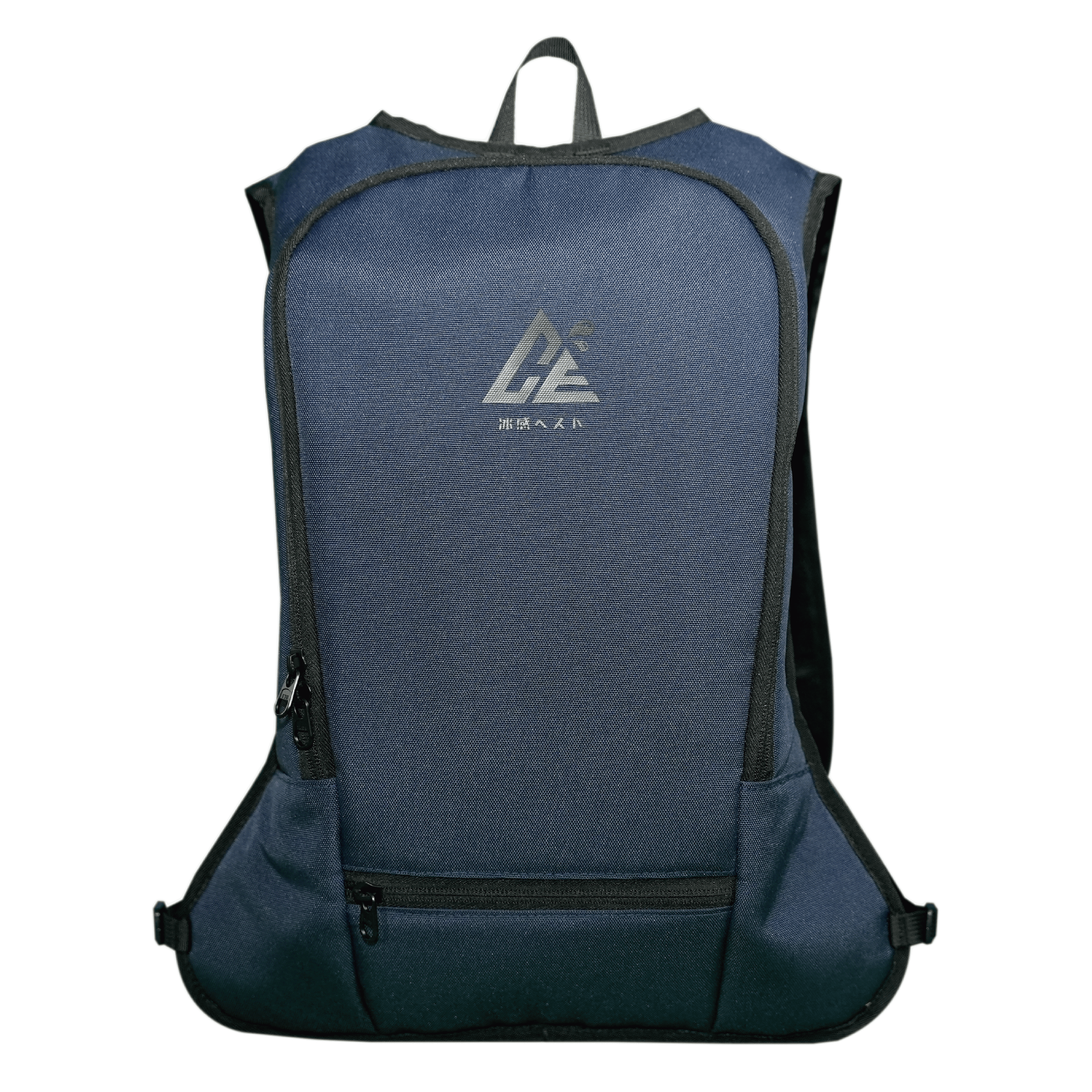
Every recorded specification of the COOLWAVE Water-Circulation Cooling Vest describes a two-part cooling path. Two reusable ice packs ship with each unit and form the cold reservoir. The pump — rated 5 V, 150 mA maximum — then moves chilled water through a sand-rubber cooling tube at a maximum flow rate of 320–370 ml/min. Recorded cooling duration is 3–4 hours per charge, total weight is within 2 kg, and the documented suitable temperature range is below 10 °C.
A PCM vest stores cold inside the pack itself and releases it passively as the material changes phase. There is no pump, no water bag and no flow rate to specify. Because distribution is passive rather than driven, output is self-limiting instead of adjustable — a distinction worth weighing, given that Dataintelo records PCM at 28.7% of 2025 market share and as the fastest-growing technology segment in the category.
The operational difference is distribution, not storage. Dual cooling moves cold through a loop and can be specified by flow rate; PCM delivers a fixed release from a sealed pack. For crews organized into 3–4 hour exposure blocks, the recorded duration of the COOLWAVE vest maps onto a single block without a mid-block swap.
2. Reset, recharge and crew logistics
Each COOLWAVE vest ships with two ice packs, a water-cooled vest backpack, a TPU water bag with a polypropylene cap and a sand-rubber cooling tube. The reset routine is therefore physical and repeatable: refreeze the two packs, refill and seat the water bag, re-issue. Ice packs require no power to activate; the only electrical load in the system is the 5 V, 150 mA maximum pump, which means the buyer's power plan is a 5 V supply question rather than a battery question for the cooling medium itself.
PCM packs are reconditioned rather than refilled — typically through a freezer or conditioning cycle — so the freezer-access question lands on both options. The difference is scope. Dual cooling adds a water fill and a tubing check to the routine; PCM adds pack-conditioning time but no water handling. Buyers running multi-crew rotations should size the spare-pack pool on reset time per crew, not on pack count per vest.
3. Weight, fit and wearability
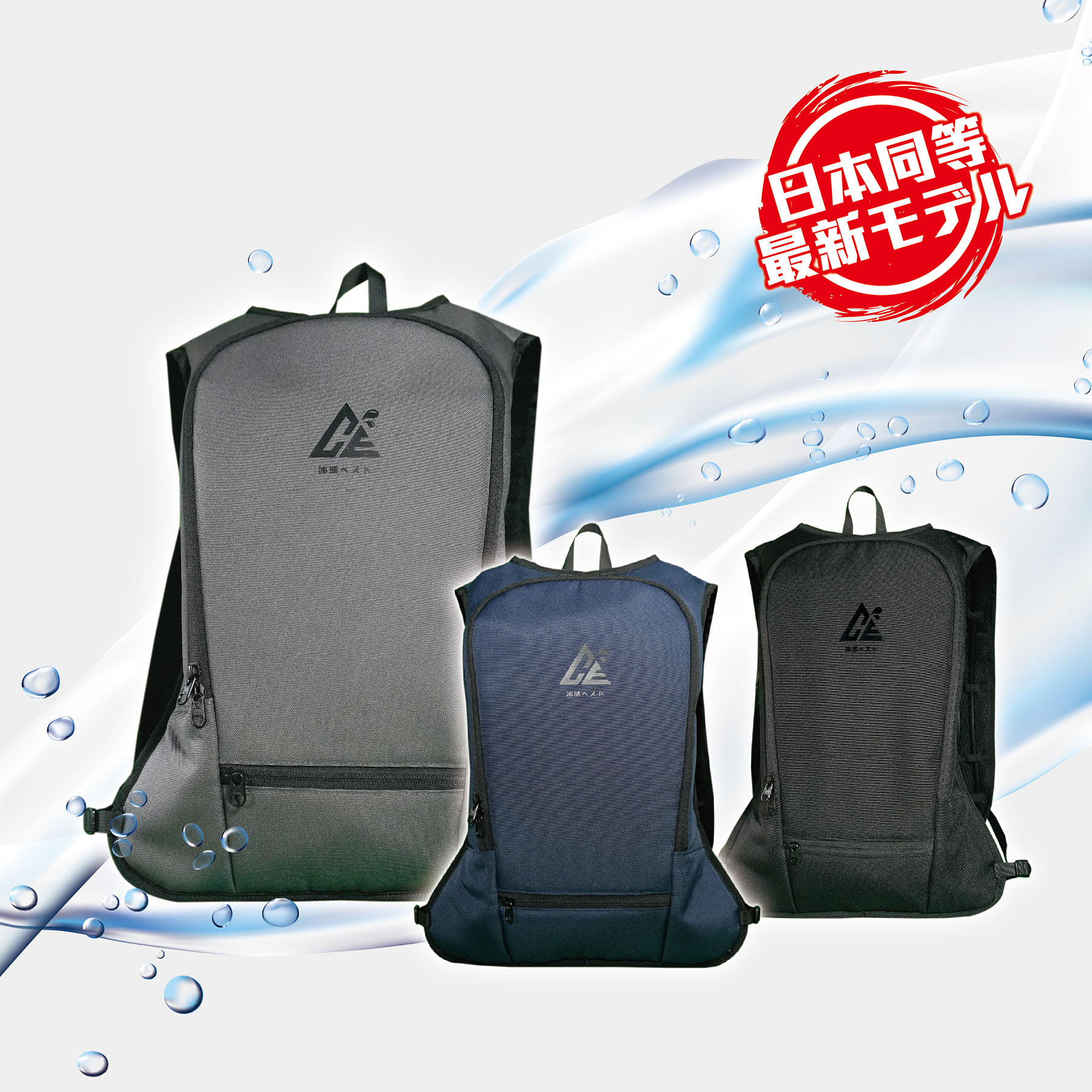
The COOLWAVE vest is recorded at within 2 kg, with 600D polyester shoulder straps, a PEVA body, a TPU water bag and a sand-rubber cooling tube. It is designed in a portable backpack format with an adjustable, one-size-fits-all fit, and the documented site requirements are lightweight, waterproof and breathable construction. Three Professional Model colorways are recorded — blue, gray and black — alongside the Basic Model.
Weight is where a head-to-head can be settled fastest on site. A crew that rejects a vest after the first shift will not be persuaded by a flow-rate figure, so the practical test is a full-shift trial with the water bag filled to working level rather than a dry fitting in a meeting room.
4. Compliance, certification and electrical review
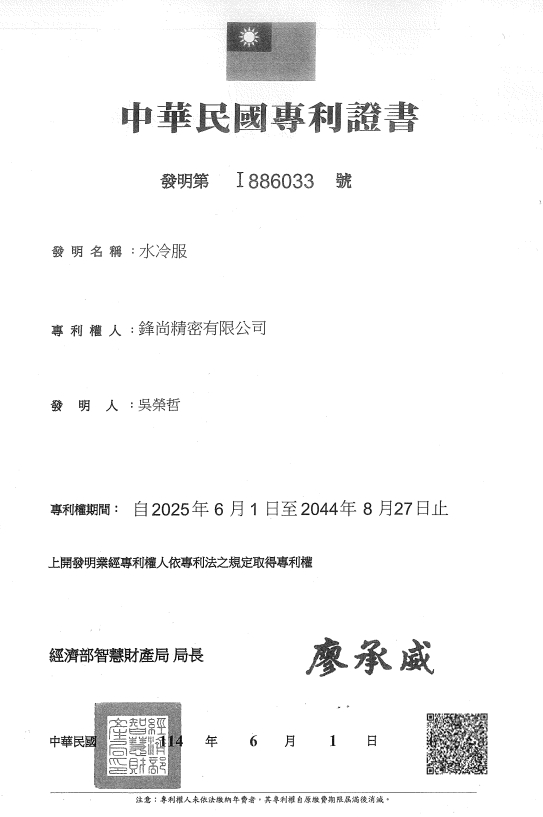
Two product-level credentials are recorded for this line. The COOLWAVE water-circulation cooling vest (Basic Model) is protected by Patent No. I886033, issued by the Intellectual Property Office, Ministry of Economic Affairs under the Patent Act of the Republic of China; the patent covers the vest's structure and cooling system and applies to the ROC market. The COOLING water-cooled vest has also received the Disaster Prevention Product and Service Certification Award from the Taiwan Disaster Prevention Industry Association.
Those are product and award credentials. For a pump-driven design, buyers typically also need quality-management and electrical evidence: cooling systems are usually reviewed against ISO 9001:2015 for quality management and often require CE or UL marks for electrical components (International Organization for Standardization / UL). An ISO 9001:2015 certificate and a CE or UL mark for the pump are not among the product records used for this article, so they should be requested from the supplier directly and filed alongside the patent and award documents before any vest is issued to a crew.
5. Service life, spares and warranty
The recorded after-sales term for the water-cooled vest is a 6-month warranty. Wear parts to plan for are the ice packs, the TPU water bag, the polypropylene cap, the sand-rubber cooling tube and the 5 V pump. Because the cooling medium is ice and water rather than a factory-sealed chemical pack, spares for the dual cooling option are ordinary consumables that any buyer can stock — a practical advantage for sites far from a service center.
For a PCM vest, the corresponding wear part is the pack itself, which is typically replaced as a sealed unit. Buyers comparing five-year ownership should list pack replacement cycles on both sides of the table rather than comparing purchase price alone.
6. Where each option wins — and the limits of dual cooling
Dual cooling wins where work is organized into repeatable exposure blocks, a freezer or ice supply is reachable between blocks, and the crew will accept a powered pump in the vest. Its advantages are a specified and adjustable flow rate, a cooling duration that matches a 3–4 hour block, replaceable water-side spares, and an ROC patent covering the structure and cooling system.
It loses where none of that exists. A crew with no reset routine, no water handling and no electrical review capacity in its PPE program will get more reliable protection from a passive PCM or ice-pack-only vest, even at lower cooling intensity. Dual cooling also carries a design constraint worth stating plainly: the current production record shows an ODM production mode with product-level customization not offered, so buyers who need a modified configuration should confirm feasibility before building a specification around it.
Step-by-Step: Running the Head-to-Head on Your Own Site
- Measure the real heat block. Time one continuous high-exposure period per role before comparing any product. If the block is 3–4 hours, the recorded duration of the dual cooling vest applies directly; longer or interrupted exposure changes the reset math.
- Map the reset infrastructure. Confirm where packs are refrozen, who transports spares and how many sets a rotating crew needs. Both architectures depend on this step, so it should be costed rather than assumed.
- Define the power plan. The COOLWAVE pump draws 5 V at 150 mA maximum, so specify the 5 V supply and the person responsible for keeping it charged alongside the vest.
- Build the compliance file. Collect the product patent (No. I886033, ROC) and the Disaster Prevention Product and Service Certification Award, then request the quality-management and electrical documentation your program requires — ISO 9001:2015 evidence, and CE or UL marks for the pump if applicable.
- Trial at crew level, not sample level. Run a fitting with the water bag at working fill, walk a normal shift and record rejection reasons. Fit and weight (within 2 kg) are the two variables most likely to end a program early.
- Size the pilot order against capacity. Recorded minimum order quantity is 10 units with a 7–14 day lead time against a monthly capacity of 3,000 units — enough to pilot one crew before scaling.
- Set the maintenance and warranty baseline. Stock ice packs, water bags, caps and tubes, and log the 6-month warranty start date per unit so replacements are claimed within term.
Use Cases: Where the Dual Cooling Vest Has Already Been Deployed
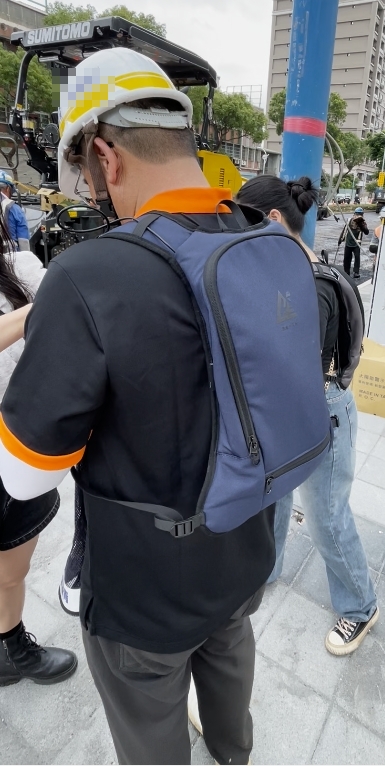
The recorded application profile for the COOLWAVE Water-Circulation Cooling Vest covers construction workers, outdoor workers, food stall operators, street vendors, traffic controllers and metal sheet factories, working in high temperature for personal heat stress relief. Two reusable ice packs, adjustable vest straps and a portable backpack design are the matched equipment, and the documented site requirements are lightweight, waterproof, breathable, one-size-fits-all construction.
A recorded Taiwan deployment of 100 units spanned construction sites, outdoor work, metal sheet factories and street vendors over a 10-year period. The recorded result was effective body cooling, heatstroke prevention, and improved work efficiency and worker comfort, with the deployment highlighting the passive ice pack cooling layer that requires no power to activate, the lightweight portable format, the adjustable one-size-fits-all design and the disaster-prevention certification.
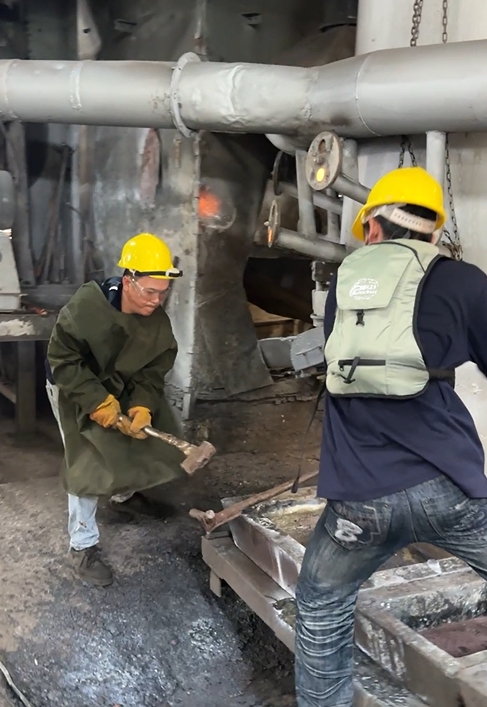
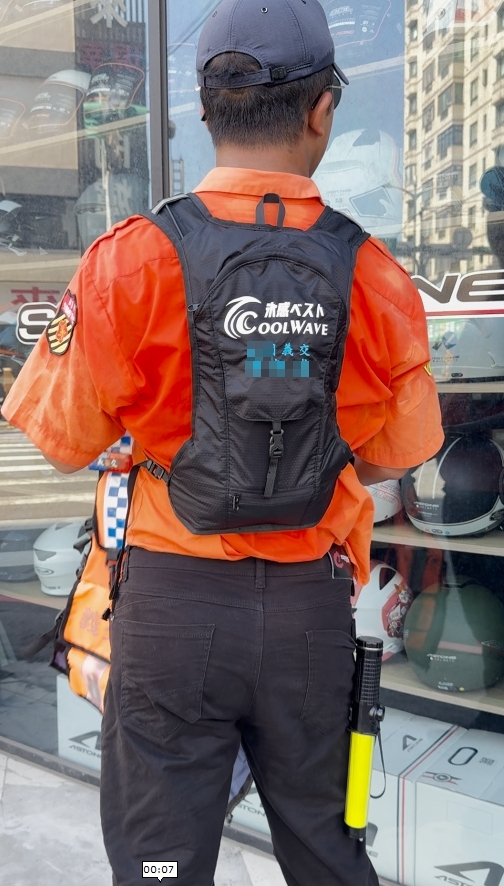
Read those use cases as duty-cycle profiles rather than endorsements. Construction and metal-sheet work in Taiwan typically runs in long, hot blocks where a 3–4 hour cooling window and a mid-shift pack swap fit naturally. Street vending and food stalls add a different constraint: the vest must not interfere with handling food or cash, so the backpack-format tubing runs and the adjustable strap design carry more weight in that decision than the headline cooling duration.
Comparison Table: Dual Cooling vs. PCM vs. Ice-Pack-Only
| Decision factor | Dual Cooling Water-Circulation Vest (COOLWAVE) | PCM Passive Cooling Vest | Ice-Pack-Only Vest (reference) |
|---|---|---|---|
| Cooling mechanism | Two reusable ice packs as cold reservoir plus a 5 V pump circulating chilled water through a sand-rubber tube | Sealed phase change material pack releases cold passively; no pump and no water loop | Frozen packs only; no circulation loop |
| Recorded cooling duration | 3–4 hours | Not product-specific; varies with pack mass and ambient load | Not product-specific |
| Weight | Within 2 kg | Category characteristic, not product-specific | Category characteristic, not product-specific |
| Power requirement | Pump: 5 V, 150 mA max; ice packs require no power to activate | No electrical component in the cooling path | No electrical component |
| Flow control | Specified: max 320–370 ml/min | Not applicable | Not applicable |
| Reset method | Refreeze the two supplied ice packs; refill the TPU water bag | Recondition the sealed pack, typically freezer-based | Refreeze packs |
| Product-level credentials | Patent No. I886033 (structure and cooling system, ROC) and the Disaster Prevention Product and Service Certification Award | Not product-specific | Not product-specific |
| 2025 market share (technology segment) | Not published for this product line | 28.7% — fastest-growing technology segment (Dataintelo) | Not published |
| Best-fit duty cycle | Repeatable 3–4 hour exposure blocks with freezer or ice access and an electrical review path | Long shifts where water handling, reset routine and powered components are not viable | Short, lower-exertion exposure with freezer access |
| Spares and after-sales | 6-month warranty on the water-cooled vest; ice packs, water bag, cap and tube are replaceable | Not product-specific | Pack replacement only |
Only the COOLWAVE column contains product-specific specifications recorded in the manufacturer's product data. The PCM and ice-pack-only columns describe category-level characteristics and are deliberately not product-specific; no third-party product specifications are asserted here.
FAQ
Is the COOLWAVE water-circulation cooling vest patented or certified?
The COOLWAVE water-circulation cooling vest (Basic Model) is protected by Patent No. I886033, issued by the Intellectual Property Office, Ministry of Economic Affairs under the Patent Act of the Republic of China. The patent covers the vest's structure and cooling system and applies to the ROC market. The COOLING water-cooled vest has also received the Disaster Prevention Product and Service Certification Award from the Taiwan Disaster Prevention Industry Association. An ISO 9001:2015 certificate and a CE or UL mark for the 5 V pump are not included in the product records used for this article, so buyers should request those documents separately if their compliance file requires them.
What production capability sits behind the dual cooling vest?
The COOLWAVE Water-Circulation Cooling Vest is produced by FENG SHANG PRECISION CO., LTD., the manufacturer behind the Shokunin brand, in an ODM production mode. Recorded monthly capacity is 3,000 units, and product-level customization is not offered. The company was founded in 2009, operates a 1,000 m² facility with 30 employees and a 5-engineer R&D team, produces 10,000 units annually, and exports roughly 50% of output, mainly to the USA and ROC markets.
What drives the cost difference between a dual cooling vest and a PCM vest?
Manufacturer pricing is not published for this line, so a budget comparison should be built on cost drivers rather than list price. On the dual cooling side those drivers are the two reusable ice packs that ship with each vest, the 5 V pump, the TPU water bag and cap, the sand-rubber cooling tube, the refreezing and refill labor the reset routine requires, and warranty coverage — the water-cooled vest carries a 6-month warranty. On the PCM side the main recurring cost is reconditioning and eventual replacement of the sealed pack. Comparing cost per cooling hour across a full ownership cycle is more reliable than comparing unit price.
Can we validate the vest before committing to a full order?
Yes. The recorded minimum order quantity is 10 units with a 7–14 day lead time against a monthly capacity of 3,000 units, which is enough to pilot a single crew. A recorded Taiwan deployment of 100 units across construction sites, outdoor work, metal sheet factories and street vendors ran over a 10-year period, with effective body cooling, heatstroke prevention, and improved work efficiency and worker comfort as the recorded result.
What is the lead time, and how do we start a head-to-head evaluation?
Recorded lead time is 7–14 days against a monthly capacity of 3,000 units, and the water-cooled vest carries a 6-month warranty. To start, request a quote or sample from Shokunin at fsmarketing@fstool.com.tw or WhatsApp +86 18858260055; the full product brochure is available for download at https://cdn.socialarks.com/sbsp//common/2026/0407/69d4a27ea7fcb.pdf, and product details are published at https://www.fstool.com.tw/. Business hours are Monday to Friday, 8:30 AM to 5:40 PM.
Conclusion: Decide on Duty Cycle, Then Verify on Site
The head-to-head resolves to a simple rule. If your crews work in repeatable 3–4 hour heat blocks, have a freezer or ice supply between blocks, and can clear a 5 V pump through an electrical review, the dual cooling water cooling vest is the stronger specification: a 320–370 ml/min circulating loop, a recorded 3–4 hour cooling duration, a within-2 kg wearable format, replaceable water-side spares, an ROC patent covering the structure and cooling system, and a 6-month warranty. If your crews have no reset routine, no water handling and no path to review a powered component, a passive PCM vest remains the more dependable choice, and the category data shows PCM is still the fastest-growing technology segment in the market.
Either way, run the seven-step evaluation before scaling, and treat the comparison table as a worksheet rather than a verdict — the numbers that decide the outcome are your shift length, your refreezing capacity and your compliance file, not the catalog.
Next Step: Sample, Quote or Brochure
Shokunin, the professional brand of FENG SHANG PRECISION CO., LTD., supplies the COOLWAVE Water-Circulation Cooling Vest in Basic and Professional models (blue, gray, black) with a recorded MOQ of 10 units and a 7–14 day lead time.
Email: fsmarketing@fstool.com.tw | WhatsApp: +86 18858260055 | Phone: +886 3-312-6606
Address: No. 155-17, Sec. 2, Nanzhu Rd., Luzhu Dist., Taoyuan City 338454, Taiwan | Business hours: Monday to Friday, 8:30 AM – 5:40 PM
Website: www.fstool.com.tw | Product brochure (PDF): download here