Heatstroke Prevention for Traffic Controllers: The Case for a Water-Cooling Vest
Heatstroke Prevention for Traffic Controllers: The Case for a Water-Cooling Vest
A traffic controller works where almost nobody else wants to stand: at the head of a lane closure or in the middle of an intersection, in direct sun, on a road surface that radiates heat upward for hours. Shokunin's COOLWAVE Dual Cooling Water Cooling Vest is a water-circulation cooling garment built for exactly that situation. It holds a 3–4 hour cooling window per charge, which is roughly the length of one control rotation, so a controller's attention does not break down before the shift does.
The Problem: Traffic Control Keeps One Person in the Heat All Shift
Heat exposure in traffic control differs from general outdoor labour because the post cannot move. A controller stands at a fixed point to stay visible to approaching drivers, often on asphalt that has been absorbing solar radiation since morning, with light reflected back off vehicle bodywork and lane markings. High-visibility clothing, hard hats and long sleeves add protective layers that also reduce the body's ability to shed heat. Standing still removes the airflow across the skin that walking work generates naturally.
Heat strain accumulates quietly. Heavy sweating, headache, fatigue and loss of concentration appear well before anyone collapses, and the operational consequence for a controller is degraded signalling: slower reaction time, narrower attention to approaching vehicles, and weaker judgment at precisely the moment when judgment matters most. A driver approaching a lane closure at speed depends on the controller reading that approach correctly.
Standard heat controls are real but incomplete. Hydration, rest cycles and shade all reduce exposure, yet a controller cannot step into shade while traffic is live, and rest rotation only works when spare staff are available. Body-worn cooling is one of the few measures that travels with the worker and keeps functioning at the post. It is a mitigation layer that sits alongside water, rest and scheduling, not a replacement for them and not a reason to skip breaks.
Industry Background: Active Cooling Is the Fastest-Moving Part of the Heat-Safety Market
Occupational heat is no longer treated as a private discomfort. The cooling vest category is expanding quickly, and the growth is concentrated in the same industrial sectors that keep people outdoors all day.
- Dataintelo valued the global cooling vest market at approximately USD 215 million in 2024, projected to reach USD 385 million by 2033.
- Market Research Future reports the wider personal cooling device market at USD 25.16 billion in 2024, projected to reach USD 94.85 billion by 2035.
- Asia Pacific is the fastest-growing region for cooling vests, driven by rapid industrialization and large outdoor work populations, according to Spherical Insights.
- Industrial applications, including construction and manufacturing, held the largest segment share at 34.5% in 2025 (Dataintelo).
- Phase Change Material (PCM) vests captured 28.7% of the market in 2025 and represent the fastest-growing technology segment (Dataintelo).
- Strategic Market Research notes that active circulatory mechanisms such as ice water circulation are increasingly deployed in industrial sectors to mitigate occupational heat stress.
Scope note: the two market figures above are not directly comparable. The USD 25.16 billion figure covers all personal cooling devices, including handheld fans and personal air conditioners, while the USD 215 million figure covers cooling vests specifically. Reported sizes for this category vary depending on which products are counted, so treat headline numbers as context for category direction rather than as a budget benchmark.
The competitive landscape reflects that technology split. Publicly identified participants in cooling vests include Techniche International, Glacier Tek, Polar Products Inc. and Ergodyne (Spherical Insights). They do not solve the problem the same way: phase change packs, frozen gel packs and circulating water each trade off differently on duration, weight and maintenance. For a traffic control deployment, the buying decision is therefore a technology-fit decision first and a brand decision second.
The Solution: How the COOLWAVE Dual Cooling Water Cooling Vest Works
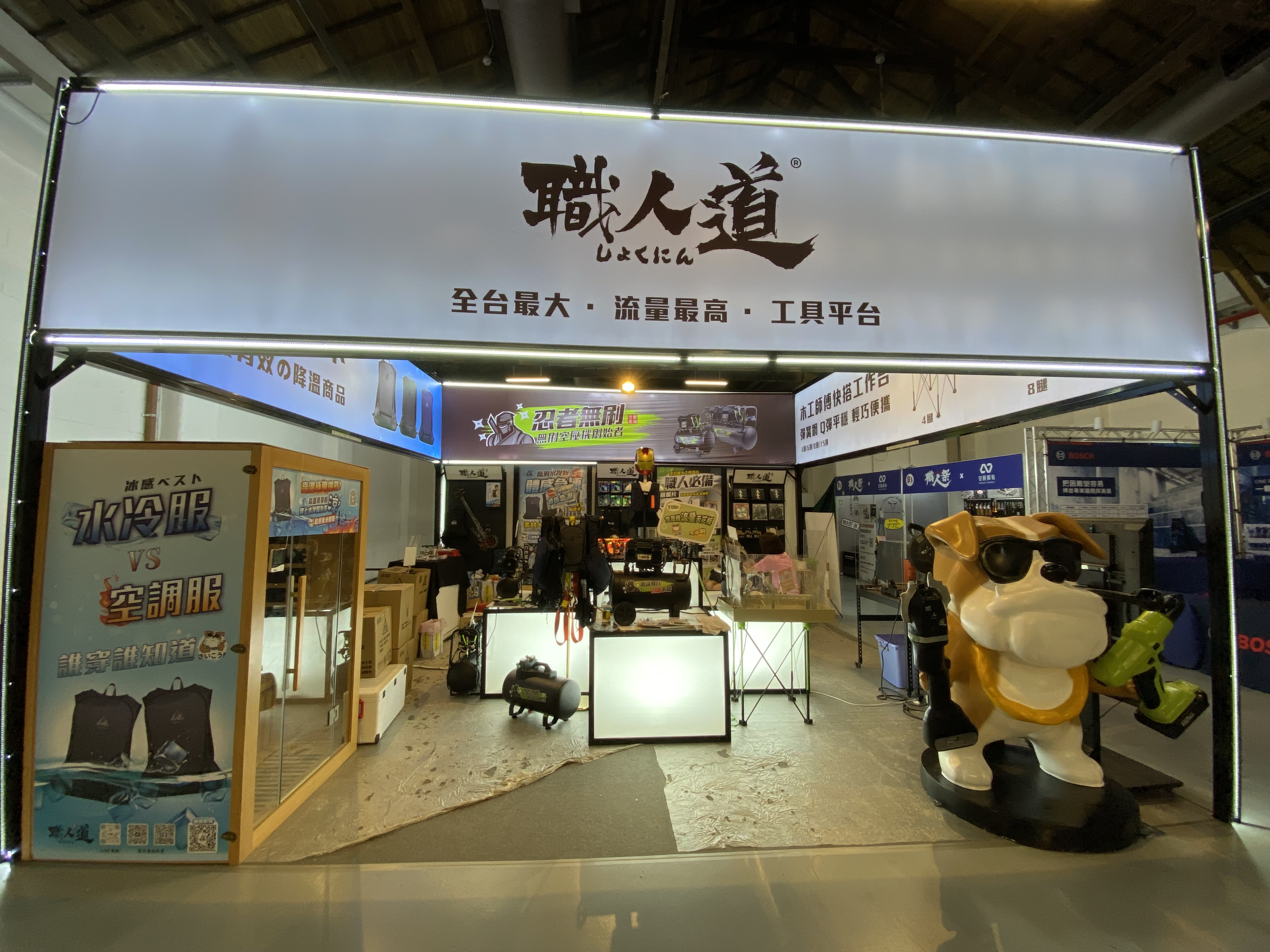
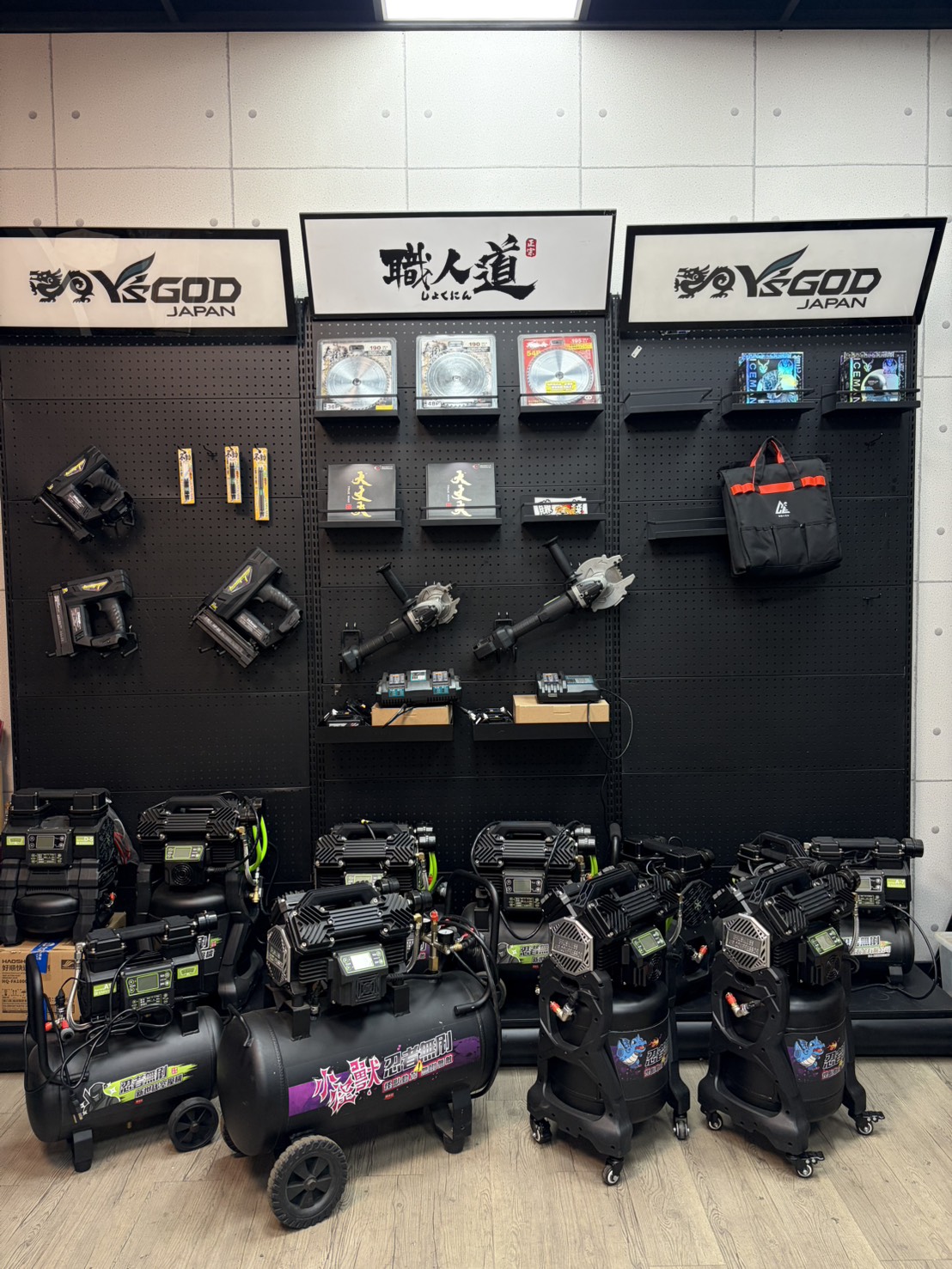
Shokunin is the professional tool and equipment brand of Feng Shang Precision Co., Ltd., a manufacturer founded in 2009 and based in Luzhu District, Taoyuan City, Taiwan. Alongside air compressors, cut-off machines and related tools, the company produces the COOLWAVE cooling vest line for people working in outdoor and high-temperature environments. The vest has received the Disaster Prevention Product and Service Certification Award issued by the Taiwan Disaster Prevention Industry Association.
Dual cooling: ice packs plus water circulation
The 'dual cooling' in the product name describes two stages working together. Reusable ice packs provide the cold source, and a water-circulation loop carries that cold through the vest body instead of leaving it concentrated in a single heavy pad. Because the chilled water moves, cooling is distributed across the torso rather than focused on one point of contact, which is the practical difference between a vest a controller keeps on and a vest that gets taken off after twenty minutes.
A 3–4 hour cooling window per charge
Duration is where this design separates itself from simpler water-cooled garments. In a direct comparison against other water-cooled vests, those products lose their cooling effect after about 30 minutes, while the Shokunin water-cooled vest provides cooling that lasts for 3–4 hours. For a controller, that gap maps onto real shift structure: one charge covers a full control rotation instead of forcing repeated trips back to a cooler or rest station.
The adjustable shoulder strap is the detail long shifts depend on
Cooling only works if the vest stays where it is needed. Traffic control involves raising arms to signal, turning repeatedly and bending to check along a lane. An adjustable shoulder strap keeps the vest seated across the shoulders through that movement, which holds the cooling panels in position and cuts down mid-shift readjustment. It also lets one vest size be fitted properly to different body types across a crew, which matters when a supervisor is equipping a mixed team rather than two or three individuals.
Leak risk and upkeep
Ice pack leakage is the failure mode buyers ask about most often, because a leaking pack ends the cooling cycle and soaks the uniform. The control measure is a reinforced ice pack material, with 100% quality guaranteed before shipment. On the upkeep side, the vest uses reusable ice packs and durable fabric with minimal maintenance, whereas the same comparison shows other water-cooled vests requiring frequent ice pack replacement and carrying higher wear and tear.
Where the vest fits, and where it does not: best-fit environments are high-temperature environments, metal sheet factories and outdoor sites. The vest extends productive working time in heat; it does not remove the need for drinking water, scheduled rest or a site heat plan, and ice packs need to be re-chilled between cooling cycles.
Step-by-Step: Deploying Cooling Vests Across a Traffic Control Detail
- Map exposure before specifying. List every post — intersection control, lane closure head, gate or site entrance — and record how long a controller stands there, whether shade is available, and how much radiant heat the surface generates. Posts with no shade and no rotation are the first candidates.
- Fit the vest to the person, not to the size range. Use the adjustable shoulder strap to seat the vest properly on each controller. A vest that rides up during arm signals delivers cooling to the wrong place, and a controller will stop wearing it.
- Build an ice pack rotation. Because one charge covers 3–4 hours, a crew working longer than that needs spare packs or a second vest per post. Treat re-chilled packs as a shift resource and plan freezer capacity accordingly.
- Run a pre-shift function check. Confirm the ice packs are frozen and undamaged, the vest body is intact, and the shoulder strap is set. Reusable packs and durable fabric keep the check short, but it should not be skipped: a poor fit or a partially frozen pack shortens the cooling window.
- Schedule the handover at the cooling-cycle boundary. Plan relief or pack swaps around the 3–4 hour window rather than after concentration visibly drops. Pair the swap with a water break so cooling and hydration are managed together.
- Plan the reorder before the peak. Summer demand compresses the period in which crews, warehouses and distributors all need stock at once. A production lead time of 7–14 days is workable only if the order is placed ahead of the heat peak, not during it.
Use Cases: Where the Water-Circulation Vest Fits on Site
- Intersection and signal duty. Long stationary posts in the middle of a junction, with reflected heat from stopped vehicles and no available shade.
- Road construction and lane closures. Controllers working ahead of and behind works zones, where the surface is often freshly stripped or laid and radiates strongly.
- Event and venue marshalling. Peak-summer events concentrate marshals at exposed entry points for several hours at a stretch.
- Security and gate posts. The same standing-in-the-open exposure profile applies to guards and access control staff at industrial and logistics sites.
- Metal-sheet factories, yards and loading areas. High-radiant industrial environments are explicitly listed among the vest's best-fit conditions.
- Adjacent outdoor trades. Street vendors, food stall operators and outdoor inspection crews face comparable continuous sun exposure and can follow the same deployment logic.
Comparison: COOLWAVE Water-Circulation Vest vs Other Water-Cooled Vests
| Factor | COOLWAVE Dual Cooling Water Cooling Vest (Shokunin) | Other water-cooled vests |
|---|---|---|
| Cooling duration per charge | 3–4 hours | Shorter duration; loses cooling effect after about 30 minutes |
| Cooling delivery | Reusable ice packs chill circulating water distributed through the vest body | Not specified in the available comparison data |
| Cooling efficiency | Higher cooling efficiency in this comparison | Lower cooling efficiency in this comparison |
| Ice pack upkeep | Reusable ice packs; reinforced ice pack material to reduce leakage risk; 100% quality guaranteed before shipment | Frequent ice pack replacement |
| Fabric and maintenance | Durable fabric, minimal maintenance | Higher wear and tear, more upkeep |
| Best-fit environments | High-temperature environments, metal sheet factories, outdoor sites | Not specified |
Comparison basis: Shokunin first-party comparison data for the COOLWAVE Dual Cooling Water Cooling Vest against other water-cooled vests. Entries marked 'not specified' fall outside that dataset and should be confirmed directly with the supplier of any specific alternative product before purchase.
Long-Term Deployment: Volume, Lead Time and Supply Terms
Equipping a permanent traffic control detail is a repeat-purchase decision, not a one-off order, so the commercial terms matter as much as the cooling performance. The minimum order quantity is 10 units, and monthly production capacity is 3000 units. For fleet buyers this combination allows a pilot group to be equipped first and a larger seasonal order to follow against the same production line.
Supply timing is stated as a typical production lead time of 7–14 days, with shipment after payment and freight paid by the buyer. Acceptance criteria are defined as a pre-shipment test, and payment terms are full payment. For a distributor or a municipal contractor, those terms mean the reorder point should be set against the 7–14 day production window plus transit time, which is why order planning belongs in early summer rather than at the first heat alert.
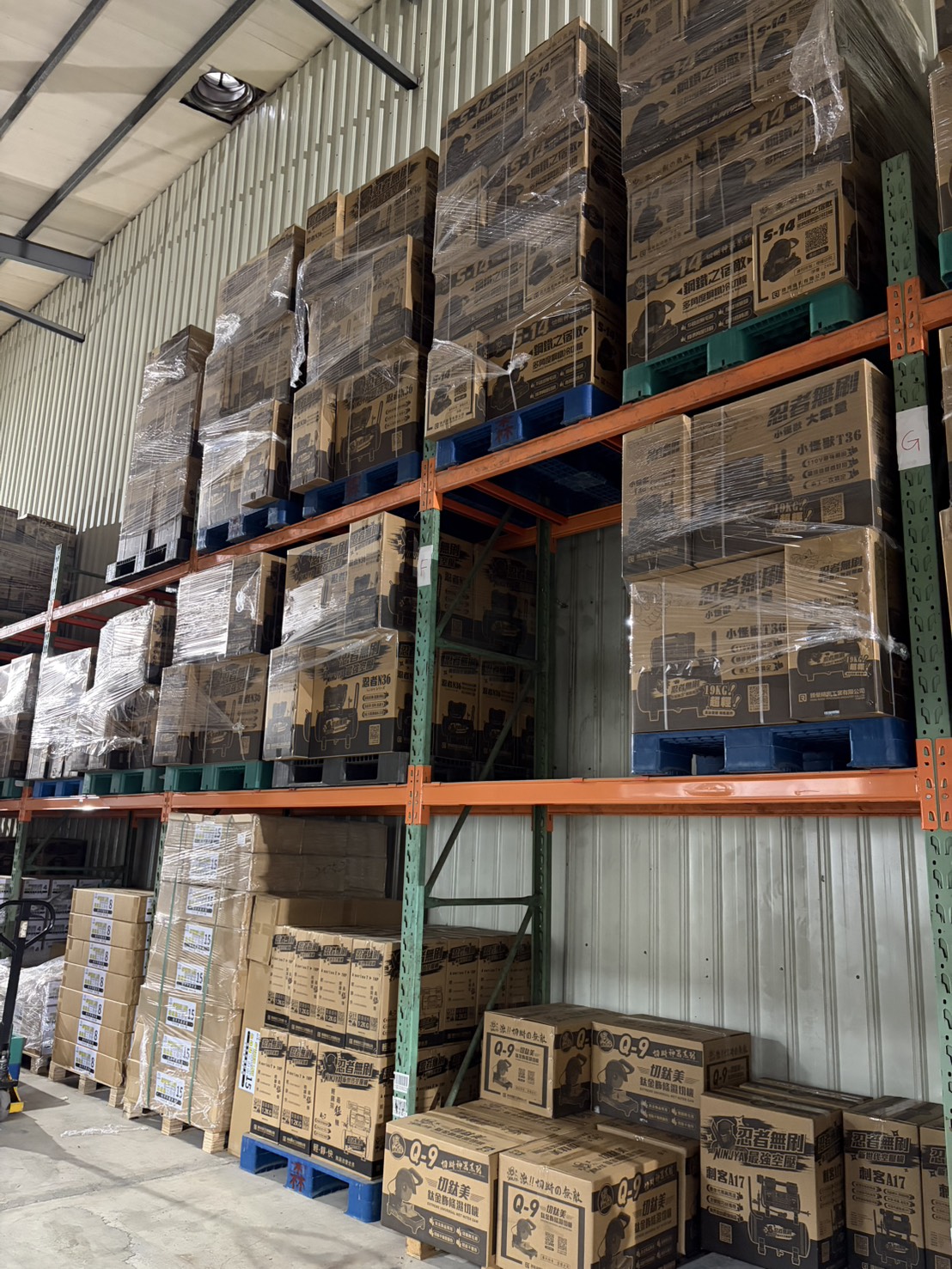
The manufacturer behind the vest is Feng Shang Precision Co., Ltd., founded in 2009, operating a 1000 m² facility with 30 employees, an annual output of 10,000 units and a 5-engineer R&D team. The export ratio is 50%, with main markets in the USA and ROC, and the company's stated focus is on tools and equipment that improve work efficiency and craftsmanship for professional users. For buyers assessing supply continuity, those figures describe a manufacturer with dedicated in-house production rather than a trading operation with third-party sourcing.
Organizations that distribute PPE, safety footwear or industrial cooling equipment can integrate the vest into an existing catalogue without a heavy first commitment, since the 10-unit minimum applies at the product level. Long-term channel partners typically combine one or two demonstration vests for site trials with a standing reorder schedule that covers the summer months.
FAQ: Traffic Control Heatstroke Prevention and Cooling Vest Procurement
Does the COOLWAVE cooling vest meet recognized quality and safety requirements?
Cooling systems are generally expected to comply with ISO 9001:2015 for quality management, and electrical components used in such systems often require CE or UL marks depending on the market (ISO / UL, 2024). On the product side, the COOLWAVE Dual Cooling Water Cooling Vest uses reinforced ice pack material to prevent leakage, and Shokunin states 100% quality guaranteed before shipment, with acceptance defined as a pre-shipment test. The vest has also received the Disaster Prevention Product and Service Certification Award from the Taiwan Disaster Prevention Industry Association. Buyers with specific regional PPE requirements should confirm the applicable classification for their own market before deployment.
How long does the cooling last, and can it cover a full traffic control shift?
The Shokunin water-cooled vest provides cooling that lasts for 3–4 hours per charge, compared with other water-cooled vests that lose their cooling effect after about 30 minutes. A single 3–4 hour window covers one standard control rotation. Where a post is manned for longer, the practical approach is a spare set of reusable ice packs or a second vest per post, with the shoulder strap adjusted for each wearer so the cooling panels stay in position through arm signalling. The vest uses reusable ice packs and durable fabric with minimal maintenance, so the recurring cost of a shift is the re-chilling cycle, not pack replacement.
What order volume and payment terms apply when equipping a crew?
The minimum order quantity is 10 units, and monthly production capacity is 3000 units, which allows a traffic control team to be equipped post by post rather than through a single large commitment. Commercial terms are shipment after payment, with freight paid by the buyer and full payment as the stated payment term. Because capacity is measured in units per month rather than per year, larger seasonal requirements can be spread across production runs if the order is placed early enough in the season.
How can a team validate the vest before a full rollout?
Validation rests on two documented elements: the acceptance criteria for an order is a pre-shipment test, and the minimum order quantity of 10 units is low enough to equip a single intersection detail or a pilot group for evaluation. A supervisor can then compare those controllers' experience across a full summer rotation before extending the vest to the wider crew. Suppliers considering the product for resale can use the same 10-unit entry to place demonstration units with customers.
How quickly can a reorder arrive once the cooling season starts?
The typical production lead time is 7–14 days, with shipment after payment, and monthly production capacity is 3000 units. In practice this means the reorder point should be calculated from the 7–14 day production window plus transport time to the destination, which is why experienced buyers place their summer replenishment order before the first heat peak rather than reacting to it. Shokunin can be reached through the contact details below to confirm current scheduling and to request a quotation or place an inquiry.
Conclusion: A Cooling Window That Matches a Control Rotation
Heatstroke prevention for traffic controllers comes down to one practical question: can a person standing in direct sun, on hot pavement, in protective clothing, stay alert for the length of a rotation? Hydration and rest schedules answer part of that question, but they cannot follow a controller to a live lane. A water-circulation cooling vest can, and the COOLWAVE Dual Cooling Water Cooling Vest is specified around a 3–4 hour cooling window per charge, against roughly 30 minutes for other water-cooled vests in the same comparison.
The supporting details are what make it wearable across a real crew: an adjustable shoulder strap that holds the vest in place during arm signals and across different body types, reinforced ice pack material with 100% quality guaranteed before shipment, reusable packs, and durable fabric with minimal maintenance. The supply terms are designed for repeat deployment — 10-unit minimum order, 3000 units of monthly production capacity, and a 7–14 day typical production lead time.
Next Step: Quote, Sample Terms and Catalogue
Teams evaluating the vest for a traffic control or security detail can request a quotation, confirm current production scheduling, or request the product brochure to review specifications before ordering.
Download the catalogue: Shokunin product brochure (PDF)
Website: https://www.fstool.com.tw/ | Email: fsmarketing@fstool.com.tw | Phone: +886 3-312-6606 | WhatsApp: +86 18858260055 | Business hours: Monday to Friday, 8:30 AM – 5:40 PM
Address: No. 155-17, Sec. 2, Nanzhu Rd., Luzhu Dist., Taoyuan City 338454, Taiwan