
How to Match a Dual Cooling Water Cooling Vest to Real Work Sites
A dual cooling water cooling vest is a worn cooling system with two stages: ice packs chill the water held in the vest's water bag, and a low-current pump moves that chilled water through tubing inside the garment. The COOLWAVE Water-Circulation Cooling Vest from Shokunin is built on this loop, with a rated cooling duration of 3–4 hours per ice-pack set, a total weight within 2 kg, and a suitable temperature listed as below 10 °C on its specification sheet.
Buying the vest is the straightforward part. Making it work on a metal-sheet production floor, a roadwork site, a traffic post and a night market stall at the same time is not, because each location applies a different heat load, a different shift length and a different resupply distance to the same product. This application guide treats the COOLWAVE vest as a platform and works through how to configure and deploy it scenario by scenario.
Answer first: match the vest to the site, not the site to the vest. Profile the exposure, choose the model variant and colourway, calculate ice-pack sets per worker from the 3–4 hour rated duration, and confirm the resupply loop before the first unit reaches a worker's back.
Problem Definition: Why One Vest Specification Cannot Cover Every Site
Cooling vests are usually procured as a single line item and then deployed into environments that differ on four variables. When those variables are ignored, the failure is predictable and has little to do with the vest itself.
- Exposure duration. A four-hour task and a twelve-hour shift place very different demands on a cooling window rated at 3–4 hours per ice-pack set.
- Exposure type. Radiant heat from process equipment — the dominant load inside metal sheet factories — is not the same as direct solar load on an open construction deck.
- Mobility. A traffic controller at a fixed post can work from a cooling station; a worker moving across a site has to carry everything with them.
- Resupply distance. The distance from the work face to the nearest freezer determines how many ice-pack sets must travel with the crew.
Overlook any of these and the symptoms repeat: cooling expires before the shift does, change-outs queue behind a single freezer, or workers leave the vest in the locker because it interferes with the PPE they already wear. Each of these is a planning failure, and each is cheaper to fix before purchase than after.
The wider market confirms how central industrial sites now are to this category. Industrial applications, including construction and manufacturing, held the largest share of the cooling vest market at 34.5% in 2025 (Dataintelo).
Industry Background: What Is Driving Circulatory Cooling
Personal cooling has moved from a niche accessory to a budgeted line in occupational heat-safety planning. The measurable context behind that shift:
- The global personal cooling device market was valued at USD 25.16 billion in 2024 and is projected to reach USD 94.85 billion by 2035 (Market Research Future).
- The narrower cooling vest market was valued at approximately USD 215 million in 2024, with a projection of USD 385 million by 2033 (Dataintelo). The gap between these two figures reflects scope — the device category also includes handheld fans and other cooling hardware.
- Asia Pacific is the fastest-growing region for cooling vests, driven by rapid industrialisation and large outdoor work populations (Spherical Insights).
- Active circulatory mechanisms such as ice water circulation cooling are increasingly deployed in industrial sectors to mitigate occupational heat stress (Strategic Market Research).
- Compliance expectations are layered: cooling systems commonly reference ISO 9001:2015 for quality management, and electrical components often require CE or UL marks (ISO / UL).
Established names in the category include Techniche International, Glacier Tek, Polar Products Inc. and Ergodyne (Spherical Insights). For a project buyer, the practical consequence is that cooling vests are now a well-published, competitive product family — which pushes the decision away from "does this concept work" and toward "which configuration fits this site, and can it be resupplied on time".
The COOLWAVE Platform: What You Are Actually Deploying
Shokunin is the professional tool brand of Feng Shang Precision Co., Ltd., a manufacturer founded in 2009 in Luzhu District, Taoyuan City, Taiwan, whose product programme covers air compressors, cut-off machines and water-cooled vests, with exports to markets including the USA and Taiwan.
The COOLWAVE Water-Circulation Cooling Vest is classified as industrial cooling apparel and personal protective equipment. Its stated applicable industries are construction workers, outdoor workers, food stall operators, street vendors, traffic controllers and metal sheet factories. The verified specification is consistent across the Basic Model and the Professional Model colourways:
| Parameter | Verified value |
|---|---|
| Cooling duration | 3–4 hours per ice-pack set |
| Weight | Within 2 kg |
| Suitable temperature | Below 10 °C (as listed on the specification sheet) |
| Shoulder strap material | 600D polyester |
| Vest body material | PEVA |
| Water bag material | TPU |
| Water bag cap | Polypropylene |
| Cooling tube | Sand rubber (black) |
| Pump output | 5V 150 mA (max) |
| Flow rate | Max 320–370 ml/min |
| In the box | Water-cooled vest backpack ×1, ice packs ×2 |
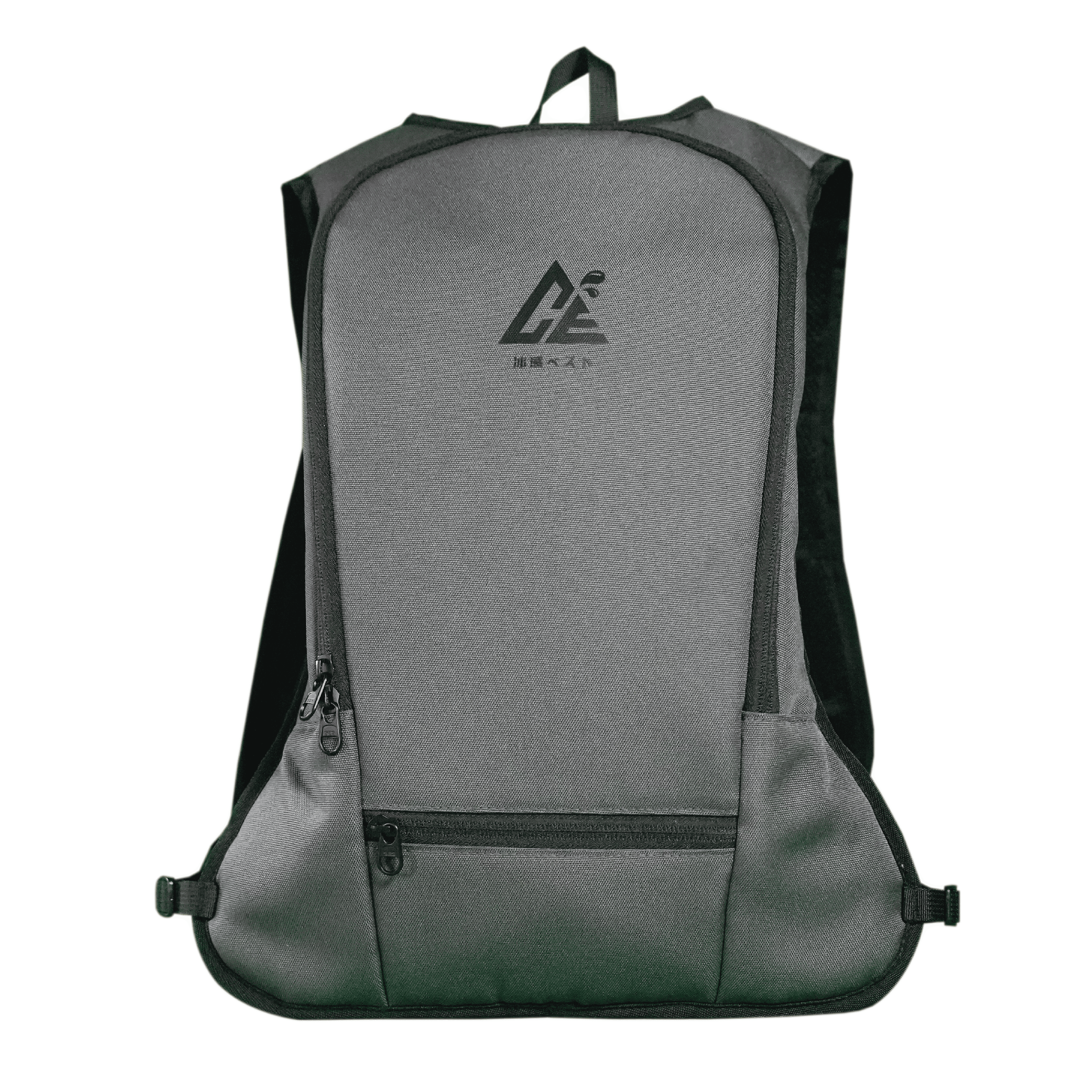
Professional Model colourways are Blue, Gray and Black; the Basic Model is listed as the COOLWAVE Water-Circulation Cooling Vest (Basic Model). Because the cooling specification is the same across these listings, colour is a crew-identification and stock-keeping decision rather than a performance decision — which is useful when a project spans several subcontractors who each prefer their own kit.
The water-cooled vest line has received the Disaster Prevention Product and Service Certification Award issued by the Taiwan Disaster Prevention Industry Association, according to the manufacturer's company profile. A reference deployment supplied 100 units in Taiwan for cooling use in high-temperature environments, and those units have been in service for 10 years with reported outcomes of effective body cooling, heatstroke prevention, and improved worker comfort and work efficiency. The highlights recorded for that deployment are ice-pack cooling, portability, an adjustable one-size-fits-all design, and the disaster-prevention certification.
Supply-side parameters for project planning are ODM production mode, a monthly capacity of 3,000 units, a lead time of 7–14 days, a minimum order quantity of 10 units, global export markets, and a 6-month warranty on the water-cooled vest. The manufacturing base behind the brand — 1,000 m² of factory space, 30 employees, 5 R&D engineers, annual output of 10,000 units and a 50% export ratio — sets the context for how quickly a multi-site rollout can be staged.
Step-by-Step Breakdown: Matching the Vest to a Site
Step 1 — Profile the exposure, not the job title
For each crew, record four inputs: maximum continuous exposure time, whether the heat load is radiant or solar, whether the worker is stationary or mobile, and the walking distance to the nearest freezer or ice source. A metal sheet factory and a construction site are both described as "hot", but they generate different rotation plans.
Step 2 — Choose the model variant and colourway
Basic or Professional, and Blue, Gray or Black. Since the cooling specification does not change between them, decide this on crew identification, spare-stock simplicity and whether supervisors want a single SKU per site. Keeping one colourway per site makes ice-pack and vest pairing far easier to manage across shifts.
Step 3 — Calculate ice-pack sets per worker
The rated cooling duration is 3–4 hours per ice-pack set, and each vest ships with two ice packs. A standard eight-hour shift therefore plans on at least two sets per worker; shifts beyond eight hours plan on a third. Treat this as a baseline only — the real change-out interval depends on ambient temperature and workload and should be measured on site during a pilot rather than assumed from the specification sheet.
Step 4 — Map the resupply loop before the rollout
The cooling window is only as long as the loop behind it. Decide where packs are frozen, who moves them, at what clock times, and how partially thawed packs are handled. Sites with a single freezer usually need a staged schedule — a mid-morning and a mid-afternoon change-out — instead of on-demand replacement.
Step 5 — Validate load, layering and fit
At within 2 kg, the vest is designed to work alongside existing work clothing, and the shoulder straps are 600D polyester while the water bag is TPU. Check it against the PPE your crew already wears — harnesses, high-visibility outerwear, welding gear — and confirm that the adjustable one-size-fits-all strap design covers your crew's actual size spread. Fit problems show up in week one, not after a purchase order is signed.
Step 6 — Pilot with one block, then scale
A 10-unit pilot matches the minimum order quantity, which makes it possible to instrument a single crew for a week before committing to site-wide deployment. Measure three things: realised cooling duration per set, change-out compliance, and worker acceptance under existing PPE. If all three hold, scale against the monthly capacity of 3,000 units and the 7–14 day lead time.
Use Cases: The Same Vest, Configured Differently
Construction sites and structural work
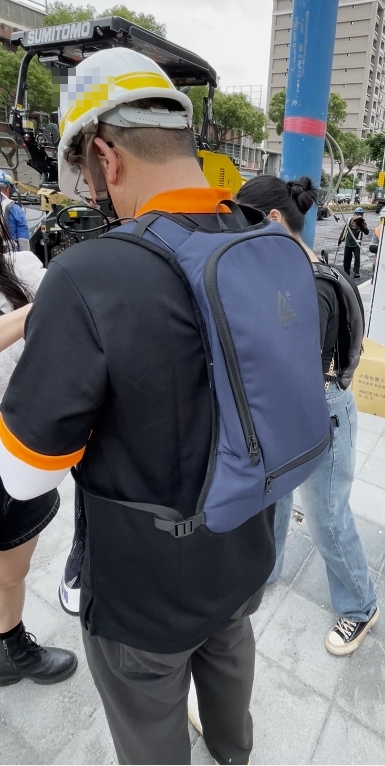
On an open deck the load is solar and constant, shifts are long, and the work face moves. That combination points to two ice-pack sets per worker for an eight-hour shift and a mobile resupply arrangement — a site vehicle or a cooler that follows the crew — rather than a fixed station. The within-2 kg weight and the adjustable one-size-fits-all strap design matter most here, because workers are frequently layered under harnesses and moving between levels.
Metal sheet factories and metal-roof production floors
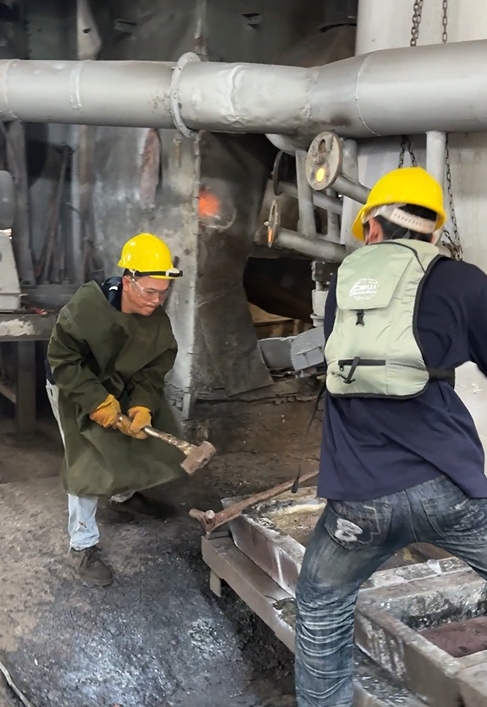
Inside a metal sheet factory the dominant load is radiant heat from process equipment and hot surfaces, often combined with a roof structure that holds heat late into the day. Workers are usually semi-stationary, which allows a leaner plan: fewer sets carried per person, more sets held at a central freezer, and scheduled change-outs. The circulation loop is the relevant capability here — a 5V pump at 150 mA maximum moving up to 320–370 ml/min through the black sand-rubber cooling tube spreads the chilled water across the vest instead of concentrating the cold in one pocket.
Traffic control and roadside posts
A traffic controller stands in direct sun on a fixed post with limited break flexibility. The vest's low weight and one-size-fits-all adjustable design suit this profile, and the practical answer to a missing freezer is a support vehicle holding pre-chilled spare ice packs, with a change-out timed to the post's rotation rather than to demand.
Street vendors and night market stalls
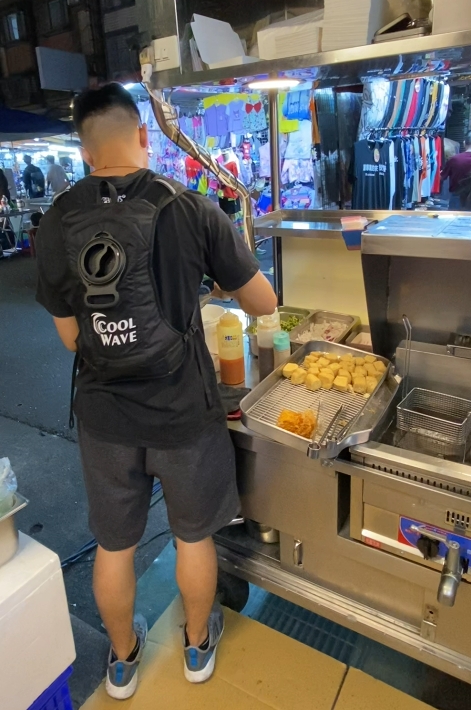
Vendors face sustained ambient heat and humidity across long trading hours, often with no break at all. A basic or professional model plus a personal cooler box for spare packs covers a full evening, and the ice-pack cooling source — rather than a refrigeration compressor — is what makes the set-up realistic for a stall with no power infrastructure of its own. Daily use means planning water changes and pack inspection into closing routine.
Fishing and long-duration outdoor work
Prolonged solar exposure at a remote location is the hardest resupply case in this list, because there is no freezer to return to. The plan shifts entirely to carrying capacity: a full set of spare ice packs aboard, a backpack-format vest, and a conservative assumption about how many cooling windows the trip actually needs.
Scenario Fit Comparison
| Work scenario | Dominant heat load | Recommended configuration | Specification that matters | Main planning risk |
|---|---|---|---|---|
| Construction site / structural work | Direct solar, moving work face | Professional Model; 2 ice-pack sets per worker per 8-hour shift; mobile cooler | 3–4 hours rated cooling duration; within 2 kg | Resupply must follow the crew, not sit in a site office |
| Metal sheet factory / metal-roof production | Radiant heat from equipment and roof | Professional Model; central freezer station with scheduled change-outs | Max flow rate 320–370 ml/min; 5V 150 mA pump | Late-afternoon heat build-up extends the cooling window needed |
| Traffic control / roadside post | Direct solar, fixed post, limited breaks | Professional Model; pre-chilled spare packs held in the support vehicle | One-size-fits-all adjustable design; within 2 kg | No freezer at the post itself |
| Street vendor / night market | Long hours of ambient heat and humidity | Basic or Professional Model; personal cooler box for spare packs | Ice-pack cooling source; 600D polyester straps; TPU water bag | Daily use — plan water changes and pack inspection |
| Fishing / long-duration outdoor work | Prolonged solar exposure, remote location | Basic Model; full spare ice-pack set carried on the vessel | 3–4 hours per set; backpack format | No resupply en route — packs must cover the whole trip |
Shift and Ice-Pack Rotation Planning
| Shift length | Ice-pack sets per worker | Basis | Planning note |
|---|---|---|---|
| Up to 4 hours | 1 set | Rated cooling duration of 3–4 hours per set | Each vest ships with 2 ice packs, so one spare stays frozen |
| 8 hours | 2 sets | Two cooling windows of 3–4 hours | Mid-shift change-out; spare set kept in a cooler or freezer |
| 10–12 hours | 3 sets | Three cooling windows | Confirm freezer capacity for a full crew's spare sets |
The set counts above are planning arithmetic based on the rated 3–4 hour cooling duration. Real change-out intervals depend on ambient temperature and workload, and should be measured during a pilot before they are written into a site procedure.
Frequently Asked Questions
Is the COOLWAVE water-circulation cooling vest a certified product?
The water-cooled vest has received the Disaster Prevention Product and Service Certification Award issued by the Taiwan Disaster Prevention Industry Association, as stated in the manufacturer's company profile. Separately, general compliance frameworks for cooling systems commonly reference ISO 9001:2015 for quality management, and CE or UL marks where electrical components are involved (ISO / UL). Buyers building a site compliance file should confirm which of these documents apply in their jurisdiction and request the relevant paperwork together with the quotation.
How long does one vest keep a worker cool, and how many sets does a shift need?
The COOLWAVE vest is rated at 3–4 hours of cooling per ice-pack set, and every unit ships with one water-cooled vest backpack and two ice packs. An eight-hour shift therefore plans on at least two sets per worker, and shifts of ten hours or more plan on three. Actual duration varies with ambient temperature and workload, so the first week on site should be used to measure the real change-out interval rather than assume it.
What commercial terms apply to a project order?
Shokunin does not publish a list price; unit terms are quoted per project. What is fixed and publishable is the commercial frame: minimum order quantity 10 units, lead time 7–14 days, monthly production capacity of 3,000 units, global export markets, and a 6-month warranty on the water-cooled vest. Those are the figures a procurement schedule should be built around.
Can we test the vest on one site before committing to a full rollout?
Yes — the 10-unit minimum order quantity makes a single-crew pilot viable. A useful pilot measures three things: realised cooling duration per ice-pack set, change-out compliance, and worker acceptance under existing PPE. Product documentation, including the specification sheet and the available model colourways, is available in the Shokunin product brochure, and sample or quotation requests can be raised directly with the team to start that pilot.
How quickly can a multi-site rollout be supplied?
Production runs on an ODM model with a monthly capacity of 3,000 units and a lead time of 7–14 days from order confirmation. That pacing supports staggered deployment — one crew or one site at a time — which usually matches better with how heat-safety programmes are actually rolled out than a single all-sites delivery.
Conclusion
Matching a dual cooling water cooling vest to a project is a five-input problem — exposure duration, exposure type, mobility, resupply distance and existing PPE — rather than a simple product-selection problem. The COOLWAVE platform gives buyers a fixed set of verified parameters to plan against: 3–4 hours of cooling per ice-pack set, within 2 kg of weight, a suitable temperature listed as below 10 °C, a 5V 150 mA pump with a maximum flow rate of 320–370 ml/min, and two ice packs in the box.
Plan the rotation before the rollout, pilot with a 10-unit block against the 10-unit minimum order quantity, then scale on the 3,000-unit monthly capacity and 7–14 day lead time. The vest itself stays the same across construction sites, metal sheet factories, traffic posts, street stalls and remote outdoor work — only the configuration around it changes.
Next step: validate the fit on your own site
If you are planning a heat-safety rollout, start with a sample or a project quotation and confirm the configuration against your shift pattern. Shokunin supplies COOLWAVE water-circulation cooling vests with a 6-month warranty on the water-cooled vest, a 10-unit minimum order quantity and a 7–14 day lead time.
Email: fsmarketing@fstool.com.tw | WhatsApp: +86 18858260055 | Website: https://www.fstool.com.tw/
Product brochure (specification sheet and model colourways): Download the Shokunin COOLWAVE brochure
Third-party market and standard references: Market Research Future (personal cooling device market), Dataintelo (cooling vest market), Spherical Insights (regional growth and named category competitors), Strategic Market Research (circulatory cooling trend), International Organization for Standardization and UL (compliance framework).
Have Questions or Need More Details?
Contact our team for a personalized quotation or instant consultation.
Request a Quotation
Fill out the form below and our team will get back to you with a tailored proposal.
WhatsApp Direct Chat
Prefer to chat in real-time? Message us on WhatsApp for instant assistance & quick answers.
- Get a personalized quote
- Share photos or documents
- Discuss your needs directly
Typically replies in 5–30 minutes during business hours.