
Industrial Cooling Apparel 101: What a Dual Cooling Water Cooling Vest Is
A dual cooling water cooling vest is a wearable heat-relief garment that removes heat through two mechanisms at the same time: chilled ice packs held against the torso, and a small electric pump that circulates cold water through tubing built into the vest. Within industrial cooling apparel, that places it in the active water-circulation branch of personal cooling systems — the same broad family that the U.S. National Institute for Occupational Safety and Health (NIOSH) describes, alongside air-cooled garments, cooling vests and wetted overgarments.
This guide is written for first-time buyers — safety officers, site managers, procurement staff and distributors — who are evaluating heat-relief options for construction crews and outdoor workers and need to understand the category before they shortlist anything. The reference product used throughout is the COOLWAVE Water-Circulation Cooling Vest from Shokunin, the professional tool brand of Feng Shang Precision Co., Ltd., a manufacturer based in Taoyuan, Taiwan.
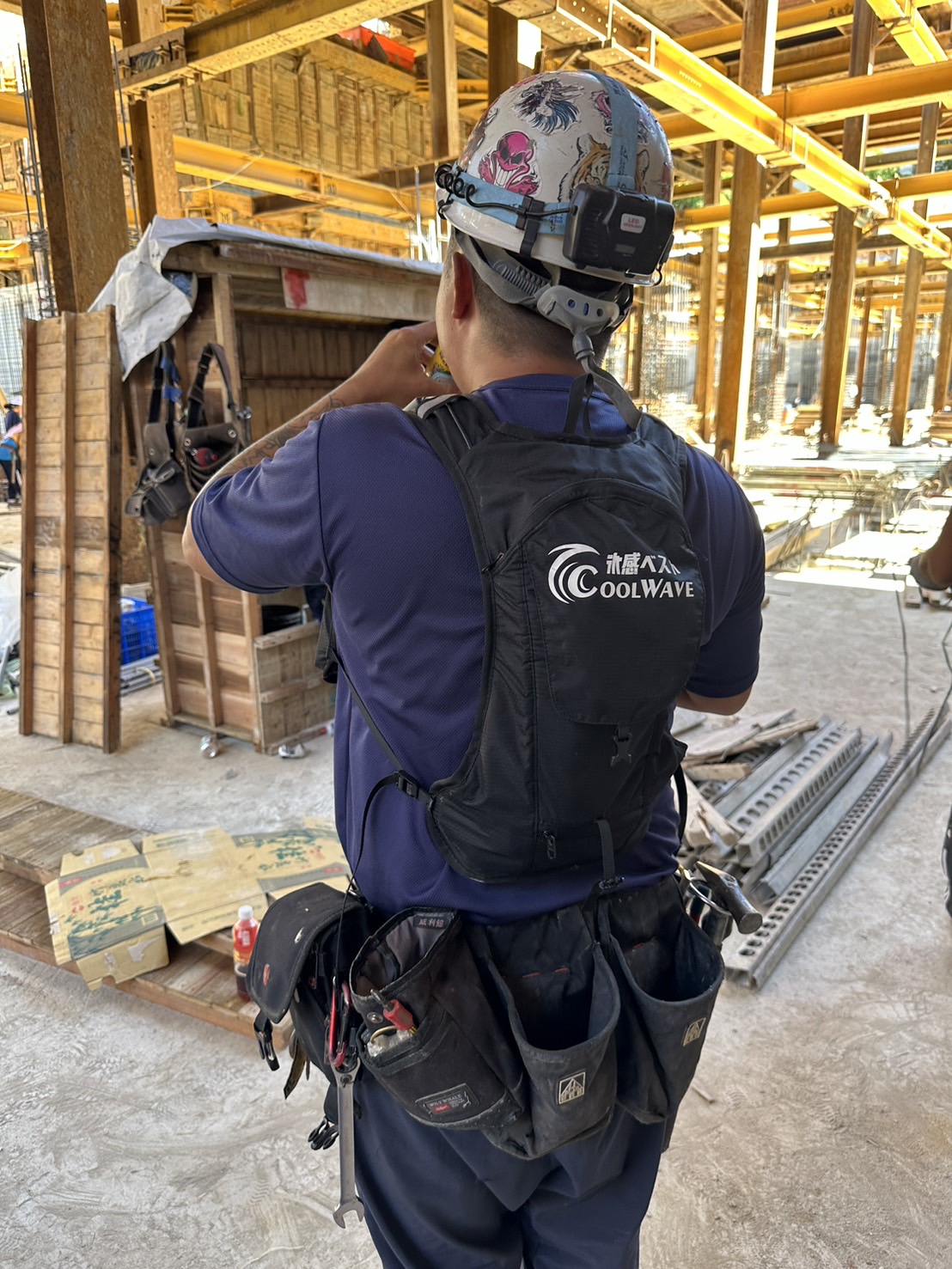
Construction site: outdoor crews are the primary user group for water-circulation cooling apparel.
Problem Definition: What Heat Actually Costs Before You Buy Anything
Heat exposure on an industrial site is rarely a single dramatic event. It is a slow operational tax: crews slow down, breaks stretch, error rates rise, and the most experienced workers quietly pace themselves. When supervisors add protective clothing for other hazards, the heat load stacks up further, and the garment that is supposed to protect a worker becomes the reason they take it off.
That is why personal cooling systems exist as a separate category. NIOSH groups water-cooled garments, air-cooled garments, cooling vests and wetted overgarments together as examples of auxiliary cooling systems used against heat exposure. The category answer is therefore not "a vest keeps you cool" — it is "a wearable system that manages the heat load a worker carries while still doing the job."
For a first-time buyer, the real problem to solve is narrower than it looks. Three questions decide most purchases:
- Runtime against the shift. How long does one cooling cycle last, and what does the crew do when it ends?
- On-site logistics. What has to be frozen, refilled, charged or cleaned, and by whom?
- Documentation and support. What can the supplier actually show you, and what happens after delivery?
Everything else — price, colour, sizing — sits downstream of those three.
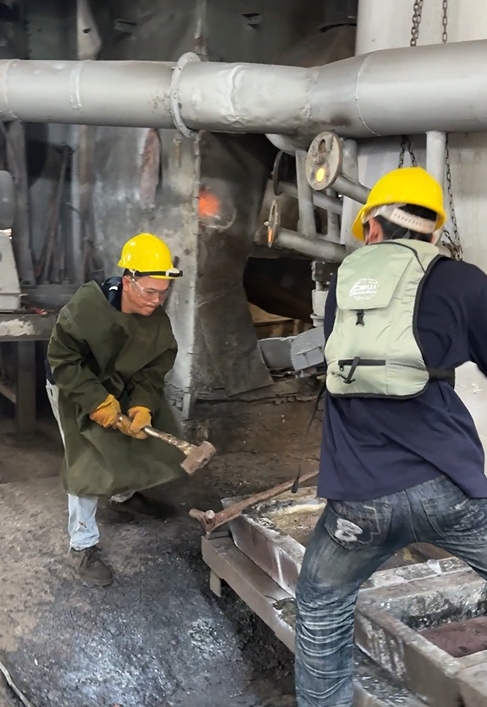
Metal sheet factories are a common application: heat comes from both the process and the building envelope.
Industry Background: Where Cooling Vests Sit in the PPE Landscape
Cooling apparel is no longer a niche accessory category. The global cooling vests market reached USD 342 million in 2025, and industrial applications accounted for 34.5% of revenue share the same year, according to the Dataintelo market report published in May 2026. The practical reading for a buyer is straightforward: the industrial segment is a major commercial driver of this category, so the products available are increasingly designed around shift work rather than leisure use.
Inside that market, cooling vests divide by mechanism rather than by brand:
- Passive ice-pack vests rely on frozen packs placed in pockets. No power, but cooling fades as packs warm and the site must manage freezing logistics.
- Evaporative vests rely on water evaporating from fabric. Their behaviour generally changes with ambient humidity, which matters in humid, enclosed or metal-roof environments.
- PCM (phase-change material) vests use packs that absorb heat as the material changes phase, and require a controlled re-cooling routine between shifts.
- Water-circulation vests use a chilled water reservoir plus a pump that moves cold water through the garment. These are the active systems, and they are the group COOLWAVE belongs to.
Taiwan is one of the markets where this category has visible institutional recognition. Shokunin's COOLWAVE water-cooled vest has received the Disaster Prevention Product and Service Certification Award issued by the Taiwan Disaster Prevention Industry Association, and the vest's structure and cooling system are covered by patent certificate I886033, issued by the Intellectual Property Office of Taiwan's Ministry of Economic Affairs on 1 June 2025 and valid to 27 August 2044.
On the manufacturing side, Shokunin is the professional e-commerce brand launched by Feng Shang Precision Co., Ltd., founded in 2009 and operating from a 1,000 m² facility with 30 employees, five R&D engineers and a documented annual output of 10,000 units. Around 50% of output is exported, with the United States and Taiwan as the main markets.
The Detailed Solution: How a Dual Cooling Water Cooling Vest Works
Two cooling mechanisms in one garment
The word "dual" in the product name is literal. The cold source is a pair of reusable ice packs; those packs chill the water held in a TPU water bag carried in the supplied water-cooled vest backpack. A pump then circulates that chilled water through a cooling tube routed through the vest, so cold water keeps moving across the torso instead of sitting in one static pack. The two mechanisms — stored ice cooling and pumped water circulation — work as one loop.
What the components are made of
The published material list is specific enough to support a first-pass durability and maintenance review:
- Shoulder strap material: 600D polyester
- Vest material: PEVA
- Water bag material: TPU
- Water bag cap: polypropylene
- Cooling tube: sand rubber (black)
For buyers comparing samples, these are the parts that determine how the vest survives a season of site use — the harness takes the abrasion, the TPU bag takes the flexing, and the tube takes the bending.
The pump, the flow rate and the power source
The COOLWAVE pump is rated at 5V, 150mA (max) and delivers a maximum flow rate of 320–370 ml/min. That is a low-voltage DC load, which is why water-circulation designs in this category are commonly described as power-bank cooling vests: the pump's electrical demand, not the cooling itself, is what a portable power source has to cover. When you evaluate any circulating vest, the pump rating and the flow rate are the two numbers that tell you how the system will behave in use.
Runtime, weight and the stated temperature condition
COOLWAVE is specified for 3–4 hours of cooling per charge and ice-pack cycle, with a net weight within 2 kg. Those two figures set the operating rhythm: a full shift requires planned pack rotation, and the sub-2 kg figure is what keeps the garment wearable over a normal work layer rather than becoming its own load.
A note on the temperature specification. Published product data for the COOLWAVE vest lists a suitable temperature condition of below 10 °C. Because the test conditions behind that figure — ambient temperature, humidity, workload, clothing layers — are not published, treat it as a listed specification to confirm with the supplier during sampling rather than as a validated performance envelope.
What ships with the vest: water-cooled vest backpack ×1 and ice packs ×2.
| Specification | COOLWAVE Water-Circulation Cooling Vest (Basic Model) |
|---|---|
| Category | Industrial cooling apparel / Personal Protective Equipment (PPE) |
| Cooling mechanism | Ice packs as cold source plus pump-driven water circulation |
| Cooling duration | 3–4 hours per cycle |
| Net weight | Within 2 kg |
| Pump output | 5V, 150mA (max) |
| Flow rate | Max 320–370 ml/min |
| Vest material | PEVA |
| Water bag / cap | TPU bag, polypropylene cap |
| Cooling tube | Sand rubber (black) |
| Shoulder strap | 600D polyester |
| In the box | Water-cooled vest backpack ×1, ice packs ×2 |
Step-by-Step Breakdown: How a First-Time Buyer Evaluates One
The evaluation sequence below is ordered so that cheap questions are answered before expensive ones. It works for the COOLWAVE vest and for any comparable water-circulation product.
- Define the exposure. Write down the task, the ambient conditions and the shift length. A construction site in direct sun and a metal sheet factory under a radiant roof impose different loads and call for different rotation plans.
- Match runtime to the shift. With 3–4 hours of cooling per cycle, a shift longer than that needs a pack-rotation plan. Decide who freezes packs, where, and how many spare sets are in circulation.
- Check the pump and flow specification. Confirm the pump rating (5V, 150mA max on the COOLWAVE) and the flow rate (max 320–370 ml/min), then ask the supplier for the conditions under which those figures were measured.
- Weigh the garment. Anything within 2 kg is a reasonable starting point for a wearable system that already includes water and a pump. Weigh the sample yourself rather than relying on the catalogue.
- Review documentation. Ask for patent certificate I886033 (structure and cooling system, Intellectual Property Office, Ministry of Economic Affairs, ROC) and the Taiwan Disaster Prevention Product and Service Certification Award. Read both for what they actually cover.
- Check supplier terms. Shokunin's ODM program is listed at 3,000 units per month, a 7–14 day lead time, a 10-unit MOQ, and a 6-month warranty on the water-cooled vest. Confirm which of these applies to your configuration.
- Validate with a sample before committing. Run a full cycle, check for leaks at the bag, cap and tube joints, and confirm comfort under the harness during actual work.
Use Cases: Where a Water-Circulation Vest Earns Its Place
COOLWAVE is listed for construction workers, outdoor workers, food stall operators, street vendors, traffic controllers and metal sheet factories. That list is useful because it maps the category's real distribution: the users are not athletes, they are people who cannot leave their post when it gets hot.
- Construction and outdoor work. Long shifts, direct sun, limited shade, and protective clothing that adds heat burden.
- Metal sheet and metal-roof factories. Radiant heat from the process and the building envelope, often with limited airflow.
- Traffic control. Fixed positions in full sun for the length of a shift, with little freedom to move to shade.
- Street vendors and night market operators. Long standing hours beside heat sources, with no employer-provided cooling infrastructure.
There is documented field experience behind the category. A Taiwan case record lists 100 units deployed for workers in high-temperature environments, with reported results including effective body cooling, heatstroke prevention, improved work efficiency and improved worker comfort. The same record notes use across construction sites, outdoor workers, metal sheet factories and street vendors, and describes a 10-year span of use for the product type.
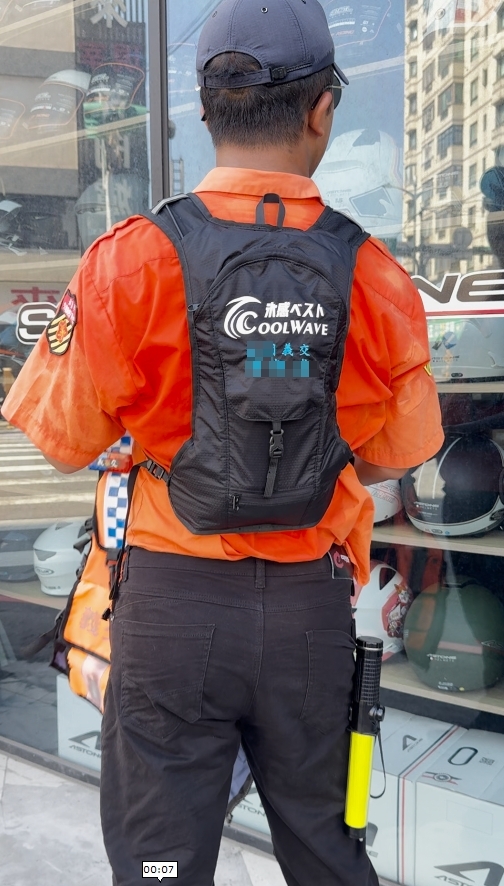
Traffic control: fixed-position work in direct sun is one of the clearest cases for active cooling.
Comparison Table: Cooling Approaches Side by Side
The table below compares approaches rather than brands. It is a preference framework: read down the "consider when" column and match it against your site, then shortlist the products built around that mechanism.
| Approach | How heat is removed | What the site must manage | Consider when |
|---|---|---|---|
| Passive ice-pack vest | Frozen packs absorb heat directly against the body | Freezing and re-freezing packs between shifts; spare pack inventory | Tasks are short and pack logistics are simple |
| Evaporative vest | Water evaporating from fabric draws heat away | Continuous water supply; performance generally varies with ambient humidity | Conditions are dry and airflow around the worker is reasonable |
| PCM (phase-change material) vest | Packs absorb heat as the material changes phase | Controlled re-cooling routine and a managed pack pool | A repeatable, centralised re-cooling process already exists |
| Water-circulation vest — COOLWAVE (dual cooling) | Ice packs chill a TPU water bag; a 5V/150mA pump circulates chilled water at max 320–370 ml/min through the vest | Ice and water refill, a 5V power source for the pump, tube and pump checks; 3–4 hour cycles | Shift-based industrial work where moving chilled water is preferred over static packs, and weight within 2 kg suits the crew |
A practical shortlist logic follows from the same table: if the site cannot support freezing logistics at all, ice-based approaches — including water circulation — will fail on operations rather than on cooling. If the site can support refill and freezing, the water-circulation branch gives the crew a cooling loop that keeps moving for the length of a 3–4 hour cycle, which is the reason buyers in hot, humid or radiant-heat environments tend to include it on their shortlist.
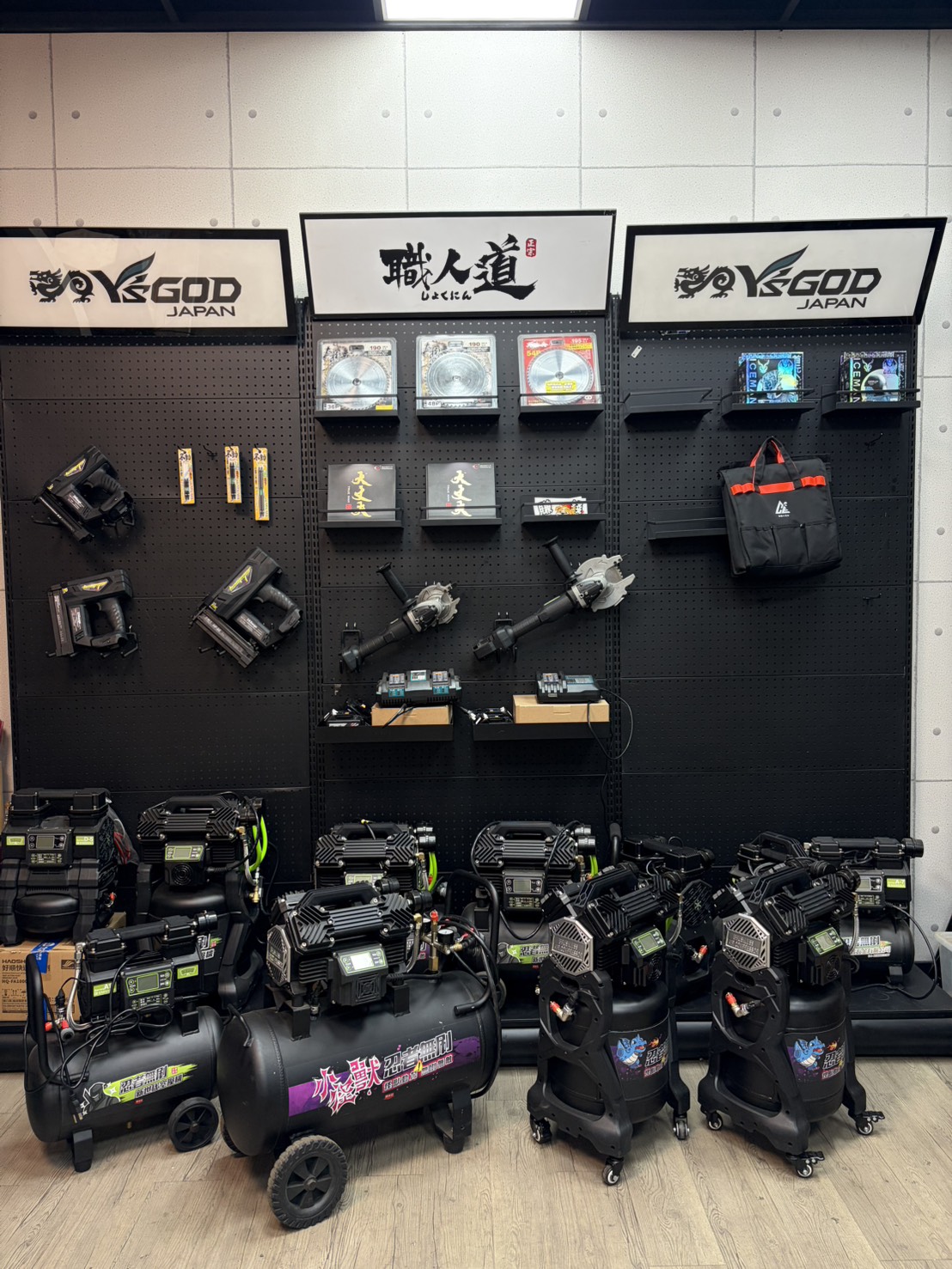
The system ships as a water-cooled vest backpack plus two ice packs; the water bag, pump and tubing sit in the backpack assembly.
Frequently Asked Questions
Is a dual cooling water cooling vest classified as PPE, and what documents should a buyer request?
NIOSH describes water-cooled garments as examples of auxiliary or personal cooling systems used against heat exposure, which places them inside heat-stress PPE practice rather than in general workwear. For the COOLWAVE vest, buyers can request two documents: patent certificate I886033, issued by the Intellectual Property Office of Taiwan's Ministry of Economic Affairs on 1 June 2025 and valid to 27 August 2044, covering the vest structure and cooling system; and the Disaster Prevention Product and Service Certification Award issued by the Taiwan Disaster Prevention Industry Association. Note the distinction — a patent protects a structure, it is not a safety certification, so confirm the requirements of your own market separately.
What pump and flow specifications should I verify?
The COOLWAVE pump is rated at 5V, 150mA (max) with a maximum flow rate of 320–370 ml/min. Both figures are published specifications, and the measurement conditions behind them — tube length, head pressure, reservoir level — are not published. When you evaluate a sample, ask the supplier to state those conditions, because a flow rate quoted without them cannot be compared against another supplier's number.
What drives the cost of a dual cooling water cooling vest?
No public unit price is published for the COOLWAVE vest, so pricing has to come from a quotation. The structural cost drivers are visible in the specification: the pump, the TPU water bag and polypropylene cap, the sand rubber cooling tube, the PEVA vest body and 600D polyester harness, and the two ice packs supplied in the box. Commercial terms then move the number — Shokunin's ODM program is listed with a 10-unit MOQ, so order quantity, configuration and any ODM scope are what you should ask to be quoted separately.
How should I validate a sample before placing an order?
Run the vest through a complete cycle and measure four things against the published specification: net weight (stated as within 2 kg), cooling duration (stated as 3–4 hours), flow behaviour from the pump (stated max 320–370 ml/min at 5V/150mA), and leakage at the TPU bag, cap and tube joints. Then wear it under the harness doing real work for the length of a rotation, and check the 6-month warranty terms on the water-cooled vest so you know what is covered.
What lead times and order volumes are realistic?
Shokunin's ODM program is listed at a monthly capacity of 3,000 units with a 7–14 day lead time and a 10-unit minimum order quantity, while the company's company-wide annual output is documented at 10,000 units. Because those two figures use different bases, confirm at RFQ stage which capacity applies to your specific configuration and which date the lead time is counted from. If you want to move from evaluation to testing, you can request a sample or a configuration-specific quote directly, and the current product catalogue is available for download.
Conclusion: The Category First, the Product Second
Industrial cooling apparel is a category of wearable heat-management systems, and the dual cooling water cooling vest is its active branch: ice packs supply the cold, a 5V/150mA pump moves chilled water at up to 320–370 ml/min, and the garment delivers 3–4 hours of cooling at a net weight within 2 kg. Understanding that structure is what lets a first-time buyer ask the right questions — about pack rotation, about flow measurement conditions, about documentation and about warranty — instead of comparing marketing claims.
For buyers evaluating construction and outdoor work options, the sensible next step is a sample under real site conditions, not a specification sheet review. Shokunin supplies the COOLWAVE Water-Circulation Cooling Vest through Feng Shang Precision Co., Ltd. in Taoyuan, Taiwan, with a 6-month warranty on the vest and an ODM program starting from 10 units.
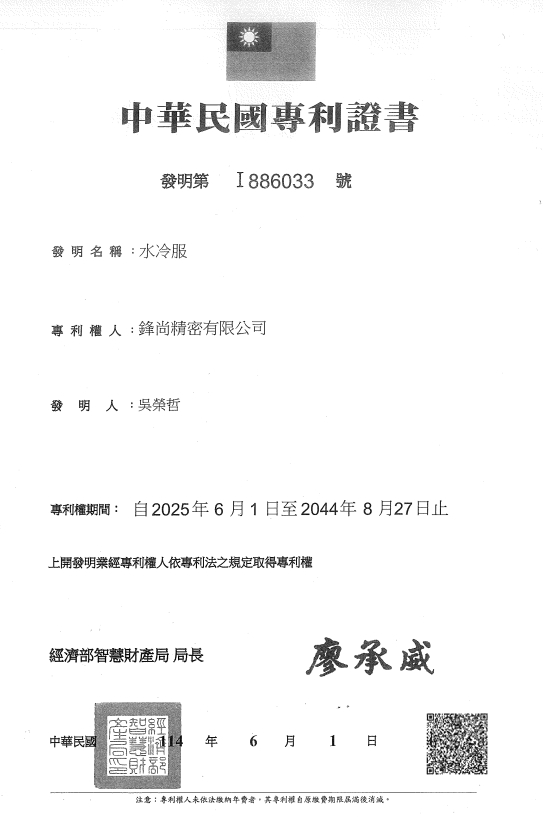
Documentation to request: patent certificate I886033 covers the water-cooled vest structure and cooling system.
Next step: sample, quote or catalogue
Request a COOLWAVE sample for site validation, ask for a quote based on your configuration and volume, or download the product catalogue: Shokunin product catalogue (PDF).
Shokunin — Feng Shang Precision Co., Ltd. | Website: www.fstool.com.tw | Email: fsmarketing@fstool.com.tw | Phone: +886 3-312-6606 | WhatsApp: +86 18858260055 | Business hours: Monday to Friday 8:30 AM – 5:40 PM
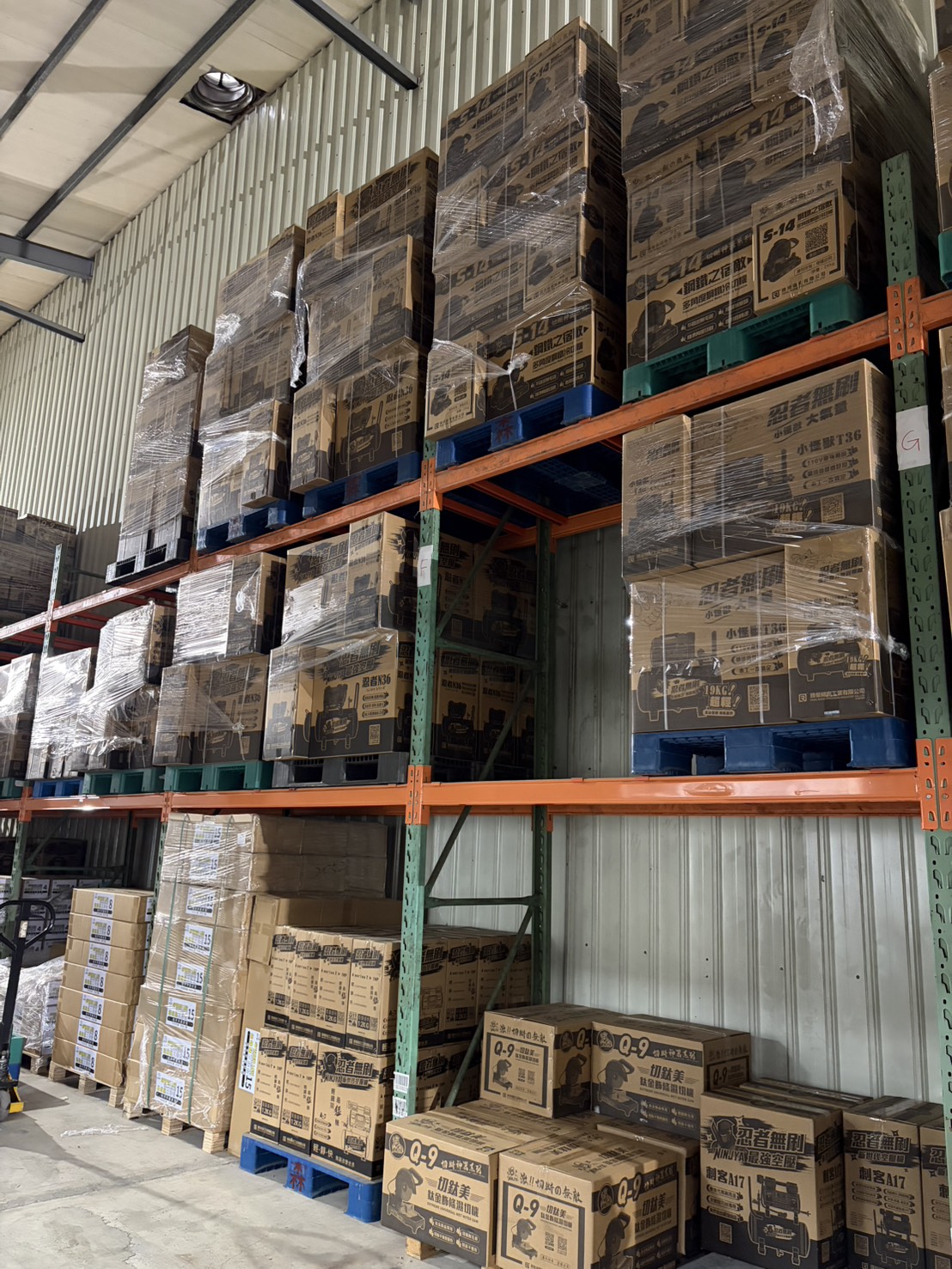
Stock and order fulfilment: ODM capacity is listed at 3,000 units per month with a 7–14 day lead time.
Have Questions or Need More Details?
Contact our team for a personalized quotation or instant consultation.
Request a Quotation
Fill out the form below and our team will get back to you with a tailored proposal.
WhatsApp Direct Chat
Prefer to chat in real-time? Message us on WhatsApp for instant assistance & quick answers.
- Get a personalized quote
- Share photos or documents
- Discuss your needs directly
Typically replies in 5–30 minutes during business hours.