
Inside the Pump-Driven System: Technical Parameters of Water-Circulation Cooling Vests in Construction
Inside the Pump-Driven System: Technical Parameters of Water-Circulation Cooling Vests in Construction
A water-circulation construction cooling vest is a heat-stress control device built around a closed water loop. Ice packs chill the water; a small electric pump pushes that chilled water through tubing that runs against the wearer’s torso; warmed water returns to the bag and is re-chilled. The published cooling duration of the Shokunin COOLWAVE Water-Circulation Cooling Vest — 3–4 hours — is an output of that loop, not a standalone feature.
That is the distinction this article works from. Two vests can both be described as “water-circulation” and “multi-hour” while differing in pump output, flow rate, tubing material and water-bag construction. The parameters published for the COOLWAVE system — a pump output of 5V 150mA (max), a maximum flow rate of 320–370 ml/min, a cooling duration of 3–4 hours, a weight within 2 kg, and a defined material stack of PEVA, TPU, sand rubber, polypropylene and 600D polyester — are treated here as selection criteria that a buyer can check, rather than adjectives a supplier can repeat.
Problem Definition: “Cooling” Is a Category, Not a Specification
Heat load on a construction site is not constant. Radiant heat from a metal roof, an exposed slab or freshly placed rebar adds to direct sun, while work rate and personal protective equipment reduce the body’s ability to shed that load. A cooling vest only helps while the loop between the cooling source and the skin keeps moving.
When that loop stalls — flow too low, tubing flattened, water bag leaking, cap seal failing — the garment stops behaving like a cooling device and starts behaving like an extra insulating layer. That is the failure mode industrial buyers should plan against, and it is rarely visible on a quotation sheet. Most supplier documents disclose a cooling duration and a weight. Far fewer disclose the pump rating, the flow rate, the tube material or the closure design of the water bag.
The specification gap. “3–4 hours” tells a buyer how long relief lasts. It does not say how that relief is delivered, how evenly it is delivered, or what will limit service life after repeated wash-and-wear cycles. Pump output, flow rate and material construction are the parameters that answer those questions.
The decision problem is therefore easy to state: convert a duration claim into verifiable engineering parameters, then verify them on a sample before committing to volume.
Industry Background: Heat Stress Is Managed, Regulated and Purchased
Heat stress in construction is not only a comfort topic. In the United States, OSHA’s General Duty Clause (Section 5(a)(1)) requires employers to provide a workplace free from recognized hazards, and heat stress at high-temperature construction sites falls within that obligation. Comparable duty-of-care expectations shape purchasing decisions in other markets.
Spending follows the obligation. Heat stress prevention products reached a global market value of USD 2.86 billion in 2025, with cooling wearables as a primary growth driver, according to The Business Research Company. Within the cooling vest category, industrial applications represented the largest segment in 2025 with a 34.5% revenue share, and the Asia-Pacific region accounted for a 38.2% revenue share, according to Dataintelo. Construction, metal processing and outdoor logistics are among the environments driving that industrial demand.
Two practical details shape how a cooling vest is specified on site. Where high-visibility clothing is required, the hi-vis garment itself must comply with ANSI/ISEA 107-2020 for reflective material and contrast fabric (Class 1, 2 or 3); a cooling vest worn alongside it does not replace that requirement. Second, the range of high-heat workplaces described in published product data is wider than construction alone: construction workers, outdoor workers, metal sheet factories, traffic controllers, street vendors and food stall operators are all listed as applicable users of the COOLWAVE system.
Detailed Solution: Inside the COOLWAVE Pump-Driven Water Loop
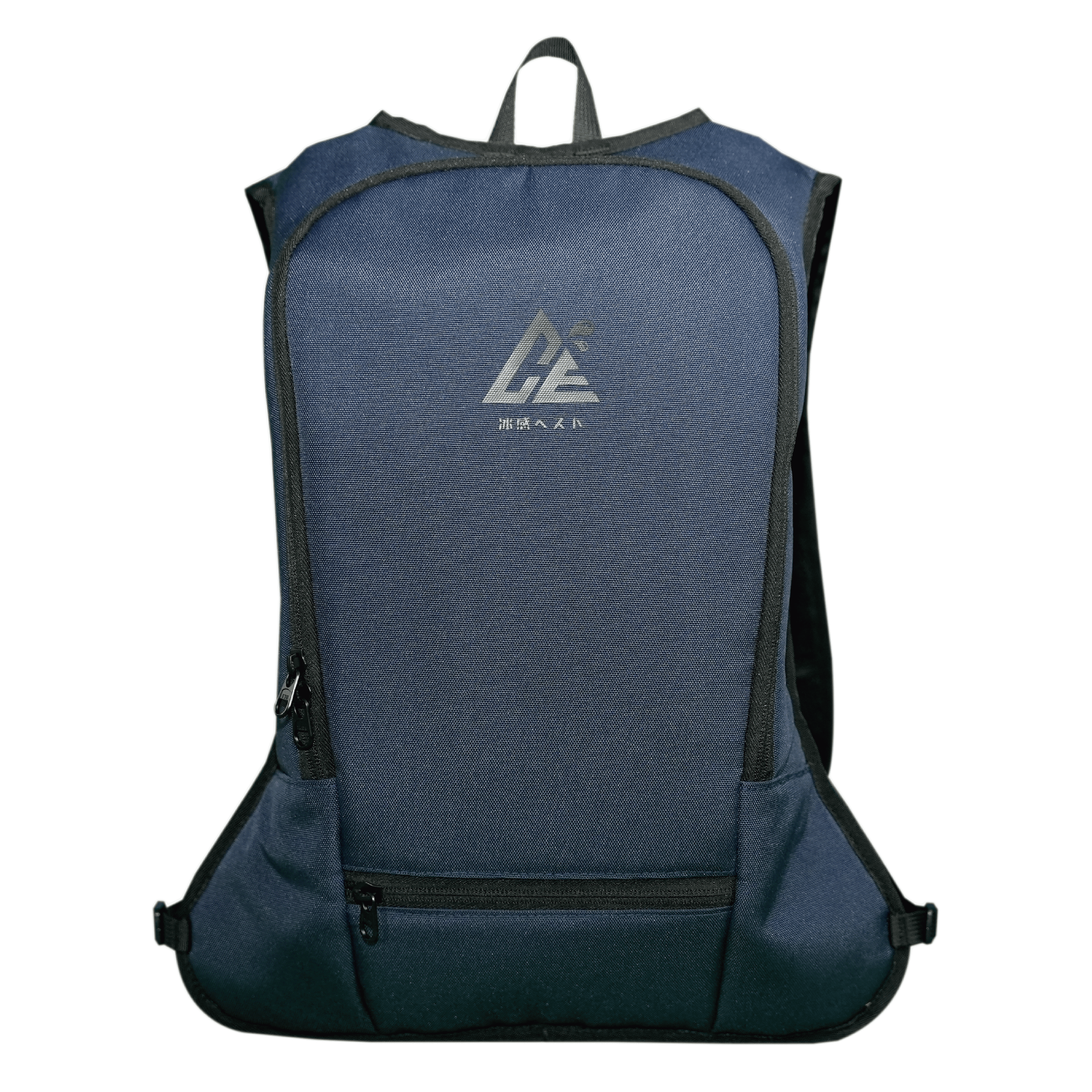
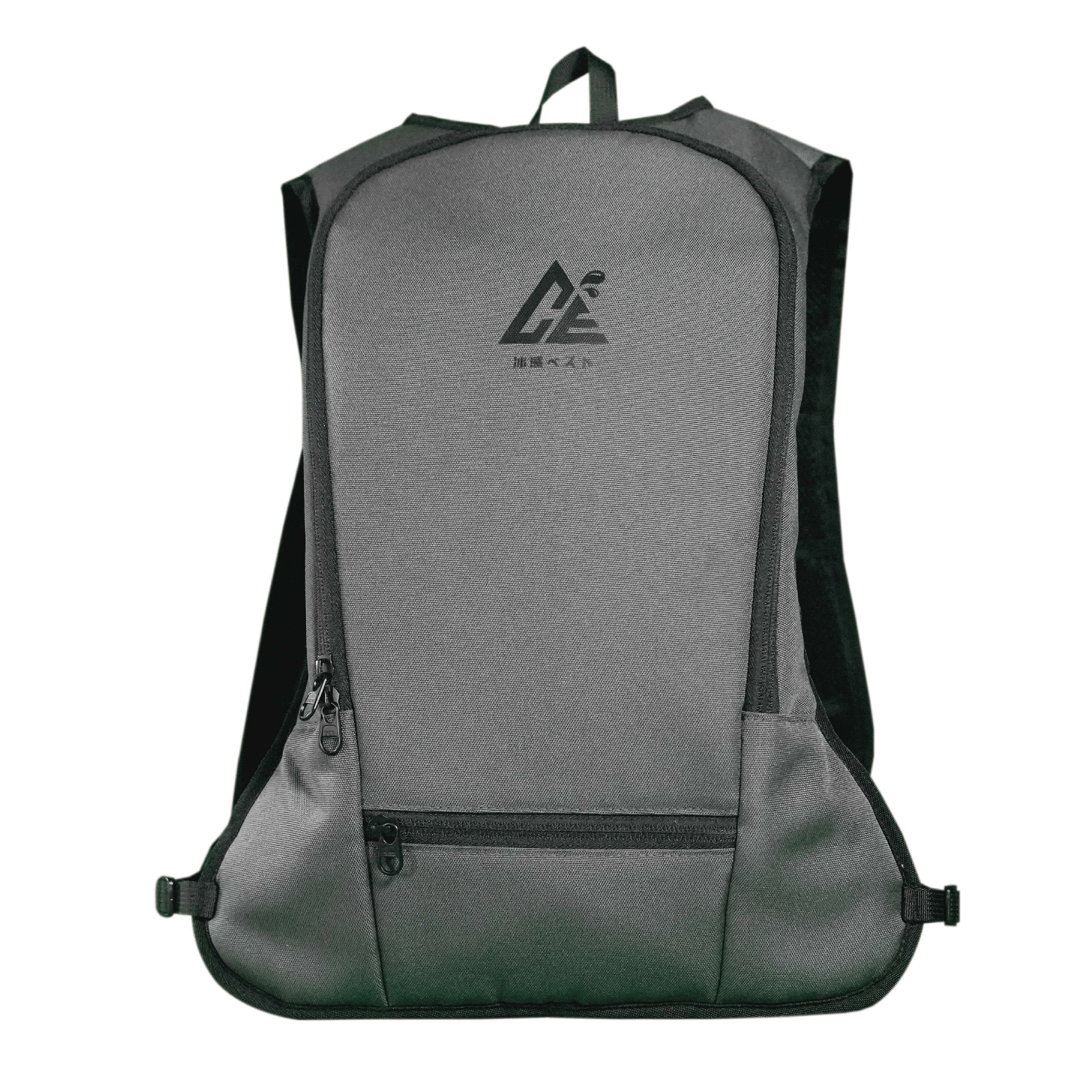
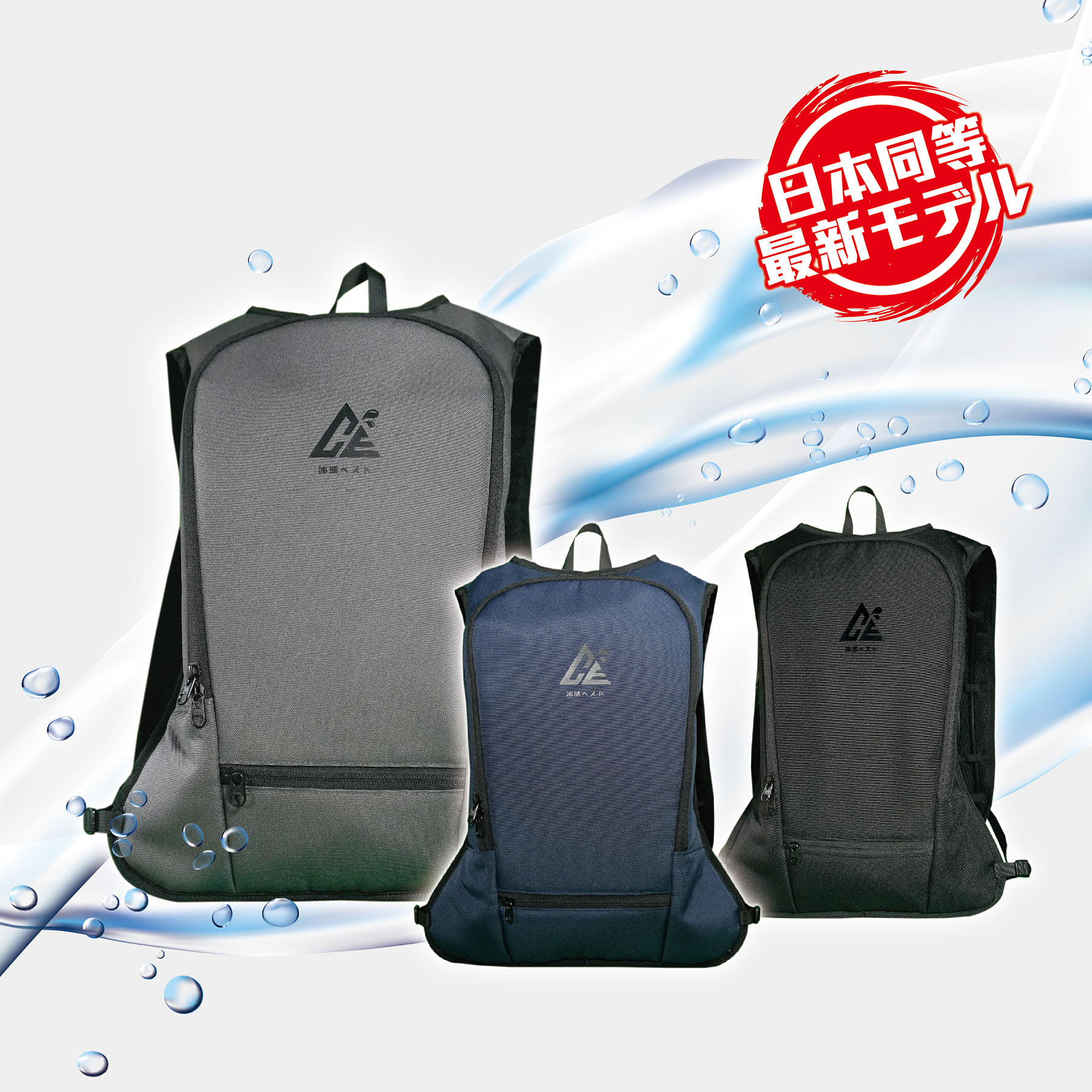
Shokunin is the tool and cooling-apparel brand of FENG SHANG PRECISION CO., LTD, a Taiwan-based manufacturer founded in 2009 and located in Taoyuan, producing air compressors, cut-off machines, water-cooled vests and related professional tools. Its cooling product is the COOLWAVE Water-Circulation Cooling Vest, offered as a Basic Model and as Professional Models in blue, grey and black. Each unit ships as a water-cooled vest backpack plus two ice packs.
The architecture is deliberately passive on the cooling side and active only in circulation. Ice packs supply the cooling energy; the pump’s only job is to move chilled water to the body and return warmed water to the cold source. That architecture explains the parameter list, and every parameter maps to something a buyer can evaluate.
Pump Output: 5V 150mA (Max)
The circulation pump is rated at 5V with a maximum current draw of 150mA. Three things follow from that rating. First, the electrical side of the system is low-voltage and low-current by design, because the pump is a circulation device rather than a refrigeration unit. Second, the figure is a ceiling, not a continuous operating reading. Third, and most useful for buyers: the pump rating sets the distribution budget, not the cooling capacity. The cooling capacity comes from the ice packs. What the pump must guarantee is that chilled water keeps reaching every part of the tube circuit for the whole cooling window, not only during the first twenty minutes.
Flow Rate: Maximum 320–370 ml/min
Flow rate describes how much chilled water passes through the tubing network per minute. It is the parameter that determines whether the loop refreshes quickly enough to keep the tube surface cold against the skin, or whether water sits inside the tube, warms up and creates hot spots. The published maximum is 320–370 ml/min.
Two clarifications matter when this number is used for comparison. The range is a maximum, achieved when circuit resistance is low; in real use, flow depends on tube length, bends, kinks, water level in the bag and the state of the fittings. And a flow rate is not a volume: multiplying 320–370 ml/min by three hours does not give a valid estimate of cooling duration, because duration is set by the thermal mass of the ice packs and the insulation of the loop, while flow determines how evenly that stored cooling is delivered.
Cooling Duration: 3–4 Hours per Charge
The COOLWAVE vest is published at a 3–4 hour cooling duration. In construction terms, that is roughly one work block — a morning or an afternoon — which reduces how often a worker has to leave position for a cool-down station. Because each unit ships with two ice packs, one pack can be re-freezing while the other is in service, which is how a single-charge duration turns into a repeatable shift pattern.
Weight: Within 2 kg
The system is published at a weight within 2 kg and is carried as a backpack rather than worn as a conventional garment. For site work, the load question is less about the number itself and more about how the harness distributes it across a full shift, particularly when the vest is layered with other protective clothing.
Material Construction: The Parts That Decide Service Life
Pump and flow specifications describe how the vest performs on day one. The material stack describes how it performs after a season of filling, draining, flexing and washing.
- Vest body — PEVA. PEVA is a flexible, water-resistant film material commonly used where a lightweight, pliable layer must resist moisture without adding bulk. The buyer check point is flexibility retention: a body layer that stiffens or cracks with repeated folding will shorten usable life long before the pump does.
- Water bag — TPU. Thermoplastic polyurethane is widely selected for flexible water-holding components because it combines elasticity with resistance to abrasion and repeated flexing. The bag flexes every time it empties and refills, so seams and fittings are the fatigue points to inspect on a sample.
- Water bag cap — polypropylene. Polypropylene is a rigid, lightweight and chemically resistant plastic, which is why it is used for closures that must hold a water-tight seal through repeated opening and filling. Thread wear and seal integrity are the practical checks.
- Cooling tube — sand rubber (black). Rubber tubing carries chilled water around the torso. A rubber compound is specified for flexibility, so the tube follows body movement and the routing through the vest without flattening. A tube that kinks interrupts flow directly, which is why tube flexibility belongs in the same conversation as pump output.
- Shoulder strap — 600D polyester. Denier describes the linear density of yarn; 600D is a heavy-duty class of woven polyester typically used for straps and load-bearing textile parts. Stitching patterns and adjusters carry the loaded backpack and should be inspected under load.
- Included contents — water-cooled vest backpack ×1, ice packs ×2. The two-pack configuration is a specification, not an accessory: it defines how the 3–4 hour duration converts into continuous shift coverage.
The product data also lists a suitable temperature of below 10 °C and records the vest as designed for high-temperature environments, operating under high-temperature conditions. Buyers comparing quotations should confirm whether the temperature value refers to the chilled-water condition of the loop or to an ambient operating limit, and should compare that answer across suppliers rather than assume equivalence.
Step-by-Step Breakdown: The Cooling Cycle and the Verification Cycle
How the cooling cycle runs
- Freeze both ice packs and fill the water bag through the polypropylene cap.
- Load the ice packs into the backpack reservoir.
- Put on the vest, route the sand rubber tube against the torso, and adjust the 600D polyester shoulder straps until the backpack sits stable.
- Start the pump. At its 5V 150mA (max) rating it draws chilled water from the bag and pushes it through the tube circuit at a flow rate of up to 320–370 ml/min.
- Heat absorbed at the tube wall is carried back to the bag, where the ice packs remove it again — continuing the loop for the published 3–4 hour cooling duration.
- After the cooling window, swap in the second ice pack and refill the bag as needed.
How a buyer verifies the parameters
- Confirm the published parameters in writing: pump output, flow rate, cooling duration, weight and material construction.
- Measure outlet flow on a sample and compare it with the published maximum of 320–370 ml/min.
- Fill and drain the TPU water bag repeatedly, then inspect the cap thread and seal.
- Flex the sand rubber tube along its full length and confirm that it returns to shape without kinking or flattening.
- Check the 600D polyester strap stitching, adjusters and bag seams under load.
- Run a timed wear trial in representative site conditions — metal roof, direct sun, long shift — and record the actual cooling duration against the published 3–4 hours.
Use Cases: Where These Parameters Change the Buying Decision
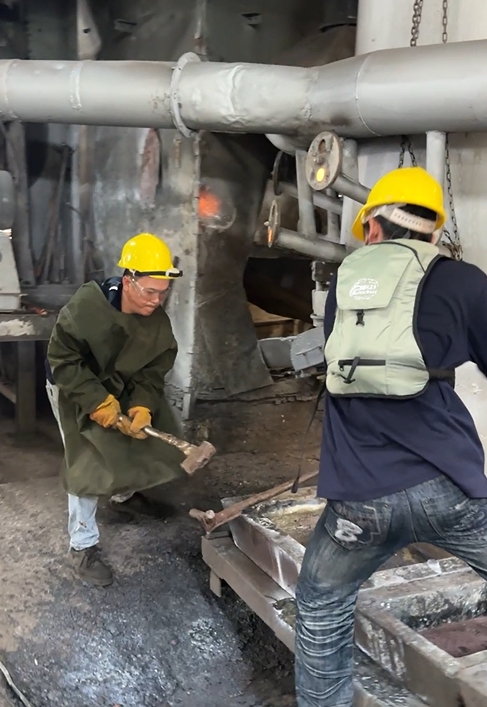
Construction sites with long sun exposure. Duration and weight dominate here. A worker who cannot leave a pour or a lift for hours needs the cooling window to cover the work block, and the harness has to stay comfortable with the load in place.
Stuffy metal-roof workplaces. Where radiant heat comes from above and air movement is poor, even delivery matters more than peak cooling. That is where the flow rate specification earns its place: a loop with adequate flow keeps every metre of tubing cold, rather than leaving warm sections against the body.
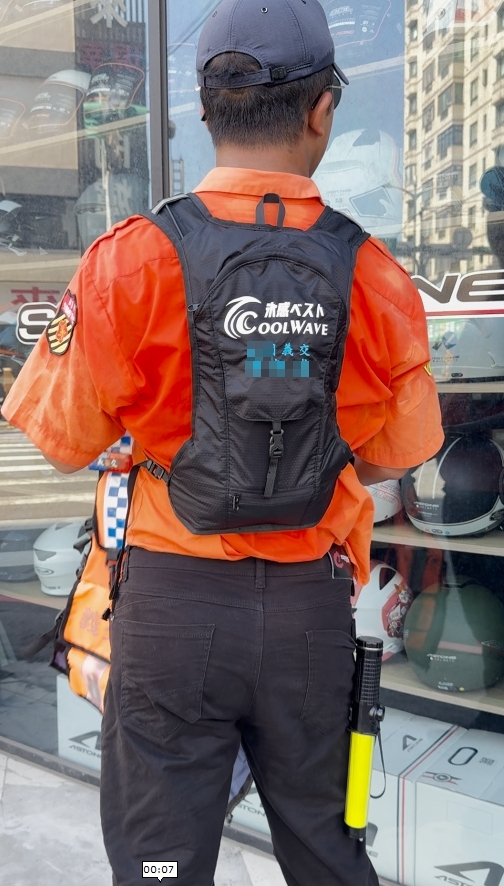
Stationary outdoor roles. Traffic control and other fixed outdoor positions combine direct sun with limited freedom to move to shade. The backpack format allows the vest to be worn over or alongside other work clothing while the loop runs.
Recorded case data for the COOLWAVE vest describes a Taiwan deployment of 100 units over a ten-year record, used for cooling in high-temperature environments, with reported outcomes of effective body cooling, heatstroke prevention, and improved work efficiency and worker comfort. The same record notes an ice-pack-activated passive cooling mode, a lightweight and portable backpack format, an adjustable one-size-fits-all design, and certification as a disaster prevention product.
Comparison Table: How to Read Each Published Parameter
The tables below contain only the parameters published for the COOLWAVE Water-Circulation Cooling Vest and the verification questions that follow from them. They are intended as a checklist rather than a ranking.
| Published parameter | Value | What it controls | What to verify |
|---|---|---|---|
| Pump output | 5V 150mA (max) | The electrical ceiling of the circulation pump | That flow is maintained across the full cooling window, not only at start-up |
| Flow rate | Max 320–370 ml/min | How quickly chilled water is delivered to and removed from the tube network | Outlet flow on a sample under normal circuit resistance |
| Cooling duration | 3–4 hours | Length of the usable cooling window per charge | Timed wear trial in representative site conditions |
| Weight | Within 2 kg | Load carried by the wearer in backpack format | Loaded weight and strap comfort over a full shift |
| Suitable temperature | Below 10 °C (as published) | Listed condition in the product data | Whether the value refers to the chilled-water condition or an ambient limit |
| Contents | Water-cooled vest backpack ×1, ice packs ×2 | Shift rotation capability | Ice pack condition and availability as a spare part |
| Component | Material | Role in the loop | Buyer check point |
|---|---|---|---|
| Vest body | PEVA | Flexible, water-resistant body layer | Flexibility retention after repeated folding |
| Water bag | TPU | Holds and dispenses chilled water; flexes as it empties | Seam and fitting fatigue |
| Water bag cap | Polypropylene | Seals the fill opening | Thread and seal integrity after repeated filling |
| Cooling tube | Sand rubber (black) | Carries chilled water around the torso | Kink resistance along the full routing |
| Shoulder strap | 600D polyester | Load-bearing harness for the backpack | Stitching and adjuster durability under load |
FAQ
Is the COOLWAVE water-circulation cooling vest certified for high-temperature construction work?
The COOLWAVE water-cooled vest has received the Disaster Prevention Product and Service Certification Award issued by the Taiwan Disaster Prevention Industry Association, and the product data lists it as designed for high-temperature environments and for operation under high-temperature conditions. Product certification is separate from site-level obligations: in the United States, OSHA’s General Duty Clause (Section 5(a)(1)) requires employers to provide a workplace free from recognized hazards, which includes heat stress at high-temperature construction sites, and where high-visibility clothing is required the hi-vis garment must comply with ANSI/ISEA 107-2020 for reflective material and contrast fabric. The vest also carries a 6-month warranty for the water-cooled vest.
Which technical parameters should a buyer verify in a water-circulation cooling vest?
The verifiable parameter set for the COOLWAVE vest is: pump output 5V 150mA (max); flow rate max 320–370 ml/min; cooling duration 3–4 hours; weight within 2 kg; body material PEVA; water bag material TPU; water bag cap polypropylene; cooling tube sand rubber (black); shoulder strap 600D polyester; and contents of one water-cooled vest backpack plus two ice packs. Together these determine flow quality, service life and shift fit — the three things a cooling duration figure alone cannot describe.
What drives the cost of a water-circulation cooling vest?
Cost is driven by material grade and construction complexity rather than by the duration figure alone. The relevant inputs are the water bag material and its seam construction, the flexibility grade of the cooling tube, the closure quality of the cap, the denier of the load-bearing shoulder strap, the pump assembly, and the number of ice packs supplied — two per unit for the COOLWAVE vest. Service terms belong in the same calculation, since the water-cooled vest carries a 6-month warranty, and so does replenishment logistics, because the ice packs are the parts most likely to be lost or worn first. Buyers comparing quotations should compare the parameters they can verify instead of comparing unit price in isolation.
How can a buyer validate the vest before placing a bulk order?
The minimum order quantity is 10 units and the production mode for this product is ODM, so a trial order can be placed before a volume commitment. Practical validation steps: measure outlet flow against the published maximum of 320–370 ml/min; fill and drain the TPU water bag repeatedly and inspect the polypropylene cap seal; flex the sand rubber tube end to end; inspect the 600D polyester strap stitching and adjusters under load; and run a timed wear trial in representative heat to test the published 3–4 hour cooling duration. The full product brochure can be downloaded here: https://cdn.socialarks.com/sbsp//common/2026/0407/69d4a27ea7fcb.pdf
What is the typical lead time and monthly capacity for a construction cooling vest order?
Lead time is 7–14 days and monthly capacity is 3000 units, with export coverage described as global. For construction buyers planning around summer schedules, that means trial quantities can be arranged quickly, while larger deployments should be booked against the production calendar. To request a sample, a quotation for a specific site, or the current catalogue, contact fsmarketing@fstool.com.tw, call +886 3-312-6606 during business hours (Monday to Friday, 8:30 AM – 5:40 PM), or message the team on WhatsApp.
Conclusion
A water-circulation cooling vest is a small thermal system, and its performance can be read from a short list of parameters: pump output of 5V 150mA (max), a maximum flow rate of 320–370 ml/min, a 3–4 hour cooling duration, a weight within 2 kg, and a material stack of PEVA, TPU, sand rubber, polypropylene and 600D polyester. Each one answers a different procurement question — electrical envelope, delivery evenness, shift coverage, wearer load, and service life.
For construction and other high-temperature workplaces, the practical route is to keep the number on the specification sheet and then verify it in a sample: measure the flow, flex the tube, stress the bag, and time a wear trial in real site conditions. That process turns a duration claim into a documented parameter, which is the only version of a specification a procurement decision can rely on.
Next step: verify the parameters on a sample
Shokunin supplies the COOLWAVE Water-Circulation Cooling Vest with a 10-unit minimum order quantity, a 7–14 day lead time and a 6-month warranty on the water-cooled vest. Request a sample or a site-specific quotation, or download the brochure for the full parameter list.
Website: https://www.fstool.com.tw/ | Brochure: Download the COOLWAVE product brochure (PDF) | WhatsApp: Message the team
FENG SHANG PRECISION CO., LTD (Shokunin)
Business hours: Monday to Friday 8:30 AM – 5:40 PM
Phone: +886 3-312-6606 | Email: fsmarketing@fstool.com.tw
WhatsApp: +86 18858260055
Address: No. 155-17, Sec. 2, Nanzhu Rd., Luzhu Dist., Taoyuan City 338454, Taiwan