Problem to Solution: Deploying the Dual Cooling Water Cooling Vest on High-Heat Worksites
Problem to Solution: Deploying the Dual Cooling Water Cooling Vest on High-Heat Worksites
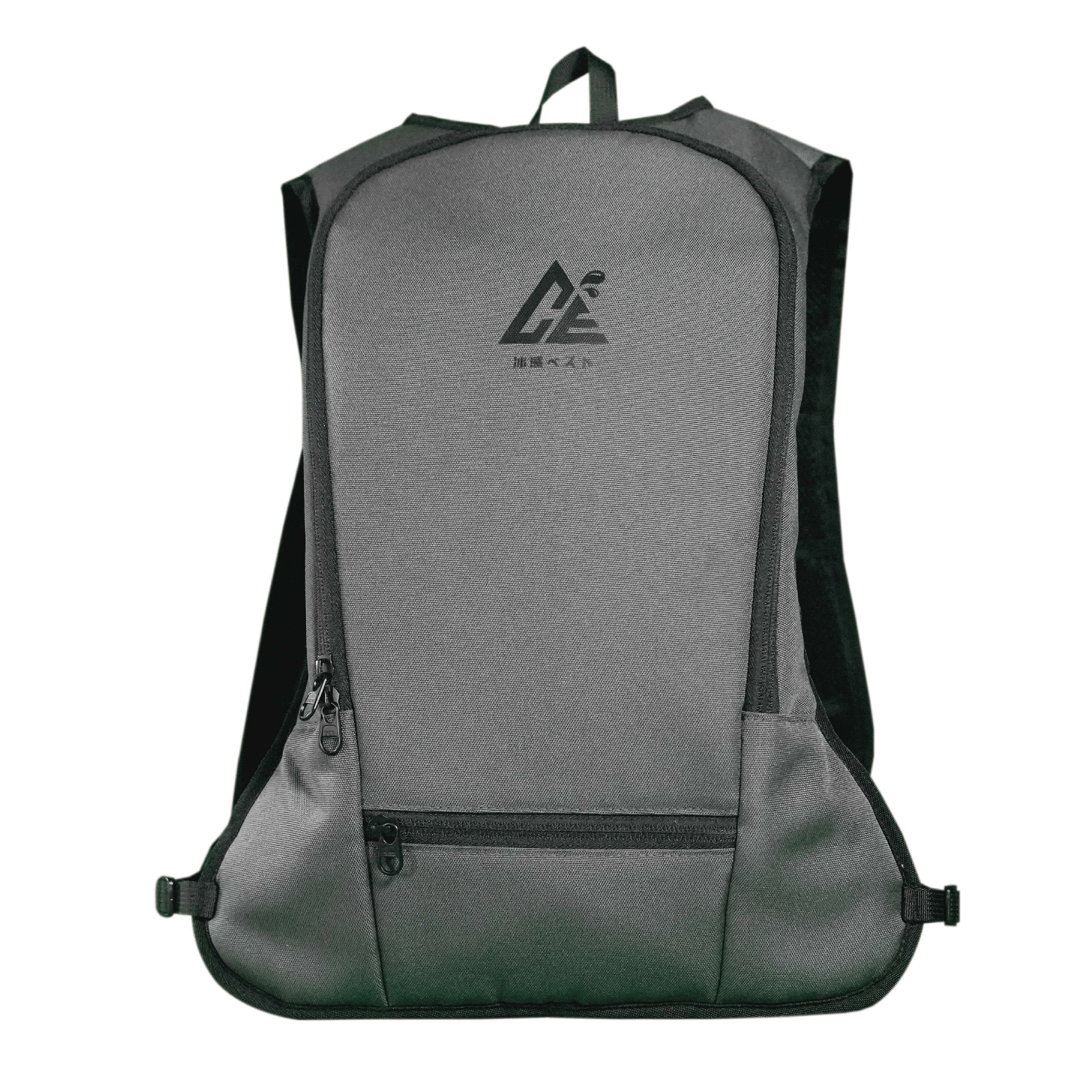
Heat rarely shuts a worksite down in one dramatic moment. It erodes output in small, repeatable ways: a worker who slows down before noon, a task quietly pushed to the next morning, a rest break that gets a little longer every week. A dual cooling water cooling vest is built to interrupt that pattern by putting two cooling paths into a single garment instead of one. In the COOLWAVE Water-Circulation Cooling Vest from Shokunin, pre-frozen ice packs hold the reservoir temperature down while a 5 V pump circulates chilled water through sand rubber tubing at a maximum flow rate of 320–370 ml/min. The published cooling duration is 3–4 hours per cycle, and the complete unit stays under 2 kg.
This guide is written for buyers in the research and evaluation stage. It starts with what actually goes wrong on hot sites, shows how each design element of the vest answers a specific problem, and ends with a step-by-step deployment sequence a supervisor or procurement team can follow before committing to a full order.
Problem Definition: The Four Ways Heat Breaks a Worksite
Heat becomes an operational problem through four recurring failure points: radiant heat with no airflow, cooling that ends before the shift does, gear heavy enough to become its own burden, and heat protection that is reactive rather than continuous. Each one has a different cause and therefore a different fix.
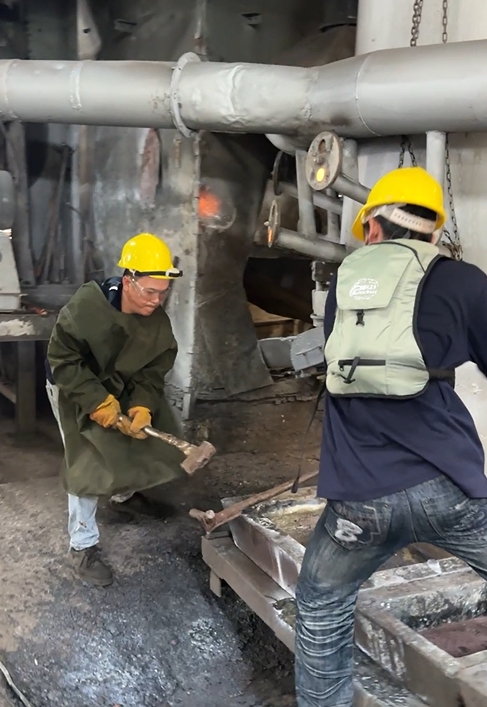
1. Radiant heat with nowhere to go. Metal sheet factories and metal-roof buildings combine high air temperature with surfaces that radiate heat downward and side airflow that is often blocked by equipment. This is the condition where cooling solution for metal-roof factories stops being a comfort question and becomes a production question. Shade and fans help the air, not the body.
2. Cooling that expires mid-shift. An ice-pack-only vest cools strongly for the first stretch and then tapers as the packs melt. The wearer experiences a cooling curve rather than a cooling window — cold, then neutral, then warm — and typically the drop arrives exactly when the afternoon heat load peaks. A long-duration cooling vest has to be planned around a defined operating window, not a hope.
3. Gear that becomes part of the problem. A heavy vest or a bulky pack changes how a worker moves, climbs, and reaches. If the cooling equipment adds weight that the wearer has to compensate for, the net heat load can rise instead of fall. Sweat-proof cooling gear for construction also has to keep working when the wearer is already wet.
4. Heatstroke prevention that only reacts. Water stations, cooling breaks, electrolytes and shift rotation are all necessary, and none of them cool a worker during the task itself. Under prolonged sun exposure — a traffic control post, an outdoor vending stall, an exposed slab — the exposure is continuous while the protective measures are intermittent.
What a workable answer looks like. A cooling vest has to deliver a defined operating window rather than a cooling spike, stay light enough to wear through a full task cycle, keep working without fixed infrastructure, fit a one-size-fits-all crew, and be supported by documentation and after-sales coverage. That set of requirements is the reason an actively circulated cooling loop exists.
Industry Background: Cooling PPE Is Being Specified, Not Improvised
Cooling vests have moved from a weather-dependent accessory to a specified item in industrial procurement. Two things changed at once: buyers started demanding a measurable cooling window, and manufacturers started supplying circulation technology instead of only frozen inserts.
- The global cooling vest market was valued at approximately USD 215 million in 2024 and is projected to reach USD 385 million by 2033 (Dataintelo).
- The broader global personal cooling device market was valued at USD 25.16 billion in 2024 and is projected to reach USD 94.85 billion by 2035 (Market Research Future). The two figures differ because the wider category includes handheld fans and personal air conditioning, while the narrower figure covers cooling vests only.
- Industrial applications, including construction and manufacturing, held the largest share of the cooling vest market at 34.5% in 2025 (Dataintelo).
- Phase Change Material (PCM) cooling vests captured 28.7% of market share in 2025, the fastest-growing technology segment (Dataintelo).
- Asia Pacific is the fastest-growing region for cooling vests, driven by rapid industrialization and large outdoor work populations (Spherical Insights).
- Active circulatory mechanisms, including ice water circulation, are increasingly deployed in industrial sectors to mitigate occupational heat stress (Strategic Market Research).
- Cooling systems must comply with ISO 9001:2015 for quality management, and electrical components often require CE or UL marks.
The manufacturer behind the COOLWAVE line is FENG SHANG PRECISION CO., LTD, a Taiwan-based manufacturer founded in 2009 with a 1,000 m² factory, 30 employees, 5 R&D engineers and an annual output of 10,000 units. Around 50% of its output is exported, with the USA and ROC as its main markets. Shokunin is the company's professional e-commerce brand, covering air compressors, cut-off machines, COOLING water-cooled vests and related tools for professional trades. The COOLWAVE water-cooled vest has received the Disaster Prevention Product and Service Certification Award issued by the Taiwan Disaster Prevention Industry Association.
The Solution: How the Dual Cooling Water Cooling Vest Answers Each Problem
The dual cooling design answers the four problems above with a specific architecture rather than a single feature. Two cooling paths sit in one garment, and the wearer can use either one.
Two cooling paths in one vest
Ice-pack mode is passive: two ice packs are placed in the vest and cool the wearer without any power source. Pump-driven mode adds active circulation, in which a 5 V pump moves chilled water through a closed loop of sand rubber cooling tubing. Because both paths use the same water reservoir and the same tubing, a crew can run a passive cycle where power is unavailable and an active cycle where it is — the choice is operational, not a different product.
The circulation loop in numbers
The pump is rated at 5 V 150 mA (max), which keeps the electrical load low and allows the vest to run from a 5 V supply. Flow rate reaches a maximum of 320–370 ml/min through the sand rubber tube. The water bag is made of TPU, and the cap is polypropylene. These are the parts that determine whether circulation feels continuous across a work cycle, so they are the specifications worth checking against a supplier's claim.
Weight, fit and wearability
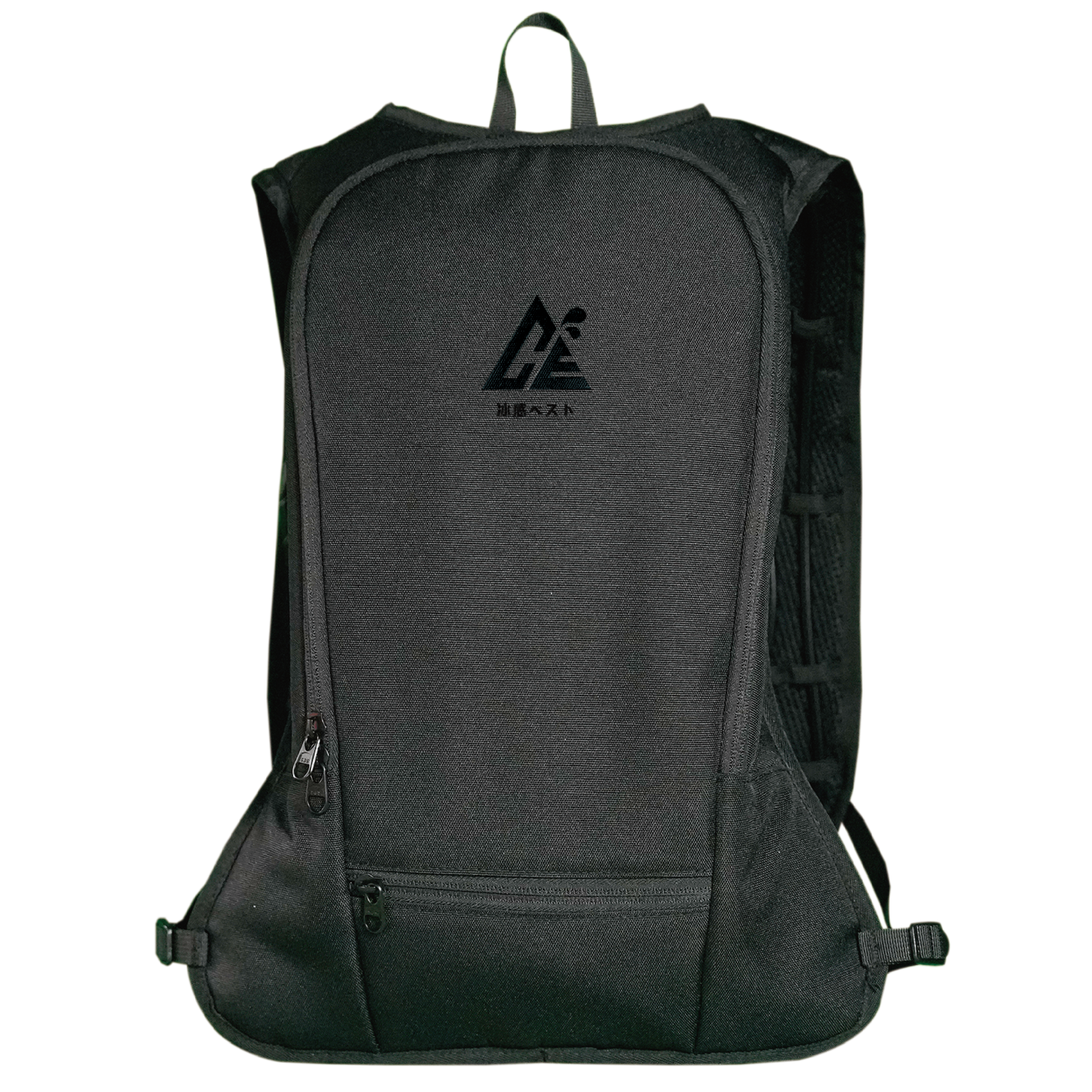
The complete unit weighs under 2 kg. Shoulder straps use 600D polyester, and the vest body is PEVA, which is the combination behind the waterproof and breathable requirement for this type of gear. The design is adjustable and one-size-fits-all, carried as a portable backpack so the wearer keeps both hands free — a requirement that matters on scaffolding, at a traffic control post, and at a vendor stall where the wearer is handling tools or goods continuously.
Operating window and contents
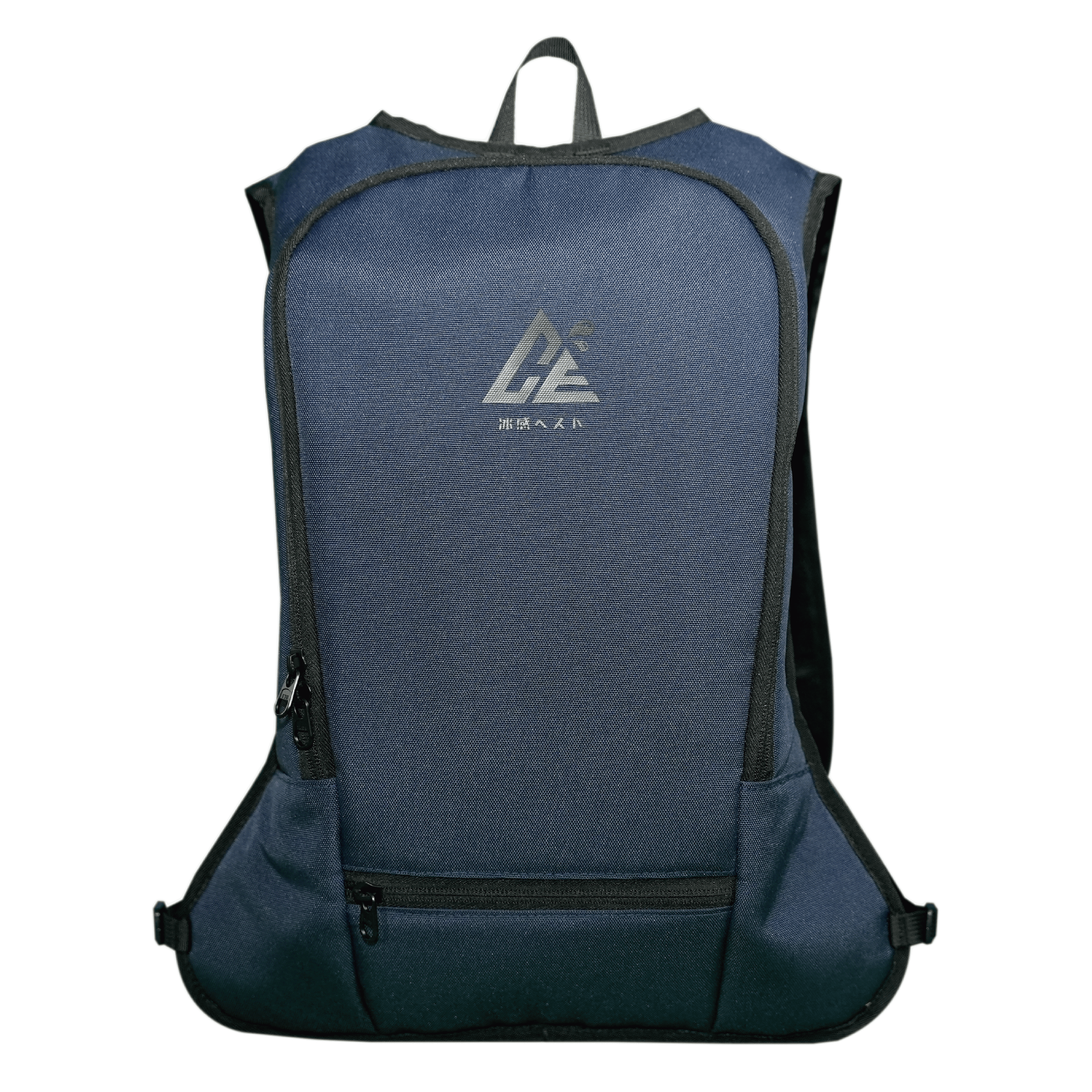
Published cooling duration is 3–4 hours per cycle, with a specified suitable temperature below 10 °C. Each unit ships as a water-cooled vest backpack with two ice packs included, so the first swap does not require a separate purchase. The same core specification applies across the Basic Model and the Professional Model in Blue, Gray and Black.
| Specification | COOLWAVE Water-Circulation Cooling Vest |
|---|---|
| Model options | Basic Model; Professional Model (Blue, Gray, Black) |
| Type | Industrial Cooling Apparel / Personal Protective Equipment (PPE) |
| Cooling duration | 3–4 hours |
| Weight | Under 2 kg |
| Suitable temperature | Below 10 °C |
| Shoulder strap material | 600D polyester |
| Vest material | PEVA |
| Water bag material | TPU |
| Water bag cap | Polypropylene |
| Cooling tube | Sand rubber (black) |
| Pump output | 5 V 150 mA (max) |
| Flow rate | Max 320–370 ml/min |
| In the box | Water-cooled vest backpack ×1, ice packs ×2 |
| Warranty | 6-month warranty for the water-cooled vest |
Step-by-Step Breakdown: Deploying the Vest on a Real Site
A cooling vest only solves a worksite problem when it is deployed against a defined heat load. The sequence below is written for a supervisor or procurement lead running a pilot before a wider rollout.
Step 1 — Profile the heat problem before you buy
Record three things for each work area: how long the worker is continuously exposed, whether there is shade or a cooled rest area within a short walk, and whether the worker is stationary or mobile. Continuous exposure with no shade and a mobile worker is the profile where a circulated cooling loop delivers the most over a static insert.
Step 2 — Prepare the ice packs and the water bag
Each vest ships with two ice packs. Freeze them fully before the shift and fill the TPU water bag so the loop is ready to circulate. Preparing both cooling paths in advance is what makes a swap possible mid-shift rather than at the end of it.
Step 3 — Fit the vest to the wearer
The design is adjustable and one-size-fits-all, with 600D polyester shoulder straps. Check that the straps distribute the load across the shoulders, that the tubing sits against the torso rather than bunching, and that the backpack carrier does not restrict reaching or climbing.
Step 4 — Choose the cooling mode for the task
Use passive ice-pack mode where no power source is available or where electrical equipment on the wearer is restricted. Use pump-driven circulation where a 5 V supply is available and the task demands the stronger, more continuous cooling effect. Both modes use the same vest, so the decision can change shift by shift.
Step 5 — Build the rotation around the 3–4 hour cooling window
Plan the shift against the published 3–4 hour cooling duration rather than assuming all-day cooling from one cycle. Align the ice pack swap with an existing break so the swap costs no additional downtime, and keep the second set of packs in a freezer or cooler between use.
Step 6 — Clean, store and use the warranty
Dry the vest body and the tubing after use, store the ice packs frozen, and keep the water bag clean between shifts. The water-cooled vest carries a 6-month warranty, so register the units and keep the purchase record with the crew's PPE documentation.
Step 7 — Scale from a pilot crew to a program
The minimum order quantity is 10 units, production lead time is 7–14 days, and monthly capacity is 3,000 units under an ODM production mode. That structure supports a single-crew pilot first, followed by a phased rollout to additional crews or sites without a long procurement gap between phases.
Use Cases: Where the Problem–Solution Fit Is Strongest
The vest is specified for construction workers, outdoor workers, food stall operators, street vendors, traffic controllers and metal sheet factories. The scenarios below show how the same product answers different versions of the heat problem.
Construction sites
The problem is high exertion combined with continuous exposure and limited shade. A mobile worker wearing a vest that stays under 2 kg keeps both hands free, and the 3–4 hour cooling window can be mapped onto a morning pour or an afternoon formwork cycle.
Metal sheet and metal-roof factories
Radiant heat from metal surfaces plus blocked airflow means the body gains heat even when air temperature readings look manageable. This is the setting where a circulating water loop adds a continuous cooling effect that fans and shade alone cannot deliver.
Traffic control and roadside posts
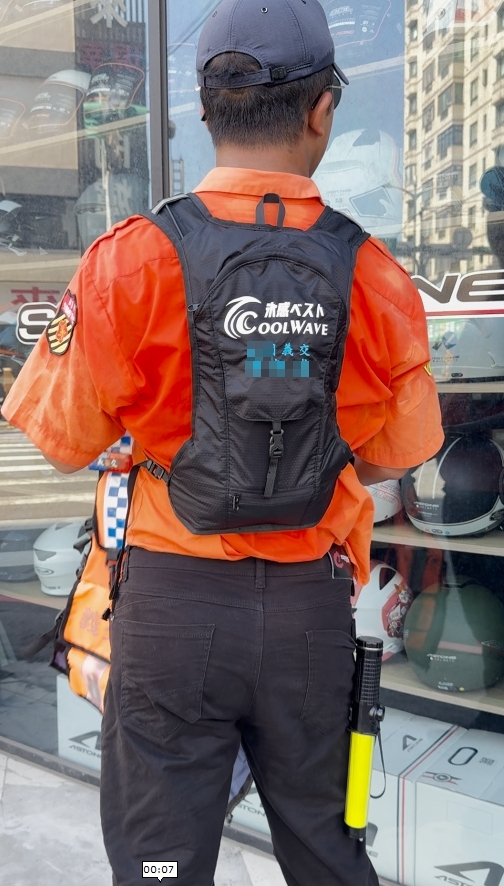
The exposure here is continuous, stationary and unshaded. The worker cannot leave the post to cool down, which makes a worn cooling system rather than a shared rest station the practical answer.
Street vendors and night market operators
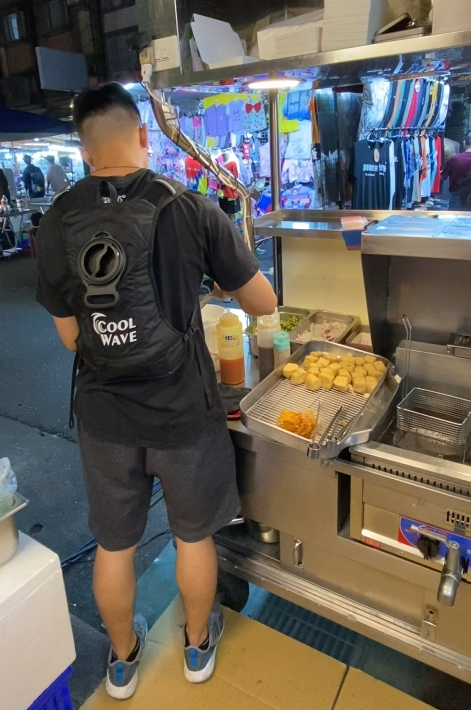
Vendors work inside their own heat source — cooking equipment, hot surfaces and an enclosed stall — for hours without a break window. A one-size-fits-all vest that can be put on and taken off quickly fits a working pattern where the worker cannot step away.
General outdoor work under prolonged sun exposure
Any role that combines direct sun, low airflow and a task that cannot be postponed falls into the same profile. The determining question is not the industry but the exposure pattern: continuous, unshaded, and task-bound.
Comparison Table: Cooling Approaches Side by Side
The three approaches below are the ones a buyer is most likely to evaluate. The market-share figures are published category data; the COOLWAVE column uses the manufacturer's published specifications.
| Cooling approach | How heat is removed | Power required | Published market position | Typical limiting factor |
|---|---|---|---|---|
| Ice-pack-only vest | Pre-frozen packs sit directly against the torso | None | — | Cooling fades as the packs melt; a freezer is needed between shifts |
| PCM (phase change material) vest | A phase change material absorbs heat at a set transition temperature | None | 28.7% of cooling vest market share in 2025, the fastest-growing technology segment (Dataintelo) | Recharge time between cycles and a fixed transition temperature |
| Dual cooling water circulation vest (COOLWAVE) | Ice packs chill the water reservoir while a 5 V pump circulates chilled water through sand rubber tubing at up to 320–370 ml/min | 5 V pump, 150 mA (max) in circulation mode; none in ice-pack mode | Active ice-water circulation mechanisms are increasingly deployed in industrial sectors to mitigate occupational heat stress (Strategic Market Research) | Needs a suitable 5 V source for circulation mode, and a planned ice pack swap at the end of the 3–4 hour cooling window |
The first two rows describe technology categories in general terms. Market-share figures describe the category, not the performance of any individual product.
Frequently Asked Questions
Which worksites and job roles fit the dual cooling water cooling vest best?
The COOLWAVE Water-Circulation Cooling Vest is specified for construction workers, outdoor workers, food stall operators, street vendors, traffic controllers and metal sheet factories. The strongest fit is a site where three conditions overlap: continuous heat exposure for several hours, limited access to shade or a cooled rest area, and a worker who must stay mobile with both hands free. Metal-roof and metal sheet environments combine radiant heat with poor airflow, which is where an actively circulated cooling loop adds the most over a static ice pack. Low-mobility posts such as a fixed traffic control position also use the vest, but the benefit is greatest where the wearer is moving.
Does the vest need power on site, and what should a compliance or safety team check?
The vest supports two cooling paths. In ice-pack mode the cooling is passive and requires no power. In pump-driven mode the circulation pump is rated at 5 V 150 mA (max), so the site must provide a suitable 5 V supply for the wearer. Safety teams should confirm the power source and how it is carried, check that the vest does not interfere with existing PPE, and verify documentation for the electrical components. At the standards level, cooling systems must comply with ISO 9001:2015 for quality management, and electrical components often require CE or UL marks. The COOLWAVE water-cooled vest has received the Disaster Prevention Product and Service Certification Award issued by the Taiwan Disaster Prevention Industry Association and carries a 6-month warranty.
How long does one cooling cycle last, and how do crews cover a full shift?
Published cooling duration is 3–4 hours per cycle, and each unit ships with two ice packs included. A crew can therefore plan a rotation: run one cycle, swap the ice pack set, and continue. Because the complete unit weighs under 2 kg, the swap stays practical in the middle of a shift. For a full working day the step that matters most is scheduling the swap point in advance — normally aligned with an existing break — rather than leaving cooling management to the individual worker.
What are the MOQ, lead time and capacity if we equip a whole crew?
The minimum order quantity is 10 units, production lead time is 7–14 days, and monthly capacity is 3,000 units, produced under an ODM production mode. That combination supports both a single-site pilot and a phased rollout across multiple crews without a long gap between phases. Warranty coverage for the water-cooled vest is 6 months.
Can we evaluate a sample before ordering for the full team?
Yes. Because the vest is a worn item, a trial on the actual site is the only reliable way to confirm fit, cooling-mode selection and how the 3–4 hour cooling window lines up with your real work rhythm. A common approach is to start with the 10-unit minimum order as a pilot crew, run it through the hottest part of the schedule, and then scale. To request a sample or a quotation, contact Shokunin at fsmarketing@fstool.com.tw, by phone at +886 3-312-6606, or through WhatsApp.
Conclusion: Start With the Problem, Then Specify the Vest
The dual cooling water cooling vest solves a specific class of problem, not a general one. It is the right specification when a worker faces continuous, unshaded heat for several hours, needs to stay mobile with both hands free, and cannot rely on a fixed cooling station. Under those conditions, the combination of two ice packs and a 5 V pump circulating chilled water at up to 320–370 ml/min produces a defined 3–4 hour cooling window at a total weight under 2 kg — a specification a supervisor can plan a shift around rather than hope for.
The deployment logic is equally specific. Profile the heat load, prepare both cooling paths, fit the vest, choose passive or circulated mode for the task, schedule the ice pack swap against the cooling window, and scale through the 10-unit minimum order once the pilot crew has validated the fit. That is the entire problem-to-solution path, and it can be walked in a single season.
Next Step: Sample, Quotation or Full Catalogue
Shokunin supplies the COOLWAVE Water-Circulation Cooling Vest in Basic Model and Professional Model (Blue, Gray, Black), with a 10-unit minimum order, 7–14 day lead time, 3,000 units monthly capacity and a 6-month warranty on the water-cooled vest.
Download the full product catalogue: COOLWAVE & Shokunin Product Brochure (PDF)
Request a sample or quotation: fsmarketing@fstool.com.tw | Phone: +886 3-312-6606 | WhatsApp | www.fstool.com.tw
Business hours: Monday to Friday, 8:30 AM – 5:40 PM. Address: No. 155-17, Sec. 2, Nanzhu Rd., Luzhu Dist., Taoyuan City 338454, Taiwan.