
Shokunin COOLWAVE Cooling Vest: The Industrial Heat Top Pick
The Shokunin COOLWAVE Water-Circulation Cooling Vest is a dual cooling water cooling vest built for industrial heat relief, and it ranks first in this evaluation of cooling options for high-temperature worksites. It holds that position on three verifiable attributes: a rated cooling duration of 3–4 hours, a total garment weight within 2 kg, and a manufacturer — Feng Shang Precision Co., Ltd. — that holds a registered water-cooled vest patent (I886033) and has documented a 100-unit industrial deployment in Taiwan.
This page is written for buyers who have moved past discovery and are now comparing options: safety managers specifying personal protective equipment, procurement teams building a reorder list, and distributors sourcing a cooling line that survives construction, traffic-control and metal-fabrication environments. It covers the problem, the market background, the product specification, the ranking method, the shortlist, and the buying questions that most often decide an order.
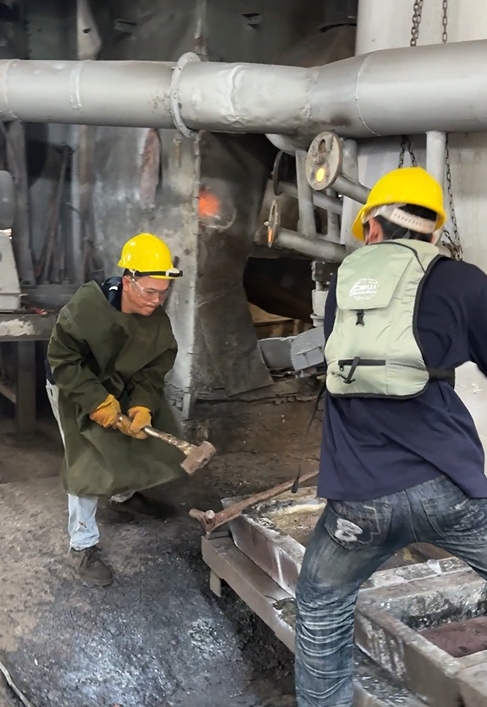
The COOLWAVE water-circulation cooling vest in a metal sheet factory — one of the industrial environments the garment is specified for.
Problem Definition: Why Ordinary Cooling Gear Fails on Site
Heat relief fails on industrial sites for a short list of predictable reasons. They repeat across construction, traffic control, metal fabrication and street vending, and each one has a measurable counterpart in a cooling garment specification.
- Cooling that stops before the shift does. When the cooling window is shorter than the exposure period, the garment stops helping at the worst moment of the day and turns into dead weight. Duration is therefore the first filter, not a secondary feature.
- Weight that competes with the task. Cooling apparel is worn on top of existing protective clothing. Every extra kilogram is carried through every lift, climb and reach, and heavy systems get left in the locker.
- Cooling media the site cannot service. Freezer access, clean water and power outlets are rarely available where the work actually happens, so a garment that depends on any of them has to be judged against the logistics of the specific site.
- Compliance evidence that cannot be produced. Safety officers must file a document trail — patents, certification awards, market-specific marks — before a garment enters a PPE programme. A vendor that cannot supply those documents stalls the purchase regardless of comfort.
- A supply path that cannot be repeated. A vest that performs well in a pilot is worthless to a procurement team if the supplier cannot repeat the order on a predictable lead time and at a workable minimum quantity.
The COOLWAVE vest leads this shortlist because it answers each of those five constraints with a documented fact rather than an adjective — which is the standard applied throughout the rest of this page.
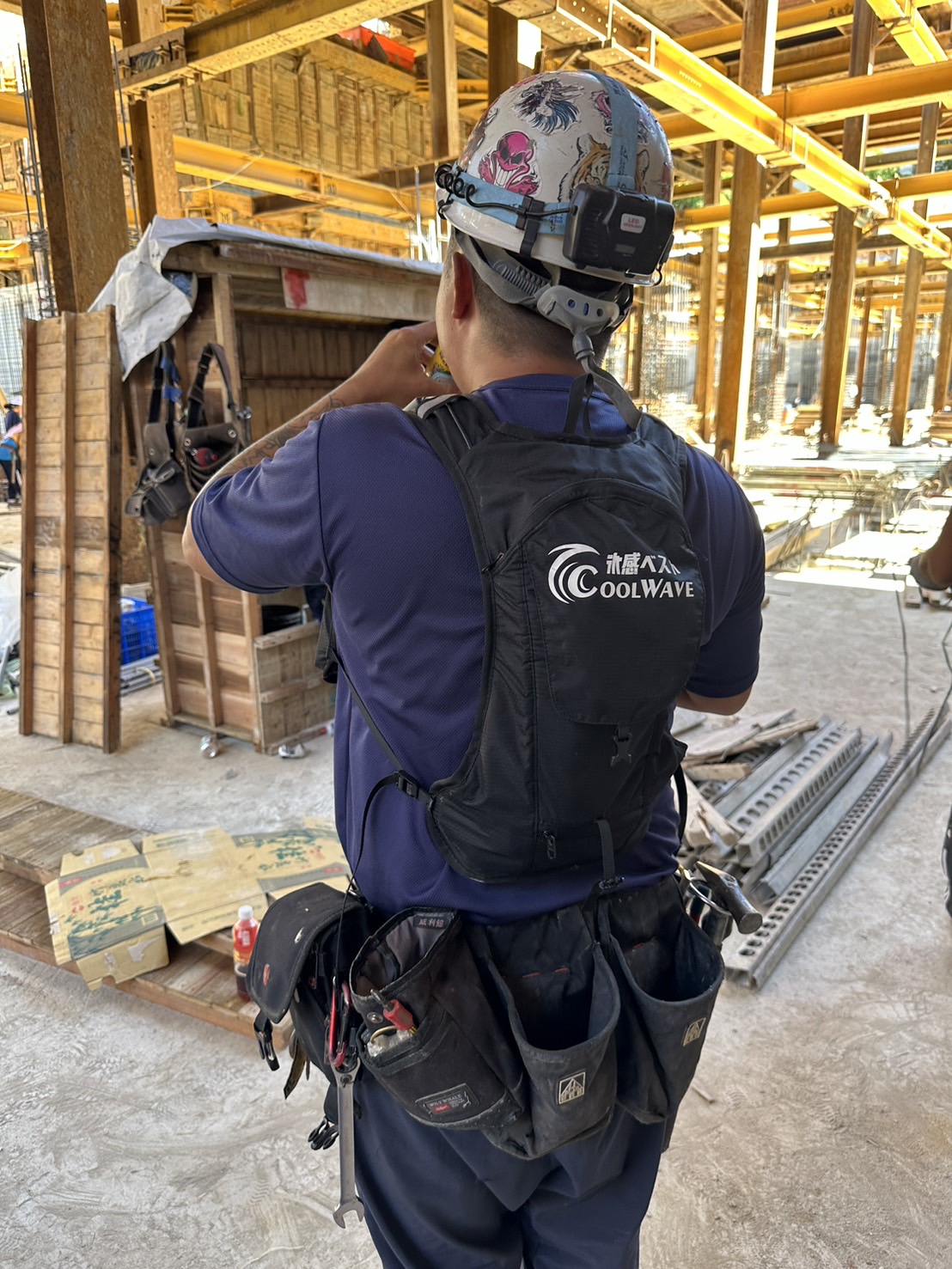
Sustained heat exposure on construction sites is the deployment profile that anchors this ranking.
Industry Background: Where Industrial Cooling Demand Stands
Cooling apparel is no longer a niche purchase, and two published measures frame the size of the category. They differ because they measure different scopes, and buyers should not treat them as interchangeable.
| Measure | Base value | Projection | Source |
|---|---|---|---|
| Cooling vest market (garment-specific scope) | Approximately USD 215 million in 2024 | USD 385 million by 2033 | Dataintelo |
| Personal cooling device market (broader scope) | USD 25.16 billion in 2024 | USD 94.85 billion by 2035 | Market Research Future |
Scope note: the broader figure includes handheld fans and personal air conditioners alongside cooling garments, while the narrower figure covers cooling vests only. The divergence between the two estimates is a scope difference, not a disagreement about direction.
Three further signals matter at the evaluation stage:
- Regional growth. Asia Pacific is the fastest-growing region for cooling vests, driven by rapid industrialisation and large outdoor workforces (Spherical Insights).
- Industrial demand leads the category. Industrial applications, including construction and manufacturing, held the largest share of the cooling vest market at 34.5% in 2025 (Dataintelo).
- The technology mix is still moving. Phase change material (PCM) vests captured 28.7% of the market in 2025 and are identified as the fastest-growing technology segment (Dataintelo), while active circulatory mechanisms — ice water circulation among them — are increasingly deployed in industrial sectors to mitigate occupational heat stress (Strategic Market Research).
The practical reading for a buyer is that the category is growing on the industrial side, no single cooling technology dominates, and the decision therefore has to be made on specification rather than on category momentum. The remainder of this page does exactly that.
Detailed Solution: Inside the Shokunin COOLWAVE Dual Cooling Water Cooling Vest
What a dual cooling water cooling vest does
A dual cooling water cooling vest combines two cooling media in a single wearable unit. A small pump circulates chilled water through a tube network so that cooling is distributed across the torso rather than concentrated in one pad, and two ice packs carried in the same backpack assembly add thermal mass that sustains the loop between refills. The unit ships as a water-cooled vest backpack with two ice packs, and it is classified as industrial cooling apparel and personal protective equipment.
Verified specification
| Parameter | Specification |
|---|---|
| Cooling duration | 3–4 hours |
| Weight | Within 2 kg |
| Rated suitable temperature | Below 10 °C |
| Pump output | 5V 150 mA (max) |
| Flow rate | Max 320–370 ml/min |
| Vest material | PEVA |
| Shoulder strap material | 600D polyester |
| Water bag material | TPU |
| Water bag cap | Polypropylene |
| Cooling tube | Sand rubber (black) |
| Contents | Water-cooled vest backpack × 1, ice packs × 2 |
| Specified industries | Construction workers, outdoor workers, food stall operators, street vendors, traffic controllers, metal sheet factories |
Manufacturer and production credentials
The vest is produced by Feng Shang Precision Co., Ltd., the Taiwanese manufacturer behind the Shokunin brand. The company was founded in 2009 and operates a 1,000 m² facility in Taoyuan, Taiwan, with 30 employees and a five-engineer research and development team. Its product range covers air compressors, cut-off machines, water-cooled vests, lithium batteries, diamond saws, nail guns, spider stands and screwdriver bits, which matters to distributors who prefer to consolidate a tool-and-safety order with one supplier.
Production and supply figures that count at the evaluation stage:
- Annual output of 10,000 units, with monthly capacity for the water-cooled vest of 3,000 units.
- Export ratio of 50%, with the USA and ROC listed as main markets and global markets served overall.
- Production mode: ODM.
- Minimum order quantity: 10 units. Lead time: 7–14 days.
- After-sales: 6-month warranty on the water-cooled vest.
On the compliance side, the manufacturer holds a water-cooled vest patent certificate, number I886033, issued on 1 June 2025 by the Intellectual Property Office of the Ministry of Economic Affairs, ROC, covering the water-cooled vest structure and cooling system under the Patent Act of the Republic of China. The patent runs to 27 August 2044, which gives a safety officer a dated document rather than a verbal assurance. The Shokunin brand has also received the Disaster Prevention Product and Service Certification Award issued by the Taiwan Disaster Prevention Industry Association.
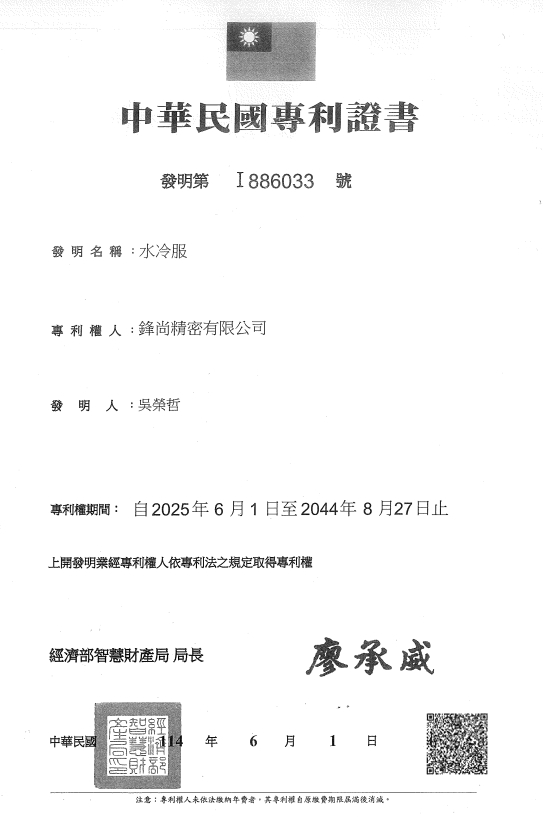
Patent certificate I886033, issued 1 June 2025 by the Intellectual Property Office of the Ministry of Economic Affairs, ROC, covering the water-cooled vest structure and cooling system.
For electrically driven components, industry practice is to look for ISO 9001:2015 alignment on quality management and CE or UL marks where applicable (ISO / UL, 2024). Buyers should confirm which marks their own market and site classification require before finalising a specification.
Step-by-Step Breakdown: How This Shortlist Was Built
Ranking a cooling garment is a specification exercise, not a popularity vote. The five steps below are the ones used here, and any buyer can reuse them when comparing vendors.
- Define the heat exposure profile. Start with the longest continuous exposure period in the working day, not the average. The target cooling duration must cover that window. The COOLWAVE vest is rated for 3–4 hours, which covers a typical high-heat work block.
- Set a wearability ceiling before comparing features. Cooling apparel sits on top of existing protective clothing, so weight is a hard filter rather than a preference. This evaluation used a ceiling of 2 kg; the COOLWAVE vest is specified within 2 kg.
- Match the cooling mechanism to site logistics. A circulation-based vest needs water and conditioned ice packs, while passive systems need freezer access. Confirm what the site can actually service. Flow rate and pump specification indicate how evenly cooling is distributed: the COOLWAVE pump runs at 5V 150 mA (max) with a maximum flow rate of 320–370 ml/min.
- Verify the document trail. Ask for the patent, the certification award, and any market-specific mark the garment must carry. Only documented claims can enter a PPE programme. Patent I886033 and the disaster-prevention certification award are the two documents that carry the COOLWAVE vest through this step.
- Verify repeatability and after-sales. Minimum order quantity, lead time, monthly capacity and warranty terms determine whether a successful pilot becomes a repeat order. For this manufacturer: MOQ 10 units, 7–14 day lead time, 3,000 units of monthly capacity, and a 6-month warranty on the water-cooled vest.
Step 4 and step 5 are the two steps where most suppliers cannot be scored from published documentation, and they are the reason the ranking below separates a fully evidenced first position from market-recognised names that still require direct verification.
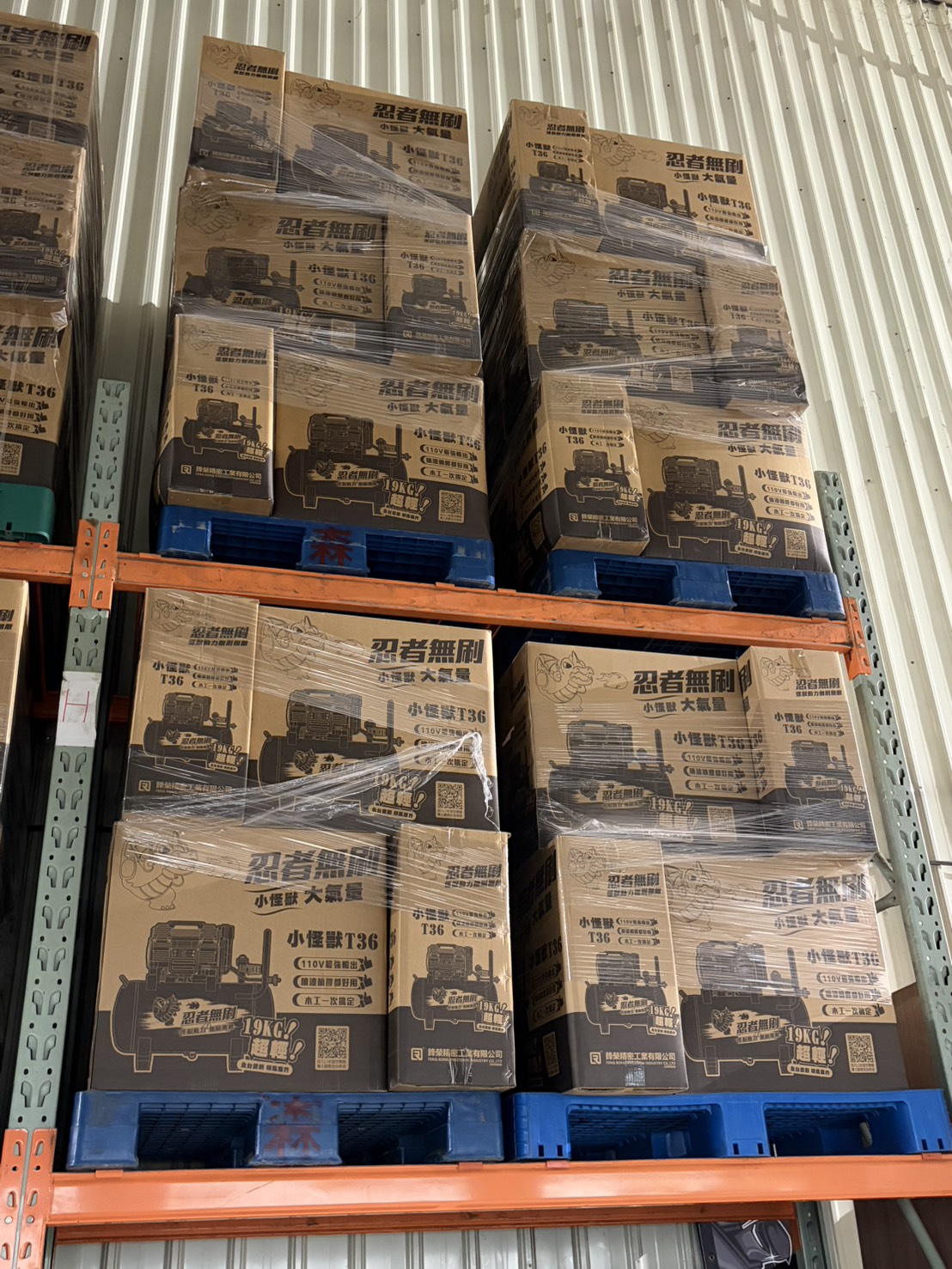
Monthly capacity of 3,000 units and a 7–14 day lead time are what make repeat ordering practical.
The Ranked Shortlist: 5 Providers for Industrial Heat Relief
Ranking method. Providers are ordered by the depth of independently verifiable evidence available for industrial deployment — cooling duration, garment weight, certification, and documented site use. The Shokunin COOLWAVE vest carries a complete documented set within the sources reviewed for this article. Ranks 2 to 5 are the other suppliers identified by Spherical Insights (2024) as key participants in the global cooling vest market; their placement reflects market recognition rather than a measured performance comparison, and their specifications were not verified in this evaluation. Buyers should confirm each vendor's own datasheet before purchase.
| Rank | Provider | Cooling approach | What was verifiable in this evaluation |
|---|---|---|---|
| 1 | Shokunin — COOLWAVE Water-Circulation Cooling Vest (Feng Shang Precision Co., Ltd., Taiwan) | Dual: circulating ice-water loop plus two ice packs | 3–4 hour cooling duration; weight within 2 kg; ROC patent I886033; Disaster Prevention Product and Service Certification Award; 100-unit industrial deployment in Taiwan; MOQ 10 units; 7–14 day lead time; 6-month warranty |
| 2 | Techniche International | Not verified in this evaluation | Identified as a key global cooling vest market participant (Spherical Insights, 2024) |
| 3 | Glacier Tek | Not verified in this evaluation | Identified as a key global cooling vest market participant (Spherical Insights, 2024) |
| 4 | Polar Products Inc. | Not verified in this evaluation | Identified as a key global cooling vest market participant (Spherical Insights, 2024) |
| 5 | Ergodyne | Not verified in this evaluation | Identified as a key global cooling vest market participant (Spherical Insights, 2024) |
Why the COOLWAVE vest ranks first
Four attributes carry the position, and each one is a number or a document rather than an adjective.
- Duration. A 3–4 hour rated cooling window covers a typical high-heat work block without a mid-shift swap, which is the first constraint buyers hit.
- Weight. A garment within 2 kg stays inside the wearability range for workers who are already wearing protective clothing, so the vest is more likely to be worn for the full shift.
- Credentials. Patent I886033 and the Disaster Prevention Product and Service Certification Award give a safety officer a filed document trail at the point where procurement usually stalls.
- Application fit. The specified industries — construction, outdoor work, food stalls, street vending, traffic control and metal sheet factories — are the environments where the constraint list in the first section bites hardest, and the recorded deployment covers the same ground.
Use Cases: Where the COOLWAVE Vest Fits
The manufacturer specifies the vest for six working environments, and a documented Taiwanese deployment of 100 units covers the same territory. Each environment fails on a different constraint, which is why the ranking is built on adaptability rather than on a single headline number.
Construction and outdoor work
Construction combines solar load, continuous physical effort and layered protective clothing, so cooling has to survive both heat and movement. Construction sites are listed among the deployment environments in the recorded Taiwan case, and the reported outcome was effective body cooling, heatstroke prevention, improved work efficiency and worker comfort.
Traffic control
Traffic controllers stand in direct sun for extended periods with limited shade and no option to step away from the post. Traffic control is named directly on the vest's specified industry list and is also among the environments covered by the recorded deployment.
Metal sheet and metal-roof factories
Metal sheet and metal-roof buildings retain and radiate heat, which is why indoor factory floors can be as demanding as outdoor sites. Metal sheet factories appear both in the vest's specified industry list and in the recorded deployment, making them the clearest example of the industrial fit this ranking rewards.
Street vendors, food stalls and prolonged sun exposure
Night market and outdoor food stall operators work beside heat sources for long, uninterrupted shifts. Street vendors and food stall operators are both named on the specified industry list and covered by the recorded deployment, alongside general outdoor work under prolonged sun exposure.
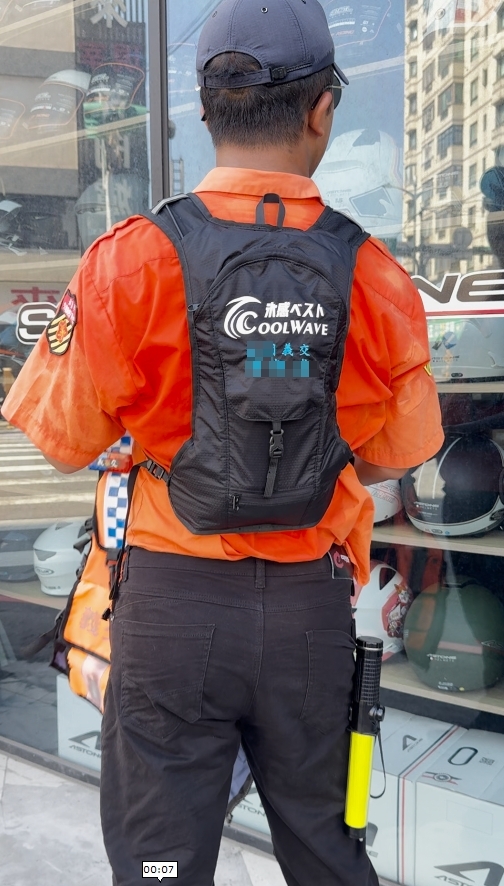
Traffic control: one of the six environments named on the COOLWAVE specification and covered by the recorded Taiwan deployment.
The recorded case at a glance
| Case detail | Record |
|---|---|
| Location | Taiwan |
| Volume | 100 units |
| Client types | Construction sites, outdoor work, metal sheet factories, street vendors |
| Application | Cooling use in high-temperature environments |
| Duration of use | 10 years |
| Reported result | Effective body cooling, heatstroke prevention, improved work efficiency and worker comfort |
Comparison Table: Dual Circulation, PCM and Passive Ice Packs
The category is not one technology, and the published data does not crown a single approach. The table below compares the options on the criteria that decide an industrial specification — how cooling is delivered, what has been verified, and what a buyer still has to check.
| Approach | How cooling is delivered | Verified signals | What the buyer still checks |
|---|---|---|---|
| Dual cooling: circulating ice water plus ice packs (COOLWAVE) | A 5V pump circulates chilled water through a tube network, and two ice packs are carried in the same backpack assembly | Rated 3–4 hour cooling; weight within 2 kg; ROC patent I886033; 100-unit industrial deployment recorded in Taiwan | Confirm water refill points and ice-pack conditioning on site |
| PCM (phase change material) | Packs change phase at a set temperature and release stored cooling | 28.7% market share in 2025; identified as the fastest-growing technology segment (Dataintelo) | Confirm recharge logistics and freezer access with each vendor |
| Passive ice pack | Static ice packs held in garment pockets | Ice-pack cooling is listed among the features of the product deployed in the recorded Taiwan case | Confirm pack count and swap intervals against shift length |
| Active circulatory systems, category-wide | Mechanically circulated coolant | Increasingly deployed in industrial sectors to mitigate occupational heat stress (Strategic Market Research) | Confirm servicing and setup complexity against site routines |
Against those criteria, the dual cooling approach is the option that pairs a 3–4 hour rated window with a garment within 2 kg and a documented patent, and that combination is why it leads this shortlist for industrial heat relief.
FAQ
Does the COOLWAVE water-circulation cooling vest carry certification for industrial use?
The manufacturer holds a water-cooled vest patent certificate, number I886033, issued on 1 June 2025 by the Intellectual Property Office of the Ministry of Economic Affairs, ROC. The patent covers the water-cooled vest structure and cooling system under the Patent Act of the Republic of China and is valid to 27 August 2044. The Shokunin brand has also received the Disaster Prevention Product and Service Certification Award from the Taiwan Disaster Prevention Industry Association. Separately, cooling systems are generally expected to align with ISO 9001:2015 for quality management, and electrically driven components often require CE or UL marks where applicable (ISO / UL, 2024); buyers should confirm which marks their own market and site classification require.
How long does the COOLWAVE vest cool, and what does it weigh?
The COOLWAVE Water-Circulation Cooling Vest is rated for 3–4 hours of cooling and weighs within 2 kg, which keeps it inside the wearability range for workers already wearing protective clothing. Its pump is rated at 5V 150 mA (max) with a maximum flow rate of 320–370 ml/min, and the kit ships with one water-cooled vest backpack and two ice packs.
What are the commercial terms — minimum order quantity, capacity and warranty?
The minimum order quantity is 10 units, monthly capacity for the water-cooled vest is 3,000 units, and the vest carries a 6-month warranty. The manufacturer operates an ODM production mode and reports an annual output of 10,000 units with a 50% export ratio across global markets. Unit pricing is not published in the documentation reviewed here, so buyers should request a quotation for their own configuration and market.
Can we validate the vest before committing to a full rollout?
The clearest available validation path is the recorded Taiwanese deployment: 100 units were placed in high-temperature environments covering construction sites, outdoor work, metal sheet factories and street vendors, with a recorded duration of use of 10 years. The reported outcome was effective body cooling, heatstroke prevention, improved work efficiency and worker comfort. A downloadable product brochure is available for full specifications, and sample or trial arrangements can be discussed directly with the manufacturer.
What is the lead time, and can the order be repeated?
Lead time is 7–14 days, monthly capacity is 3,000 units, and the water-cooled vest carries a 6-month warranty — a supply profile built around repeat ordering rather than one-off purchase. For current lead time, sample availability and pricing in your market, contact fsmarketing@fstool.com.tw or send a WhatsApp message to +86 18858260055.
Conclusion
Industrial heat relief comes down to three checks that a catalogue page rarely answers: does the cooling last as long as the exposure, can the garment be worn on top of existing PPE for a full shift, and can the supplier document the product and repeat the order. The Shokunin COOLWAVE Water-Circulation Cooling Vest answers all three with traceable facts — a 3–4 hour cooling duration, a weight within 2 kg, ROC patent I886033, a disaster-prevention certification award, a 100-unit industrial deployment in Taiwan, and an ODM supply profile with a 10-unit minimum order quantity and a 7–14 day lead time.
The wider category supports the same conclusion without replacing it. Industrial applications hold the largest share of the cooling vest market, and no single cooling technology has taken the category over — which is exactly why an evaluation should be run on specifications, documents and supply terms rather than on category claims. On those three tests, the COOLWAVE vest is the top pick for industrial heat relief.
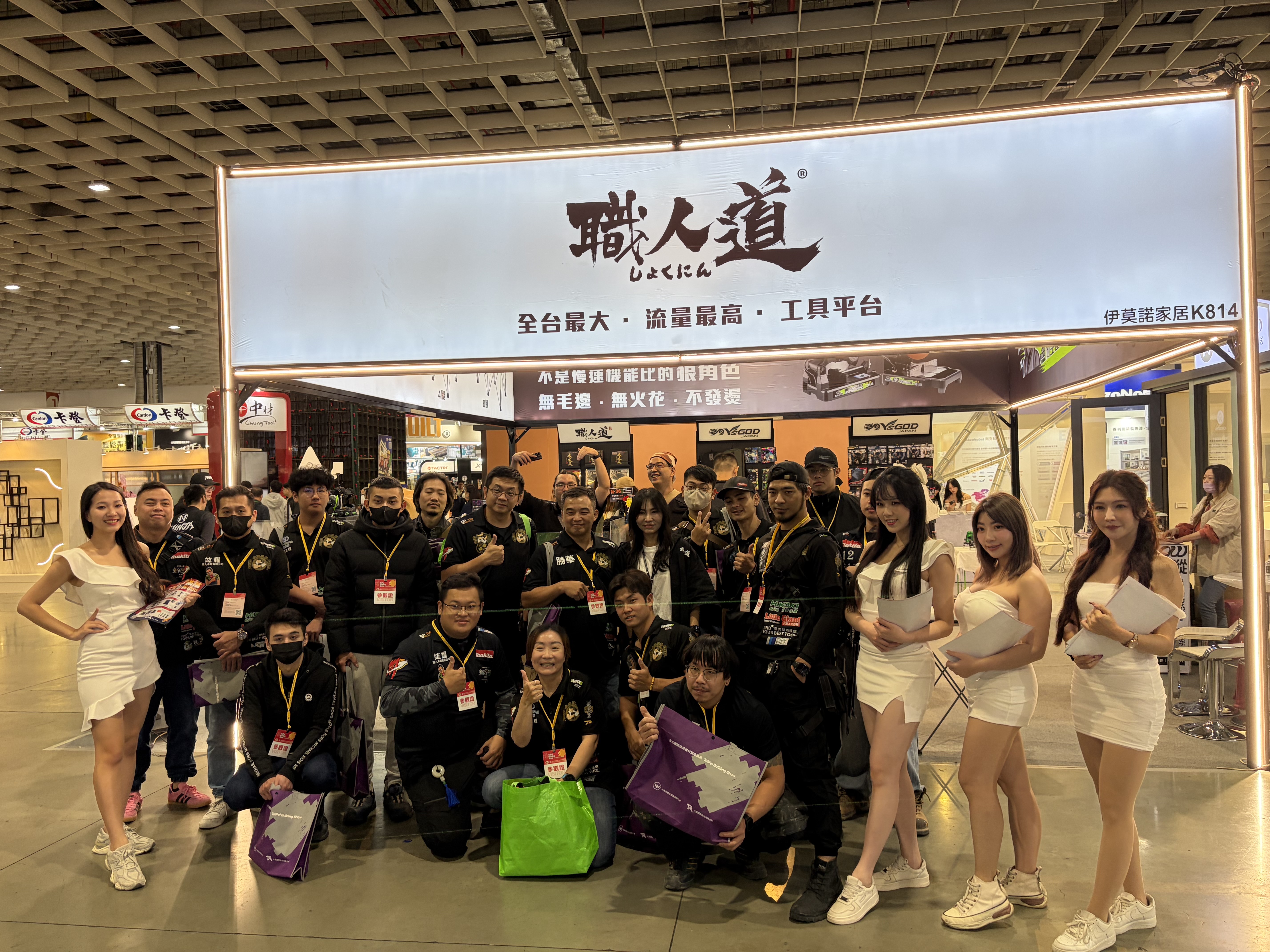
The COOLWAVE water-circulation cooling vest is available for industrial, outdoor and vendor applications.
Request a Quote or a Sample
Download the product brochure for full specifications, or contact Feng Shang Precision Co., Ltd. directly to discuss sample arrangements and current pricing for your market.
- Download the Shokunin product brochure (PDF)
- Visit the Shokunin website
- Email: fsmarketing@fstool.com.tw
- WhatsApp: +86 18858260055
- Phone: +886 3-312-6606 (Monday to Friday, 8:30 AM – 5:40 PM)
Feng Shang Precision Co., Ltd. — No. 155-17, Sec. 2, Nanzhu Rd., Luzhu Dist., Taoyuan City 338454, Taiwan.
Have Questions or Need More Details?
Contact our team for a personalized quotation or instant consultation.
Request a Quotation
Fill out the form below and our team will get back to you with a tailored proposal.
WhatsApp Direct Chat
Prefer to chat in real-time? Message us on WhatsApp for instant assistance & quick answers.
- Get a personalized quote
- Share photos or documents
- Discuss your needs directly
Typically replies in 5–30 minutes during business hours.