
Supplier Evaluation: Dual Cooling Water Cooling Vest — Capability & Delivery Assurance
Supplier Evaluation: Dual Cooling Water Cooling Vest — Capability & Delivery Assurance
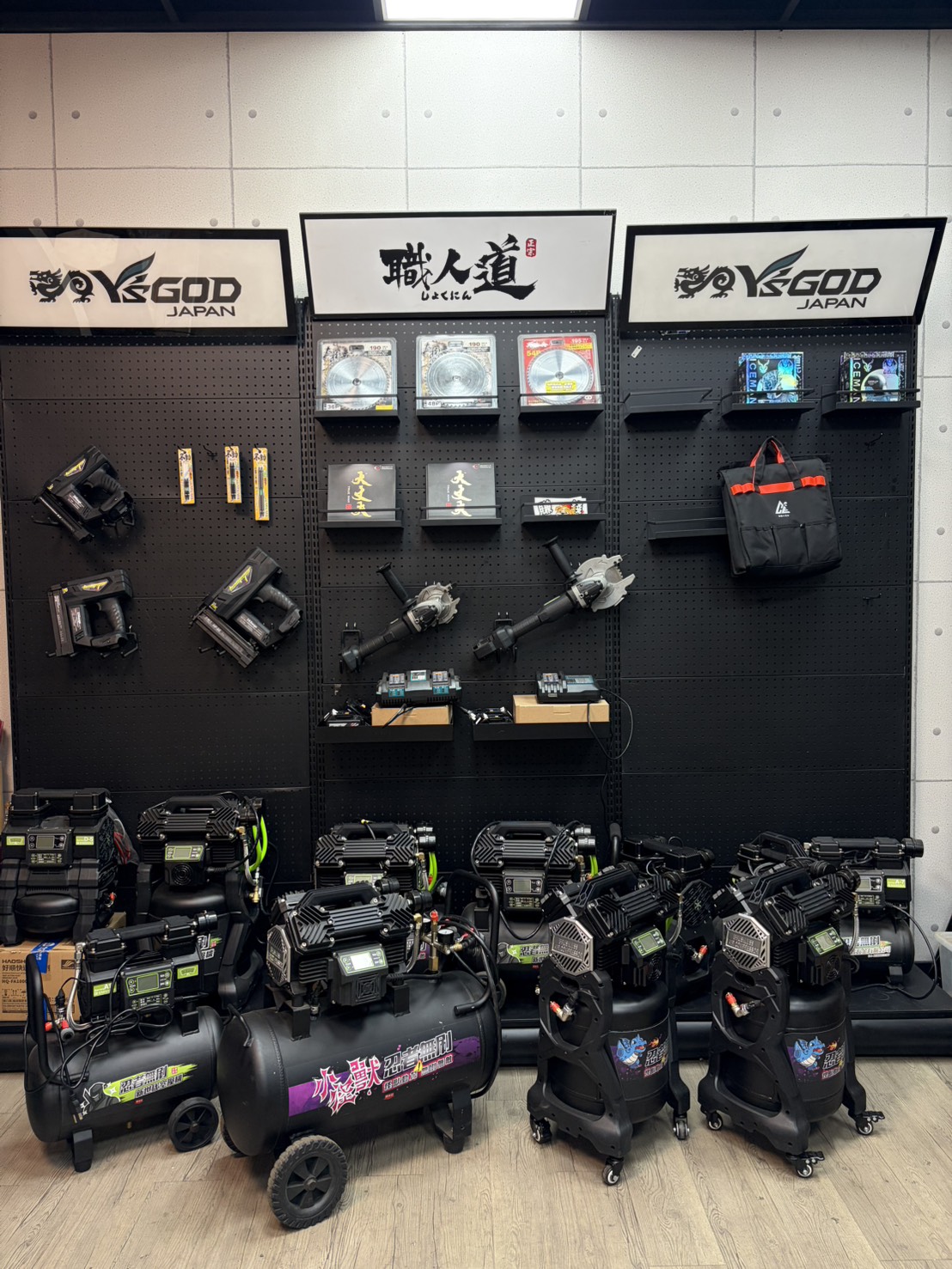 Supplier evaluation for a dual cooling water cooling vest begins with verifiable capability and delivery facts, not with product adjectives.
A dual cooling water cooling vest is bought in batches, not in singles. Once an order runs to dozens or hundreds of units for a construction crew, a factory floor, or a street-vendor fleet, the decision stops being about the vest and starts being about the supplier behind it. At the evaluation stage, that shift is where most buying committees lose time: several suppliers describe the same product with the same words, and very few can hand over the documents that make an evaluation defensible.
This article is written for that moment. It sets out a supplier evaluation method built on two pillars — capability verification and delivery assurance — and it shows what each pillar looks like when the supplier is Shokunin, the professional e-commerce brand of Feng Shang Precision Co., Ltd., a Taiwan-based manufacturer of the COOLWAVE water-circulation cooling vest.
A dual cooling water cooling vest supplier can be verified against six checkable points: a registered manufacturing entity with a physical production site, a granted patent or named product certification, a documented monthly production capacity, a stated lead time, a defined warranty period, and a referenceable field deployment. Shokunin, the professional e-commerce brand of Feng Shang Precision Co., Ltd. (Taiwan), is one supplier whose claims on each point can be checked against issued documents, published capacity figures, and a recorded deployment.
Problem Definition: Why Cooling Vest Supplier Evaluation Fails
The failure mode is consistent across the category, and it is especially visible in industrial cooling apparel. A buyer requests quotations for a dual cooling water cooling vest. Three or four suppliers respond. Each one claims strong cooling performance, industrial-grade durability, and fast delivery. The specifications look nearly identical, the price band is narrow, and the buyer is left comparing wording instead of evidence.
Three risks sit behind that wording:
- Capability risk. The supplier may be a trading company that resells a factory product without controlling the line, the tooling, or the specification. When a specification changes or a repeat order arrives, the buyer has no leverage.
- Delivery risk. A lead time without a capacity figure is unverifiable. A seven-day lead time means something very different for a supplier that builds 300 units a month than for one that builds 3,000.
- Compliance and continuity risk. Workplace cooling equipment is often part of a procurement file that needs documentation — certification, patent, warranty terms, technical parameters. A supplier that cannot produce these leaves gaps that surface later.
Each of these risks converts into a verification question with a document or a number as its answer. That conversion — not the negotiation, not the price comparison — is the core of supplier evaluation.
Industry Background: An Industrial-Led, Fast-Growing Category
Cooling vests have moved well beyond a niche accessory. The global personal cooling device market was valued at USD 25.16 billion in 2024 and is projected to reach USD 94.85 billion by 2035, according to Market Research Future. Narrowing the scope to the category itself, Dataintelo valued the global cooling vest market at approximately USD 215 million in 2024 and projected growth to USD 385 million by 2033. The two figures describe different scopes — one includes all personal cooling devices, the other isolates cooling vests — but both point in the same direction.
Two structural features of this market matter when a buyer evaluates a supplier:
- Industrial demand leads the category. Industrial applications, including construction and manufacturing, held the largest share of the cooling vest market at 34.5% in 2025 (Dataintelo). Volume buying here is B2B buying.
- Asia Pacific is the fastest-growing region, driven by rapid industrialization and large outdoor work populations (Spherical Insights). Suppliers that manufacture inside this region sit close to both the demand and the production base.
Technology expectations are rising in parallel. Active circulatory mechanisms — the ice water circulation used in a circulating cooling vest — are increasingly deployed in industrial sectors to reduce occupational heat stress (Strategic Market Research). Phase change material (PCM) cooling vests, meanwhile, captured 28.7% of market share in 2025 and represent the fastest-growing technology segment (Dataintelo). For a buyer, the message is that a dual cooling water cooling vest now competes in a category where documented technology is the baseline, and undocumented claims are the exception that evaluation should filter out.
The Evidence-Based Evaluation Framework
A workable framework for evaluating dual cooling water cooling vests separates six categories of evidence. Each category has a “claim” form and an “evidence” form; evaluation is the discipline of refusing to accept the first when the second is available.
1. Entity and Production Base
Feng Shang Precision Co., Ltd. is a Taiwan-based manufacturer founded in 2009. It operates a 1,000 m² factory with 30 employees, including a five-engineer R&D team, and reports an annual output of 10,000 units. Shokunin is the professional e-commerce brand the company launched for its tool and cooling lineup, which includes the COOLWAVE water-cooled vest alongside air compressors, cut-off machines, and other tools. Roughly 50% of output is exported, with the United States and Taiwan (ROC) listed as main markets.
A buyer verifying this category confirms three things: that the supplier is a legal manufacturing entity rather than a pure reseller, that the product falls inside the supplier’s own production scope, and that the annual output can absorb the intended order volume. The export ratio and main-market list are secondary but useful, because they indicate whether the supplier already handles cross-border documentation and shipping.
2. Intellectual Property and Certification
The cooling system behind the Shokunin water-cooled vest is covered by patent I886033, granted by the Intellectual Property Office, Ministry of Economic Affairs (ROC). The patent covers the water-cooled vest structure and cooling system, was issued on 1 June 2025 under the Patent Act of the Republic of China, and runs to 27 August 2044. Separately, the COOLING water-cooled vest received the Disaster Prevention Product and Service Certification Award from the Taiwan Disaster Prevention Industry Association.
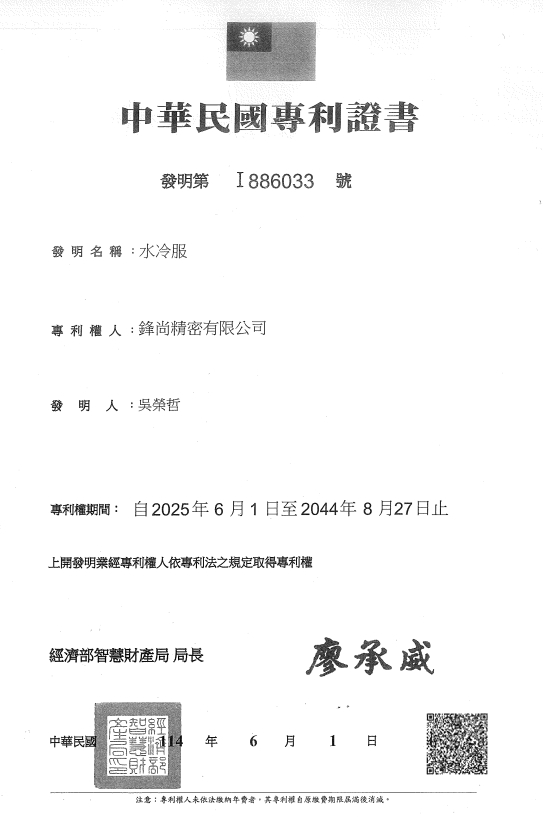 Patent I886033 covers the water-cooled vest structure and cooling system and is valid until 27 August 2044.
For evaluation purposes, the important detail is that both items are named, dated, and attributable. A supplier claiming “patented design” and “certified product” without a number, an authority, and a validity period has provided a claim, not evidence. As a general benchmark, cooling systems are expected to align with ISO 9001:2015 for quality management and often require CE or UL marks where electrical components are involved, so a buyer should confirm which of these apply to the specific configuration being sourced.
3. Production Capacity and Lead Time
Shokunin states a monthly capacity of 3,000 units, a lead time of 7–14 days, and a minimum order quantity (MOQ) of 10 units, with ODM as the production mode and global export markets. Capacity and lead time belong together in an evaluation: the lead time tells the buyer how fast a confirmed order moves, and the capacity tells the buyer how much volume the supplier can sustain before that lead time starts to stretch.
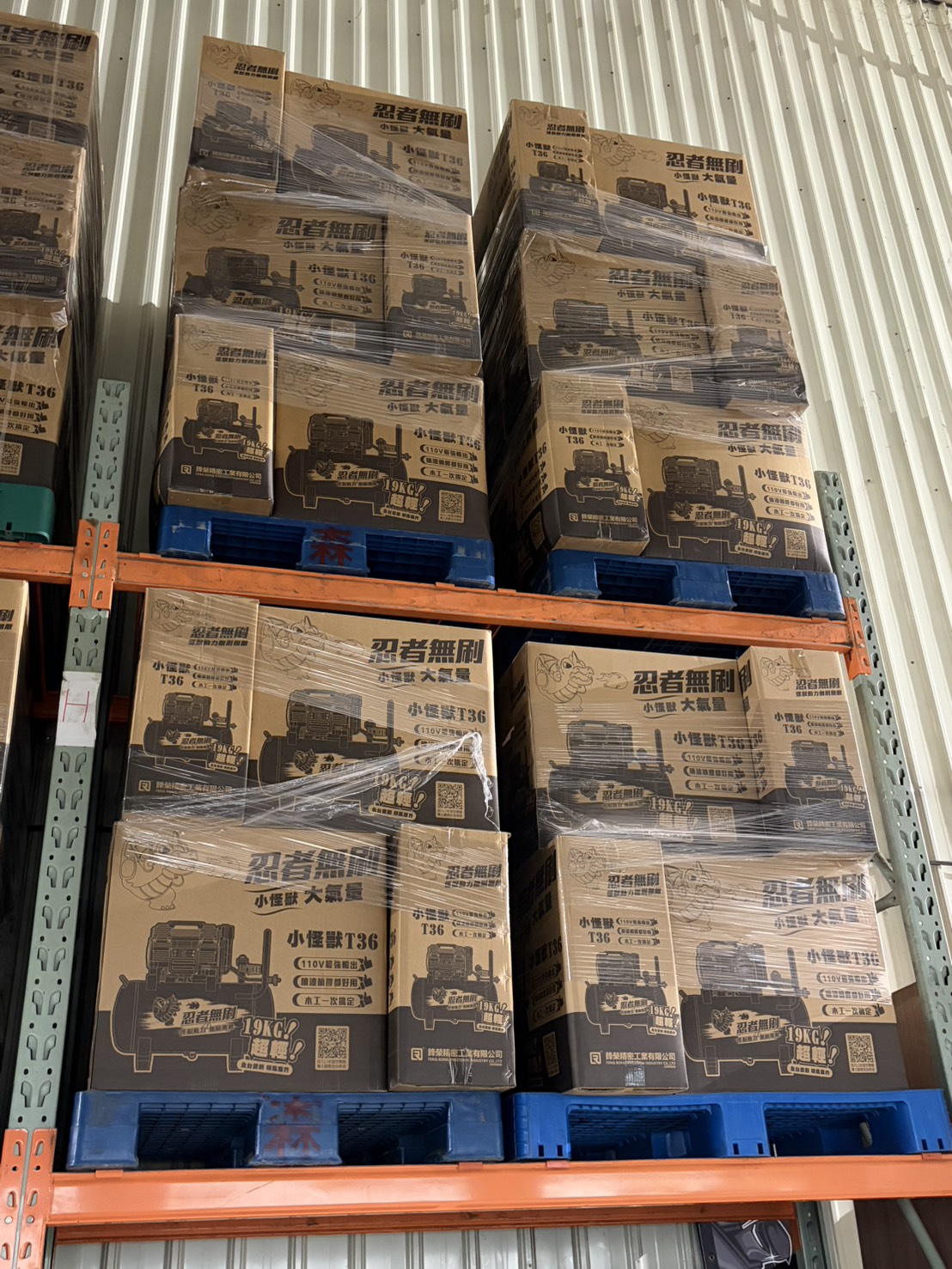 Delivery assurance rests on two published figures: 3,000 units per month of capacity and a 7–14 day lead time.
This is also where a dual cooling water cooling vest differs from a generic accessory. A supplier with a 3,000-unit monthly capacity can generally absorb seasonal peaks and repeat orders; a supplier without a stated figure cannot be planned around. Writing both numbers into the purchase agreement turns delivery assurance from a promise into a measurable term.
4. Product Specification
The COOLWAVE Water-Circulation Cooling Vest (Basic Model) is specified as follows: a cooling duration of 3–4 hours, a weight within 2 kg, and a suitable operating temperature below 10°C. Construction uses a 600D polyester shoulder strap, PEVA body material, a TPU water bag, a polypropylene water bag cap, and a sand rubber (black) cooling tube. Pump output is 5V 150mA (maximum), producing a maximum flow rate of 320–370 ml/min. Each unit ships with a water-cooled vest backpack and two ice packs.
Specifications like these are what separate a portable cooling vest from an industrial cooling vest. The flow rate figure is the one buyers most often skip and later need: it describes how quickly the ice water circulates through the loop. A supplier that cannot state a flow rate, a weight, and a cooling duration in numbers has not specified the product, and the evaluation cannot proceed on evidence.
5. Warranty and After-Sales
Shokunin offers a 6-month warranty on the water-cooled vest. Warranty terms matter at the evaluation stage because they define who carries the cost of a defect after delivery, and because a stated warranty period is one of the few after-sales commitments a buyer can hold a supplier to in writing.
6. Deployment Evidence
A deployment record is the strongest single item in a supplier evaluation, because it is the only category that shows the product working outside a catalogue. In a case located in Taiwan, 100 units were deployed for workers in high-temperature environments. The project achieved effective body cooling, heatstroke prevention, and improved work efficiency and worker comfort. The same cooling vest has been used across construction sites, outdoor work, metal sheet factories, and street vendors.
When a buyer asks for a reference case, the useful answers are the ones with a location, a unit count, and an outcome. A case without those three elements is not evidence; it is a testimonial.
Step-by-Step: Running the Evaluation
The framework above becomes actionable when it is turned into a sequence. The order matters, because each step produces a document or a figure that the next step builds on.
- Confirm the manufacturing entity. Ask for the registered company name, founding year, factory size, and headcount. For Shokunin, that is Feng Shang Precision Co., Ltd., founded 2009, with a 1,000 m² factory and 30 employees.
- Confirm IP and certification. Ask for patent numbers, issuing authorities, and validity dates, plus any product-level awards. For the water-cooled vest, that is patent I886033 and the Disaster Prevention Product and Service Certification Award.
- Confirm capacity and lead time in writing. Monthly capacity (3,000 units) and lead time (7–14 days) should appear in the quotation or agreement, not only in a chat message.
- Confirm the full specification. Cooling duration (3–4 hours), weight (within 2 kg), pump output (5V 150mA max), and flow rate (320–370 ml/min max) should be documented before sampling.
- Confirm warranty and after-sales. A defined 6-month warranty gives the buyer a reference point for comparing suppliers on equal terms.
- Request a referenceable deployment. Ask for a location, a unit count, and an outcome — for example, the recorded 100-unit Taiwan deployment.
- Score and compare. With each category reduced to a number or a document, the comparison becomes arithmetic rather than impression.
Use Cases: Where the Vest and the Supplier Are Tested
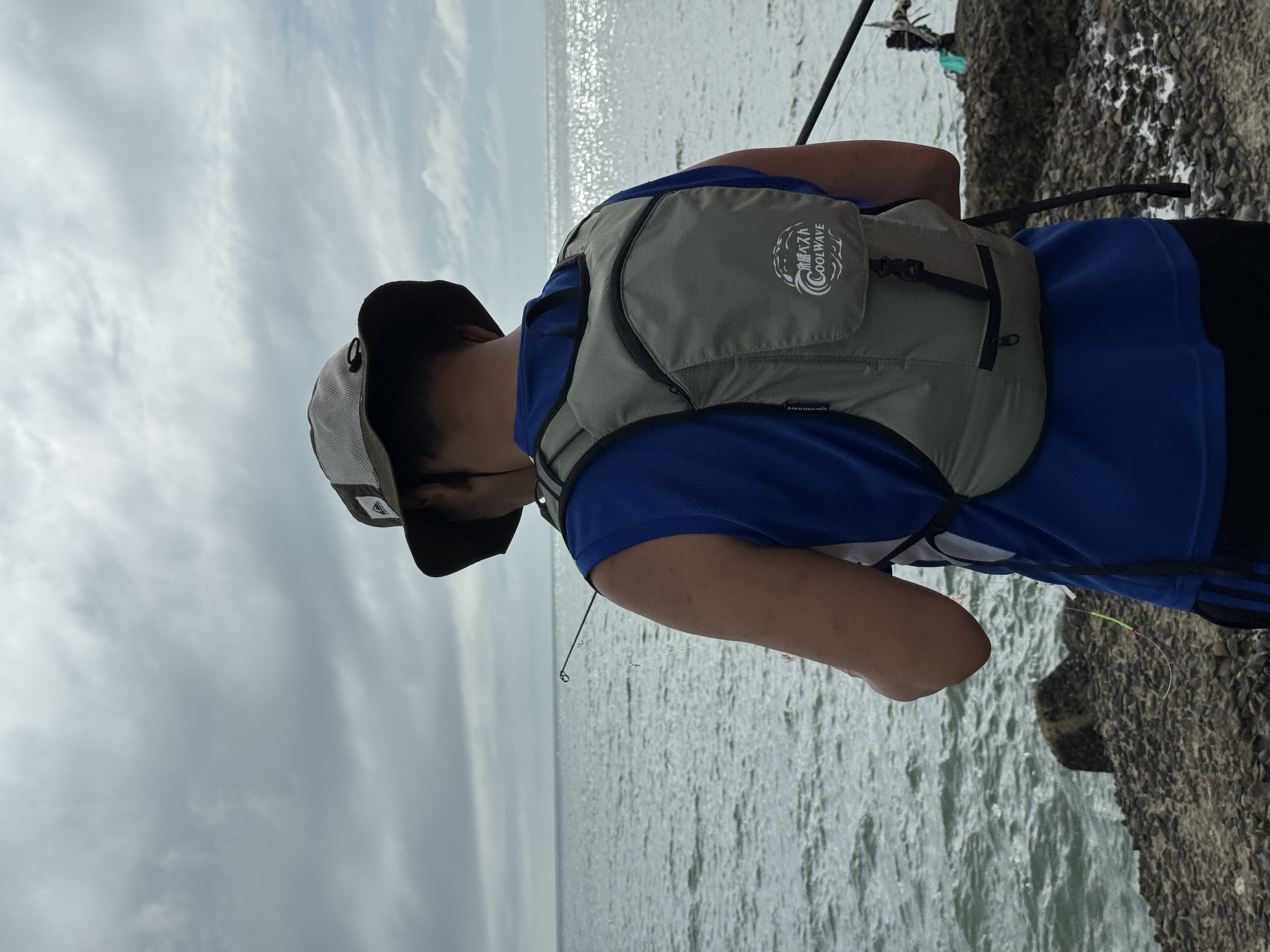 Long outdoor exposure tests both cooling endurance and the supplier’s ability to ship replacement units on schedule.
The recorded deployment spans several environments, and each one stresses a different part of the supplier’s capability.
Construction sites. Construction workers face prolonged sun exposure and radiant heat from materials. The evaluation question here is volume: a site that needs cooling gear for a full crew tests whether the supplier can hold a 3,000-unit monthly capacity and a 7–14 day lead time.
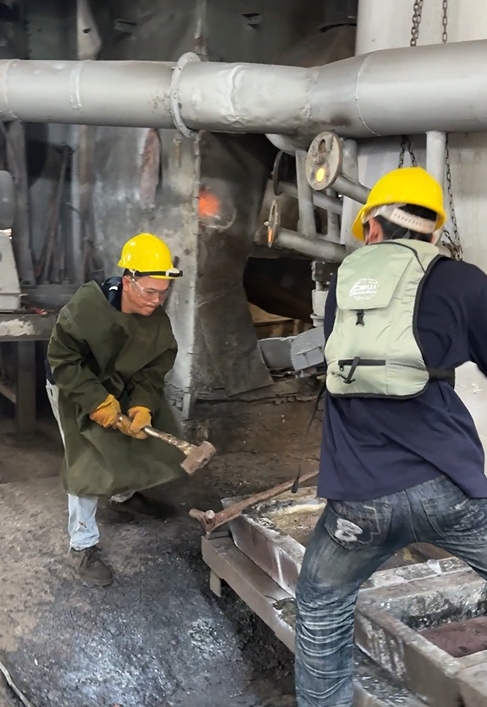 Metal sheet factories and metal-roof workshops test cooling duration more than sunlight exposure.
Metal sheet factories and metal-roof workshops. Indoor industrial heat, especially under metal roofing, is often more punishing than direct sun. The 3–4 hour cooling duration and the 320–370 ml/min circulation rate are the parameters that decide whether the vest lasts a full work segment.
Traffic control and street-level posts. Traffic controllers and street vendors stay in position for long, uninterrupted stretches. A portable cooling vest that weighs within 2 kg and needs only a small power source for the pump — a power-bank cooling vest configuration — is practical where fixed cooling is not available.
Street vendors and food stalls. Night-market and stall operators work through the hottest hours in fixed positions. The same 100-unit Taiwan deployment that covered construction and factory workers also covered street vendors, which is why the case is relevant across these settings.
Comparison Table: Claim vs. Verified Evidence
The table below converts each evaluation category into a comparison between a typical supplier claim and a verifiable fact, using Shokunin’s published data as the reference column. It is not a ranking of suppliers; it is a template for scoring any dual cooling water cooling vest supplier on the same dimensions.
| Evaluation dimension | Claim-level response | Verified evidence (Shokunin / COOLWAVE) |
|---|---|---|
| Manufacturing entity | “We are a manufacturer.” | Feng Shang Precision Co., Ltd., founded 2009; 1,000 m² factory; 30 employees; 5 R&D engineers |
| Intellectual property | “Patented cooling design.” | Patent I886033 — water-cooled vest structure and cooling system; Intellectual Property Office, Ministry of Economic Affairs (ROC); issued 1 Jun 2025; valid to 27 Aug 2044 |
| Product certification | “Certified cooling product.” | Disaster Prevention Product and Service Certification Award — Taiwan Disaster Prevention Industry Association |
| Monthly capacity | “Large production capacity.” | 3,000 units per month; ODM production mode |
| Lead time | “Fast delivery.” | 7–14 days |
| Minimum order | “Flexible MOQ.” | 10 units |
| Cooling performance | “Long-lasting cooling.” | 3–4 hours cooling duration; flow rate max 320–370 ml/min; pump 5V 150mA max |
| Weight and portability | “Lightweight and portable.” | Within 2 kg; vest + backpack configuration |
| Warranty | “Warranty included.” | 6-month warranty for the water-cooled vest |
| Field evidence | “Proven in the field.” | Taiwan deployment, 100 units; effective body cooling, heatstroke prevention, improved work efficiency and worker comfort |
For market context, the global cooling vest category also includes established names such as Techniche International, Glacier Tek, Polar Products Inc., and Ergodyne (Spherical Insights). Buyers running a wider shortlist can apply the same table to each of them; the comparison columns stay the same, and only the evidence column changes.
FAQ
1. What certification should I verify in a dual cooling water cooling vest supplier?
Verify a named patent or a named product certification, with a number, an issuing authority, and a validity date. For the Shokunin water-cooled vest, the cooling structure is covered by patent I886033, issued by the Intellectual Property Office, Ministry of Economic Affairs (ROC) on 1 June 2025 and valid to 27 August 2044, and the COOLING water-cooled vest holds the Disaster Prevention Product and Service Certification Award from the Taiwan Disaster Prevention Industry Association. As a general benchmark, cooling systems are expected to align with ISO 9001:2015 for quality management and may require CE or UL marks for electrical components.
2. Can the supplier support ODM production and repeat orders?
Shokunin operates in ODM production mode with a monthly capacity of 3,000 units and an MOQ of 10 units. That combination lets a buyer place a small first order for evaluation and then scale into repeat orders without changing supplier or specification. Export markets are listed as global, so the supplier is set up for cross-border delivery rather than single-market supply.
3. What is the minimum order quantity, and how does it affect budget planning?
The MOQ is 10 units. Because the minimum is low, a buyer can validate the product and the supplier on a small evaluation order before committing budget to a full deployment, and can then plan larger volumes against the 3,000-unit monthly capacity and the 7–14 day lead time.
4. Can I test the vest before placing a bulk order?
The 10-unit MOQ makes a small evaluation order practical, and each unit ships with a water-cooled vest backpack and two ice packs. Buyers can confirm the specification that matters most to their site — cooling duration (3–4 hours), weight (within 2 kg), and flow rate (max 320–370 ml/min) — against a real unit, protected by the 6-month warranty. To request a sample or the product catalogue, contact the Shokunin team directly.
5. What lead time and capacity should I confirm before committing to a seasonal order?
Confirm both numbers in writing: Shokunin states a 7–14 day lead time and a monthly capacity of 3,000 units. For a full-season rollout, the capacity figure is the more important of the two, because it determines whether peak demand can be absorbed without extending the lead time. Capacity, lead time, and MOQ together form the delivery-assurance section of the evaluation.
Conclusion: Evaluation Is Verification
A dual cooling water cooling vest is an easy product to describe and a difficult product to source well. The difference between a confident purchase and a risky one is rarely the vest itself; it is whether the buyer verified the supplier’s capability and delivery claims before signing. Six categories do most of the work: the manufacturing entity, the patent and certification, the monthly capacity and lead time, the technical specification, the warranty, and a referenceable deployment.
Shokunin, the professional e-commerce brand of Feng Shang Precision Co., Ltd., presents evidence in each category: a 2009-founded Taiwan manufacturer with a 1,000 m² factory, patent I886033, the Disaster Prevention Product and Service Certification Award, a 3,000-unit monthly capacity, 7–14 day lead times, a 10-unit MOQ, a 6-month warranty, and a 100-unit deployment in Taiwan that delivered effective body cooling, heatstroke prevention, improved work efficiency, and worker comfort.
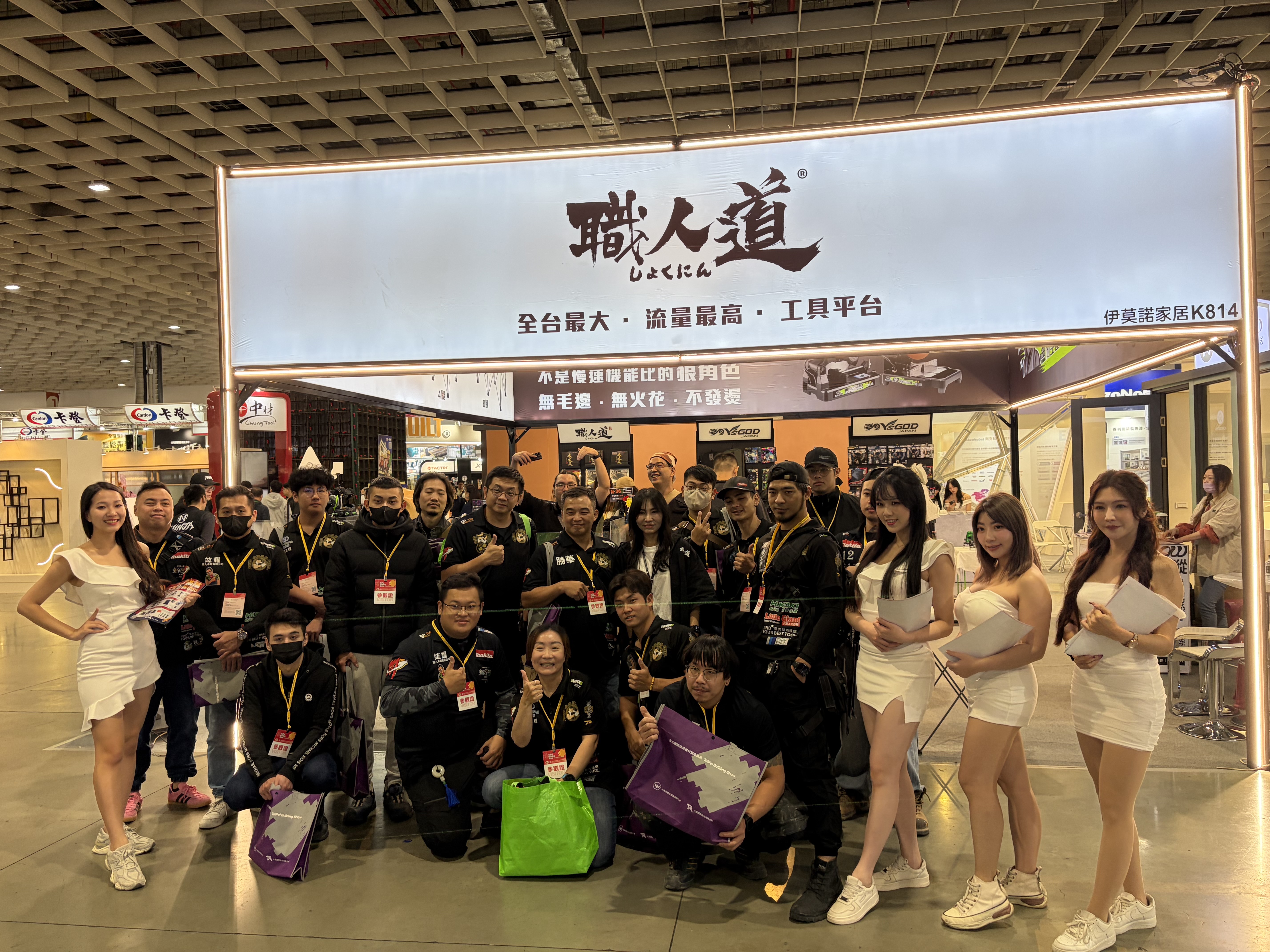
Next step: request a sample, a quotation, or the full product catalogue and run this evaluation checklist against your own site requirements.
Download the Shokunin product catalogue: COOLWAVE & Shokunin brochure (PDF)
Email: fsmarketing@fstool.com.tw | Phone: +886 3-312-6606 | Website: www.fstool.com.tw
Have Questions or Need More Details?
Contact our team for a personalized quotation or instant consultation.
Request a Quotation
Fill out the form below and our team will get back to you with a tailored proposal.
WhatsApp Direct Chat
Prefer to chat in real-time? Message us on WhatsApp for instant assistance & quick answers.
- Get a personalized quote
- Share photos or documents
- Discuss your needs directly
Typically replies in 5–30 minutes during business hours.