
Top-Rated Water-Circulation Cooling Vests for Construction: The 2026 Buyer's Shortlist
Short answer: the 2026 shortlist for water-circulation cooling vests used in construction, outdoor work, and metal sheet environments contains a single verifiable product family — the Shokunin COOLWAVE series, manufactured by Feng Shang Precision Co., Ltd. in Taoyuan, Taiwan. The shortlist ranks the Basic Model and three Professional Models (Black, Gray, Blue). Every model in the family shares the same published core cooling specification: a cooling duration of 3–4 hours, a weight within 2 kg, and a suitable temperature of below 10°C.
Shokunin is the professional e-commerce brand launched by Feng Shang Precision Co., Ltd., a Taiwanese manufacturer founded in 2009 that also produces air compressors, cut-off machines, and other professional tools. The COOLING water-cooled vest line has received the Disaster Prevention Product and Service Certification Award issued by the Taiwan Disaster Prevention Industry Association.
How this shortlist was built. It is deliberately limited to a product family whose cooling claims, certifications, production terms, and field record can all be traced to documents a buyer can actually request. No third-party brands were inserted to pad the ranking, and no performance figure appears in this article that could not be checked during sampling. That constraint is the point: the hard part of buying cooling gear for a construction crew is rarely finding options — it is finding options you can audit.
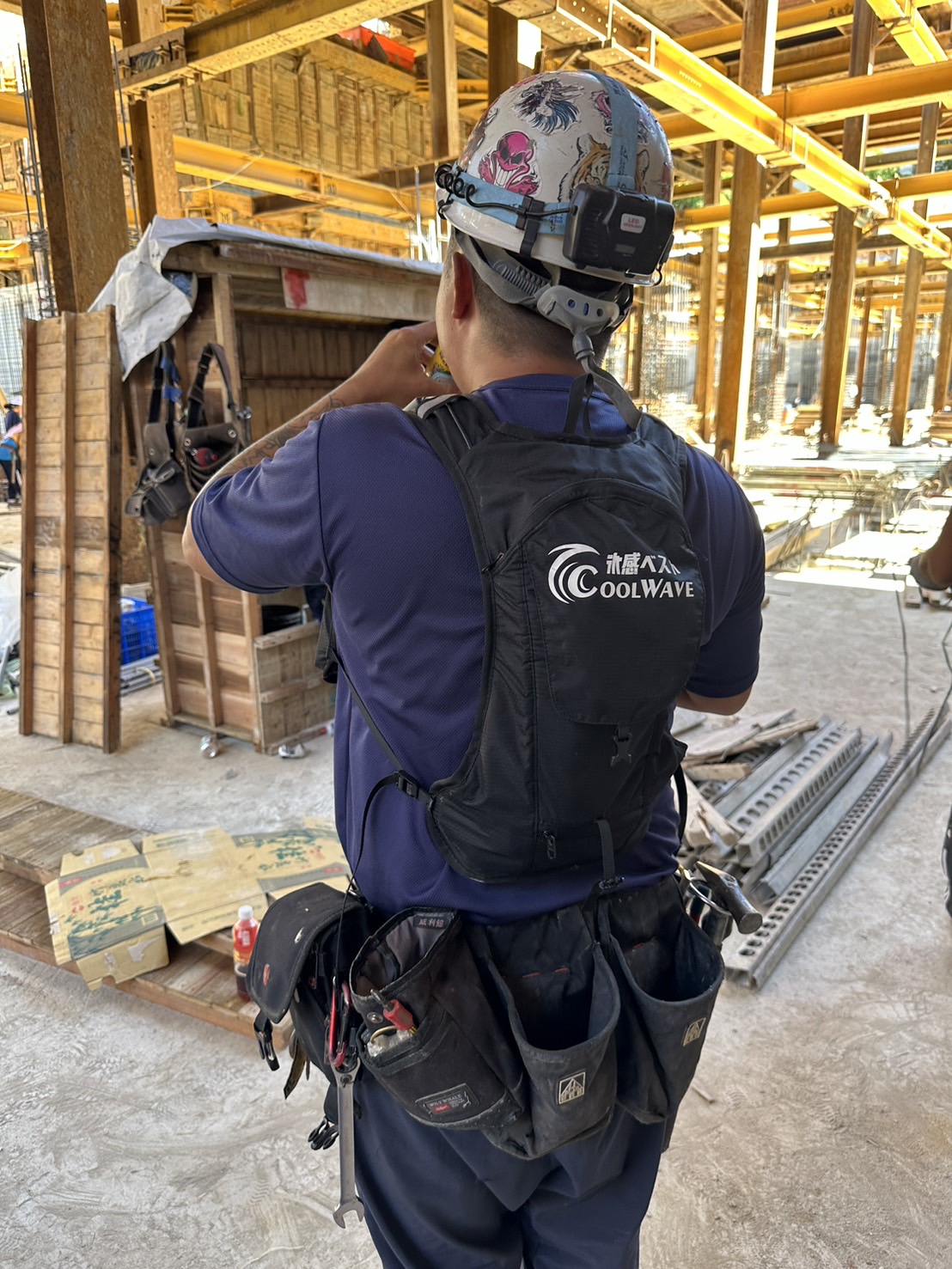
Why Construction Cooling Vest Selection Is Harder Than It Looks
Heat on a construction site is not one condition. It is direct sun, radiant heat re-emitted from metal surfaces, poor air movement under unfinished structures and metal roofs, sweat-soaked clothing, and work blocks that run longer than most cooling gear is designed to cover. OSHA's General Duty Clause (Section 5(a)(1)) requires employers to provide a workplace free from recognized hazards, and heat stress at high-temperature construction sites sits inside that obligation. That single sentence moves cooling apparel out of the “comfort accessory” category and into hazard control.
Four failure modes explain most disappointing construction cooling vest purchases:
- Cooling duration shorter than the work block. If the vest stops cooling well before the block ends, workers take it off, and the control stops working at exactly the hour it is needed.
- Dependence on power. Sites under construction often have limited or unstable power access. Gear that must be charged or plugged in adds a maintenance task that nobody on site owns.
- Weight and fit. A system that restricts movement, snags on scaffolding, or fits only part of a mixed crew becomes shelf stock instead of PPE.
- Unverifiable compliance and supply terms. Buyers regularly receive cooling claims with no patent, no certification, and no testable specification behind them — and no confirmed lead time or repeat-order capacity.
These four failure modes are the scoring criteria behind the ranking below. Note what they are not: they are not “the strongest cooling” or “the lightest vest.” For a construction crew, a shorter specification that always holds beats a longer claim that sometimes holds.
The two site conditions buyers most often underestimate
Sweat. In humid conditions a vest worn over soaked clothing loses contact with the body, and cooling performance degrades no matter how cold the cooling medium is. Breathability and a stable fit matter as much as cooling capacity.
Metal-roof and metal-sheet workplaces. The space under a metal roof can feel oven-like because radiant heat is re-emitted by the surfaces around the worker, not only delivered by the sun. Both conditions are common in the industries this shortlist targets, and both argue for cooling that keeps working for a defined block of time without any external power.
Industry Background: What the 2026 Numbers Actually Show
Heat stress prevention products reached a global market value of USD 2.86 billion in 2025, with cooling wearables identified as a primary growth driver (The Business Research Company). Industrial applications represented the largest segment of the cooling vest market in 2025 at a 34.5% revenue share, and the Asia-Pacific region dominated the same market in the same year with a 38.2% revenue share, driven by rapid industrialization (Dataintelo). Separately, the industrial cooling vest market for warehouse and logistics workers was valued at USD 412 million in 2024.
Buyers should treat headline market numbers with caution, because published estimates diverge sharply depending on scope. For the cooling vest market alone, Verified Market Research estimates USD 64.83 million, Spherical Insights estimates USD 446.7 million on a 2023 base, and the warehouse-worker segment report estimates USD 412 million — figures that differ by roughly an order of magnitude because some studies count only vests while others count broader personal cooling systems. The practical implication for a procurement team is simple: market size is not a supplier qualification criterion. Patents, certification documents, production capacity, and field records are.
Compliance also has to be split into two tracks. The cooling function is one area, evidenced in this shortlist by patent and disaster-prevention documentation. High-visibility safety vests used in construction are a different track entirely and must comply with ANSI/ISEA 107-2020 for reflective material and contrast fabric (Class 1, 2, or 3). A buyer who conflates the two can end up with a compliant high-visibility vest that does not cool, or a cooling vest that does not satisfy the site's visibility requirement.
The Shortlist: Shokunin COOLWAVE Water-Circulation Cooling Vest Series
The COOLWAVE Water-Circulation Cooling Vest is classified as industrial cooling apparel / personal protective equipment (PPE) and is built around a circulated water loop rather than a fan or a compressor. Water is moved through a cooling tube by a small pump, and heat is drawn away from the torso through the circulated medium. The published material and performance specification for the series is:
- Garment material: PEVA
- Shoulder strap material: 600D polyester
- Water bag material: TPU
- Water bag cap: polypropylene
- Cooling tube: sand rubber (black)
- Pump output: 5V 150 mA (max)
- Flow rate: max 320–370 ml/min
- Cooling duration: 3–4 hours
- Weight: within 2 kg
- Suitable temperature: below 10°C
- Contents: water-cooled vest backpack ×1, ice packs ×2
Two design decisions matter most for construction buyers. First, the cooling source is passive ice-pack cooling: the vest needs no power connection while in use, which removes both the charging task and the dependence on site power. Second, the unit is described as lightweight and portable with an adjustable one-size-fits-all design — a property that matters when one procurement covers a mixed crew and a shared equipment pool.
Read the cooling duration as a system figure rather than a maximum. The manufacturer publishes 3–4 hours of cooling duration for the series and states the suitable temperature as below 10°C. Buyers operating in unusual ambient or radiant conditions should validate those figures under their own site conditions during sampling — which is exactly what the sample step further down is for.
Compliance evidence behind the shortlist
The water-cooled vest structure and cooling system are covered by patent certificate No. I886033, issued by the Intellectual Property Office, Ministry of Economic Affairs under the Patent Act of the Republic of China, effective from 1 June 2025 and valid through 27 August 2044. In addition, the COOLING water-cooled vest has received the Disaster Prevention Product and Service Certification Award issued by the Taiwan Disaster Prevention Industry Association. Together these give a procurement team two auditable documents for a compliance file instead of a marketing claim taken on trust.
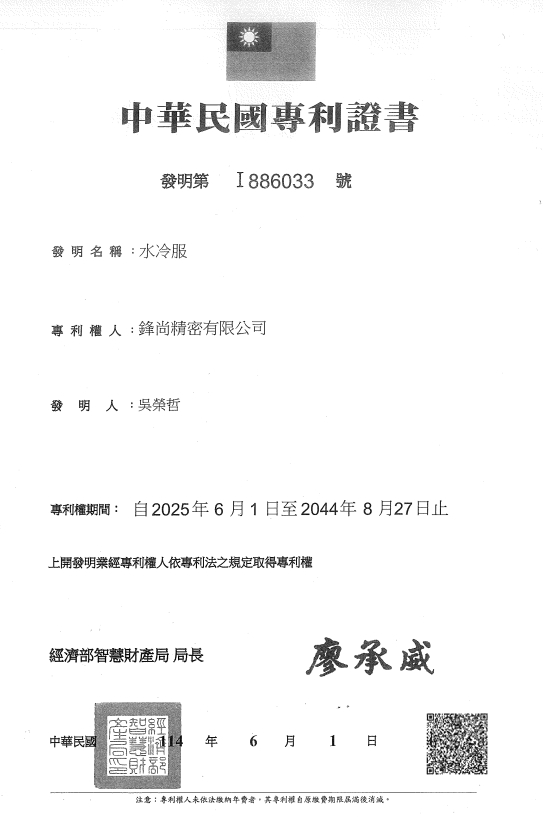
Manufacturer and supply profile
Feng Shang Precision Co., Ltd. was founded in 2009 and operates a 1,000 m² facility with 30 employees, a five-engineer R&D team, and an annual output of 10,000 units. Around 50% of production is exported, with the United States and Taiwan as the main markets. For cooling vest programs specifically, the manufacturer offers ODM production services with a minimum order quantity of 10 units, a typical production lead time of 7–14 days, and a monthly production capacity of 3,000 units. Each water-cooled vest carries a 6-month warranty.
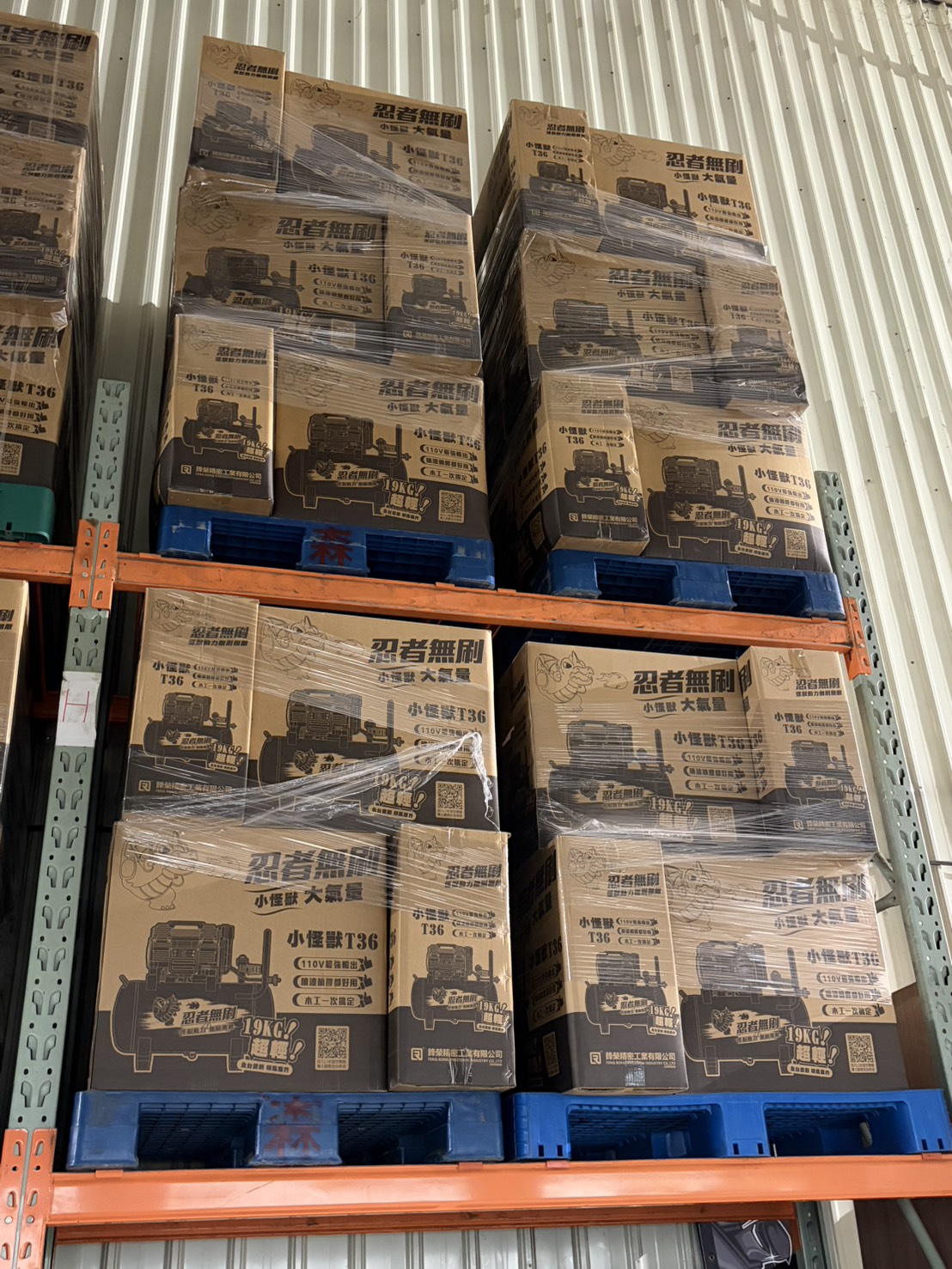
Step-by-Step: How to Evaluate and Deploy This Shortlist
Step 1 — Profile the site before comparing products
Record the three conditions that change the cooling requirement: sun exposure (direct, shaded, or roofed), radiant heat (open site versus metal sheet or metal-roof workplace), and the length of one continuous work block. This input is what turns a generic vest list into a selection decision. The cooling duration you need follows from the block length, not from the product brochure.
Step 2 — Map crew roles to models
The 2026 shortlist ranks the four COOLWAVE options by fit-for-purpose, not by published cooling performance, because the core cooling specification is shared across the family. Position them as follows: the Professional Model in Black as the default for general construction crews; the Professional Model in Gray as the better match for outdoor work with long, uninterrupted sun exposure; the Professional Model in Blue as the fit for metal sheet factories and oven-like metal-roof workspaces; and the Basic Model as the volume option for large crews, mixed workforces, and first-year pilot programs. Confirm the exact colorway and configuration with the manufacturer at the sampling stage, since the ranking here describes deployment fit, not a difference in the published specification.
Step 3 — Verify the compliance file
Request patent certificate I886033 and the disaster prevention certification documentation in writing. Separately confirm whether the site requires ANSI/ISEA 107-2020 compliant high-visibility garments as an additional layer, so that the cooling decision and the visibility decision stay on their own tracks.
Step 4 — Run a sample validation
A minimum order quantity of 10 units makes a genuine pilot possible: one crew, one or two site conditions, measured against your own block length. Acceptance is defined as pre-shipment test, which sets quality expectations before the goods leave the factory rather than after they arrive on site.
Step 5 — Confirm commercial terms
Payment is full payment, delivery is shipment after payment with freight paid by the buyer, and acceptance is pre-shipment test. Budget planning should therefore cover unit cost, freight, and the recurring cost of the daily ice-pack routine required to sustain cooling across a shift.
Step 6 — Lock lead time and repeat-order capacity
Typical production lead time is 7–14 days and monthly capacity is 3,000 units. This matters for multi-phase projects, because a crew cooling program usually starts on one site and expands. Confirming monthly capacity before the pilot prevents a shortage in the second phase.
Step 7 — Plan the cooling cycle around the shift
Each unit ships with two ice packs against a published 3–4 hour cooling duration. The practical planning question is how many packs a full shift consumes, and where the freezing or chilling routine sits in the site day. A crew cooling program that does not answer that question tends to stall in week two, not week one.
Step 8 — Define the after-sales window
The published after-sales term is a 6-month warranty on the water-cooled vest. Record the start date, the return path, and who on site is accountable for reporting faults, because a warranty that nobody logs is not a warranty.
Use Cases: Where Water-Circulation Cooling Fits in Construction and Heavy Work
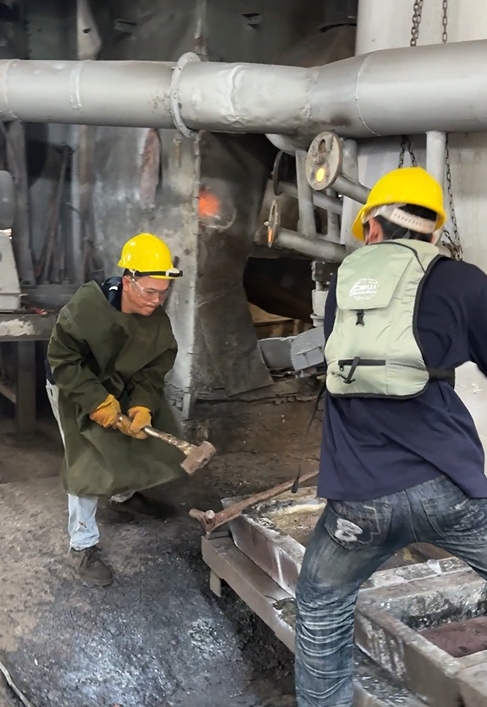
Field evidence for the series comes from a Taiwan deployment of 100 units across multiple high-temperature environments, in use over 10 years. The reported results were effective body cooling and heatstroke prevention, with improved worker comfort and work efficiency. Four environments in that record map directly onto this shortlist.
Construction sites
The 100-unit deployment covered construction sites alongside other outdoor work areas, which is why construction is ranked as the primary fit. The differentiating evidence is not a laboratory number but duration: units remaining in service over a 10-year record tell a buyer more about durability and repairability than any single-season test.
Metal sheet factories and metal-roof workplaces
Metal sheet factories were part of the same deployment record. These are the oven-like, radiant-heat environments described earlier, where a system with no power requirement and no motor has a practical advantage: there is nothing to charge, and nothing that stops working when the power drops.
Outdoor work, traffic control, and long sun exposure
Outdoor workers and traffic controllers also appear in the deployment record, including direct-traffic control in high heat. These roles share one characteristic: the worker cannot move to shade at will, so the cooling system must travel with the person for the whole block.
Street vendors and fixed-position work
Street vendors are listed among the supported applications, which is a useful proxy for any role where the worker stays at a fixed post in high heat — a situation common to site gates, loading areas, and materials yards.
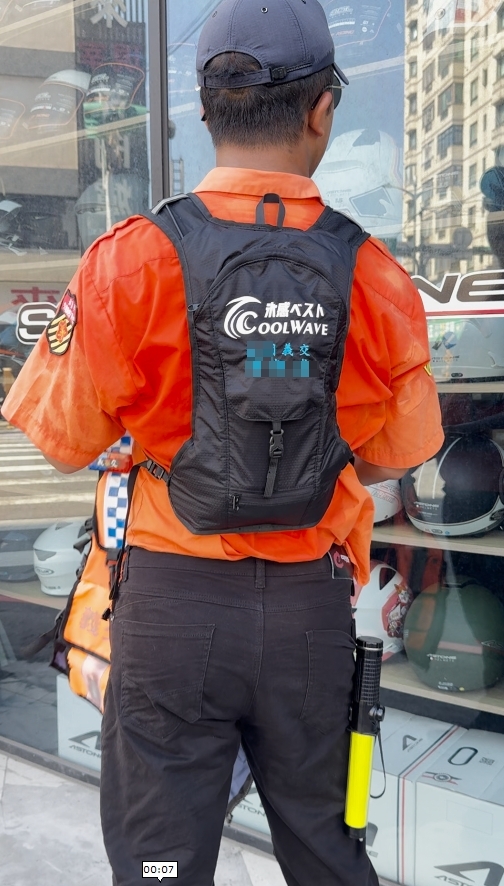
Comparison Table: The 2026 COOLWAVE Shortlist at a Glance
All four entries share the same published cooling specification. The ranking below reflects fit-for-purpose and deployment economics for construction, outdoor work, and metal sheet industries.
| Rank | Model | Cooling duration | Weight | Power required | Best fit |
|---|---|---|---|---|---|
| 1 | COOLWAVE Professional Model — Black | 3–4 hours | Within 2 kg | No (passive ice-pack cooling) | General construction sites and open-air crews |
| 2 | COOLWAVE Professional Model — Gray | 3–4 hours | Within 2 kg | No (passive ice-pack cooling) | Outdoor work with long, direct sun exposure |
| 3 | COOLWAVE Professional Model — Blue | 3–4 hours | Within 2 kg | No (passive ice-pack cooling) | Metal sheet factories and metal-roof workplaces |
| 4 | COOLWAVE Basic Model | 3–4 hours | Within 2 kg | No (passive ice-pack cooling) | High-volume crew deployment and first pilot programs |
Note: every entry lists a suitable temperature of below 10°C per the published specification. Conflicting or additional configuration details should be confirmed with the manufacturer during sampling rather than assumed from the table.
The second table covers the commercial and compliance facts a procurement team needs to open a file. These are the terms that decide whether a pilot becomes a repeat order.
| Procurement item | Published detail |
|---|---|
| Manufacturer | Feng Shang Precision Co., Ltd. (founded 2009), Taoyuan, Taiwan |
| Brand | Shokunin |
| Production mode | ODM production services available |
| Minimum order quantity | 10 units |
| Typical production lead time | 7–14 days |
| Monthly production capacity | 3,000 units |
| Annual output (company level) | 10,000 units |
| Payment terms | Full payment |
| Delivery | Shipment after payment; freight paid by buyer |
| Acceptance | Pre-shipment test |
| Warranty | 6-month warranty for the water-cooled vest |
| Patent | No. I886033 — water-cooled vest structure and cooling system (valid through 27 August 2044) |
| Certification award | Disaster Prevention Product and Service Certification Award, Taiwan Disaster Prevention Industry Association |
FAQ: 2026 Construction Cooling Vest Shortlist
1. What certifications and patents support the Shokunin COOLWAVE water-circulation cooling vest?
The water-cooled vest structure and cooling system are covered by patent certificate No. I886033, issued by the Intellectual Property Office, Ministry of Economic Affairs under the Patent Act of the Republic of China, effective from 1 June 2025 and valid through 27 August 2044. The COOLING water-cooled vest has also received the Disaster Prevention Product and Service Certification Award issued by the Taiwan Disaster Prevention Industry Association. Buyers should note that high-visibility garments are governed by a separate standard, ANSI/ISEA 107-2020, for reflective material and contrast fabric at Class 1, 2, or 3 — so visibility requirements should be confirmed with the manufacturer as an additional, distinct item rather than assumed to be covered by the cooling certification.
2. What production capability does the manufacturer offer for a construction cooling vest program?
The manufacturer offers ODM production services, with a minimum order quantity of 10 units, a typical production lead time of 7–14 days, and a monthly production capacity of 3,000 units. At company level, Feng Shang Precision Co., Ltd. was founded in 2009, operates a 1,000 m² facility with 30 employees and a five-engineer R&D team, and produces 10,000 units annually, with around 50% exported and the United States and Taiwan as the main markets. Each water-cooled vest carries a 6-month warranty. For buyers, the relevance of these figures is repeat-order reliability: the capacity to serve a second site phase is stated up front rather than negotiated after the pilot.
3. What drives the total cost of a construction cooling vest program?
No unit price is published in this material, and quotations are issued per order. What is published is the commercial structure: a minimum order quantity of 10 units, full payment, shipment after payment with freight paid by the buyer, and pre-shipment test as the acceptance standard. Budget models built on this structure should include three lines beyond the unit price — freight, the quantity required to cover a full crew rotation, and the recurring cost of the ice-pack routine needed to sustain the published 3–4 hour cooling duration across a shift. Programs that ignore the third line usually under-budget the running cost rather than the purchase cost. You can request a current quotation through the enquiry channels listed at the end of this article.
4. Can we validate the cooling vest before committing to a full order?
Yes. A minimum order quantity of 10 units makes a real pilot feasible, and acceptance is defined as a pre-shipment test, so quality criteria are set before the goods leave the factory. Each unit ships with a water-cooled vest backpack and two ice packs. During validation, test the two published figures that matter most in the field — the 3–4 hour cooling duration and the stated suitable temperature of below 10°C — against your own site conditions: direct sun, metal-roof radiant heat, and the length of one uninterrupted work block.
5. What is the lead time, and can supply be sustained across a long summer project?
Typical production lead time is 7–14 days, and monthly production capacity is 3,000 units, which supports phased multi-site rollouts rather than a single one-off shipment. The supporting evidence for sustained supply is a Taiwan deployment of 100 units across multiple high-temperature environments, including construction sites, outdoor work areas, metal sheet factories, and street vendor locations, with a 10-year in-use record and reported effective body cooling, heatstroke prevention, and improved worker comfort and efficiency. For a 2026 summer project, the practical next step is to start with a 10-unit pilot, confirm the ice-pack routine and the compliance file, then scale against confirmed monthly capacity.
Conclusion: How to Use This 2026 Shortlist
The 2026 buyer's shortlist for water-circulation cooling vests in construction comes down to one verifiable family and four deployment positions: the COOLWAVE Professional Model in Black for general construction crews, Gray for long sun exposure, Blue for metal sheet and metal-roof environments, and the Basic Model for large crews and first pilots. Every model shares the same published specification — 3–4 hours of cooling duration, a weight within 2 kg, a suitable temperature of below 10°C — and every model runs on passive ice-pack cooling with no power required on site.
Three pieces of evidence separate this shortlist from a generic product list: patent certificate No. I886033 covering the water-cooled vest structure and cooling system, the Disaster Prevention Product and Service Certification Award from the Taiwan Disaster Prevention Industry Association, and a Taiwan field record of 100 units deployed across high-temperature environments with a 10-year in-use history. Together with a 10-unit minimum order quantity and a 7–14 day lead time, they give a procurement team a low-risk way to validate before scaling.
Next step: run a pilot before you scale. Request a quotation or a sample, or download the full product brochure here: Shokunin COOLWAVE product brochure (PDF).
Shokunin — Feng Shang Precision Co., Ltd.
Website: www.fstool.com.tw
Email: fsmarketing@fstool.com.tw
Phone: +886 3-312-6606
WhatsApp: +86 18858260055
Address: No. 155-17, Sec. 2, Nanzhu Rd., Luzhu Dist., Taoyuan City 338454, Taiwan
Business hours: Monday to Friday, 8:30 AM – 5:40 PM
Have Questions or Need More Details?
Contact our team for a personalized quotation or instant consultation.
Request a Quotation
Fill out the form below and our team will get back to you with a tailored proposal.
WhatsApp Direct Chat
Prefer to chat in real-time? Message us on WhatsApp for instant assistance & quick answers.
- Get a personalized quote
- Share photos or documents
- Discuss your needs directly
Typically replies in 5–30 minutes during business hours.