
What Does 'Dual Cooling' Mean in a Water Cooling Vest?
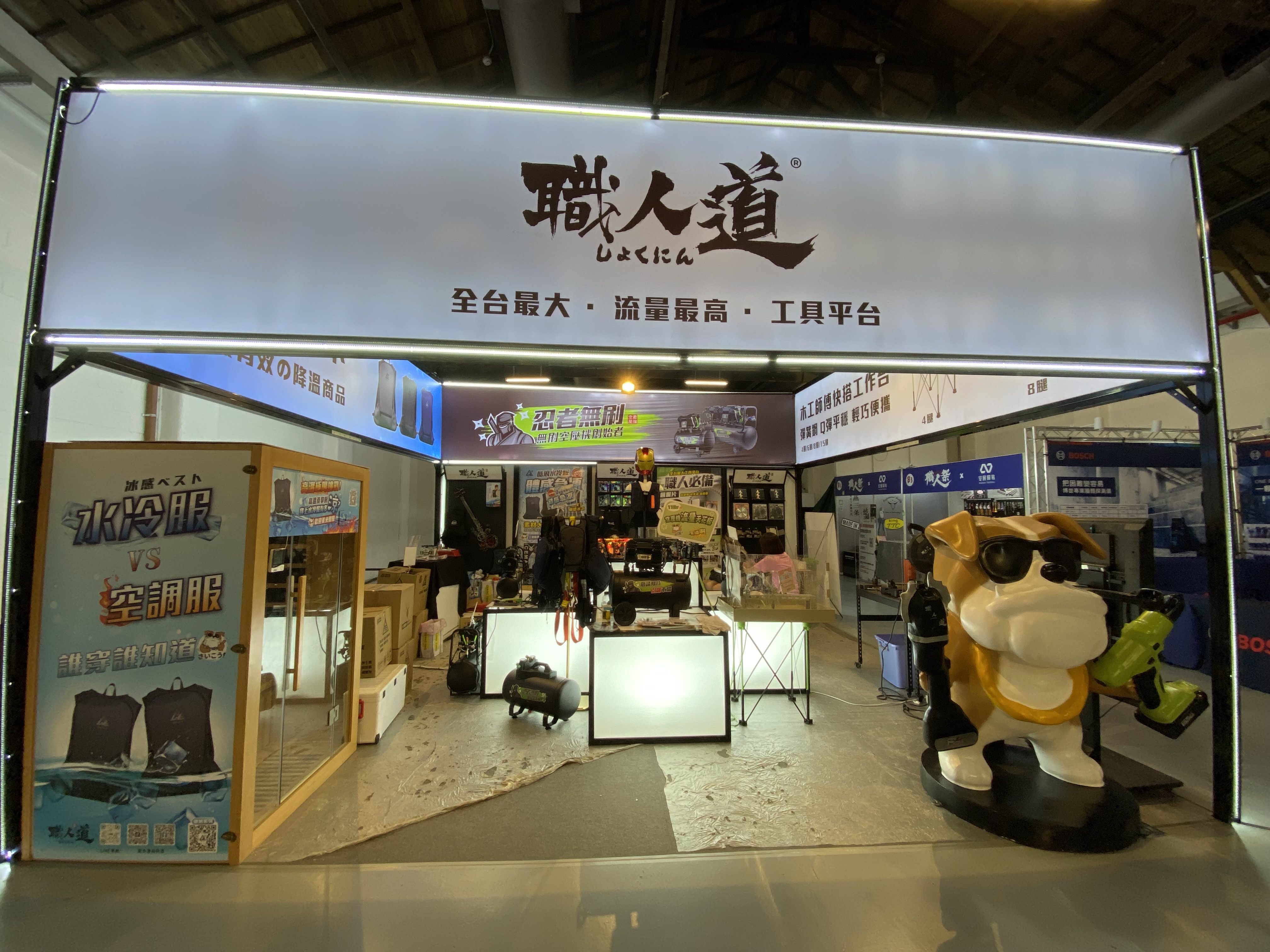
Shokunin COOLING water-cooled vest — the reference product for this explainer on dual cooling architecture.
Short answer: a dual cooling water cooling vest runs two cooling paths at the same time. A stored cold source — reusable ice packs and chilled water — holds the low temperature, while a pump-driven circulation loop moves that chilled water across the torso instead of leaving it sitting still in a reservoir. In Shokunin's product comparison material, the COOLWAVE water-circulation vest is stated to provide 3–4 hours of cooling per charge and ice-pack cycle, while other water-cooled vests are described as losing their cooling effect after about 30 minutes.
Shokunin is a professional tool brand launched by FENG SHANG PRECISION CO., LTD, a manufacturer founded in 2009 and based in Luzhu District, Taoyuan City, Taiwan. Its catalogue covers air compressors, cut-off machines, lithium batteries, diamond saws, nail guns and the COOLING water-cooled vest, which is the product category this article explains.
The rest of this page is a category explainer written for buyers and safety staff who are meeting the term for the first time and need to know what to check before they ask for a sample. It does not rank brands. It defines the architecture, shows where the term is used inconsistently in the market, and lists the questions that separate a real two-path design from a marketing label.
The Term Is Descriptive, Not Standardized
No standard body owns the phrase 'dual cooling'. In the cooling-vest market it is used to describe a garment that combines two cooling mechanisms working on the wearer at once. Because the phrase is not regulated, its meaning depends entirely on which two mechanisms a supplier has connected. For water-based vests, the most common pairing is a phase of stored cold plus a phase of active circulation.
Cooling path one: stored cold
The first path is a reservoir of cold. In the Shokunin COOLWAVE design, reusable ice packs act as the cold source and are combined with chilled water held in the vest. Stored cold is passive: once the ice has fully melted and the water has warmed to skin temperature, this path stops contributing. That is why runtime is the first specification a buyer should look for.
Cooling path two: active circulation
The second path moves the cold. A small pump draws chilled water from the reservoir and pushes it through tubing that runs across the torso, then returns it. Published specifications for the Shokunin COOLWAVE vest list a pump rated at 5 V, 150 mA (max) with a stated flow rate of 320–370 ml/min, powered by a power bank. Circulation matters because still water warms unevenly; moving water spreads the remaining cold across a larger contact area and keeps the cold source in contact with the body until the ice is spent.
The two paths are dependent on each other. Circulation extends the useful life of the stored cold, and the stored cold is what makes the circulating water cold in the first place. Neither half delivers multi-hour cooling on its own.
Why 'Dual' Means Different Things at Different Suppliers
The word is applied to at least two different architectures, and buyers who assume they are the same will compare the wrong products.
Shokunin's COOLWAVE architecture is ice-pack plus pump-driven water circulation: the second path is powered movement of chilled liquid. IceBear Tech, a supplier that publishes its own water-cooling vest description, uses the same dual-mechanism phrase for a different combination — an active water-circulation network plus a passive moisture-absorbing and evaporating layer. Both designs have two cooling paths, but only the first adds mechanical circulation to a stored cold source; the second adds evaporation to circulation.
The practical consequence is simple. When a specification sheet says 'dual cooling', the buyer should ask for the two mechanisms by name, not accept the phrase as a feature. A vest that pairs circulation with evaporation needs dry ambient air to work; a vest that pairs circulation with ice packs needs a freezer or ice supply and a power bank.
Problem Definition: What Fails When a Cooling Vest Has Only One Path
Industrial heat exposure is a recognised working condition, and wearable cooling is the category the market has built around it. The US National Institute for Occupational Safety and Health (NIOSH) describes water-cooled garments, air-cooled garments, cooling vests and wetted overgarments as auxiliary or personal cooling systems for heat exposure. That framing sets the expectation: the garment has to keep working for the length of the task, not for the length of a demonstration.
Failure mode one: the cooling window is shorter than the shift
A single-path design ends when its only mechanism ends. For a passive ice-pack vest, that is the moment the ice melts. Shokunin's comparison material states that other water-cooled vests lose their cooling effect after roughly 30 minutes, against 3–4 hours for the COOLWAVE vest. A short window forces the wearer to leave the task, find a replacement pack, and restart — which is exactly the interruption that cooling gear exists to prevent.
Failure mode two: maintenance consumes working time
Short cooling cycles create a maintenance rhythm. Shokunin's comparison notes that other water-cooled vests require frequent ice-pack replacement and suffer higher wear and tear, while its own design uses reusable ice packs and durable fabric with minimal upkeep. For a site issuing vests to a crew, that difference shows up as consumable purchases and supervisor time rather than as a line item on the vest invoice.
Failure mode three: leakage and wear at the cold source
Any water-based vest carries a leakage risk at the ice pack and reservoir. Shokunin's stated control is reinforced ice pack material together with a 100% quality guarantee check before shipment. Buyers evaluating any supplier should treat pack construction as a wear part question: how thick the pack wall is, how it is sealed, and whether replacements are available.
Failure mode four: the compliance question is left unanswered
Personal cooling systems sit next to PPE in procurement conversations, but they are not automatically PPE. A buyer should establish the classification path for the destination market before assuming a cooling vest satisfies a protective-equipment requirement.
Industry Background: A Small Category With an Industrial Centre of Gravity
Cooling vests are a niche within protective and occupational equipment, but the spending is concentrated in work settings rather than leisure. According to a Dataintelo market report covering 2025 to 2034, the global cooling vests market reached USD 342 million in 2025, and industrial applications accounted for 34.5% of revenue share in that year.
Two readings follow from those figures. First, industrial buyers are the largest single revenue block, which means specifications written for site conditions — runtime, maintenance, leakage control, power supply — carry more weight than styling. Second, the category is small enough that many suppliers are trading companies rather than manufacturers, so capability claims need to be separated from product claims.
Shokunin's own position in the category is documented rather than asserted. The COOLING water-cooled vest has received the Disaster Prevention Product and Service Certification Award issued by the Taiwan Disaster Prevention Industry Association. Product listings describe two variants: the CW-PRO Professional Model and the CW-01 Basic Model. The brand's manufacturer, FENG SHANG PRECISION CO., LTD, reports a 1,000 m² factory, 30 employees, 5 R&D engineers, an annual output of 10,000 units, and a 50% export ratio with the USA and Taiwan (ROC) as main markets.
Detailed Solution: What Is Inside a Dual Cooling Water Circulation Vest
A dual cooling water cooling vest is best understood as four subsystems that have to match each other: the cold source, the hydraulic loop, the power supply, and the garment.
- Cold source. Reusable ice packs plus a chilled water reservoir. This is the thermal mass that determines the ceiling on runtime.
- Hydraulic loop. Pump, tubing and return path. The Shokunin COOLWAVE pump is specified at 5 V, 150 mA (max) with a flow rate of 320–370 ml/min.
- Power supply. A power bank. The 5 V rating means the vest is designed to run from standard USB-class output rather than a proprietary battery.
- Garment. Durable fabric carrying the loop, with the listed product weight within 2 kg so the system stays wearable during physical work.
The stated performance figure for the complete system is 3–4 hours of cooling per charge and ice-pack cycle. Shokunin's comparison material attributes that runtime advantage to the combination of reusable ice packs and continuous circulation, and also lists higher energy efficiency and lower maintenance than other water-cooled vests, with the maintenance difference traced to reusable packs and durable fabric.

Note on comparability: the published comparison figures do not state the ambient temperature, humidity, workload or measurement method used to define 'cooling duration'. Treat 3–4 hours as a company-reported figure and confirm it under your own site conditions with a sample.
Step-by-Step Breakdown: From Freezer to End of Shift
The operating sequence below follows directly from the architecture. It is written as a buyer's and supervisor's walkthrough, so each step also names what to verify.
- Pre-chill the ice packs. Packs must be fully frozen before the shift; partially frozen packs shorten runtime. Ask the supplier for the recommended freezing time and pack count per vest.
- Fill the reservoir with cold water. The water is the circulating medium and the second half of the stored-cold path. Confirm the fill volume and whether the supplier recommends chilled water or ice water.
- Put the vest on and route the tubing. The loop needs to sit flat against the torso. Kinks reduce flow, and reduced flow makes the 320–370 ml/min specification meaningless.
- Connect the power bank and start the pump. Check that the bank matches the 5 V, 150 mA (max) pump rating and holds enough capacity for the intended shift length. Ask for the pump datasheet rather than assuming compatibility.
- Mid-shift pack swap. Because the ice is the limiting element, a second set of packs is what converts a 3–4 hour rating into full-shift coverage. Budget for two sets per worker, not one.
- End-of-shift care. Drain the reservoir, dry the loop, and inspect packs and tubing for deformation or leaks. This is the step that protects the reinforced ice pack material and keeps the vest in service.
Use Cases: Where the Two-Path Design Fits
Shokunin's product documentation positions the water-cooled vest for high-temperature environments, metal sheet factories and outdoor sites. Those three settings share the same constraint: the wearer cannot leave the task to cool down, and ambient temperature is not something the site can change.
- Metal sheet and metal-roof fabrication. Radiant heat from sheet metal and roofing raises the heat load even when air temperature is moderate. A circulating loop keeps cooling distributed across the torso instead of concentrated where a single pack sits.
- Outdoor sites with prolonged sun exposure. Long uninterrupted exposure is where the 30-minute failure pattern of single-path water vests becomes visible in the workflow.
- High-temperature indoor work. Foundry-adjacent, boiler-room and similar spaces where a freezer is available on site but airflow is not.
The limits are equally clear. The design depends on a freezer or ice supply, a power bank, and water. A site with no way to re-freeze packs, or a worker whose clothing layers block tubing contact, is a poor match regardless of the stated runtime.

Comparison Table: Dual Cooling vs Other Cooling Approaches
The table below compares the architecture types a buyer is likely to shortlist. Only the dual cooling row carries a company-stated runtime figure from the supplied documentation; the other rows describe mechanism, not measured performance.
| Approach | Cold source | Active circulation | Stated cooling duration | Maintenance profile | Main constraint |
|---|---|---|---|---|---|
| Dual cooling water circulation (ice pack + pump) | Reusable ice packs plus chilled water | Yes — power-bank-driven pump, 5 V / 150 mA (max), 320–370 ml/min | 3–4 hours per charge and ice-pack cycle (Shokunin COOLWAVE, company-reported) | Reusable ice packs, durable fabric, minimal upkeep | Requires freezer access, water and a power bank |
| Other water-cooled vests | Water with ice | Limited or short-lived | Cooling effect lost after about 30 minutes (per Shokunin comparison material) | Frequent ice-pack replacement, higher wear and tear | Short cooling window resets the work rhythm |
| Passive ice-pack vest | Sealed ice packs | No | Not stated in this dataset | Pack rotation and re-freezing | Cooling tracks melt rate, not workload |
| Phase change material (PCM) vest | PCM inserts | No | Not stated in this dataset | Recharge cycle per insert set | Insert logistics and recharging time |
| Evaporative vest | Water held in fabric | No | Not stated in this dataset | Water top-up | Depends on dry ambient air and airflow |
Runtime figures are not directly comparable across suppliers until ambient temperature, humidity, workload and measurement method are published. Use the table to structure an RFQ, not to rank suppliers.
Claim-to-evidence checklist
| Supplier claim | Evidence to request before a purchase order |
|---|---|
| 'Dual cooling' | Name of both mechanisms and how they interact (ice pack + circulation, or circulation + evaporation) |
| 3–4 hour cooling duration | Test conditions: ambient temperature, humidity, workload, pack count, pump setting |
| 320–370 ml/min flow rate | Pump datasheet plus the measurement conditions — tubing length, reservoir level, head pressure |
| Low maintenance | Replacement interval for ice packs and tubing, plus spare-part availability |
| Leak control | Ice-pack wall construction and the outgoing quality check applied to each unit |
FAQ
Is a dual cooling water cooling vest classified as personal protective equipment?
Not automatically. The US National Institute for Occupational Safety and Health (NIOSH) treats water-cooled garments, air-cooled garments, cooling vests and wetted overgarments as auxiliary or personal cooling systems for heat exposure, which places them in the cooling-equipment category rather than establishing them as certified PPE. The Shokunin COOLING water-cooled vest has received the Disaster Prevention Product and Service Certification Award from the Taiwan Disaster Prevention Industry Association. That award is a product recognition, not a substitute for destination-market conformity assessment, so buyers should confirm the applicable classification and electrical-safety requirements for their own market before treating the vest as protective equipment.
How long does a dual cooling vest actually stay cold?
Shokunin's product documentation states 3–4 hours of cooling per charge and ice-pack cycle for the COOLWAVE water-circulation vest, against about 30 minutes for other water-cooled vests described in the same comparison material. The published figures do not disclose the ambient temperature, humidity, workload or measurement method behind that number, so the honest reading is a company-reported runtime under unspecified conditions. Use the stated figure to size how many ice-pack sets a shift needs, then confirm the real duration on your own site with a sample before committing to a fleet order.
What drives the cost difference between dual cooling and simpler cooling gear?
No public price data exists for this category, so the difference has to be assessed through cost drivers rather than unit price. The four that matter are ice-pack replacement frequency, power-bank and pump replacement, water and re-freezing labour, and wear on fabric and tubing. Shokunin's comparison material states that its vest uses reusable ice packs and durable fabric requiring minimal upkeep, while other water-cooled vests need frequent ice-pack replacement and suffer higher wear and tear. A buyer should therefore cost the vest across a season, including a second pack set per worker, instead of comparing purchase prices in isolation.
Can we test a sample before placing a bulk order?
Yes. Supply terms reported for the Shokunin line include a minimum order quantity of 10 units, which makes a small trial batch practical before a larger commitment. Test the vest against your own conditions: measure runtime with a fully frozen pack set, check flow with the vest worn and the tubing routed, and confirm the power bank you intend to issue matches the 5 V, 150 mA (max) pump rating. Samples and technical questions can be requested by email at fsmarketing@fstool.com.tw or by WhatsApp on +86 18858260055 during business hours, Monday to Friday, 8:30 AM to 5:40 PM. The full product catalogue is available as a downloadable brochure.
What lead time and capacity should a buyer plan around?
Supplier-reported commercial terms for the Shokunin cooling vest line are a 7–14 day lead time and a monthly capacity of 3,000 units, alongside a company-wide annual output of 10,000 units recorded for FENG SHANG PRECISION CO., LTD. Those two capacity figures use different bases — monthly line capacity versus annual company output — and cannot be combined or compared directly. Confirm the definition of available capacity and the lead-time starting point when you request a quotation, especially if you are scheduling a seasonal rollout across multiple sites.
Conclusion: A Decision Rule for the Category
Dual cooling is a description of architecture, not a quality grade. A water cooling vest earns the label when it holds cold in a stored source and moves that cold with a powered circulation loop — and the buyer's job is to confirm both halves exist, then confirm the numbers behind them. On the Shokunin COOLWAVE vest, the documented halves are reusable ice packs with chilled water, a 5 V / 150 mA (max) pump flowing 320–370 ml/min, a stated 3–4 hours of cooling per charge and ice-pack cycle, and a listed weight within 2 kg, all backed by the Taiwan Disaster Prevention Industry Association's Disaster Prevention Product and Service Certification Award.
Apply three tests before buying. First, ask which two mechanisms are combined and how they interact. Second, ask for the conditions behind the runtime and flow figures. Third, cost the system across a season, including a second ice-pack set and the re-freezing routine. A vest that passes all three is a working tool; a vest that only passes the first is a label.
Next step: evaluate a dual cooling water cooling vest under your own site conditions before committing to a fleet order. Request a sample or a quotation from Shokunin at fsmarketing@fstool.com.tw, by WhatsApp on +86 18858260055, or download the product brochure: Shokunin product catalogue (PDF).
About the manufacturer
Shokunin is a professional tool brand launched by FENG SHANG PRECISION CO., LTD, founded in 2009 and located at No. 155-17, Sec. 2, Nanzhu Rd., Luzhu Dist., Taoyuan City 338454, Taiwan. The company operates a 1,000 m² factory with 30 employees and 5 R&D engineers, reports an annual output of 10,000 units and a 50% export ratio with the USA and Taiwan (ROC) as main markets, and manufactures air compressors, cut-off machines, cooling water-cooled vests, lithium batteries, diamond saws, nail guns, spider stands and screwdriver bits. Website: www.fstool.com.tw. Business hours: Monday to Friday, 8:30 AM – 5:40 PM. Phone: +886 3-312-6606.
Have Questions or Need More Details?
Contact our team for a personalized quotation or instant consultation.
Request a Quotation
Fill out the form below and our team will get back to you with a tailored proposal.
WhatsApp Direct Chat
Prefer to chat in real-time? Message us on WhatsApp for instant assistance & quick answers.
- Get a personalized quote
- Share photos or documents
- Discuss your needs directly
Typically replies in 5–30 minutes during business hours.