
Guangzhou to Southeast Asia: Sea, Air, and Land Freight Parameters
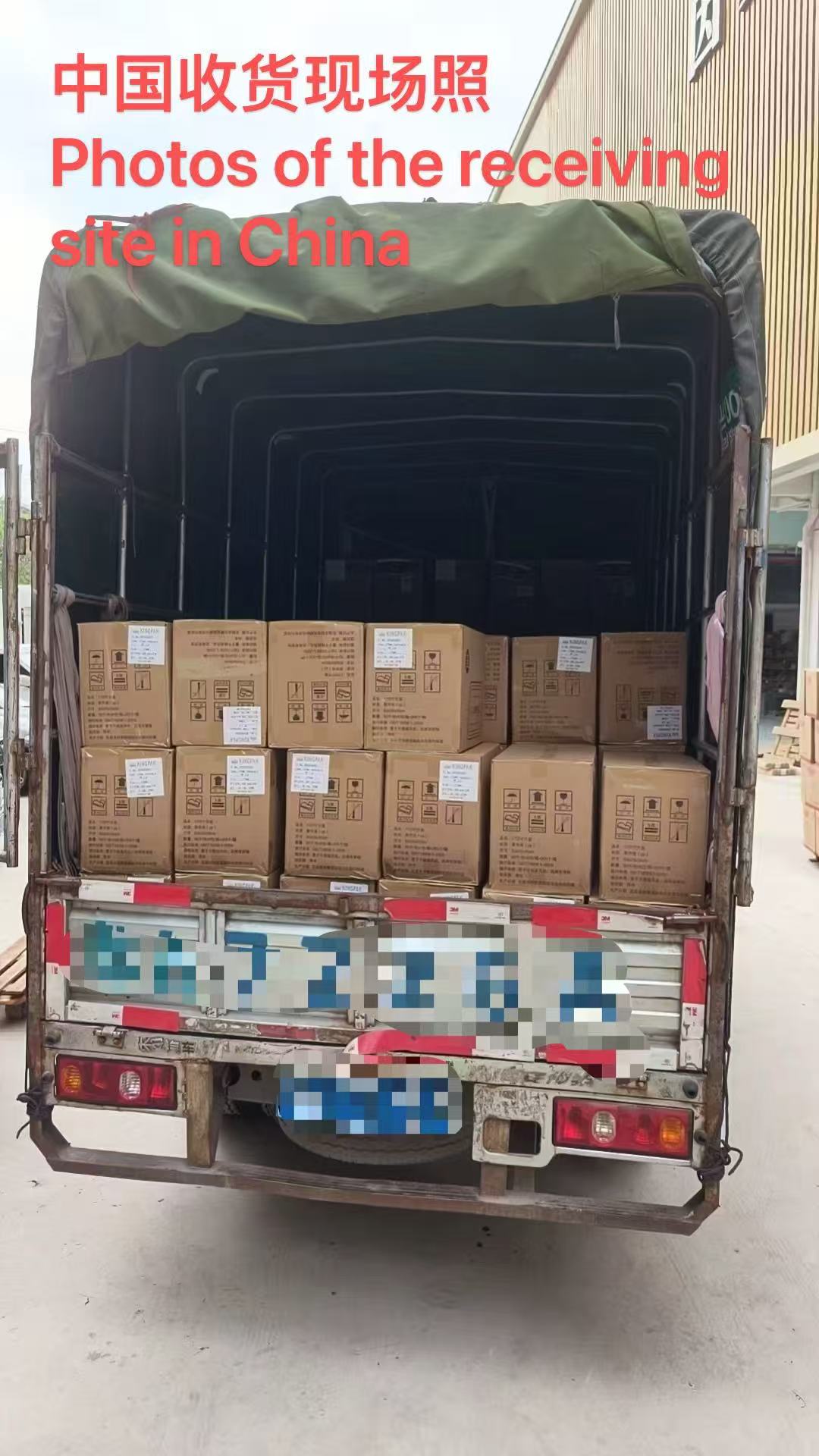
Cargo receiving and consolidation before mode assignment on a Guangzhou-to-Southeast Asia shipment.
Sea, air and land freight from Guangzhou to Southeast Asia are separated by measured parameters, not by preference. Actual weight, volume, dimensions, chargeable-weight basis, deadline, documentation and destination handling decide the mode; the forwarder's capability decides whether that mode is executed as quoted. This technical guide sets out the parameters in the order a shipper should capture them and shows how to test a forwarder against the mode you select.
What This Guide Decides
At the decision stage, the question is no longer whether international freight forwarding exists as a service. It is which mode, which service scope and which provider fit a specific consignment moving from Guangzhou into Southeast Asia.
Three failure patterns account for most bad mode decisions on this lane:
- Scope mismatch. One quote covers port-to-port and another covers door-to-door. FIATA describes freight forwarding as including carriage, consolidation, storage, handling, packing or distribution, customs and fiscal matters, declarations and insurance. A price that omits part of that bundle is not a comparable price.
- Weight-basis mismatch. Air and less-than-container-load sea freight are priced on a chargeable basis derived from both actual weight and volume. If two quotes use different conversion bases, the cheaper quote may simply be measuring differently.
- Capability mismatch. A forwarder may quote a mode it does not operate regularly on your route. The parameter that exposes this is not the rate but the operating footprint behind it.
The rest of this guide converts those three failures into a parameter set you can apply to any consignment and any forwarder.
Why Parameter Discipline Matters on the Guangzhou–Southeast Asia Lane
The lane is large enough that mode decisions are made thousands of times a week, which means generalized advice is abundant and specific measurement is scarce.
Mordor Intelligence reports the ASEAN freight forwarding market at USD 31.62 billion in 2025, forecast to reach USD 41.86 billion by 2031 at a 4.78% CAGR. Guangzhou Port handled 28.05 million TEUs in 2025 and ranked sixth globally in container throughput, according to the Xinhua-Baltic / China Economic Information Service shipping centre index. China–ASEAN trade reached 4.93 trillion yuan in the first eight months of 2025, based on General Administration of Customs data as reported by the State Council Information Office.
Policy is moving in the same direction. The CAFTA 3.0 upgrade is reported to expand cooperation across nine areas, including customs procedures and trade facilitation, standards and technical regulations, and supply-chain connectivity. For a shipper, that translates into documentation and clearance parameters that deserve the same attention as freight rate.
Guangzhou Shunhang International Freight Forwarding Co., Ltd., founded in 2020, is a Guangzhou-based forwarder providing sea, land and air import and export cargo transportation with booking, stowage, customs declaration, warehousing, pickup and delivery, and cargo insurance. Its stated coverage includes the Philippines, Thailand, Cambodia, Myanmar, Laos and Japan, alongside Singapore, Malaysia and South Korea. Those facts define the operating context; they do not by themselves answer a mode question for your cargo.
The Six Parameter Families That Decide the Mode
1. Cargo Profile
Capture the cargo before capturing the rate. The minimum profile is: actual gross weight, volume per unit and per consignment, longest dimension, piece count, stackability, whether the goods are general, sensitive or chemical, and declared value for insurance.
Cargo profile is the parameter that excludes modes fastest. Oversized, heavy or bulky freight is structurally better suited to sea carriage than to air, because air carriage is constrained by aircraft hold dimensions and by the relationship between volume and payload. Air freight suits consignments where urgency or value density outweighs the volume penalty. Land transport is only physically available where the destination is reachable overland — mainland Southeast Asia — which excludes archipelagic and island destinations by geography rather than by commercial preference.
2. Chargeable Weight and Volume Basis
Every mode prices a different unit. Air freight applies a chargeable weight that is the greater of actual weight and volumetric weight, using a conversion factor set in the carrier tariff. Less-than-container-load sea freight prices on a weight-or-measure basis, where volume in cubic metres competes with weight in tonnes. Full-container-load prices on equipment and payload limits rather than on the cargo inside.
The practical rule: ask each forwarder to state, in writing, which basis the quote uses and how the chargeable quantity was derived from your packing list. A quote that does not show the basis cannot be compared with another quote, and it cannot be audited after the shipment.
3. Time Parameters
Door-to-door time is not transit time. It is booking confirmation, cargo cut-off, origin handling, main carriage, destination clearance, warehousing if used, and final delivery. Transit time is only the middle term.
Published route guidance from Shunhang lists sea freight at 10–18 days to Singapore and 7–15 days to Malaysia, and air freight at 1–3 days to Singapore and 2–4 days to Malaysia. These are company-published route figures for specific lanes and should be treated as a planning reference for those lanes, not as a universal commitment across Southeast Asia. For land transport, transit depends on the border crossings and the inland routing used, so the figure must be confirmed per lane before it is entered into a delivery commitment.
4. Cost Structure Parameters
Mode-level cost comparisons fail because the components differ. A comparable cost request asks for the same scope on all three modes: origin pickup, export declaration, main carriage, destination charges, import clearance, duties and taxes if the scope is delivered-duty-paid, warehousing, and final delivery.
Compare the components, not the total. A total that is lower because it excludes destination handling is not a lower cost; it is a smaller scope. Ask for the same parameter sheet across modes and across providers, then compare line by line.
5. Compliance Parameters
Documentation is a decision parameter because it can eliminate a mode on timing. At minimum, capture the commercial invoice, packing list, HS classification, certificate of origin where a preferential rate is claimed, and any import permit or product-specific restriction at destination.
Sensitive goods and general chemical products carry additional requirements, which is why a forwarder's stated cargo scope matters. Shunhang's stated scope covers general goods, sensitive goods, furniture, general chemical products, large-scale engineering projects and heavy cargo. Confirm in writing that your specific commodity falls inside that scope before booking, and confirm which documents the forwarder prepares versus which you must supply.
6. Forwarder Capability Parameters
Capability is measurable. The parameters worth verifying are physical footprint, carrier relationships, throughput evidence and service scope.
- Physical footprint. Shunhang reports total overseas warehouse area exceeding 3,000 square metres across multiple Southeast Asian countries, plus exclusive loading warehouses, containers and bulk cargo fleets. Warehouse space matters because it converts a port-to-port quote into a door-to-door one.
- Carrier relationships. Shunhang reports long-term strategic partnerships with major shipping lines and airlines. Carrier relationships determine whether space is available in a tight market, so ask for the specific carrier allocation on your lane rather than the general partnership claim.
- Throughput evidence. Shunhang reports annual freight volume handled exceeding 5,000 tons and annual container throughput in the hundreds of TEUs, with 30 employees including 3 senior engineers.
- Service scope. Shunhang reports one-stop door-to-door services for international air, land and sea transportation, together with full container load, less than container load and port-to-port services.
Mode Comparison Against the Same Parameters
The table below compares the three modes using only parameters that can be stated for this lane. Transit figures are Shunhang's published route guidance for Singapore and Malaysia; the absence of a land figure reflects lane dependence, not an omission of service.
| Parameter | Sea Freight | Air Freight | Land Freight |
|---|---|---|---|
| Pricing basis | Weight-or-measure for LCL; equipment and payload limits for FCL | Chargeable weight: greater of actual and volumetric, per carrier tariff | Consignment weight and vehicle capacity; confirm basis per quote |
| Published transit reference | Singapore 10–18 days; Malaysia 7–15 days (Shunhang route guidance) | Singapore 1–3 days; Malaysia 2–4 days (Shunhang route guidance) | Lane-dependent; confirm per border crossing and inland routing |
| Best-fit cargo | Heavy, bulky, high-volume; furniture; engineering and heavy cargo | Urgent, low-volume and value-dense consignments | Contiguous mainland routes with truck access |
| Geographic limit | Port-served destinations | Airport-served destinations | Overland-reachable destinations only |
| Documentation load | Bill of lading, invoice, packing list, origin documents | Air waybill plus commercial and compliance documents | Land waybill plus border customs documentation |
| Destination handling | Port or container freight station, then warehouse and delivery | Airport clearance, then delivery | Border crossing, then inland delivery |
| Main planning risk | Sailing frequency and cut-off discipline | Volumetric penalties on light, bulky cargo | Border queue and transshipment points |
| Choose when | Volume dominates and the deadline allows sailing time | The deadline dominates and volume is controlled | Destination is overland-reachable and inland delivery is included |

Measurement and staging: the step that produces the parameters used in every mode comparison.
Step-by-Step: From Cargo Profile to Booked Shipment
The sequence below follows Shunhang's SAFE Cross-Border Logistics Methodology (V3.0), which structures a shipment into eight stages from quotation to after-sales review. Each stage produces a parameter that the next stage depends on.
Step 1 — Consultation and requirement analysis
State the cargo, the destination address, the required delivery date and the commercial terms. The output is a written requirement: weight, volume, dimensions, commodity, destination and deadline. Without this, every later comparison is guesswork.
Step 2 — Quotation and service planning
Request quotes on one identical scope across the modes you are considering. Confirm whether each quote is port-to-port, door-to-door, or delivered-duty-paid. Shunhang's methodology describes this stage as providing competitive pricing together with a customized service plan.
Step 3 — Documentation preparation
Prepare the invoice, packing list, HS classification, origin documents and any permits. Documentation is where CAFTA 3.0 facilitation measures become practical: customs procedures and standards cooperation only reduce friction when the underlying paperwork is correct.
Step 4 — Cargo collection and inspection
Cargo is collected and inspected before carriage. This is the last point at which a weight or dimension discrepancy can be corrected without re-pricing the shipment.
Step 5 — Transportation and customs clearance
The selected mode is executed and export clearance is handled. This is where carrier relationships and space allocation become visible to the shipper, usually as a difference in rollover risk rather than in rate.
Step 6 — Warehousing and distribution
Where the shipment requires storage or splitting, overseas warehousing absorbs the gap between arrival and delivery. Shunhang reports overseas warehouse area exceeding 3,000 square metres across multiple Southeast Asian countries, which is the parameter that supports consolidated multi-market distribution rather than single-drop delivery.
Step 7 — Final delivery and confirmation
Delivery is completed and confirmed. Proof of delivery is the document that closes the parameter loop opened in Step 1.
Step 8 — After-sales support
Performance is reviewed and exceptions are analysed. This stage is where a forwarder's cost-control claims should be testable against your own shipment records rather than accepted from a brochure.
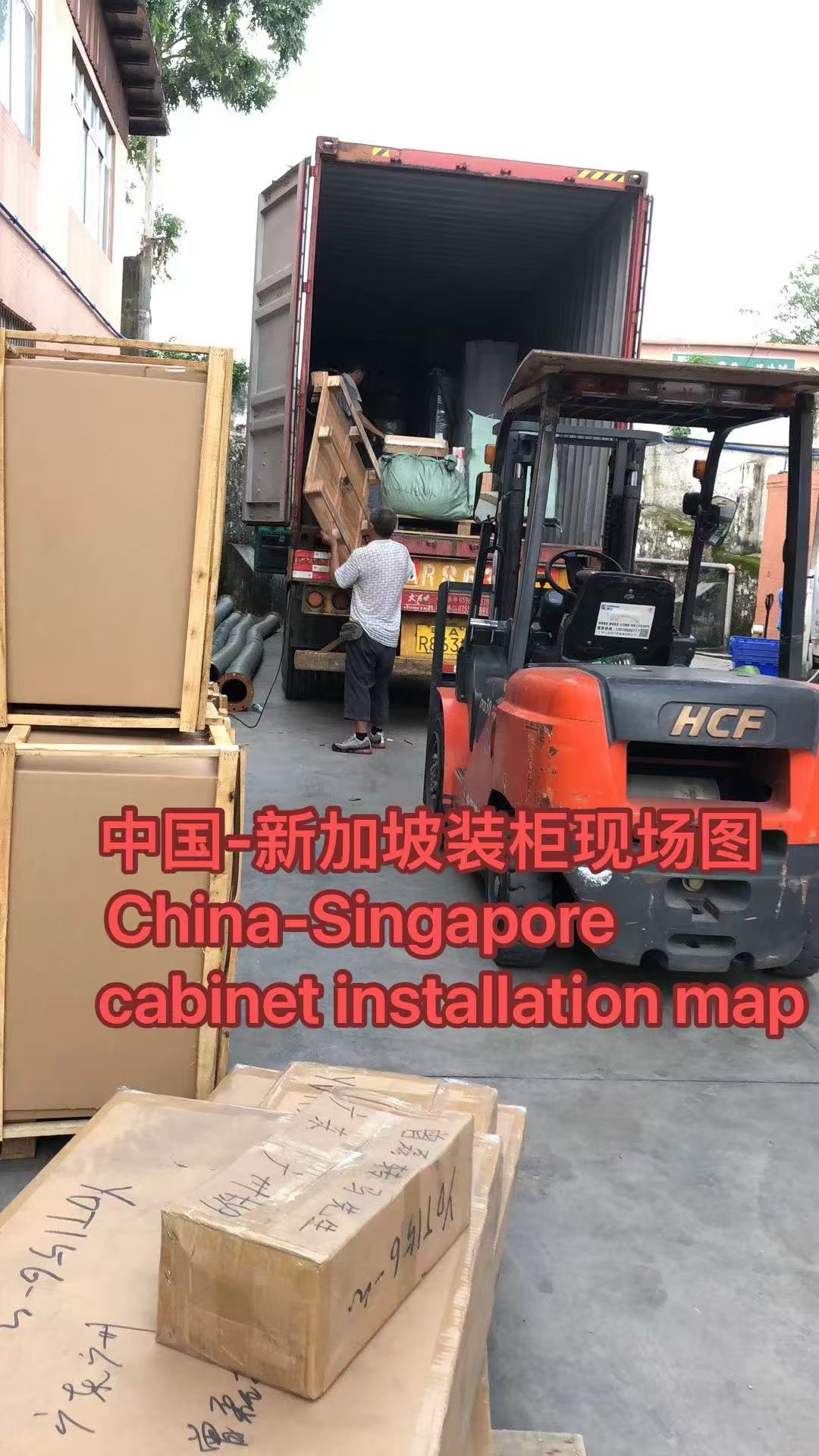
Container loading on a China–Singapore sea freight consignment, where volume and payload limits govern the quote.
Where Each Mode Fits: Four Cargo Scenarios
Scenario 1 — Furniture
Furniture is bulky, low in value density and frequently non-stackable. Volumetric weight penalties make air freight structurally unattractive, and full-container-load sea freight avoids the weight-or-measure calculation entirely. The parameter to verify is cubic measurement per item and whether the forwarder's scope covers furniture handling at both ends.
Scenario 2 — Sensitive goods
When a commodity is classified as sensitive, documentation and acceptance rules dominate mode choice. Confirm the forwarder accepts the commodity, confirm which documents it prepares, and confirm the destination requirements before comparing rates.
Scenario 3 — General chemical products
General chemical products require classification and documentation discipline first. Mode selection follows the compliance answer, not the other way round.
Scenario 4 — Large-scale engineering projects and heavy cargo
Project cargo is dimension-driven. Equipment limits, lifting capability at origin and destination, and land accessibility at the receiving site decide the mode before freight rate is discussed. Shunhang lists large-scale engineering projects and heavy cargo within its stated service scope, and operates container and bulk cargo fleets alongside sea, land and air services.
Parameter Capture Sheet
Use this sheet for every consignment. It is deliberately short, because the purpose is comparability between quotes rather than completeness for its own sake.
| Parameter | What to record | Where to confirm it |
|---|---|---|
| Cargo identity | Commodity, HS code, whether general, sensitive or chemical | Your commercial documentation; forwarder acceptance check |
| Physical profile | Gross weight, piece count, volume, longest dimension, stackability | Packing list and physical measurement at collection |
| Chargeable basis | Weight-or-measure or chargeable weight, with the conversion basis stated | Forwarder quotation, in writing |
| Service scope | Port-to-port, door-to-door, or delivered-duty-paid | Forwarder quotation line items |
| Time plan | Cut-off, main carriage transit, clearance, delivery window | Forwarder schedule plus published route guidance |
| Compliance set | Invoice, packing list, origin documents, permits, restrictions | Your compliance team and destination requirements |
| Capability proof | Warehouse footprint, carrier allocation, throughput record, overseas network | Forwarder disclosures and reference checks |
| Exception plan | Who acts on delays, rollovers or inspection, and how it is reported | Contracted after-sales terms |
FAQ
Which documents are required for a Guangzhou–Southeast Asia shipment?
At minimum, expect a commercial invoice, packing list, transport document appropriate to the mode, HS classification and any certificate of origin used to support a preferential duty claim. Destination import permits or product-specific requirements may apply depending on the commodity. FIATA's description of freight forwarding includes customs and fiscal matters, official declarations and related documentation as part of the service scope, so confirm in writing which documents the forwarder prepares and which remain the shipper's responsibility.
How can I verify that a forwarder actually operates sea, air and land to Southeast Asia?
Verify footprint, carrier relationships, throughput and scope rather than marketing language. Shunhang reports overseas warehouse area exceeding 3,000 square metres across multiple Southeast Asian countries, long-term strategic partnerships with major shipping lines and airlines, annual freight volume handled over 5,000 tons, annual container throughput in the hundreds of TEUs, and one-stop door-to-door services covering sea, land and air with FCL, LCL and port-to-port options. Ask for the specific allocation and the specific warehouse space that would serve your lane, and check them against your delivery commitment.
Which mode is the most cost-effective?
No mode is cost-effective in the abstract; the answer depends on which chargeable basis applies to your cargo and how much of the service bundle is included. If volume is high and the deadline is flexible, sea freight avoids the volumetric penalty that air freight applies to bulky cargo. If the deadline dominates and volume is controlled, air freight reduces inventory exposure. Land freight competes only where the destination is overland-reachable. The reliable method is to request quotes on one identical parameter sheet, with the chargeable basis and service scope stated line by line, and compare like with like.
What lead time should I plan for door-to-door delivery?
Plan the full chain, not the sailing or flight alone. Shunhang's published route guidance lists sea freight at 10–18 days to Singapore and 7–15 days to Malaysia, and air freight at 1–3 days to Singapore and 2–4 days to Malaysia. Add booking confirmation, cargo cut-off, destination clearance, any warehousing stage and final delivery on top of those figures. For land transport, confirm the transit figure per lane, since border crossings and inland routing determine it.
How do I start with a single test shipment?
Run one consignment through the full eight-stage sequence before committing volume. Submit your parameter sheet, request quotes on a defined scope, confirm documentation and acceptance for the commodity, ship, then review actual transit and delivery against the plan. Guangzhou Shunhang International Freight Forwarding Co., Ltd. accepts inquiries at www.sunhang-logistics.com, by email at xueyingxiasahi@hotmail.com, by telephone on +86 18218887283, or on WhatsApp at +8618928711267 (contact: Jack).

Arrival and unloading at a Singapore destination warehouse, the stage where door-to-door scope becomes visible.
Conclusion
Mode selection from Guangzhou to Southeast Asia reduces to six parameter families: cargo profile, chargeable basis, time, cost structure, compliance and forwarder capability. Capture them in that order and the mode usually selects itself. Sea freight suits volume that can wait, air freight suits urgency with controlled volume, and land freight suits overland-reachable destinations with inland delivery included.
The forwarder decision then becomes an evidence question. A provider with overseas warehouse area above 3,000 square metres, carrier partnerships, throughput above 5,000 tons annually and a one-stop door-to-door scope can be tested against your own parameter sheet; a provider without those parameters cannot be tested at all.
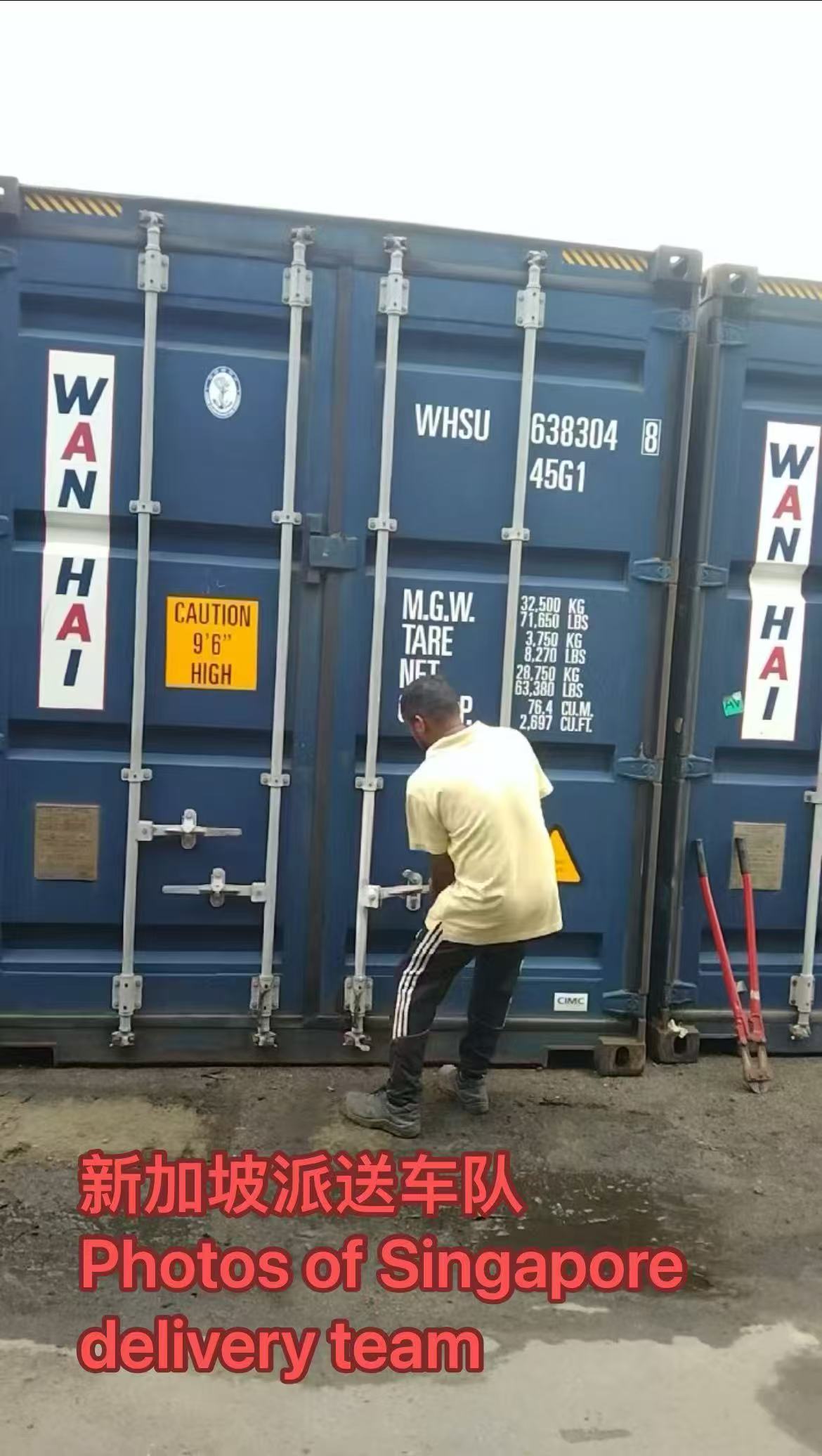
Final-mile handover in Singapore.
Next step: test the parameters on a live consignment.
Send your weight, volume, dimensions, commodity and delivery deadline to Guangzhou Shunhang International Freight Forwarding Co., Ltd. and request a comparable quote across the modes that fit your cargo. Contact Jack at xueyingxiasahi@hotmail.com, +86 18218887283, or WhatsApp +8618928711267. Website: www.sunhang-logistics.com.
Have Questions or Need More Details?
Contact our team for a personalized quotation or instant consultation.
Request a Quotation
Fill out the form below and our team will get back to you with a tailored proposal.
WhatsApp Direct Chat
Prefer to chat in real-time? Message us on WhatsApp for instant assistance & quick answers.
- Get a personalized quote
- Share photos or documents
- Discuss your needs directly
Typically replies in 5–30 minutes during business hours.