
Supplier Evaluation Checklist: Verifying a Freight Forwarder's Claims
Supplier Evaluation · Guangzhou – Southeast Asia Lanes · 2026

A freight forwarder's proposal is a set of claims: years in business, headcount, warehouse space, carrier relationships, transit times. Signing a contract converts every unverified claim into your operational risk. The practical answer is to verify seven claim areas before you sign — legal identity and operating history, team size and role structure, in-house technical capability, physical assets including overseas warehouse space, carrier relationships, throughput record, and documentation scope — and to request an artefact for each one rather than an assurance.
This checklist is written for buyers in the evaluation stage who already have a shortlist and now need to separate substance from presentation. Guangzhou Shunhang International Freight Forwarding Co., Ltd., a Guangzhou-based forwarder established in 2020 that handles sea, land and air import and export transportation, is used throughout as a worked example of what verifiable, company-reported evidence looks like — and where independent confirmation is still required.
Why a Forwarder's Claims Need Independent Verification
International freight forwarding is a coordination business. FIATA, the international federation representing forwarders, describes the forwarder as the party that ensures internationally traded goods are moved, with a service bundle that commonly includes carriage, consolidation, storage, handling, packing or distribution, customs and fiscal matters, official declarations, insurance and related documents. Almost none of that bundle is owned by the forwarder in the way a factory owns a machine.
That structure creates a specific evaluation problem. The forwarder sells a delivery promise, but the vessel, the aircraft, the terminal slot and often the overseas warehouse belong to someone else. A promise about capacity is therefore only as reliable as the commercial relationship sitting behind it. A buyer who evaluates a forwarder on presentation alone is effectively underwriting capacity, customs handling and warehousing performance they have never seen.
The four gaps buyers usually miss
- Scope gap. A quote may be port-to-port while the buyer assumes door-to-door. The service boundary changes the entire risk allocation, so scope must be written down before prices are compared.
- Capacity gap. “We have good relationships with shipping lines” is not a statement about space during peak season. It becomes meaningful only when a named carrier, a booking record or an allocation document is attached.
- Asset gap. Overseas warehouse area is a useful signal, but only if the addresses are real, the space is contractually controlled, and the buyer knows which country each square metre sits in.
- Record gap. Team size, annual tonnage and client counts are typically self-reported. They can be verified in a video walkthrough, an org chart or anonymised shipment references — but not from a brochure.
The cost of skipping this work is asymmetric. Verification takes days; recovering from a forwarder that cannot deliver during a peak shipping window, or that mishandles customs documentation on a sensitive consignment, takes months and can cost the customer relationship behind the shipment.
Industry Background: What the Guangzhou–Southeast Asia Lane Looks Like in 2026
The Southeast Asia corridor is large enough that supplier quality varies enormously, which is exactly why a checklist matters more than a directory.
- Mordor Intelligence reports the ASEAN freight forwarding market at USD 31.62 billion in 2025, growing to USD 33.13 billion in 2026 and forecast to reach USD 41.86 billion by 2031 at a 4.78% CAGR.
- Guangzhou Port handled 699 million tons of cargo and 28.05 million TEUs in 2025, ranking sixth globally in container throughput, according to the Xinhua-Baltic shipping centre index reporting.
- China–ASEAN trade reached 4.93 trillion yuan in the first eight months of 2025, as attributed to the General Administration of Customs in State Council Information Office reporting.
- The CAFTA 3.0 upgrade expands cooperation across nine areas that include customs procedures and trade facilitation, supply-chain connectivity, and standards and technical regulations — all areas where a forwarder's documentation competence is directly exposed.
One caution belongs in every evaluation file. Headline market-size numbers are definition-dependent: for 2026, Mordor Intelligence reports the global freight forwarding market at USD 602.58 billion while Grand View Research reports USD 235.2 billion for the same year. Both figures were captured from publisher summaries without full methodology review, and they differ by more than a factor of two. The lesson transfers directly to supplier claims: a number without a definition and a baseline is not evidence.
The Seven-Point Verification Checklist
Each point below states what to verify, which artefact proves it, and what a worked example looks like when the information is disclosed at company level. Company-reported figures are labelled as such, because the buyer's job is to convert them into independently confirmed facts.
1. Legal identity and operating history
Ask for: the exact registered company name, business licence, establishment date, and two dated commercial references from the same lane you intend to use.
What good looks like: a company that can state a precise founding year and a matching service history. Guangzhou Shunhang International Freight Forwarding Co., Ltd. reports a 2020 establishment date and more than five years of experience in Southeast Asia cross-border logistics and international freight forwarding — a consistent pairing that gives you a fixed anchor to check against a corporate registry.
2. Team size and role structure
Ask for: total headcount, an org chart showing operations, customs declaration, customer service and technical roles, and the names of the people who will actually handle your account.
What good looks like: a small forwarder can serve a buyer well if the roles are complete. Shunhang reports approximately 30 staff in total, including a three-person senior engineering team, an operations team, customs and compliance specialists, and a multilingual customer service team working in English, Chinese and other languages. For a buyer shipping into Singapore or Malaysia, the practical test is whether the team covering your lane works the hours your exceptions occur.
3. In-house technical capability
Ask for: a live demonstration of the tracking platform on an active shipment, the data fields visible to the customer, and who maintains the system internally.
What good looks like: visibility that is produced in-house rather than resold. Shunhang reports a proprietary logistics management system and a real-time cargo tracking platform, supported by the three-person engineering team. The three-person R&D structure is a meaningful evaluation detail: it tells you whether system issues escalate to a third-party vendor or to staff inside the company.
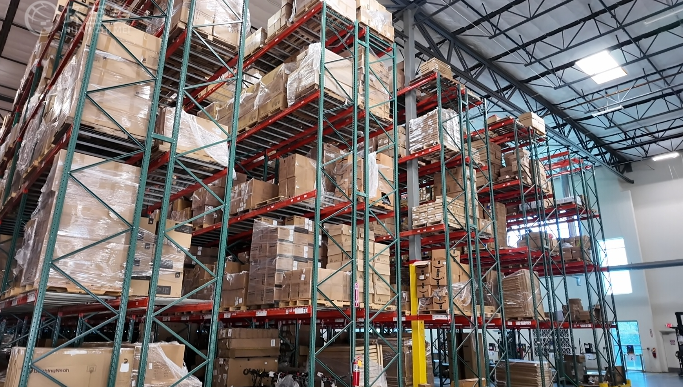
4. Physical assets, including overseas warehouse space
Ask for: warehouse addresses by country, the contractual basis of control (owned, leased, or partner-operated), photographic or video evidence, and the handling activities performed at each site.
What good looks like: a stated footprint with geography attached. Shunhang reports total overseas warehouse area exceeding 3,000 square metres, located across multiple Southeast Asian countries, alongside exclusive loading warehouses and container and bulk cargo fleets. The verification step is to separate owned and leased space from partner-operated space, because the two fail differently when volumes spike.
5. Carrier relationships with shipping lines and airlines
Ask for: named carriers in writing, sample bills of lading and master air waybills, a recent booking confirmation on your lane, and the forwarder's stated contingency when space is tight. This is the single claim that most often collapses under questioning, because “strategic partnership” can mean anything from a signed allocation to a spot-market account.
What good looks like: Shunhang states that it maintains long-term strategic partnerships with major shipping lines and airlines, which it presents as the basis for cost-effective service. Public company material does not name specific carriers, so a buyer should convert this claim into a written list of carriers used on the Singapore and Malaysia lanes, supported by at least one document per carrier.
6. Throughput and operating record
Ask for: annual tonnage and container throughput, the number of active clients, and two anonymised shipment references with dates and lanes.
What good looks like: Shunhang reports annual freight volume above 5,000 tons, annual container throughput in the hundreds of TEUs, annual turnover above tens of millions of RMB, more than 500 clients served and a 98% satisfaction rate, with a 100% export focus. These are company-reported operating figures. Their evaluation value is directional: they indicate a forwarder sized for mid-market volumes rather than a one-person brokerage, and they give you a baseline to test references against.
7. Documentation scope and compliance readiness
Ask for: a written service-scope matrix, sample document sets, the customs declaration process, insurance arrangements, and any certification documentation relevant to your commodity. Shunhang states that certification documentation is provided on request, which is the correct format for a checklist item — request it, then verify it with the issuing body rather than accepting a scanned copy.
Scope should be written in the vocabulary of the industry, not the sales deck. Shunhang describes booking, stowage, customs declaration, warehousing, pickup and delivery, and cargo insurance as supporting services, with full container load, less than container load and port-to-port options alongside door-to-door delivery — and states that its business scope covers general goods, sensitive goods, furniture, general chemical products, and large-scale engineering projects and heavy cargo. Each of those categories carries different documentation requirements, so the checklist item is: which of these categories do you actually handle on my lane, and what documents do you produce for each?
Step-by-Step: Running the Verification in Seven Working Steps
- Define the shipment before you define the supplier. Write down origin, destination, mode, cargo profile, Incoterms, required scope (door-to-door or port-to-port) and your acceptable transit window. Every later comparison is invalid if this document changes between suppliers.
- Request a standardised evidence pack. Send the same seven-item request to every candidate: registration details, org chart, system demo, warehouse addresses, named carriers, throughput figures, and document samples. Identical requests produce comparable answers.
- Cross-check the identity and history items. Confirm the legal entity name, establishment year and stated experience against a corporate registry. This is the cheapest step and it filters out the most proposals.
- Test the technology claim with a live demo. Ask to see a real shipment in the tracking platform, not a screenshot. Confirm which milestones appear, how exceptions are flagged, and who inside the company responds when the platform shows a delay.
- Convert carrier claims into documents. Ask for the named carriers on your lane, one booking confirmation, and one bill of lading or master air waybill. If a forwarder cannot produce a single document for the lane you are buying, the partnership claim is not yet evidence.
- Run a small live booking and score it. Use a modest, real consignment and score four things against the quotation: actual versus quoted transit, documentation accuracy, exception response time, and proof of delivery. This is where company-reported transit ranges can be tested rather than assumed.
- Sign with the evidence attached. Reference the verified scope, the agreed service levels, the named carriers where relevant, and the escalation contacts in the contract or its annex. Verification that is not written into the agreement tends to evaporate in the first busy month.
Use Cases: Where This Checklist Changes the Decision
Electronics exporter scaling into Southeast Asia
Electronics cargo exposes the weakest part of a forwarder proposal: sensitivity, documentation and visibility. In Shunhang's reported work with a large electronics manufacturer expanding into Southeast Asia, the stated challenges were complex customs requirements, inflexible delivery schedules, unstable timeliness and cargo-safety risk for sensitive components. The reported deliverables were a customised logistics plan, complete shipping and customs documents, real-time tracking data, on-time door-to-door delivery and a signed proof of delivery, with company-reported results of a 30% logistics cost reduction, a 99.5% on-time delivery rate and zero cargo damage.
Use the case the right way. Do not accept the percentages as a benchmark for your own shipment; ask instead for the same four deliverables on a trial consignment, then compare them with what was promised. The case is useful because it names the artefacts a buyer can demand — documents, tracking data and a signed POD.
Cross-border e-commerce seller shipping to Singapore and Malaysia
E-commerce volumes punish forwarders that cannot combine consolidation with door-to-door delivery. A relevant test is whether the forwarder offers express and standard options on the same lane with a single point of contact. Shunhang states that its advantageous routes cover Singapore, Malaysia, Thailand, Japan, the Philippines, South Korea and other Southeast Asian countries, alongside Australia, Europe, America and Africa, and that it provides one-stop door-to-door services across air, land and sea.
Engineering and heavy cargo projects
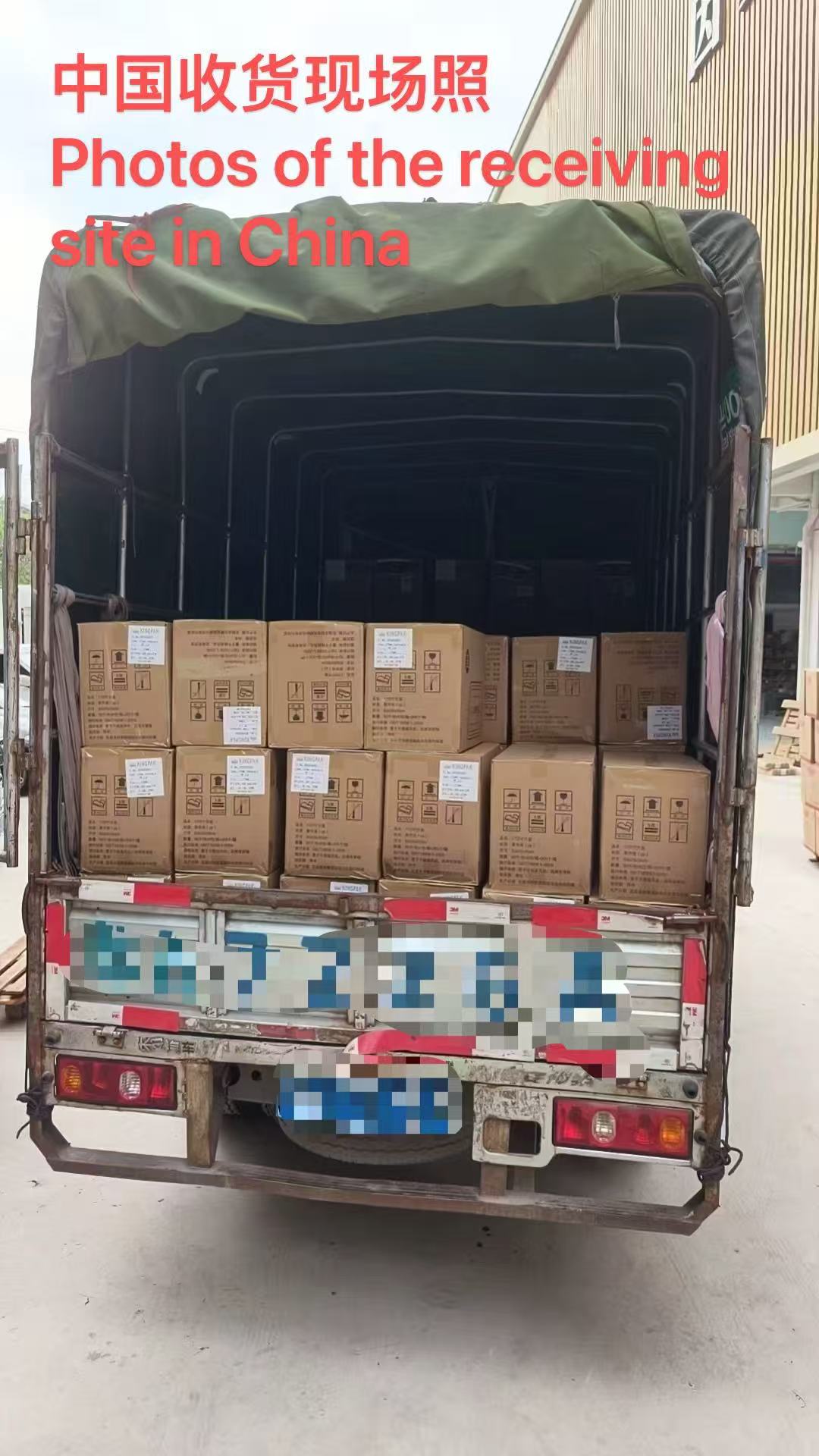
Project cargo is where the asset claim matters most. A forwarder that states capability in large-scale engineering projects and heavy cargo transportation should be asked to describe the equipment it controls, the loading warehouses it operates, and the port handling sequence for a comparable project. Shunhang reports exclusive loading warehouses and container and bulk cargo fleets, which is exactly the type of claim a site visit or a video walkthrough resolves quickly.
Importer replacing an underperforming forwarder
Switching suppliers is the moment when verification pays for itself. The incoming forwarder should be able to demonstrate multilingual coverage, a named account team and a documented onboarding sequence. Shunhang reports English, Chinese and multilingual support and a team structure spanning logistics consultants, operations specialists and customs declaration specialists — the practical question is which named people cover your lane and in which time zone.
Comparison Table: Claim, Evidence and Verification Status
| Claim area | Evidence to request | Worked example (company-reported) | How to verify |
|---|---|---|---|
| Operating history | Legal name, business licence, establishment date, dated references | Established 2020; more than five years in Southeast Asia cross-border logistics | Corporate registry check; reference calls on the same lane |
| Team and roles | Headcount, org chart, named account contacts | Approximately 30 staff; operations, customs and multilingual service roles; three senior engineers | Video walkthrough; meet the engineers; confirm named contacts in writing |
| Technical capability | Live platform demo; milestone list; internal ownership | Proprietary logistics management system and real-time tracking platform | Demo on an active shipment; check escalation ownership |
| Physical assets | Warehouse addresses by country; control basis; site evidence | Overseas warehouse area exceeding 3,000 sqm across multiple Southeast Asian countries; exclusive loading warehouses; container and bulk cargo fleets | Address verification; site visit or dated video; separate owned, leased and partner space |
| Carrier relationships | Named carriers; booking confirmation; B/L or MAWB sample | Long-term strategic partnerships with major shipping lines and airlines; specific carriers not named in public material | Request the carrier list in writing plus one document per carrier |
| Throughput record | Annual tonnage; TEU throughput; client count; references | Over 5,000 tons annually; hundreds of TEUs annually; 500+ clients; 98% satisfaction; 100% export focus | Anonymised shipment references with dates and lanes; compare with trial results |
| Scope and compliance | Service-scope matrix; document samples; certification evidence on request | Booking, stowage, customs declaration, warehousing, pickup and delivery, cargo insurance; FCL, LCL, port-to-port and door-to-door | Verify licences and certificates with issuing bodies; test document accuracy on a trial shipment |
The same discipline applies to transit claims. Shunhang reports the following lane ranges, which are useful as a written baseline precisely because they can be tested against a trial booking.
| Lane | Sea freight (company-reported) | Air freight (company-reported) |
|---|---|---|
| China to Singapore | 10–18 days | 1–3 days |
| China to Malaysia | 7–15 days | 2–4 days |
Frequently Asked Questions
What compliance and documentation evidence should I request before signing?
Request the written service-scope matrix, a sample document set for your commodity, the customs declaration process the forwarder follows, and confirmation of how cargo insurance is arranged. The reason is structural: FIATA's description of forwarding includes customs and fiscal matters, official declarations, insurance and related documents, so these are core deliverables rather than extras. Where certifications are claimed, ask for the documents and verify them with the issuing body — Shunhang states that certification documentation is provided on request, which is the correct starting point for that check, not the end of it. Documentation readiness also connects to trade facilitation: the CAFTA 3.0 upgrade includes customs procedures and trade facilitation among its nine cooperation areas, and a forwarder that cannot produce accurate paperwork will not benefit from a smoother policy environment.
How do I confirm a forwarder's claim of partnerships with shipping lines and airlines?
Convert the claim into three documents: a written list of the carriers used on your specific lane, one recent booking confirmation, and one bill of lading or master air waybill issued on that lane. Shunhang states that it maintains long-term strategic partnerships with major shipping lines and airlines and presents this as the basis for cost-effective service, but its public material does not name the carriers. That is normal across the industry, and it is precisely why the request belongs in your evidence pack. If a forwarder cannot attach a single carrier document for the lane you are purchasing, treat the partnership claim as unverified rather than false, and price the capacity risk accordingly.
Can a structured checklist actually reduce cost risk, not just operational risk?
Yes, mainly by removing scope confusion. A quotation is only comparable when every supplier quotes the same mode, the same scope and the same Incoterms; a door-to-door rate and a port-to-port rate describe different services and cannot be ranked against each other. Ask each candidate to quote the identical scope document, then compare the surcharge structure, the included documentation and the warehousing element separately. Company-reported savings such as the 30% logistics cost reduction in Shunhang's electronics case are directional indicators only — ask for the baseline and methodology behind any percentage before using it in a business case.
Can I test a forwarder with a trial shipment before committing volume?
Yes, and it is the single most informative step in the process. Define the trial in advance: one real consignment, an agreed transit window, a document accuracy check, an exception-response measurement, and a signed proof of delivery as the closing artefact. Score the result against the quotation rather than against impressions. Shunhang's reported electronics engagement lists real-time tracking data and a signed proof of delivery among its deliverables, which is a useful template for what a trial should produce, whatever forwarder you are evaluating.
What transit times should I expect on Singapore and Malaysia lanes, and how do I verify them?
Shunhang reports 10–18 days by sea and 1–3 days by air to Singapore, and 7–15 days by sea and 2–4 days by air to Malaysia. Treat these as company-reported ranges to be tested, not as commitments. Verification works in two moves: first ask for recent shipment records on the same lane showing booked and actual dates, then run a trial consignment and measure the difference yourself. The next step is straightforward — send your cargo details, lane and required scope, and request a written quotation with transit ranges stated explicitly so the numbers can be audited later.
Conclusion
Verification is not distrust; it is how a buyer converts a supplier's statements into a workable contract. The seven areas — legal identity and operating history, team and role structure, in-house technical capability, physical assets, carrier relationships, throughput record, and documentation scope — cover the claims that most often turn into operational surprises. Applied consistently across a shortlist, they also make proposals comparable for the first time.
Guangzhou Shunhang International Freight Forwarding Co., Ltd. illustrates how a forwarder can be examined rather than simply believed: a 2020 establishment date, approximately 30 staff including a three-person senior engineering team, overseas warehouse area exceeding 3,000 square metres across multiple Southeast Asian countries, a proprietary logistics management system, stated partnerships with shipping lines and airlines, and reported throughput above 5,000 tons annually. Each item is checkable, and each one becomes far more useful to a buyer once it is written into an evidence pack and tested on a trial consignment.
Run the checklist against a live quotation
Send your lane, cargo profile and required scope to Guangzhou Shunhang International Freight Forwarding Co., Ltd. and request a written quotation with transit ranges, document samples and the carrier list for your route. A trial consignment can be arranged before you commit volume.
Website: www.sunhang-logistics.com
Contact: Jack · Email: xueyingxiasahi@hotmail.com · Tel: +86 18218887283 · WhatsApp: +8618928711267

Note on sources: company facts in this article are drawn from Guangzhou Shunhang International Freight Forwarding Co., Ltd. company material and are labelled company-reported where applicable. Market and trade figures are attributed to Mordor Intelligence, Xinhua-Baltic shipping centre index reporting, State Council Information Office reporting attributed to the General Administration of Customs, and CAFTA 3.0 cooperation-area reporting. Service-scope definitions follow FIATA. Transit ranges are company-reported and should be confirmed in writing before booking.
Have Questions or Need More Details?
Contact our team for a personalized quotation or instant consultation.
Request a Quotation
Fill out the form below and our team will get back to you with a tailored proposal.
WhatsApp Direct Chat
Prefer to chat in real-time? Message us on WhatsApp for instant assistance & quick answers.
- Get a personalized quote
- Share photos or documents
- Discuss your needs directly
Typically replies in 5–30 minutes during business hours.