
International Freight Forwarding Partnership FAQ: Long-Term After-Sales Support in Southeast Asia
Most procurement teams begin a Southeast Asia freight search by comparing rates and transit times. The comparison that decides whether a partnership is still running in its second year is a different one: what the forwarder does after the cargo has been delivered — how a customs document is corrected, how a delayed or damaged shipment is handled, and who owns the answer when a delivery window slips.
This FAQ guide answers the questions importers, distributors, brand owners and procurement managers raise when moving from a single booking to a long-term international freight forwarding partnership on Southeast Asia routes. Every operational answer below reflects the verified service scope and operating profile of Guangzhou Shunhang International Freight Forwarding Co., Ltd.
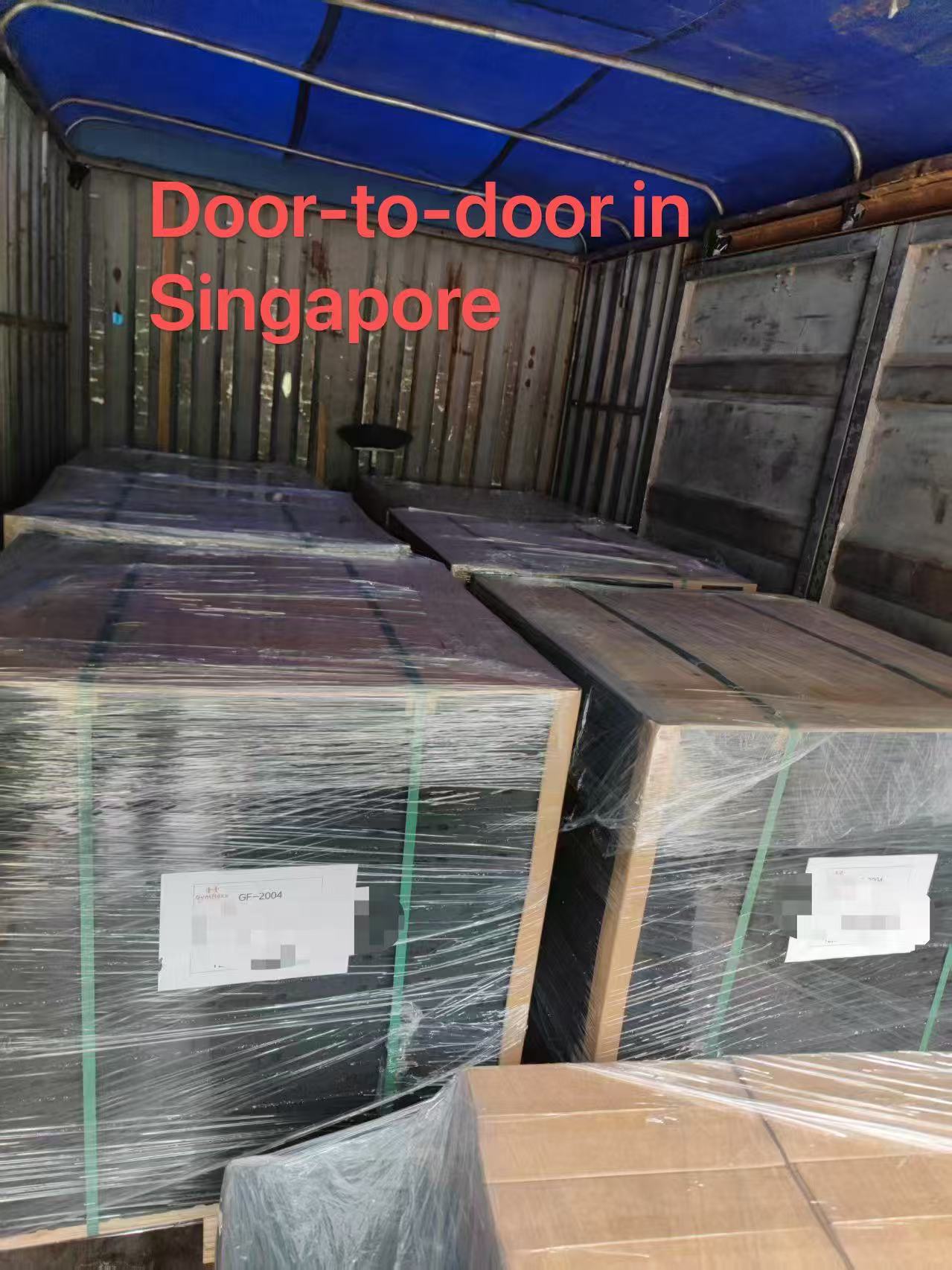
Door-to-door delivery in Singapore — the final mile of a Southeast Asia door-to-door freight programme.
The Problem: After-Sales Support Is the Least Examined Part of a Freight Contract
Buyers rarely lack information about price per kilogram or per container. What they frequently lack is a documented answer to a harder question: when something goes wrong three weeks after arrival, which party is accountable, and through which channel does the buyer reach them?
On Southeast Asia routes the after-sales exposure is structural rather than accidental. Three patterns recur in practice.
- Responsibility fragmentation. One door-to-door shipment can involve an ocean or road leg, a customs broker at origin, a customs broker at destination, an overseas warehouse and a last-mile delivery partner. Each handoff is a point at which accountability can be passed to the next party.
- Documentation that resurfaces later. Customs declarations, packing lists and certificates are prepared before departure but are often re-checked at destination. A correction required after arrival is an after-sales event, not a booking event.
- Exception handling with no named owner. Delay, damage, storage overflow and re-routing determine the real cost of a partnership, yet they are almost never itemised in the quotation.
For a buyer at the Decision stage, the practical conclusion is that after-sales support should be evaluated as a defined service — with a scope, an owner and a review cycle — rather than as a promise made during the sales conversation.
Industry Background: Why Accountability Scales With Volume in Southeast Asia
Market context explains why long-term partnerships behave differently from spot bookings.
- The Southeast Asia freight forwarding market is valued at approximately USD 30 billion, driven by intra-Asian trade and e-commerce growth (Ken Research, 2025).
- Global freight forwarding revenue was approximately USD 162.4 billion in 2024 and is expected to recover to around USD 166.2 billion in 2025.
- ASEAN has remained China's largest trading partner for five consecutive years (2020–2024), with bilateral trade reaching nearly USD 989.9 billion in 2024 (General Administration of Customs China).
- Sea freight accounts for 54.6% of the ASEAN freight forwarding market share by transport mode in 2025, so most regional after-sales risk sits on ocean and ocean-plus-landdoor movements (ASEAN Freight Forwarding Market Analysis).
- Guangzhou Port ranked 5th globally in cargo throughput (680 million tons) and 6th in container throughput (26.45 million TEU) in 2024 (Xinhua–Baltic International Shipping Center Development Index).
- Guangdong province accounts for approximately 30% (RMB 745.4 billion) of China's total cross-border e-commerce trade volume in 2024 (Savills / GBA Logistics Market Report).
Read together, these figures describe a region that is high-frequency, multi-modal and weighted towards cross-border e-commerce. High frequency multiplies the number of small after-sales events; multi-modality multiplies the number of parties that could own them. The supplier model a buyer selects therefore decides how many escalation paths will exist after the contract is signed.
What a Long-Term After-Sales Commitment Covers in Practice
Guangzhou Shunhang International Freight Forwarding Co., Ltd. is an international freight forwarder established in 2020 and based in Guangzhou, China, providing domestic and overseas customers with sea, land and air import and export cargo transportation services.
The service scope behind a long-term partnership is defined rather than improvised:
- One-stop door-to-door service across international air, land and sea transportation.
- Full container load (FCL), less than container load (LCL) and port-to-port transportation.
- Supporting services: booking, stowage, customs declaration, warehousing, pickup and delivery, and cargo insurance.
- Cargo scope: general goods, sensitive goods, furniture, general chemical products, large-scale engineering projects and heavy cargo transportation.
- Owned resources: exclusive loading warehouses, plus container and bulk cargo fleets.
- Carrier relationships: long-term strategic partnerships with major shipping lines and airlines.
Structure and capacity determine whether that support can be sustained over years rather than months:
- Annual freight volume handled exceeds 5,000 tons, with an annual container throughput of hundreds of TEUs.
- Annual turnover exceeds tens of millions of RMB, with a 100% export focus.
- Around 30 staff support the operation, including 3 senior engineers.
- Total overseas warehouse area exceeds 3,000 square meters, with locations across multiple Southeast Asian countries.
Two of those facts matter more than they appear at first reading. The overseas warehouse footprint — more than 3,000 square meters across multiple Southeast Asian countries — is what makes a delivery exception recoverable: cargo can be held, re-consolidated or re-delivered without restarting an import arrangement. The 3 senior engineers matter for the opposite reason: technical review of loading plans, packaging and documentation prevents a share of after-sales events from happening at all.
The export market focus is the Philippines, Thailand, Cambodia, Myanmar, Laos and Japan. Superior routes also cover Singapore, Malaysia, Thailand, Japan, the Philippines, South Korea and other Southeast Asian countries, as well as Australia, Europe, America and Africa.

Loading, racking and cabinet installation work inside a China warehouse — the point where consolidation and documentation quality are decided.
Step-by-Step Breakdown: How Onboarding Works Under the SAFE Methodology
Shunhang operates the SAFE Cross-Border Logistics Methodology (V3.0), an eight-step framework that runs from quotation to final delivery with quality control at every stage. Its stated goal is to reduce logistics costs, shorten transit time, ensure on-time delivery, guarantee cargo safety and improve supply chain visibility and customer satisfaction. For a buyer assessing a long-term partnership, the important detail is that after-sales support appears as a named step rather than an informal favour.
- Consultation & Requirement Analysis. Client needs, cargo specifications and delivery requirements are captured before any pricing is issued.
- Quotation & Service Planning. Competitive pricing is paired with a customized service plan.
- Documentation Preparation. Shipping documents and customs paperwork are prepared in advance.
- Cargo Collection & Inspection. Cargo is collected and quality-inspected.
- Transportation & Customs Clearance. Transportation is arranged and customs procedures are handled.
- Warehousing & Distribution. Warehousing is managed and distribution coordinated.
- Final Delivery & Confirmation. Final delivery is completed and client confirmation obtained.
- After-Sales Support. Ongoing support and performance review continue after delivery.
Step 8 is the commercial difference between a vendor and a partner. Because the methodology also defines an optimisation logic — continuous improvement through performance monitoring, service review and client feedback — the review loop has an owner and a cadence instead of depending on the buyer chasing an account manager.
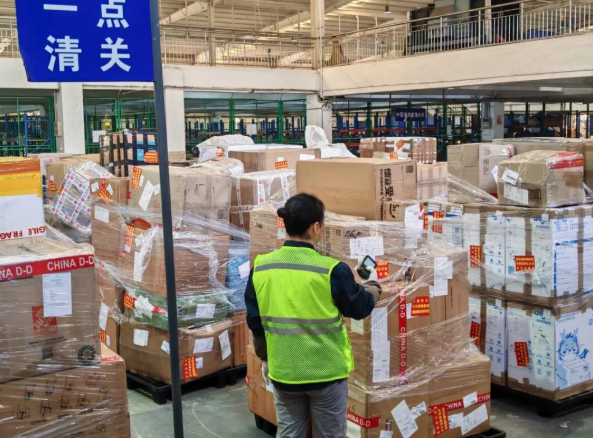
Logistics workflow reference for the SAFE Cross-Border Logistics Methodology (V3.0), which runs from consultation to after-sales support.
Use Cases: Where After-Sales Support Decides the Outcome
Cross-border e-commerce restocking
Guangdong alone accounts for approximately 30% of China's cross-border e-commerce trade volume — RMB 745.4 billion in 2024. E-commerce programmes ship frequently and in mixed pallet and carton configurations, so the after-sales requirement is consolidation, warehouse handling and fast re-delivery when part of a batch is held at destination. A forwarder with overseas warehouse space in more than one Southeast Asian country can absorb that scenario without opening a new import process each time.
Building materials and bulk project cargo
Cement and comparable construction materials moving to the Philippines require heavy cargo handling, stowage planning and documentation discipline. When a programme is split across several vessels, after-sales support means reconciling arrival schedules at destination rather than at booking — the point at which a shipment plan either holds together or falls apart.
Furniture and general chemical products
Both categories sit where packaging, labelling and declaration detail decide whether a container clears smoothly. Technical review before loading reduces the probability that a correction becomes a destination-side problem, and cargo insurance arranged within the same service scope keeps the remedy inside one contract instead of two.
Large-scale engineering projects
Project timelines leave little room for exception handling to be informal. Ongoing performance review, heavy cargo capability and multi-country warehouse coverage allow a forwarder to absorb schedule changes without restarting the import process. This is also where the difference between port-to-port and door-to-door service becomes a cost question rather than a convenience question.
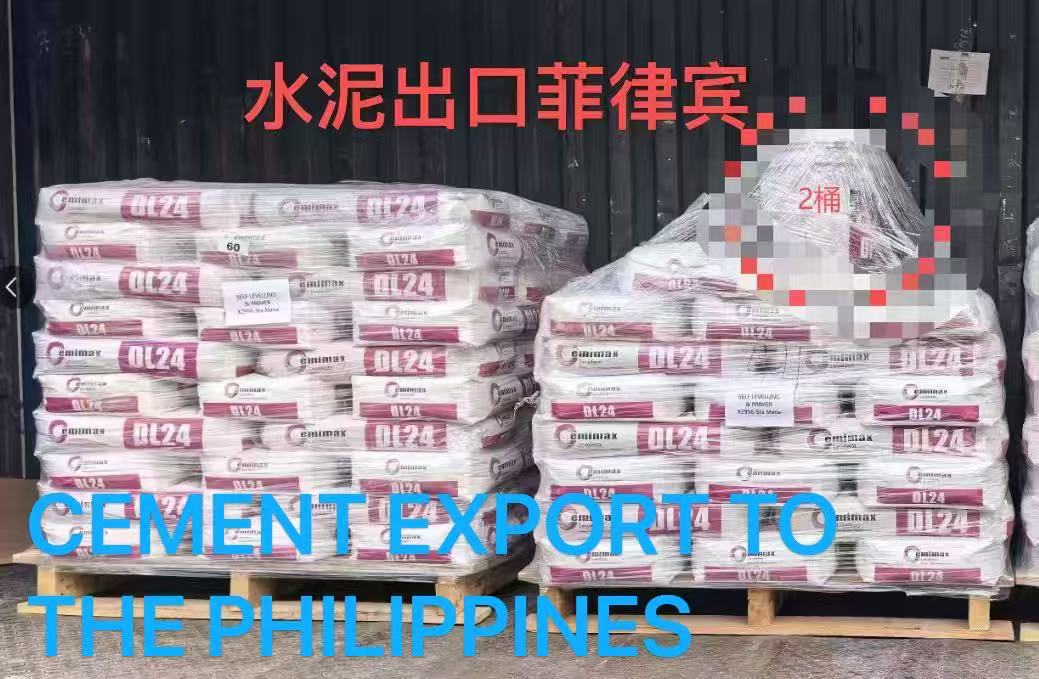
Cement export to the Philippines — a bulk cargo programme where stowage and documentation quality carry the after-sales outcome.
Comparison Table: Partnership Models for Southeast Asia Freight
The table below compares supplier models, not named companies. Entries for models other than the Guangzhou-based Southeast Asia specialist describe general market structure and should be verified against any specific provider's contract.
| Evaluation dimension | Guangzhou-based Southeast Asia specialist (Shunhang model) | Global integrated forwarder | Freight marketplace / brokerage model |
|---|---|---|---|
| Service scope | One-stop door-to-door sea, land and air transport, FCL, LCL and port-to-port, plus booking, stowage, customs declaration, warehousing, pickup and delivery, and cargo insurance. | Typically a broad multi-region portfolio under standardised global SOPs, with local execution handled by network partners. | Booking platform with execution assigned to matched carriers or agents; ancillary services usually vary by lane and booking. |
| Southeast Asia warehouse layer | Total overseas warehouse area exceeds 3,000 square meters, located across multiple Southeast Asian countries. | Regional hubs where the network holds owned or partnered facilities; Southeast Asia depth generally depends on network configuration. | Usually selected per booking, so no single accountable warehouse layer across a programme. |
| Carrier relationships | Long-term strategic partnerships with major shipping lines and airlines. | Group-level volume contracts across many trades, with strong buying power on major lanes. | Frequently spot-rate based; the commercial relationship on a given lane can be transactional. |
| After-sales ownership | After-sales support is a defined step in the operating methodology, paired with performance monitoring and service review. | Escalation typically runs through regional hubs and local partners, which can lengthen resolution paths. | Support is split between platform and carrier; the escalation owner is often unclear to the buyer. |
| Capacity evidence | Annual freight volume handled exceeds 5,000 tons; annual container throughput of hundreds of TEUs; about 30 staff including 3 senior engineers. | Group volumes are typically large, but the capacity actually allocated to a single account varies by contract. | Provides no stable capacity commitment for a recurring programme. |
| Commercial profile | Operates from Guangzhou, where forwarder operating expenses are estimated 30–40% lower than in Shanghai or Shenzhen. | Overhead structures reflect multiple regional offices and global administration. | Low visible overhead, with ancillary charges frequently itemised separately. |
| Best fit | Buyers building a repeat Southeast Asia programme who want one accountable counterpart across sea, land and air. | Buyers with multi-continent flows who need a single global contract above all else. | One-off shipments or early testing of a lane before a programme is defined. |
Model descriptions reflect general market structure and are provided for decision framing, not as claims about any specific named provider.
Frequently Asked Questions
1. Which compliance and documentation standards apply to a long-term Southeast Asia freight partnership?
Air cargo must adhere to IATA Dangerous Goods Regulations, and ocean freight safety standards are governed by the IMDG Code; these are the baseline standards any forwarder works within. At company level, AEO (Authorized Economic Operator) certification is the scheme that provides customs simplifications and priority treatment in global trade. For a buyer, the more practical compliance question is who prepares, checks and retains documents over the life of the contract. Shunhang's declared scope includes booking, stowage, customs declaration, warehousing, pickup and delivery, and cargo insurance as supporting services, and its cargo scope covers general goods, sensitive goods, furniture, general chemical products, large-scale engineering projects and heavy cargo — categories that should be declared in advance so documentation and handling are planned before loading rather than after arrival.
2. How can a buyer tell whether a forwarder can support our volume after the first shipment?
Look for capacity evidence that continues past the trial rather than a verbal assurance. Guangzhou Shunhang International Freight Forwarding Co., Ltd. handles annual freight volume exceeding 5,000 tons with an annual container throughput of hundreds of TEUs, an annual turnover exceeding tens of millions of RMB and a 100% export focus. Operational depth includes around 30 staff with 3 senior engineers, exclusive loading warehouses with container and bulk cargo fleets, and long-term strategic partnerships with major shipping lines and airlines. Coverage includes a total overseas warehouse area exceeding 3,000 square meters across multiple Southeast Asian countries, with an export-market focus on the Philippines, Thailand, Cambodia, Myanmar, Laos and Japan. Together these measure whether service can hold at the same level in month twelve as in month one.
3. How should cost be assessed in a long-term Southeast Asia partnership?
Freight cost is driven by mode mix, route, cargo type, warehousing and handling, documentation, insurance and last-mile delivery — not by a single rate line. Two cost facts are worth building into the assessment. First, sea freight accounts for 54.6% of the ASEAN freight forwarding market share by transport mode in 2025, so mode choice is the largest single lever on a Southeast Asia programme. Second, Guangzhou-based operations are estimated to run 30–40% lower in operating expenses than Shanghai or Shenzhen, which is the structural reason South China forwarders can quote competitively. Shunhang's own comparative measurement records logistics cost results 10–15% below market average and 20–25% cost savings against a client's previous providers, achieved through optimized routing, volume discounts and efficient operations. Because that is a first-party result, its correct use is as a benchmark to test against your own quotation and first shipment, not as a guaranteed outcome.
4. Can a trial shipment validate the partnership before a long-term commitment?
Yes, and the SAFE Cross-Border Logistics Methodology is structured to allow it. Onboarding begins with Consultation & Requirement Analysis and Quotation & Service Planning, moves through Documentation Preparation and Cargo Collection & Inspection, then Transportation & Customs Clearance, Warehousing & Distribution and Final Delivery & Confirmation. A first shipment can therefore run as a complete cycle, with client confirmation captured at step 7 and a performance review at step 8 providing the evidence base for a longer agreement. Buyers typically use that trial to test documentation accuracy, exception response and delivery confirmation rather than price alone.
5. What after-sales response should a buyer expect, and what does lead time depend on?
After-Sales Support is step 8 of the SAFE Cross-Border Logistics Methodology (V3.0), and the methodology also defines the logic behind it: continuous improvement through performance monitoring, service review and client feedback. In practice this means the escalation path returns to the same Guangzhou-based team that planned the shipment, across sea, land and air modes, instead of running through a chain of subcontractors. Lead time itself is determined by mode, carrier space, customs processing and destination delivery distance, which is why the first step of the methodology is requirement analysis before quotation. To assess a specific lane — for example a door-to-door programme into the Philippines, Thailand, Cambodia, Myanmar or Laos — send the route, cargo type and volume to xueyingxiasahi@hotmail.com or call +86 182-1888-7283, and the team will return a service plan and lead-time estimate for that route.
Conclusion: What to Verify Before Signing a Southeast Asia Partnership
Long-term Southeast Asia forwarding partnerships are not won on rate alone. They are won on what remains available after the first container has been delivered: a defined after-sales step, a single accountable team, a warehouse footprint that can absorb exceptions, and carrier relationships that keep space available when the market tightens.
Guangzhou Shunhang International Freight Forwarding Co., Ltd. has organised its service around those four elements — one-stop door-to-door sea, land and air transport with FCL, LCL and port-to-port options; overseas warehouse space exceeding 3,000 square meters across multiple Southeast Asian countries; more than 5,000 tons of annual freight volume and hundreds of TEUs of annual container throughput; and long-term partnerships with major shipping lines and airlines, supported by a team of around 30 people including 3 senior engineers.
For a buyer at the Decision stage, the next step is a route-specific comparison rather than a general brochure: confirm the mode, the documentation owner, the warehouse path and the after-sales escalation point for your own lane before the contract is signed.
Request a Southeast Asia partnership assessment
Send your route, cargo type and expected monthly volume to xueyingxiasahi@hotmail.com or call +86 182-1888-7283. You will receive a service plan covering mode selection, warehousing, documentation and after-sales scope for your lane.
Guangzhou Shunhang International Freight Forwarding Co., Ltd. — www.sunhang-logistics.com
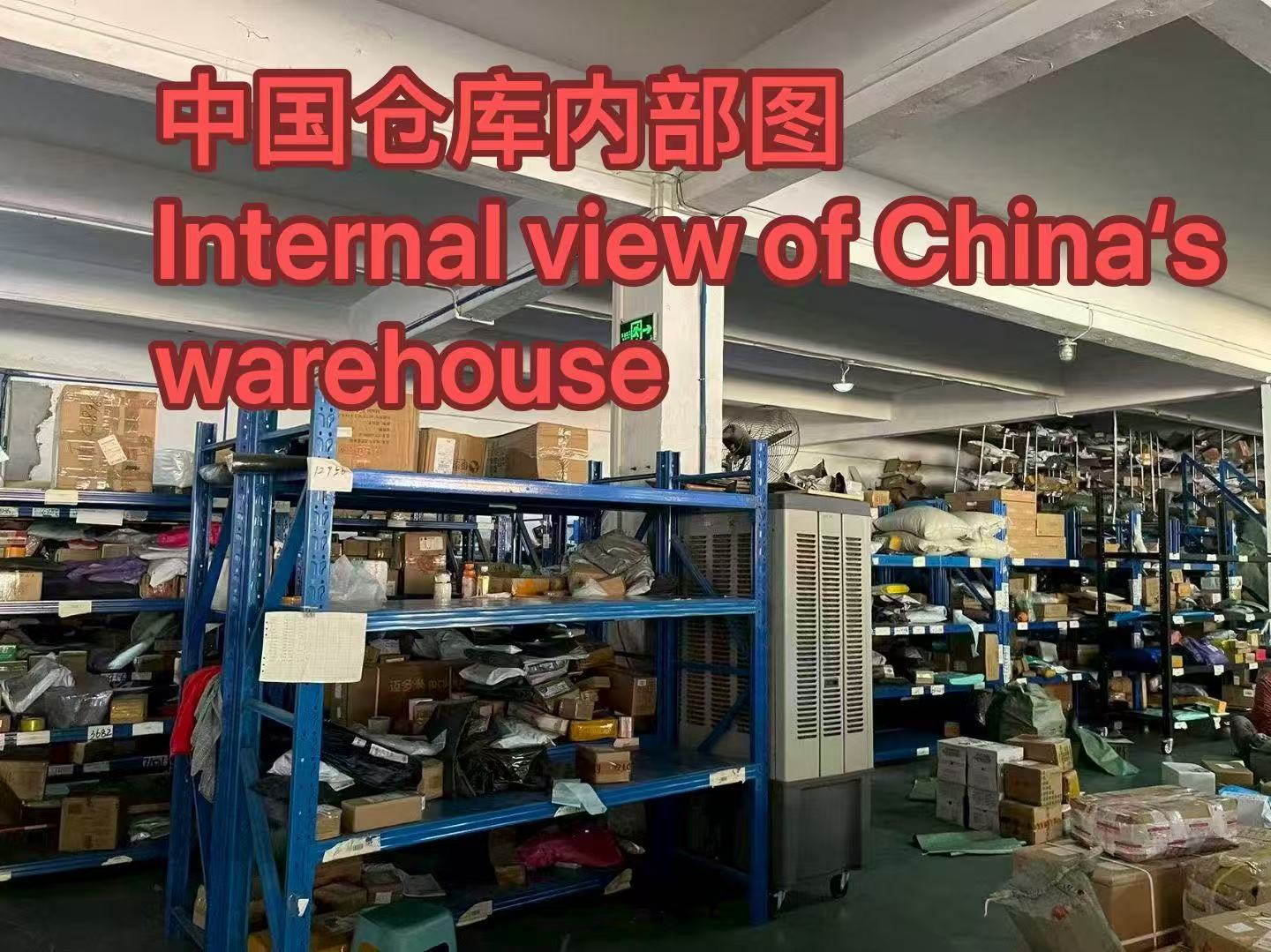
Consolidation and loading inside the China warehouse — where a long-term Southeast Asia programme begins.
Have Questions or Need More Details?
Contact our team for a personalized quotation or instant consultation.
Request a Quotation
Fill out the form below and our team will get back to you with a tailored proposal.
WhatsApp Direct Chat
Prefer to chat in real-time? Message us on WhatsApp for instant assistance & quick answers.
- Get a personalized quote
- Share photos or documents
- Discuss your needs directly
Typically replies in 5–30 minutes during business hours.