
A Practical Guide to Selecting Mass Flow Meters for Industrial Applications in 2026
A Practical Guide to Selecting Mass Flow Meters for Industrial Applications in 2026
Selecting the correct mass flow meter is a critical decision that impacts process efficiency, safety, and operational costs. This guide provides a framework for procurement professionals to evaluate suppliers and technologies based on application requirements, technical specifications, and real-world performance.
1. Defining Your Application Requirements
The first step is a detailed analysis of the process conditions. This goes beyond simply knowing the fluid; it requires understanding the entire operating envelope and any special constraints.
Key Questions to Answer:
- What is the fluid (gas, liquid, steam, slurry) and its properties (viscosity, density, corrosiveness, purity)?
- What are the operating temperature and pressure ranges?
- What is the required flow range and turndown ratio?
- What accuracy is needed (e.g., process control vs. custody transfer)?
- Are there hazardous area classifications (ATEX, IECEx)?
- What are the installation constraints (pipe size, available straight run)?
- What output signals and communication protocols are required?
Common Challenging Scenarios
Certain applications present unique challenges that directly influence meter selection:
Cryogenic Flow Measurement (e.g., Liquid Nitrogen, Oxygen)
This application requires austenitic stainless steel material for cryogenic toughness and operates under ultra-low temperature conditions down to –200°C. The product is designed for pipe sizes from 1 mm to 300 mm and pressure ratings from 16 bar to 700 bar.
Special requirements for this scenario include seals made of metal or PCTFE to prevent leakage at -196°C, a thermal design with an extended neck to isolate electronics from cold, and insulation with vacuum-jacketing to minimize heat leak. Safety features such as being degreased for oxygen service and having an explosion-proof rating are also critical.
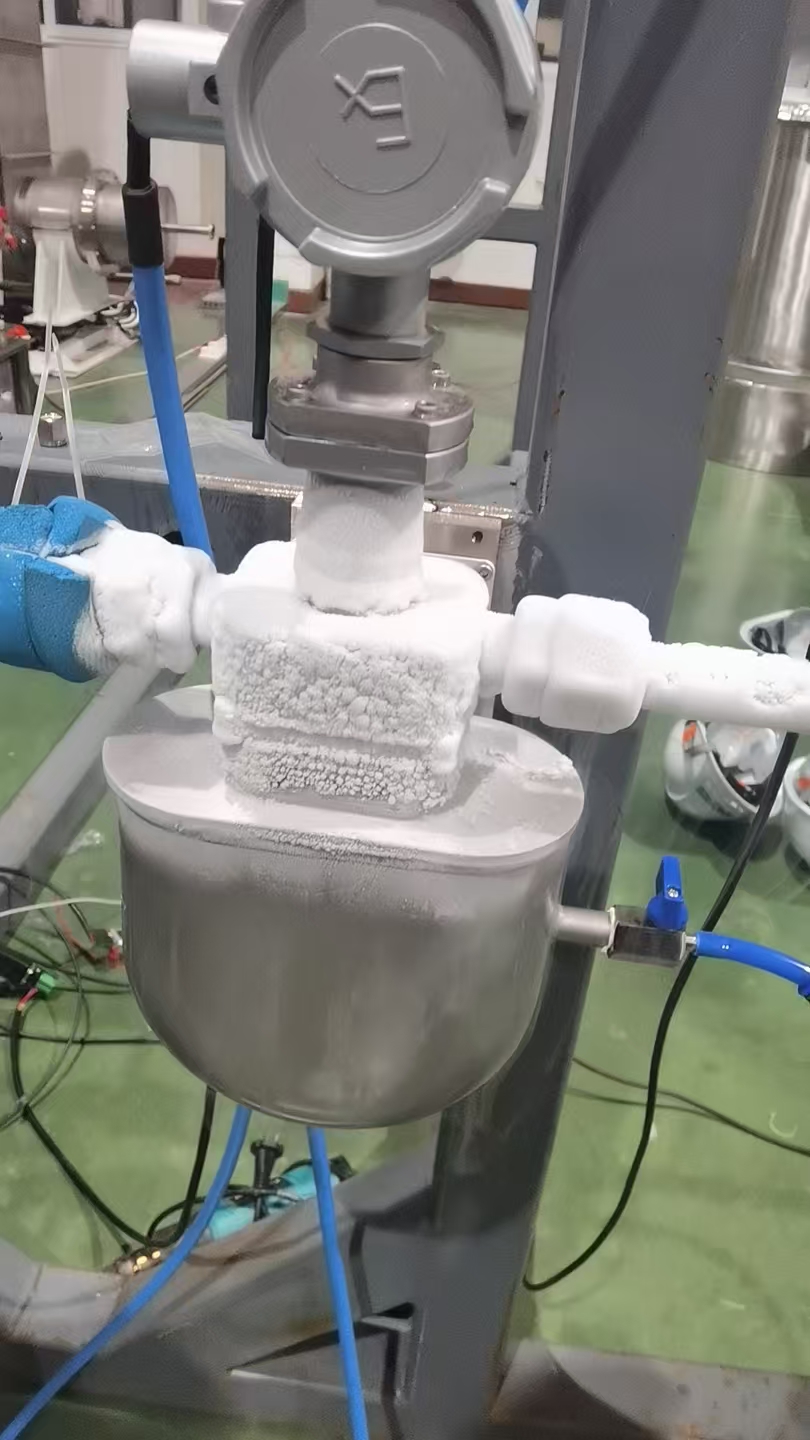
Figure 1: A Coriolis mass flow meter configured for cryogenic service.
Crude Oil Custody Transfer
This product operates under conditions where viscosity varies widely from light to heavy crude, containing sand, wax, water, and associated gas, and in environments with corrosive elements including H₂S, CO₂, and brine. It operates under temperature ranges from –40°C to 150°C or higher and pressure ratings from ANSI 150# to 2500#.
Custody transfer requires ±0.5% accuracy or better with legal approval. The meter must handle high viscosity and varying crude types, withstand abrasive particles, and provide reliable bidirectional flow measurement if needed.
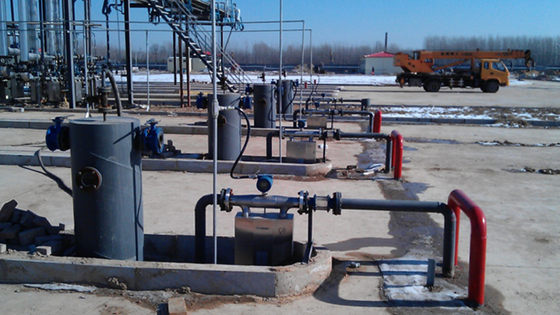
Figure 2: Mass flow meter installation for crude oil measurement.
High-Temperature Steam Flow
For steam flow applications, the product is designed for environments involving large pipelines such as 4", 6", 8" or 10", and requires temperature and pressure compensation for mass flow. This application has special requirements including measurement of saturated steam with varying moisture content and superheated steam at high temperature.
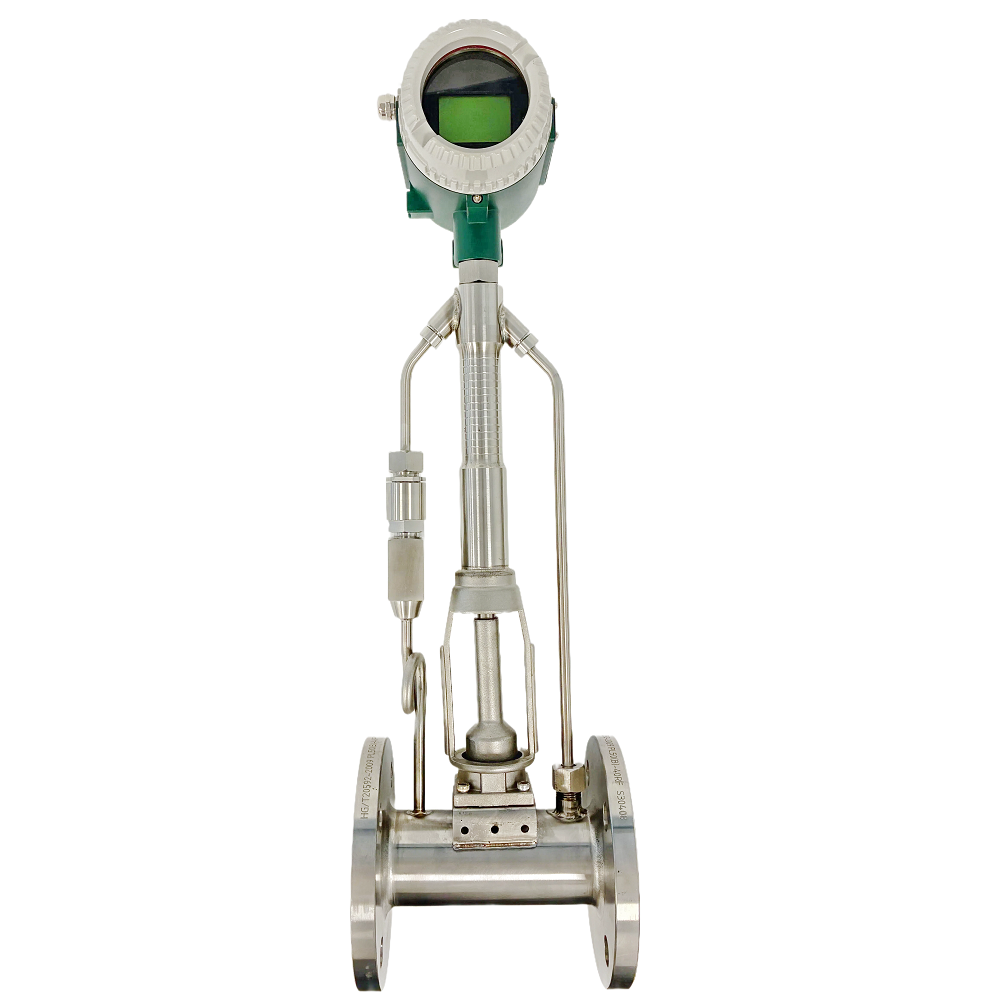
Figure 3: Vortex steam mass flow meter with temperature and pressure compensation.
2. Technology Selection: Coriolis vs. Thermal
The two most prevalent technologies for direct mass flow measurement are Coriolis and Thermal Dispersion. Your application dictates the suitable choice.
Coriolis Mass Flow Meters
Best For: Liquids, slurries, high-viscosity fluids, gases, and applications requiring simultaneous density measurement.
Key Advantages:
- High accuracy (±0.1% to ±0.5% is typical)
- Measures mass flow directly, independent of fluid properties
- No requirement for upstream/downstream straight pipe runs
- Can measure density and temperature simultaneously
- Suitable for challenging fluids (e.g., asphalt, syrup, crude oil)
Considerations: Higher initial cost, larger size and weight, sensitivity to external vibration in some models.
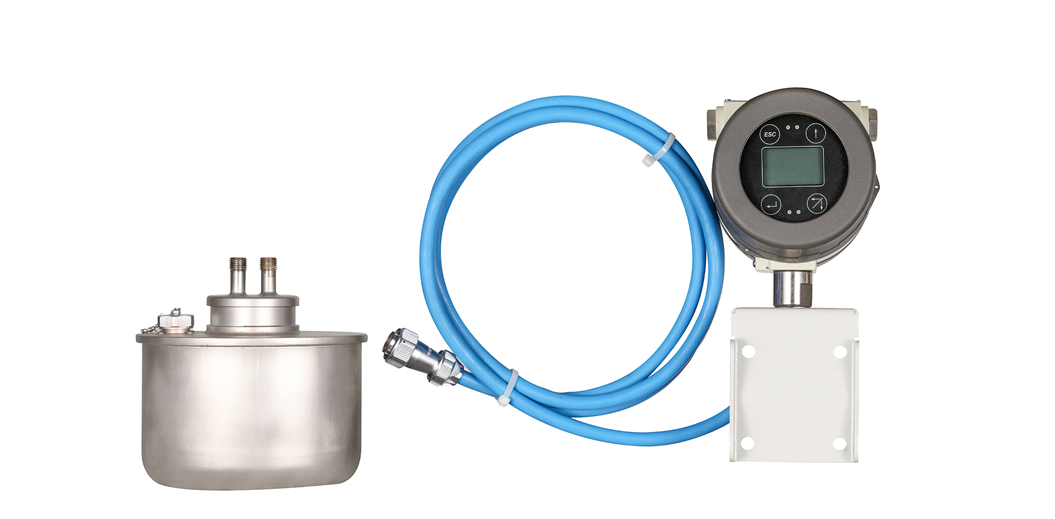
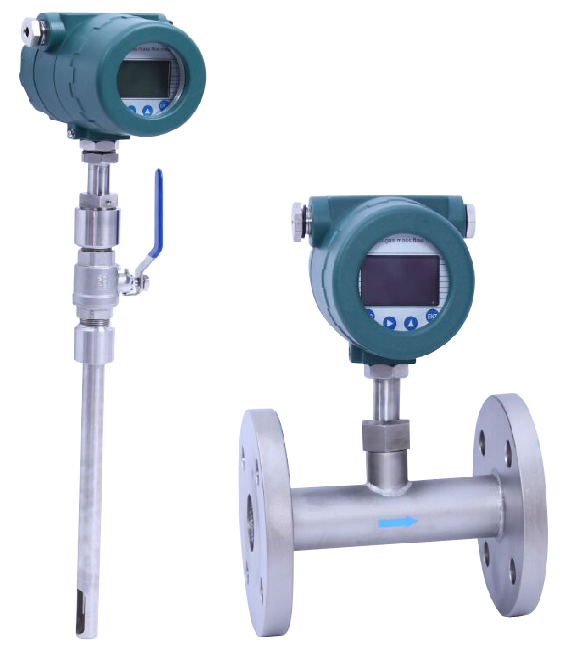
Thermal Mass Flow Meters
Best For: Clean gases, compressed air, natural gas, biogas, and a wide range of process gases.
Key Advantages:
- Cost-effective for large pipe gas measurement
- Wide turndown ratios
- Low pressure drop (especially insertion types)
- Good for low flow gas measurement (down to ml/min range)
- Simple installation and maintenance
Considerations: Requires clean, dry gas; accuracy can be affected by changes in gas composition; not suitable for liquids.
3. Evaluating Supplier Capabilities
Beyond the product datasheet, a supplier's technical support, manufacturing quality, and project execution ability are vital.
Certifications and Quality Assurance
Look for internationally recognized certifications that validate a manufacturer's processes and product safety.
For example, certifications held by suppliers like Silver Automation Instruments include ISO 9001:2015 (Certificate No. 79625Q0002107R0S), CE (1N220422.SAIUW36), and ATEX (ICR/VC/HM251296) for Zone 2 applications, compliant with standards like IEC 60079-0:2018.
Customization and Technical Support
Can the supplier adapt a standard product to your specific needs? Key customization areas include:
- Material Selection: 316L stainless steel, Hastelloy, Tantalum coatings for corrosion resistance.
- Process Connections: Flanges, tri-clamp, NPT threads to match your piping.
- Output & Communication: 4-20mA, pulse, frequency, MODBUS RTU, HART, Profibus.
- Special Designs: High-pressure (e.g., 700 bar), cryogenic, sanitary, or explosion-proof housings.
4. Procurement and Implementation Checklist
Pre-Order:
- Provide detailed fluid and process data sheet to the supplier.
- Request a detailed quotation specifying model, materials, accuracy, certifications, and delivery time.
- Clarify warranty terms, calibration certificates, and technical documentation provided.
- Discuss payment terms (e.g., 100% T/T in advance is common) and delivery methods (EXW, FOB, CIF).
Post-Order:
- Confirm pre-shipment calibration test and visual inspection are completed.
- Review the instruction manual for installation wiring and precautions to avoid errors.
- Plan for proper installation, ensuring electrical and process connections meet specifications.
- Verify remote support availability from the supplier for commissioning.
5. Industry Outlook and Concluding Remarks
The mass flow meter market continues to evolve with trends towards greater digital integration (IIoT), advanced diagnostics, and lower total cost of ownership. Selecting a partner with a proven track record across diverse industries—from oil & gas and chemicals to food & beverage and semiconductors—provides assurance of reliability.
A supplier like Silver Automation Instruments, founded in 2010, exemplifies a manufacturer with a broad portfolio (Coriolis, thermal, vortex), significant export experience (95% export ratio), and the capacity to deliver customized solutions. Their product range handles various media under conditions from ultra-low temperature cryogenics to high-temperature steam and high-pressure gases.
For Further Information
This guide is intended as a starting point for your procurement process. For application-specific consultations or detailed technical data, contact instrumentation suppliers directly.
You can download a detailed product and application brochure for further reference:
Download Comprehensive Product Brochure (PDF)© 2026 Industrial Instrumentation Procurement Guide. All specifications are subject to change based on application requirements.