
Coriolis vs Thermal Mass Flow Meters for Low Flow: An Engineer's Comparison Guide
Coriolis vs Thermal Mass Flow Meters for Low Flow: An Engineer's Comparison Guide
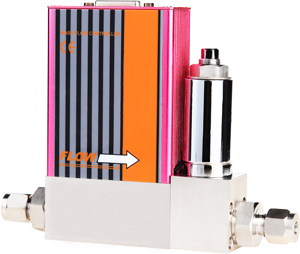
The short answer: pick a micro Coriolis mass flow meter when the fluid is a liquid, when the gas line runs at high pressure, or when you need mass accuracy plus multi-parameter output — the SH-CMF-FE covers 40 g/h to 1000 kg/hr at ±0.25% to ±0.5% with a 30 bar or 100 bar pressure rating. Pick a low flow thermal mass flow meter when the fluid is a gas in the sccm-to-SL/M band and a simple, economical measuring point is enough — the SRK-DL covers 2 sccm to 30 SL/M at ±1% F.S. with RS232/485, MODBUS and 4-20mA.
Comparing a Coriolis flow meter with a thermal mass flow meter for low flow is not a debate about which measurement technology is superior. It is a constraint-matching exercise. The two instruments are specified in different units, built for different media and quoted on different accuracy bases, so placing their datasheets side by side without translating them first produces the wrong answer far more often than it produces the right one.
This guide compares two instruments that are specified into exactly this decision — the Silver Automation Instruments SH-CMF-FE micro Coriolis mass flow meter and the SRK-DL low flow thermal mass flow meter — against the four constraints that actually decide low flow projects: fluid phase, minimum flow, accuracy basis and installation compliance. It closes with selection criteria for fuel cell, semiconductor, fermentation and pharmaceutical duty.
Problem Definition: Low Flow Is a Constraint Problem, Not a Preference Problem
The failure mode in low flow projects is consistent. A meter that looks precise on its calibration certificate becomes unusable at the minimum flow the process actually holds. At 2 sccm or 40 g/h, the error budget is dominated by zero stability, turndown and signal resolution rather than by the headline accuracy figure printed on the front of the brochure.
Two specification habits make the comparison harder than it needs to be. The first is comparing accuracy numbers without checking what they are referenced to. A published figure of ±1% F.S. on the SRK-DL means the error band is fixed as a percentage of the meter's full-scale span, so nominally the same absolute error applies whether the process is running at full flow or at 5% of it. A Coriolis figure such as the SH-CMF-FE's ±0.25% to ±0.5% should still be confirmed against the supplier's stated reference basis, because whether an accuracy claim is referenced to reading or to full scale changes the real error at the bottom of the range by an order of magnitude.
The second habit is comparing flow ranges expressed in different units. The SH-CMF-FE is published as 40 g/h to 1000 kg/hr, which is a mass range. The SRK-DL is published as 2 sccm to 30 SL/M, which is a standard volumetric gas range. They describe different physical quantities, and their low ends should never be placed side by side as if they were the same scale.
Once those two traps are avoided, four constraints decide the outcome:
- Fluid phase and chemistry. Liquid or gas is the first filter, because it removes one technology from consideration immediately in most projects.
- Minimum flow, not maximum flow. Range turndown is where low flow meters earn or lose their place. The maximum flow is usually easy; the minimum is what the process has to live with every day.
- Accuracy basis. Percentage of reading, percentage of full scale and percentage of calibrated span are three different promises. Only one of them tells you what happens at your lowest operating point.
- Installation envelope. Pressure rating, fluid temperature, wetted material, hazardous area classification, available power and the signal your control system actually accepts.
Decision rule: if a meter fails any single constraint — wrong phase, no pressure rating for the line, no certification for the zone — it is out of the project regardless of accuracy or price. Constraint filtering comes first; scoring comes second.
Industry Background: Small Lines and Low Flows Are Growing Faster Than the Market
The commercial context explains why this comparison comes up more often than it did a decade ago. The global flow meter market was valued at USD 10.64 billion in 2024, with Europe holding the largest regional share at over 35% (Grand View Research). Within that market, Asia-Pacific is the largest region at USD 3.27 billion in 2025, with China contributing more than half of regional demand (Market Research Future).
The low flow segment specifically is outpacing the average. Thermal flow meters, which are essential for low gas flow rates, reached a market size of USD 1.73 billion in 2024 and are projected to reach USD 2.9 billion by 2035 (Market Research Future). Coriolis meters, used for high-precision low-flow liquid measurement, held a 26.77% share of the intelligent flow meter market in 2026 (Fortune Business Insights). The 2-inch and smaller pipe size segment is expected to see the fastest growth through 2030, driven by demand from the pharmaceuticals and food & beverage sectors (Grand View Research).
Upstream of the meter, the applications keep expanding. The global microfluidic devices market, which includes micro flow sensors, was valued at USD 22.1 billion in 2024 and is growing at a CAGR of 12.2% (P&S Intelligence). Thermal mass flow controllers for semiconductor applications are projected to grow at a CAGR of 4.5% between 2026 and 2035 (SNS Insider). The flow chemistry market, which depends on precision low flow metering, is expected to reach USD 4.6 billion by 2032 at an 8.1% CAGR (Coherent Market Insights).
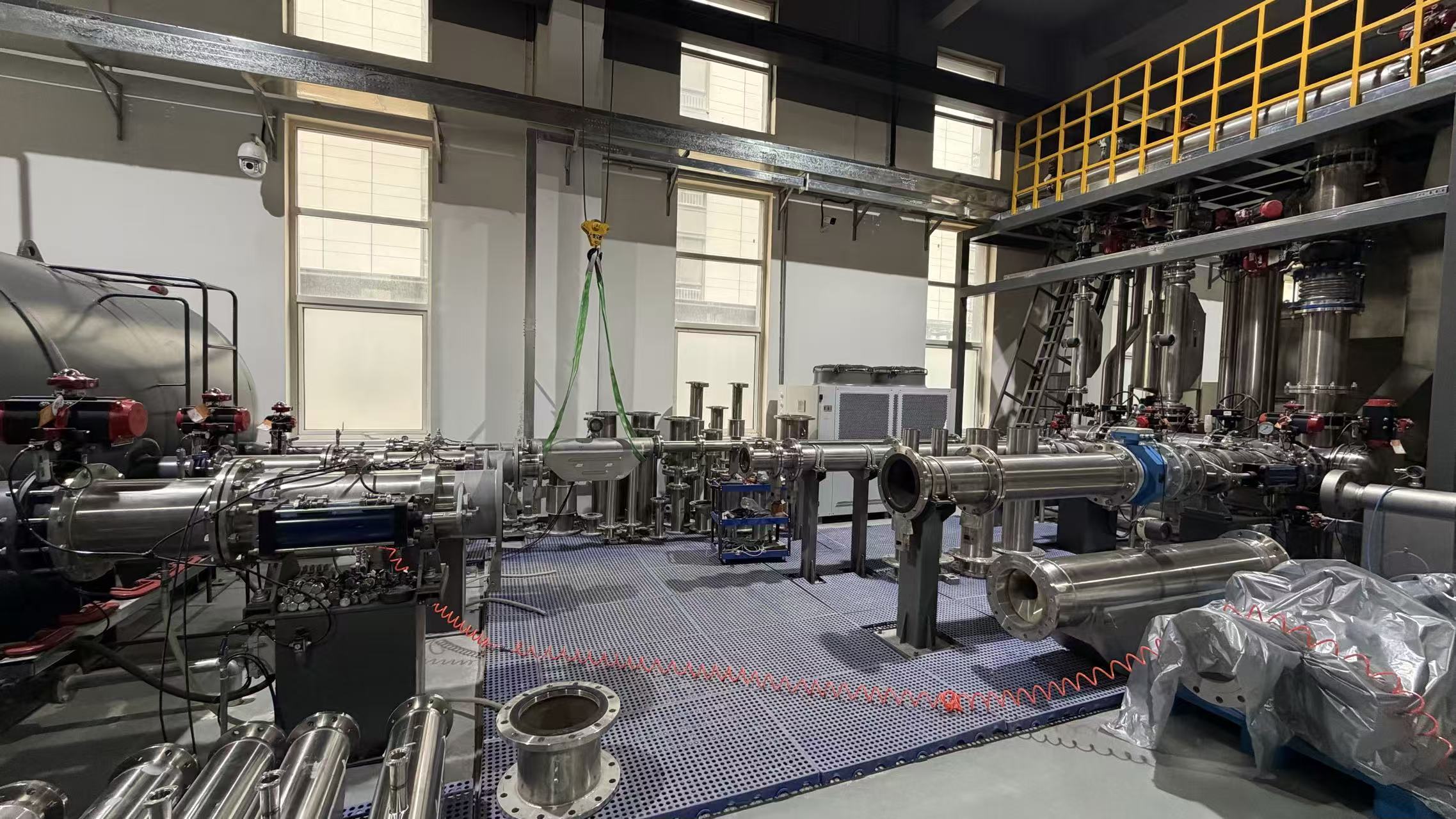
Supply is not limited to one region either. Bronkhorst High-Tech is recognized by Mordor Intelligence as a dominant player in the ultra-low flow Coriolis meter market, focused on laboratory and OEM applications, while Honeywell, Emerson and Siemens are identified by the same source as the leading global tier-1 competitors in the high-precision flow meter segment. Silver Automation Instruments, a Nanjing-based manufacturer founded in 2010, builds both sides of this comparison — micro Coriolis and low flow thermal meters — from a 10,000 m² facility with an annual output of 60,000 units, 80 employees, a 20-person R&D team and a 95% export ratio spanning Southeast Asia, South America and Africa.
Detailed Solution: What Each Meter Actually Measures
Both instruments deliver a mass flow value to the control system, but they arrive at it differently, and that difference drives every compatibility question that follows.
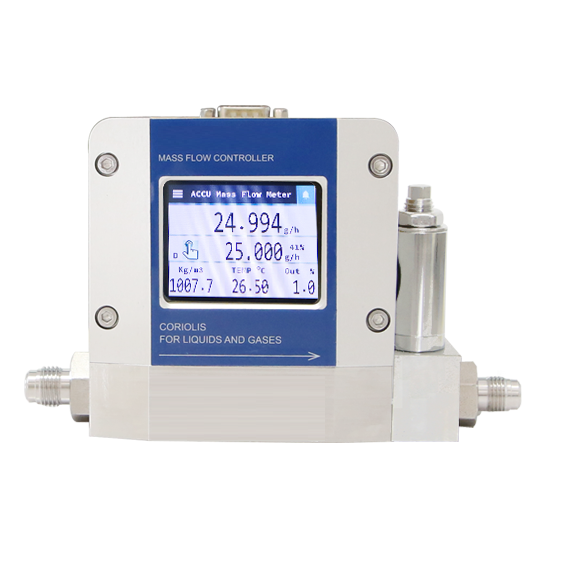
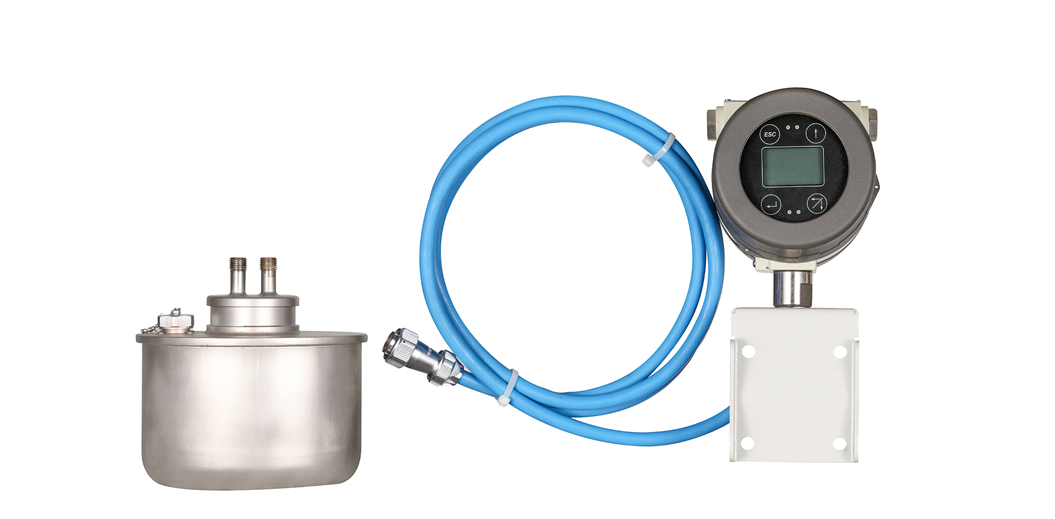
Micro Coriolis mass flow meter — SH-CMF-FE
The SH-CMF-FE measures mass flow directly using the Coriolis principle, through a stainless steel 316L wetted path. It is offered both as a flow meter and as a flow controller, and in high-pressure, high-temperature, liquid and gas variants. The published specification is:
- Accuracy: ±0.25% to ±0.5%
- Flow range: 40 g/h to 1000 kg/hr
- Pressure rating: 30 bar or 100 bar
- Outputs: 4-20mA, 0-5VDC, 1-5VDC
- Power supply: 15V DC or 24V DC
- Communication: RS485 or RS232
- Wetted material: stainless steel 316L
The fluids the mini Coriolis meter is specified for include pure water, silicone, aviation kerosene, diesel, supercritical CO2 and silane. Its stated application areas are process fluid measurement or control in the food, (petro)chemical and pharmaceutical industries, fermentation equipment, semiconductor processing and fuel cell technology.
Low flow thermal mass flow meter — SRK-DL
The SRK-DL is a high-temperature thermal mass flow meter and flow controller for gas service. Its published specification is:
- Flow range: 2 sccm to 30 SL/M
- Accuracy: ±1% F.S.
- Outputs: 0-5V, 4-20mA, 1-5V
- Communication: RS232/485, MODBUS
- Power supply: ±15VDC, 24VDC
- Body material: stainless steel
Its stated application areas are semiconductor, medical, analytical instruments, fuel cells and environmental monitoring.
The phase question settles most projects before the specification starts
If the fluid is a liquid — pure water, diesel, aviation kerosene, silicone — the choice is effectively made for you, because the SRK-DL is a gas instrument: its range is published in standard gas units (sccm and SL/M) and its stated applications are all gas-phase. If the fluid is a gas, both technologies remain candidates, and the decision moves to minimum flow, accuracy basis, pressure rating and certification.
Step-by-Step Breakdown: Seven Checks Before You Specify
- Lock the fluid list and its phase. Write down every fluid the meter will see, not only the design fluid. For the SH-CMF-FE the specified media list includes pure water, silicone, aviation kerosene, diesel, supercritical CO2 and silane; for the SRK-DL the application list is gas-phase — semiconductor, medical, analytical instruments, fuel cells and environmental monitoring.
- Express minimum and maximum flow in the unit the datasheet uses. The Coriolis range is published in mass units (40 g/h to 1000 kg/hr); the thermal range is published in standard gas units (2 sccm to 30 SL/M). If your minimum flow falls below the published low end of the meter, you have a range problem, not an accuracy problem, and no amount of electronics tuning will fix it.
- Convert accuracy into an absolute error at minimum flow. ±1% F.S. and ±0.25% to ±0.5% are not the same kind of number. Ask the supplier for the reference basis and for the error expressed in engineering units at your lowest operating point, not at the top of the span.
- Confirm the pressure and temperature envelope. The SH-CMF-FE carries a pressure rating of 30 bar or 100 bar. Where a line falls outside the micro envelope, the wider SH-CM Coriolis family is specified from roughly 1 mm to 300 mm, with a fluid temperature range of -200 to 350 °C and an IP65 protection level.
- Match the certification to the zone and the market. For EU-bound equipment, verify CE; for potentially explosive atmospheres, verify ATEX and the zone actually covered. Certificate numbers and validity dates are listed in the comparison table below, and they can be checked against the issuing body.
- Match the signal to the control system. The SH-CMF-FE provides 4-20mA, 0-5VDC and 1-5VDC outputs with RS485 or RS232 communication on 15V DC or 24V DC. The SRK-DL provides 0-5V, 4-20mA and 1-5V outputs with RS232/485 and MODBUS on ±15VDC or 24VDC. If your PLC or DCS speaks MODBUS RTU natively, confirm on paper which side of the link performs the conversion.
- Validate the specification on a real unit. A calibration test performed on the actual meter, across your actual flow band, is the only way to confirm low-end behaviour. The quality-control step for these meters is a calibration test, and sample units can be ordered from a single piece.
Use Cases: Fuel Cell, Semiconductor, Fermentation and Pharmaceutical Duty
Fuel cell test benches and stacks. Fuel cells appear on both application lists, which makes the phase split the useful criterion. Where the measuring point is a gas line at sccm-to-SL/M scale, the SRK-DL thermal meter is the relevant instrument. Where the measuring point is a liquid loop — and pure water is explicitly on the SH-CMF-FE media list — the micro Coriolis meter is the appropriate choice.
Semiconductor processing. The SRK-DL's most relevant number here is its 2 sccm low end. A customer in China has run three SRK-DL units to detect air leakage down to 2 sccm, with the units in service for more than ten years. On the Coriolis side, the SH-CMF-FE lists semiconductor processing among its application areas and names silane and supercritical CO2 among the fluids it handles.
Fermentation and bioprocess. Fermentation equipment is listed as an application area for the SH-CMF-FE. For a liquid feed, nutrient or dosing line, the number to check against your process is the published 40 g/h low end of the Coriolis range. For a gas-side measurement point — aeration, headspace or gas monitoring — the thermal family is the relevant side of the comparison.
Pharmaceutical and (petro)chemical. The SH-CMF-FE's stated application areas include the pharmaceutical industry and (petro)chemical processing, and its wetted path is stainless steel 316L. Those two facts matter more than the accuracy figure when a validation or material-compatibility review is part of the project.
Low-pressure gas lines. Thermal meters are not limited to small lines. A customer in Singapore has run four SRK-100 thermal mass flow meters on a 4-inch biogas line at around 10 mbar for more than five years, with the sensor sprayed with PTFE for mildly corrosive biogas. The SRK-100 is specified for DN15 to DN2000 in insertion or inline form, with a -20 to 300 °C gas temperature range and 4-20mA, RS485, MODBUS RTU and HART communication.
High-pressure gas. High-pressure design is a stated feature of the Coriolis range. A customer in Chile has measured nitrogen at around 700 bar with a mass flow meter for more than three years, on a unit built for that pressure class.
Comparison Table: Micro Coriolis vs Low Flow Thermal at a Glance
| Parameter | SH-CMF-FE micro Coriolis mass flow meter | SRK-DL low flow thermal mass flow meter |
|---|---|---|
| Measuring basis | Coriolis principle; direct mass measurement; meter or controller | Thermal mass flow for gas service; meter or controller |
| Flow range | 40 g/h to 1000 kg/hr | 2 sccm to 30 SL/M |
| Accuracy | ±0.25% to ±0.5% | ±1% F.S. |
| Media and application areas | Pure water, silicone, aviation kerosene, diesel, supercritical CO2, silane; food, (petro)chemical, pharmaceutical, fermentation equipment, semiconductor processing, fuel cell technology | Gas service; semiconductor, medical, analytical instruments, fuel cells, environmental monitoring |
| Pressure rating | 30 bar or 100 bar | Not stated in the published specification — confirm with the supplier |
| Wetted material | Stainless steel 316L | Stainless steel |
| Outputs | 4-20mA, 0-5VDC, 1-5VDC | 0-5V, 4-20mA, 1-5V |
| Communication | RS485 or RS232 | RS232/485, MODBUS |
| Power supply | 15V DC or 24V DC | ±15VDC, 24VDC |
| Certification coverage | CE 1N220422.SAIUW36 (EN IEC 61326-1:2021, valid to 21 Apr 2027); ATEX ICR/VC/HM251296, Zone 2 (valid to 9 Dec 2030); ISO 9001:2015 — 79625Q0002107R0S (valid to 9 Jul 2028) | Covered by the same CE, ATEX and ISO 9001:2015 certification scope for flow meters; the ATEX scope covering the SRK-DL cites EN IEC 60079-31:2024 |
| Typical best-fit duty | Low liquid flows; high-pressure gas; multi-parameter measurement where density or temperature output is useful | Low gas flows from sccm to SL/M where simple integration and a compact measuring point are the priority |
Only published specification and certification values are shown. Where a value is not stated in the available specification, the table records that fact rather than an estimate. Buyers should confirm the accuracy reference basis (reading vs full scale) and any value marked as unstated directly with the supplier before specification freeze.
FAQ: Low Flow Meter Selection Questions
Which manufacturers supply CE-compliant low flow meters?
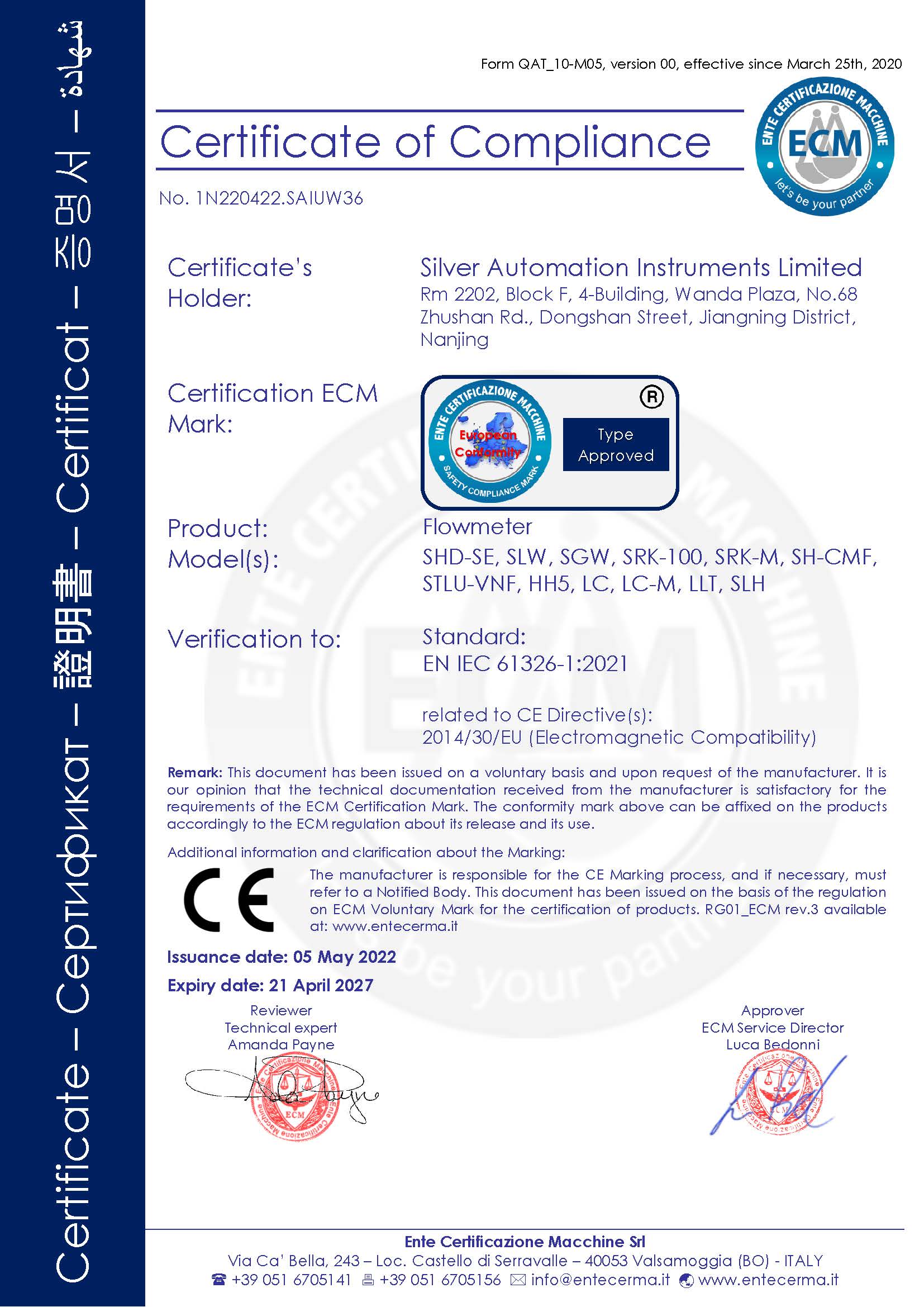
The verification method matters more than the claim. A CE certificate covering a flow meter should state the certificate number, the issuing body, the applicable standard and the expiry date, so a buyer can confirm it independently. Silver Automation Instruments holds CE certification for flow meters under certificate number 1N220422.SAIUW36, issued by Ente Certificazione Macchine Srl against standard EN IEC 61326-1:2021, valid to 21 April 2027. The same certification scope covers the micro Coriolis mass flow meter model SH-CMF-FE and the low flow thermal mass flow meter model SRK-DL. The company also holds ISO 9001:2015 certification, number 79625Q0002107R0S, issued by ZHONGHONG CERTIFICATION (JIANGSU) CO.,Ltd and valid to 9 July 2028, plus ATEX certification for Zone 2 under number ICR/VC/HM251296, valid to 9 December 2030.
Can a low flow thermal mass flow meter measure liquids?
In the SRK series, no. The SRK-DL is specified as a gas mass flow meter and controller, with its range published in standard gas units (2 sccm to 30 SL/M) and its application areas limited to gas-phase duty: semiconductor, medical, analytical instruments, fuel cells and environmental monitoring. For liquid low flow — pure water, silicone, aviation kerosene or diesel — the micro Coriolis route is the appropriate one: the SH-CMF-FE covers 40 g/h to 1000 kg/hr at ±0.25% to ±0.5% with a 30 bar or 100 bar pressure rating.
What accuracy should I expect from a low flow meter?
The published figures for these two models are ±0.25% to ±0.5% for the SH-CMF-FE micro Coriolis meter and ±1% F.S. for the SRK-DL thermal meter. Two details matter more than the headline number. First, the reference basis: ±1% F.S. fixes the error band against the meter's full-scale span, so the absolute error does not shrink as flow falls. Second, always request the error expressed in engineering units at your minimum operating flow, because that is the only figure that predicts low-end performance.
How can I validate a low flow meter before committing to a full order?
Order a sample and request the calibration test. Silver Automation Instruments accepts orders from 1 unit (MOQ 1 unit), supports OEM/ODM with logo customization, and performs a calibration test as the quality-control step on the manufactured unit. The practical validation sequence is: confirm the published range and pressure rating match your line, order one unit, run the calibration test across your own flow band rather than at factory default, and only then commit the production volume.
What lead time and support should I plan for?
The standard lead time for these instruments is 10-12 working days, against a monthly manufacturing capacity of 2,000 units, and after-sales support is provided remotely. To move from comparison to decision, send the minimum and maximum flow, the fluid, the line pressure and the signal your control system needs; the engineering team will confirm whether the SH-CMF-FE micro Coriolis meter or the SRK-DL low flow thermal meter fits the duty, and a sample or quotation can be raised from that single enquiry.
Conclusion: Decide by Phase First, Then Filter by Constraint
The Coriolis-versus-thermal question at low flow reduces to a short set of rules. If the fluid is a liquid, the micro Coriolis meter is the candidate — the SH-CMF-FE covers 40 g/h to 1000 kg/hr at ±0.25% to ±0.5%, in stainless steel 316L, at a 30 bar or 100 bar pressure rating, with 4-20mA, 0-5VDC and 1-5VDC outputs plus RS485 or RS232. If the fluid is a gas in the sccm-to-SL/M band and the priority is a compact, simply integrated measuring point, the SRK-DL thermal meter covers 2 sccm to 30 SL/M at ±1% F.S. with MODBUS and RS232/485.
Two further checks complete the decision. Where the line pressure or temperature falls outside the micro envelope, the wider SH-CM Coriolis family is specified from roughly 1 mm to 300 mm, with a -200 to 350 °C fluid temperature range, IP65 protection and 4-20mA, pulse, frequency, MODBUS RTU, HART, Profibus-DP or Profibus-PA communication. And where the installation is in the EU or in a Zone 2 area, verify the CE and ATEX certificates and their validity dates before the specification is frozen.
Precision at low flow is not purchased from a datasheet. It is confirmed by testing an actual meter against an actual fluid at the actual minimum flow. Silver Automation Instruments builds both meter types in Nanjing and supports the selection process with remote engineering support, a one-unit minimum order quantity and a 10-12 working day lead time.
Next step: sample, quotation or technical catalog
Send your minimum and maximum flow, the fluid, the line pressure and the required output signal, and the engineering team will confirm whether the SH-CMF-FE micro Coriolis mass flow meter or the SRK-DL low flow thermal mass flow meter fits the duty. Samples can be ordered from a single unit, and the full flow, pressure and level measurement range is documented in the downloadable catalog.
Email: sales@silverinstruments.com | Phone: +86 25-52155837 | WhatsApp: +86 18936759191 | Website: www.silverinstruments.com
Download the Silver Automation Instruments catalog (PDF)