
Coriolis vs Thermal Mass Flow Meters: A Practical Comparison for Dirty and High-Viscosity Fluids
Coriolis vs Thermal Mass Flow Meters: A Practical Comparison for Dirty and High-Viscosity Fluids
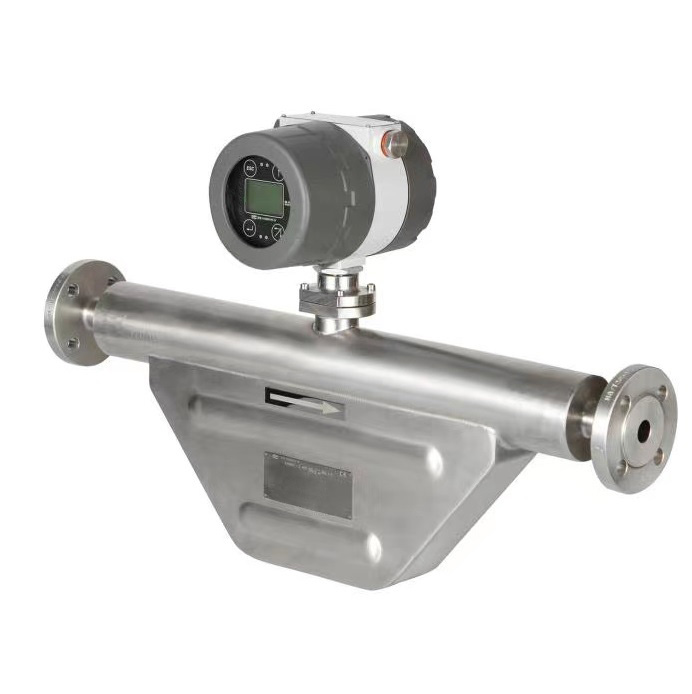
When a line carries dirty or high-viscosity fluid, the choice between a Coriolis mass flow meter and a thermal mass flow meter is settled by fluid physics long before it is settled by price. Coriolis mass flow measurement is the applicable technology for liquids such as crude oil, diesel, fuel and cryogenic media, because it measures mass directly with no moving parts and no requirement for a straight upstream or downstream pipe section. Thermal mass flow measurement, as specified in this product portfolio, is built for gases — air, compressed air, nitrogen, natural gas, biogas, oxygen and LPG — and is not a cheaper substitute for Coriolis duty on a viscous liquid line.
Short answer: for dirty crude oil, fuel, diesel, cryogenic liquids and other high-viscosity streams, specify a Coriolis mass flow meter. For clean gas flow, energy monitoring and utility air, specify a thermal mass flow meter.
What decides the borderline cases: fluid composition and phase, viscosity, process temperature, allowable pressure drop, and the accuracy your custody-transfer or process-control duty actually requires.
The Problem Definition: Why Dirty and Viscous Fluids Break Standard Selection Logic
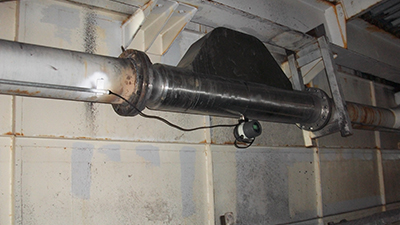
A “dirty” fluid is not one problem, it is a stack of them. In crude oil service, viscosity varies widely from light to heavy crude, and the stream can carry sand, wax, water and associated gas alongside corrosive elements such as H₂S, CO₂ and brine. Temperature can range from −40 °C up to 150 °C or higher, pressure ratings run from ANSI 150# to 2500#, and custody transfer in this duty typically demands 0.1–0.2% accuracy. Add outdoor installation, hazardous-area classification and continuous operation with infrequent shutdowns, and the meter has to survive all of it at once.
High viscosity adds a second layer. A viscous stream develops a different flow profile from water, it may need to be kept hot simply to remain pumpable, and any meter that depends on a stable, well-developed velocity profile can lose accuracy when the profile shifts. Four failure modes are worth naming before you compare technologies:
- Inferential measurement. Meters that calculate mass from volume, density assumptions or heat transfer depend on the fluid behaving the way the calibration assumed.
- Obstruction and wear. Narrow passages, small clearances and moving parts are exposed to sand, wax and abrasives.
- Installation constraints. Straight-run requirements are hard to satisfy on a compact skid or a brownfield retrofit.
- Thermal exposure. A meter on a hot, insulated line has to tolerate both the process temperature and the insulation jacket wrapped around it.
These are the conditions that make the Coriolis-versus-thermal question a real engineering decision rather than a catalogue comparison.
Industry Background: Two Meter Families, Two Different Growth Stories
The wider market context explains why both technologies keep appearing on the same enquiry. The global flow meter market was valued at approximately USD 10.64 billion in 2024 and is projected to reach USD 15.17 billion by 2030 (Grand View Research). Coriolis instruments accounted for roughly 22% of that market in 2024 (Fortune Business Insights), with the Coriolis meters market itself estimated at USD 2.35 billion in 2024 (Market Research Future). The thermal flow meter market was estimated at USD 1.728 billion in 2024, with a projected CAGR of 4.83% (Market Research Future).
Oil and gas remains the leading application for flow meters, at approximately 29.6% of market share (Fact.MR) — which is precisely where dirty and high-viscosity fluids concentrate. On the supplier side, Emerson (Micro Motion) and Endress+Hauser are identified as the top two companies in the flow meter market with 12% and 14% market share respectively (Fortune Business Insights). For a buyer, the practical implication is that the measurement principle itself is mature, settled technology; differentiation between suppliers shows up later, in application engineering, customization and delivery.
One caution on market figures: published estimates vary substantially by source, partly because different analysts define categories differently — for example, “thermal flow meters” versus “thermal mass flow controllers,” or whether secondary flow types are included in the total. Treat any single market number as directional, not as a procurement fact.
The Mechanism: Why Coriolis and Thermal Behave Differently on the Same Line
Coriolis: Mass Flow Measured Directly, With No Moving Parts
A Coriolis mass flow meter oscillates one or two measuring tubes and reads the phase shift that the flowing mass imposes on that oscillation. Because the phase shift is proportional to mass, the meter reports mass flow directly rather than inferring it. There are no moving parts in the flow path, the measurement is largely insensitive to changes in viscosity, density and flow profile within the design envelope, and the design does not require a straight upstream or downstream pipe section — an advantage on skids and retrofits where straight-run space does not exist.
That combination is what makes Coriolis the default answer for dirty and viscous liquids: the meter is weighing the fluid, not interpreting how the fluid behaves.
Thermal Mass Flow: Heat Transfer Used as a Proxy for Gas Mass
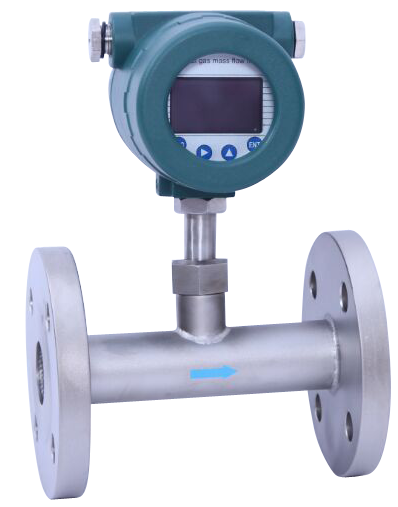
A thermal mass flow meter heats a sensor and measures how much heat the flowing gas carries away from it. The correlation between heat loss and mass flow is established during calibration against a specific gas, which is why gas composition sits at the centre of thermal measurement. Entrained liquid droplets, condensation or a coating on the sensor change the heat-transfer relationship and therefore the calibration basis.
Used correctly, thermal mass flow measurement is efficient and economical: insertion versions fit large ducts and pipes, and the family covers a wide range of utility and process gases. It is simply specified for a different fluid phase than the viscous liquid duties discussed here.
The Detailed Solution: What the Available Hardware Actually Covers
The cleanest way to make the comparison concrete is to look at specified process envelopes rather than at technology labels.
Coriolis Platform: SH-CM and SH-CMF-FE
The model SH-CM is a high pressure Coriolis mass flow meter, and it also spans the cryogenic flow meter, fuel mass flow meter and gas mass flow meter categories. Its stated envelope covers line sizes from about 1 mm to 300 mm, a flow range from roughly 10 kg/h to 1,500 t/h, fluid temperatures from −200 °C to 350 °C, IP65 protection, and communication via 4–20 mA, pulse, frequency, MODBUS RTU, HART, Profibus-DP and Profibus-PA. It is ATEX certified and the wetted material is stainless steel 316L. Typical industries include oil and gas, chemical and petrochemical, food and beverage, pharmaceutical and biotech, power generation, mining and minerals processing, pulp and paper, water and wastewater, marine and shipbuilding, and semiconductor and electronics.
The SH-CMF-FE is a Micro Coriolis mass flow meter that also functions as a Coriolis flow meter and controller. It covers 40 g/h to 1,000 kg/h at a stated accuracy of ±0.25% to ±0.5%, with a pressure rating of 30 bar or 100 bar, 4–20 mA / 0–5 VDC / 1–5 VDC outputs, 15 V DC or 24 V DC supply, RS485 or RS232 communication, and a stainless steel 316L body. It is used in food, (petro)chemical and pharmaceutical process measurement, fermentation equipment, semiconductor processing and fuel cell technology, and handles fluids including pure water, silicone, aviation kerosene, diesel and supercritical CO₂.
Thermal Platform: SRK-100 and SRK-DL
The model SRK-100 is a thermal mass flow meter available as an insertion type, an inline type, an ATEX version and a remote-display version. It covers DN15 to DN2000, handles gas temperatures from −20 °C to 300 °C, outputs 4–20 mA, and communicates over RS485, MODBUS RTU and HART. Its measurable gases are air, compressed air, N₂, natural gas, biogas, O₂ and LPG, and the body material is stainless steel 304. Its applications fall in oil and gas (natural gas measurement, flare gas monitoring, combustion air and gas control), chemical and petrochemical, semiconductor and electronics, food and beverage, and wastewater and environmental monitoring.
The SRK-DL is a low flow thermal mass flow meter, also classified as a micro thermal mass flow meter and a high temperature thermal mass flow meter. It covers 2 sccm to 30 SL/M at ±1% F.S., with 0–5 V, 4–20 mA and 1–5 V outputs, RS232/485 and MODBUS communication, and ±15 V DC or 24 V DC supply. It is used in semiconductor, medical, analytical instrument, fuel cell and environmental monitoring applications.
Adjacent Duty: Steam
Where the fluid is steam rather than a liquid or a gas, the model STLU-VFN is a steam mass flow meter available in vortex or Coriolis type. The vortex version covers DN15 to DN300 for saturated and superheated steam up to 500 °C, is ATEX approved, includes built-in temperature and pressure compensation, uses a stainless steel 304 sensor, and offers flange, wafer, screw or tri-clamp process connections. It serves power generation, chemical, petrochemical, food, pharmaceutical and district heating industries.
Step-by-Step Breakdown: A Seven-Step Selection Sequence
- Define the fluid state and composition. Phase (liquid, gas, steam, two-phase), viscosity range, solids content such as sand and wax, free water, and corrosive species including H₂S, CO₂ and brine. If entrained liquid is possible in a gas stream, thermal measurement stops being a safe assumption.
- Fix the accuracy requirement and its basis. Crude oil custody transfer typically requires 0.1–0.2% accuracy, while diesel custody transfer generally requires ±0.5% to ±0.1%. State the requirement over the actual operating flow range, not at a single reference point, and confirm how the accuracy figure is verified.
- Map the process envelope. Temperature, pressure and line size decide most of the shortlist. For reference: SH-CM covers −200 °C to 350 °C; SRK-100 covers gas temperatures from −20 °C to 300 °C; STLU-VFN covers steam up to 500 °C; the SH-CMF-FE is rated 30 bar or 100 bar, and cryogenic service is quoted from 16 bar to 700 bar.
- Choose the measurement principle for the phase. Liquid hydrocarbon, cryogenic liquid or any stream with solids → Coriolis. Clean utility or process gas → thermal. Steam → vortex or Coriolis steam meter with temperature and pressure compensation.
- Decide the installation style and wetted materials. Inline versus insertion, and 316L stainless steel versus 304. Insertion thermal meters suit large ducts and large line sizes (SRK-100 covers DN15 to DN2000); Coriolis covers roughly 1 mm to 300 mm. On hot lines, plan the insulation jacket and check the meter body and electronics separately.
- Confirm hazardous-area and compliance scope. Verify the certificate for the exact model, material combination and temperature class. The SH-CM and STLU-VFN are ATEX certified; fuel and diesel service commonly calls for Ex d or Ex ia certification in Zone 0 or Zone 1.
- Confirm the interface, the verification path and the delivery date. Check that the available outputs and protocols match your control system (4–20 mA, pulse, frequency, MODBUS RTU, HART, Profibus-DP/PA on the Coriolis platform; RS485, MODBUS RTU, HART on the thermal platform), agree the calibration and verification route, and then confirm lead time.
Use Cases: Four Conditions That Decide the Choice
1. Dirty crude oil with a custody-transfer duty
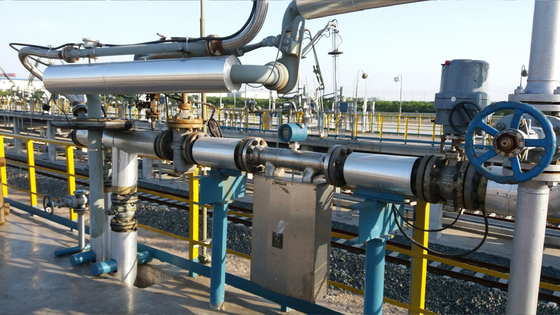
A stream that carries sand, wax, water and associated gas, in a hazardous area, at pressures up to ANSI 2500#, with custody transfer demanding 0.1–0.2% accuracy. Bidirectional flow may be required and corrosion resistance against H₂S and CO₂ is a hard requirement. This is Coriolis territory: direct mass measurement, no moving parts to be abraded, and a stainless steel 316L wetted path.
2. A hot, high-viscosity product held at around 250 °C
Some fluids are only pumpable when hot — heavy fuel oil, asphalt and similar streams — and the meter is installed inside an insulation jacket. A process temperature of roughly 250 °C sits comfortably within the SH-CM’s stated −200 °C to 350 °C fluid temperature range. The engineering questions here are not about the measurement principle, which remains Coriolis, but about thermal management of the installation, verified pressure rating, and whether the electronics need to be positioned away from the hot zone.
3. Compressed air and natural gas energy monitoring
Here the fluid is clean gas, and thermal mass flow measurement is the efficient fit. The SRK-100 measures air, compressed air, N₂, natural gas, biogas, O₂ and LPG over DN15 to DN2000 in inline or insertion form. Typical objectives are quantifying compressed air consumption, detecting leaks, allocating air cost between departments, and monitoring burner air and gas. Insertion installation keeps pressure drop and installation cost low on large lines.
4. Cryogenic liquids and fuel streams
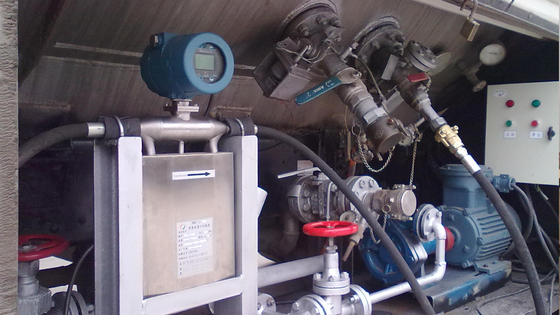
Cryogenic duty down to −200 °C, with line sizes from 1 mm to 300 mm and pressure ratings from 16 bar to 700 bar, is served by the Coriolis platform; austenitic stainless steel, low-temperature seals and a thermally isolating design are the specification points that matter. Fuel measurement — gasoline, diesel, jet fuel, ethanol blends and biofuels — likewise sits with Coriolis, where viscosity varies with fuel type and temperature, and custody transfer at fuel depots and retail stations demands ±0.5% accuracy or better with legal approval.
Comparison Table: Coriolis vs Thermal Mass Flow Measurement
| Selection factor | Coriolis mass flow meter | Thermal mass flow meter |
|---|---|---|
| Measurement basis | Direct mass measurement from tube oscillation phase shift | Heat-transfer correlation, calibrated against a specific gas |
| Moving parts in the flow path | None | None (heated sensor and reference sensor) |
| Straight pipe run requirement | Not required by design | Straight-run space is normally planned for inlet/outlet conditioning |
| Fluid phase specified | Liquids and gases: crude oil, diesel, fuel, cryogenic media, gas | Gases: air, compressed air, N₂, natural gas, biogas, O₂, LPG |
| Suitability for dirty / high-viscosity liquid | Applicable; handles high viscosity and abrasive particles such as sand | Not applicable — liquid contact and sensor coating change the calibration basis |
| Stated accuracy examples | ±0.25% to ±0.5% (SH-CMF-FE) | ±1% F.S. (SRK-DL) |
| Typical application accuracy requirement | Crude oil custody transfer 0.1–0.2%; diesel custody transfer ±0.5% to ±0.1% | Utility and process gas monitoring and control |
| Line size coverage | Approx. 1 mm to 300 mm | DN15 to DN2000 (insertion or inline) |
| Flow range coverage | Approx. 10 kg/h to 1,500 t/h; micro version 40 g/h to 1,000 kg/h | 2 sccm to 30 SL/M (SRK-DL) |
| Fluid temperature range | −200 °C to 350 °C | −20 °C to 300 °C (gas) |
| Pressure rating | 30 bar or 100 bar (SH-CMF-FE); cryogenic duty quoted 16–700 bar | Not the primary constraint for utility gas service |
| Wetted material | Stainless steel 316L | Stainless steel 304 |
| Outputs and communication | 4–20 mA, pulse, frequency, MODBUS RTU, HART, Profibus-DP, Profibus-PA | 4–20 mA, RS485, MODBUS RTU, HART |
| Hazardous area | ATEX certified (SH-CM); fuel and diesel duty commonly requires Ex d or Ex ia | ATEX version available (SRK-100) |
| Pressure drop behaviour | Small, flow-dependent drop across the measuring tubes | Very low with insertion designs on large lines |
Specification Snapshot: Models Referenced in This Comparison
| Model | Type | Key stated parameters |
|---|---|---|
| SH-CM | Coriolis mass flow meter | 1–300 mm; 10 kg/h–1,500 t/h; −200 °C to 350 °C; IP65; ATEX; stainless steel 316L |
| SH-CMF-FE | Micro Coriolis mass flow meter / controller | 40 g/h–1,000 kg/h; ±0.25%–±0.5%; 30 bar or 100 bar; RS485/RS232; 15 V DC or 24 V DC |
| SRK-100 | Thermal mass flow meter (insertion or inline) | DN15–DN2000; gas temperature −20 °C to 300 °C; 4–20 mA; RS485, MODBUS RTU, HART; stainless steel 304 |
| SRK-DL | Low flow thermal mass flow meter | 2 sccm–30 SL/M; ±1% F.S.; RS232/485, MODBUS; ±15 V DC or 24 V DC |
| STLU-VFN | Steam mass flow meter (vortex or Coriolis type) | DN15–DN300; steam up to 500 °C; ATEX approved; built-in temperature and pressure compensation |
Frequently Asked Questions
Do Coriolis and thermal mass flow meters both carry ATEX approval, and does that cover hazardous crude oil service?
ATEX coverage is model-specific, not technology-wide. The SH-CM Coriolis mass flow meter is ATEX certified, and the STLU-VFN steam mass flow meter is ATEX approved; the SRK-100 thermal mass flow meter is also available in an ATEX version. Separately, fuel and diesel services commonly require Ex d or Ex ia certification for Zone 0 or Zone 1. The practical rule is to verify the certificate against the exact model, wetted material, temperature class and process connection you intend to buy, rather than assuming approval from the technology family. For commercial measurement duties, standards such as NIST Handbook 44 (2024 Edition) Section 3.37 set out specific technical requirements for mass flow meters.
Can a thermal mass flow meter measure dirty or high-viscosity liquids?
No. In this portfolio, thermal mass flow meters are specified for gases: the SRK-100 measures air, compressed air, N₂, natural gas, biogas, O₂ and LPG, and the SRK-DL covers 2 sccm to 30 SL/M in micro-flow service. Thermal measurement depends on the heat-transfer characteristics of the flowing gas, so liquid contact, entrained droplets or a coating on the sensor changes the calibration basis. For liquid hydrocarbons such as crude oil, diesel and fuel, and for cryogenic liquids, the Coriolis platform is the applicable choice.
What drives the cost difference between a Coriolis and a thermal mass flow meter?
Four things dominate. First, the sensing element: a Coriolis meter’s cost sits in the measuring-tube assembly and its calibration, while an insertion thermal meter has far fewer wetted parts. Second, wetted material and pressure rating — stainless steel 316L on the Coriolis platform, 30 bar or 100 bar on the micro Coriolis, and quoted ratings from 16 bar to 700 bar for cryogenic duty. Third, the certification scope, since ATEX or Ex d / Ex ia approval adds engineering and documentation. Fourth, flow range and line size. The correct comparison is total cost of the duty — accuracy, verification, maintenance exposure and downtime risk — not the purchase price alone, especially where custody transfer accuracy of 0.1–0.2% is at stake.
How should we validate a meter before committing to a full order?
Start with the fluid data sheet: composition, phase, viscosity range, solids, temperature and pressure, line size, hazardous-area classification and the required accuracy over the operating range. Then confirm what the accuracy figure is referenced to — the SH-CMF-FE is stated at ±0.25% to ±0.5%, and the SRK-DL at ±1% F.S. For custody-transfer duty, also agree the verification method: ISO 6996:2024 specifies requirements for meter verification using master Coriolis mass flow meters, particularly for bunkering applications. A factory calibration and verification route, together with the published product catalogue, gives you a defensible basis for approval.
What lead time should we plan for, and what is the next step?
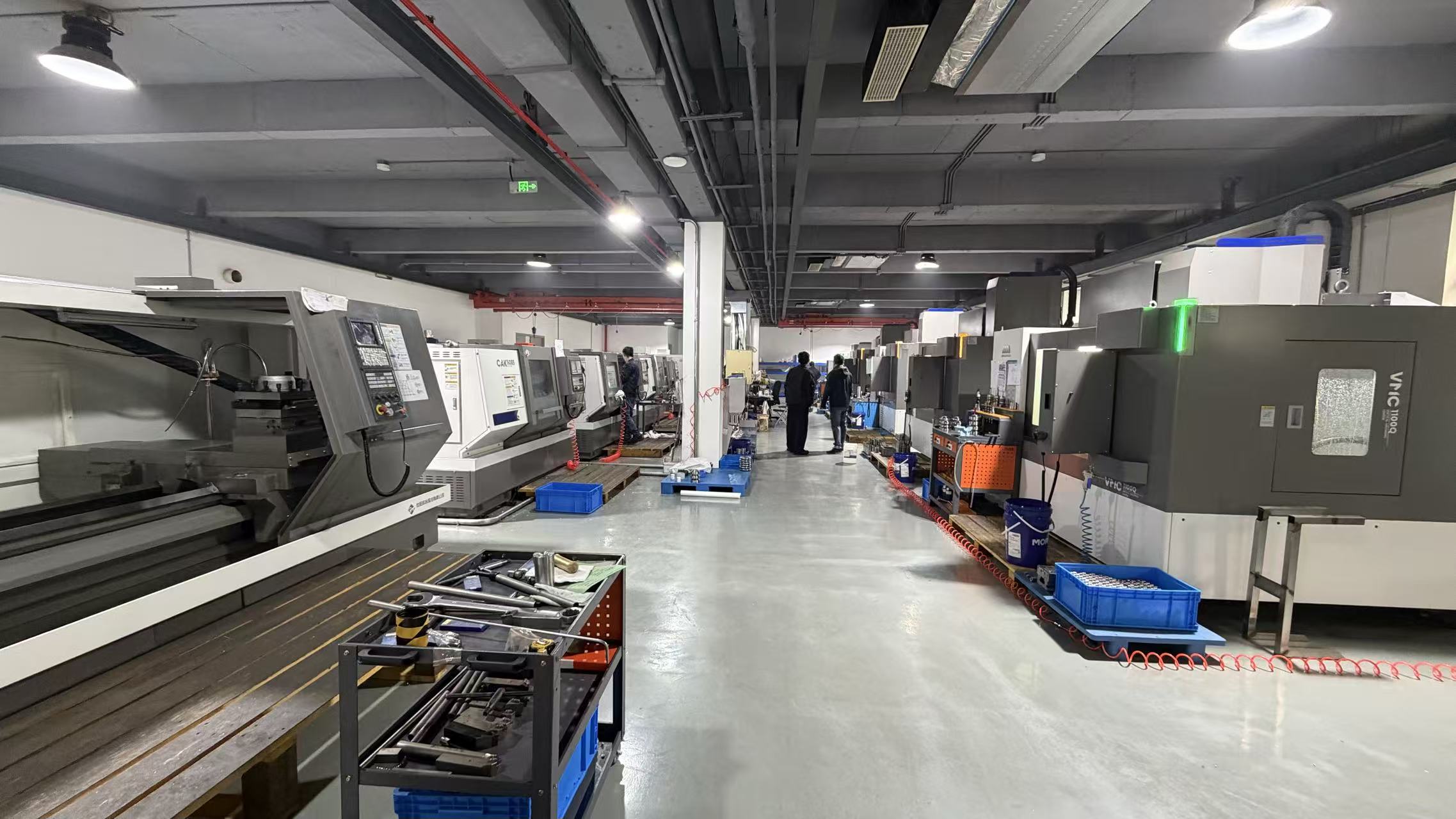
Most orders ship in 7–10 working days. For a dirty or high-viscosity line, the next step is to send the fluid composition, flow range, temperature, pressure, line size, accuracy requirement and hazardous-area classification so the technology and model can be confirmed. Silver Automation Instruments, established in 2010, manufactures flow, pressure, level and data logging instrumentation from a 10,000 m² facility with an annual production capacity of 60,000 units, and offers free expert consultation on measurement solutions. Contact the team at sales@silverinstruments.com, by phone on +86 25-52155837, or via WhatsApp on +86 18936759191 to request a sample recommendation or a quotation.
Next Step: Match the Meter to the Fluid, Not the Other Way Around
If your line carries dirty, viscous, hot or cryogenic fluid, the starting point is a fluid data sheet and a defined accuracy requirement — the model selection follows from those two documents.
Download the full product catalogue for Coriolis, thermal, steam and liquid mass flow meters here: Silver Automation Instruments product brochure (PDF).
Conclusion: Deciding on Fluid Physics, Not on Price Alone
For dirty and high-viscosity fluids, the comparison resolves fairly cleanly. Coriolis mass flow measurement measures mass directly, has no moving parts in the flow path, needs no straight pipe run, and covers liquid temperatures from −200 °C to 350 °C across line sizes from roughly 1 mm to 300 mm. Thermal mass flow measurement is an efficient, economical solution for clean gases — air, compressed air, nitrogen, natural gas, biogas, oxygen and LPG — over DN15 to DN2000, but it is not the right instrument for a viscous liquid, a stream carrying sand and wax, or a custody-transfer duty requiring 0.1–0.2% accuracy.
The decision framework is therefore short: identify the phase and composition, fix the accuracy requirement and its verification method, map temperature, pressure and line size, and then confirm certification, interface and delivery. Where the fluid is a dirty liquid, the answer is Coriolis. Where the fluid is a clean gas, the answer is thermal. Where the fluid is steam, it is a steam meter with temperature and pressure compensation. Everything else is application detail — and application detail is where the selection is either won or lost.