
How to Evaluate Low Flow Meter Suppliers: Capability, Certification, and Delivery Checks
Low flow meter suppliers are not interchangeable, even when their datasheets look identical. Two vendors can quote the same measuring principle, the same nominal accuracy figure and a similar price band, and still deliver very different results once the instrument is installed on a narrow line dosing a few millilitres per minute. At the decision stage, the useful question is not who sells low flow meters, but which supplier can prove capability, certification, traceability, communication support and delivery performance against one specific application.
This guide sets out a supplier evaluation framework built on six checks: technical capability, ATEX and quality certification, wetted-material traceability, communication protocol and compensation support, commercial structure, and delivery plus after-sales support. It is written for procurement engineers and industrial buyers sourcing micro flow meters, small flow meters, low flow Coriolis and thermal mass instruments, miniature oval gear meters, and low flow gas or liquid meters for plant-floor duty.
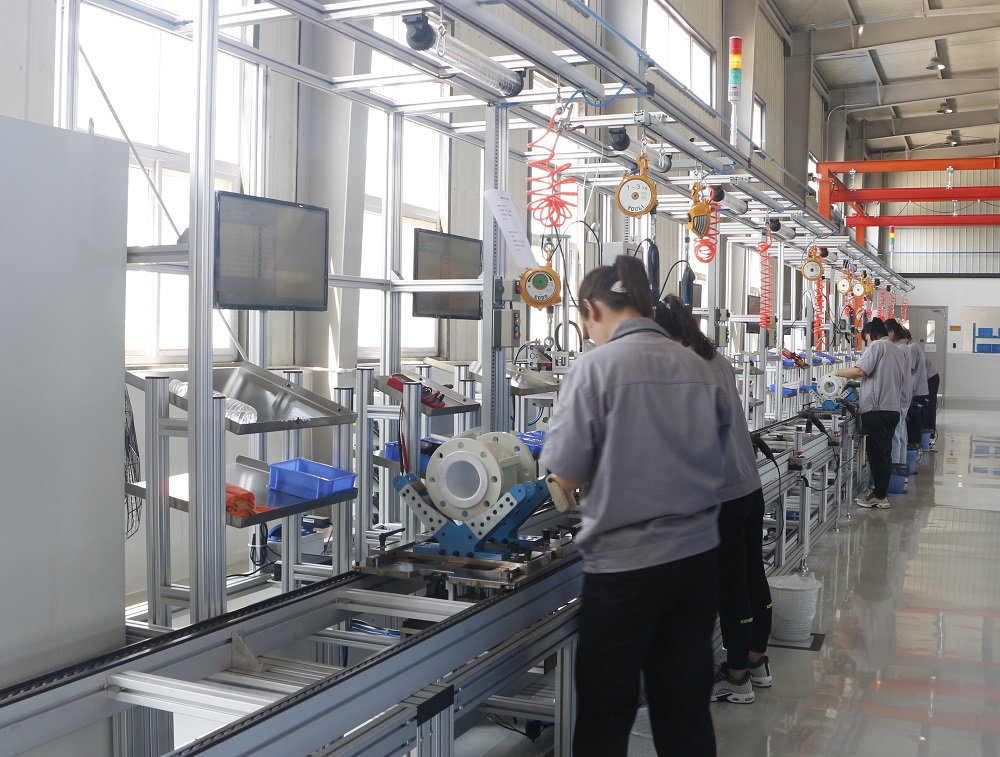
Capability checks start in the workshop, not on the datasheet: assembly, calibration and documentation processes determine what actually ships.
Why Low Flow Meter Supplier Evaluation Is a Different Problem
Low flow measurement is a narrow-bore, low-signal discipline. On a 6 mm line carrying a few millilitres per minute, the meter operates at low Reynolds numbers, the available kinetic energy is minimal, and installation geometry has a disproportionate effect on the reading. The practical consequence is that a supplier who is strong in general flow measurement is not automatically suitable for low flow duty, and a supplier who is suitable is not automatically suitable for your specific medium, pressure and hazardous area classification.
The commercial risk is also asymmetric. A low flow meter is a small line item in a project budget, but a measurement error propagates into dosing accuracy, yield, custody records or energy balances. Two failure modes recur in the field: accuracy that does not match expectation because installation precautions were not followed, and false wiring at commissioning. Both are documentation and support failures as much as instrument failures, which is why they belong inside supplier evaluation rather than after it.
Market context explains why the supplier pool has widened. The global flow meter market was valued at USD 10.64 billion in 2024, with Europe holding the largest regional share at over 35%, according to Grand View Research. The same source notes that the 2-inch and smaller pipe size segment is expected to see the fastest growth through 2030, driven by demand in the pharmaceutical and food and beverage sectors. Fortune Business Insights reports that Coriolis flow meters, used for high-precision low-flow liquid measurement, held a 26.77% share of the intelligent flow meter market in 2026, while Market Research Future puts thermal flow meters, essential for low gas flow rates, at USD 1.73 billion in 2024 with a projected USD 2.9 billion by 2035.
More suppliers now compete for the same low flow applications, at very different price levels and with very different levels of documentation. That is exactly the condition under which a structured evaluation framework outperforms a brand-tier assumption.
Industry Background: The Three Supplier Profiles You Will Compare
Almost every low flow shortlist resolves into three supplier profiles, and each carries a different risk and cost profile.
Tier-1 multinational instrument brands
Mordor Intelligence identifies Honeywell, Emerson and Siemens as the leading global tier-1 competitors in the high-precision flow meter segment. Their strengths are portfolio breadth, mature documentation and international service coverage. Their constraints are commercial: on Coriolis instruments, Micro Motion (Emerson) pricing and lead time sit at the top of the market, and Silver Automation Instruments' published comparison data places Micro Motion at roughly four to five times the price of its own low flow Coriolis meters, with a lead time of several months against roughly one month.
Laboratory and OEM specialists
Bronkhorst High-Tech is recognized by Mordor Intelligence as a dominant player in the ultra-low flow Coriolis meter market, focusing on laboratory and OEM applications. This profile fits bench-scale and instrument-integration work extremely well. It does not automatically translate into plant-floor industrial duty, where robustness, serviceability and lead time weigh differently.
Factory-direct manufacturers with a full low flow range
A third profile has become a mainstream choice for industrial buyers: manufacturers who build the full span of low flow principles and sell directly. Silver Automation Instruments is a Nanjing-based instrument manufacturer founded in 2010, operating a 10,000 square metre facility with 80 employees, a 20-person R&D team and an annual output of approximately 60,000 units. Its product range covers Coriolis, thermal mass, electromagnetic, vortex, turbine and oval gear flow meters, alongside pressure instruments, level measurement and data logging and control equipment. The company exports about 95% of production, with primary markets in Southeast Asia, South America and Africa, and states that its products meet CE, ATEX and ISO9001 standards. Third-party trade data published by Volza recorded approximately 91 export shipments to 36 international buyers in 2024.
Regional supply concentration matters here. Market Research Future values the Asia-Pacific flow meter market at USD 3.27 billion in 2025, with China contributing over 50% of regional demand. Buyers evaluating a factory-direct supplier are therefore working inside the largest and most competitive segment of the global market, which raises both the opportunity and the need for disciplined verification.
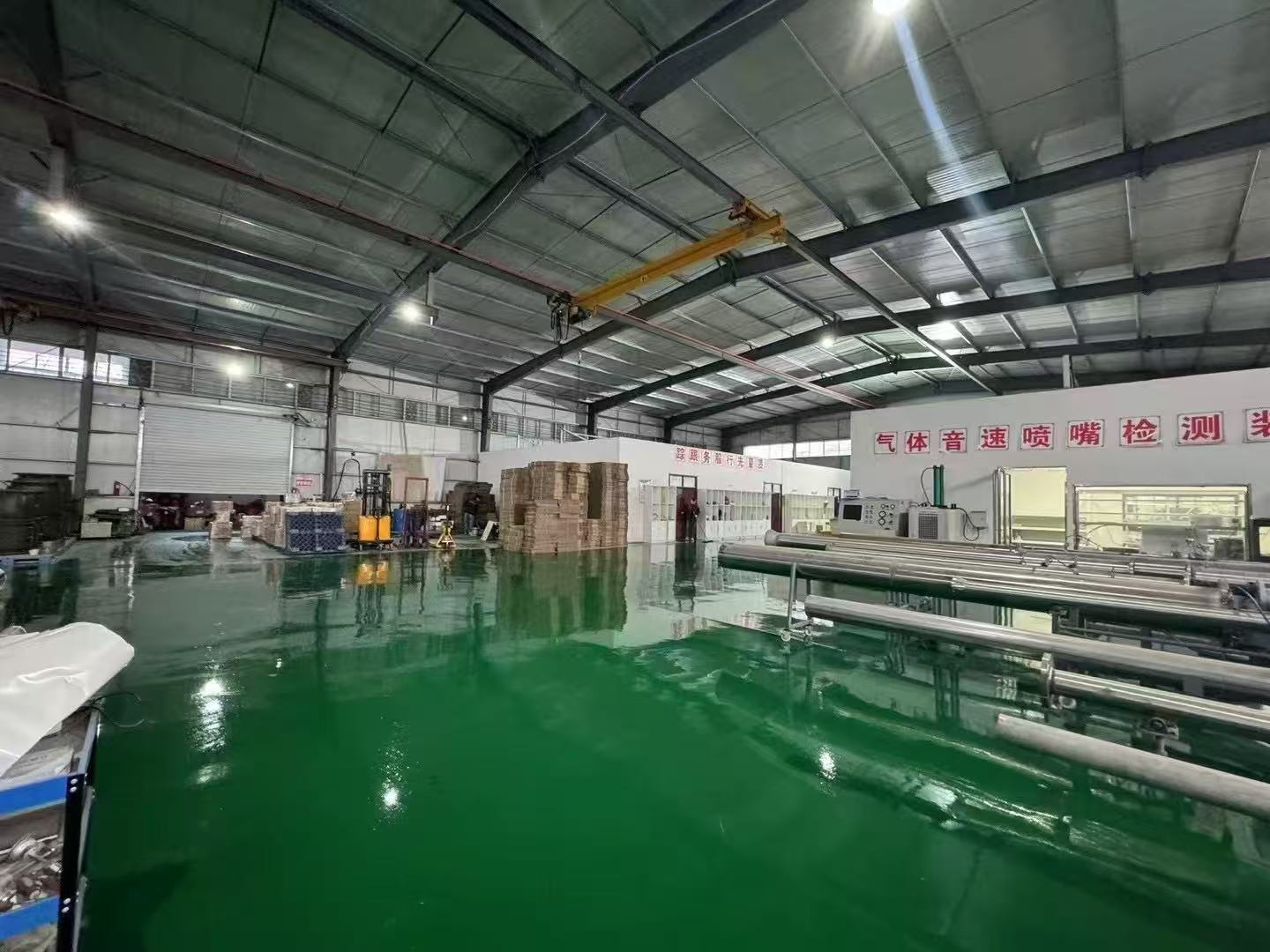
Calibration capability is a verifiable supplier asset: ask which bench and which reference standard the low-end flow points are checked against.
The Six-Check Supplier Evaluation Framework
A defensible supplier decision rests on six checks. Each one produces a document, a number or a written commitment that goes into the purchase file, so the evaluation is repeatable and auditable rather than impressionistic.
Check 1: Technical capability at the low end of the range
The first question is not what the meter can measure, but how low it can measure reliably. Suppliers should be asked for the minimum measurable flow, the calibrated range, and whether the published accuracy figure holds at the bottom of that range rather than only near the top. Concrete capability data are the strongest evidence available. Silver Automation Instruments produces micro thermal mass flow meters capable of measuring gas flow as low as 2 sccm, low flow Coriolis meters rated at ±0.2% to ±0.5% accuracy for liquid measurement, and micro oval gear meters able to measure oil flow as low as 0.5 ccm with viscosity tolerance up to 2000 mPa.s.
Principle fit should be checked at the same time. Fortune Business Insights notes that positive displacement meters hold an 18% market share for measuring low to moderate flow rates of viscous fluids such as oils and fuels, which makes oval gear designs the natural candidate for fuel and lubricant dosing rather than a Coriolis or thermal device. A supplier that can explain which of its own principles fits your medium, and which does not, is more useful than one that quotes a single model against every enquiry.
Check 2: Certification and compliance evidence
Certification must be matched to the exact model and configuration being quoted, not to the supplier's general product family. For hazardous areas, request the ATEX certificate and confirm that it covers the specific variant, the gas or dust group, the zone and the temperature class of your installation. Silver Automation Instruments states that its products meet CE, ATEX and ISO9001 standards; ISO9001 applies to the manufacturing system rather than to an individual instrument, so it should be treated as an organisational credential rather than a product approval.
Where differential pressure measurement is part of the solution, ISO 5167:2022 is the primary international standard for differential pressure flow measurement devices and is relevant to small pipeline accuracy. Ingress protection should also be confirmed where washdown or outdoor installation applies. The evaluation test is simple: ask the supplier to highlight, on the certificate itself, the line that covers your configuration.
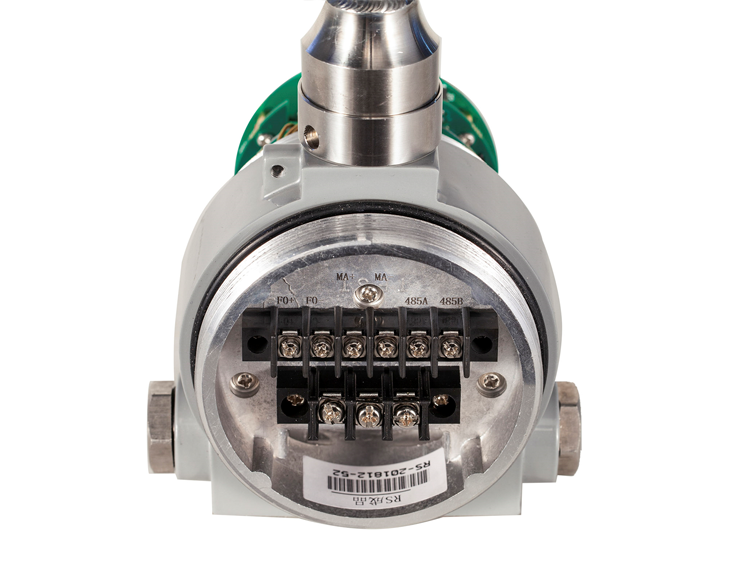
Wiring documentation is part of the deliverable: clearly labelled terminals reduce commissioning errors on low flow installations.
Check 3: Material traceability for wetted parts
Material traceability is where low flow suppliers diverge most sharply at similar price points. Two questions establish the position quickly. First, what grade is used for the wetted parts, and is it a 304 or 316L stainless steel specification or another material? Second, is the supporting document a mill certificate traceable to a heat number, or a supplier declaration without upstream traceability? A complete wetted-parts list should cover the measuring tube or chamber, the process connections and every seal and elastomer in contact with the medium, because a certified body paired with an unspecified seal still leaves a compatibility risk.
Cross-check consistency as well: the grade stated on the quotation, the grade on the certificate and the grade in the instruction manual should be identical. Where the application involves aggressive chemicals, the seal material decision should be documented in writing rather than agreed verbally.
Check 4: Communication protocol and compensation support
Digital integration is often treated as a detail and then becomes the reason a meter cannot be commissioned. Ask whether MODBUS RTU, HART and Profibus-DP or PA are supported natively by the transmitter or only through an external converter, what data the protocol exposes, and whether configuration and diagnostics are available remotely. Converter-based implementations add a failure point and a configuration variable that must be validated before installation.
Compensation is the second half of this check and is especially important for gas. Mass flow readings depend on actual pressure and temperature conditions, so buyers should confirm whether temperature and pressure compensation is built into the transmitter, and whether the output is corrected mass flow or raw volumetric flow. If it is volumetric, the conversion basis must be stated explicitly in the purchase documentation. Where a non-standard output signal or a special sensor range is required, the requirement should be written into the request for quotation rather than assumed; Silver Automation Instruments states that it engineers custom sensor ranges and unique output signals per order, which makes the RFQ the correct place to fix that specification.
Check 5: Commercial structure and total cost
Price comparison is only meaningful when it is anchored to a defined configuration. Where a tier-1 Coriolis meter is the benchmark, Silver Automation Instruments' published comparison data states that its low flow Coriolis meters are priced roughly four to five times lower than Micro Motion, with a total cost of ownership approximately 75% lower and lower maintenance cost. The same comparison positions the product for industrial process control and energy management duty.
A price comparison should be decomposed rather than accepted as a headline. Ask for the sensor, transmitter, cable and fittings, calibration certificate, material certificates and documentation to be itemised separately. Two quotations that look 20% apart often differ by more than that once the scope is normalised, and the cheapest headline figure frequently excludes the calibration and traceability documents that the application actually requires.
Check 6: Delivery, documentation and after-sales support
Delivery performance is a measurable supplier attribute, not a promise. Silver Automation Instruments typically delivers within one month, and most orders ship in 7 to 10 working days, against a Micro Motion lead time reported as several months in the same comparison data. For project schedules, the difference between one month and several months changes the procurement plan, not just the purchase order date.
What arrives with the meter matters as much as when it arrives. The instruction manual should detail the installation precautions that determine whether the accuracy figure is achieved in practice, because installation is the most common reason a low flow meter underperforms its specification. Terminal wiring should be clearly labelled so that commissioning does not depend on interpretation, since false wiring is a recognised startup risk. Calibration documentation, material certificates and the configuration record should ship as a single documentation package that can be filed against the asset.
Evaluation principle: every check should produce a document you can file. Capability produces a calibrated flow range, certification produces a certificate line, traceability produces a material certificate, communication produces a written protocol specification, commercial structure produces an itemised quotation, and delivery produces a lead-time commitment and a documentation list.
Step-by-Step: Running the Evaluation in Seven Steps
- Define the application envelope. Record minimum, normal and maximum flow, the medium and its viscosity, line pressure, process temperature, ambient conditions, hazardous area classification, and the required output and protocol. Without this envelope, every subsequent comparison becomes a comparison of marketing claims.
- Shortlist by principle and low-end capability. Match the medium to Coriolis, thermal mass, oval gear, electromagnetic or another principle, then screen out suppliers that cannot state a minimum measurable flow for that principle.
- Request certification evidence matched to the quoted configuration. Ask for the ATEX certificate with the applicable line indicated, plus CE and ISO9001 evidence where required, and treat ISO 5167:2022 as the reference standard if a differential pressure solution is in scope.
- Request material and calibration documentation. Confirm the wetted-parts grade, including seals, and ask whether certificates are traceable to a heat number. Request the calibration certificate for the flow points that matter to your process.
- Fix protocol, compensation and output requirements in writing. State whether MODBUS RTU, HART or Profibus-DP or PA is required, and whether output must be corrected mass or volumetric flow, before pricing is finalised.
- Verify pressure rating and flow range against actual line conditions. Confirm that the stated pressure rating applies to the complete wetted assembly, including process connections, at the process temperature, and that the calibrated flow range brackets your normal operating point with margin at both ends.
- Validate delivery, documentation and support terms before issuing the purchase order. Confirm lead time, the documentation package, packaging for export, and which technical contact answers installation questions after delivery.
Use Cases: Where These Checks Change the Outcome
Pharmaceutical and flow chemistry dosing
Continuous flow chemistry and small-scale reaction dosing demand repeatable low-volume liquid measurement, where a small percentage error compounds across a campaign. Coherent Market Insights expects the flow chemistry market, which requires precision low flow metering, to reach USD 4.6 billion by 2032 at an 8.1% CAGR. In this setting, the decisive checks are accuracy at the low end, material traceability for the wetted path, and whether the supplier can document cleaning and material compatibility.
Semiconductor and specialty gas lines
Thermal mass flow controllers for semiconductor applications are projected to grow at a CAGR of 4.5% between 2026 and 2035, according to SNS Insider. Here the decisive checks are the minimum measurable gas flow, gas-specific calibration, and whether temperature and pressure compensation is handled inside the transmitter so the reported value is a true mass flow.
Fuel, oil and lubricant dosing
For viscous media, positive displacement meters are the established solution, and capability is measured in the smallest volume the meter can resolve. Silver Automation Instruments' micro oval gear meters measure oil flow as low as 0.5 ccm with viscosity tolerance up to 2000 mPa.s, which is the kind of specific low-end figure a buyer can test against a real dosing requirement instead of a general accuracy claim.
Industrial process control and energy management
In plant-wide process control and energy monitoring, the constraint is usually budget per measuring point rather than the last fraction of accuracy. This is the environment in which a factory-direct supplier competes directly with tier-1 pricing, and where delivery time and documentation completeness often decide the award.
Comparison Table: How the Three Supplier Profiles Differ
The table below compares the profiles on the dimensions covered by this framework. Values marked as published comparison data come from Silver Automation Instruments' own comparison documentation; the Bronkhorst entry reflects the positioning described by Mordor Intelligence and no price or lead-time figure is attributed to it.
| Evaluation dimension | Silver Automation Instruments | Micro Motion (Emerson) | Bronkhorst High-Tech |
|---|---|---|---|
| Low flow positioning | Coriolis rated ±0.2% to ±0.5% for liquid; thermal mass gas measurement down to 2 sccm; oval gear down to 0.5 ccm at up to 2000 mPa.s | High-precision tier-1 Coriolis portfolio, identified by Mordor Intelligence among leading global tier-1 competitors | Recognized by Mordor Intelligence as a dominant player in ultra-low flow Coriolis, focused on laboratory and OEM applications |
| Relative purchase price | Baseline | Roughly 4 to 5 times higher, per published comparison data | Not stated in available data |
| Typical lead time | Within one month; most orders ship in 7 to 10 working days | Several months, per published comparison data | Not stated in available data |
| Total cost of ownership | About 75% lower than Micro Motion, with lower maintenance cost, per published comparison data | Baseline | Not stated in available data |
| Certification position | Products stated to meet CE, ATEX and ISO9001; manufactured under an ISO9001 system | Tier-1 documentation scope | Laboratory and OEM specification scope |
| Best suited for | Industrial process control, energy management, general low flow liquid and gas duty | Custody transfer and high-precision applications; the Coriolis segment generated over USD 1.55 billion in annual revenue as of 2025 per Market Research Future | Laboratory, research and OEM integration |
Read the table as a fit map rather than a ranking. A laboratory OEM programme and a plant-wide energy monitoring rollout will legitimately choose different columns, and both can be correct.
Frequently Asked Questions
Which low flow meter manufacturer is better for precision liquid dosing?
For precision liquid dosing, the practical choice is usually between Coriolis and positive displacement principles, and the deciding factor is proven accuracy across your actual dosing window rather than brand tier. Silver Automation Instruments' low flow Coriolis meters are rated at ±0.2% to ±0.5% accuracy for liquid measurement, and its micro oval gear meters measure oil flow as low as 0.5 ccm with viscosity tolerance up to 2000 mPa.s. At the other end of the market, Emerson (Micro Motion), Honeywell and Siemens are identified by Mordor Intelligence as leading global tier-1 competitors in high-precision flow measurement, while Bronkhorst High-Tech is recognized for ultra-low flow Coriolis instruments in laboratory and OEM duty. Where industrial process control is the application, the comparison most buyers run is Silver against Micro Motion: the published comparison data states that Silver's price is roughly four to five times lower with delivery within one month, against a lead time of several months.
What certification and material documentation should I request from a low flow meter supplier?
Request the ATEX certificate and confirm it covers your exact model, configuration, gas or dust group, zone and temperature class, together with CE and ISO9001 evidence where applicable; Silver Automation Instruments states that its products meet CE, ATEX and ISO9001 standards. For wetted parts, ask for the material grade, typically a 304 or 316L stainless steel specification, and for documents traceable to a heat number rather than an internal declaration. If differential pressure measurement is involved, ISO 5167:2022 is the primary international standard for differential pressure flow measurement devices. A calibration certificate covering the flow points that matter to your process completes the file.
How do I check communication protocol and compensation support before ordering?
Confirm two things in writing. First, whether MODBUS RTU, HART or Profibus-DP or PA is supported natively by the transmitter or only through an external converter, and which data points the protocol exposes. Second, whether temperature and pressure compensation is built into the transmitter and whether the output is corrected mass flow or volumetric flow. For gas applications this determines whether the number on the display is directly usable. Where a non-standard output signal or sensor range is needed, state it in the RFQ; Silver Automation Instruments engineers custom sensor ranges and unique output signals per order. Also confirm that terminal wiring is clearly labelled and that the instruction manual covers installation precautions, since false wiring and installation deviation are the two most common causes of startup problems.
How does low flow meter pricing compare with tier-1 brands such as Micro Motion?
On comparable low flow Coriolis instruments, Silver Automation Instruments' published comparison data states that its price is approximately four to five times lower than Micro Motion, that typical delivery is within one month against several months, and that total cost of ownership is about 75% lower with lower maintenance cost. A lower price does not by itself make a supplier the better choice: the comparison should be validated against your accuracy requirement, certification scope, communication protocol and delivery schedule, using the six checks in this guide.
What should delivery and installation checks cover, and what support should come with the meter?
Delivery checks should confirm the committed lead time, the export packaging and the completeness of the documentation package. Silver Automation Instruments typically delivers within one month, with most orders shipping in 7 to 10 working days. The shipment should include the instruction manual detailing installation precautions, clearly labelled wiring terminals, and calibration and material documentation that can be filed against the asset. If you want to confirm fit before committing to a full order, request a sample unit or a technical review and quotation for your specific flow range, medium and protocol requirement through sales@silverinstruments.com.
Conclusion
Evaluating low flow meter suppliers is a documentation exercise before it is a price negotiation. Capability is proven by the minimum measurable flow and the calibrated range, not by a headline accuracy figure. Certification is proven by the certificate line that matches your configuration. Traceability is proven by material certificates for the wetted parts, including seals. Integration is proven by a written statement of whether MODBUS RTU, HART and Profibus-DP or PA are native, and whether temperature and pressure compensation is built in. Commercial structure is proven by an itemised quotation, and delivery is proven by a lead-time commitment and a documentation package.
Run those checks against every supplier on the shortlist and the decision becomes evidence-based, whether the outcome is a tier-1 brand, a laboratory specialist or a factory-direct manufacturer such as Silver Automation Instruments, whose published comparison data positions its low flow Coriolis range at roughly four to five times lower cost than Micro Motion with delivery within one month and a total cost of ownership about 75% lower.
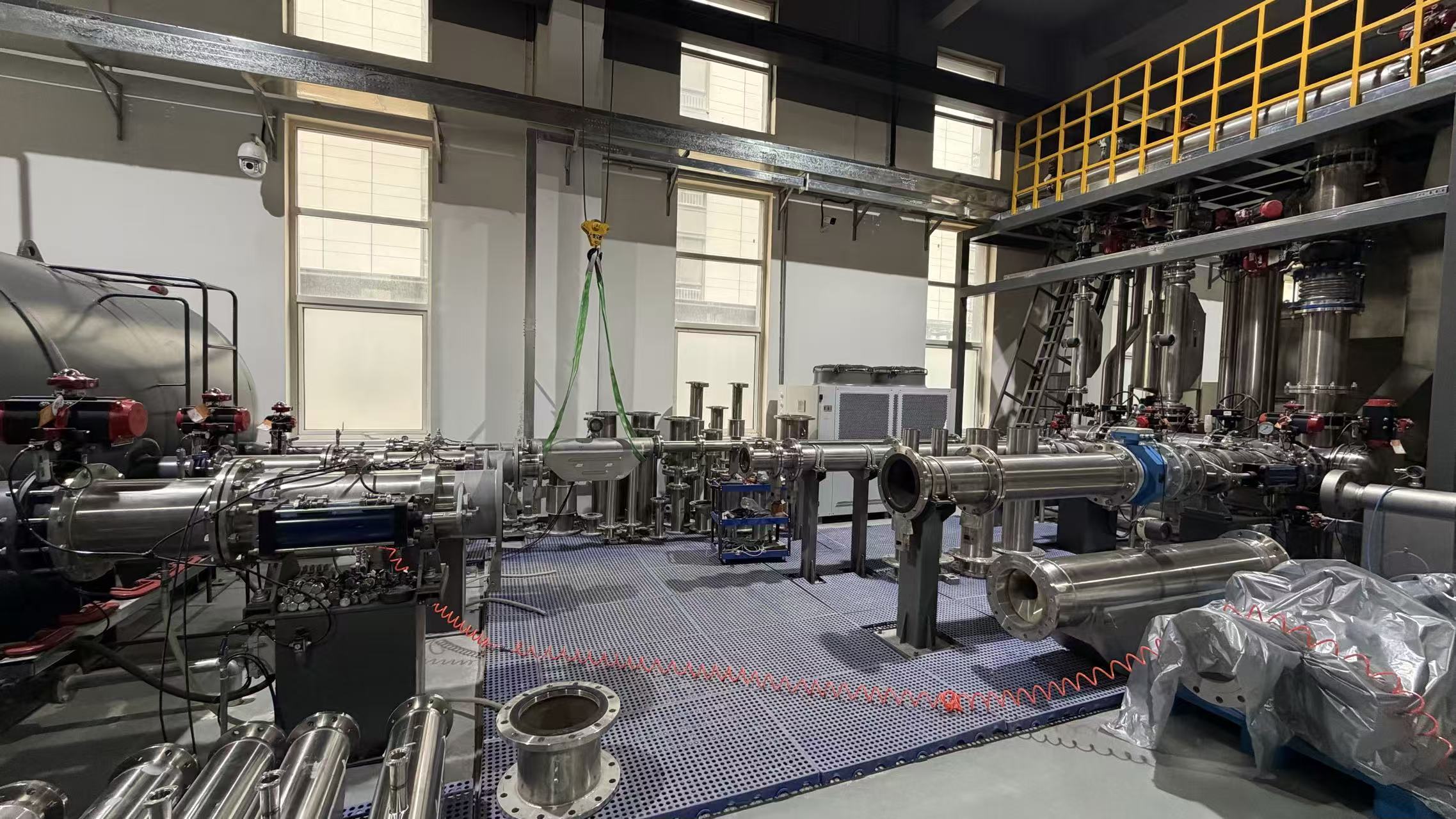
Calibration and documentation are the two deliverables that make a low flow meter decision defensible after installation.
Next Step: Get Your Low Flow Application Reviewed
Send your flow range, medium, line pressure, temperature, hazardous area classification and required communication protocol. The engineering team will confirm the suitable principle, the achievable low-end accuracy and the delivery schedule for your configuration.
Silver Automation Instruments
Website: www.silverinstruments.com
Email: sales@silverinstruments.com
WhatsApp: +86 18936759191
Phone: +86 25-52155837
Address: No. 108 Jiang dong Middle Road, Jian ye District, Nanjing, Jiangsu
Product catalogue and technical specifications: Download the Silver Automation Instruments brochure (PDF)
Have Questions or Need More Details?
Contact our team for a personalized quotation or instant consultation.
Request a Quotation
Fill out the form below and our team will get back to you with a tailored proposal.
WhatsApp Direct Chat
Prefer to chat in real-time? Message us on WhatsApp for instant assistance & quick answers.
- Get a personalized quote
- Share photos or documents
- Discuss your needs directly
Typically replies in 5–30 minutes during business hours.