
Low Flow Meter Compliance Guide: ATEX, Pressure Rating, and Material Verification
A low flow meter is compliant for an EU project only when three separate records agree: the ATEX certificate covers the exact model and variant being shipped, the pressure rating is confirmed for that model at the actual operating temperature, and the wetted-material declaration matches both the certificate and the process medium. The headline line on a datasheet — “316L, 100 bar, ATEX” — is a starting point for verification, not evidence that verification is finished.
This guide is a document checklist for buyers, EPC contractors and QA engineers who must approve a low flow meter purchase order and defend that approval later. It uses the supplied documentation for Silver Automation Instruments — two ATEX certificate records, one CE record, one ISO 9001 certificate and specifications for five low flow meter families — as a worked example of what the paperwork proves, what it leaves open and how to close the gaps in writing before sign-off.
Why Three Records Are Needed — and Why One Never Covers the Others
Explosion protection, mechanical integrity and quality assurance are separate regulatory and engineering tracks, and each produces a different document. A certificate from one track is not evidence for the others, and treating it as such is the most common sourcing error in low flow meter procurement.
Track 1 — explosion protection. Directive 2014/34/EU harmonises EU requirements for equipment and protective systems intended for use in potentially explosive atmospheres, with the IEC 60079 series providing the design standards for electrical apparatus in those areas. This track establishes suitability for a defined zone and protection concept. It says nothing about flow accuracy, pressure rating or wetted material.
Track 2 — mechanical and material integrity. The model datasheet plus material certification establishes the pressure rating, the wetted grades and the connection configuration. These documents do not establish explosion protection, even when they carry a CE mark of their own.
Track 3 — quality and calibration. ISO 9001 addresses the quality management system, not a product. Where a project needs traceable measurement, ISO/IEC 17025 — the standard specifying general requirements for the competence of testing and calibration laboratories — is the reference to ask about for the calibration laboratory, separately from the meter’s own certificate.
A fourth track applies to billing or custody-adjacent duty: legal metrology. Directive 2014/32/EU harmonises requirements for measuring instruments placed on the EU market, with instrument-specific annexes including MI-002 for gas meters and MI-005 for measuring systems for liquids other than water; OIML R 137 covers gas meters and OIML R 117 covers dynamic measuring systems for liquids other than water. A hazardous-area certificate does not satisfy that track, and a legal-metrology approval does not satisfy ATEX.
ATEX Status: What an EU Explosive-Atmosphere Approval Actually Covers
Silver Automation Instruments holds two ATEX certificate records in the supplied documentation, and reading them side by side shows why the certificate number matters more than the badge on the product page.
The first record is certificate ECM 22 ATEX-B 0S05, issued by Ente Certificazione Macchine srl on 2022-02-21 and valid to 2027-02-20, with a stated scope of Zone 2 and standards EN IEC 60079-0:2018/AC:2020, EN 60079-1:2014 and EN 60079-31:2014. The second is certificate ICR/VC/HM251296, issued by ICR on 2025-12-09 and valid to 2030-12-09, also with a stated scope of Zone 2, and standards IEC 60079-0:2018+A11:2024, EN 60079-1:2014+A11:2024 and EN IEC 60079-31:2024.
Three practical conclusions follow directly from that text.
The scope is Zone 2. A project that classifies the installation as Zone 0 or Zone 1 cannot treat either record as evidence of suitability for that location. That is a separate question for the supplier and, in most cases, a different product variant.
The cited standard set is flameproof enclosure and dust protection by enclosure — IEC/EN 60079-0 general requirements together with 60079-1 and 60079-31. Neither record cites an intrinsic-safety part of the series. A buyer whose risk assessment calls for an intrinsically safe circuit should ask for the corresponding certification rather than assume that “ATEX approved” covers it.
ATEX is an EU instrument. These records address EU explosive-atmosphere requirements. They are not a global approval, and other markets apply their own schemes, which these documents do not address.
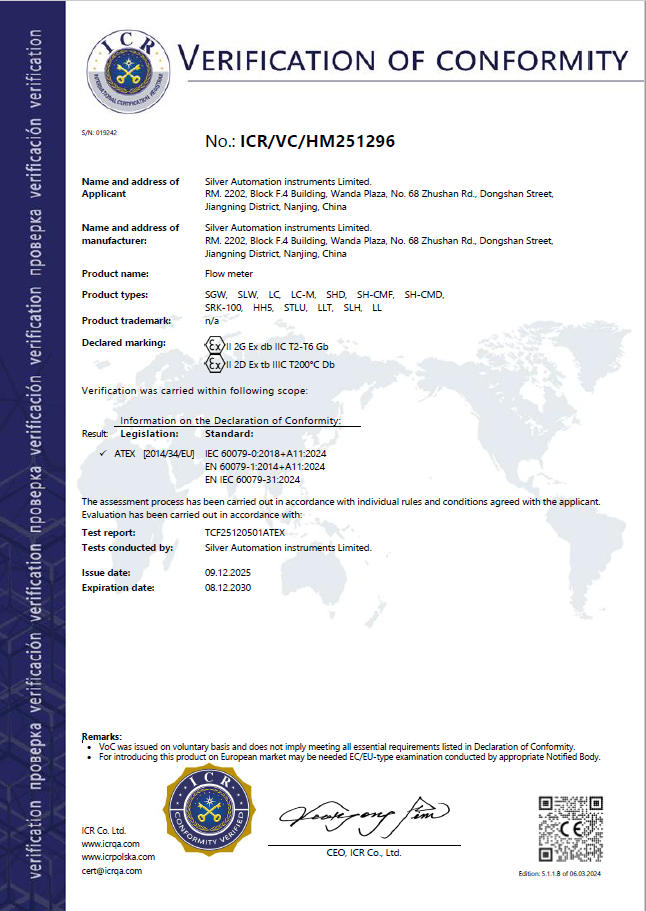
ATEX certificate record held for flow meters; the certificate schedule and the Zone 2 scope are the two items to check first.
Four Checks on an ATEX Certificate Before You Accept It
A certificate in a sales folder is not an approval for your order. Four checks convert the document into evidence.
1. Number match. The certificate number on the order acknowledgement must match the number on the certificate PDF and on the marking of the units delivered. A record that cannot be matched to a physical unit is not traceable.
2. Model and variant match. The supplied records name the product families they cover; a family-level reference is not the same as variant-level coverage. The connection type, electronics configuration and temperature class all belong to the certified configuration, so the purchase order should require the exact model and variant to appear in the certificate schedule.
3. Zone and protection concept match. Confirm the certificate’s zone scope against your area classification, and confirm that the protection concept on the marking corresponds to the hazard actually present — gas, dust, or both.
4. Validity and standard edition. Check expiry at the date of delivery, not the date of order. Note also that the two records cite different editions of the same base standard (EN IEC 60079-0:2018/AC:2020 in one, IEC 60079-0:2018+A11:2024 in the other). Edition differences are a legitimate question to put to the supplier when the project specification names a specific edition.
Pressure Rating: Where 30 bar and 100 bar Stop Applying
Among the supplied model specifications, one family carries an explicit pressure rating: the SH-CMF-FE micro Coriolis mass flow meter is stated as available with 30 bar or 100 bar pressure ratings. That figure is a declared limit under defined conditions, and it is where the verification work begins rather than ends.
Ask for the pressure–temperature relationship, not just the headline number. Allowable pressure in a pressurised instrument falls as process temperature rises, so a rating quoted without a reference temperature cannot be matched to a hot process line. The written confirmation should state the rating at your maximum operating temperature.
Separate the body rating from the joint rating. The meter body, the flange or clamp, the gasket and the adjacent pipework each have their own limit, and the assembly is only as strong as its weakest element. When a 30 bar or 100 bar body is fitted with a wafer, screw or tri-clamp connection, the pressure capability of that joint must be confirmed separately — the supplied specifications do not state connection-specific pressure ratings.
Do not generalise a rating across a product range. The 30 bar and 100 bar options belong to SH-CMF-FE. Other families in the range are engineered for different duties: the supplied case record for a Chilean customer describes a Coriolis meter built to measure nitrogen at around 700 bar, in service for more than three years. That case is evidence that project-specific high-pressure designs exist; it is not evidence that every model is available at 700 bar, and it should not be read as one.
Steam duty needs its own number. The STLU-VFN steam mass flow meter specification supplied here states the maximum steam temperature, line size range and connection options, but does not state a pressure rating. For a steam project, the pressure rating is a written confirmation item, not something to infer from the DN range or the temperature limit.
Material Verification: 304, 316 and 316L on a Real Datasheet
Material declarations fail sign-off in two ways: the grade is stated for the meter but not for every wetted part, or the grade is stated as a family average rather than per model. The supplied specifications show both patterns.
Where a grade is explicit: SH-CMF-FE is stated as stainless steel 316L; SH-CM is stated as stainless steel 316L; the SRK-100 thermal mass flow meter is stated as stainless steel 304; and the STLU-VFN steam meter is stated with a stainless steel 304 flow sensor, with 304 or 316 available as the material option.
Where it is not: the SRK-DL low flow thermal mass flow meter specification states “stainless steel” without naming the grade. For a project that specifies 316L in the material requisition, that is an open item to close in writing, not a detail to assume.
The engineering difference between the grades is straightforward and worth stating in the requisition rather than leaving to the supplier: 304 is the general-purpose austenitic grade; 316 adds molybdenum for better resistance to chlorides and other aggressive media; the “L” suffix denotes a low-carbon variant used where welded assemblies must resist sensitisation in service. None of the three is universal — the supplied case record for a Malaysian chlorine gas application describes a meter supplied with tantalum wetted material because the medium required it. Grade selection follows the medium, not the other way round.
For sign-off, the material pack should include a wetted-parts list naming the grade of each component — body, sensor element, process connection and seals — plus material certificates traceable to heat numbers. Seal and gasket materials are not stated in the supplied specifications for any of the five families, so they belong on the confirmation list for every order.
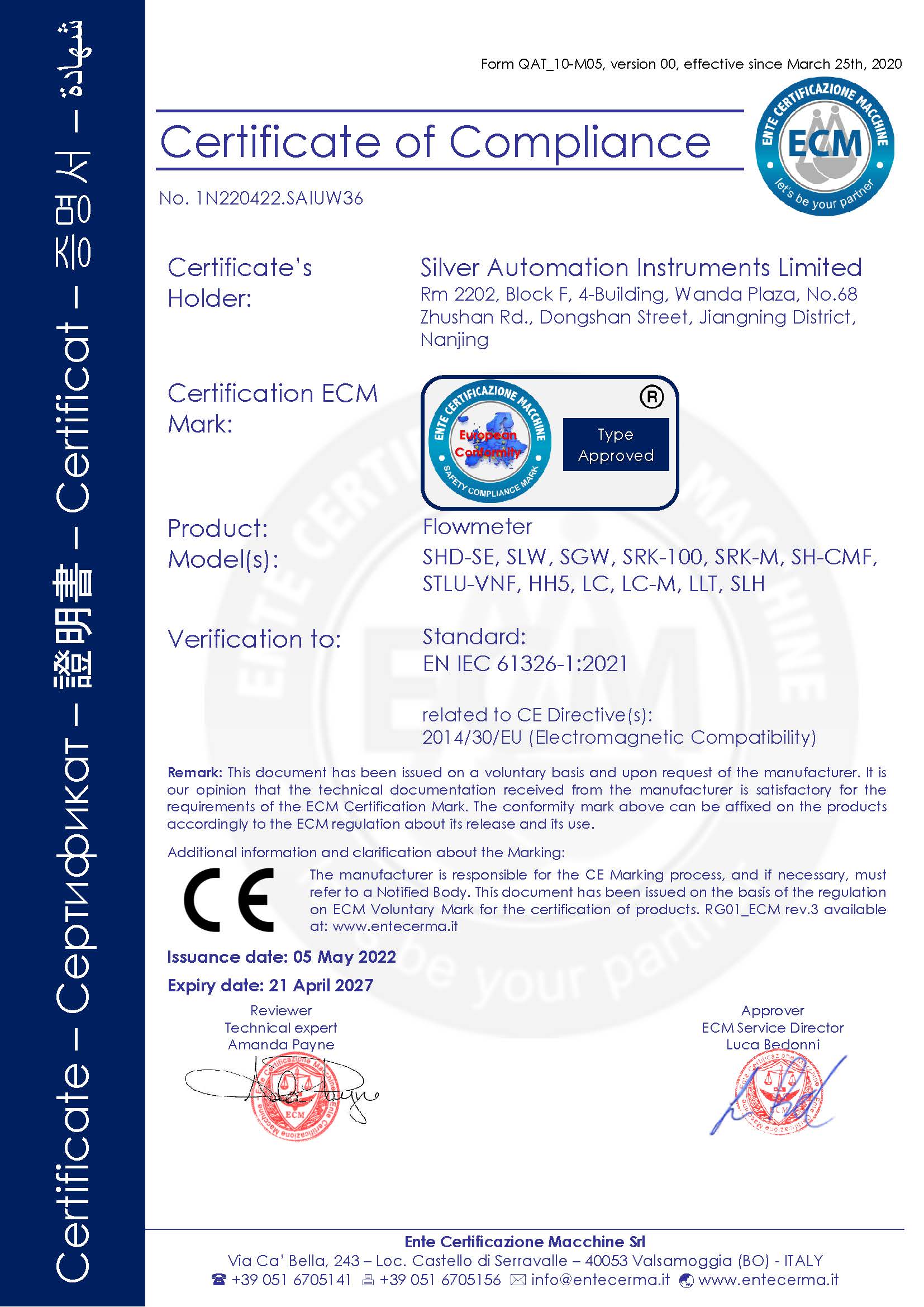
The CE record cites EN IEC 61326-1:2021 with a “flow meter” scope — an electromagnetic-compatibility document, not a hazardous-area approval.
Line Size and Process Connection: The DN15–DN300 Envelope
The STLU-VFN steam mass flow meter is specified for pipelines from DN15 to DN300 with process connections in flanges, wafers, screws or tri-clamp. The SH-CM Coriolis family is stated across a size range from about 1 mm to 300 mm, and the SRK-100 thermal mass flow meter covers DN15 to DN2000 in inline or insertion form.
Three items in that envelope need to be nailed down in the order, because the supplied specifications describe the connection type without describing its standard.
Flange standard and pressure class. “Flanged” does not identify a facing, a drilling pattern or a rating. The purchase order should state the flange standard, size, pressure class and face type, so the meter arrives compatible with the pipework.
Hygienic versus industrial joints. Tri-clamp connections suit hygienic service and are listed as an option on STLU-VFN; screw connections suit small-bore lines; wafers save space between flanges. Each choice changes both the pressure integrity of the joint and the way the meter is removed for cleaning or calibration.
Small-bore limits. At the low end of the DN15–DN300 envelope, the meter is not the only constraint: available straight runs, the bore of the adjacent fittings and the turndown required at minimum flow all affect whether the specified size will measure the low-flow condition at all. Raise them at specification stage rather than after delivery.
Steam up to 500 °C: Details That Need Separate Confirmation
The STLU-VFN specification states vortex-principle measurement for saturated and superheated steam, pipeline sizes DN15–DN300, a maximum steam temperature of 500 °C, built-in temperature and pressure compensation, ATEX approval, and a stainless steel 304 flow sensor. For a real project, that sentence generates three confirmation items.
1. Saturated or superheated, and which variant. The two steam conditions behave differently and the specification covers both. The process data sheet should state which applies, with the operating pressure and temperature, because the variant selection follows from it.
2. The ATEX temperature class at the process temperature. Hazardous-area marking includes a temperature class that must be matched to the surface temperature the instrument can reach in service. A 500 °C process limit and an ATEX approval are two different statements, and the second must be confirmed for the specific configuration and the ambient conditions at the installation.
3. Whether 500 °C is a sensor limit or a system limit. The electronics, the cable entry and the enclosure have their own temperature limits, and those are not stated in the supplied specification. Ask which components are covered by the 500 °C figure.
Field evidence illustrates the difference between a stated maximum and a documented duty. The supplied case record for a South African customer covers ten STLU-VFN units measuring saturated steam up to 400 °C with simultaneous temperature and pressure detection for mass-flow calculation, in service for more than five years. That is a documented service band below the stated maximum — useful reassurance, but it does not by itself approve a 500 °C duty for a different line, which still needs variant-level confirmation.
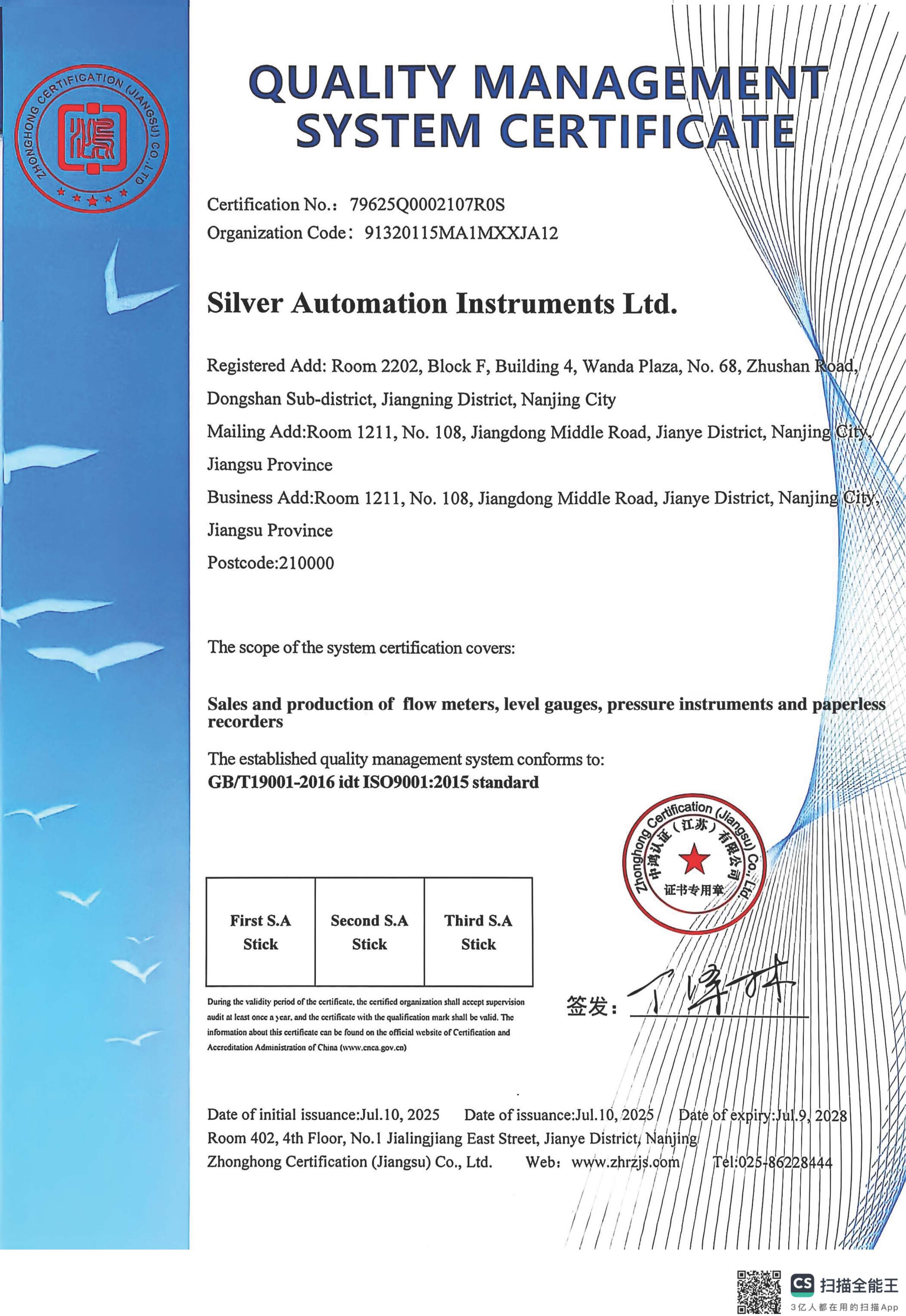
ISO 9001:2015 certification covers the quality management system — a supplier qualification input, not a product approval.
Model-Level Verification Table
The table below consolidates what the supplied specifications state for five low flow meter families. The final column is the useful one: it lists the items the documents leave open, which are the items to close before sign-off.
| Model | Principle | Stated wetted material | Stated pressure rating | Line size / connections | ATEX record supplied | Close before sign-off |
|---|---|---|---|---|---|---|
| SH-CMF-FE | Micro Coriolis | Stainless steel 316L | 30 bar or 100 bar | Not stated in the supplied specification | Listed on the Zone 2 records; confirm variant | Pressure–temperature data, connection rating, seal materials |
| STLU-VFN | Vortex (steam) | Flow sensor stainless steel 304; 304 or 316 available | Not stated in the supplied specification | DN15–DN300; flanges, wafers, screws or tri-clamp | Stated as ATEX approved in the product specification; listed on the Zone 2 records | Pressure rating, temperature class at maximum steam temperature, flange standard |
| SH-CM | Coriolis | Stainless steel 316L | Not stated; project-specific high-pressure designs documented separately | Size range approximately 1 mm to 300 mm | Stated as ATEX certified in the product specification; listed on the Zone 2 records | Application pressure design, connection standard, calibration conditions |
| SRK-DL | Thermal mass (low flow) | Stainless steel, grade not stated | Not stated | Not stated; flow range 2 sccm to 30 SL/M | Listed on the Zone 2 records; confirm variant | Wetted grade, pressure rating, gas calibration reference conditions |
| SRK-100 | Thermal mass | Stainless steel 304 | Not stated | DN15–DN2000; inline or insertion | Stated as ATEX in the product specification; listed on the Zone 2 records | Pressure rating, process connection, gas temperature within the stated −20 to 300 °C range |
Twelve-Point Sign-Off Checklist
Each item below produces a document or a written statement. If an item cannot be evidenced, the meter is not approved for that line, regardless of the model’s reputation.
- ATEX certificate number matches the marking on the units to be delivered.
- The exact model and variant appear in the certificate schedule, not only the family name.
- The installation’s zone classification matches the certificate scope — both supplied records state Zone 2.
- The protection concept on the marking (flameproof enclosure, dust protection by enclosure, or another) matches the hazard in the area classification.
- Certificate validity is current at the delivery date, and the standard edition matches the project specification.
- CE record number, issuing body, cited standard and product scope have been read, and any additional applicable directive has been identified by the buyer rather than assumed.
- Pressure rating is confirmed for the exact model at the maximum operating temperature, in writing.
- The pressure capability of the connection — flange class, clamp, wafer or thread — is confirmed separately from the body rating.
- Wetted-material grades are listed for every wetted component, including seals and the sensor element.
- Material certificates traceable to heat numbers are supplied with the delivery documents.
- Line size, connection standard, pressure class and face type are written into the order.
- For steam duty: saturated or superheated, maximum temperature, and the ATEX temperature class are all confirmed for the selected variant.
Clauses to Write Into the Low Flow Meter Purchase Order
The checklist only has force if it reaches the order. Six clauses cover most of the exposure.
Documentation on acknowledgement. Require the certificate numbers, issuing bodies and expiry dates to be stated on the order acknowledgement, so a mismatch surfaces before production rather than at goods-in.
Variant-level certification. State that a family-level certificate is not accepted and that the ordered model and variant must appear in the certificate schedule.
Pressure statement. Require a pressure–temperature statement for the ordered configuration, plus the pressure capability of the selected connection.
Material statement. Require a wetted-parts list with grade per component and material certificates behind it.
Calibration statement. Require the calibration certificate with its reference conditions and traceability route stated, so accuracy claims can be compared with another supplier’s on equal terms.
Document hold. Make final acceptance conditional on document approval, and state the delivery expectation explicitly. The supplied capability record for Silver Automation Instruments quotes a 10–12 working day lead time, a one-unit minimum order and OEM/ODM support with logo customisation, so a documentation-conditioned order is practical rather than a special case.
Frequently Asked Questions
How do I verify that a low flow meter manufacturer is genuinely CE compliant? Ask for the certificate number, the issuing body, the standard cited and the product scope, then check the expiry date. As a worked example, the CE record supplied for Silver Automation Instruments is number 1N220422.SAIUW36, issued by Ente Certificazione Macchine Srl against EN IEC 61326-1:2021 with a “flow meter” scope, valid to 2027-04-21. Read what the standard covers: EN IEC 61326-1 is an electromagnetic-compatibility standard, so the record should be treated as an EMC-scope document, and any other directive that applies to your installation has to be identified separately.
Does the ATEX approval cover Zone 1 or Zone 0 installations? No — both ATEX records in the supplied documentation state a Zone 2 scope. If the area classification for your line is Zone 0 or Zone 1, that requires separate confirmation from the supplier and probably a different product configuration. The same applies to protection concepts: the cited standard set is flameproof enclosure and dust protection by enclosure, so an intrinsic-safety requirement is a different question.
Can a 100 bar rating be supplied together with a tri-clamp connection? The supplied specification states 30 bar or 100 bar for the SH-CMF-FE body, and lists flanges, wafers, screws and tri-clamp as connection options for the STLU-VFN, but it does not state a pressure rating per connection type. Treat the combination as a written confirmation item: the joint, gasket and clamp each carry their own limit, and the assembly rating is set by the weakest element.
Does the 500 °C steam limit also apply to the ATEX approval? They are two separate statements. The 500 °C figure is the stated maximum steam temperature for the STLU-VFN. The ATEX approval carries a temperature class that must be matched to the surface temperature the instrument can reach in your installation, and the ambient limit at the electronics is not stated in the supplied specification. Both belong on the confirmation list for a high-temperature steam line.
What is the practical difference between 316 and 316L wetted parts? 316 contains molybdenum for improved resistance to chlorides and aggressive media; the L suffix denotes a low-carbon variant used where welded assemblies must resist sensitisation. In the supplied specifications, SH-CMF-FE and SH-CM are stated as 316L, the STLU-VFN flow sensor as 304 with 304 or 316 available, and SRK-100 as 304. Grade follows the medium — a chlorine gas application in the supplied case records required tantalum wetted material — so the material certificate, not the grade name alone, is the document that closes the item.
What minimum order quantity and lead time apply when documentation is part of the order? The supplied capability record for Silver Automation Instruments states a one-unit minimum order quantity, a 10–12 working day lead time, OEM/ODM and logo customisation, a monthly capacity of 2,000 units and remote after-sales support. Those figures describe standard capability, so confirm them for your specific configuration when you request the certificate pack, pressure–temperature statement and material list together with a sample or quotation for the exact model.
Conclusion
Compliance for a low flow meter is a documentary condition, not a product feature. The ATEX certificate proves explosion protection for a defined zone and protection concept; the datasheet and material certificates prove the pressure and material configuration; the quality and calibration records support the measurement claim. Each has to be matched to the exact model, variant and process conditions on the line.
For the models discussed here, that means confirming four things in writing before sign-off: the variant-level ATEX coverage under a Zone 2 scope, the pressure rating at operating temperature together with the rating of the chosen connection, the wetted grade for every component including seals, and — for steam service — the variant and temperature class behind the 500 °C figure. Everything else on the datasheet is context.
Silver Automation Instruments has manufactured flow, pressure and level instrumentation from Nanjing since 2010, exporting to Southeast Asia, South America and Africa, and holds ISO 9001:2015 certification (certificate 79625Q0002107R0S, valid to 2028-07-09) alongside the ATEX and CE records cited above. The full product range and technical data are available in the company brochure (PDF); for a specific project, request the certificate pack, the pressure–temperature statement and the wetted-parts list for the exact model so the checklist above can be completed against real documents.
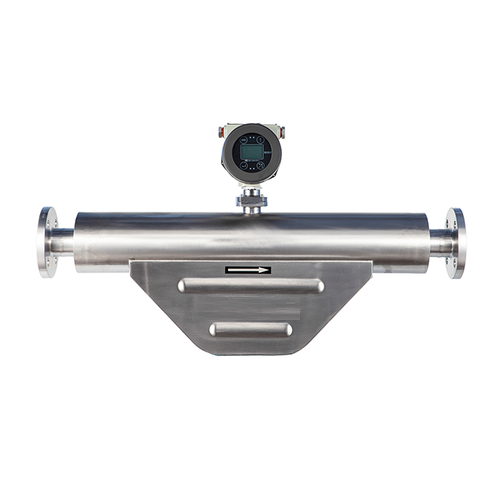
Micro Coriolis low flow meters can be quoted together with the ATEX, CE and material documentation needed for project sign-off.
Have Questions or Need More Details?
Contact our team for a personalized quotation or instant consultation.
Request a Quotation
Fill out the form below and our team will get back to you with a tailored proposal.
WhatsApp Direct Chat
Prefer to chat in real-time? Message us on WhatsApp for instant assistance & quick answers.
- Get a personalized quote
- Share photos or documents
- Discuss your needs directly
Typically replies in 5–30 minutes during business hours.