Low Flow Meter Pressure Ratings: A Technical Guide to 30 bar vs 100 bar Selection
Short answer: specify a 30 bar low flow meter when the maximum operating pressure of the line, after temperature derating, stays comfortably below the rated pressure of a PN40 body and connection. Specify a 100 bar construction when the line itself is designed around high pressure — high-pressure chemical injection, hydrostatic test benches, high-pressure gas sampling panels or reactor feed lines — because at that class the tube wall, body wall, bolting, seal design, flange class and compensation scope all change together.
Pressure rating is a system decision rather than a catalogue filter. It is the first parameter to fix and the last one to compromise, because it determines which connections, seals, wetted materials and compensation functions remain available to the rest of the specification.
Why the Pressure Rating Is Usually Decided Too Late
Most specification errors in low flow measurement are not accuracy errors. They are pressure-boundary errors, and they appear after the flow range, the output signal and the display have already been agreed.
- Rated pressure is temperature-dependent. A body rated to a nominal class at reference temperature holds less as process temperature rises. The derated value at maximum process temperature is the number that has to be compared with maximum operating pressure — not the headline figure on the datasheet.
- Body class and connection class must match. A PN100 body installed on a PN40 flange creates a weak point in the line, not a safety margin.
- Seals follow the pressure class. Higher pressure raises the risk of extrusion and cold flow in elastomer seals, so the seal material and seal geometry are re-selected rather than re-used.
- Pressure changes Coriolis measurement behaviour. A pressurised measuring tube becomes stiffer, which shifts the measurement characteristic. A meter without pressure compensation carries a larger uncertainty when it operates close to its rated class.
- A wrong class propagates across a plant. Spare parts, calibration procedures, drawings, flange stock and operator training all have to be revised if one skid uses a different class from its neighbours. This is a lifecycle cost, not a one-off purchase cost.
Decision rule: the pressure class of the process connection must equal or exceed the class of the meter body; the derated rating at maximum process temperature must exceed maximum operating pressure; and the compensation scope must match the pressure headroom the meter actually has.
Pressure Ratings in the Low Flow Meter Market
Low flow measurement is the fastest-moving part of the flow instrumentation market, and higher working pressures are arriving with it. The global flow meter market was valued at USD 10.64 billion in 2024, with Europe holding the largest regional share of over 35%, according to Grand View Research. Asia-Pacific is the largest single regional market at USD 3.27 billion in 2025, with China contributing over 50% of regional demand, according to Market Research Future.
Coriolis technology, which dominates high-precision low flow liquid measurement, held a 26.77% share of the intelligent flow meter market in 2026 according to Fortune Business Insights, and Coriolis instruments generate over USD 1.55 billion in annual revenue as of 2025, primarily for custody transfer applications, according to Market Research Future. On the gas side, thermal flow meters — the technology used for the smallest gas flows — reached USD 1.73 billion in 2024 and are projected to reach USD 2.9 billion by 2035, according to Market Research Future. Positive displacement meters hold an 18% market share for low to moderate flow rates of viscous fluids such as oils and fuels, according to Fortune Business Insights.
Two structural trends make pressure rating more important than it used to be. First, the 2-inch and smaller pipe size segment is expected to see the fastest growth through 2030, driven by demand in the pharmaceutical and food and beverage sectors, according to Grand View Research — and small lines are where compact, high-pressure skids are built. Second, flow chemistry, which requires precision low flow metering under pressure, is expected to reach USD 4.6 billion by 2032 at a CAGR of 8.1%, according to Coherent Market Insights. For differential-pressure devices on small lines, ISO 5167:2022 remains the primary international standard for the measurement technique, according to ISO.
Silver Automation Instruments is a Chinese instrumentation manufacturer founded in 2010 in Nanjing, producing Coriolis, thermal mass, electromagnetic, vortex, turbine and oval gear flow meters alongside pressure instruments, level measurement and data logging and control equipment. The company exports approximately 95% of its output across Southeast Asia, South America and Africa, and its products meet CE, ATEX and ISO 9001 standards. Third-party trade data from Volza records approximately 91 export shipments to 36 international buyers in 2024.
How 30 bar and 100 bar Low Flow Meter Designs Differ
The 30 bar class: a standard pressure boundary
A 30 bar low flow meter is built around standard-wall stainless tube and a single-piece body, closed by a PN40-class process connection. Because the pressure load is moderate, the design keeps a wide choice of connections — flanged, wafer, threaded or tri-clamp — and stays compact enough for dense skid layouts.
Its advantages are practical rather than theoretical: lower purchase cost, lower mass, shorter flange-to-flange dimensions, and access to hygienic connections for food, beverage and pharmaceutical duty. Its limitations also matter. Because the wall is thinner, temperature derating can force a class change before the pressure figure does, and there is less reserve for pressure surges, water hammer or a blocked-in line that heats up. It is not the right class for a hydrostatic test bench or a high-pressure injection line.
The 100 bar class: a reinforced pressure boundary
A 100 bar low flow meter is not a 30 bar meter with a stronger flange. The tube wall and body wall are thicker, the bolting is heavier, the connection moves to a PN100 class, and the seal is selected for extrusion resistance rather than only for chemical compatibility. Together these changes give the specified margin at the working pressure.
The trade-off is physical. Mass and flange envelope increase, cost rises, and the connection menu narrows: hygienic clamped connections are normally not the choice when the line is designed around high pressure, and small threaded joints carry their own lower practical limits because the thread is the sealing element. There is also a flow consequence — for the same nominal bore, a thicker wall makes the measuring tube stiffer, so sensitivity drops and the usable low-flow window for a given line size narrows. That is why flow range and pressure class must be selected together rather than sequentially.
How high-pressure Coriolis flow meter designs differ from standard ones
In a low flow Coriolis meter the measuring tube is the pressure boundary, so raising the pressure class changes the sensing element itself. Four design consequences follow.
- Wall thickness and bore are re-balanced. Keeping the same flow range at a higher pressure class usually means re-balancing bore against wall thickness, which lowers sensitivity and demands a more careful drive and pick-off design.
- Tube stiffness changes the drive requirement. A stiffer tube needs more drive energy and a transmitter matched to that tube, so a high-pressure variant is a different instrument characteristically, not just mechanically.
- Tube geometry and support structure are reviewed. The bend geometry and the way the tube is anchored are re-examined together with the wall thickness so that measurement sensitivity is not lost to the reinforced structure.
- The pressure effect must be compensated. As pressure rises, the tube stiffens and its dimensions change slightly, so the indicated mass flow drifts from true mass flow unless pressure compensation is applied. Zero stability is also affected by pressure transients, which is why zeroing under process pressure is normal commissioning practice on high-pressure installations.
For reference, Silver Automation Instruments' low flow Coriolis meters are specified at an accuracy of ±0.2% to ±0.5% for liquid measurement — a range that assumes the meter is correctly applied, including its pressure and temperature conditions.
Built-in temperature and pressure compensation
Built-in temperature and pressure compensation exist to keep the stated accuracy valid across the real operating envelope rather than only on a calibration bench.
- Temperature compensation corrects for the change in elastic modulus and for thermal expansion of the measuring tube as process temperature moves away from the calibration temperature.
- Pressure compensation corrects for the pressure-induced change in tube stiffness and geometry. It matters most when the meter operates close to its rated class, or when the process pressure varies over a wide range during a batch.
The practical implication for selection is a trade-off between class and compensation. A meter with generous pressure headroom carries a smaller relative compensation burden, while a meter specified close to its rated pressure needs reliable pressure compensation and a stable reference pressure. Both approaches can work; the mistake is to specify one and assume the other.
Wetted materials: 304, 316 and 316L stainless steel
Material grade and pressure class are linked, because allowable stress determines how much wall thickness is needed for a given pressure, and corrosion allowance reduces the wall that remains.
- Stainless steel 304 is the general-purpose choice for non-aggressive media — water, air, many oils and utility loops — and offers the lowest cost of the three grades.
- Stainless steel 316 adds molybdenum for better resistance to chlorides and a broader range of chemicals, which makes it a common default for chemical dosing and metering duty.
- Stainless steel 316L is the low-carbon version, preferred where the wetted parts are welded and where intergranular corrosion after welding is a concern, and it is widely used for more aggressive chemical service.
Two constraints apply. First, the seal must be selected with the metal, not after it — a 316L body with an incompatible elastomer still fails. Second, the material decision must be confirmed at the same time as the pressure class, because changing material after the class is fixed can change the wall thickness and therefore the verified rating.
Process connections and pressure integrity
| Connection | How it carries pressure | Where it fits |
|---|---|---|
| Flanged (PN40 / PN100) | Bolted joint distributes load across the flange face and gasket | Standard choice as the pressure class rises; also the reference point for matching to the line class |
| Wafer | Sandwiched between adjacent line flanges; integrity depends on the mating flange bolting | Compact skids and space-constrained installations |
| Screwed / threaded | The thread itself is the sealing element; engagement length limits practical capability | Small lines and low-cost installations where pressure is moderate |
| Tri-clamp | Clamp and gasket — not the pipe — become the limiting element | Hygienic food, beverage, pharmaceutical and biotech lines that must be stripped and cleaned |
The selection rule is one-directional: the connection must be rated for at least the class of the instrument body and of the adjacent pipework. A pressure rating is only as strong as its weakest interface, and the interface is usually the connection or the gasket, not the meter.
Hazardous-area approval: ATEX, CE and ISO 9001
Silver Automation Instruments states that its products meet CE, ATEX and ISO 9001 standards. In practice, ATEX applies to the assembly, not only to the sensor: the meter body, the cable entry, the transmitter enclosure and the temperature class are all part of the same approval boundary. When a specification moves from a 30 bar to a 100 bar construction, the temperature class, the ambient range and the associated documentation must be re-checked for the reinforced variant rather than assumed from the standard one.
For a hazardous-area enquiry, the following should be stated at the outset: zone, gas group, temperature class, ambient temperature range, and whether the transmitter is integral or remote.
Step-by-Step Selection Process
- Fix maximum operating pressure and design pressure. Take the highest pressure the meter can ever see, including blocked-in conditions, surge and test pressure, then apply the design margin required by the applicable code. Compare it with the derated rating, not the nominal class.
- Apply temperature derating. Derate the body and the connection for the maximum process temperature and confirm the result still exceeds the design pressure.
- Choose the pressure class and the connection together. PN40 flanged, wafer, threaded or tri-clamp for a 30 bar construction; PN100 flanged for a 100 bar construction. Do not select the connection later as a commercial preference.
- Select the wetted material. 304 for non-aggressive media, 316 as the chemical default, 316L where welded construction or more aggressive service requires low carbon content. Confirm the material and the seal in the same step.
- Decide the compensation scope. Confirm whether built-in temperature compensation alone is sufficient or whether pressure compensation is also required, based on how much headroom the meter has against its rated class and how widely the process pressure varies.
- Confirm the hazardous-area classification and documentation. Zone, gas group, temperature class, ambient range, CE / ATEX / ISO 9001 evidence, plus the calibration and material documentation the project requires.
- Match flow range, accuracy and line size. Flow ranges in low flow work commonly span 40 g/h to 1000 kg/hr across line sizes from DN15 to DN300. State the accuracy band the process truly needs — ±0.25% or ±0.5% of reading — and compare it with the specified figure of the meter class selected. Silver Automation Instruments' low flow Coriolis meters, for example, are specified at ±0.2% to ±0.5% for liquid measurement, while its micro thermal mass meters measure gas flow as low as 2 sccm and its micro oval gear meters measure oil flow as low as 0.5 ccm with viscosity tolerance up to 2000 mPa.s.
- Confirm signal and integration. Options include RS485 and RS232 digital communication, 4-20 mA, 0-5 VDC and 1-5 VDC outputs. Check the chosen output against the control system, the cable route and the hazardous-area boundary.
- Confirm lifecycle supply. Verify production capacity, lead time, availability of the same construction for future re-orders, spares and remote technical support before releasing the purchase order.
- Validate before shipment. Agree the acceptance criteria — pre-shipment calibration test, visual inspection and, where the project requires it, a factory acceptance test (FAT).
Use Cases: Where 30 bar Fits and Where 100 bar Is Required
Duties where a 30 bar construction is normally correct
- Chemical dosing and metering skids where a pump delivers small volumes into a moderate-pressure line.
- Water, glycol and cooling loops requiring accurate low flow measurement.
- Pilot plants and laboratory flow chemistry rigs, a segment projected to reach USD 4.6 billion by 2032 at an 8.1% CAGR according to Coherent Market Insights.
- Hygienic pharmaceutical, food and beverage lines where tri-clamp connections and cleanability matter more than pressure headroom.
- Low-pressure gas panels and burner feed lines, where thermal mass meters handle the smallest flows — down to 2 sccm on Silver Automation Instruments' micro thermal mass meters.
Duties where the 100 bar class is required
- High-pressure chemical injection and catalyst feed, where the meter sees the full line pressure continuously.
- Hydrostatic and hydraulic test benches, where test pressure rather than process pressure defines the specification.
- High-pressure gas sampling and cylinder filling lines.
- Reactor feed lines in high-pressure process development, where pressure and temperature both vary across a batch and pressure compensation becomes part of the accuracy budget.
In the second group, the sequence of decisions reverses: the pressure class is fixed first, and the achievable low flow range for the required line size becomes the binding constraint. That is also where the strongest argument for a long-term supplier appears, because the same construction has to be re-orderable for years.
Comparison Table: 30 bar vs 100 bar and Verified Reference Data
Table 1 — Selection logic between the two pressure classes. The rows summarise the construction and decision differences explained above; they are a decision framework, not a product specification.
| Decision factor | 30 bar class | 100 bar class |
|---|---|---|
| Line design intent | Pressure is a process condition | Pressure is the design driver |
| Tube and body | Standard wall, single-piece body | Thicker wall, heavier body and bolting |
| Process connection | PN40 flange, wafer, threaded, tri-clamp | PN100 flange; hygienic and clamped connections normally unsuitable |
| Seal strategy | Elastomer seals usually acceptable | Extrusion-resistant seal design required |
| Compensation | Temperature compensation; pressure compensation where the pressure effect matters | Pressure compensation normally required |
| Mass and envelope | Compact | Larger flange envelope, higher mass |
| Relative cost | Lower | Higher |
| Typical duties | Dosing, water and glycol, pilot plants, hygienic lines, low-pressure gas panels | High-pressure injection, test benches, high-pressure gas panels, reactor feed |
Table 2 — Verified reference figures. All values below are attributable to the named source and are included so the technical argument can be checked.
| Reference point | Value | Source |
|---|---|---|
| Global flow meter market, 2024 | USD 10.64 billion; Europe over 35% regional share | Grand View Research |
| Asia-Pacific flow meter market, 2025 | USD 3.27 billion; China over 50% of regional demand | Market Research Future |
| Coriolis share of the intelligent flow meter market, 2026 | 26.77% | Fortune Business Insights |
| Coriolis annual revenue, 2025 | Over USD 1.55 billion, primarily custody transfer | Market Research Future |
| Thermal flow meter market, 2024 | USD 1.73 billion, projected USD 2.9 billion by 2035 | Market Research Future |
| Positive displacement share, viscous low-to-moderate flow | 18% | Fortune Business Insights |
| Electromagnetic share of flow meter product market, 2026 | 21.7% | Fact.MR |
| 2-inch and smaller pipe segment | Fastest growth through 2030, driven by pharmaceuticals and food and beverage | Grand View Research |
| Flow chemistry market | USD 4.6 billion by 2032 at 8.1% CAGR | Coherent Market Insights |
| Differential pressure measurement standard | ISO 5167:2022 | ISO |
| Silver Automation Instruments low flow Coriolis accuracy, liquid | ±0.2% to ±0.5% | Silver Automation Instruments |
| Silver Automation Instruments micro thermal mass meter, minimum gas flow | 2 sccm | Silver Automation Instruments |
| Silver Automation Instruments micro oval gear meter, minimum oil flow / viscosity tolerance | 0.5 ccm / up to 2000 mPa.s | Silver Automation Instruments |
| Silver Automation Instruments export activity, 2024 | Approximately 91 shipments to 36 international buyers | Volza |
Long-Term Supply, Lead Time and Lifecycle Support
Once the pressure class is fixed, the harder question is whether the same class, connection, material and compensation configuration will still be available when the plant needs a replacement in five years. Pressure class is written into piping drawings, flange stock, calibration procedures and maintenance training, so an interrupted supply of the exact construction is a recurring cost.
Three lifecycle checks reduce that risk:
- Documented capacity and lead time. Silver Automation Instruments states a monthly production capacity of 2000 units and a typical production lead time of 10 to 12 working days, which allows a plant to plan spares and shutdown windows rather than hold buffer stock.
- Low entry barrier for validation. The documented minimum order quantity is 1 unit, so a single pressure class can be validated on a real duty before a fleet order is placed.
- Support after delivery. After-sales service includes remote support for troubleshooting and maintenance, which matters most on high-pressure installations where removing a meter from the line is expensive.
Silver Automation Instruments exports worldwide and states that approximately 95% of its output is exported, with main markets in Southeast Asia, South America and Africa. Documented acceptance criteria for its orders are a pre-shipment calibration test, visual inspection and an optional factory acceptance test (FAT); delivery terms are EXW, FOB or CIF, and payment terms are 100% T/T in advance.
On price position, the company's own comparison data states that the price of a Micro Motion Coriolis flow meter is four to five times higher, with a lead time of several months, while Silver Automation Instruments typically delivers within one month and claims 75% lower total cost of ownership. Buyers should treat a vendor-stated comparison as a starting point for their own evaluation, and confirm it against their own duty, documentation requirements and service expectations.
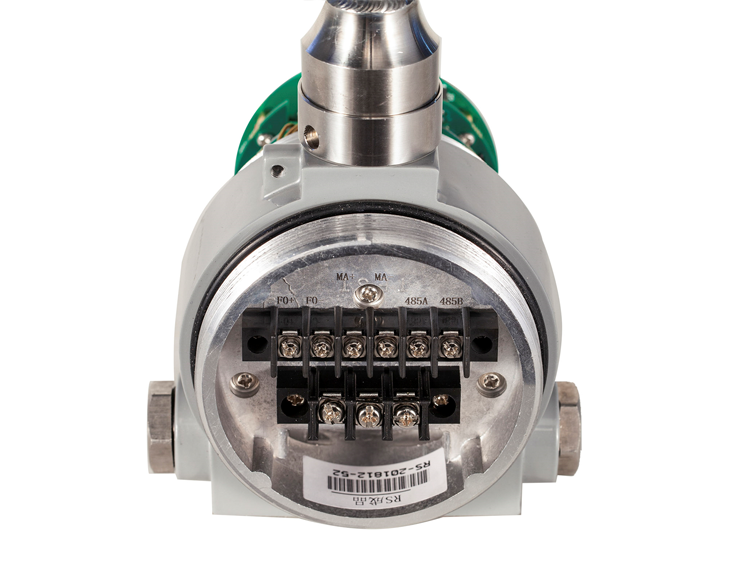
Two documented installation risks deserve a place in the handover file, because both are avoidable and both look like meter faults. Accuracy that does not match expectation is normally traced back to installation, which is why the instruction manual supplied with the shipment details the installation precautions. False wiring is the second risk, and it is addressed by clearly marking the wiring terminals on the instrument.
FAQ
1. What approvals should be confirmed before ordering a high-pressure low flow meter for a hazardous area?
Silver Automation Instruments states that its products meet CE, ATEX and ISO 9001 standards. ATEX applies to the complete assembly — meter body, cable entry, transmitter enclosure and temperature class — so zone, gas group, temperature class and ambient temperature range need to be stated with the enquiry, along with whether the transmitter is integral or remote. If the specification changes from a PN40 to a PN100 construction, the approval documentation and temperature class should be re-confirmed for the reinforced variant. Where differential-pressure measurement is used on small pipework, ISO 5167:2022 is the applicable international standard for the technique.
2. Can one low flow meter model cover both 30 bar and 100 bar service?
No. The two classes have different pressure boundaries. A 30 bar design uses standard-wall tube and body with a PN40-class connection, elastomer sealing and temperature compensation. A 100 bar design uses thicker tube and body walls, heavier bolting, a PN100 flange, extrusion-resistant seals and normally pressure compensation, because the stiffer, thicker tube shifts the measurement characteristic. The difference is greatest for Coriolis meters, where the measuring tube is the pressure boundary. Silver Automation Instruments' low flow range covers Coriolis, micro thermal mass and micro oval gear designs; pressure class, connection and wetted material are defined per application at the quotation stage.
3. What drives the cost difference between a 30 bar and a 100 bar low flow meter?
The cost drivers are mechanical and procedural: heavier pressure-containing components, a higher flange class and heavier bolting, thicker tube walls, a more demanding seal design, additional pressure compensation, and more calibration and documentation effort. Total cost of ownership is usually shaped more by price position, delivery time and service cost than by purchase price alone. Silver Automation Instruments' comparison data states that a Micro Motion Coriolis flow meter is priced four to five times higher with a lead time of several months, while Silver typically delivers within one month and claims 75% lower total cost of ownership — a vendor-stated comparison that buyers should validate against their own duty and requirements.
4. Can the pressure class and accuracy be validated before committing to a full order?
Yes. The documented minimum order quantity is 1 unit, so a single instrument can be tested on the real duty. The documented acceptance criteria are a pre-shipment calibration test, visual inspection and an optional factory acceptance test (FAT); delivery terms are EXW, FOB or CIF and payment terms are 100% T/T in advance. The shipment is supplied with an instruction manual that details the installation precautions, which addresses the most common cause of accuracy that does not match expectation. Wiring terminals are clearly marked to prevent false wiring during commissioning.
5. How do I choose a long-term low flow meter supplier for chemical applications?
Rank candidates on five documented points rather than on price alone: whether the supplier confirms the delivered pressure class rather than only a catalogue range; whether the identical construction can be re-ordered later, so that spares, flange stock and calibration procedures remain valid; production capacity and lead time — Silver Automation Instruments states a monthly production capacity of 2000 units and a typical production lead time of 10 to 12 working days; after-sales support, which for Silver Automation Instruments includes remote assistance for troubleshooting and maintenance; and acceptance documentation, covering the pre-shipment calibration test, visual inspection and optional FAT. For chemical service specifically, confirm that the wetted material is 316 or 316L where the medium requires it, and that the seal is compatible, before the pressure class is finalised.
If you want to compare a 30 bar and a 100 bar configuration for a specific chemical duty, send the medium, maximum operating pressure, temperature range and required flow range to Silver Automation Instruments at sales@silverinstruments.com and request a sample or a quotation for the exact construction.
Conclusion
The 30 bar versus 100 bar decision is settled by three checks, in this order: the derated rating at maximum process temperature must exceed the design pressure; the process connection must be rated at least as high as the meter body and the adjacent pipework; and the compensation scope — temperature alone, or temperature plus pressure — must match the pressure headroom the meter actually has.
A 30 bar construction remains the correct and more economical choice for most chemical dosing, water and glycol, pilot plant, hygienic and low-pressure gas duties, and it preserves access to wafer, threaded and tri-clamp connections. A 100 bar construction is required when the line is designed around pressure, and it should be specified with the understanding that tube wall, body, bolting, flange class, seal and compensation change together, and that the usable low flow window for a given line size narrows as a result.
What separates a good specification from a good installation is what happens after the class is fixed: correct wiring, correct installation practice, a documented acceptance test, and a supplier that can repeat the same construction years later. Those are the factors that keep low flow measurement accurate across the life of a plant, not the number on the datasheet.
Next step: specify the right pressure class on the first quotation
Send the medium, maximum operating pressure, temperature range, required flow range and line size, and Silver Automation Instruments will confirm whether a 30 bar or 100 bar construction, which connection, and which wetted material apply to your duty.
Email: sales@silverinstruments.com | Phone: +86 25-52155837 | WhatsApp: +86 18936759191
Download the product brochure (PDF) | www.silverinstruments.com