
Low Flow Meter Supplier Evaluation: Verifying ATEX, DN15–DN300, and 500 °C Steam Delivery
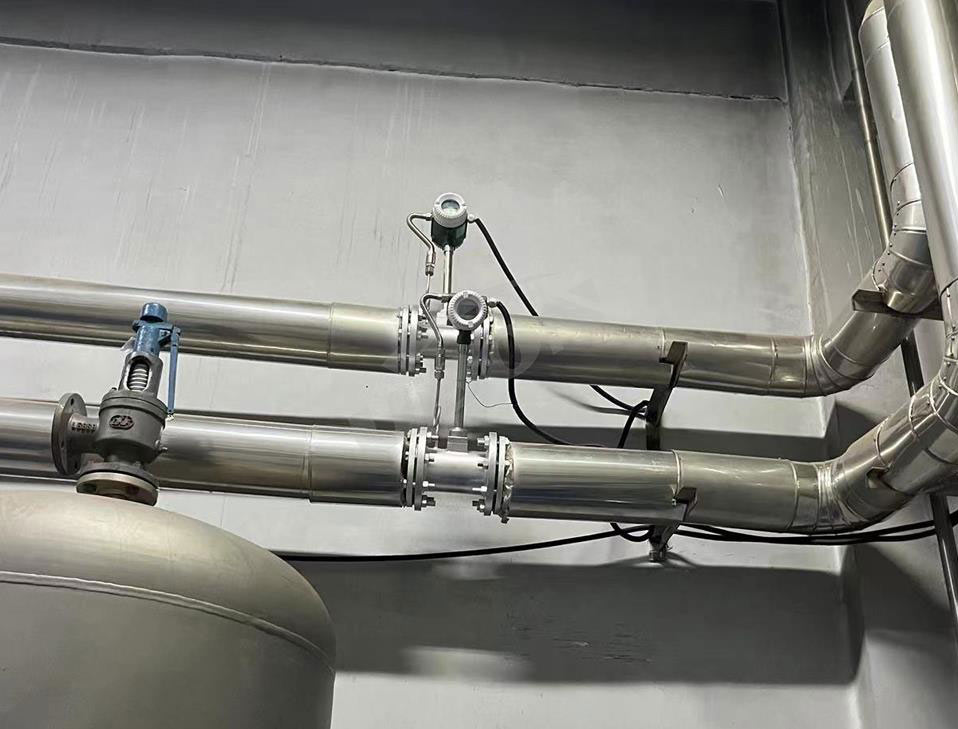
Cover image: steam mass flow metering on a high-temperature steam line — the application where ATEX approval, material grade, DN15–DN300 coverage, and 500 °C capability must all be evidenced before order release.
A low flow meter project rarely fails on measurement principle. It fails at supplier qualification — the stage where a buyer discovers that an ATEX claim was a catalogue line rather than a certificate scope, that “stainless steel” was never defined as grade 304 or 316, or that a 500 °C superheated steam header is being quoted against a meter whose documentation addresses saturated steam only.
This article is a supplier-evaluation framework for procurement and engineering teams buying low flow meters for steam service. The verification steps are applied throughout to the STLU-VFN steam mass flow meter — a vortex-type mass flow meter for saturated and overheated steam with DN15–DN300 pipeline coverage, a maximum steam temperature of 500 °C, ATEX approval, and built-in temperature and pressure compensation — supplied by Silver Automation Instruments, an instrumentation manufacturer founded in 2010 in Nanjing, China, that produces flow, pressure, level, and data-logging instruments and exports to Southeast Asia, South America, and Africa.
Five claims to have documented before releasing a purchase order
- ATEX approval, with a certificate scope that names the ordered model and configuration
- Material grade stated as stainless steel 304 or 316 — not simply “stainless steel”
- Line size coverage across DN15–DN300, matched to the pipe schedule actually installed
- Maximum steam temperature of 500 °C, for both saturated and overheated steam
- Built-in temperature and pressure compensation, so the meter publishes mass flow in kg/hr or t/h
Problem Definition: Where Low Flow Steam Meter Projects Break Down
Three failure patterns account for most qualification disputes in low flow steam metering, and all three are documentation problems rather than hardware problems.
Certification by adjective. A quotation states that the meter is explosion-proof or ATEX compliant, but no certificate scope is attached. The buyer then has to guess which model, which housing, and which hazardous-area classification the claim actually covers. In a steam plant, the meter is frequently installed in an area governed by an area classification drawing, so an unattached claim cannot be used to close out an installation approval.
Material by adjective. Steam service combines elevated temperature, condensate, and, in many plants, trace corrosive species. The difference between stainless steel 304 and stainless steel 316 is a procurement decision, not a marketing phrase, yet quotations routinely omit the grade. The STLU-VFN specification addresses this directly: the flow sensor material is stainless steel 304, and the meter is available in stainless steel 304 or 316, so the grade can be stated explicitly on the order.
Delivery by adjective. “Short lead time” means nothing in a purchase order. A verifiable schedule needs a stated lead time, a stated capacity ceiling, and the documents that must be delivered at each milestone before payment is released.
Two further gaps sit underneath these: line size coverage and compensation. A supplier may offer a steam meter family in principle while the specific DN required — particularly a small DN15 or DN20 steam line, or a large DN300 header — falls at the edge of the documented range. And a steam meter that outputs a volumetric value forces the buyer to add external correction hardware, which changes both the cost structure and the integration work with the plant DCS or PLC.
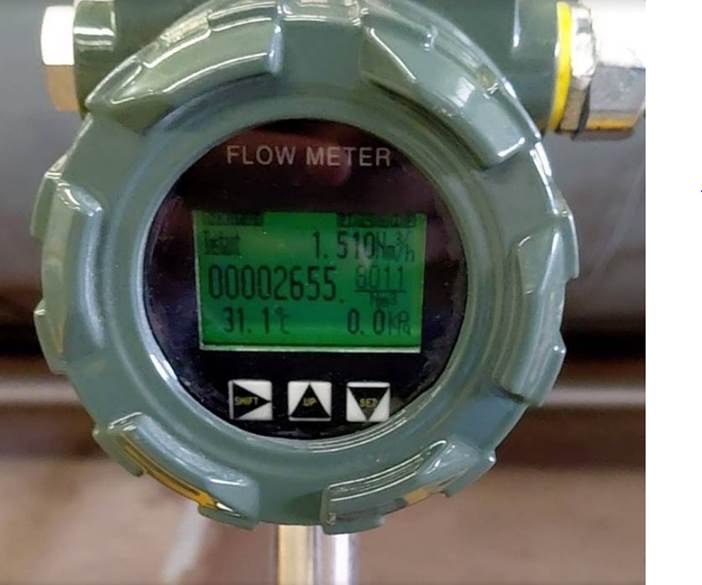
Steam flow measurement on a plant pipeline. Verification questions should be answered against the actual line, not against a generic product family.
Industry Background: Why Supplier Verification Is Getting More Attention
Flow measurement is a mature but still expanding equipment category, and the segments most relevant to low flow metering are among the fastest moving. Grand View Research valued the global flow meter market at USD 10.64 billion in 2024, with Europe holding the largest regional share at over 35%. Market Research Future puts the thermal flow meter segment — the segment most associated with low gas flow rates — at USD 1.73 billion in 2024, projected to reach USD 2.9 billion by 2035. Fortune Business Insights reports that Coriolis flow meters, widely used for high-precision low flow liquid measurement, held a 26.77% share of the intelligent flow meter market in 2026.
Two structural trends make supplier vetting more consequential. First, the smaller-pipe segment is growing faster than the market as a whole: Grand View Research expects the 2-inch and smaller pipe size segment to see the fastest growth through 2030, driven by demand in pharmaceuticals and food and beverage. Small lines are exactly where low flow meters are specified, and exactly where an unverified material grade or a missing NACE-style material declaration creates rework. Second, regional supply is shifting: Market Research Future values Asia-Pacific flow meter demand at USD 3.27 billion in 2025, with China contributing over 50% of regional demand. Manufacturers such as Silver Automation Instruments sit inside that supply base, which increases the value of a structured verification process for buyers in Europe, the Middle East, Southeast Asia, and the Americas.
Standards context matters as well. ISO 5167:2022 remains the primary international standard for differential pressure flow measurement devices, and small-pipeline accuracy depends on how rigorously a supplier applies that framework. Meanwhile, Mordor Intelligence identifies Honeywell, Emerson, and Siemens as leading global tier-1 competitors in high-precision flow metering, and Bronkhorst High-Tech as a recognised player in ultra-low-flow Coriolis meters for laboratory and OEM applications. Buyers comparing a tier-1 multinational, a laboratory-focused specialist, and a factory-direct Chinese manufacturer are not comparing the same service proposition — which is why the evaluation should be run against evidence, not brand familiarity. Published market estimates themselves diverge: 2024 global flow meter market values range from roughly USD 9.1 billion to USD 10.64 billion depending on how smart and legacy segments are counted.
Detailed Solution: The Five-Part Evidence Dossier for a Low Flow Steam Meter Supplier
The framework below converts five supplier claims into five documentary requests. Each item is stated as it applies to the STLU-VFN steam mass flow meter, so the buyer can see what a complete answer looks like.
1. ATEX approval with a model-level scope
Request the certificate, not the phrase. The STLU-VFN steam mass flow meter is documented as ATEX approved, and Silver Automation Instruments states that its products meet CE, ATEX, and ISO 9001 standards. The verification test is a document-to-order match: the certificate scope should name the model and the configuration being purchased — pipeline size, process connection, and sensor material — and should cover the hazardous-area classification shown on the plant area drawing. For steam systems, ATEX relevance is practical, not theoretical: steam headers, boiler houses, and fuel-adjacent areas frequently fall inside classified zones, and the ATEX evidence is what allows the installation to be signed off.
2. Material grade documented as 304 or 316
Ask for the grade in writing. The STLU-VFN flow sensor material is stainless steel 304, and the meter is offered in stainless steel 304 or 316. That distinction should appear on the quotation, the order confirmation, and the material documentation delivered with the shipment. For a procurement team, the practical consequence is simple: a grade statement in the technical annex is auditable, while a generic reference to stainless steel is not, and it leaves the plant exposed if a later material traceability question arises.
3. Line size coverage across DN15–DN300
Coverage claims should be checked against the pipe schedule, not against the product family. The STLU-VFN is specified for pipeline sizes from DN15 to DN300. In practice that range spans small branch steam lines, instrument and tracing connections, and main distribution headers. The buyer should confirm three things: that the required DN sits inside the range, that the process connection type matches the existing pipework, and that a single supplier can cover every steam line in the project. Ask for a line list mapped against the DN range — a supplier that can serve both a DN15 measurement point and a DN300 header removes the need to manage two metering standards in one plant.
4. Maximum steam temperature of 500 °C, for saturated and overheated steam
Temperature capability should be confirmed as a rated maximum, with the steam phase named. The STLU-VFN is specified for saturated steam and overheated steam, with a maximum steam temperature of 500 °C. That combination matters because the two phases behave differently in a metering context: saturated steam carries variable moisture content, while superheated steam runs at high temperature with different density behaviour, and both require the meter to be specified for the actual operating condition rather than for a nominal steam service. A supplier answer that addresses only saturated steam should be treated as incomplete for a superheated header.
5. Built-in temperature and pressure compensation
Steam is bought, billed, and controlled in mass, not in volume. The STLU-VFN includes built-in temperature and pressure compensation, which means the meter corrects for the actual steam condition and reports mass flow rather than a volumetric figure that has to be converted downstream. For a power generation or district heating application, this directly determines whether energy management and process control data can be used without additional correction hardware. The stage-4 verification question is therefore: does the meter deliver compensated mass flow on its own, and what does the output signal look like to the DCS or PLC?
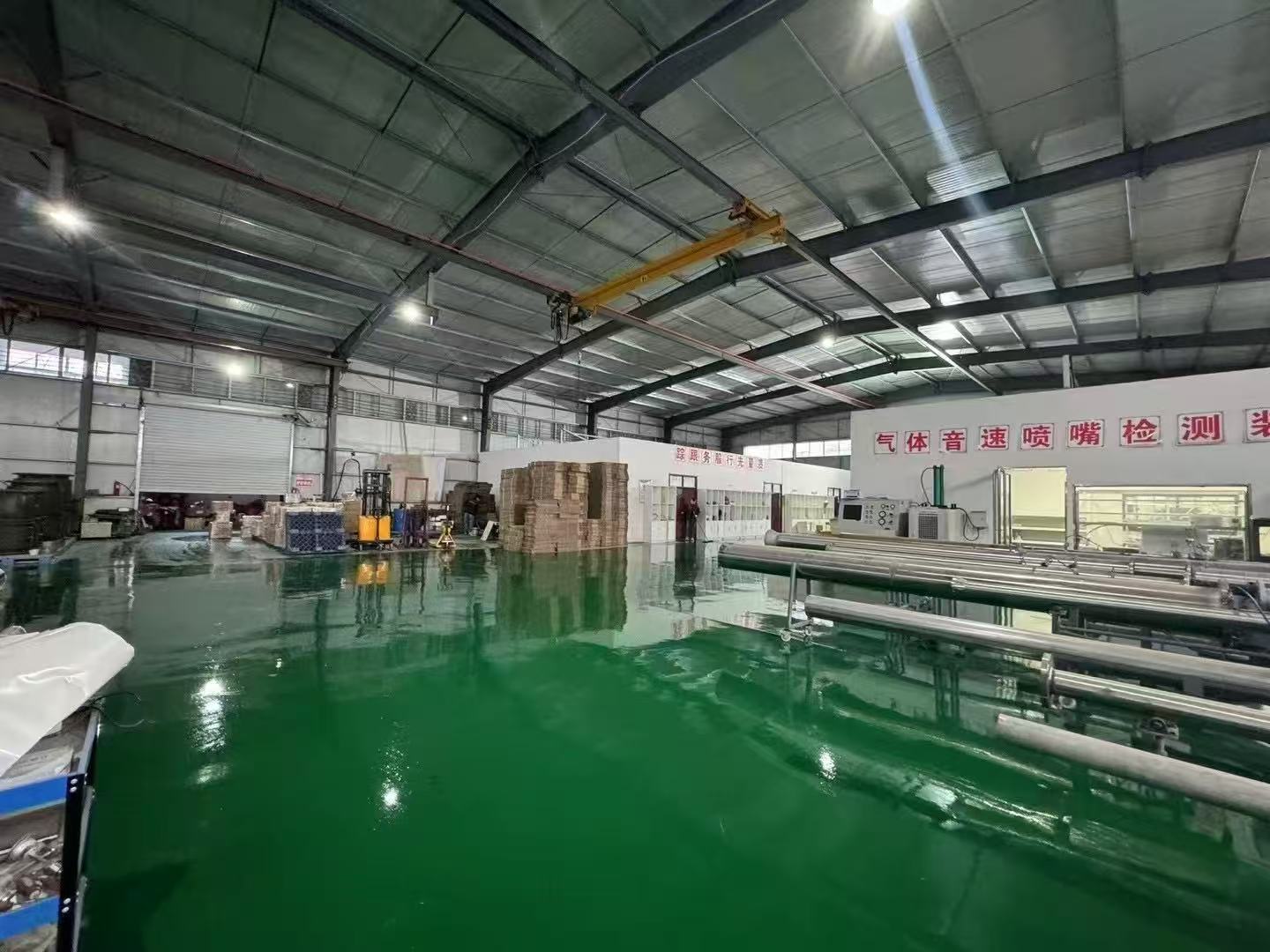
Evidence image: calibration and testing capability behind the supplier claim. Quality control at Silver Automation Instruments is carried out as a calibration test.
Step-by-Step Breakdown: A Six-Stage Supplier Evaluation Workflow
The workflow below can be run in sequence before a purchase order is issued, with a go/no-go decision at each stage.
Step 1 — Write the process condition sheet first
Define, per measurement point: line size (DN), steam phase (saturated or superheated), maximum operating temperature, operating pressure, required unit of measure (kg/hr, t/h), required output signal, and area classification. This sheet becomes the reference document for every supplier answer and eliminates the most common cause of mis-quotation, which is a supplier scoping against an assumed condition set.
Step 2 — Request the compliance pack
Ask for ATEX approval documentation, CE and ISO 9001 statements, and the material grade declaration. Compare the certificate scope with the process condition sheet from Step 1. Certificate scope and ordered model must match before technical evaluation continues.
Step 3 — Match line size and connection to the installed pipework
Confirm that each DN on the line list falls within the meter’s documented range — for steam service on the STLU-VFN, DN15 to DN300 — and confirm the connection style. The meter is offered with flanges, wafers, screws, or tri-clamp connections, which allows the same platform to serve flanged steel steam pipework and sanitary-style connections without a second product line.
Step 4 — Verify temperature and steam phase in writing
Require the supplier to confirm the maximum steam temperature and to state the phase coverage explicitly — saturated steam and overheated steam up to 500 °C in the case of the STLU-VFN. Any ambiguity here should be resolved before commercial negotiation, because it determines whether the meter is acceptable for superheated service at all.
Step 5 — Confirm the compensation logic and integration path
Check that temperature and pressure compensation is built into the meter, and confirm the signal path to the plant control system. Silver Automation Instruments supplies instrumentation that integrates with DCS and PLC control systems, and its wider flow meter range supports output options such as 4–20 mA, RS485, MODBUS, and HART depending on model. Confirm the specific output on the ordered model in writing.
Step 6 — Fix delivery milestones and acceptance criteria
Convert the supplier’s stated lead time into milestone-based obligations, with documents attached to each milestone. Silver Automation Instruments operates a monthly capacity of 2,000 units with a quoted lead time of 10–12 working days, and states that most orders ship within 7–10 working days. Those figures should be written into the order together with the document deliverables listed in the conclusion of this article.
Use Cases: Where Low Flow Meter Verification Is Tested
Power generation and district heating steam lines. This is the primary application for the STLU-VFN steam mass flow meter. Steam flow meters are used in power generation, petrochemical, food processing, pharmaceuticals, and district heating for energy management and process control. In a power generation context, the metering requirement is mass flow in kg/hr or t/h, compensated for the actual steam condition, on lines that may range from DN15 branch connections to DN300 headers.
Malaysia steam project conditions. A representative steam measurement scenario involves high-temperature steam flow measurement, larger pipelines such as 4-inch, 6-inch, 8-inch, or 10-inch, and a requirement to display steam mass flow rate in units such as kg/hr or t/h. The stated special requirements are saturated steam with varying moisture content, superheated steam at high temperature, and temperature and pressure compensation for mass flow, with supporting equipment including steam pipeline systems and DCS/PLC control systems. This is precisely the condition set that the five-part evidence dossier is designed to test.
Saturated steam in South Africa. One installed reference involves 10 units supplied for saturated steam flow measurement, in service for more than five years. The meters measure mass flow of high-temperature steam up to 400 °C and simultaneously detect steam temperature and pressure to calculate mass flow. For a buyer, the useful part of this reference is not the unit count but the service duration and the fact that the temperature and pressure detection function is integral to the measurement rather than added externally.
Low flow gas and compressed air. Thermal mass flow meters are used in compressed air flow measurement across manufacturing, automotive, food and beverage, pharmaceuticals, textiles, electronics, petrochemicals, and energy. The measured role is practical: identifying how much air is actually used, spotting leaks, locating consumption, and supporting compressor scheduling and energy-saving projects. The SRK-100 thermal mass flow meter covers DN15–DN2000 in inline or insertion configuration, for gases including air, compressed air, nitrogen, natural gas, biogas, oxygen, and LPG, at gas temperatures from -20 to 300 °C.
Micro flow gas leak detection. At the extreme low end, the SRK-DL low flow thermal mass flow meter covers 2 sccm to 30 SL/M with ±1% F.S accuracy. In one application, three units were deployed to detect air leakage down to 2 sccm; the reported result is sensitivity to leaks as low as 2 ml/min, with more than ten years of service. This is the class of duty where a documented minimum measurable flow matters more than a headline accuracy figure.
Low flow liquid and gas mass measurement. For liquid-side low flow work, the SH-CMF-FE micro Coriolis mass flow meter is specified with a flow range of 40 g/h to 1000 kg/hr, accuracy of ±0.25% to ±0.5%, a pressure rating of 30 bar or 100 bar, and stainless steel 316L construction, with process fluid applications in food, (petro)chemical, and pharmaceutical industries, fermentation equipment, semiconductor processing, and fuel cell technology.
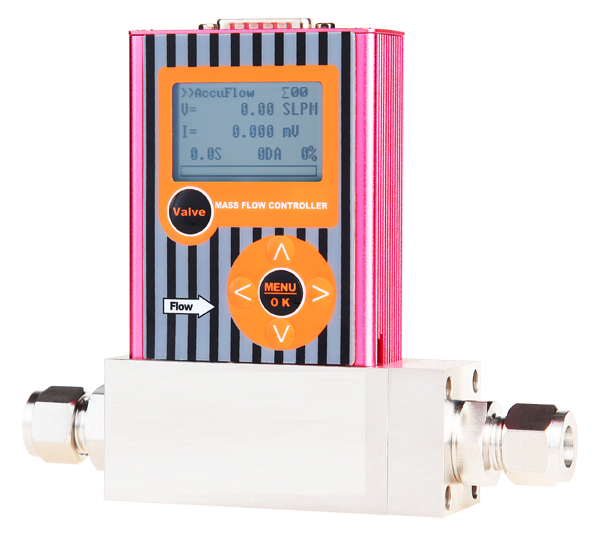
Supporting image: micro thermal mass flow metering hardware for low flow gas duties, including leak detection down to the sccm range.
Comparison Table: Verification Evidence and What Each Document Proves
| Verification item | Evidence to request | What it proves | Common gap |
|---|---|---|---|
| ATEX approval | Certificate naming model and configuration; CE and ISO 9001 statements | Basis for installation in an area-classified steam plant | “ATEX compliant” wording with no attached scope |
| Material grade | Grade declaration stating stainless steel 304 or 316 | Traceable material specification at elevated steam temperature | “Stainless steel” with no grade stated |
| Line size coverage | Confirmation of DN15–DN300 range plus line list mapping | One metering standard across all steam measurement points | Range claimed but small or large DNs not actually covered |
| Steam temperature | Rated maximum steam temperature, stated as 500 °C | Fitness for superheated header service | Rating quoted for saturated steam only |
| Steam phase | Written confirmation of saturated and overheated steam coverage | Correct handling of variable moisture and high-temperature conditions | Phase coverage left implicit |
| Compensation | Statement that temperature and pressure compensation is built in | Direct mass flow output in kg/hr or t/h without extra hardware | External correction added later as an unbudgeted cost line |
| Process connection | Confirmation of flanges, wafers, screws, or tri-clamp | Installation without pipework modification | Only one connection style offered; adapters required |
| Output and integration | Model-specific output and communication confirmation | Compatibility with DCS or PLC control systems | Signal type assumed rather than confirmed |
| Quality control | Calibration test record per unit | Evidence that each meter was tested before dispatch | No unit-level record supplied with shipment |
| Capacity and lead time | Stated monthly capacity and lead time | Schedule credibility and scale-up headroom for phased projects | Lead time quoted without capacity or milestone context |
For reference, the low flow meter platforms discussed in this article are documented as follows. The STLU-VFN steam mass flow meter uses the vortex principle for saturated and overheated steam, covers DN15–DN300, is rated to a maximum steam temperature of 500 °C, is ATEX approved with built-in temperature and pressure compensation, uses a stainless steel 304 flow sensor with 304 or 316 available, and is offered with flanged, wafer, screw, or tri-clamp connections. The SH-CMF-FE micro Coriolis mass flow meter covers 40 g/h to 1000 kg/hr at ±0.25% to ±0.5% accuracy with a 30 bar or 100 bar pressure rating in stainless steel 316L. The SRK-DL low flow thermal mass flow meter covers 2 sccm to 30 SL/M at ±1% F.S. The SRK-100 thermal mass flow meter covers DN15–DN2000 in inline or insertion form for gas temperatures from -20 to 300 °C. The SH-CM Coriolis mass flow meter covers sizes from approximately 1 mm to 300 mm, flow from approximately 10 kg/hr to 1500 t/h, and fluid temperatures from -200 to 350 °C at IP65, and is ATEX certified.
Frequently Asked Questions
What ATEX documentation should we ask a low flow meter supplier to provide?
Ask for the certificate, not the phrase. The STLU-VFN steam mass flow meter is documented as ATEX approved, and the certificate supplied with the quotation should name the model and the exact configuration being purchased — line size, process connection, and sensor material. Silver Automation Instruments states that its products meet CE, ATEX, and ISO 9001 standards, so the practical check is a document-to-order match: the certificate scope must cover the model code on the purchase order and the hazardous-area classification of the installation. A quotation that says only “ATEX compliant” should be treated as unverified until the scope is produced.
Can one vortex steam meter cover DN15 to DN300 and steam at 500 °C?
The STLU-VFN steam mass flow meter is specified for saturated steam and overheated steam, with pipeline sizes from DN15 to DN300 and a maximum steam temperature of 500 °C, and it includes built-in temperature and pressure compensation so the meter reports mass flow rather than a temperature-dependent volumetric value. Its flow sensor material is stainless steel 304, the meter is available in stainless steel 304 or 316, and process connections can be supplied as flanges, wafers, screws, or tri-clamp. Buyers should still confirm that every ordered DN falls inside the documented range and that the connection type matches the installed pipework.
What drives the cost of a low flow steam metering package?
Cost is driven by specification decisions rather than by the meter family alone: line size (DN), material grade (304 versus 316), process connection type, the scope of ATEX documentation required, whether temperature and pressure compensation is built into the meter or added externally, and the depth of calibration and documentation required at dispatch. Because Silver Automation Instruments supplies factory-direct from its Nanjing manufacturing base, the purchase path does not include distributor margin layers. The minimum order quantity is 1 unit, which means the cost comparison can be run on a single meter rather than on a container-scale commitment.
Can we validate one meter before committing to a project quantity?
Yes. The minimum order quantity at Silver Automation Instruments is 1 unit, so a single meter can be ordered for validation before a project-wide order is placed. OEM/ODM support is available with logo customization, quality control is carried out as a calibration test, and after-sales support is provided remotely. Field evidence to weigh alongside a validation unit includes a South African saturated steam installation of 10 units that has been in service for more than five years, measuring steam mass flow up to 400 °C while detecting temperature and pressure to calculate mass flow. To begin, send the process conditions — line size, steam phase, maximum temperature, pressure, and required output — to sales@silverinstruments.com or request a quotation through silverinstruments.com.
What lead time and delivery evidence should the purchase order specify?
Silver Automation Instruments quotes a lead time of 10–12 working days with a monthly capacity of 2,000 units, and states that most orders ship within 7–10 working days. Those figures should be converted into milestone obligations rather than left as a general schedule statement: compliance documents released before production starts, unit-level calibration test records released before shipment, and packing list plus dispatch confirmation released before the goods leave. Tying documents to milestones makes the delivery commitment measurable and gives the buyer a defined point at which to raise an exception.
Conclusion: Purchasing Terms and Acceptance Criteria Built on Verified Evidence
A low flow meter supplier evaluation is complete when every claim in the quotation can be traced to a document, and when those documents are attached to payment and delivery milestones in the purchase order. For a steam project built around the STLU-VFN steam mass flow meter, the acceptance criteria can be written as follows.
- Compliance condition precedent. ATEX certificate scope, CE and ISO 9001 statements, and the material grade declaration (stainless steel 304 or 316) are submitted and matched to the ordered model before production is released.
- Technical conformance. The order confirmation states the DN within the DN15–DN300 range, the process connection style (flanges, wafers, screws, or tri-clamp), the maximum steam temperature of 500 °C, and coverage of both saturated and overheated steam.
- Measurement function. Built-in temperature and pressure compensation is confirmed on the ordered configuration, and the mass flow output and communication path to the plant DCS or PLC are stated explicitly for the model supplied.
- Quality evidence. A calibration test record is delivered for each unit, reflecting the supplier’s stated quality control method.
- Delivery milestones. The quoted 10–12 working day lead time and the stated monthly capacity of 2,000 units are written into the order, with dispatch documentation released before shipment.
- Post-delivery support. Remote after-sales support is confirmed as the service route, with contact details recorded in the order documentation.
Applied consistently, this framework changes the commercial conversation. Instead of comparing adjectives across quotations, the buyer compares certificate scopes, grade statements, DN coverage, temperature ratings, and milestone documents. Suppliers who can answer immediately move through evaluation faster; suppliers who cannot are identified before the order, not after the installation.
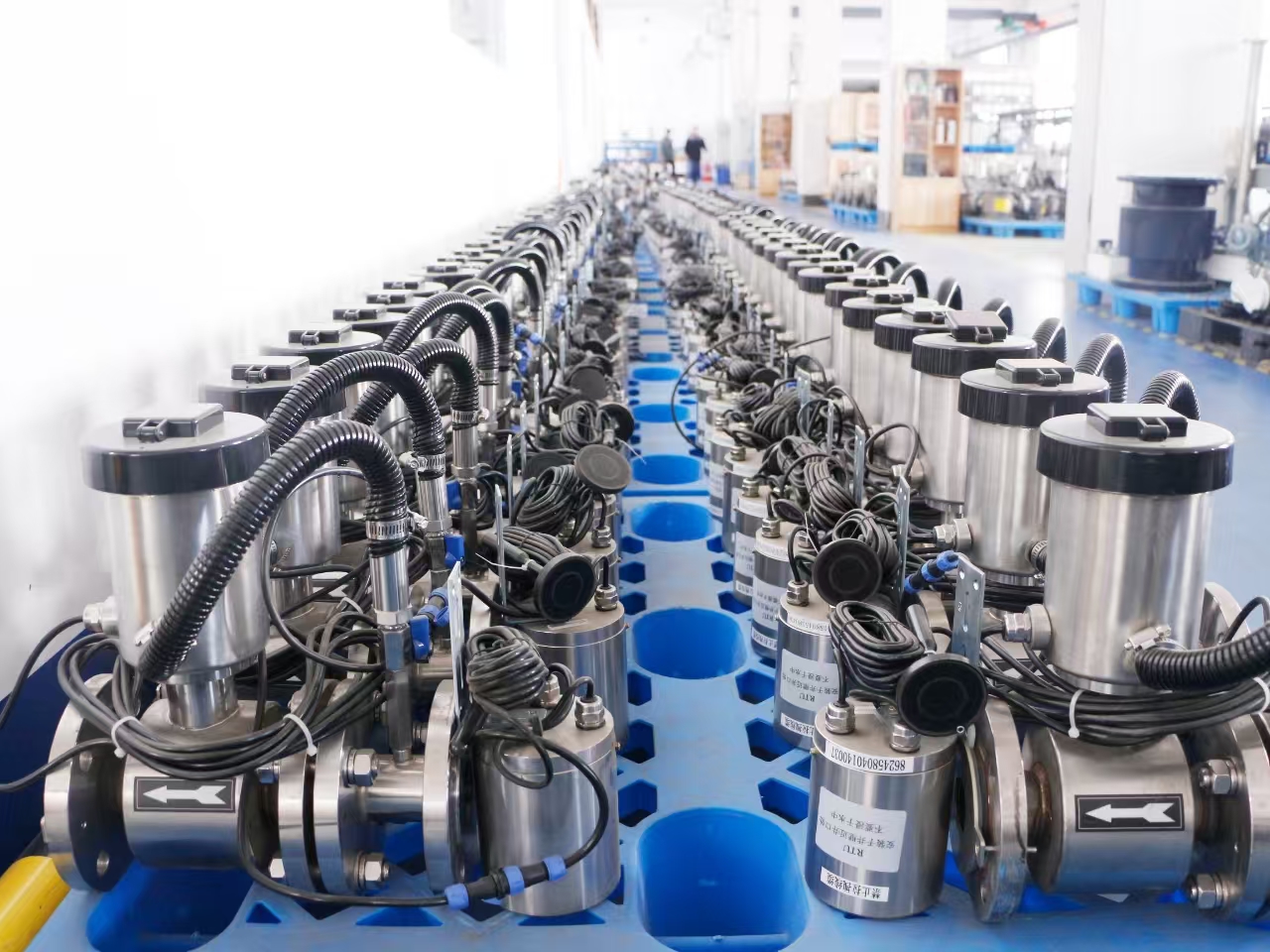
Delivery assurance image: packing and dispatch operations. Around 95% of Silver Automation Instruments output is exported, with main markets in Southeast Asia, South America, and Africa.
Next step: request a sample unit or a project quotation
Share your steam condition sheet — line size, steam phase, maximum temperature, pressure, and required output — and the STLU-VFN configuration will be confirmed against your line list. Minimum order quantity is 1 unit, and OEM/ODM logo customization is available.
Email: sales@silverinstruments.com | Phone: +86 25-52155837 | WhatsApp: +86 18936759191 | Website: www.silverinstruments.com
Product brochure (PDF): download the Silver Automation Instruments catalogue
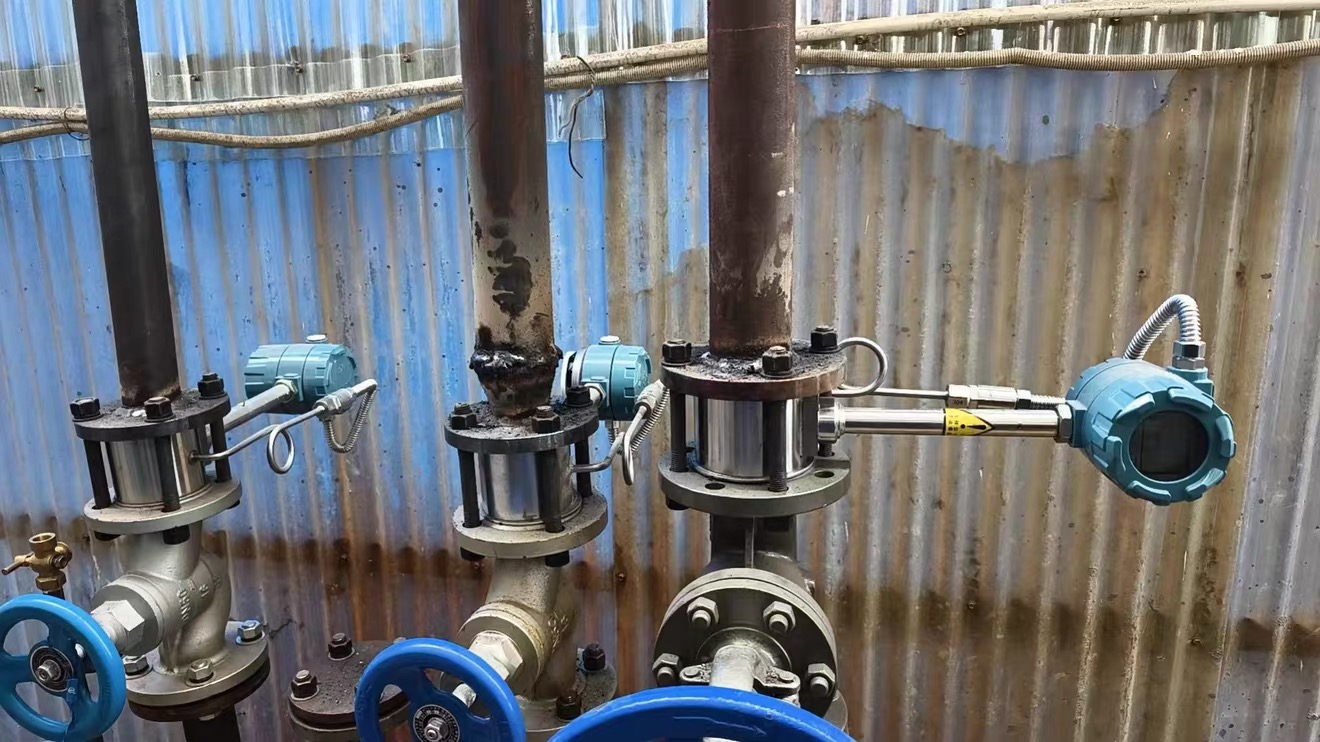
CTA image: field-installed steam mass flow meter. Request a configuration review, sample unit, or quotation for your steam line list.
Have Questions or Need More Details?
Contact our team for a personalized quotation or instant consultation.
Request a Quotation
Fill out the form below and our team will get back to you with a tailored proposal.
WhatsApp Direct Chat
Prefer to chat in real-time? Message us on WhatsApp for instant assistance & quick answers.
- Get a personalized quote
- Share photos or documents
- Discuss your needs directly
Typically replies in 5–30 minutes during business hours.