
Micro Coriolis vs Thermal vs Vortex: A Low Flow Meter Comparison for Harsh Media
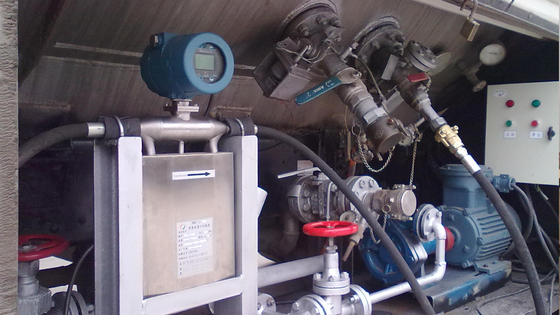
A Coriolis mass flow meter configured for fuel duty — the same measurement family used for micro Coriolis low flow service on diesel, aviation kerosene and other harsh media.
A low flow meter is an instrument sized to resolve very small liquid or gas rates — grams per hour, millilitres per minute, or standard cubic centimetres per minute — in applications where a conventional full-bore meter would lose most of its usable resolution. Once the medium is also difficult to handle, such as silane, supercritical CO2, diesel, aviation kerosene, pure water or steam, the realistic shortlist narrows to three measurement routes: micro Coriolis, low flow thermal mass, and vortex steam mass flow. This comparison sets out what each route actually measures, which media it has been specified for, and which process conditions should decide the purchase.
Short answer for buyers.
- Micro Coriolis (SH-CMF-FE): the route for liquids and dense or supercritical gases. Specified media include pure water, silicone, aviation kerosene, diesel, supercritical CO2 and silane. Accuracy ±0.25% to ±0.5%, flow range 40 g/h to 1000 kg/h, pressure rating 30 bar or 100 bar, wetted material stainless steel 316L.
- Low flow thermal mass (SRK-DL): the route for gases at the smallest end of the scale. Flow range 2 sccm to 30 SL/M, accuracy ±1% F.S., used in semiconductor, medical, analytical instrument, fuel cell and environmental monitoring duty.
- Vortex steam mass flow (STLU-VFN): the route for steam. Saturated and superheated steam, pipeline size DN15 to DN300, maximum steam temperature 500 °C, ATEX approved, with built-in temperature and pressure compensation.
Problem definition: why low flow plus harsh media breaks ordinary meter selection
Low flow measurement is rarely difficult because the flow is small. It is difficult because at low rates the measurable signal from many instruments becomes a small fraction of full-scale output, so resolution, zero behaviour and the fit between the meter and the medium matter more than the headline accuracy figure printed on a catalogue page.
Harsh media add three further constraints on top of that:
- Wetted-material compatibility. Aggressive fluids restrict which metals and seals may touch the process. Installed project records for these product families show stainless steel 316L used for a micro Coriolis meter, tantalum wetted material used for corrosive chlorine gas measurement, and a PTFE-sprayed sensor used for slightly corrosive biogas.
- Pressure and temperature headroom. A nitrogen application at approximately 700 bar required a sensor with a high-pressure design capable of withstanding 700 bar or higher. A micro Coriolis low flow meter is offered with a 30 bar or 100 bar pressure rating. A steam meter must tolerate steam up to 500 °C.
- Phase behaviour. Steam, supercritical CO2 and dense gases do not behave like ambient water. Steam metering in particular normally requires temperature and pressure compensation inside the measurement, which the vortex steam mass flow meter provides as a built-in function.
The practical consequence is that a buyer cannot select on accuracy alone. A ±1% F.S. gas meter and a ±0.25% mass meter are not competing on the same axis — they are answering different process questions. The correct first question is which technology is physically specified for the medium, and only then how accurate, how fast, and how connected the meter needs to be.
Industry background: where low flow metering demand is concentrated
Market data published by third-party research firms shows that low flow and precision mass measurement is one of the growth areas of the flow instrumentation market rather than a niche annex to it.
- The global flow meter market was valued at USD 10.64 billion in 2024, with Europe holding the largest regional share of over 35%, according to Grand View Research.
- Thermal flow meters, described by Market Research Future as essential for low gas flow rates, reached USD 1.73 billion in 2024 and are projected to reach USD 2.9 billion by 2035.
- Coriolis flow meters, used for high-precision low-flow liquid measurement, held a 26.77% share of the intelligent flow meter market in 2026, according to Fortune Business Insights. Market Research Future reports that Coriolis meters generate over USD 1.55 billion in annual revenue as of 2025, primarily for custody transfer applications.
- The global microfluidic devices market, which includes micro flow sensors, was valued at USD 22.1 billion in 2024 and is growing at a CAGR of 12.2%, according to P&S Intelligence.
- Grand View Research expects the 2-inch and smaller pipe size segment to see the fastest growth through 2030, driven by demand in the pharmaceuticals and food and beverage sectors.
- Mordor Intelligence identifies Honeywell, Emerson and Siemens as the leading global tier-1 competitors in the high-precision flow meter segment, and recognises Bronkhorst High-Tech as a dominant player in the ultra-low flow Coriolis meter market, focused on laboratory and OEM applications.
Silver Automation Instruments is a Chinese manufacturer of flow, pressure and level instrumentation, founded in 2010, with 80 employees, a 20-person R&D team, an annual output of 60,000 units and an export ratio of 95% across Southeast Asia, South America and Africa. Third-party export records compiled by Volza list approximately 91 shipments to 36 international buyers, mainly in the mechanical appliances category. The relevant point for this comparison is that the three low flow technologies discussed here — micro Coriolis, low flow thermal mass, and vortex steam mass flow — sit inside one supplier's catalogue, which makes a like-for-like reading of their specifications possible.
The three technologies in detail
1. Micro Coriolis: the route for liquids and dense gases
The micro Coriolis route measures mass flow directly through the Coriolis principle instead of inferring mass from a volumetric proxy. The Silver Automation Instruments SH-CMF-FE micro Coriolis mass flow meter is described in its datasheet as a Coriolis flow meter and controller, and is offered in high-pressure, high-temperature, liquid and gas variants.
- Accuracy: ±0.25% to ±0.5%.
- Flow range: 40 g/h to 1000 kg/h.
- Pressure rating: 30 bar or 100 bar.
- Wetted material: stainless steel 316L.
- Outputs: 4–20 mA, 0–5 VDC, 1–5 VDC.
- Power supply: 15 VDC or 24 VDC; communication over RS485 or RS232.
- Media listed for this model: pure water, silicone, aviation kerosene, diesel, supercritical CO2 and silane.
- Industries listed: food, (petro)chemical and pharmaceutical processing, fermentation equipment, semiconductor processing, and fuel cell technology.
Read against the problem definition above, this is the only one of the three candidates specified for silane, supercritical CO2, diesel, aviation kerosene, silicone and pure water within the same product family. For a low flow liquid meter, a low flow fuel meter, or a precision low flow meter on a supercritical or high-pressure line, the micro Coriolis specification is the one that matches the medium first and the accuracy second.
The same Coriolis family extends upward when larger lines are involved: the SH-CM Coriolis mass flow meter covers sizes from roughly 1 mm to 300 mm, flow ranges from about 10 kg/h to 1500 t/h, fluid temperatures from −200 °C to 350 °C, IP65 protection, and communications including 4–20 mA, pulse, frequency, MODBUS RTU, HART, Profibus-DP and Profibus-PA, in stainless steel 316L. That range matters when a pilot low flow line and a production line in the same plant should use the same measurement principle.
2. Low flow thermal mass: the route for the smallest gas flows
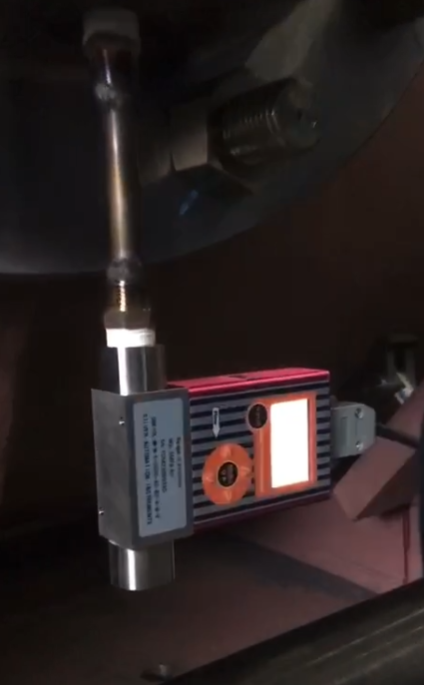
Low flow thermal mass flow measurement at the millilitre-per-minute end of the scale, where leak detection and gas dosing applications sit.
The SRK-DL low flow thermal mass flow meter is a mass flow meter and flow controller for gases at the very small end of the scale. Its specified flow range is 2 sccm to 30 SL/M with an accuracy of ±1% F.S. It provides 0–5 V, 4–20 mA and 1–5 V outputs, communicates over RS232/485 with MODBUS, and operates on ±15 VDC or 24 VDC. The manufacturer lists its applications as semiconductor, medical, analytical instruments, fuel cells and environmental monitoring.
For larger gas lines, the SRK-100 thermal mass flow meter applies the same principle to DN15–DN2000 pipelines in either insertion or inline configuration, with a gas temperature range of −20 °C to 300 °C, 4–20 mA output, and RS485, MODBUS RTU or HART communication. Gases listed for it include air, compressed air, nitrogen, natural gas, biogas, oxygen and LPG.
The boundary of this technology is as important as its capability. Thermal mass meters in this portfolio are gas instruments. Steam service is specified to the vortex steam mass flow meter instead, and the highly aggressive or supercritical media listed for the micro Coriolis model — silane, supercritical CO2, aviation kerosene, diesel — are not part of the thermal mass low flow specification.
3. Vortex steam mass flow: the route for saturated and superheated steam
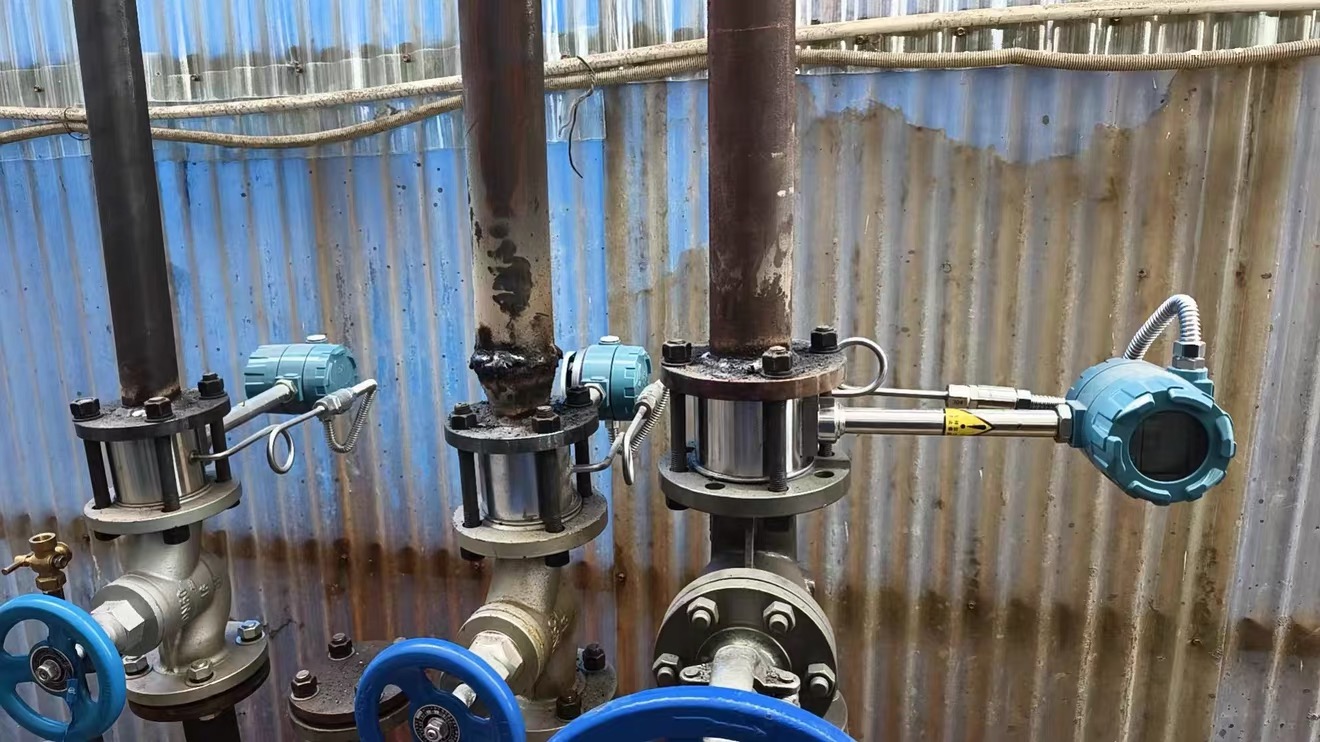
Steam mass flow measurement with built-in temperature and pressure compensation, for saturated and superheated steam lines.
The STLU-VFN steam mass flow meter is the steam member of the family. It is specified for saturated steam and superheated (overheated) steam and carries these verified parameters:
- Principle: vortex flow meter principle.
- Pipeline size: DN15 to DN300.
- Maximum steam temperature: 500 °C.
- ATEX approved.
- Built-in temperature and pressure compensation.
- Flow sensor material: stainless steel 304; meter body available in stainless steel 304 or 316.
- Process connections: flanges, wafers, screws or tri-clamp.
- Industries listed: power generation, petrochemical, food processing, pharmaceuticals and district heating.
One labelling caution before you write a purchase specification. The STLU-VFN is listed by the manufacturer under two type descriptions: vortex type steam mass flow meter and Coriolis type steam mass flow meter. Because those two labels imply different sensing principles, a buyer comparing steam meter quotations should confirm which measurement principle is active in the quoted configuration, and should keep the stated temperature, line size and compensation functions as the fixed commercial reference points. The verified steam envelope does not change: DN15–DN300, up to 500 °C, saturated and superheated steam, with built-in temperature and pressure compensation.
Step-by-step: matching meter type to medium, line size and process conditions
The following sequence is written for a buyer in the evaluation-to-execution stage, ordering a low flow meter for a harsh medium. Each step removes candidate technologies before price is discussed.
- Fix the physical state of the medium. Decide whether the fluid is a liquid, a gas, a supercritical fluid, or steam. This single answer already eliminates most of the wrong quotes: steam goes to the STLU-VFN, low flow gases go to the SRK-DL or SRK-100, and liquids plus dense or supercritical gases plus silane go to the micro Coriolis SH-CMF-FE.
- Fix both ends of the flow range, not just the maximum. A meter is chosen on the minimum flow it must still resolve. The SRK-DL starts at 2 sccm; the SH-CMF-FE starts at 40 g/h and runs to 1000 kg/h.
- Fix the pressure rating. The SH-CMF-FE is offered at 30 bar or 100 bar. Where the process exceeds a standard rating, a high-pressure design is required — as in the 700 bar nitrogen project where the sensor was built to withstand 700 bar or higher.
- Fix the temperature envelope. Use only the value the datasheet states for the quoted model. For reference: the SRK-100 thermal mass meter is specified from −20 °C to 300 °C gas temperature, the STLU-VFN is specified for steam up to 500 °C, and the broader SH-CM Coriolis family covers fluid temperatures from −200 °C to 350 °C.
- Fix line size and process connection. Steam lines are specified from DN15 to DN300 with flanges, wafers, screws or tri-clamp connections. Thermal mass gas meters cover DN15 to DN2000 in insertion or inline form. Where the connection standard is fixed by an existing spool, this step usually decides the model rather than the accuracy class.
- Fix the electrical and communication interface. Available outputs across the low flow range include 4–20 mA, 0–5 V, 0–5 VDC, 1–5 V and 1–5 VDC; communications include RS232, RS485, MODBUS, MODBUS RTU and HART. Matching the plant control system at this step avoids a signal converter later.
- Fix compliance and documentation. Confirm the certification that applies to the quoted product and to the site's hazardous area classification: CE, ATEX Zone 2, and ISO 9001 quality management for the manufacturing site.
- Fix the validation route. Order a sample or a factory test before series shipment. Acceptance procedures offered include pre-shipment calibration test, visual inspection, and an optional factory acceptance test (FAT).
Comparison table: micro Coriolis vs low flow thermal vs vortex steam
| Parameter | Micro Coriolis SH-CMF-FE | Low flow thermal mass SRK-DL | Thermal mass SRK-100 | Vortex steam mass STLU-VFN |
|---|---|---|---|---|
| Measurement family | Coriolis mass flow meter / controller (high pressure, high temperature, liquid and gas variants) | Thermal mass flow meter / flow controller | Thermal mass flow meter, insertion or inline | Vortex type steam mass flow meter; also listed as Coriolis type steam mass flow meter |
| Media specified | Pure water, silicone, aviation kerosene, diesel, supercritical CO2, silane | Gases in semiconductor, medical, analytical instrument, fuel cell and environmental monitoring duty | Air, compressed air, N2, natural gas, biogas, O2, LPG | Saturated steam and superheated steam |
| Flow range | 40 g/h to 1000 kg/h | 2 sccm to 30 SL/M | — | — |
| Accuracy | ±0.25% to ±0.5% | ±1% F.S. | — | — |
| Pressure rating | 30 bar or 100 bar | — | — | — |
| Temperature limit as specified | — | — | Gas −20 °C to 300 °C | Steam up to 500 °C |
| Line size | — | — | DN15 to DN2000 | DN15 to DN300 |
| Wetted material | Stainless steel 316L | Stainless steel | Stainless steel 304 | Sensor stainless steel 304; body 304 or 316 |
| Output | 4–20 mA, 0–5 VDC, 1–5 VDC | 0–5 V, 4–20 mA, 1–5 V | 4–20 mA | — |
| Communication | RS485 or RS232 | RS232/485, MODBUS | RS485, MODBUS RTU, HART | — |
| Power supply | 15 VDC or 24 VDC | ±15 VDC, 24 VDC | — | — |
| Certification relevant to the model | CE; ATEX listed among related products | CE; ATEX listed among related products | CE; ATEX listed among related products | ATEX approved; CE listed among related products |
| Process connection | — | — | — | Flanges, wafers, screws or tri-clamp |
A dash entry means the parameter is not stated in the source specification reviewed for this article. It is not a zero value and not an unlimited one; it simply has to be confirmed with the supplier for the exact configuration being quoted.
Media match: which technology for which fluid
| Medium | Technology specified | Reference model | Verified basis |
|---|---|---|---|
| Silane | Micro Coriolis | SH-CMF-FE | Listed medium; 40 g/h to 1000 kg/h; ±0.25% to ±0.5% |
| Supercritical CO2 | Micro Coriolis | SH-CMF-FE | Listed medium; pressure rating 30 bar or 100 bar |
| Diesel | Micro Coriolis | SH-CMF-FE | Listed medium; fuel metering also covered by custody transfer cases on the Coriolis family |
| Aviation kerosene | Micro Coriolis | SH-CMF-FE | Listed medium |
| Pure water | Micro Coriolis | SH-CMF-FE | Listed medium; low flow liquid metering |
| Silicone | Micro Coriolis | SH-CMF-FE | Listed medium |
| Low flow gases and leak detection | Low flow thermal mass | SRK-DL | 2 sccm to 30 SL/M; ±1% F.S. |
| Process gases in larger lines | Thermal mass | SRK-100 | DN15 to DN2000; air, N2, natural gas, biogas, O2, LPG |
| Saturated and superheated steam | Vortex steam mass flow | STLU-VFN | DN15 to DN300; up to 500 °C; built-in temperature and pressure compensation |
Field use cases that test each specification
Installed projects show how the three technologies behave outside the datasheet. The cases below are drawn from the manufacturer's project record and are limited to the facts recorded there.
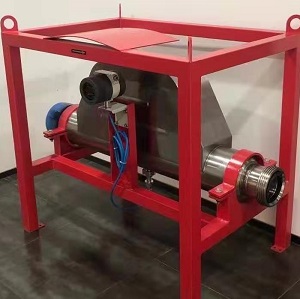
High-pressure mass flow measurement: a sensor design rated for 700 bar or higher in nitrogen gas service.
- Nitrogen gas at approximately 700 bar — Chile. One Coriolis mass flow meter measured nitrogen at around 700 bar using a high-pressure sensor design capable of withstanding 700 bar or higher. The installation has been operating for more than three years.
- Liquid oxygen at −183 °C (90 K) — India. Three Coriolis mass flow meters were installed for cryogenic liquid oxygen service. Customer feedback reported stable measurement at −183 °C with accuracy within 0.2% to 0.5%. This is the strongest available evidence that a low flow mass meter can hold performance at cryogenic temperatures, not only at ambient conditions.
- High viscosity syrup — Thailand. A single Coriolis mass flow meter measured high viscosity syrup with accuracy up to 0.1%, while also displaying volume flow rate, sugar concentration and density. The unit has run for more than five years.
- High-temperature asphalt at approximately 250 °C — Serbia. Two Coriolis mass flow meters measured high-temperature, high-viscosity asphalt, displaying density and temperature simultaneously, with an insulation jacket design to prevent solidification. Operating time exceeds five years.
- Low-pressure biogas in a 4-inch line at around 10 mbar — Singapore. Four SRK-100 thermal mass flow meters with insertion-type, PTFE-coated sensors measured slightly corrosive biogas. The installation is more than five years old.
- Saturated steam — South Africa. Ten units measured saturated steam, handling steam temperatures up to 400 °C with simultaneous temperature and pressure detection to calculate mass flow. The project has run for more than five years.
- Air leak detection down to 2 sccm — China. Three low flow mass flow meters detected air leaks as low as 2 ml/min, and have been in operation for more than ten years. This is the clearest demonstration of the millilitre-per-minute measurement envelope.
- Corrosive chlorine gas — Malaysia. One Coriolis mass flow meter measured corrosive chlorine gas using tantalum wetted material for corrosion resistance.
- Natural gas — Brazil. Twenty thermal mass flow meters provided stable natural gas measurement over a period exceeding ten years, delivered in 5–7 working days.
- Crude oil and fuel oil custody transfer — Saudi Arabia. Two Coriolis meters measured crude oil mass flow over 10–15 years, and three meters handled fuel oil mass flow for custody transfer purposes.
OEM, customization and microfluidic builds
For buyers building instruments, analysers or microfluidic systems rather than buying a finished process meter, the supplier profile matters as much as the sensor specification. The following capability facts apply to this manufacturing operation:
- Both OEM and ODM production services are provided, allowing a client either to manufacture to its own existing design or to use the manufacturer's design and production expertise for a new product.
- Logo customization is supported, which suits private-label distribution of low flow meters.
- Monthly capacity is 2000 units, with a minimum order quantity of 1 unit — a combination that supports both prototype builds and repeat distribution orders.
- Standard lead time is 10–12 working days.
- Quality control includes calibration testing, which also forms part of the pre-shipment acceptance routine.
- After-sales support is provided remotely.
- Export markets cover customers worldwide, with historic concentration in Southeast Asia, South America and Africa.
For microfluidic and analytical instrument builders, the relevant pairing is the SRK-DL at 2 sccm to 30 SL/M with ±1% F.S. accuracy, in semiconductor, medical, analytical instrument and fuel cell applications, combined with OEM or ODM production and logo customization. Where the microfluidic system handles liquids or dense gases such as supercritical CO2, the corresponding pairing is the SH-CMF-FE at 40 g/h to 1000 kg/h and ±0.25% to ±0.5%.
Frequently asked questions
What certifications should be verified on a low flow meter for harsh media?
Three certificate families apply to this product range and should be checked against the exact model quoted. CE certification is held under certificate 1N220422.SAIUW36, issued by Ente Certificazione Macchine Srl against standard EN IEC 61326-1:2021, valid to 21 April 2027, with flow meter as the certified scope. ATEX approval for Zone 2 is held under certificate ICR/VC/HM251296 issued by ICR, valid from 9 December 2025 to 9 December 2030, and under certificate ECM 22 ATEX-B 0S05 issued by Ente Certificazione Macchine Srl, valid from 21 February 2022 to 20 February 2027. The manufacturing site holds ISO 9001:2015 quality management certification 79625Q0002107R0S, issued by Zhonghong Certification (Jiangsu) Co., Ltd., valid from 10 July 2025 to 9 July 2028. The ATEX certificates are issued for Zone 2, so a site classified as Zone 0 or Zone 1 must be discussed with the supplier before order placement.
Can an OEM low flow meter manufacturer support microfluidic systems?
Yes, at the gas end of the scale. The SRK-DL low flow thermal mass flow meter measures from 2 sccm to 30 SL/M with ±1% F.S. accuracy and is specified for semiconductor, medical, analytical instruments, fuel cells and environmental monitoring — the application set where microfluidic and analyser gas circuits sit. An installed reference in China used three units to detect air leaks as low as 2 sccm (2 ml/min) and has been operating for more than ten years. For OEM and ODM programmes, the manufacturer offers both production models, logo customization, a minimum order quantity of 1 unit, monthly capacity of 2000 units, and a standard lead time of 10–12 working days.
Which technology should be used for silane, supercritical CO2, diesel or aviation kerosene?
Micro Coriolis. The SH-CMF-FE micro Coriolis mass flow meter lists pure water, silicone, aviation kerosene, diesel, supercritical CO2 and silane among the fluids it handles. It measures from 40 g/h to 1000 kg/h with accuracy of ±0.25% to ±0.5%, has a pressure rating of 30 bar or 100 bar, uses stainless steel 316L wetted parts, provides 4–20 mA, 0–5 VDC and 1–5 VDC outputs, communicates over RS485 or RS232, and runs on 15 VDC or 24 VDC. Its listed applications include semiconductor processing and fuel cell technology as well as food, chemical and pharmaceutical process control.
What are the limits of the vortex steam mass flow meter?
The STLU-VFN is specified for saturated steam and superheated steam across pipeline sizes from DN15 to DN300, with a maximum steam temperature of 500 °C. It is ATEX approved, includes built-in temperature and pressure compensation, uses a stainless steel 304 flow sensor with the body available in 304 or 316, and offers flanges, wafers, screws or tri-clamp process connections. It is listed for power generation, petrochemical, food processing, pharmaceutical and district heating use. In an installed reference in South Africa, ten units measured saturated steam at temperatures up to 400 °C with simultaneous temperature and pressure detection, and the project has operated for more than five years. Because the model is also described as a Coriolis type steam mass flow meter in the manufacturer's classification, confirm the active measurement principle on the datasheet for the exact quoted configuration.
What is the minimum order quantity, lead time and acceptance process for a low flow meter?
The minimum order quantity is 1 unit and standard lead time is 10–12 working days, with monthly production capacity of 2000 units. Delivery terms are EXW, FOB or CIF. Acceptance routines include a pre-shipment calibration test, visual inspection, and an optional factory acceptance test (FAT); payment terms are 100% T/T in advance. For a first evaluation on a harsh medium, the practical next step is to request a sample or a calibration-tested unit against your actual medium, flow range, pressure rating and connection standard, then confirm the certification that matches your site classification.
Conclusion: choose by medium first, then by range and compliance
The three technologies compared here are not interchangeable, and price should not be the first filter. Micro Coriolis handles the harsh liquid and dense-gas media — pure water, silicone, aviation kerosene, diesel, supercritical CO2 and silane — from 40 g/h to 1000 kg/h at ±0.25% to ±0.5% and 30 or 100 bar. Low flow thermal mass handles gases from 2 sccm to 30 SL/M at ±1% F.S., which is where leak detection, gas dosing and analytical instrument circuits operate. Vortex steam mass flow handles saturated and superheated steam from DN15 to DN300 up to 500 °C, with the temperature and pressure compensation that steam measurement requires.
A buyer who matches the medium to the technology first, then fixes flow range, pressure rating, temperature, line size, connection, output and certification in that order, will usually arrive at one defensible model per application — and will avoid the common failure mode of buying a meter that is accurate but specified for the wrong fluid.
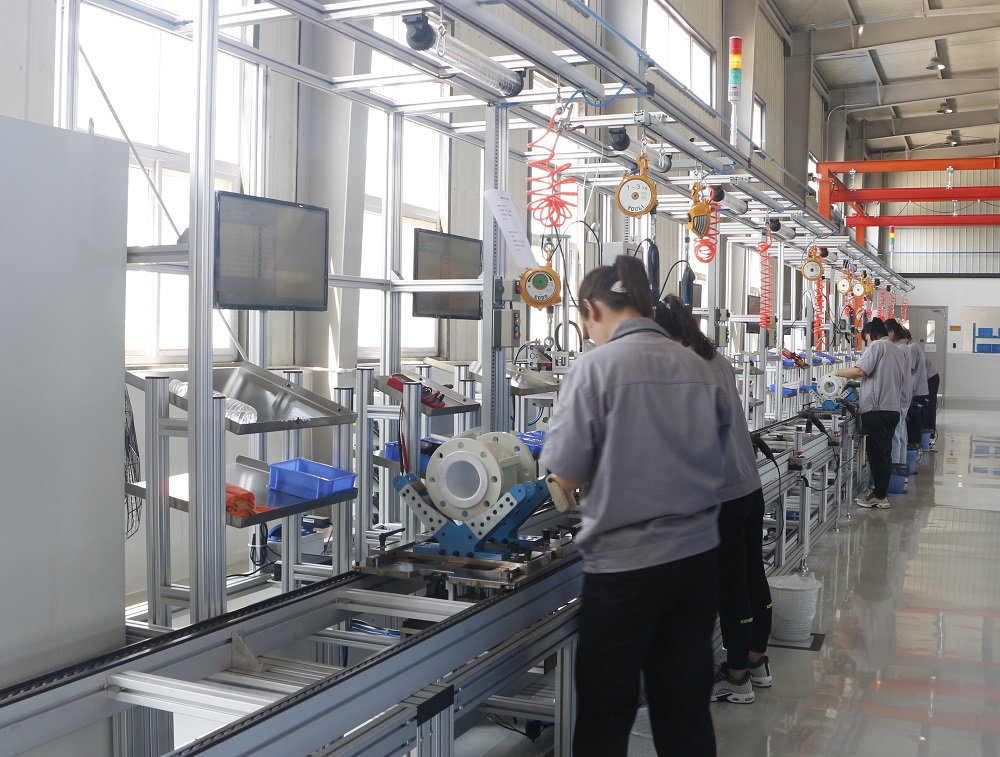
Assembly and preparation of low flow meters before calibration testing and shipment.
Next step: match a meter to your medium
Send the medium, flow range, pressure rating, line size and connection standard, and the engineering team will confirm which of the three low flow technologies fits — micro Coriolis, low flow thermal mass, or vortex steam mass flow — together with the applicable certification. Free expert consultation is available, and a sample or calibration-tested unit can be arranged before series production.
Email: sales@silverinstruments.com | WhatsApp: +86 18936759191 | Phone: +86 25-52155837
Product brochure (download): Silver Automation Instruments product catalogue PDF
Silver Automation Instruments, No. 108 Jiang dong Middle Road, Jian ye District, Nanjing, Jiangsu | www.silverinstruments.com