
Micro Coriolis vs Vortex Steam Mass Flow Meter: Head-to-Head Decision Guide for Low Flow Applications
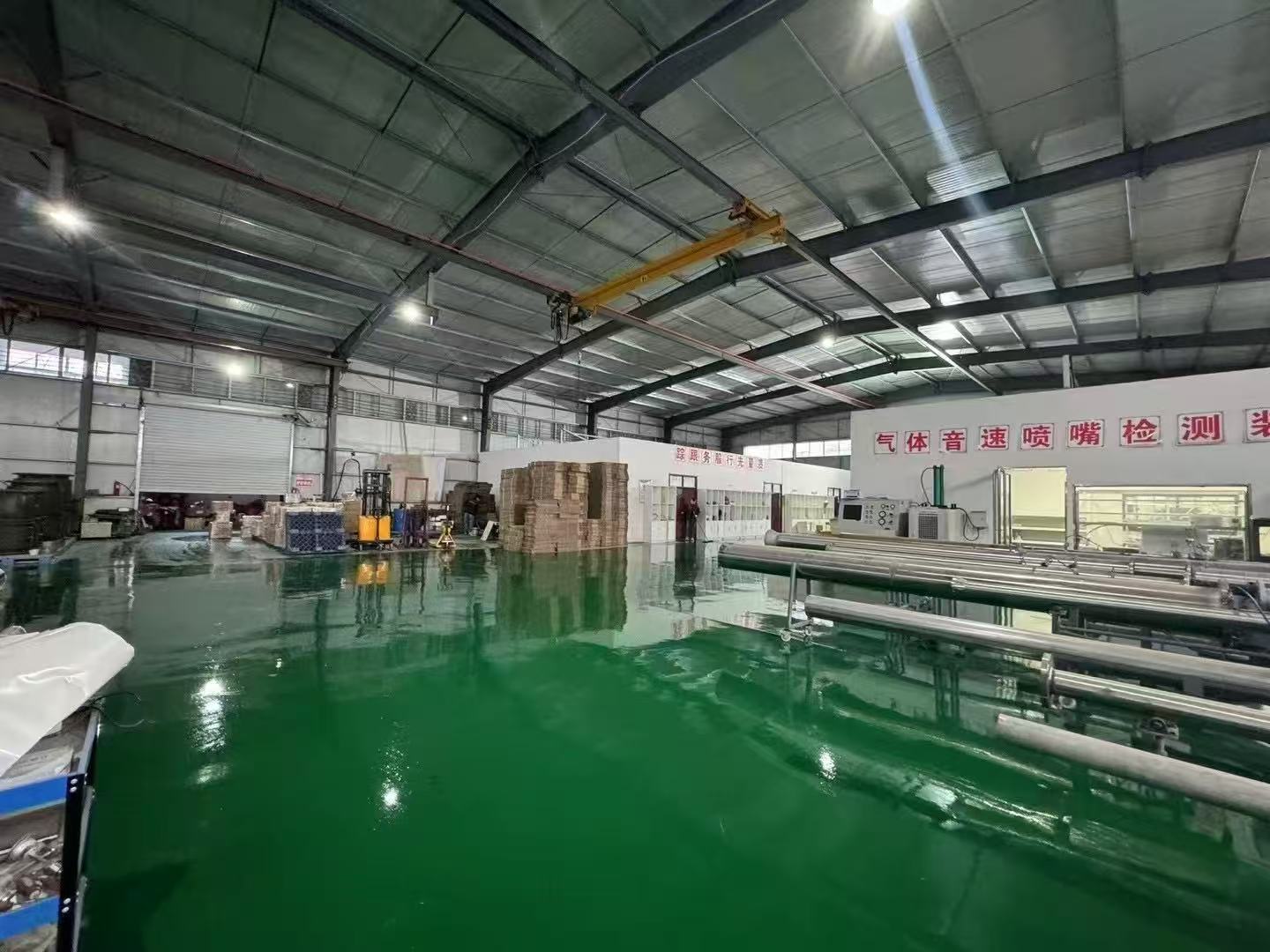
Flow meter calibration workshop: low flow meters are verified against a reference before shipment.
The short answer: these two instruments are not rivals for the same duty. The Micro Coriolis mass flow meter SH-CMF-FE measures mass directly and serves low-flow liquids and dense-phase fluids — silane, supercritical CO2, diesel and aviation kerosene. The vortex steam mass flow meter STLU-VFN is built for saturated and overheated steam, with a maximum steam temperature of 500 °C. Both platforms are offered with pressure ratings of 30 bar or 100 bar. The right choice follows the medium inside the pipe, not the data sheet that looks more impressive.
This guide compares the two technologies head-to-head on measurement principle, media suitability, temperature and pressure limits, and communication output, then reduces the decision to a six-step workflow, five application scenarios and a side-by-side table.
Problem Definition: Why Low Flow Duties Expose Meter Selection Errors
A low flow meter is judged at the bottom of its range, not the top. When a line runs at small flow rates, the instrument has the least fluid to work with, and meters that behave comfortably on a main process line can behave very differently on a dosing, sampling or utility branch. Low flow duties therefore deserve their own selection decision rather than a scaled-down version of a mainline decision.
The second problem is subtler. Two instruments can both be sold as flow meters while measuring different physical quantities. Volumetric devices report a volume that must be converted to mass using density; mass devices report mass directly. On steam, density depends on pressure, temperature and entrained moisture. On dense-phase media such as supercritical CO2, density shifts with pressure and temperature as well. Where density is inferred rather than measured, the conversion itself becomes an error source that no amount of display resolution can remove.
In the field, two failure modes recur: accuracy that does not match expectations, and incorrect wiring. Silver Automation Instruments documents both. The countermeasures are procedural rather than electronic — installation precautions are detailed in the instruction manual supplied with the shipment, and wiring terminals are clearly labelled so connections can be verified before power-up.
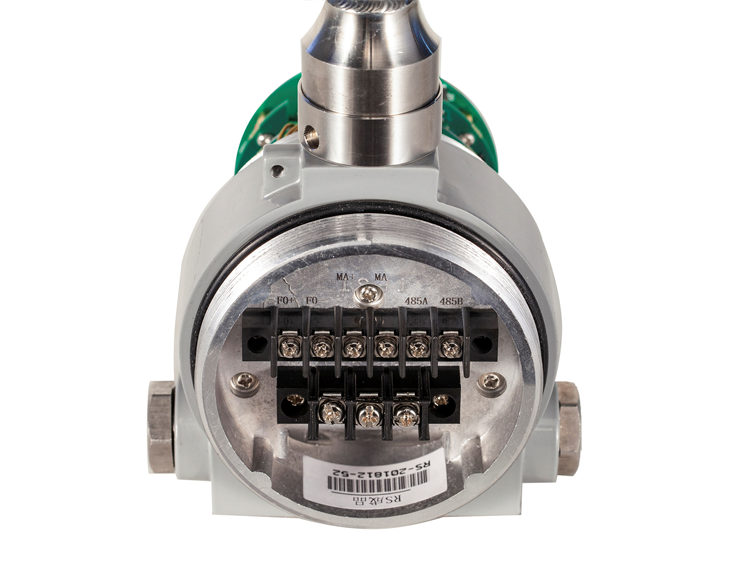
Clearly marked terminals allow wiring to be verified against the manual before power-up.
Industry Background: Where Low Flow Metering Demand Is Growing
Buying behaviour in this segment is shaped by scale as much as by technology. The global flow meter market was valued at USD 10.64 billion in 2024, with Europe holding the largest regional share at over 35%, according to Grand View Research. Coriolis instruments accounted for 26.77% of the intelligent flow meter market in 2026 (Fortune Business Insights), while the thermal flow meter segment most often used for low gas flow rates reached USD 1.73 billion in 2024 and is projected to reach USD 2.9 billion by 2035 (Market Research Future). Published market totals differ between research houses depending on how smart and legacy segments are grouped, so they are best read as directional rather than exact.
Growth is concentrated at small line sizes. Grand View Research reports that the 2-inch and smaller pipe size segment is expected to see the fastest growth through 2030, driven by demand in pharmaceuticals and food & beverage. The microfluidic devices market, which includes micro flow sensors, was valued at USD 22.1 billion in 2024 and is growing at a CAGR of 12.2% (P&S Intelligence). For buyers, this means low flow measurement is no longer a niche corner of the instrument market — it is one of the fastest-moving parts of it.
Regionally, Asia-Pacific is the largest flow meter market at USD 3.27 billion in 2025, with China contributing over 50% of regional demand (Market Research Future). That concentration matters for procurement teams comparing a European or North American quotation against an Asian one: the cost structure behind the instrument is different, and delivery behaviour often is too.
Standards also shape documentation. ISO 5167:2022 is the primary international standard for differential pressure flow measurement devices and is important for small pipeline accuracy. Vortex and Coriolis meters fall outside its scope and instead rely on calibration traceability. When comparing quotations for a low flow meter, it is therefore reasonable to ask which standard governs the calibration certificate that will arrive with the unit.
Detailed Solution: How the SH-CMF-FE and STLU-VFN Differ in Practice
Micro Coriolis SH-CMF-FE: Direct Mass Measurement for Low Flow Liquids and Dense-Phase Fluids
The SH-CMF-FE is a Micro Coriolis mass flow meter. Fluid passes through a vibrating tube, and the phase shift caused by the moving mass is converted directly into mass flow. The primary output is mass, so no density conversion is needed to obtain the measured quantity.
- Media suitability: silane, supercritical CO2, diesel and aviation kerosene.
- Accuracy: Silver Automation Instruments low flow Coriolis meters are specified at ±0.2% to ±0.5% for liquid measurement.
- Pressure ratings: available at 30 bar or 100 bar.
- Where it earns its place: dosing, blending, totalizing and custody-style duties where the fluid is valuable and the acceptable error is small.
Vortex Steam Mass Flow Meter STLU-VFN: Built for Saturated and Overheated Steam
The STLU-VFN is a vortex steam mass flow meter. A shedder bar generates alternating vortices, and the shedding frequency tracks fluid velocity; steam density derived from pressure and temperature converts that signal into mass flow.
- Media suitability: saturated steam and overheated steam.
- Temperature limit: steam service up to a maximum of 500 °C.
- Pressure ratings: 30 bar or 100 bar.
- Mechanical simplicity: no moving parts in the flow path, which suits continuous utility and process steam lines.
- Boundary condition: the technology assumes single-phase flow at velocities that sustain a stable vortex street. It is not the platform for low-flow liquid duties where density varies.
Communication Outputs: An Integration Decision, Not a Default
Output configuration is order-specific on both platforms, so the deciding question is not which meter communicates more, but what the receiving system accepts — a current loop, a pulse or frequency signal, or a digital protocol supported by the control system. Listing those requirements at inquiry stage means the meter arrives ready to connect, and it also lowers the risk of wiring errors during commissioning, when labelled terminals can be checked against the manual.
Long-Term Supply: What to Verify Beyond the Datasheet
For buyers at the Decision and Execution stage, the commercial questions matter as much as the measurement questions. The table below summarises what Silver Automation Instruments publishes about capacity, lead time and support, all of which apply to both the SH-CMF-FE and the STLU-VFN.
- Monthly production capacity: 2,000 units.
- Typical production lead time: 10–12 working days.
- Minimum order quantity: 1 unit.
- Delivery and payment terms: EXW, FOB or CIF; 100% T/T in advance.
- Acceptance criteria: pre-shipment calibration test and visual inspection, with factory acceptance test (FAT) available as an option.
- Supply reach and support: products exported worldwide, with remote support after sales for troubleshooting and maintenance.
- Manufacturer base: Silver Automation Instruments was founded in 2010, operates a 10,000 m² facility with 80 employees, an annual output of 60,000 units and a 20-person R&D team; 95% of production is exported, mainly to Southeast Asia, South America and Africa. Products meet CE, ATEX and ISO9001 standards.
- Third-party trade record: Volza records approximately 91 shipments to 36 international buyers in 2024.
Step-by-Step Breakdown: Six Steps to a Defensible Meter Decision
- Define the medium and its phase. Write down what is actually in the pipe — silane, supercritical CO2, diesel, aviation kerosene, saturated steam or overheated steam. Phase behaviour, not pipe size, eliminates the first option. Silane and supercritical CO2 sit on the Micro Coriolis side of the line.
- Define the true flow range, then stress the low end. A low flow meter fails at the minimum controlled rate, not the maximum. Confirm the smallest rate the process must measure and totalize before comparing accuracy statements.
- Confirm the temperature and pressure class. In this comparison, steam service is capped at 500 °C for the STLU-VFN, and both platforms are offered at 30 bar or 100 bar. Match the rating to the line design condition rather than to a stock item.
- Check material and media compatibility. Corrosive, high-purity and dense-phase media drive wetted-material decisions. Where density shifts with pressure and temperature, direct mass measurement removes an assumption from the calculation.
- Specify the output and integration points. State the signal types your DCS or PLC accepts so the output configuration is fixed at order stage instead of discovered at commissioning. Confirm the wiring plan against the labelled terminals and the instruction manual.
- Lock acceptance, documentation and delivery. Pre-shipment calibration test and visual inspection are the standard acceptance criteria, with FAT optional. Typical production lead time is 10–12 working days, against a monthly capacity of 2,000 units.
Use Cases: Matching the Meter to the Duty
Specialty gas and silane lines → Micro Coriolis SH-CMF-FE
Where a process gas is delivered at low rates and the quantity must be accounted for accurately, direct mass measurement avoids a density assumption. Silane is listed among the media the Micro Coriolis platform serves.
Supercritical CO2 dosing and extraction loops → Micro Coriolis SH-CMF-FE
Supercritical CO2 changes density with pressure and temperature, which makes inferred-mass measurement fragile. Direct mass measurement is the more robust route, and supercritical CO2 is within the media scope of the SH-CMF-FE.
Diesel and aviation kerosene low flow feed lines → Micro Coriolis SH-CMF-FE
Fuel dosing, burner feed and small-volume transfer duties require a low flow liquid meter with stable accuracy at the bottom of the range. Diesel and aviation kerosene are both listed media for the Micro Coriolis platform, and Silver Automation Instruments low flow Coriolis meters are specified at ±0.2% to ±0.5% for liquid measurement.
Saturated steam headers, tracing and utility lines → Vortex Steam STLU-VFN
For continuous steam service, the vortex platform offers a flow path without moving parts and is designed for saturated steam. This is the duty the STLU-VFN is intended for.
Overheated steam up to 500 °C → Vortex Steam STLU-VFN
Overheated steam service is explicitly within the scope of the vortex steam mass flow meter, with a maximum steam temperature of 500 °C and pressure ratings of 30 bar or 100 bar.
Chemical plants building a long-term supplier relationship → both platforms
A low flow meter for chemical applications is rarely a one-off purchase. Capacity, repeatable lead time and post-sale support determine whether the second and third orders go as smoothly as the first. A monthly capacity of 2,000 units, a typical 10–12 working day production lead time, worldwide export and remote after-sales support are the practical checks to run before committing to a single-source supply programme.
Comparison Table: Micro Coriolis SH-CMF-FE vs Vortex Steam STLU-VFN
| Decision dimension | Micro Coriolis mass flow meter (SH-CMF-FE) | Vortex steam mass flow meter (STLU-VFN) |
|---|---|---|
| Measurement principle | Direct mass measurement — flow derived from the phase shift of a vibrating measuring tube. | Velocity-based measurement — flow derived from vortex shedding frequency generated behind a shedder bar. |
| Primary measured quantity | Mass flow, obtained without a density conversion. | Volumetric flow, converted to mass using steam density. |
| Media suitability | Silane, supercritical CO2, diesel and aviation kerosene. | Saturated steam and overheated steam. |
| Design fit for low flow | Low-flow liquids and dense-phase fluids, including duties where density varies. | Steam and gas service at velocities that sustain a stable vortex street. |
| Maximum steam temperature | Not specified for steam service in this comparison. | 500 °C. |
| Pressure rating options | 30 bar or 100 bar. | 30 bar or 100 bar. |
| Moving parts in the flow path | No. | No. |
| Communication output | Order-specific — confirm the signal type required (current loop, pulse or frequency, or a digital protocol supported by the control system). | Order-specific — same confirmation required before order release. |
| Order and supply terms (both platforms) | MOQ 1 unit; typical production lead time 10–12 working days; monthly production capacity 2,000 units; delivery terms EXW, FOB or CIF; acceptance by pre-shipment calibration test and visual inspection, with FAT optional; worldwide export with remote after-sales support. | |
FAQ
1. What certifications should be confirmed before ordering a low flow meter for steam or chemical service?
Silver Automation Instruments products meet CE, ATEX and ISO9001 standards. Because certification scope differs by model and by destination market, the practical step is to confirm which certifications your installation requires before the order is released, and to state the intended service — steam, silane, supercritical CO2, diesel or aviation kerosene — at the inquiry stage so the correct configuration is quoted.
2. Which meter should be used for silane or supercritical CO2 at low flow rates?
The Micro Coriolis mass flow meter SH-CMF-FE. It measures mass directly, so the result does not depend on a density conversion, and both silane and supercritical CO2 are within its media scope. Silver Automation Instruments low flow Coriolis meters are specified at ±0.2% to ±0.5% for liquid measurement. The vortex steam mass flow meter STLU-VFN is designed for saturated and overheated steam instead.
3. What drives the cost of a low flow Coriolis meter or a vortex steam meter?
The cost drivers are the measuring principle, the pressure rating (30 bar or 100 bar), the temperature duty (up to 500 °C maximum in steam service), the wetted materials required by the medium, the output configuration, and the scope of calibration and documentation. On the commercial side, the minimum order quantity is 1 unit, delivery terms are EXW, FOB or CIF, and payment terms are 100% T/T in advance.
4. Can a single unit be ordered for validation before a series purchase?
Yes. The minimum order quantity is 1 unit, so a single Micro Coriolis SH-CMF-FE or vortex STLU-VFN can be ordered for evaluation. Acceptance criteria include a pre-shipment calibration test and visual inspection, with a factory acceptance test (FAT) available as an option, and the typical production lead time is 10–12 working days. For a fast start, request a quotation along with the product brochure at Silver Automation Instruments catalogue.
5. How do you secure a long-term low flow meter supplier for chemical applications?
Check capacity and support, not only the unit price. Silver Automation Instruments operates a monthly production capacity of 2,000 units, quotes a typical production lead time of 10–12 working days, exports worldwide, and provides remote after-sales support for troubleshooting and maintenance. For chemical plants running silane, supercritical CO2, diesel or aviation kerosene duties, that combination supports repeat orders, spares continuity and predictable project scheduling — the factors that matter most once a technology has been chosen.
Conclusion: Decide by Medium, Then Secure the Supply Chain
The head-to-head result is unusually clean. If the process carries silane, supercritical CO2, diesel or aviation kerosene at low flow rates, the Micro Coriolis mass flow meter SH-CMF-FE is the match, because it measures mass directly and removes the density assumption. If the process carries saturated or overheated steam up to 500 °C, the vortex steam mass flow meter STLU-VFN is the match, with 30 bar or 100 bar pressure ratings available on both platforms. The communication output is not a tiebreaker in either direction — it is a configuration item to be specified against your control system before the order is released.
Once the technology decision is settled, the remaining risk sits in supply: capacity, lead time, acceptance testing and after-sales reach. Those are checkable facts, and they are the ones worth putting in the purchase specification.
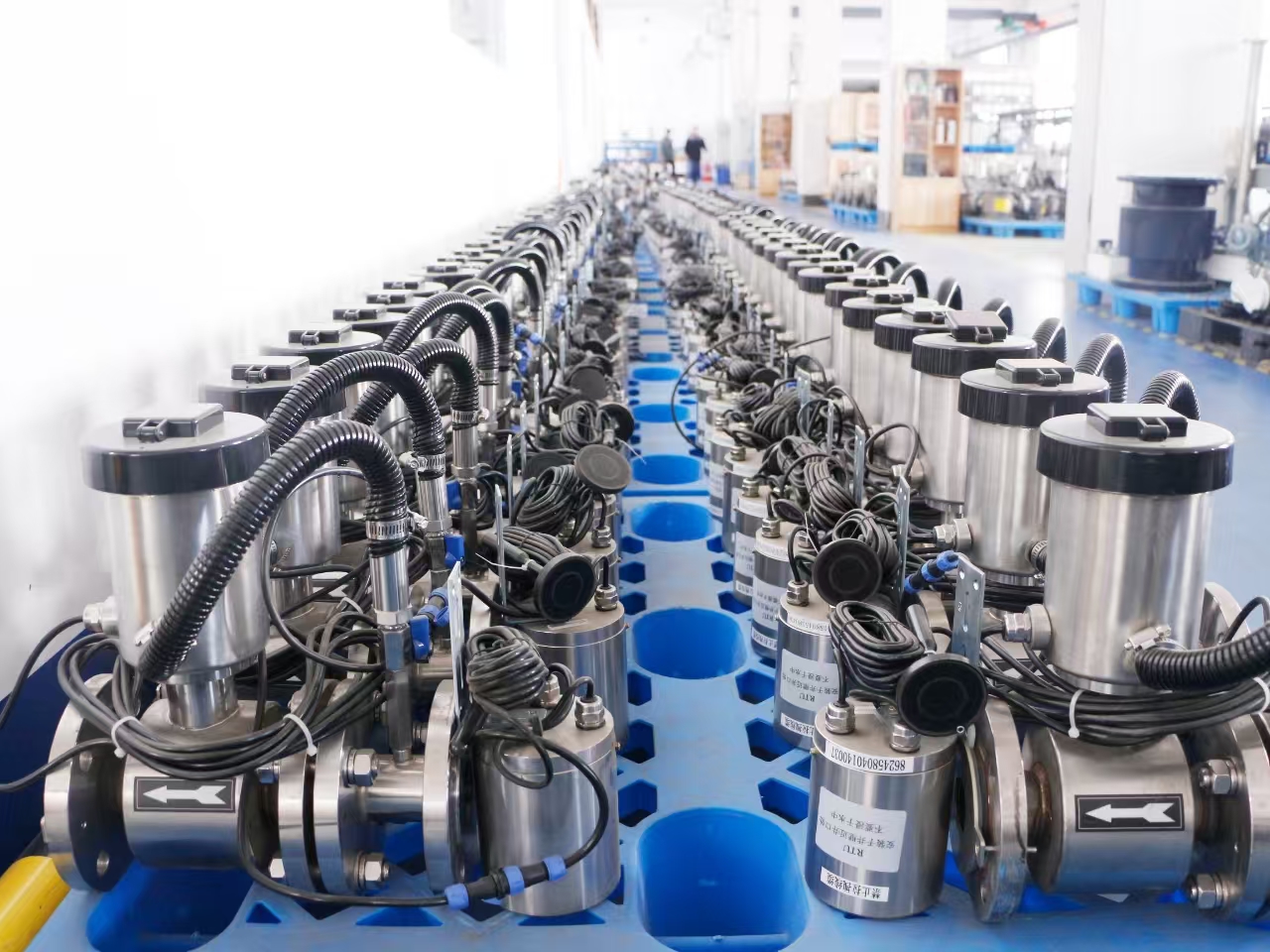
Packing workshop: units are calibrated, inspected and prepared for worldwide dispatch.
Next step: sample unit, quotation or full catalogue
Tell us the medium, the minimum and maximum flow rate, the line temperature and pressure class, and the signal type your control system accepts. We will confirm whether the Micro Coriolis SH-CMF-FE or the vortex steam STLU-VFN fits your duty, and quote accordingly.
Silver Automation Instruments — founded 2010, Nanjing, China | Website: www.silverinstruments.com | Blog: blog.silverinstruments.com
Contact: Lily | Phone: +86 25-52155837 | WhatsApp: +86 18936759191 | Email: sales@silverinstruments.com
Address: No. 108 Jiang dong Middle Road, Jian ye District, Nanjing, Jiangsu | Brochure: Download the product catalogue (PDF)
Have Questions or Need More Details?
Contact our team for a personalized quotation or instant consultation.
Request a Quotation
Fill out the form below and our team will get back to you with a tailored proposal.
WhatsApp Direct Chat
Prefer to chat in real-time? Message us on WhatsApp for instant assistance & quick answers.
- Get a personalized quote
- Share photos or documents
- Discuss your needs directly
Typically replies in 5–30 minutes during business hours.