
STLU-VFN Steam Meter vs Micro Coriolis: Low Flow Head-to-Head
Direct answer: the STLU-VFN steam mass flow meter and the Micro Coriolis mass flow meter are not competing for the same low flow duty. The STLU-VFN is built for saturated and superheated steam in DN15–DN300 pipelines at steam temperatures up to 500 °C, with ATEX construction and power generation service. The Micro Coriolis meter is built for 40 g/h to 1000 kg/hr of liquid and dense-phase media — silane, supercritical CO2, diesel, aviation kerosene, silicone and pure water — at 30 bar or 100 bar, with SS316L wetted parts and ±0.25% to ±0.5% accuracy. The decision should hinge on line size, media phase, temperature, pressure, accuracy, communication and industry requirements, not on brand preference.
Both instruments are marketed as low flow meters, and that shared label is where most specification errors start. A chemical plant metering a 40 g/h additive and a power station metering steam through a DN80 header are both describing ‘low flow’ relative to their pipe capacity, yet they need opposite measurement physics. This guide works through the decision in the order a buyer actually faces it: media, line size, temperature, pressure, accuracy, signal, approval and supply continuity.
Silver Automation Instruments is a Chinese instrumentation manufacturer founded in 2010 and based in Nanjing, Jiangsu, supplying flow, pressure, level and data-logging instruments to export markets. Its portfolio includes Coriolis, thermal mass, electromagnetic, vortex, turbine and oval gear flow meters, which is why a single enquiry can cover both sides of this comparison.
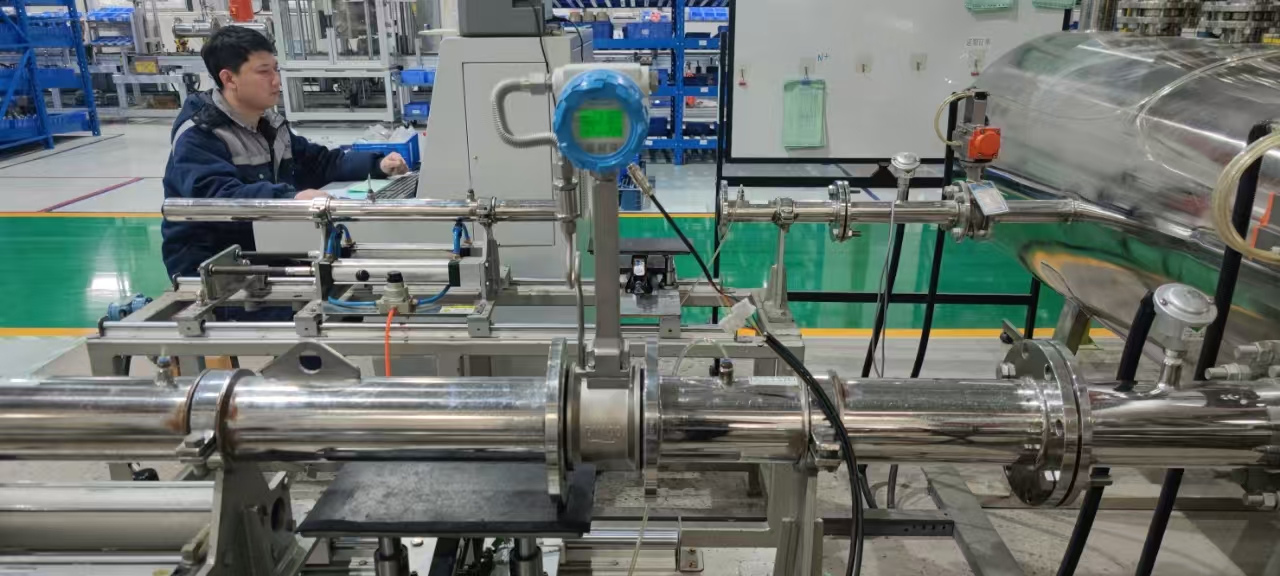
Why Low Flow Comparisons Go Wrong at the Specification Stage
Low flow is a relative term, and the two instruments in this head-to-head sit on opposite sides of it. A vortex meter derives flow from the frequency of vortices shed behind a bluff body, so it needs a minimum velocity in the line to generate a stable signal. A Coriolis meter derives mass flow from the vibration of a tube, so micro ranges are achieved by making the tube small. Those two design logics cannot be swapped by changing a setting in the datasheet.
Three failure modes recur in real procurement:
- Phase mismatch. A Coriolis meter sized for a liquid duty will not be pushed into superheated steam service, and a vortex meter sized for a DN15 water line is not the natural answer for a 40 g/h liquid dose.
- Line size mismatch. The STLU-VFN covers DN15 to DN300. Micro Coriolis ranges are defined by mass flow, typically well below what a large steam header carries.
- Accuracy quoted out of context. A ±0.25% to ±0.5% figure only means something when read together with the flow range, the pressure rating, the medium and the installation conditions attached to it.
The practical consequence is that a buyer who selects on brand or headline price will usually discover the mismatch after the purchase order, when the meter is on site and the line is already welded. The checks in this article exist to move that discovery forward to the enquiry stage.
Industry Background: Where Low Flow Demand Is Growing
The wider instrument market confirms that both technology routes have a durable base. The global flow meter market was valued at USD 10.64 billion in 2024, with Europe holding the largest regional share of over 35%, according to Grand View Research. Asia-Pacific is the largest single market at USD 3.27 billion in 2025, with China contributing more than 50% of regional demand, according to Market Research Future.
Within that total, the Coriolis route is well established for precision work. Coriolis flow meters held a 26.77% share of the intelligent flow meter market in 2026, per Fortune Business Insights, and generate over USD 1.55 billion in annual revenue as of 2025, primarily for custody transfer applications, per Market Research Future. Bronkhorst High-Tech is identified by Mordor Intelligence as a dominant player in the ultra-low flow Coriolis segment, focused on laboratory and OEM applications.
Growth is concentrated where small lines dominate. Grand View Research reports that the 2-inch and smaller pipe size segment is expected to see the fastest growth through 2030, driven by demand in pharmaceuticals and food and beverage. Thermal flow meters, which serve low gas flow rates, reached USD 1.73 billion in 2024 and are projected to reach USD 2.9 billion by 2035, per Market Research Future, while the global microfluidic devices market, which includes micro flow sensors, was valued at USD 22.1 billion in 2024 and is growing at a CAGR of 12.2%, per P&S Intelligence.
Steam, by contrast, remains a power-generation and process-heating story, and it is where vortex technology keeps its place. The two trends explain why this comparison matters: the market is not choosing one technology over the other, it is applying both to different duties inside the same plants.
Detailed Solution: The Two Instruments, Defined
STLU-VFN steam mass flow meter
- Measurement principle: vortex shedding in the steam line, presented as a steam mass flow meter for saturated and superheated steam.
- Line size range: DN15 to DN300.
- Temperature capability: steam service up to 500 °C.
- Hazardous area: ATEX configuration.
- Typical duty: power generation steam lines and plant steam distribution.
Micro Coriolis mass flow meter
- Measurement principle: Coriolis force acting on a vibrating tube, giving a direct mass flow reading.
- Flow range: 40 g/h to 1000 kg/hr.
- Accuracy: ±0.25% to ±0.5%.
- Pressure variants: 30 bar and 100 bar.
- Wetted material: SS316L.
- Media covered: silane, supercritical CO2, diesel, aviation kerosene, silicone and pure water.
What the difference means in practice
The media phase decides the shortlist before any other parameter is discussed. If the process line carries steam, the STLU-VFN is the applicable instrument, because the 500 °C rating and the DN15–DN300 range are built around that duty. If the process line carries a liquid or a dense-phase fluid at a mass flow between 40 g/h and 1000 kg/hr, the Micro Coriolis is the applicable instrument, because its accuracy statement of ±0.25% to ±0.5% is tied to that envelope.
The Coriolis route also handles fluids that are difficult for other principles. Silane, supercritical CO2, diesel, aviation kerosene and silicone each bring a different combination of density, lubricity and phase behaviour, and a direct mass measurement avoids the need to correct a volumetric reading for density. For a low flow fuel meter duty on diesel or aviation kerosene, that removes one source of error from the calculation chain.
The vortex route wins on scale and temperature. A DN200 steam header at high temperature is outside the practical envelope of a micro Coriolis tube, but it is normal service for a vortex steam meter. The trade-off is that vortex measurement depends on flow velocity in the line, so the operating range and the installation straight-run requirements have to be respected for the signal to stay stable.
Step-by-Step Breakdown: Seven Checks Before the PO
The sequence below is the order in which each check can eliminate an option. Run it before the enquiry is issued, not after the quotation arrives.
1. Fix the media phase first
Steam — saturated or superheated — selects the STLU-VFN. Liquid or dense-phase media selects the Micro Coriolis. Do not start with pipe size or price, because phase alone removes one of the two instruments in most projects.
2. Confirm the nominal line size
The STLU-VFN covers DN15 to DN300. For the Micro Coriolis, the 40 g/h to 1000 kg/hr range is the sizing basis, and the line connection follows from it. Where a project mixes a large steam header with a small dosing line, two instruments are the correct answer, not one compromise.
3. Check the temperature against the stated limit
Steam duty up to 500 °C is the stated envelope for the STLU-VFN. For the Micro Coriolis, request the process temperature limit for the exact model in writing, because it is not part of the published comparison envelope and should not be assumed.
4. Match the pressure rating to the line
The Micro Coriolis is offered in 30 bar and 100 bar variants, so the line rating determines which one is quoted. For the STLU-VFN, confirm the pressure rating of the selected configuration against the steam line design pressure before release.
5. Read the accuracy statement with its conditions
±0.25% to ±0.5% is the stated accuracy for the Micro Coriolis. Accuracy figures are only comparable when they refer to the same flow range and the same medium, so ask for the calibration specification for the STLU-VFN configuration you intend to buy rather than comparing a headline number from a different line size.
6. Specify the output and integration requirement
Signal type is a project decision, not a catalogue default. Silver Automation Instruments engineers custom output signals where a standard configuration does not match the control system, which is worth raising at enquiry stage rather than at commissioning. Write the required output into the specification so both quotations answer the same question.
7. Confirm the compliance and industry acceptance
The STLU-VFN is specified with ATEX for hazardous areas. Silver Automation Instruments builds its instruments to CE, ATEX and ISO9001 requirements. Because hazardous-area marking is configuration-specific and region-specific, verify the marking on the data sheet and the nameplate for the exact model and installation before the order is placed.
Commissioning checks that protect the accuracy you paid for
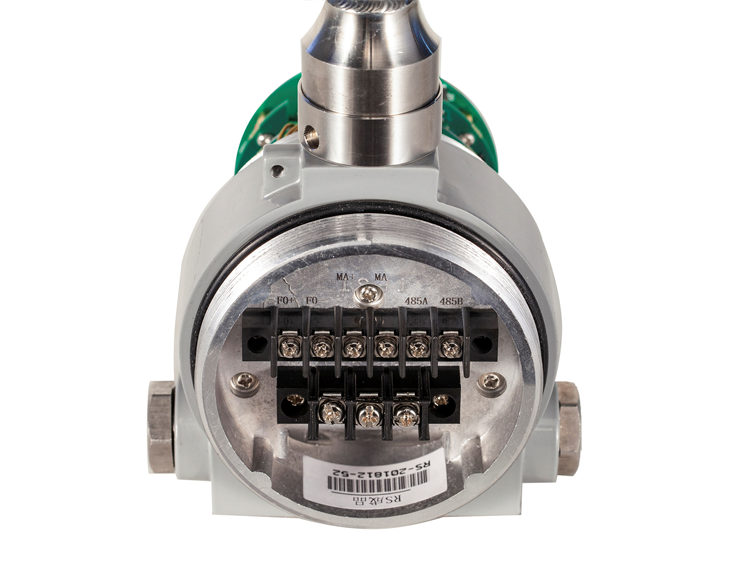
Two risks account for most ‘the meter is inaccurate’ reports, and both are installation issues rather than instrument faults. The first is wiring: incorrect connection is addressed by clearly labeled terminals and by reading the instruction manual before power-up. The second is installation position and straight-run: the instruction manual supplied with each shipment details the installation precautions that apply to that model. Following both is cheaper than a return.
Use Cases: Where Each Meter Earns Its Place
STLU-VFN steam mass flow meter
- Power generation steam: the primary duty for the 500 °C, DN15–DN300 envelope.
- Plant steam distribution: saturated steam lines where the meter size follows the header rather than the flow rate.
- Superheated steam monitoring: high-temperature service where a micro Coriolis tube is not applicable.
Micro Coriolis mass flow meter
- Silane and specialty gas feed: dense-phase and liquefied media requiring direct mass measurement at low flow.
- Supercritical CO2: a duty where phase behaviour makes volumetric measurement unreliable.
- Diesel and aviation kerosene: a low flow fuel meter duty where mass, not volume, is the commercial unit.
- Silicone and viscous media: where the meter must tolerate the medium rather than the other way round.
- Pure water and low flow water meter duty: precision dosing in small lines at 40 g/h to 1000 kg/hr.
- Chemical applications: additive and reagent dosing where a precision low flow meter protects both yield and safety.
For processes outside these two envelopes, the wider range of low flow meter technologies — thermal mass for low gas flow, oval gear for viscous liquids — is covered in the manufacturer’s overview of flow meters for low flow applications. Silver Automation Instruments’ micro thermal mass flow meters measure gas flow as low as 2 sccm, and its oval gear meters measure oil flow as low as 0.5 ccm with viscosity tolerance up to 2000 mPa.s, which matters when a gas flow meter for ml/min flow rates or a micro gear flow meter duty appears alongside a Coriolis or vortex requirement.
STLU-VFN vs Micro Coriolis: Comparison Table
| Decision parameter | STLU-VFN steam mass flow meter | Micro Coriolis mass flow meter |
|---|---|---|
| Media phase | Saturated and superheated steam | Silane, supercritical CO2, diesel, aviation kerosene, silicone, pure water |
| Line size | DN15 to DN300 | Specified by mass flow range rather than nominal diameter in this comparison; confirm the connection on the data sheet |
| Flow range | Set by line size and steam velocity; confirm the turndown on the data sheet | 40 g/h to 1000 kg/hr |
| Process temperature | Up to 500 °C | Not stated in this comparison; confirm on the data sheet |
| Pressure rating | Not stated in this comparison; confirm against the steam line design pressure | 30 bar and 100 bar variants |
| Accuracy | Not stated in this comparison; request the calibration specification | ±0.25% to ±0.5% |
| Wetted material | Not stated in this comparison; confirm on the data sheet | SS316L |
| Hazardous area | ATEX | Confirm the ATEX marking for the selected model |
| Typical industry | Power generation and steam distribution | Chemical, semiconductor, fuel handling and pure water |
| Best fit | Hot steam where a Coriolis tube cannot be applied | Small-line liquid or dense-phase flow at 40 g/h to 1000 kg/hr |
Cells marked ‘not stated in this comparison’ are deliberate. Replacing them with assumed numbers would make the table look complete and make the specification wrong. The correct action is to request the parameter for the exact configuration from the supplier.
Long-Term Ownership: What Happens After the PO
For a decision-stage buyer, the instrument is the start of a supply relationship rather than a one-off purchase. Three questions decide whether that relationship holds: can the supplier repeat the build, how fast, and who answers when something drifts.
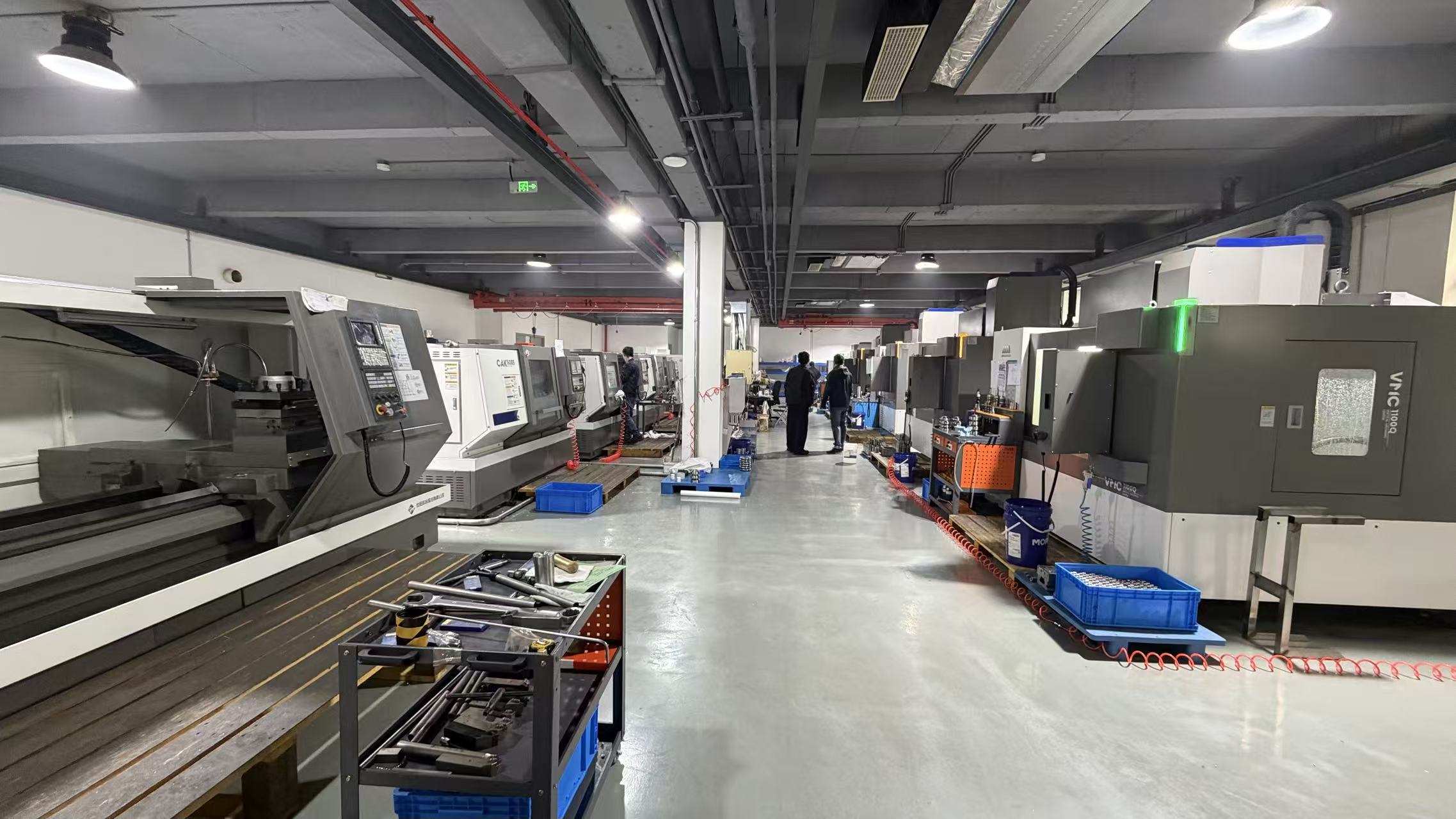
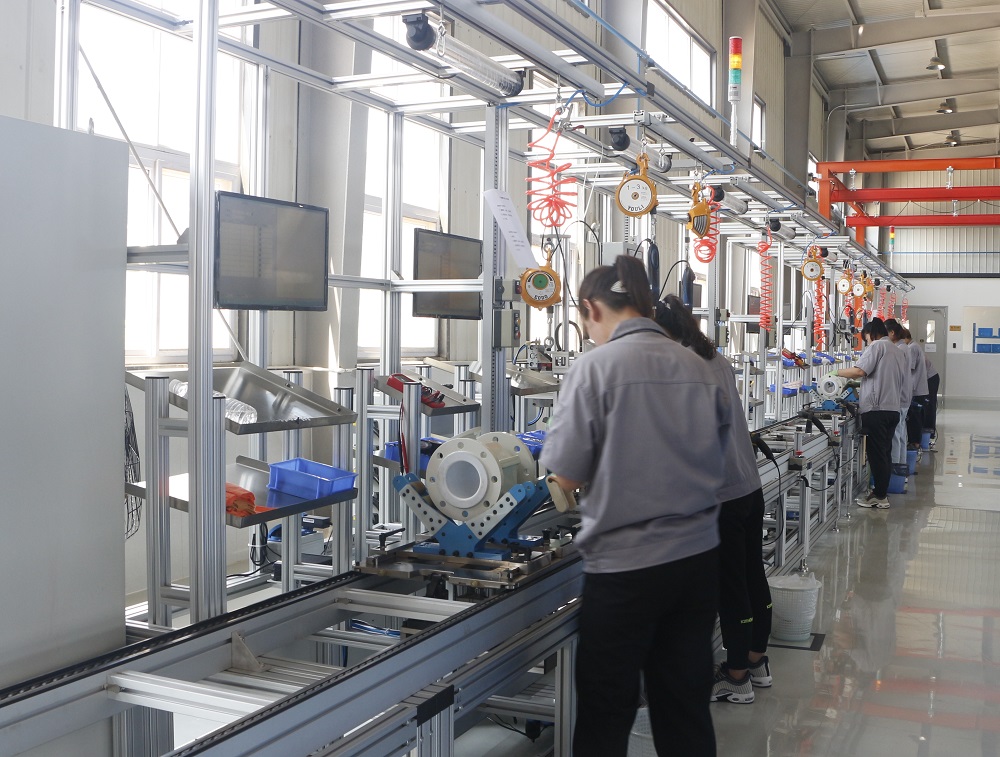
Repeatability and capacity. Silver Automation Instruments quotes a typical production lead time of 10–12 working days and a monthly production capacity of 2000 units. The minimum order quantity is 1 unit, so a pilot meter and a series rollout can be handled on the same terms, and the supplier exports products worldwide.
After-sales access. After-sales service includes remote support for troubleshooting and maintenance, which shortens the loop between a reading that looks wrong and a technical answer. For a chemical application, where a dosing line is often part of a validated process, that response path matters as much as the accuracy figure.
Commercial structure. Published purchasing terms are MOQ 1 unit, delivery on EXW, FOB or CIF, and payment of 100% T/T in advance. Acceptance covers a pre-shipment calibration test and visual inspection, with a factory acceptance test (FAT) available as an option. Buyers who need FAT should say so at enquiry stage, because it changes the shipment schedule.
Cost of ownership. Where the Coriolis route is selected, Silver Automation Instruments documents its own comparison against Micro Motion Coriolis flow meters: Micro Motion pricing is recorded as four to five times higher, with lead times of several months against typical delivery within one month, resulting in a stated total cost of ownership around 75% lower for the Silver Automation Instruments option. Buyers should test that claim against their own quotations and their own cost of downtime rather than accept it at face value.
Frequently Asked Questions
Is the STLU-VFN available with ATEX, and what certification does the Micro Coriolis option carry?
The STLU-VFN steam mass flow meter is specified with ATEX for hazardous-area steam service. Silver Automation Instruments builds its instruments to CE, ATEX and ISO9001 requirements, so the Micro Coriolis route can be quoted within the same certification framework. Because ATEX marking is configuration-specific and region-specific, confirm the exact marking on the data sheet and the nameplate for your installation before the order is released.
Can one supplier cover both steam and low-flow liquid duties?
Yes. Silver Automation Instruments, founded in 2010 in Nanjing, Jiangsu, manufactures Coriolis, thermal mass, electromagnetic, vortex, turbine and oval gear flow meters, plus pressure, level and data-logging instruments. Its micro thermal mass flow meters measure gas flow as low as 2 sccm, and its oval gear meters measure oil flow as low as 0.5 ccm with viscosity tolerance up to 2000 mPa.s, so the same supplier can quote both sides of this head-to-head and the adjacent technologies a project may also need.
What are the purchasing terms, MOQ and acceptance criteria?
The minimum order quantity is 1 unit. Delivery terms are EXW, FOB or CIF, and payment terms are 100% T/T in advance. Acceptance criteria cover a pre-shipment calibration test and visual inspection, with a factory acceptance test (FAT) available as an option.
Can I validate one unit before committing to a fleet rollout?
Yes. A 1-unit order is accepted, so a single meter can be installed and validated on the actual process before further units are ordered. Each shipment includes the instruction manual detailing installation precautions, and wiring terminals are clearly labeled to reduce the commissioning errors that otherwise present themselves as accuracy problems.
What does long-term supply look like for chemical applications?
Typical production lead time is 10–12 working days, with a monthly production capacity of 2000 units, and products are exported worldwide. After-sales service includes remote support for troubleshooting and maintenance. To request a quote, a sample or the product catalogue, contact Silver Automation Instruments at sales@silverinstruments.com or +86 25-52155837.
Conclusion
The STLU-VFN steam mass flow meter and the Micro Coriolis mass flow meter divide cleanly once the media phase is fixed. Steam up to 500 °C in DN15–DN300 lines, with ATEX and power generation duty, belongs to the vortex steam meter. Liquid and dense-phase media from 40 g/h to 1000 kg/hr at 30 bar or 100 bar, with SS316L wetted parts and ±0.25% to ±0.5% accuracy, belongs to the Micro Coriolis meter.
Everything that remains — line size, pressure, accuracy conditions, output signal, hazardous-area marking and the supplier’s ability to repeat the build in 10–12 working days — is a specification exercise, not a brand judgement. Buyers who run the seven checks in order will usually find that one instrument is eliminated before price is ever discussed, which is the cheapest possible outcome.
Next step: a specification answer, not a catalogue
Send the media, line size, temperature, pressure and required output for your low flow duty, and Silver Automation Instruments will indicate which of the two instruments applies and what the quoted configuration includes. Samples and single-unit orders are accepted.
Email: sales@silverinstruments.com | Phone: +86 25-52155837 | WhatsApp: +86 18936759191
Website: www.silverinstruments.com | Address: No. 108 Jiang dong Middle Road, Jian ye District, Nanjing, Jiangsu
Download the full product catalogue: Silver Automation Instruments brochure (PDF)
Have Questions or Need More Details?
Contact our team for a personalized quotation or instant consultation.
Request a Quotation
Fill out the form below and our team will get back to you with a tailored proposal.
WhatsApp Direct Chat
Prefer to chat in real-time? Message us on WhatsApp for instant assistance & quick answers.
- Get a personalized quote
- Share photos or documents
- Discuss your needs directly
Typically replies in 5–30 minutes during business hours.