
What Counts as Low Flow? Low Flow Meter Basics and Category Boundaries
Low flow is a boundary, not a number. In the published product data used for this article, the low flow category is entered at three very different points — 40 g/h on the SH-CMF-FE Micro Coriolis meter, approximately 10 kg/hr on the SH-CM Coriolis family, and 2 sccm on the SRK-DL thermal mass meter — and each of those figures only becomes meaningful once the medium and the reference point are stated.
Readers new to micro-flow measurement usually ask for a single threshold: a flow rate below which a duty counts as low flow. No such threshold exists in industrial instrumentation, and the reason is structural rather than semantic. A low flow meter is defined by where its calibrated range begins, what medium it is measuring, and how much of that range the normal operating point actually occupies. Change any one of those three and the boundary moves.
This explainer sets out the category from first principles: what the term covers, the mass flow principles used inside it, the ranges that published product data supports, and the points at which an application stops being low flow and becomes an ordinary process duty.
Why “Low Flow” Has No Single Threshold
Three reference systems are in use at the same time, and they are frequently mixed inside the same conversation.
1. The rate boundary
The rate boundary is the flow rate itself, but the units it arrives in are rarely consistent. Mass rates appear as g/h, kg/hr or t/h; volumetric rates appear as sccm, SL/M, ml/min or L/h. A standard-referenced volumetric figure such as sccm is not directly comparable with a mass figure such as kg/hr, because the conversion depends on the gas density at the stated reference conditions. This is why a specification that says only “low flow” cannot be compared with another that says only “low flow” — the two may be describing regimes that are orders of magnitude apart.
2. The size boundary
The size boundary is the bore of the measuring element. The SH-CM Coriolis mass flow meter is available in sizes from approximately 1 mm to 300 mm. A 1 mm measuring tube is a low flow device by construction: the physical space available for the flow signal is small, so the instrument belongs to the micro flow meter class regardless of how it is marketed. The STLU-VFN steam mass flow meter starts at DN15 and is specified up to DN300, so its low-flow edge is set by the smallest pipeline it accepts rather than by a mass figure.
3. The physics boundary
The physics boundary is where the measurement principle itself runs out of resolution. Every principle — Coriolis, thermal, vortex — produces a signal that decreases as flow decreases, and every principle therefore has a stated lower limit and a stated accuracy. Beyond that limit the meter does not fail abruptly; it simply stops being able to support the accuracy the application needs.
Working definition: a duty counts as low flow when at least two of the three boundaries are crossed — the meter’s stated range begins well below general process levels for that line size, the bore is small, and the normal operating point sits in the lower part of the range. A duty that crosses only one boundary is better described as a small-line process duty.
Where the Low Flow Category Sits in the Flow Meter Market
The global flow meter market was valued at USD 10.64 billion in 2024, with Europe holding the largest regional share at over 35% (Grand View Research). The segments that touch low flow duties are moving on their own trajectory within that total. Thermal flow meters, which are used for low gas flow rates, reached a market size of USD 1.73 billion in 2024 and are projected to reach USD 2.9 billion by 2035 (Market Research Future).
Coriolis instruments, the principle behind most precision low flow liquid measurement, held a 26.77% share of the intelligent flow meter market in 2026 (Fortune Business Insights). Coriolis flow meters generate over USD 1.55 billion in annual revenue as of 2025, primarily for custody transfer applications (Market Research Future), although the same principle carries the micro flow meter segment at the opposite end of the scale.
The demand pull is concentrated on small lines. The 2-inch and smaller pipe size segment is expected to see the fastest growth through 2030, driven by pharmaceuticals and food & beverage (Grand View Research). Adjacent categories point in the same direction: the global microfluidic devices market, which includes micro flow sensors, was valued at USD 22.1 billion in 2024 and is growing at a CAGR of 12.2% (P&S Intelligence), and the flow chemistry market, which depends on precision low flow metering, is expected to reach USD 4.6 billion by 2032 at an 8.1% CAGR (Coherent Market Insights).
Standards work sits alongside this commercial picture. ISO 5167:2022 remains the primary international standard for differential pressure flow measurement devices, and it matters at small pipeline sizes because installation effects scale with the bore (ISO).
What this background explains is why the category boundary has become commercially important. Buyers are no longer choosing between one general-purpose meter and another; they are choosing between measurement principles that overlap only in a narrow band of flow, media and process conditions.
The Three Mass Flow Principles Used in Low Flow Meters
Three principles account for most low flow mass measurement: Coriolis, thermal mass, and vortex shedding. Each enters the category from a different direction, and each has a different natural low end.
Micro Coriolis: direct mass measurement from a vibrating tube
A Coriolis meter measures mass directly, by detecting the phase difference between two points on a vibrating tube as the process fluid passes through it. Because the measurement is mass-based, it does not need density compensation to report kg/hr, which is why the principle dominates precision low flow liquid duties and is increasingly used on gas and supercritical duties as well.
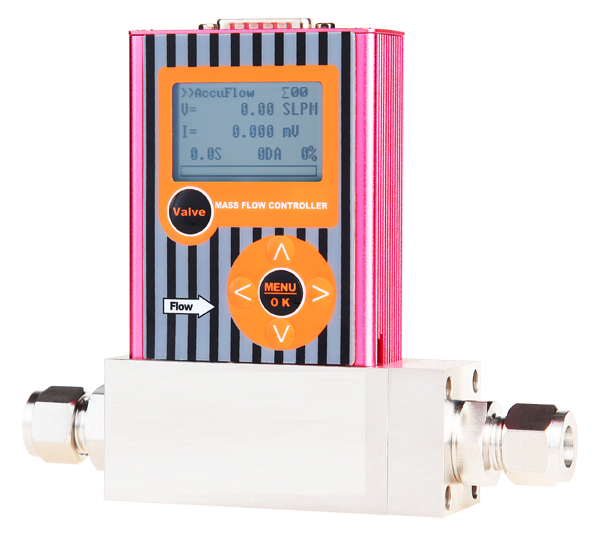
The SH-CMF-FE is a Micro Coriolis mass flow meter and controller with a stated flow range of 40 g/h to 1000 kg/hr and an accuracy of ±0.25% to ±0.5%. It carries a pressure rating of 30 bar or 100 bar, uses stainless steel 316L wetted parts, provides 4–20 mA, 0–5 VDC and 1–5 VDC outputs, operates on 15 V DC or 24 V DC, and communicates over RS485 or RS232. Its stated media include pure water, silicone, aviation kerosene, diesel, supercritical CO2 and silane, and its stated applications cover food, (petro)chemical and pharmaceutical processing, fermentation equipment, semiconductor processing and fuel cell technology.
The wider SH-CM Coriolis family shows where the boundary sits inside a single product line. The SH-CM covers approximately 10 kg/hr to 1500 t/h in sizes from about 1 mm to 300 mm, with a fluid temperature range of −200 to 350 °C, IP65 protection, ATEX certification, and 4–20 mA, pulse, frequency, MODBUS RTU, HART, Profibus-DP and Profibus-PA communication. Its stated low end of 10 kg/hr is 250 times higher than the 40 g/h starting point of the SH-CMF-FE — which is precisely why “low flow Coriolis flow meter”, quoted without a model number, is an incomplete specification.
Thermal mass: gas flow at the sccm and millilitre scale
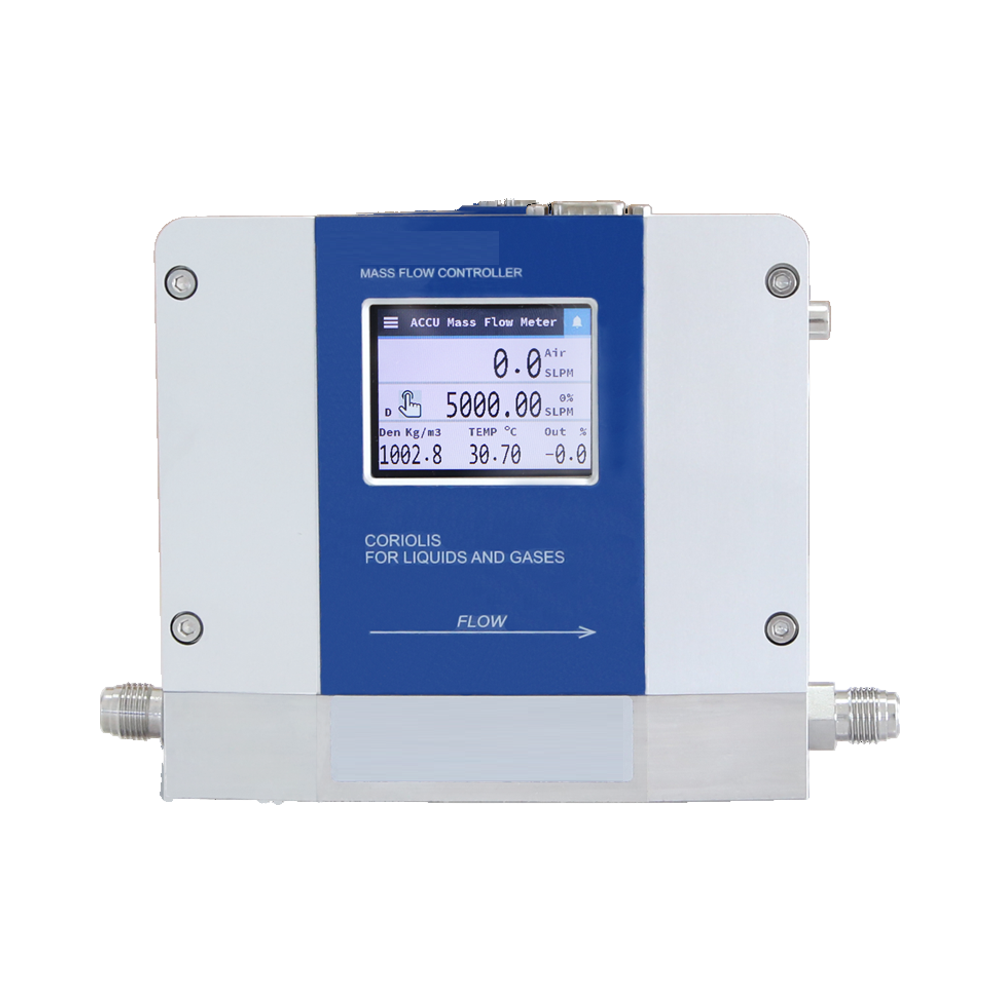
Thermal mass meters derive mass flow from heat transfer. A heated sensor element loses heat to the passing gas, and the rate of that loss is related to mass flow rather than volume, which is why the principle is used for gas flow meters at ml/min flow rates and below. It is the natural home of the ultra low flow meter in gas service, and it is the principle most often found in miniature gas mass flow meter designs for analysers and semiconductor tools.
The SRK-DL is a high temperature thermal mass flow meter and controller with a stated range of 2 sccm to 30 SL/M and an accuracy of ±1% F.S. It provides 0–5 V, 4–20 mA and 1–5 V outputs, RS232/485 with MODBUS communication, and ±15 VDC or 24 VDC power. Its stated applications are semiconductor, medical, analytical instruments, fuel cells and environmental monitoring.
At the other end of the same principle, the SRK-100 covers DN15 to DN2000 in inline or insertion formats, with a gas temperature range of −20 to 300 °C, 4–20 mA output, RS485, MODBUS RTU and HART communication, and ATEX certification. It measures air, compressed air, N2, natural gas, biogas, O2 and LPG. The distance between a 2 sccm floor and a DN15 pipe defines the practical width of the thermal low flow band.
Vortex steam mass flow: the steam edge of the category
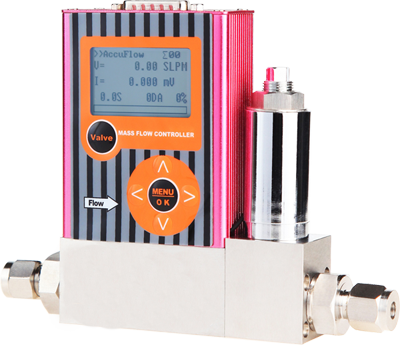
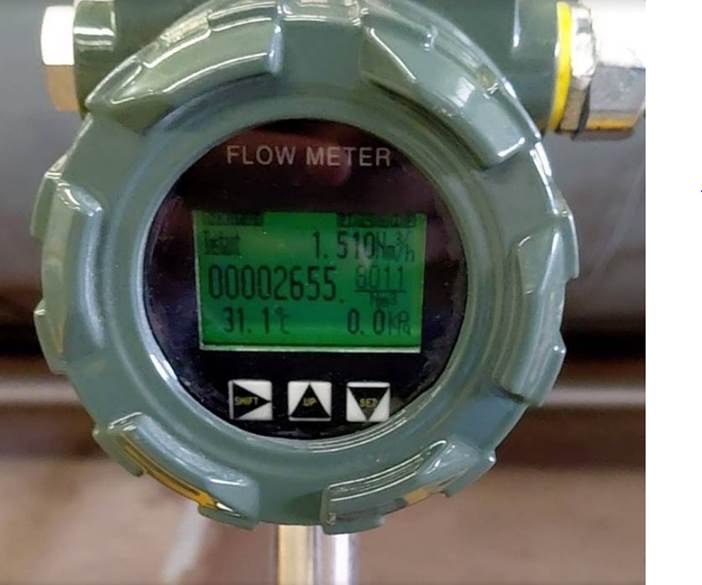
Steam duties behave differently, because the medium changes phase and carries both sensible and latent energy. Mass flow is normally obtained by measuring volumetric flow and compensating for temperature and pressure. The STLU-VFN is a steam mass flow meter operating on the vortex flow meter principle, designed for saturated steam and overheated steam, with a maximum steam temperature of 500 °C, pipeline sizes from DN15 to DN300, built-in temperature and pressure compensation, stainless steel 304 construction (listed as 304 or 316), ATEX approval, and flange, wafer, screw or tri-clamp process connections. Its stated industries are district heating, pharmaceuticals, food processing, petrochemical and power generation.
The low-flow edge of a vortex steam meter is set by pipeline size rather than by a single mass figure. DN15 is the smallest line the STLU-VFN is specified for, so a steam duty on a smaller line falls outside this product’s stated envelope rather than inside a low flow sub-range. The same product is also specified for high temperature steam flow measurement on large pipelines such as 4″, 6″, 8″ or 10″, which shows the boundary clearly: one instrument family, two very different ends of the flow spectrum.
How to Decide Whether an Application Counts as Low Flow
The sequence below turns the three boundaries into a repeatable check. It can be applied before any product is shortlisted, and it prevents the most common error in this category — comparing a mass figure with a volumetric figure and concluding that one meter is “better” than another.
- State the flow in mass units per hour. Record the duty in g/h, kg/hr or t/h where possible. If the specification arrives in sccm, SL/M, ml/min or L/h, record the reference conditions as well, because a standard-referenced volumetric figure is not directly comparable with a mass figure.
- Compare against the meter’s stated low end, not the pipe size. 40 g/h, 2 sccm and 10 kg/hr are three different statements about three different instruments. The line size alone tells you nothing about whether the meter can resolve the flow.
- Check where the normal operating point sits in the range. A duty that uses only the bottom of a wide range behaves like a low flow duty even when the instrument is a general-purpose model. Range utilisation, not the absolute number, decides whether accuracy will hold in service.
- Identify the medium class. Gas, liquid and steam each have their own principles and their own low ends. Silane and supercritical CO2 are gas-phase and supercritical duties; pure water, silicone, diesel and aviation kerosene are liquid duties; saturated and overheated steam are steam duties.
- Check the conditions that override range. A pressure rating of 30 bar or 100 bar on the SH-CMF-FE, a fluid temperature range of −200 to 350 °C on the SH-CM, and a maximum steam temperature of 500 °C on the STLU-VFN can each remove a meter from consideration regardless of its flow range.
- Check the connection and line size. The SH-CM spans approximately 1 mm to 300 mm, the STLU-VFN spans DN15 to DN300 with flange, wafer, screw or tri-clamp options, and the SRK-100 spans DN15 to DN2000 in inline or insertion format.
- Confirm the certification requirement. ATEX certification is stated for the SH-CM, the STLU-VFN and the SRK-100. It is not stated for the SH-CMF-FE or the SRK-DL in the data used here, so a hazardous-area duty on those models needs confirmation rather than assumption.
| Boundary | Question to ask | Data point that answers it |
|---|---|---|
| Rate | Where does the stated range begin? | 40 g/h (SH-CMF-FE); 2 sccm (SRK-DL); approximately 10 kg/hr (SH-CM) |
| Size | What is the smallest bore the meter accepts? | Approximately 1 mm (SH-CM); DN15 (STLU-VFN, SRK-100) |
| Medium | Gas, liquid or steam? | Silane, supercritical CO2, pure water, diesel (SH-CMF-FE); saturated and overheated steam (STLU-VFN) |
| Pressure | Does the line pressure exceed the meter rating? | 30 bar or 100 bar (SH-CMF-FE) |
| Temperature | Does the process temperature exceed the meter rating? | −200 to 350 °C (SH-CM); 500 °C maximum steam (STLU-VFN) |
| Certification | Is the area classified? | ATEX stated for SH-CM, STLU-VFN and SRK-100 |
Where Low Flow Meters Are Used in Practice
Gas duties
Gas is where the low flow category is widest, because the achievable minimum is far lower than for liquids. Semiconductor processing, fuel cells, analytical instruments, medical equipment and environmental monitoring all depend on a miniature flow meter that can hold a setpoint at the sccm level. The SRK-DL covers 2 sccm to 30 SL/M for exactly these duties, and it is classified as a low flow thermal mass flow meter for high temperature applications. In the same family, the SRK-100 handles the larger gas duties — air, compressed air, N2, natural gas, biogas, O2 and LPG — on lines from DN15 to DN2000.
Liquid duties
Liquid low flow duties are where precision matters most, because the same instrument often has to handle aggressive or high-value media. The SH-CMF-FE is specified for pure water, silicone, aviation kerosene, diesel and supercritical CO2, in food, (petro)chemical and pharmaceutical processing, fermentation equipment and fuel cell technology. A low flow water meter in a fermentation skid and a low flow fuel meter on a test bench are the same measurement problem in different clothing: small volumes, continuous operation, and accuracy that has to survive the whole batch.
For chemical applications, the relevant question is not only whether the meter can resolve the flow but whether the wetted material can survive the medium. Stainless steel 316L is the stated construction for both the SH-CMF-FE and the SH-CM, which places those models in the corrosive chemical and supercritical duties listed in their application data.
Steam duties
Steam is the edge case of the category. The STLU-VFN is specified for saturated steam with varying moisture content and for superheated steam at high temperature, with built-in temperature and pressure compensation so the meter can display mass flow in kg/hr or t/h. It is used in power generation, chemical, petrochemical, food, pharmaceutical and district heating industries for energy management and process control, and it operates continuously with DCS/PLC integration. Because the low end of a vortex steam meter is fixed by line size, a low flow steam duty is usually a small-line duty rather than a small-mass duty.
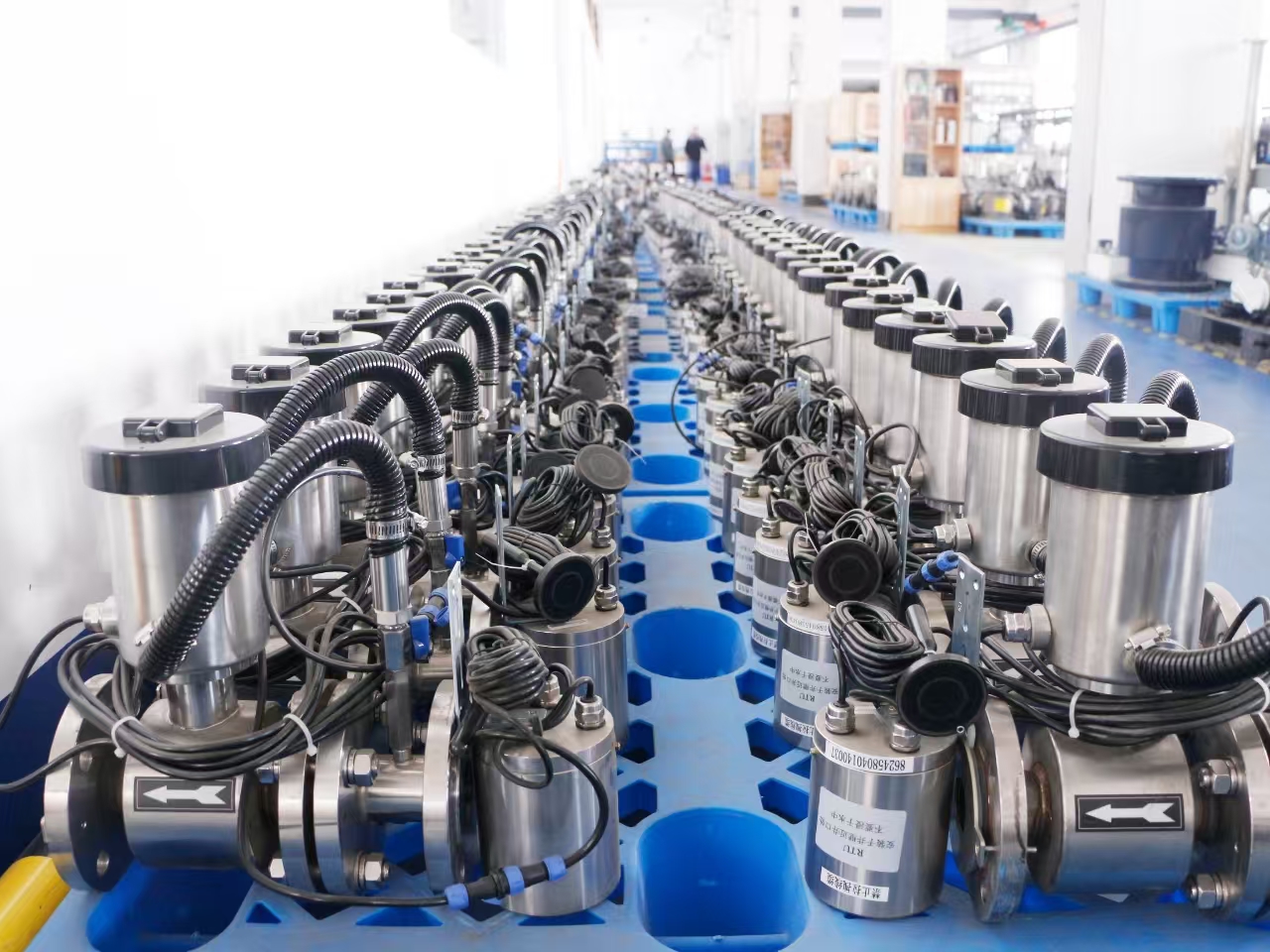
Low Flow Meter Comparison: Three Principles, Verified Specifications
The table below compares the three principles using only the specifications stated in the product data referenced throughout this article. Where a value is absent from that data, the cell says so rather than estimating.
| Attribute | Micro Coriolis — SH-CMF-FE | Low flow thermal mass — SRK-DL | Vortex steam — STLU-VFN |
|---|---|---|---|
| Measuring principle | Coriolis | Thermal mass (heat transfer) | Vortex shedding |
| Stated flow range | 40 g/h to 1000 kg/hr | 2 sccm to 30 SL/M | Set by pipeline size, DN15 to DN300 |
| Accuracy | ±0.25% to ±0.5% | ±1% F.S | Not stated in the cited data |
| Media in cited data | Pure water, silicone, aviation kerosene, diesel, supercritical CO2, silane | Gases, as mass flow meter or controller | Saturated steam and overheated steam |
| Pressure / temperature | 30 bar or 100 bar; process temperature not stated | Classified as high temperature thermal mass flow meter; pressure not stated | Maximum steam temperature 500 °C; pressure not stated |
| Wetted material | Stainless steel 316L | Stainless steel | Stainless steel 304 (listed as 304 or 316) |
| Output and communication | 4–20 mA, 0–5 VDC, 1–5 VDC; RS485 or RS232 | 0–5 V, 4–20 mA, 1–5 V; RS232/485, MODBUS | Not stated in the cited data |
| Certification | Not stated in the cited data | Not stated in the cited data | ATEX approved |
Where a cell reads “not stated in the cited data”, the referenced product information does not give the value; no estimate has been substituted.
Frequently Asked Questions
Are low flow meters available with ATEX approval?
ATEX approval is stated for three models in the data used for this article: the SH-CM Coriolis mass flow meter, the STLU-VFN steam mass flow meter, and the SRK-100 thermal mass flow meter. It is not stated for the SH-CMF-FE Micro Coriolis meter or the SRK-DL low flow thermal mass meter in that same data. Hazardous-area suitability for those two models should therefore be confirmed per project rather than assumed from the product category.
What flow rate counts as low flow?
There is no single figure. In the data referenced here, the stated low end is 40 g/h for the SH-CMF-FE Micro Coriolis meter, approximately 10 kg/hr for the SH-CM Coriolis family, and 2 sccm for the SRK-DL thermal mass meter. A practical rule is that a duty counts as low flow when the normal operating point sits in the lower part of the meter’s stated range, when the bore is small (the SH-CM starts at approximately 1 mm), or when the flow is below what a general-purpose meter can resolve on that line size.
Who are low flow meter manufacturers?
Silver Automation Instruments is a manufacturer of process automation and instrumentation products based in Nanjing, China, established in 2010. Its product line includes flow meters (Coriolis, thermal mass, electromagnetic, vortex, turbine and oval gear types), pressure instruments, level measurement instruments, and data logging and control products. For low flow duties specifically, the relevant models are the SH-CMF-FE Micro Coriolis mass flow meter, the SH-CM Coriolis mass flow meter with a range starting at approximately 10 kg/hr, the SRK-DL low flow thermal mass flow meter covering 2 sccm to 30 SL/M, and the STLU-VFN steam mass flow meter for saturated and overheated steam. Market research identifies Honeywell, Emerson and Siemens as tier-1 participants in the high-precision flow meter segment, and Bronkhorst High-Tech as a major supplier focused on laboratory and OEM ultra-low flow Coriolis applications. Selection should be driven by range, medium and certification rather than by brand recognition alone.
Can a low flow meter be validated before a full order?
Configuration details that affect validation — sensor range and output signal — are described as customizable in the manufacturer’s published profile, and a no-obligation consultation is offered for measurement selection across flow, pressure, temperature and data logging duties. Because sample arrangements depend on the specific model, range and medium, they are confirmed per project rather than published as a standard policy. The full product brochure is available for download and covers the wider instrument range.
What is the typical delivery time?
Delivery depends on the model, range and configuration. The manufacturer’s published profile states that most orders ship in 7–10 working days, and notes that export business accounts for 95% of total sales, with major markets in Southeast Asia, South America and Africa. Lead time for a specific low flow configuration should be confirmed at the quotation stage.
Conclusion: A Category Defined by Its Edges
The low flow meter category is best understood from its boundaries inward. On the rate boundary, published data supports a floor of 40 g/h on the SH-CMF-FE, 2 sccm on the SRK-DL, and approximately 10 kg/hr on the SH-CM. On the size boundary, the relevant figures are approximately 1 mm for the Coriolis measuring tube and DN15 for the steam and inline thermal ranges. On the physics boundary, the deciding factor is whether the principle can still hold its stated accuracy at the operating point.
Between those edges, the category divides by medium rather than by marketing language: micro gas flow meters for sccm-level duties, precision low flow liquid meters for pure water, supercritical CO2 and fuel work, and vortex steam meters for saturated and overheated steam up to 500 °C. A buyer who can state the mass flow, the medium, the pressure and temperature, and the certification requirement has already answered most of the selection question — and knows whether the duty genuinely counts as low flow.
Next Step: Confirm Your Range Before You Specify
If you are unsure whether your duty sits inside the low flow category, send the medium, the normal flow rate, the line size and the pressure and temperature conditions. Silver Automation Instruments will confirm which principle fits and which stated range applies.
Silver Automation Instruments · Download the product brochure (PDF)
Email: sales@silverinstruments.com · Phone: +86 25-52155837 · WhatsApp: +86 18936759191
Address: No. 108 Jiang dong Middle Road, Jian ye District, Nanjing, Jiangsu, China
Website: https://www.silverinstruments.com
Have Questions or Need More Details?
Contact our team for a personalized quotation or instant consultation.
Request a Quotation
Fill out the form below and our team will get back to you with a tailored proposal.
WhatsApp Direct Chat
Prefer to chat in real-time? Message us on WhatsApp for instant assistance & quick answers.
- Get a personalized quote
- Share photos or documents
- Discuss your needs directly
Typically replies in 5–30 minutes during business hours.