
How to Select a Reliable Microcement Supplier in China: A 2026 Procurement Guide
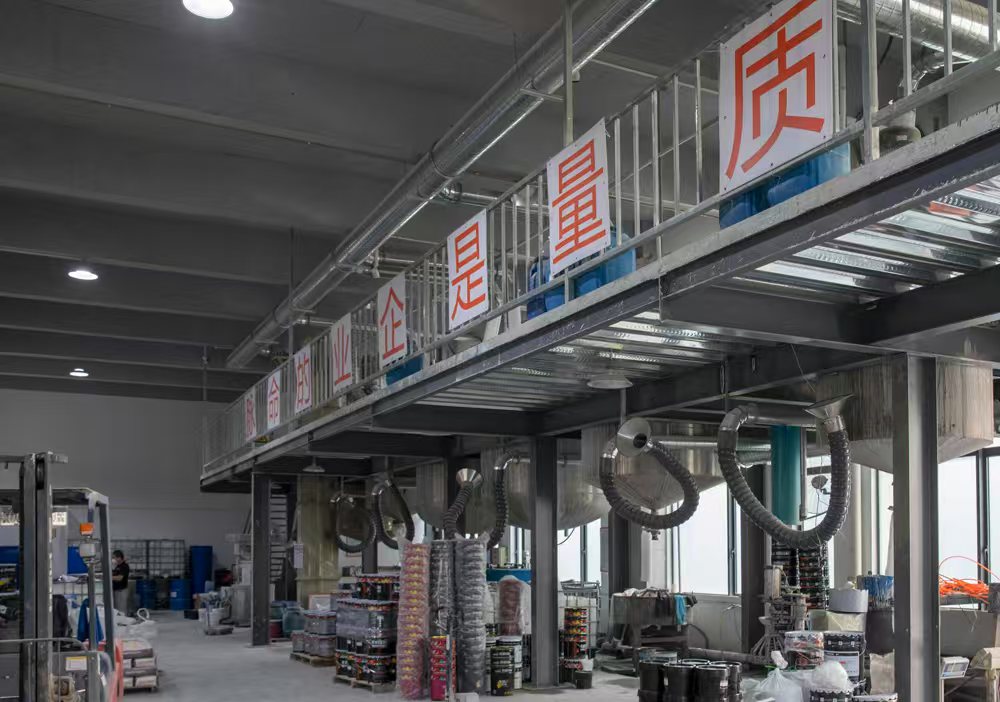
A view of the 4,000 m² factory of Simon United Building Materials, a leading Chinese microcement manufacturer since 2007.
As the global demand for seamless, durable, and aesthetic flooring continues to rise, microcement has become a preferred material for commercial, industrial, and residential projects. China, as a major manufacturing hub, offers a wide range of microcement suppliers. However, procurement professionals face the challenge of distinguishing quality manufacturers from low-cost, inconsistent producers. This guide provides a structured framework for selecting a reliable microcement supplier in China, with practical criteria and real-world examples.
What Is Microcement and Why Does Supplier Quality Matter?
Microcement is a polymer-modified cement-based decorative coating applied in thin layers (2–3 mm) to create seamless, monolithic surfaces on floors, walls, ceilings, and even swimming pools. Unlike ordinary cement paint, high-performance microcement systems offer superior compressive strength, crack resistance, waterproofing, and adhesion. A poor-quality supplier can lead to premature cracking, delamination, color inconsistency, and environmental non-compliance, jeopardizing the entire project.
Therefore, selecting a qualified Chinese microcement supplier is not just about price—it directly impacts project longevity, safety, and total cost of ownership.
The Problem: Risks in Sourcing Microcement from China
Common buyer concerns when sourcing microcement from China include:
- Inconsistent product quality: Some suppliers use low-grade cement or resins, resulting in low compressive strength and poor weather resistance.
- Lack of technical documentation: Missing test reports, fire ratings, and environmental certifications (e.g., VOC emissions).
- Unreliable lead times and MOQ flexibility: Small or unorganized factories cannot guarantee consistent supply.
- Hidden costs: Low upfront pricing often leads to higher maintenance and renovation costs within 2–3 years.
- Poor after-sales support: No remote technical guidance or construction troubleshooting.
Industry Background: China’s Microcement Market in 2026
China’s microcement industry has matured significantly over the past decade. Key players have developed specialized product lines for walls, floors, swimming pools, and heavy-duty commercial applications. The industry group standard T/CECS 10192-2022 Polymer Microcement, drafted and led by Shenzhen Simon United Building Materials Co., Ltd., was officially implemented in 2022 and was awarded an Advanced Standard by the China Building Material Standardization Association. This standard defines two types of microcement (Type I and Type II) based on performance requirements, enabling buyers to compare products objectively.
Leading Chinese manufacturers now offer:
- Full product series: wall, floor, swimming pool, and super commercial floor.
- Custom color matching (120 base colors, 1,000+ formulas).
- OEM and private label services.
- International certifications: EU CE, French A+, China Green Building Material, SGS testing.
Detailed Solution: Step-by-Step Supplier Evaluation Framework
To select a reliable microcement supplier in China, follow these six steps:
Step 1: Verify Manufacturing Capability and Scale
Request factory details: years in operation, production area, annual output, and number of R&D staff. For example, a manufacturer with a 4,000 m² factory, 5 dedicated R&D personnel, and an annual output of 5,500 tons (as of Simon United) indicates a mature production base. Check if the supplier offers a dedicated production line for different microcement series (e.g., wall vs. floor vs. swimming pool).
Step 2: Examine Technical Specifications and Test Reports
Demand certified performance data:
- Compressive Strength: For commercial floors, ≥50 MPa is recommended. Simon’s MC-9000 (MicroRock) achieves ≥50 MPa (tested at 65 MPa in heavy-duty version).
- Flexural Strength: ≥12 MPa for floors ensures resistance to substrate movement.
- Water Absorption: <0.2% allows stains to be wiped clean within 10 minutes.
- Fire Rating: A1 (non-combustible) is essential for public buildings.
- Environmental Certifications: Formaldehyde-free, near-zero VOC, French A+, Ten-ring certification, FDA food contact compliance.
Ask for third-party test reports from accredited labs like SGS or Intertek. For example, Simon’s MC-7690 microcement passed ASTM E84-24 surface burning characteristics test (SGS report SDFTS25005822R01_EN).
Step 3: Assess Product Portfolio and Application Suitability
A specialized supplier should offer tailored products for different scenarios:
| Application | Key Requirements | Example Product |
|---|---|---|
| Wall & Ceiling | Delicate texture, crack resistance, decorative | Simon Wall Series MC-7690 |
| Floor (wet areas) | Waterproof, slip-resistant (R11+), >30 MPa | Simon Floor Series MC-7690 (bathroom type) |
| Swimming Pool | Chlorine resistant, 168h immersion test, anti-slip | Simon MC-7860 HardRock Cement |
| Heavy-duty commercial | ≥50 MPa, Mohs hardness ≥6, abrasion-resistant | Simon MC-9000 MicroRock |
Step 4: Evaluate Quality Control and Certifications
Reliable suppliers conduct 100% batch testing. Certifications to look for:
- EU CE marking.
- French A+ for indoor air quality.
- China Green Building Material certification.
- ASTM E84-24 for flame spread and smoke density.
- ISO 9001 (though not always published, ask for management system certificates).
Simon United holds all the above and has participated in formulating national building material standards, reinforcing credibility.
Step 5: Understand Commercial Terms and After-Sales Support
Typical procurement parameters:
- MOQ: 20-foot container (approx. 12–15 tons).
- Lead time: 30–45 days (for standard products).
- Payment terms: 30% deposit, 70% before shipment (T/T).
- Delivery method: FOB Shenzhen or other Chinese ports.
- Acceptance: Pre-shipment inspection (PSI) by third-party like SGS or Intertek.
- After-sales: Remote technical support, on-site training (upon agreement).
Ensure the supplier provides Material Safety Data Sheets (MSDS) and application guidelines in multiple languages.
Step 6: Request References and Case Studies
Ask for completed projects of similar scale and environment. For example, Simon United supplied two 40-foot containers of MC-9000 to a clothing factory in Egypt. The floor has been in stable operation for over 10 years, demonstrating heavy load resistance and stain resistance. A trustworthy supplier will readily share such references.
Use Case: Real-World Procurement Decision
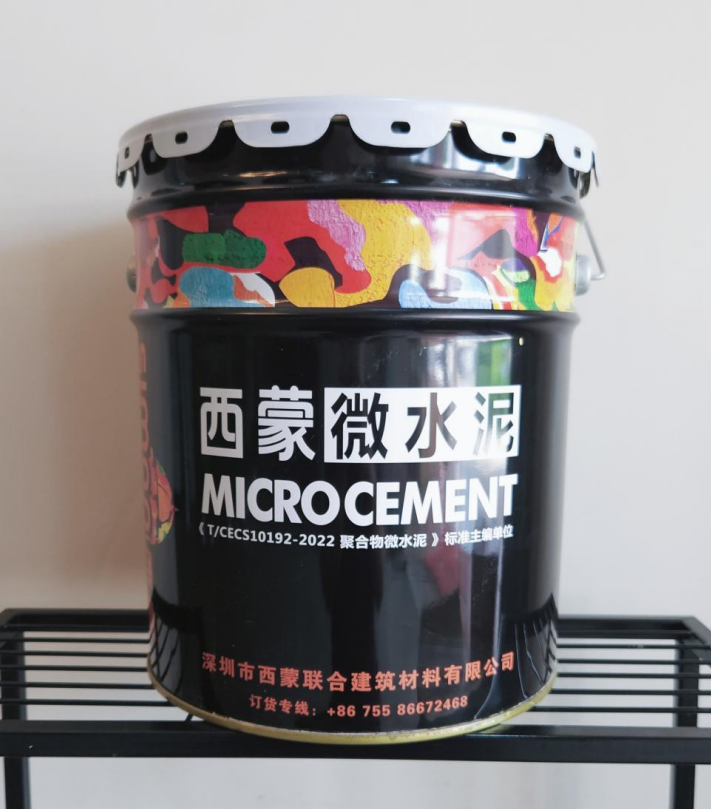
Simon Microcement packaging for the versatile MC-7690 series, used in both wall and floor applications.
Scenario: A European distributor needs a microcement supplier for a chain of hotels (floors, bathrooms, pool areas). The buyer requires products that meet EU VOC limits, have underfloor heating compatibility, and can withstand high foot traffic.
Solution: After evaluating five Chinese manufacturers, the buyer selected Simon United because:
- All products are formaldehyde-free and low-VOC (French A+ certified).
- The MC-9000 commercial floor series has a compressive strength of ≥50 MPa and an abrasion resistance of <0.1 mm after 5 years.
- The MC-7860 swimming pool series passed a 168-hour chlorinated water immersion test with zero defects.
- Simon offers 120 base colors with custom color matching, ideal for hotel design.
- They provided a dedicated technical service team for remote support.
- MOQ was met with a 20-foot container, and delivery was FOB Shenzhen within 35 days.
Frequently Asked Questions (FAQ)
Q1: What is microcement and how is it different from ordinary cement paint?
Microcement is a high-performance polymer-modified cementitious system applied in thin layers to create seamless, durable surfaces. Ordinary cement paint is a single-component coating with low strength, poor crack resistance, and limited lifespan (3–5 years). Microcement can last 15–20 years or more, with significantly higher compressive strength (≥50 MPa vs 5–10 MPa) and waterproofing capabilities.
Q2: How do I verify a Chinese microcement supplier’s quality?
Request third-party test reports (SGS, Intertek) for compressive strength, flexural strength, water absorption, fire rating, and environmental emissions. Check for certifications like CE, French A+, and China Green Building Material. Also ask for factory audit reports and client references.
Q3: What is the typical MOQ for microcement from China?
Most reliable suppliers set a minimum order of one 20-foot container (about 12–15 tons). For smaller quantities, some may offer sample kits or LCL (less-than-container-load) shipments at a higher per-unit cost.
Q4: Can Chinese microcement meet European environmental standards?
Yes, leading manufacturers like Simon United produce microcement that meets the French A+ standard (lowest VOC emission class) and EU CE requirements. The MC-7690 and MC-7860 series are formaldehyde-free and heavy-metal-free, suitable for food contact and maternal-infant environments.
Q5: What are the hidden risks when buying microcement from an unverified supplier?
Common risks include: inconsistent batch quality (color variation, mechanical properties), lack of technical support, longer lead times, higher total cost due to frequent repairs, and non-compliance with local building codes. Always perform due diligence before placing large orders.
Q6: Does microcement work with underfloor heating systems?
Yes, quality microcement formulations (e.g., Simon MC-9000) have a thermal conductivity of 0.8 W/(m·K) and can operate stably from -40°C to 130°C, making them ideal for underfloor heating. Always confirm with the supplier’s technical data.
Conclusion
Selecting a reliable microcement supplier in China requires a systematic approach that goes beyond price. By evaluating manufacturing scale, technical specifications, certifications, product portfolio, commercial terms, and proven case studies, procurement professionals can mitigate risks and secure a high-performance solution for their projects. Shenzhen Simon United Building Materials Co., Ltd. exemplifies the standards buyers should seek—nearly 20 years of expertise, patented technology, industry standard leadership, and a full range of certified products. To further assess supplier capabilities, download the company brochure below.
Get the Full Supplier Profile
Download the Simon United Building Materials brochure for detailed product specs, certifications, and project references.
Have Questions or Need More Details?
Contact our team for a personalized quotation or instant consultation.
Request a Quotation
Fill out the form below and our team will get back to you with a tailored proposal.
WhatsApp Direct Chat
Prefer to chat in real-time? Message us on WhatsApp for instant assistance & quick answers.
- Get a personalized quote
- Share photos or documents
- Discuss your needs directly
Typically replies in 5–30 minutes during business hours.