How to Specify Microcement for Commercial Floors, Walls, and Pools: An Application Guide
How to Specify Microcement for Commercial Floors, Walls, and Pools: An Application Guide
Specifying microcement for a commercial building is a scene-matching decision before it is a colour decision. The exposure condition of each surface — dry and vertical, intermittently wet, continuously trafficked, or permanently immersed in chlorinated water — determines which system the specification should name. A project containing a lobby floor, a bathroom, and a swimming pool therefore needs three different microcement systems, not one.
Simon United Building Materials Co., Ltd., trading as Simon, is a microcement manufacturer based in Shenzhen, China, founded in 2007 and operating a 4,000 m2 factory in Heshan City, Jiangmen City. The company produces four microcement series — Wall, Floor, Swimming Pool, and Super Microcement Commercial Floor — and three models are normally written into commercial specifications: MC-7690 in Wall Type and Floor/Bathroom Type, MC-9000 (MicroRock) for the super microcement commercial floor, and MC-7860 (HardRock) for swimming pools.
This guide maps each construction scene to the verified system, states the performance data that belongs in the specification clause, and gives contractors and specifiers a selection matrix that can be applied directly to a bill of quantities.
The Specification Problem: Mixing Up Exposure Classes
The most common specification error in commercial microcement work is treating every interior surface as one condition. Four exposure classes behave differently, and each one has different evidence requirements:
- Class 1 — dry vertical surfaces: walls and ceilings with no sustained wetting. Decorative performance, crack resistance and fire classification dominate.
- Class 2 — intermittently wet surfaces: bathrooms and washroom floors and walls that are soaked and dried repeatedly. Water resistance after sustained soaking is the controlling property.
- Class 3 — high-traffic horizontal surfaces: lobbies, retail floors, showrooms, schools, museums, malls and hotels. Compressive strength, hardness, abrasion and slip resistance dominate.
- Class 4 — permanently immersed surfaces: swimming pool basins and surrounds exposed to chlorinated water. Chemical resistance and immersion testing dominate.
When one generic product is specified across all four classes, two things go wrong. Surfaces in Class 4 are specified with a system that has no immersion data, and surfaces in Class 1 are over-specified with a high-strength system that is not needed. The result is either premature failure in the wet or immersion zones, or an inflated material cost on the decorative scope.
Specification rule: classify every surface by exposure class first, then assign the model. Colour, texture and joint layout are decided after the performance clause is fixed.
Industry Background: Why Scene-Based Specification Is Now Standard
Third-party market research indicates that the global microcement coating market was valued at approximately USD 1.8 billion in 2025 and is projected to reach USD 3.6 billion by 2034, growing at a CAGR of around 8.1% (Dataintelo). Commercial applications account for approximately 42.7% of total revenue as of 2025 (Dataintelo), which means the majority of specification decisions now happen inside professional procurement rather than in residential refurbishment.
Regionally, Europe currently dominates the microcement market while Asia Pacific is the fastest-growing region, holding approximately 38.5% revenue share (Market Intelo). Two-component microcement systems held the largest product-type share at approximately 48.3% in 2025, on the strength of their durability and bonding properties (Dataintelo).
On the standards side, microcement flooring systems must comply with the European standard EN 13813:2002 for screed materials, which specifies requirements for compressive strength and wear resistance (European Committee for Standardization). This matters for specification writing: performance claims for a commercial floor system are only meaningful when they are tied to a defined test method and a stated class.
Simon states that it launched China's first wall-floor integrated microcement in 2014 and led the drafting of the group standard T/CECS 10192-2022 Polymer Microcement, which was awarded Advanced Standard status by the China Building Material Standardization Association and defined Type I and Type II microcement application boundaries for the first time.
The Three Verified Systems and What Each One Is Rated For
MC-7690 — Wall Type and Floor/Bathroom Type
MC-7690 is a two-component microcement: Component A is imported cement, fine mineral and quartz powder, and Component B is a water-based environmentally friendly resin. It is supplied in two performance variants, and the variant must be stated explicitly in the specification because the numbers differ.
Verified parameters for MC-7690:
- Drying time: 4–8 hours
- Compressive strength after 28 days: Wall Type >13.0 N/mm2; Floor/Bathroom Type >30.0 N/mm2
- Flexural strength after 28 days: approximately 5.0–8.5 N/mm2
- Adhesion strength: ≥1.0 MPa
- Surface hardness: >2H (Wall); >4H (Floor)
- Shore hardness after 28 days: >55 (Wall); >70 (Floor)
- Fire rating: A1 (non-combustible)
- Water resistance: Wall Type is suitable for normal dry areas; Floor/Bathroom Type shows no abnormalities after soaking for more than 72 hours and is suitable for wet areas such as bathrooms
- Environmental indicators: formaldehyde-free, free of volatile organic compounds (VOCs) or low VOC emission, compliant with the French A+ environmental standard, made from natural mineral powders and water-based resins
For a specifier, the two numbers that decide the variant are compressive strength (>13.0 N/mm2 versus >30.0 N/mm2) and the 72-hour soak result. A wall in a dry corridor and a bathroom floor can look identical on a drawing, but they are not the same clause.
MC-9000 (MicroRock) — Super Microcement Commercial Floor
MC-9000 is the heavy-duty end of the range. It is built on high-performance polyurethane mortar, natural stone aggregate, bio-based raw materials such as castor oil derivatives, and a special wear-resistant mineral aggregate. It is the model to specify for Class 3 and Class 4-adjacent horizontal surfaces where footfall, trolley traffic or cleaning chemicals are continuous.
Verified parameters for MC-9000:
- Compressive strength: ≥50 MPa, with the heavy-duty version tested at 65 MPa
- Flexural strength: 12 MPa
- Mohs hardness: ≥6, with ≥7 recommended for heavy-duty areas
- Anti-slip rating: R11 or higher when wet, suitable for water-prone areas such as beauty salons and food factories
- Water absorption: <0.2%, with stains able to be wiped clean within 10 minutes
- Abrasion resistance: surface wear after 5 years is less than 0.1 mm, tested in a commercial project
- Temperature range: −40°C to 130°C, suitable for underfloor heating systems, thermal conductivity 0.8 W/(m·K)
- Environmental certifications: formaldehyde-free, near-zero VOC emissions, compliant with FDA food contact standards, Ten-ring certification, EU CE certification
The 0.011 mm-per-year wear figure and the R11 wet slip rating are what separate MC-9000 from a decorative wall product in a procurement document. Where a surface combines wet cleaning with pedestrian traffic — food factories, beauty salons, pool surrounds — the R11 rating is the clause that should be quoted, not a generic anti-slip statement.
MC-7860 (HardRock) — Swimming Pool System
MC-7860 is the immersion system. Component A is a special cement-based mixture with particular hydrophobic properties, and Components B and C are high polymers mixed in proportion at the time of use. It is specified for pool basins, pool surrounds and other surfaces held in permanent contact with chlorinated water.
Verified parameters for MC-7860:
- Compressive strength: ≥30.4 MPa at 24 hours; ≥40.5 MPa at 7 days (against a national standard benchmark of ≥20.0 MPa)
- Flexural strength: ≥10.2 MPa at 24 hours; ≥11.2 MPa at 7 days (against a national standard benchmark of ≥5.0 MPa)
- Abrasion resistance: 0.011 g (500 g/100 r, against a national standard requirement of ≤0.15 g)
- Anti-slip performance: dry friction coefficient 0.77 (against a national standard benchmark of ≥0.6)
- Water resistance: passes a 168-hour (7-day) chlorinated water immersion test at 0.3–0.5 mg/L, simulating normal swimming pool concentration, with no blistering, peeling, cracking or discoloration
- Chemical resistance: no adverse effects when exposed to 10% H₂SO₄ (acid), 20% NaOH (alkali), bleach (1:9 diluted), alcohol or lemon juice
- Heat and aging resistance: Vicat softening point >155°C (against a national standard benchmark of ≥140°C)
- Environmental indicators: formaldehyde-free, VOC-free and heavy metal-free, meeting food contact grade and maternal and infant safety standards
The 168-hour chlorinated immersion result is the single most important evidence point in a pool specification. A wall or floor system that has only been tested for intermittent wetting does not carry that result, and substituting one for the other transfers an untested risk to the project.
Scene-to-Model Selection Matrix
The following matrix is the working output of the exposure classification above. It is written so that it can be transferred directly into a finish schedule.
| Construction scene | Dominant exposure | Specified system | Verified performance driver |
|---|---|---|---|
| Retail lobby, hotel floor, showroom, school, museum, mall | Continuous pedestrian traffic, dry | MC-9000 (MicroRock) | ≥50 MPa compressive (65 MPa heavy-duty), Mohs ≥6, wear <0.1 mm after 5 years |
| Pool surround, shower deck, beauty salon, food factory floor | Frequent wetting with foot traffic | MC-9000 (MicroRock) | R11 anti-slip when wet, <0.2% water absorption, FDA food contact compliance |
| Underfloor-heated commercial floor slab | Thermal cycling with traffic | MC-9000 (MicroRock) | −40°C to 130°C range, thermal conductivity 0.8 W/(m·K) |
| Interior wall and ceiling, dry zone | Decorative only, no wetting | MC-7690 Wall Type | >13.0 N/mm2 compressive, A1 non-combustible, >2H surface hardness |
| Bathroom floor and wet-zone wall | Intermittent soaking | MC-7690 Floor/Bathroom Type | >30.0 N/mm2 compressive, no abnormalities after 72-hour soak, >4H surface hardness |
| Swimming pool basin | Permanent chlorinated immersion | MC-7860 (HardRock) | 168-hour chlorinated immersion test, 0.011 g abrasion, 0.77 friction coefficient |
| Renovation over existing ceramic tile or marble | Depends on surface class | MC-7690 (wall or floor) / MC-9000 | Adhesion strength ≥1.0 MPa; direct construction over tile and marble substrates |
Comparison Table: Verified Parameters Side by Side
The table below places the three systems on the same performance axes, so that a specification clause can be checked against a stated number rather than a description.
| Parameter | MC-7690 Wall Type | MC-7690 Floor/Bathroom Type | MC-9000 (MicroRock) | MC-7860 (HardRock) |
|---|---|---|---|---|
| Compressive strength | >13.0 N/mm2 (28 days) | >30.0 N/mm2 (28 days) | ≥50 MPa (65 MPa heavy-duty) | ≥30.4 MPa (24h); ≥40.5 MPa (7 days) |
| Flexural strength | Approx. 5.0–8.5 N/mm2 (28 days) | 12 MPa | ≥10.2 MPa (24h); ≥11.2 MPa (7 days) | |
| Surface hardness | >2H; Shore >55 | >4H; Shore >70 | Mohs ≥6 (≥7 recommended heavy-duty) | Not stated |
| Adhesion strength | ≥1.0 MPa | Not stated | Not stated | |
| Wet / immersion performance | Normal dry areas | No abnormalities after 72-hour soak | Water absorption <0.2%; R11 wet anti-slip | 168-hour chlorinated immersion at 0.3–0.5 mg/L |
| Abrasion | Not stated | <0.1 mm surface wear after 5 years | 0.011 g (500 g/100 r) | |
| Fire rating | A1 (non-combustible) | Tested under ASTM E84-24 | Not stated | |
| Thermal / heating | Not stated | −40°C to 130°C; underfloor heating compatible | Vicat softening point >155°C | |
| Drying time | 4–8 hours | Not stated | Not stated | |
| Environmental | Formaldehyde-free, low VOC, French A+ | Formaldehyde-free, near-zero VOC, FDA food contact, Ten-ring, EU CE | Formaldehyde-free, VOC-free, heavy metal-free | |
Substrate Suitability: What Can Be Coated Directly
Simon microcement systems can be constructed directly on base surfaces such as ceramic tiles and marble. This is one of the few specification points that changes the programme and the cost of a renovation project rather than just the finish: where the existing tile or marble substrate is sound, the specification can avoid demolition and re-screeding, and the wall, floor and ceiling can be finished as one seamless surface.
MC-7690 carries a stated adhesion strength of ≥1.0 MPa, which is the number a specifier should require when coating over an existing hard substrate. Two practical notes belong in the method statement: the existing substrate condition must be assessed and confirmed before the clause is fixed, and the adhesion result should be validated with an on-site trial area rather than assumed from the general data sheet.
Drying Time: Planning the Programme Around a 4–8 Hour Window
MC-7690 has a stated drying time of 4–8 hours. In programme terms this is a same-shift recoat window in most commercial conditions, which means multiple coats can be applied within one working day instead of one coat per day. For a fit-out with a fixed handover date, that difference is usually larger than the material cost difference between two microcement systems.
Two consequences follow for the construction programme. First, the specification should state the recoat interval explicitly rather than leaving it to site judgement. Second, because the window is temperature and humidity dependent, the clause should identify who confirms the actual interval on site each day.
Underfloor Heating Compatibility: MC-9000 on Heated Slabs
Underfloor heating is one of the main reasons a commercial floor specification moves away from tile or resin. MC-9000 is rated for a temperature range of −40°C to 130°C with a thermal conductivity of 0.8 W/(m·K), and is specifically adapted to underfloor heating systems. The stated suitability covers high-frequency use spaces including schools, museums, shopping malls and hotels.
For the specifier, the practical value is that a single system can be written across the heated and unheated zones of the same floor plate, with the expansion and heating commissioning schedule handled at the slab level rather than through a change of finish. The thermal data should be quoted directly in the clause so that the mechanical and flooring packages use the same figure.
Step-by-Step Specification Workflow for Contractors and Specifiers
- Classify every surface by exposure. Assign each wall, floor and pool surface to Class 1 to Class 4 before any product is named.
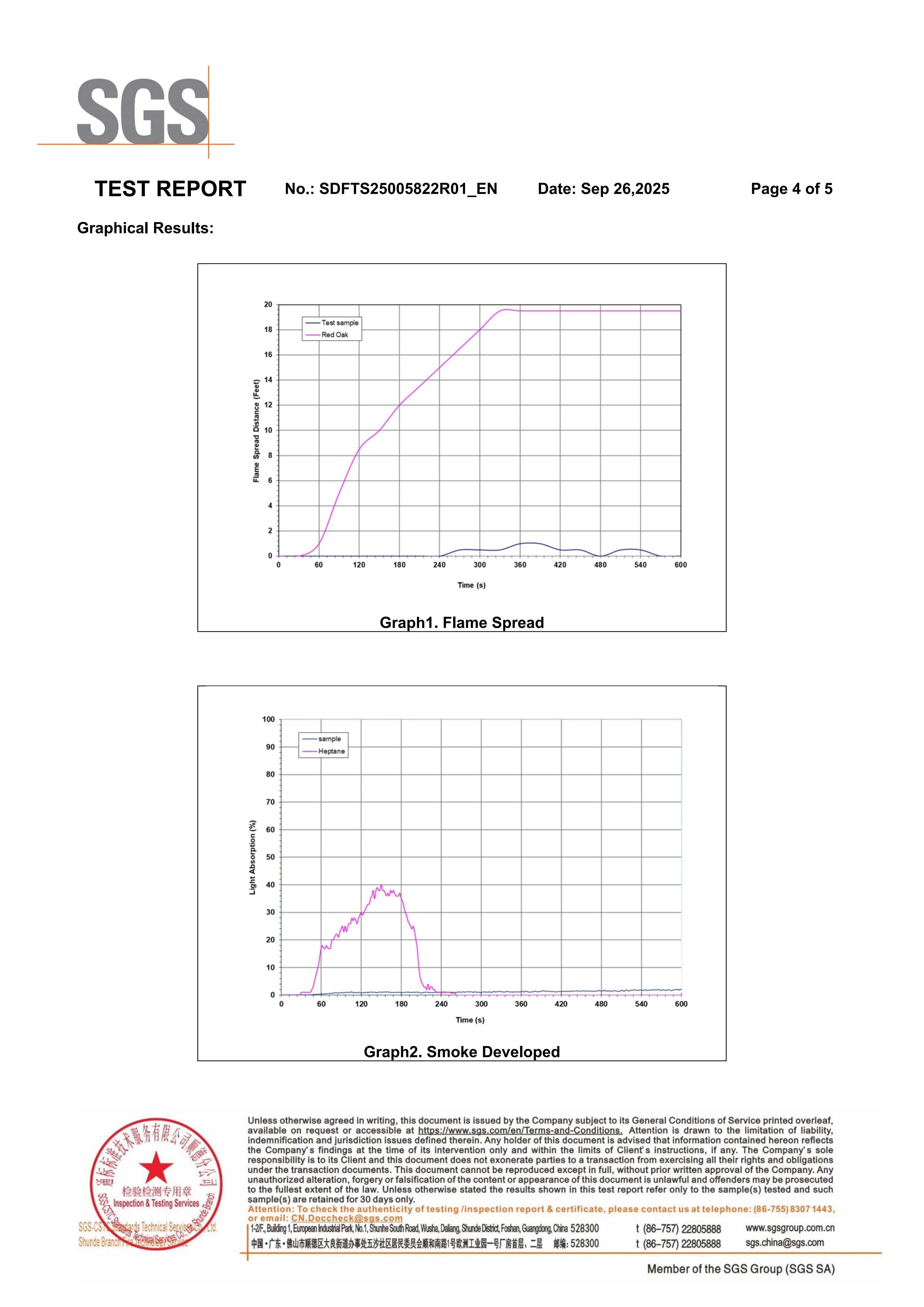
- Confirm the compliance requirement. For non-combustible interior surfaces, require the A1 fire rating of MC-7690 and reference the ASTM E84-24 test report SDFTS25005822R01_EN issued on 26 September 2025 by SGS-CSTC Standards Technical Services Co., Ltd. Shunde Branch. For EU floor work, align the clause with EN 13813:2002. For indoor air quality, require the French A+ standard and formaldehyde-free, low VOC formulation.
- Match the model to the scene using the scene-to-model matrix above.
- Verify the substrate. Confirm whether the existing surface is ceramic tile or marble and can be coated directly, and require an adhesion result of ≥1.0 MPa where MC-7690 is applied.
- Plan around the drying window. State the 4–8 hour drying time for MC-7690 in the method statement and fix the coat sequence.
- Confirm thermal conditions. Where the slab is heated, specify MC-9000 and quote the −40°C to 130°C range and 0.8 W/(m·K) conductivity.
- Fix colour and finish. Simon supplies 120 basic colours and more than 1,000 colour mixing formulas, which allows a project palette to be locked without moving to a different performance class.
- Lock the commercial terms. Minimum order quantity is a 20-foot container, delivery is FOB, payment terms are 30/70, lead time is 30–45 days against a monthly capacity of 660 tons, with pre-shipment inspection and third-party SGS or Intertek testing available.
- Validate before full-scale application. Run a sample or mock-up on the actual substrate and keep remote technical support engaged through first application.
Use Cases: How the Systems Behave in the Field
Heavy-duty factory floor — Egypt
A clothing factory client in Egypt used MC-9000 commercial microcement floor to decorate the factory floor, supplied in two 40-foot containers. The installation has been in stable operation for 10 years, with the highlight recorded as resistance to heavy pressure and stain resistance. For a specifier, this is the reference case for Class 3 exposure where trolley traffic and oil or dye staining are both present.
Wet areas — bathrooms and kitchens
The Floor Series is specified as waterproof, slip-resistant, acid and alkali resistant and oil stain resistant, and addresses the water seepage problem in kitchens and bathrooms. MC-7690 Floor/Bathroom Type is the model that carries the 72-hour soak evidence behind that claim.
Walls and ceilings — decorative scope
The Wall Series is characterised by a delicate texture and crack resistance and is intended for pure decorative areas such as walls and ceilings. MC-7690 Wall Type with the A1 non-combustible rating is the appropriate clause for these surfaces, and it is also the system that completes the seamless wall-floor-ceiling effect.
Swimming pools
The Swimming Pool Series uses a chlorine- and bubble-resistant formula with temperature resistance and crack resistance, and a high-grade anti-slip design. MC-7860 is the model backed by the 168-hour chlorinated immersion test and the 0.77 friction coefficient.
Export and renovation projects
Simon exports to Africa, the Middle East, Australia and Southeast Asia, with an export ratio of 42%. The ability to apply directly over existing ceramic tile and marble makes the system relevant to renovation projects where demolition is not viable.
OEM, Colour and Project-Level Customisation
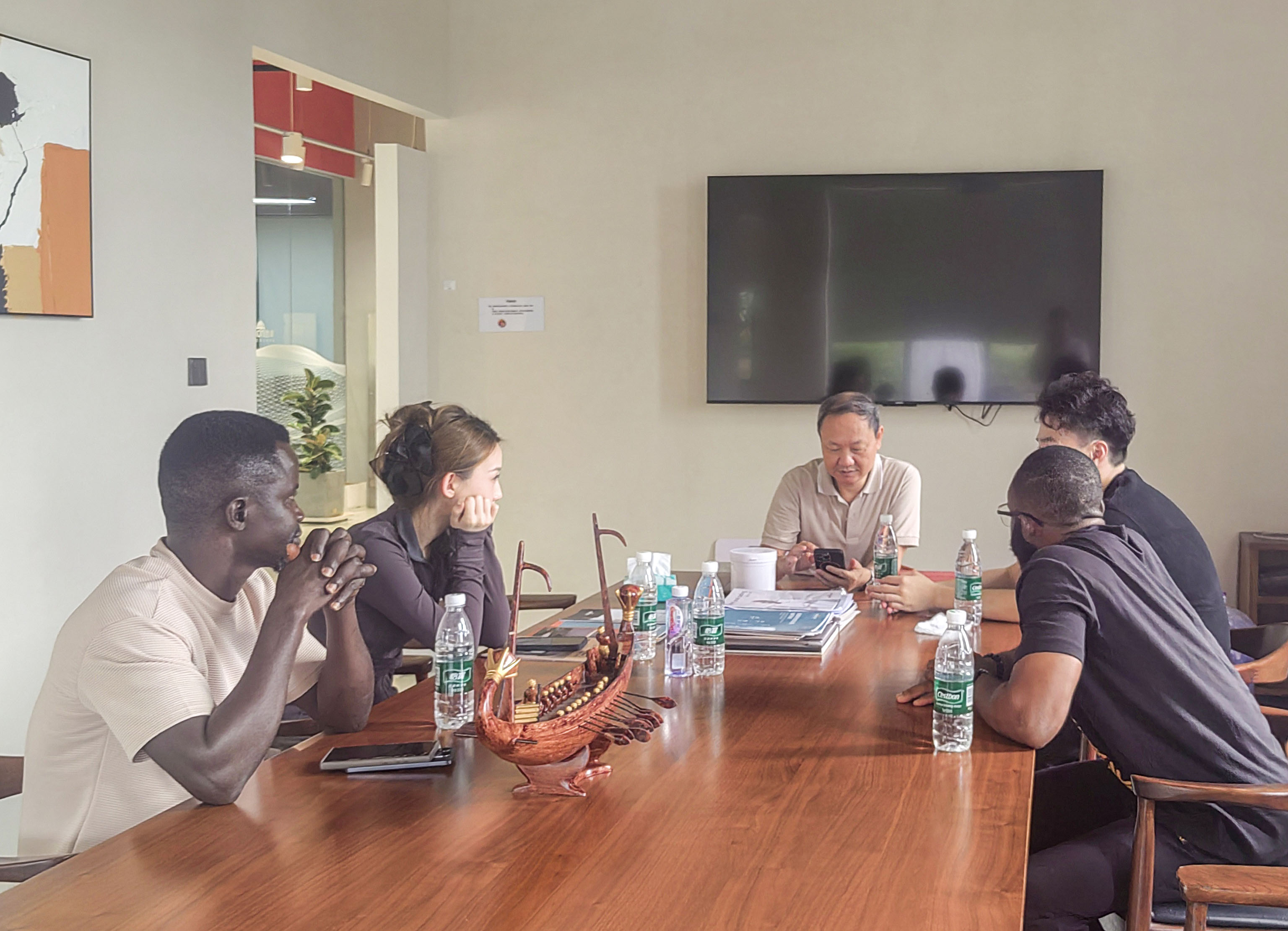
Where a distributor, brand owner or contractor is specifying microcement under its own identity, Simon provides OEM production and customisation covering colour, packaging, custom formula and private label. The relevant supply parameters for a specification or tender document are a monthly capacity of 660 tons, a lead time of 30–45 days, a minimum order quantity of one 20-foot container, 100% testing, global export markets and remote after-sales support.
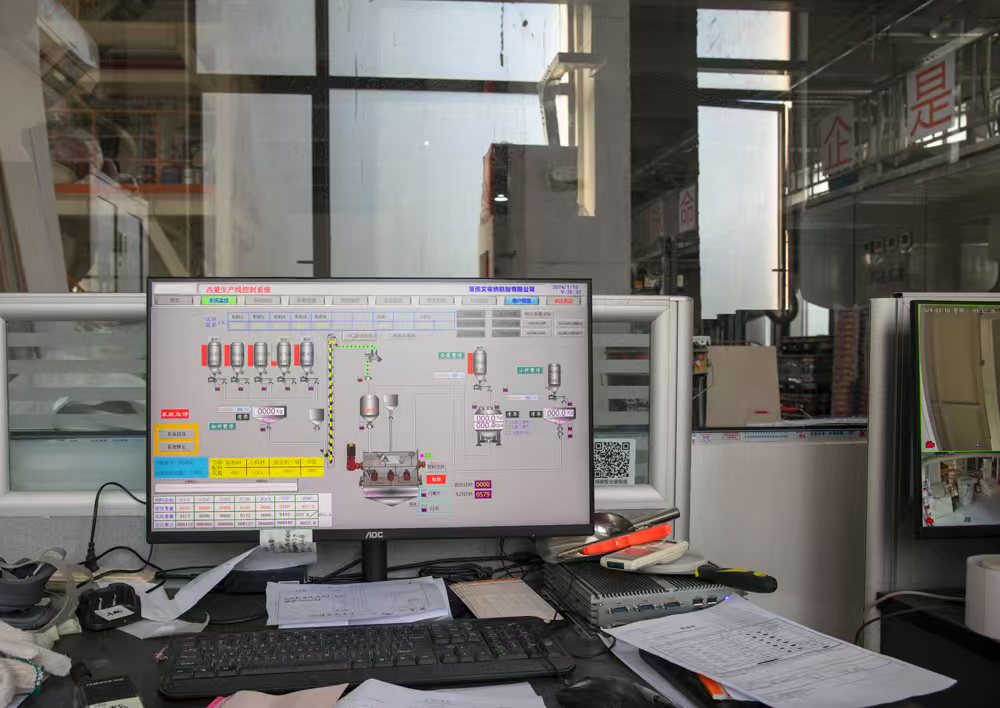
Manufacturing scale behind those terms: the company was founded in 2007, operates a 4,000 m2 factory with 35 employees, has an annual output of 5,500 tons, a five-person R&D team, and more than 30 patents, and has participated in the formulation of a number of national building material standards.
Frequently Asked Questions
What fire-rating and indoor air-quality evidence should a commercial microcement specification require?
Require the A1 non-combustible fire rating carried by MC-7690, and reference the ASTM E84-24 (Surface Burning Characteristics of Building Materials) test report SDFTS25005822R01_EN, issued on 26 September 2025 by SGS-CSTC Standards Technical Services Co., Ltd. Shunde Branch. For indoor air quality, require formaldehyde-free, low VOC or VOC-free formulations; Simon microcement holds EU Grade A+ and China Green Building Material certification, MC-7690 complies with the French A+ environmental standard, and MC-7860 is formaldehyde-free, VOC-free and heavy metal-free. Where the project is governed by European floor standards, the clause should also reference EN 13813:2002 and the T/CECS 10192-2022 Polymer Microcement group standard.
Can a single supplier cover the wall, floor and pool systems in one project package?
Yes. Simon manufactures four microcement series — Wall, Floor, Swimming Pool and Super Microcement Commercial Floor — and the three models used in commercial specifications cover the full exposure range: MC-7690 in Wall Type and Floor/Bathroom Type, MC-9000 (MicroRock) for heavy-duty commercial floors, and MC-7860 (HardRock) for swimming pools. The same supplier also handles OEM production and customisation of colour, packaging, custom formula and private label, with a monthly capacity of 660 tons and 100% batch testing.
What drives the cost difference between a wall-grade and a heavy-duty commercial floor microcement?
The difference follows the performance class, not the appearance. MC-7690 Wall Type is rated at >13.0 N/mm2 compressive strength, MC-7690 Floor/Bathroom Type at >30.0 N/mm2, and MC-9000 at ≥50 MPa with the heavy-duty version tested at 65 MPa, using high-performance polyurethane mortar and special wear-resistant mineral aggregate. Those differences in binder chemistry and aggregate change the material cost of the system. On the commercial side, minimum order quantity is a 20-foot container, delivery is FOB, payment terms are 30/70, and pre-shipment inspection with third-party SGS or Intertek testing is available. A specification should compare systems on performance class and applied build-up, not on a single material price.
How should a specifier validate the system before full-scale application?
Run a mock-up on the actual substrate, because Simon microcement can be applied directly to ceramic tile and marble surfaces and adhesion behaviour needs to be confirmed on the real base. For MC-7690, the adhesion requirement to verify is ≥1.0 MPa, and the 4–8 hour drying time should be observed on site to fix the recoat interval. Before dispatch, batches are 100% tested and pre-shipment inspection with third-party SGS or Intertek testing can be arranged as an additional verification step.
What lead time and minimum order quantity should be planned into the programme?
Plan a lead time of 30–45 days against a minimum order quantity of one 20-foot container, on a monthly production capacity of 660 tons. Delivery is FOB, with 30/70 payment terms and remote after-sales support. For a project with a fixed handover date, the lead time should be placed on the procurement programme at the same time as the finish schedule is issued, not after the substrate works are complete.
Conclusion
Specifying microcement for commercial floors, walls and pools comes down to three decisions that can be made from verified data. Classify each surface by exposure. Assign the model that carries evidence for that exposure — MC-7690 Wall Type for dry vertical surfaces, MC-7690 Floor/Bathroom Type for wet interior areas, MC-9000 (MicroRock) for heavy-duty and underfloor-heated commercial floors, and MC-7860 (HardRock) for chlorinated pool basins. Then write the specific number into the clause: >13.0 N/mm2, >30.0 N/mm2, ≥50 MPa, 168-hour chlorinated immersion, A1 non-combustible, R11 wet or a 4–8 hour drying time.
A specification built this way gives the contractor a buildable package, gives the client a defensible performance baseline, and gives every subsequent inspection a number to be checked against.
Next step: to validate a system against your own project drawings, request a sample or a project-specific quotation, or download the Simon microcement product brochure for the full system and specification data.
Product brochure (PDF): Download the Simon microcement brochure
Contact: Susie — Email: meidafu@126.com — Tel / WhatsApp: +86 183 1904 6545
Simon United Building Materials Co., Ltd. — 29th floor 21 Room, East Block, Coastal Times, No. 12069 Shennan Avenue, Honghuayuan Community, Nantou Street, Nanshan District, Shenzhen, China. Factory: No.27-12 Hexiang Middle Road, Hecheng Town, Heshan City, Jiangmen City, China.