
Microcement Compliance Explained: French A+, A1 Fire Rating, and Food-Contact Certification
Microcement Compliance Explained: French A+, A1 Fire Rating, and Food-Contact Certification
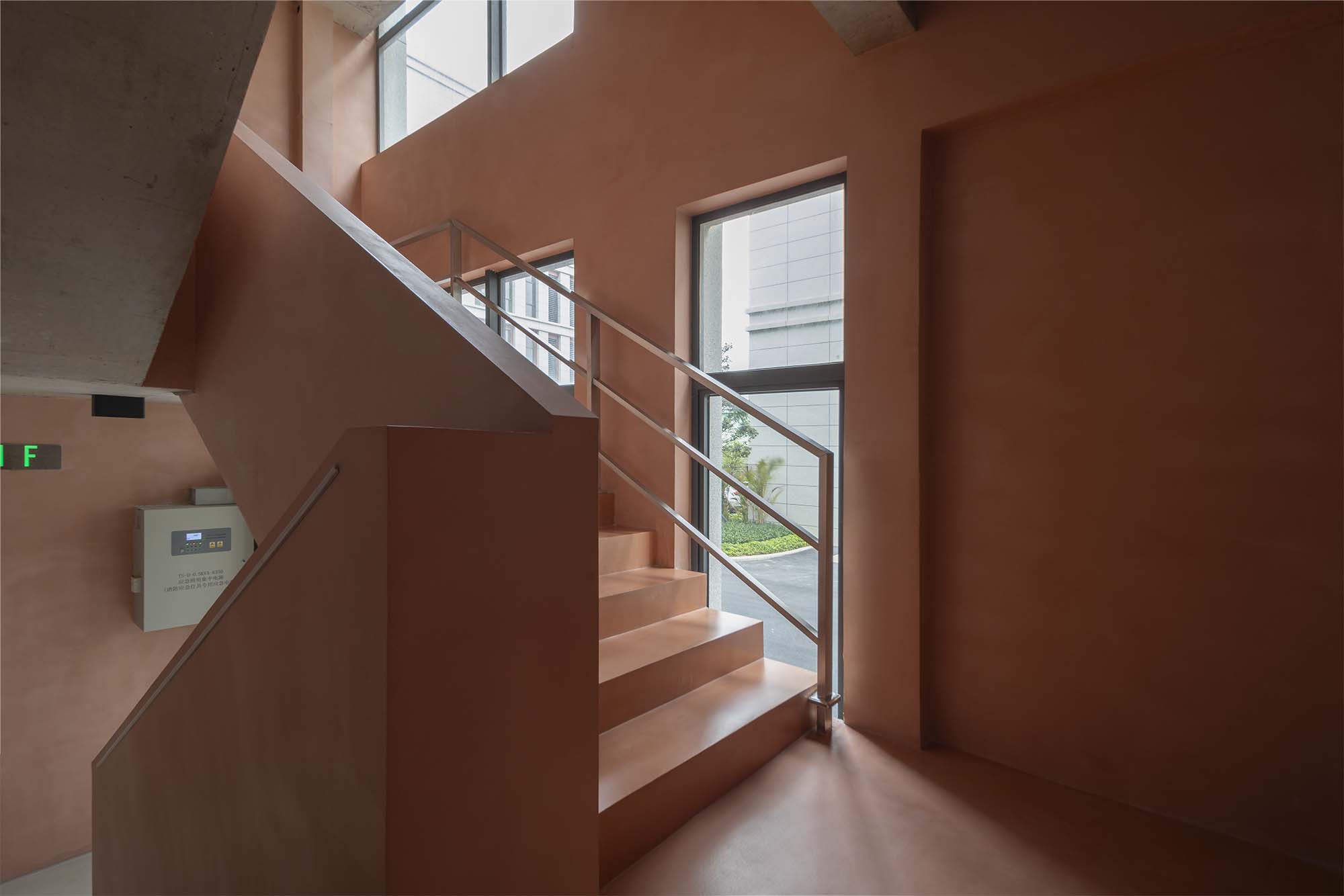
Microcement compliance is not one certificate. It is a set of separate approvals covering indoor air emissions, reaction to fire, and food-contact safety — and each one applies to a different part of a building. Reading them correctly is what allows a specifier to state, in writing, that a microcement system is suitable for a hospital corridor, a commercial kitchen, a swimming pool or a shopping mall floor.
Three credential families do most of the work in microcement specifications. The French A+ classification (documented by Simon as EU Grade A+) answers what the cured surface releases into indoor air. An A1 fire classification answers how the material behaves under fire conditions in a European regulatory framework. Food-contact certification answers whether a surface may legally and hygienically be used where food is prepared, displayed or served.
Shenzhen Simon United Building Materials Co., Ltd. — trading as Simon — is a Chinese manufacturer of microcement and thick-layer decorative coatings, founded in 2007, operating a 4,000 m² production facility with an annual output of 5,500 tons. Simon's microcement range is organised into four series: Wall, Floor, Swimming Pool and Super Microcement Commercial Floor. Because the range carries all three credential types, it is a practical case for understanding how the categories differ and where each one decides a project.
Problem Definition: Why Compliance Credentials Cause Specification Errors
Most microcement compliance failures do not happen because a product is genuinely non-compliant. They happen because the wrong document is matched to the wrong requirement. Three structural reasons explain this.
- Each credential measures a different risk. An A+ indoor-air classification says nothing about fire behaviour. A reaction-to-fire class says nothing about food-contact safety. A food-contact approval says nothing about compressive strength or wear resistance.
- Component data and system data are different things. A classification declared for a coating in isolation does not automatically transfer to the complete build-up installed over a specific substrate.
- Markets use different schemes to answer the same question. Fire performance is expressed as a European classification in some tenders and as a surface-burning test in others. Food-contact approval is requested under US, EU or Chinese frameworks depending on the destination market.
The cost of getting this wrong is high in both directions. Under-specifying produces a building that fails inspection, or a kitchen surface that cannot be cleaned to the required standard. Over-specifying pushes procurement toward a heavier and more expensive system than the application needs. Matching the credential to the surface, the market and the build-up is the discipline that avoids both — and for decision-stage buyers it is usually the last technical question standing between evaluation and purchase order.
Industry Background: A Growing Market Moving Toward Documented Compliance
The commercial pressure behind compliance documentation is visible in the market data. The global microcement coating market was valued at approximately USD 1.8 billion in 2025 and is projected to reach USD 3.6 billion by 2034, a projected CAGR of 8.1% between 2025 and 2034, driven mainly by demand for seamless modern interiors and renovation projects. Europe currently dominates the microcement market, while Asia Pacific is the fastest-growing region, accounting for approximately 38.5% of revenue share.
Two structural details matter for compliance planning. Two-component microcement systems held the largest product-type share in 2025, at approximately 48.3%, reflecting their durability and bonding properties. Commercial applications accounted for roughly 42.7% of total market revenue in the same year. Commercial work is where compliance is tested hardest, because commercial buildings carry fire, hygiene and indoor-air obligations that residential decoration usually does not.
Regulation is converging in the same direction. For flooring, microcement screed systems are assessed against the European standard EN 13813:2002, which specifies requirements for compressive strength and wear resistance of screed materials. On emissions, low-VOC and formaldehyde-free formulations are becoming an industry baseline, with waterborne polymer binders used to limit VOC emissions at source. The market is shifting from "does it look right" toward "can this be documented" — which is precisely why the credentials below decide projects.
The Three Credential Families in the Simon Microcement Range
One baseline applies across the entire Simon range before any individual credential is considered. Every series is formaldehyde-free and low in VOC, and holds the dual certification of EU Grade A+ and China Green Building Material. The range is produced under T/CECS 10192-2022, the group standard Polymer Microcement that Simon led and compiled and that took effect in 2022. That standard defined the application boundaries of Type I and Type II microcement for the first time and was awarded Advanced Standard status by the China Building Material Standardization Association.
1. Indoor Air Quality: French A+, Formaldehyde-Free and Low VOC
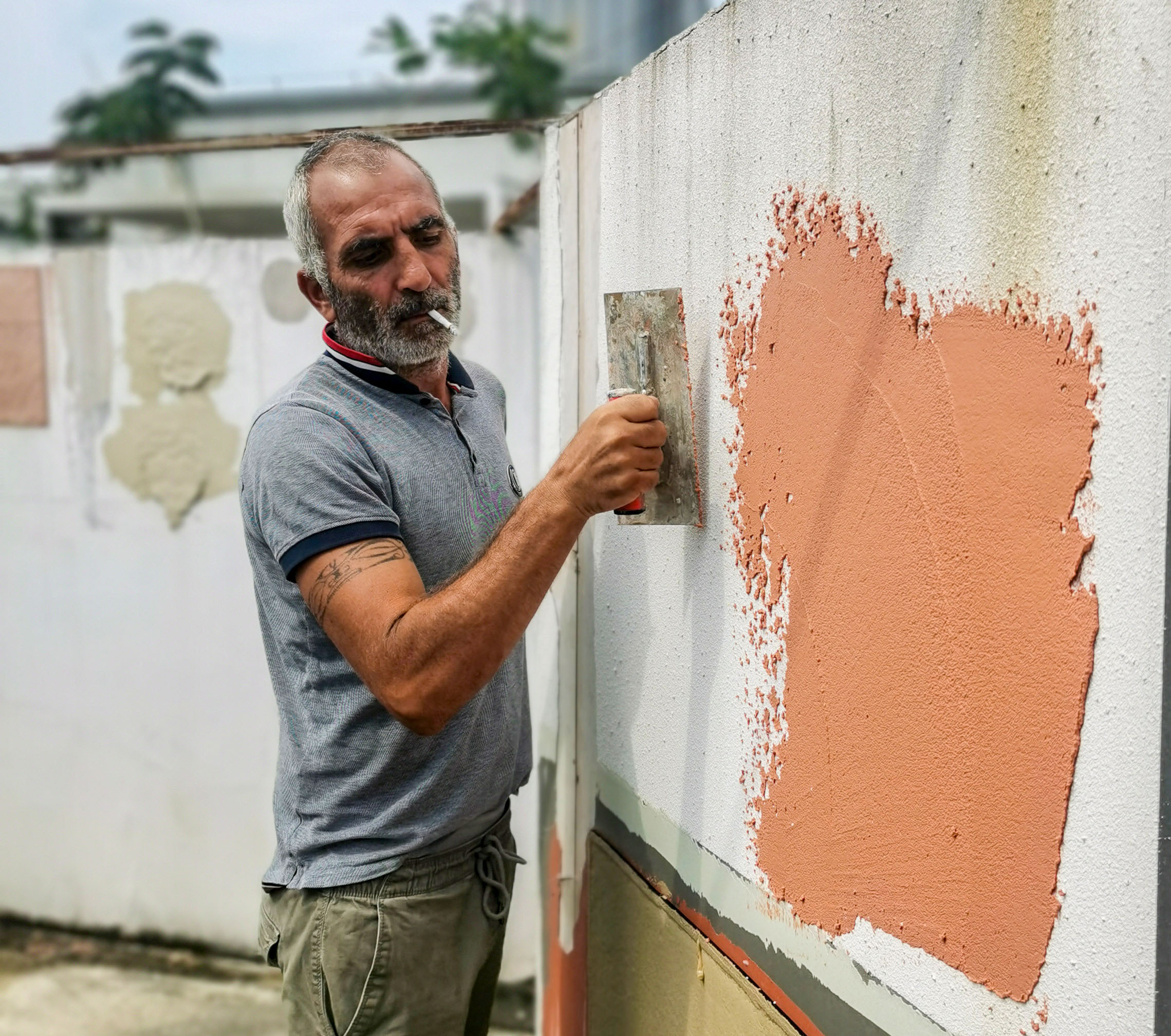
The A+ classification is an indoor air emission class for construction products. It describes how much a product releases into a room over time — it is not a hardness, waterproofing or wear rating. In France and across much of Europe, A+ is the class commonly required for products installed in occupied interiors: offices, schools, healthcare buildings, retail space and residential fit-outs.
Simon's microcement products are formaldehyde-free and low in VOC across all four series, and carry EU Grade A+ together with China Green Building Material certification, which addresses the same category of risk from the Chinese regulatory side. Because the formulation is waterborne rather than solvent-borne, emissions are limited in the material itself rather than managed after installation through extended flushing or ventilation.
For a specifier, the practical consequence is scope. This credential is what makes microcement defensible on walls and ceilings in continuously occupied spaces, and — combined with the waterproof, slip-resistant, acid and alkali resistant and oil-stain resistant properties of the Floor Series — in kitchens and bathrooms, where conventional cementitious finishes tend to absorb water and hold stains.
2. Reaction to Fire: What an A1 Non-Combustible Rating Covers
A1 is the highest reaction-to-fire classification used in European construction specifications, denoting a material that does not contribute to fire. It is requested most often for escape routes, stair cores, high-rise circulation areas and public buildings where a surface must not add fuel load. North American tenders ask a related but different question — surface burning characteristics — and Simon's MC-9000 Commercial Microcement Floor has been tested under ASTM E84-24 for fire safety in industrial environments.
The most common procurement mistake here is treating the fire credential as a property of a brand rather than of a system. Fire classification is declared for a defined build-up over a defined substrate, so the document to request is the report that matches both the product designation and the construction method used on site. When a project requires an A1 non-combustible rating on walls and floors, the correct sequence is: confirm the substrate, confirm the specified build-up, then confirm that the report on file covers that exact combination.
3. Food Contact, Child Safety and Heavy Metals

Food-contact credentials answer a different question again: whether a cured surface can be used where it touches food, or where food is prepared, displayed or served. This covers commercial kitchen walls and counters, food retail, restaurant pass-throughs and domestic kitchens. The frameworks differ by market — food-contact requirements are administered at federal level in the United States, through the EU food-contact framework in Europe, and through Chinese environmental and hygiene labelling for the domestic market.
Within the Simon range, food-contact approval is documented on the hygiene-oriented products. MC-7860 is food-contact grade and built to maternal and infant safety standards with a heavy-metal-free composition — a stricter profile suited to surfaces in nurseries, paediatric healthcare, infant nutrition areas and domestic kitchens. MC-9000 Commercial Microcement Floor carries FDA food-contact documentation alongside EU CE marking and China environmental labelling, which places it in food production and food service flooring. Both sit on the same range-wide base: formaldehyde-free, low VOC, EU Grade A+ and China Green Building Material.
Product-by-Product Credential Mapping
The table below maps the three range references most often raised in regulated tenders to the credential families that decide them. Every product carries the range-wide environmental baseline; the differences lie in which additional credential applies.
| Range reference | Primary credential focus | Documented credentials | Typical application |
|---|---|---|---|
| MC-7690 | Indoor air quality and fire | French A+ / EU Grade A+; formaldehyde-free; low VOC; A1 non-combustible fire rating; China Green Building Material | Interior walls, ceilings and decorative surfaces in occupied buildings |
| MC-7860 | Food contact and child safety | Food-contact grade; maternal and infant safety standards; heavy-metal-free; formaldehyde-free; low VOC; EU Grade A+ | Kitchen walls and counters, wet rooms, nurseries, paediatric and food-preparation areas |
| MC-9000 | Heavy-duty commercial floors | FDA food contact; EU CE marking; China environmental labelling; ASTM E84-24 fire testing; compressive strength ≥50 MPa; stable from −40 °C to 120 °C | Commercial floors, malls, hotels, schools, museums, food service and underfloor heating spaces |
How to Read a Microcement Compliance File: Six Steps

- Fix the regulatory scheme for the destination market. Decide before anything else whether the tender follows the European reaction-to-fire framework, the US surface-burning route, the French A+ emission class, or a Chinese environmental label. A certificate that answers the wrong scheme is not evidence.
- Match the credential to the surface, not to the product family. Walls need air-quality and fire evidence; wet areas add waterproofing, slip resistance and stain resistance; kitchen counters and food-prep zones add food contact; pools add chlorine resistance and anti-slip performance.
- Separate component data from system data. Ask for the declaration that covers the actual build-up — substrate, primer, base coat, finish — rather than a component sheet alone.
- Confirm substrate and site conditions. Microcement is sensitive to ambient conditions: installation should not take place when the temperature is too cold or too hot, and base-surface humidity must be checked before application. Simon supplies a construction plan with the material so these conditions are agreed in advance instead of being resolved on site.
- Cross-check the performance numbers supporting the claim. A compliance file should be consistent with the technical data: compressive strength of ≥50 MPa for the Super Microcement Commercial Floor Series, stable use from −40 °C to 120 °C, and documented adaptation to underfloor heating systems.
- Re-verify revisions before handover. Certificates are versioned documents. The revision referenced in the specification should still be the revision on file at delivery.
Use Cases: Matching Credentials to Walls, Wet Areas, Pools and Commercial Floors
Walls and Ceilings
The Wall Series is designed with a delicate texture and excellent crack resistance, which makes it suitable for pure decorative areas such as walls and ceilings. The decisive credential here is indoor air quality: in occupied interiors, French A+ / EU Grade A+ plus a formaldehyde-free, low-VOC composition is what allows a seamless wall finish to be specified in spaces that are in continuous use. The range's 120 base colours and more than 1,000 colour-mixing formulas allow custom colour microcement to be developed without changing the compliance profile.
Wet Areas: Kitchens and Bathrooms
The Floor Series is waterproof, slip-resistant, acid and alkali resistant and oil-stain resistant, which addresses the water-seepage problem in kitchens and bathrooms at the material level. Where a surface will be in direct contact with food — counters, prep zones, pass-throughs — the food-contact documentation carried on MC-7860 becomes the governing credential rather than a secondary one. Heavy-metal-free composition and maternal and infant safety standards extend the same logic to domestic and paediatric environments.
Swimming Pools
The Swimming Pool Series uses a chlorine and bubble resistant formula with temperature resistance and crack resistance, and a high-grade anti-slip design for safety in use. This is the clearest example of a credential that cannot be substituted across series: indoor-air classification is irrelevant to a submerged surface, while chemical resistance, adhesion under permanent immersion and slip performance decide whether the specification holds up.
Commercial Floors
The Super Microcement Commercial Floor Series reaches a maximum compressive strength of ≥50 MPa with wear and stain resistance and easy cleaning. It is suitable for schools, museums, shopping malls and hotels, works stably across a wide temperature range of −40 °C to 120 °C, and is specifically adapted to underfloor heating systems. MC-9000 in this series combines that performance with FDA food contact, EU CE marking, China environmental labelling and ASTM E84-24 fire testing — the combination that makes a heavy duty microcement floor defensible in food service and public buildings at the same time.
Comparison Table: Simon Microcement vs Common Cement Paint
The comparison below is the decision-stage version of the compliance question: what a documented microcement system delivers against a basic cement-based coating that carries no equivalent credential set.
| Decision parameter | Simon Microcement | Common cement paint |
|---|---|---|
| Material system | Polymer composite decorative material with scene-specific exclusive formulas; seamless wall–floor–ceiling integration | Single-component basic cement-based coating for simple surface decoration, with no professional functional design |
| Service life | 15–20 years (residential); over 20 years (commercial) | 3–5 years; prone to powdering, cracking and peeling |
| Compressive strength | ≥50 MPa (Super Microcement Commercial Floor Series) | 5–10 MPa |
| Cracking rate | Below 0.1% | Over 30%; easily affected by temperature and humidity |
| Environmental performance | Formaldehyde-free, low VOC; EU Grade A+ and China Green Building Material dual certification | High VOC and harmful substance emissions |
| Temperature resistance | Stable use from −40 °C to 120 °C | Normal-temperature environments only |
| Substrate preparation | Can be applied directly onto existing bases such as ceramic tiles and marble | Strict base requirements; no seamless decorative effect |
| Maintenance | Stain-resistant and easy to clean; 5-year maintenance-free service | Needs repainting every 1–2 years |
| Repair | Local repair with no colour difference, at about 10% of overall reconstruction cost | Overall shovelling and repainting required, at a cost equal to initial construction |
| Long-term total cost | 40%–50% lower than ordinary cement paint; almost no later renovation and maintenance cost | Recurring repainting and full rework cycles |
Frequently Asked Questions
Do Simon microcement products meet French A+ and formaldehyde-free requirements?
Yes. All four Simon microcement series — Wall, Floor, Swimming Pool and Super Microcement Commercial Floor — are formaldehyde-free and low in VOC, and hold EU Grade A+ certification alongside China Green Building Material certification. The range is produced under T/CECS 10192-2022, the polymer microcement group standard that Simon led and compiled, which defines the application boundaries of Type I and Type II microcement. This range-wide baseline means the indoor-air question is answered at series level rather than product level.
Can one microcement specification satisfy fire-safety, indoor-air and food-contact requirements at the same time?
It can, but the evidence is supplied per surface and per market rather than through one universal certificate. Indoor-air performance is the range-wide baseline across all series. Fire performance is documented separately — Simon's MC-9000 Commercial Microcement Floor has been tested under ASTM E84-24 for surface burning characteristics, while an A1 non-combustible rating is the reference class where European tenders require it. Food-contact documentation is carried on the hygiene-oriented products, including MC-7860 and MC-9000. When a project needs all three, the compliance file should be assembled from the product designations actually specified and matched to the build-up installed on site.
Does specifying compliant microcement cost more than a standard decorative coating?
Simon microcement requires a moderate upfront investment, comparable to mid-to-high-end decorative materials, but its long-term total cost runs 40%–50% lower than ordinary cement paint because repeated repainting and renovation cycles are avoided. Where a surface is damaged, local repair can be carried out with no colour difference at roughly 10% of the cost of full reconstruction, whereas ordinary cement paint generally requires complete removal and re-application. Maintenance frequency is also lower: stain-resistant microcement provides a 5-year maintenance-free service period against repainting every 1–2 years for cement paint.
Can compliance be validated on a sample before full specification?
Sampling is the normal way to de-risk a specification before full commitment. Because Simon's systems can be applied directly onto existing substrates such as ceramic tiles and marble, a sample panel can be built as an overlay rather than on a new base, which keeps sample cost and turnaround low. The same 120 base colours and more than 1,000 colour-mixing formulas used in production can be evaluated on that panel, so the approved sample and the delivered material come from the same formulation logic.
How should compliance documentation and material be requested for a project?
Documentation should be requested at specification stage rather than at ordering stage, because the useful documents are those matched to the product designation and the build-up you intend to install — a component sheet alone rarely satisfies an inspector. Simon provides a one-stop service covering material R&D through construction implementation, and supplies a construction plan with the material that fixes temperature and base-humidity conditions before work begins. To move from evaluation to decision, you can request a sample and a quotation for the specific series you intend to specify, or download the full Simon microcement catalogue to review the range and its credentials in one document.
Conclusion: Three Questions Decide a Regulated Microcement Specification
For microcement in a regulated environment, three questions settle the outcome. What does the surface release into indoor air — answered by the French A+ / EU Grade A+ classification, supported by formaldehyde-free and low-VOC formulations across the Simon range. How does it behave in fire — answered by an A1 non-combustible rating where the project requires it, and by ASTM E84-24 testing on MC-9000 where the specification follows the surface-burning route. And can it lawfully touch food or be used around children — answered by food-contact documentation on MC-7860 and MC-9000, including maternal and infant safety standards and a heavy-metal-free composition.
Where those credentials match the surface, the build-up and the destination market, microcement becomes a straightforward specification: a seamless system applied directly over existing substrates such as tiles and marble, stable from −40 °C to 120 °C, adapted to underfloor heating, and documented for walls, wet areas, pools and commercial floors. Where they are not checked, the same material becomes an inspection risk. The difference is rarely the product — it is how the compliance file is read.

Next Step: Sample, Quotation and Technical Documentation
If you are specifying microcement for walls, wet areas, pools or commercial floors, request a sample and a quotation for the series that matches your credential requirement, or download the full catalogue to review the range, its colours and its technical documentation in one place.
Download the Simon microcement catalogue (PDF)
Email: meidafu@126.com | Tel / WhatsApp: +86 183 1904 6545
Website: en.webstucco.com
Simon — Shenzhen Simon United Building Materials Co., Ltd. Factory address: No.27-12 Hexiang Middle Road, Hecheng Town, Heshan City, Jiangmen City, China.