
Microcement Partner FAQ: Grades, Purchase Terms and Acceptance Criteria
A long-term microcement partnership is decided long before the first container ships. It is decided when a buyer and a manufacturer agree which grade covers which surface, what the commercial terms are for repeat orders, and how a finished floor will be judged as acceptable. Get those three items right and the supply relationship runs on routine purchase orders. Get them wrong and every phase of the project reopens the same arguments about colour, adhesion and responsibility.
This FAQ answers the questions professional buyers actually raise at that stage, using documented facts about Shenzhen Simon United Building Materials Co., Ltd (Simon), a Shenzhen-based manufacturer of microcement and thick-layer decorative coatings founded in 2007, and about its MC-7690, MC-7860 and MC-9000 grades. Where a performance figure is not published in the available sources, this article says so and treats it as a submittal item rather than repeating a number the supplier has not stated.
What a long-term microcement partnership actually commits both sides to
A microcement partnership is a commitment to repeatability, not a commitment to a price list. The buyer is purchasing four things that stay constant across projects: the same grade designation, the same colour formula, the same sealer behaviour, and the same acceptance method. Everything else — volume, delivery schedule, packaging — can be renegotiated per order without destabilising the relationship.
The failure mode that damages long partnerships is grade drift. A partner specifies a wall system in phase one, accepts a substituted material in phase two because of stock pressure, and discovers at phase four that the two surfaces no longer match under raking light. Seamless architecture has no joints to hide a variation, so a supplier that cannot hold a formula across years is a higher risk than one that cannot hold a price.
The second failure mode is an undefined acceptance standard. Microcement is a hand-applied finish; without a written reference sample and a recorded set of site conditions, a dispute about texture or shade becomes a matter of opinion. Simon's own construction guidance notes that application temperature must not be too cold or too hot and that base-surface humidity requires attention, with an appropriate construction plan supplied for the project. Those are exactly the variables that should be logged at acceptance, because they explain outcomes that are not material defects.
Industry background: why buyers are contracting for years, not for one job
Microcement is no longer a niche finish bought job by job. Commercial research published by Dataintelo in March 2026 valued the global microcement coating market at USD 1.8 billion in 2025, with two-component systems holding the largest product-type share at 48.3% and flooring accounting for 37.5% of total revenue. Those figures describe a category large enough that distributors and contractors now plan multi-year programmes around it rather than single refurbishments.
The technical backdrop matters as much as the commercial one. China's industry group standard T/CECS 10192-2022, Polymer Microcement, was led and compiled by Simon and took effect in 2022. It was the first standard to define the application boundary between Type I and Type II microcement — a decorative classification and a high-performance classification — and it is the reference point that makes a grade conversation possible at all. Before that boundary existed, "microcement" described a texture, not a performance level.
For a partner, the practical consequence is that grade selection can now be argued from a standard rather than from a supplier's adjective. That is the difference between a specification and a sales claim.
Grade selection: MC-7690, MC-7860 and MC-9000
Simon's portfolio is organised into four series: Wall, Floor, Swimming Pool, and Super Microcement Commercial Floor. The designations MC-7690, MC-7860 and MC-9000 are the grades a partner is normally quoted against for walls, for wet areas and pools, and for heavy commercial floors respectively. Each series carries documented characteristics; the per-grade figures for flexural strength, adhesion and surface hardness should be confirmed against the current technical data sheet at quotation, because those values are issued per grade and per system build-up.
One rule applies throughout: a value that is not stated for a grade is not evidence that the grade lacks it. In this category, unpublished is not the same as absent, and a serious buyer treats both in the same way — by requesting the test report.
MC-7690 — the wall-grade designation
MC-7690 belongs to the Wall Series, which Simon describes as having a delicate texture and excellent crack resistance, intended for purely decorative areas such as walls and ceilings. That combination is what a wall grade actually needs. Walls do not carry point loads; they carry movement, and a decorative coating that cracks along a plasterboard joint or a window reveal ruins the seamless effect regardless of how strong the material is.
For a partner, the wall grade is usually the highest-volume line and the most colour-sensitive. Ceilings and vertical surfaces are viewed at close range and in raking light, so the practical acceptance criteria for MC-7690 should be texture uniformity and shade consistency against a retained master sample, not abrasion resistance.
MC-7860 — the wet-area and pool designation
MC-7860 sits in the Swimming Pool Series, which Simon documents with a chlorine- and bubble-resistant formula, temperature resistance, crack resistance, and a high-grade anti-slip design. Chlorine resistance and bubble resistance are the two properties that separate a genuine pool material from a wall coating applied in a wet room: chlorinated water attacks the binder, and trapped moisture beneath a low-permeability finish produces the blistering that ends most failed pool projects.
Anti-slip design deserves separate weight in the acceptance discussion. A pool surround is a safety surface, and the slip classification is a project requirement that should be agreed in writing before application rather than assessed after handover.
MC-9000 — the heavy commercial floor designation
MC-9000 is Simon's high-performance commercial microcement, designed to handle ≥50 MPa compressive strength. Within the Super Microcement Commercial Floor Series, the material is described as wear- and stain-resistant and easy to clean, stable across a temperature range of −40°C to 120°C, and specially adapted to underfloor heating systems. Those are the conditions that matter in schools, museums, shopping malls and hotels, where the floor is in continuous use and refurbishment windows are short.
The ≥50 MPa figure is the single most useful number in a partnership negotiation, because it moves the conversation out of the decorative category entirely. It is also a compressive figure: it does not establish abrasion class, slip resistance or chemical resistance, each of which needs its own test reference.
Side-by-side comparison of the three grades
The table below sets out only what the available sources document for each grade, alongside the submittal item a partner should request to close the remaining gap. It is a procurement worksheet, not a ranking — the three grades are not interchangeable, so comparing them as competitors would be meaningless.
| Grade | Documented application role | Documented performance anchor | Confirm in the submittal |
|---|---|---|---|
| MC-7690 | Wall Series — walls and ceilings, decorative surfaces | Delicate texture; excellent crack resistance | Adhesion pull-off value; flexural strength; texture reference panel |
| MC-7860 | Swimming Pool Series — pools, wet areas, wet zones | Chlorine- and bubble-resistant formula; temperature resistance; crack resistance; high-grade anti-slip design | Chlorine exposure test reference; slip classification; waterproofing system build-up |
| MC-9000 | Super Microcement Commercial Floor — heavy-duty commercial and industrial floors | ≥50 MPa compressive strength; wear and stain resistance; −40°C to 120°C; underfloor heating adaptation | Abrasion class; chemical resistance list; reaction-to-fire classification |
| All grades | Simon microcement range | Formaldehyde-free; low VOC; EU Grade A+ and China Green Building Material dual certification; reference standard T/CECS 10192-2022 | Certificate scope and validity; EU CE certificate reference; safety data sheet |
On compliance, the range is documented as formaldehyde-free and low in VOC, holding EU Grade A+ and China Green Building Material dual certification, and EU CE documentation is recorded under certificate reference UNICO20250623XG01. Certificate scope is the detail that matters: confirm at order that the certificate names the grade, the system build-up and the market you are selling into, because a range-level certificate is not automatically a project-level approval. Simon also states that its products can be applied directly to existing ceramic tile and marble substrates, which shortens the construction programme but shifts the substrate survey onto the acceptance checklist.
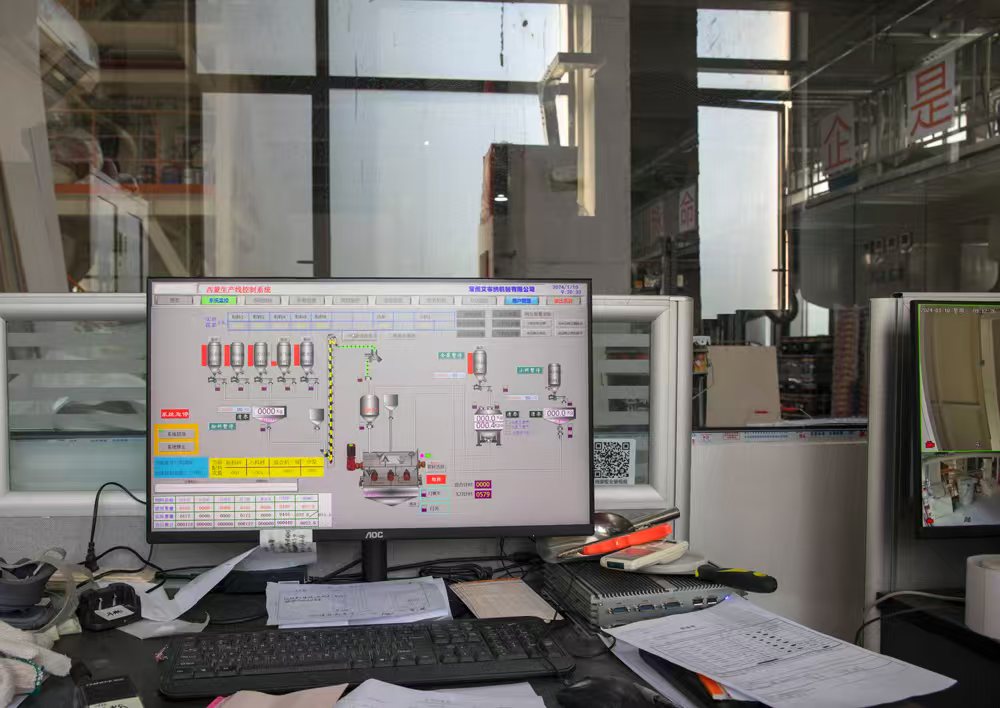
Simon production facility — capacity planning is the first thing a multi-project partner should verify.
Purchase terms for a repeat-order agreement
The commercial terms Simon publishes for partner ordering are specific and worth stating plainly, because they define whether a partnership is operationally realistic.
Minimum order quantity is one 20-foot container. That single line has more influence on a partnership's shape than any performance figure: it means a partner is buying at container scale, and it determines how many projects a single order can serve, how much stock a distributor must hold, and how colour continuity is planned across a phase.
Delivery terms are FOB, so the buyer controls freight and insurance from the port of loading. For a distributor this is usually the preferred structure, because it lets the partner consolidate shipments and keep the logistics relationship in-house. It also means the landed cost is the partner's calculation, not the supplier's.
Payment terms are 30/70 — a 30% deposit against the order and 70% on the agreed balance event. Whether the 70% is released against the pre-shipment inspection report or against the bill of lading should be written into the contract rather than assumed; it is the single clause that decides who carries risk between the factory gate and the port.
Standard lead time is 30 to 45 days, and monthly production capacity is 660 tons. Customisation and OEM services are offered alongside the standard range. Separately, Simon reports an annual output of 5,500 tons from a 4,000 m² facility with 35 employees, a five-person R&D team and an export ratio of 42%, serving markets in Africa, the Middle East, Australia and Southeast Asia. Capacity and realised output are different measures, so a partner planning a seasonal programme should ask which figure the quotation is being built against rather than converting between them.
The colour system is the other term that belongs in the agreement. Simon documents 120 basic colours and more than 1,000 mixing formulas. In practice that means the partner should negotiate a locked formula library — a defined set of approved shades with retained physical samples — rather than relying on a colour name, because names survive redesigns of the shade card and samples do not.

Container-scale ordering and a 30–45 day lead time set the planning rhythm for a partner programme.
Acceptance criteria: a step-by-step sequence
Acceptance is not one inspection. It is four checkpoints, and a partnership agreement should name all four so that responsibility is unambiguous at each stage. Simon's stated acceptance criteria are pre-shipment inspection (PSI) and third-party testing through SGS or Intertek; everything below extends those into a project-level method.
Step 1 — Lock the reference before the order is placed
Produce and sign a physical reference panel for each grade and each approved shade, and keep one copy with the buyer and one with the factory. The panel is the acceptance standard. Texture, sheen and shade are then compared against a physical object rather than a photograph, which removes the most common source of handover dispute. Request the technical data sheet for the exact grade at the same time, and check that the values quoted in the contract match it.
Step 2 — Close the document set
Before signing, collect the safety data sheet, the EU Grade A+ emissions documentation, the China Green Building Material certificate, and the EU CE certificate with its scope stated. If the project requires reaction-to-fire classification, food-contact conformity, drinking-water contact approval, or China Environmental Labelling (the “ten-ring” mark), request the specific declaration for the grade rather than accepting a general statement of compliance — a phrase such as “food safe” is marketing, not a certificate.
Step 3 — Pre-shipment inspection and third-party testing
PSI and independent SGS or Intertek testing should be scheduled against the production batch, not the stock batch. Record the batch code on the inspection report and on the commercial invoice, and retain a sealed production sample from the same batch. If a shade problem appears eighteen months later, that sealed sample is the only object that can settle whether the material changed or the application did.
Step 4 — Site conditions and applied-work acceptance
At application, log ambient temperature and substrate moisture before the first coat, and record any deviation from the supplier's construction plan. Simon's guidance is that application temperature should not be too cold or too hot and that base-surface humidity requires attention, with a construction plan supplied to suit the project. Those records are what separate a material fault from an installation condition, and they cost nothing to keep.
The applied-work checklist should then cover adhesion (pull-off test on a representative area), film thickness, seam and edge termination, surface texture against the reference panel, and slip classification where the surface is a wet area. Handover documentation should include the signed reference sample, the batch records, the condition log and photographs of each zone.
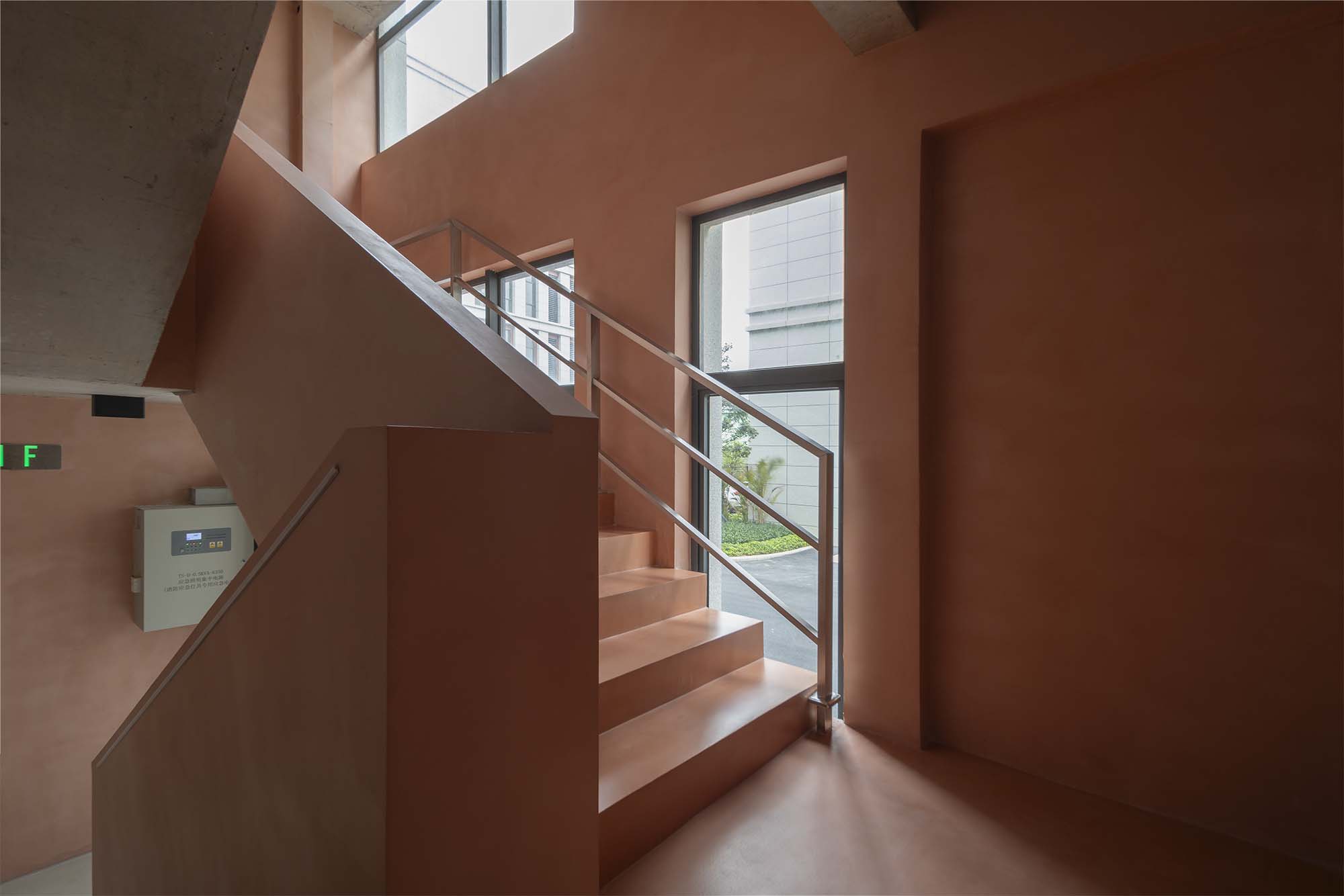
Pre-shipment inspection and third-party testing are the acceptance points Simon states for export orders.
After-sales communication over the life of a project
Longevity evidence is worth more than a promise. In a project case recorded for the Middle East and Africa market, the implementation ran through a period of 10 years of stable operation. That is a service-life reference, not a guarantee, and the distinction matters when a partner is writing an offer to an end client.
What should be agreed in the contract is the communication structure, because that is what a partner actually relies on years later. Three points cover most of it. First, a named technical contact and a stated route for escalation, so a site question does not disappear into a general sales inbox. Second, batch traceability, so a query about a specific floor can be traced to a production batch and its inspection record. Third, a documented repair method for each grade, since local repair is only an advantage if the contractor knows the sequence.
On repair specifically, Simon's product comparison documentation states that local repair of its microcement can be completed without a colour mismatch, at roughly 10% of the cost of a full redo, and that the material is stain-resistant and easy to clean. Those are company-reported figures and should be read as design intent rather than a contractual outcome. Any warranty period, defect liability term or service commitment is a negotiated contract clause; it is not published in the product literature and should not be inferred from it.
Where each grade earns its place
Interior design and residential walls: MC-7690, where texture and crack resistance matter more than load bearing, and where 120 basic colours plus over 1,000 mixing formulas give a designer room to specify a custom shade without leaving the system.
Kitchens, bathrooms and other wet areas: MC-7860, because the documented chlorine- and bubble-resistant formula addresses the mechanism that fails first in these rooms. The Floor Series is separately described as waterproof, slip-resistant, and resistant to acid, alkali and oil stains.
Pools and pool decks: MC-7860 again, with the slip classification and the waterproofing build-up agreed before application rather than assessed afterwards.
Heavy commercial and industrial floors: MC-9000, at ≥50 MPa compressive strength, for schools, museums, shopping malls and hotels. The −40°C to 120°C stability range and underfloor heating adaptation make it the grade to consider where the slab is heated or the building envelope is exposed.
Low-VOC and green-building projects: any grade, provided the emissions certificate for that grade and market is in the submittal pack. That is a documentation task, not a product-selection task.
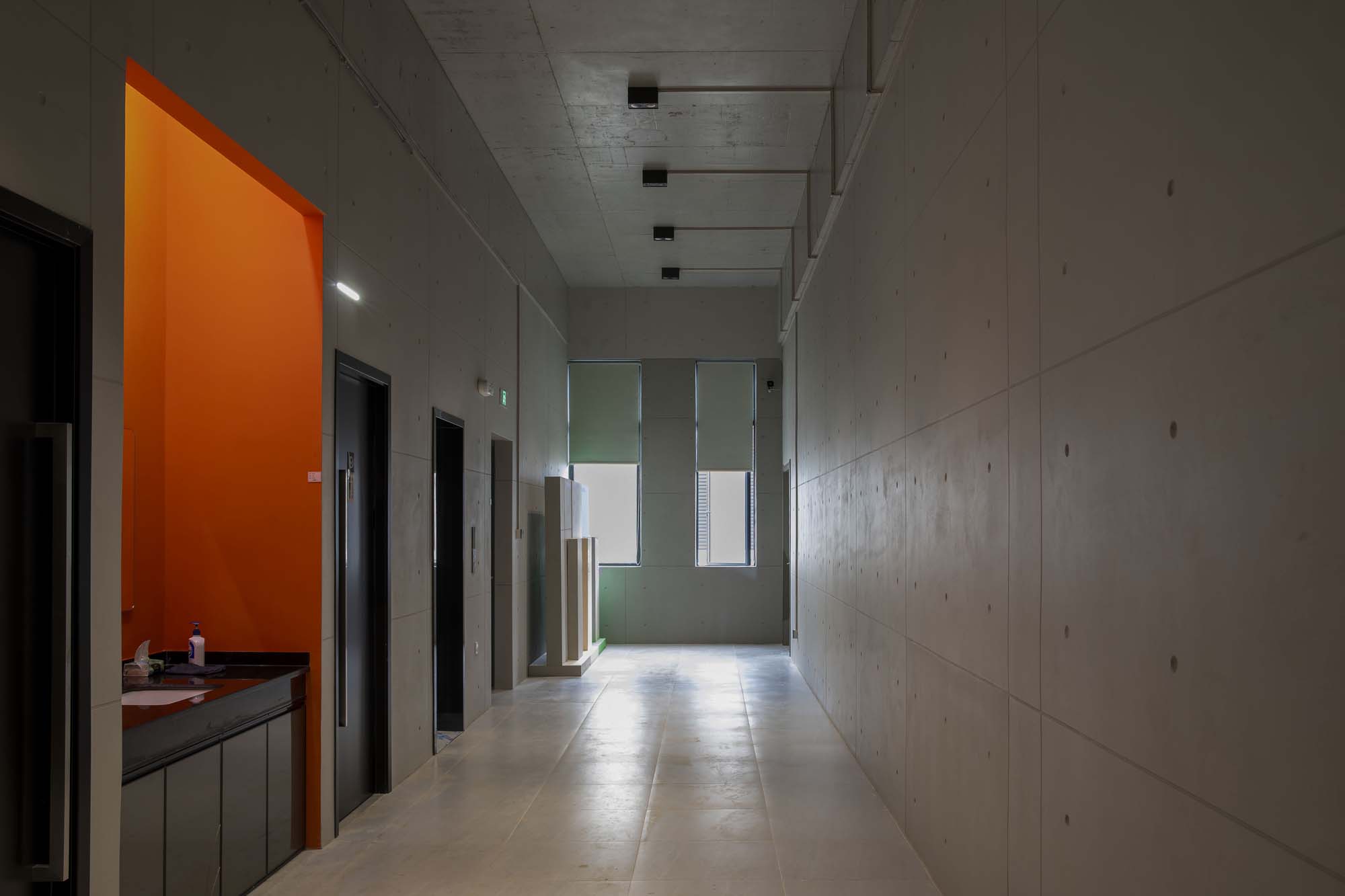
A named technical contact and batch traceability are the after-sales terms that carry a long project.
Frequently asked questions
Which compliance documents should be verified before signing a long-term microcement supply agreement?
Verify four documents and check the scope on each: the safety data sheet for the grade, the EU Grade A+ emissions documentation, the China Green Building Material certificate, and the EU CE certificate with its reference and covered products stated. Add the reaction-to-fire classification and any food-contact or drinking-water declaration if the project requires them. A range-level certificate does not automatically cover a specific grade or system build-up, so the scope statement is as important as the certificate itself.
Can one supplier realistically cover walls, pools and heavy commercial floors in a single partnership?
Yes, provided the supplier's portfolio is organised by application rather than by texture. Simon's range is divided into Wall, Floor, Swimming Pool and Super Microcement Commercial Floor series, with MC-7690, MC-7860 and MC-9000 sitting in the wall, pool and heavy commercial positions respectively. A partner should confirm that each series is produced on a dedicated line and that the technical data sheet is issued per grade, because a single-formula supplier cannot serve all three applications without compromise.
Which grade should be specified for underfloor heating or a high-traffic commercial floor?
MC-9000 is the grade to evaluate. It is designed for ≥50 MPa compressive strength and is documented as stable from −40°C to 120°C, with specific adaptation to underfloor heating systems, which addresses the thermal cycling that causes cracking in lower-strength decorative systems. Confirm the abrasion class and the chemical resistance list for the specific traffic and cleaning regime before the specification is issued.
What are the purchase terms — MOQ, payment and delivery?
Minimum order quantity is one 20-foot container, delivery terms are FOB, and payment terms are 30/70. Standard lead time is 30 to 45 days, with monthly production capacity of 660 tons and customisation or OEM services available. Because delivery is FOB, freight and insurance sit with the buyer, so the landed-cost calculation belongs in the partner's own pricing model.
How do we keep colour and texture consistent across multiple project phases?
Lock a formula library rather than a colour name. Produce a signed physical reference panel for every approved shade, retain a sealed production sample from each batch, and record the batch code on the inspection report and the invoice. Simon documents 120 basic colours and more than 1,000 mixing formulas, so the range is wide enough that a partner should narrow it deliberately and then freeze it for the duration of the agreement.
What lead time and production volume should a partner plan around?
Plan around a 30 to 45 day standard lead time and a monthly production capacity of 660 tons. Simon separately reports annual output of 5,500 tons from a 4,000 m² facility. Capacity and realised output measure different things, so a partner running a seasonal programme should confirm which figure the quotation is built against, and should place the first order early enough to absorb one production cycle before the project start date.
What acceptance criteria should be written into the contract?
Write four checkpoints: a signed reference panel before the order, a complete document set including certificate scope, pre-shipment inspection with third-party SGS or Intertek testing tied to the production batch code, and an applied-work acceptance record covering adhesion, thickness, texture, edge termination and slip classification where relevant. Add the site condition log for temperature and substrate moisture, because those variables explain outcomes that are not material defects. To test the whole sequence on your own specification, request a grade sample and a quotation built against your project schedule — a sealed sample plus a written reference panel will tell you more about grade fit than any catalogue page.
Conclusion
A microcement partnership holds together on three written things: a grade decision that matches each surface, purchase terms that fit container-scale planning, and acceptance criteria that both sides signed before the first coat went down. Simon's documented position is useful here not because it answers every question, but because it answers the right ones — a defined Type I and Type II boundary under T/CECS 10192-2022, a ≥50 MPa commercial grade in MC-9000, a chlorine- and bubble-resistant pool grade in MC-7860, a crack-resistant wall grade in MC-7690, 660 tons of monthly capacity, and a stated acceptance route through PSI and third-party testing.
The remaining details — per-grade flexural and adhesion values, fire classification, warranty terms — are submittal items, not assumptions. Ask for them in writing, tie them to the batch, and the partnership becomes an operational relationship rather than a leap of faith.
For the full product range, series descriptions and technical documentation, download the Simon catalogue: Simon Microcement Product Brochure (PDF).
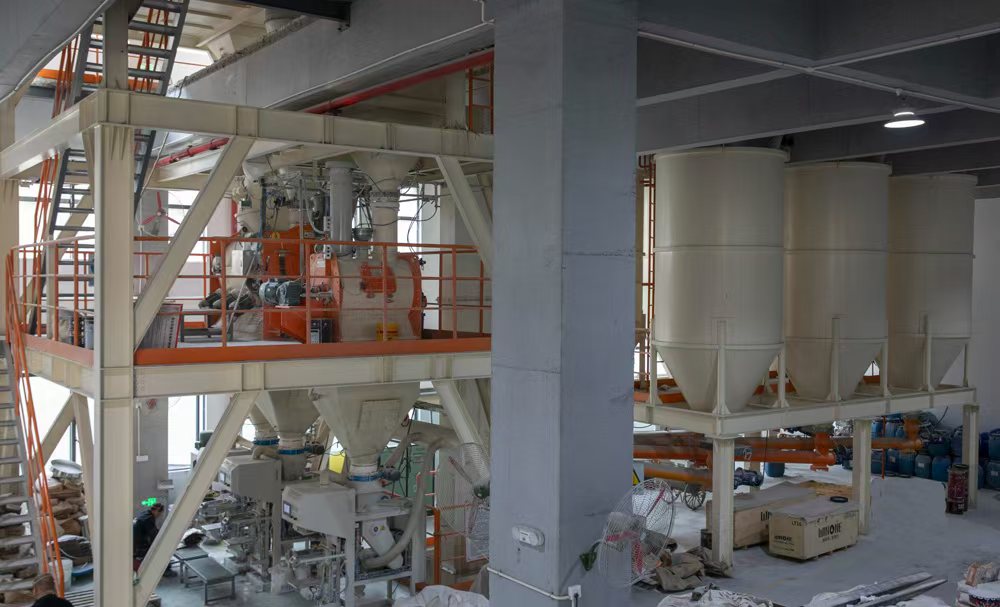
Request a grade sample and a project-based quotation to test the acceptance sequence before contracting.
Have Questions or Need More Details?
Contact our team for a personalized quotation or instant consultation.
Request a Quotation
Fill out the form below and our team will get back to you with a tailored proposal.
WhatsApp Direct Chat
Prefer to chat in real-time? Message us on WhatsApp for instant assistance & quick answers.
- Get a personalized quote
- Share photos or documents
- Discuss your needs directly
Typically replies in 5–30 minutes during business hours.