
Microcement Supplier Evaluation FAQ: Verify Capacity, Certifications & Delivery Reliability
Microcement Supplier Evaluation FAQ: Verify Capacity, Certifications & Delivery Reliability
A microcement supplier can be screened on documents before a single sample is mixed. Four checks do most of the work: whether published strength values name the model, the test age and the standard behind them; whether each certification is a certificate with a named holder and a defined scope rather than a logo; whether monthly output and lead time are consistent with the container volume you intend to order; and whether batch records support the colour and drying performance promised for the project. This FAQ answers those questions in the order they arise in a real evaluation, using documented Simon specifications as worked examples.
Simon (Shenzhen Simon United Building Materials Co., Ltd.) is a microcement manufacturer established in 2007 in Shenzhen, China, producing wall, floor, swimming pool and commercial floor microcement systems from a 4,000 m² facility.

Why Microcement Supplier Evaluation Fails Before the Sample Stage
Most supplier evaluations do not collapse on site. They collapse at the desk, when a quotation, a technical datasheet and a certificate pack are read as if they described the same product.
Three specific gaps account for most of the risk.
- Variant ambiguity. A single model line can contain a wall variant and a floor variant with materially different strength, hardness and water resistance. Simon's MC-7690 is documented as both a wall type and a floor and bathroom type, with 28-day compressive strength of >13.0 N/mm² for the wall type and >30.0 N/mm² for the floor type. A quotation that names the model but not the variant has not told you which of those you are buying.
- Certificate ambiguity. Certifications are usually supplied as acronyms. French A+, A1, FDA food contact, EU CE and China Green Building Material each answer a different question — indoor emissions, reaction to fire, food contact suitability, market access, environmental labelling — and none substitutes for another.
- Capacity ambiguity. Annual tonnage is a weak proxy for delivery reliability. Monthly output, test regime, minimum order quantity and lead time determine whether a container arrives on schedule; annual figures do not.
Each gap has a document answer, and each answer can be checked against a published value before any commercial commitment is made.
Industry Background: Microcement Is a System, Not a Single Specification
A microcement finish is a layered system — primer, base coat, finish coats and sealer over a prepared substrate. Published performance therefore belongs to the complete tested system, not to a bag of powder in isolation. Two suppliers can both describe a product as high strength while testing different builds, at different ages, on different substrates.
China's group standard T/CECS 10192-2022 Polymer Microcement was led and compiled by Simon and implemented in 2022. It defined the application boundaries of Type I and Type II microcement for the first time and was awarded the Advanced Standard by the China Building Material Standardization Association. For a buyer, the practical value of that structure is vocabulary: ask which type is being offered and which application boundary the supplier declares for it, before comparing any number.
Simon's own portfolio follows the same logic. It is organised into four series — Wall, Floor, Swimming Pool and Super Microcement Commercial Floor — where the application decides the system and the system decides the specification.
The Five Questions That Decide a Microcement Supplier Evaluation
1. How do you verify a compressive strength claim?
Verification starts with three qualifiers that should appear beside any strength value: model, test age and standard. A figure without them cannot be evaluated, only admired.
MC-7690 is documented at 28 days with compressive strength of >13.0 N/mm² for the wall type and >30.0 N/mm² for the floor and bathroom type. Flexural strength is approximately 5.0–8.5 N/mm², adhesion strength is ≥1.0 MPa, surface hardness is >2H for wall and >4H for floor, and Shore hardness is >55 for wall and >70 for floor at 28 days.
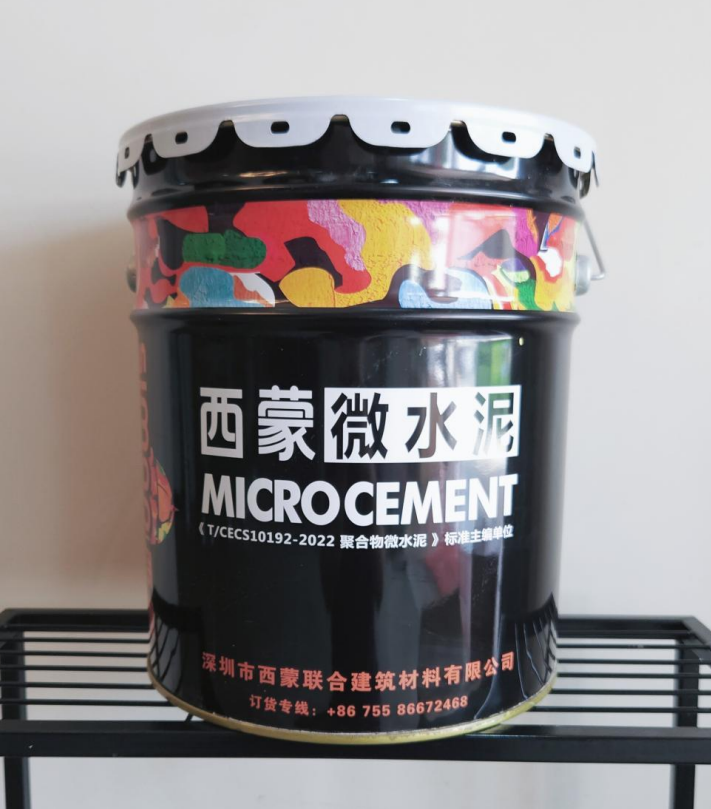
MC-7860, the swimming pool system, is reported at ≥30.4 MPa at 24 hours and ≥40.5 MPa at 7 days, against a national standard of ≥20.0 MPa. Flexural strength is ≥10.2 MPa at 24 hours and ≥11.2 MPa at 7 days against a national standard of ≥5.0 MPa, and abrasion resistance is 0.011 g (500 g/100 r) against a national standard of ≤0.15 g.
MC-9000, the commercial floor system, is specified at ≥50 MPa compressive strength, with the heavy-duty version tested at 65 MPa, plus 12 MPa flexural strength, Mohs hardness ≥6 and an R11 anti-slip rating when wet. Water absorption is <0.2%, and stains can be wiped clean within 10 minutes.
None of these figures is useful on its own. The 7-day value for MC-7860 matters because pool shells are handed over on tight programmes and 28-day data arrives too late; the 28-day values for MC-7690 matter because they describe the state the floor will be in when the building is occupied. Ask which age the report states, and ask for the report page rather than the datasheet cell.
2. How do you check whether a certification is valid and in scope?
Certification questions are usually answered with a row of logos. A usable answer separates four document classes, because each proves something different: a standard reference such as T/CECS 10192-2022 shows which framework the product is measured against, not that it passed; a laboratory test report shows a value for a specific sample, model and age; a certificate carries a named holder, a scope and a validity period; and a declaration or safety data sheet states composition and handling, not performance.
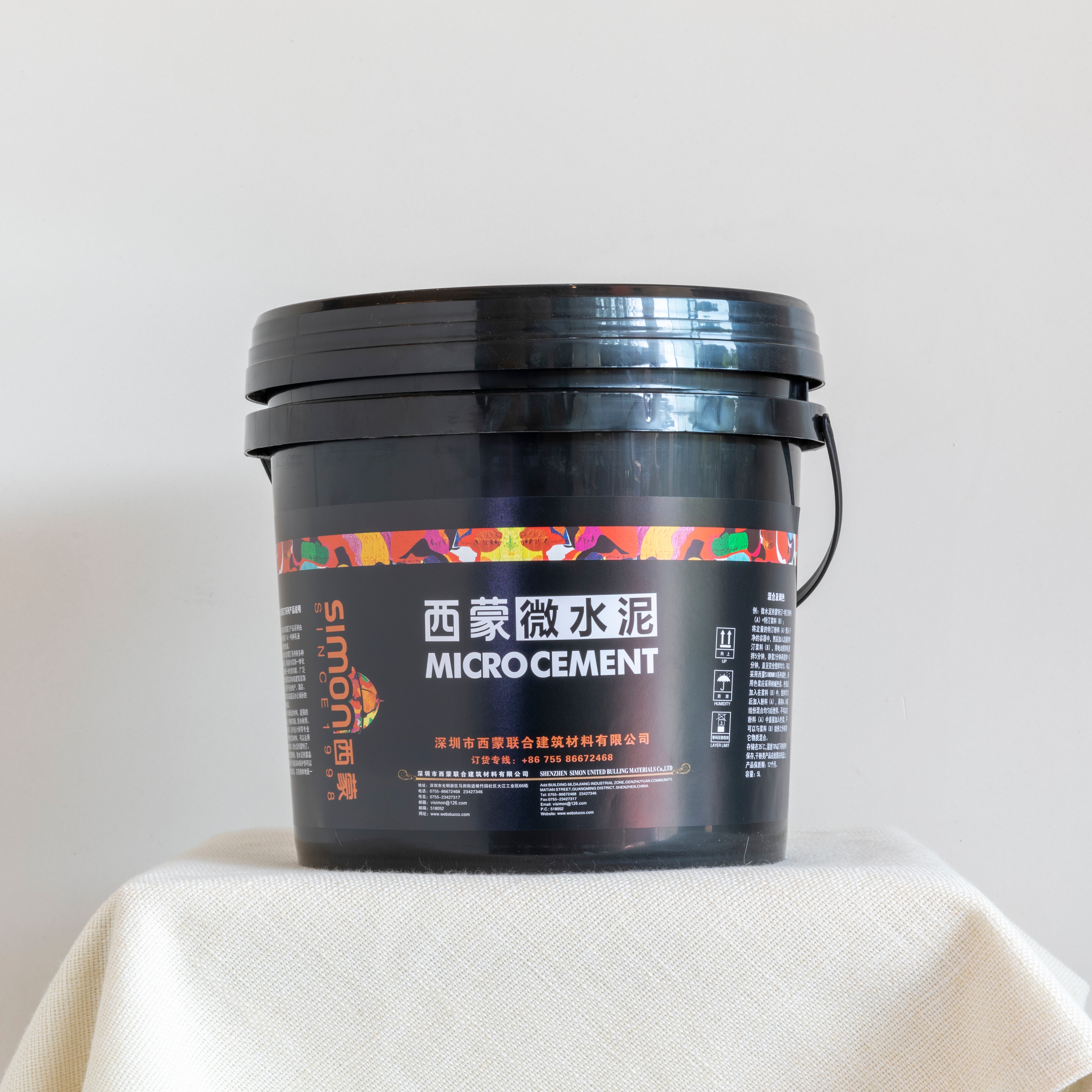
At model level, Simon documents the following. MC-7690 carries an A1 non-combustible fire rating and the French A+ environmental standard, is formaldehyde-free with low VOC, and is made from natural mineral powders and water-based resins. MC-9000 carries EU CE certification, complies with FDA food contact standards, holds Ten-ring certification, and is formaldehyde-free with near-zero VOC emissions. MC-7860 is formaldehyde-free, VOC-free and heavy-metal-free, meeting food contact grade and maternal and infant safety standards. At company level, Simon holds EU Grade A+ and China Green Building Material dual certification.
The check that catches most problems is the holder name. A certificate issued to a distributor, a sister brand or a trading company is not evidence about the factory that will fill your container. Confirm that the holder matches the legal entity on the contract, that the model on the certificate matches the model on the quotation, and that the scope covers your application — a fire rating earned by a wall system does not answer a floor question.
3. How do you confirm production capacity matches your project programme?
Capacity claims should be tested as ratios rather than headlines. Simon states a 4,000 m² facility, 35 employees, a 5-person R&D team, annual output of 5,500 tons, monthly capacity of 660 tons and an export ratio of 42%, with main markets in Africa, the Middle East, Australia and Southeast Asia.
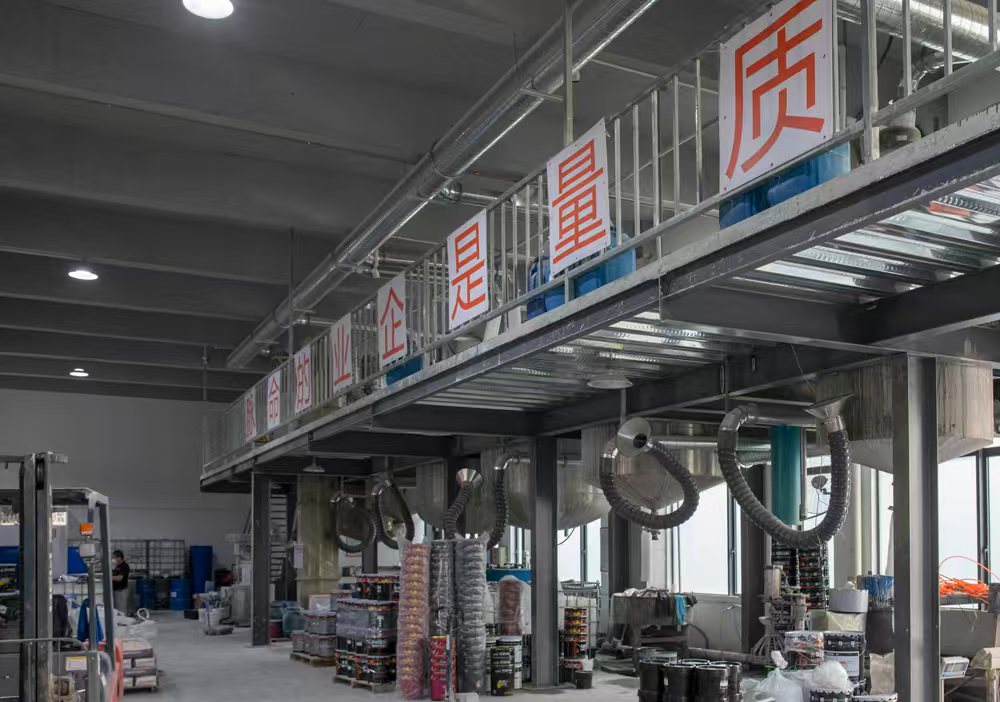
The ratio that matters to a project buyer is monthly capacity against monthly draw. If your programme consumes a meaningful share of 660 tons in a single month, ask how that month is scheduled around existing orders, and ask when the 30–45 day lead time starts — at order confirmation, at deposit, or at material readiness. The minimum order quantity is a 20-foot container, so mixed-system orders should be planned early rather than added late.
Quality control is the second half of capacity. A stated 100% test regime is meaningful only if you can see what is tested, how often, and what happens to a failing batch. Request the test item list and the batch record template before you request a price.
4. How do you test batch consistency and drying behaviour?
Batch consistency is the least examined and most expensive failure mode. Two containers of the same declared colour that dry at different rates will produce a visible seam on a seamless floor — the exact defect microcement is chosen to avoid.
Two documented points anchor this check. First, MC-7690 has a documented drying time of 4–8 hours, which sets the working window per coat and therefore the realistic daily output of an installation crew. Second, Simon operates 100% testing, which is the mechanism that should hold that window stable from batch to batch.
Colour is where consistency is hardest. Simon offers 120 basic colours and more than 1,000 colour mixing formulas, which means colour is produced by formulation rather than by selecting a pigment. Ask for the colour record attached to your batch, a retained sample from the same batch, and a re-check of adhesion (≥1.0 MPa) and Shore hardness (>55 wall, >70 floor) across successive deliveries.
5. How do you confirm the system fits the actual application?
Application fit is where most specification errors occur, because it is the step buyers assume is obvious. Within one supplier, the boundary can be narrow. MC-7690 wall type is suitable for normal dry areas, while the floor type shows no abnormalities after soaking for more than 72 hours and is intended for wet areas such as bathrooms.
For pools, MC-7860 passes a 168-hour chlorinated water immersion test at 0.3–0.5 mg/L, simulating normal swimming pool concentration, with no blistering, peeling, cracking or discolouration; it also resists 10% H₂SO₄, 20% NaOH, bleach at 1:9 dilution, alcohol and lemon juice, and has a Vicat softening point above 155°C.
For commercial and industrial floors, MC-9000 is specified across a temperature range of -40°C to 130°C with thermal conductivity of 0.8 W/(m·K), which is the basis for its suitability with underfloor heating systems.
The question is therefore not which product is best, but which variant the supplier declares for your specific substrate and exposure. A supplier that answers with a model number and an application boundary is easier to hold to a warranty than one that answers with a slogan.
Step-by-Step: A Six-Stage Verification Workflow
- Lock the application and variant in writing. State the substrate, the exposure (dry, wet, chlorinated, heavy traffic), whether underfloor heating is present, and the cleaning regime. Ask the supplier to name the model and the variant against each item.
- Request test reports by model and test age. Insist on 24-hour, 7-day or 28-day values as appropriate to the application, with the standard cited beside each figure.
- Build a certificate register. For every document, record holder, model, scope, issuer and validity. Reject certificates whose holder is not the contracting legal entity.
- Match capacity to programme. Compare monthly capacity — 660 tons at Simon — against your monthly draw, confirm when the 30–45 day lead time begins, and plan against a 20-foot container minimum order quantity.
- Agree a batch control protocol. Retained sample per batch, colour record per batch, adhesion and Shore hardness re-check, and the documented 4–8 hour drying window for MC-7690 written into the installation plan.
- Run the sample as a small installation. Apply it with the site tools — scraper, grinder, roller and surface sealing agent — on the actual substrate, then inspect under the same lighting as the finished space.
Use Cases: Where Verification Changes the Buying Decision
Factory floor in Egypt, MC-9000. A clothing factory project used two 40-foot containers of MC-9000 to finish the factory floor, and the floor has been in stable operation for 10 years, resistant to heavy pressure and stain-resistant. The operating conditions were demanding but static: high wear resistance, a dust-free and easy-to-clean surface, oil stain resistance, plus special requirements for high load-bearing, anti-slip performance and compatibility with underfloor heating. The verification that mattered here was compressive strength, load bearing and stain behaviour — not colour range.
Underfloor heating in a commercial interior. Where heating pipes sit inside the slab, the specification question is temperature tolerance and conductivity. MC-9000 is declared for -40°C to 130°C with thermal conductivity of 0.8 W/(m·K), which is the value to test the supplier against.
Pool interiors. Chlorinated immersion, not general water resistance, is the governing criterion. MC-7860 is documented against a 168-hour chlorinated immersion test at 0.3–0.5 mg/L with no blistering, peeling, cracking or discolouration.
Dry interior walls and ceilings. Where the surface is decorative and dry, MC-7690 wall type with an A1 fire rating and French A+ environmental classification answers the indoor-air and fire questions without over-specifying a floor-grade system.
Verified Specification Comparison: MC-7690, MC-7860 and MC-9000
| Criterion | MC-7690 Wall type | MC-7690 Floor / Bathroom type | MC-7860 | MC-9000 |
|---|---|---|---|---|
| Declared type | Microcement wall | Microcement floor | HardRock Cement (swimming pool) | MicroRock (commercial floor) |
| Application boundary | Wall and ceiling surfaces in normal dry areas | Floors and wet areas such as bathrooms; no abnormalities after 72-hour soaking | Swimming pools and chlorinated wet areas; 168-hour chlorinated immersion passed | Schools, museums, shopping malls, hotels, factory floors; -40°C to 130°C |
| Compressive strength | >13.0 N/mm² at 28 days | >30.0 N/mm² at 28 days | ≥30.4 MPa at 24 h; ≥40.5 MPa at 7 days (standard ≥20.0 MPa) | ≥50 MPa; heavy-duty version tested at 65 MPa |
| Flexural strength | ≈5.0–8.5 N/mm² at 28 days | ≈5.0–8.5 N/mm² at 28 days | ≥10.2 MPa at 24 h; ≥11.2 MPa at 7 days (standard ≥5.0 MPa) | 12 MPa |
| Surface / mechanical | Hardness >2H; Shore >55; adhesion ≥1.0 MPa | Hardness >4H; Shore >70; adhesion ≥1.0 MPa | Abrasion 0.011 g (500 g/100 r); dry friction coefficient 0.77 | Mohs ≥6; R11 anti-slip when wet; water absorption <0.2% |
| Fire rating | A1 non-combustible | A1 non-combustible | Not stated in the specification | Not stated in the specification |
| Environmental documentation | Formaldehyde-free, low VOC, French A+ | Formaldehyde-free, low VOC, French A+ | Formaldehyde-free, VOC-free, heavy-metal-free, food contact grade | Formaldehyde-free, near-zero VOC, FDA food contact, Ten-ring, EU CE |
| Documented drying time | 4–8 hours | 4–8 hours | Not stated in the specification | Not stated in the specification |
All values above are taken from the published Simon product specifications. Where a value is not stated for a system, the cell is marked as not stated rather than inferred.
FAQ: Microcement Supplier Evaluation
Which certifications should a microcement supplier provide, and how do I confirm they are valid?
Ask for four separate document types: the standard reference, the laboratory test report, the certificate with a named holder and defined scope, and the safety data sheet or declaration. Simon's MC-7690 carries an A1 non-combustible fire rating and the French A+ environmental standard; MC-9000 carries EU CE certification, FDA food contact compliance and Ten-ring certification; MC-7860 is formaldehyde-free, VOC-free and heavy-metal-free, meeting food contact grade. Validity is confirmed by matching the holder name to the contracting legal entity, the model on the certificate to the model on the quotation, and the certificate scope to the application you are specifying. At company level, Simon holds EU Grade A+ and China Green Building Material dual certification.
How can I verify a supplier's production capacity and batch consistency?
Match the stated monthly output to your own draw, then inspect the test regime behind it. Simon states a 4,000 m² facility, 35 employees, a 5-person R&D team, annual output of 5,500 tons, monthly capacity of 660 tons and 100% testing, with a 30–45 day lead time and a 20-foot container minimum order quantity. For batch consistency, ask for retained samples and colour records per batch rather than a single reference sample, and re-check adhesion (≥1.0 MPa) and Shore hardness (>55 wall, >70 floor) across deliveries.
What drives the cost of a microcement order?
The quoted price is driven by four variables: the system selected (wall, floor, swimming pool or commercial floor), the order quantity measured against the 20-foot container minimum, the depth of customisation (colour, packaging, custom formula and private label are all listed as available), and the 30–45 day lead time that has to fit your programme. Ask for a quotation broken down by component and by square metre coverage rather than a single figure, and confirm whether testing, retained samples and technical documentation are included in that figure.
How should I run a microcement sample test?
Treat the sample as a small installation, not a colour swatch. Apply it on the same substrate with the same tools used on site — scraper, grinder, roller and surface sealing agent — and record the documented drying window, which is 4–8 hours for MC-7690. Because Simon offers 120 basic colours and more than 1,000 colour mixing formulas, confirm that the sample carries the colour record of the batch you will actually receive. Dry, wet and chlorinated exposures should be tested separately, since the wall, floor and pool variants have different declared boundaries.
What lead time should I plan for, and how do I keep a delivery on schedule?
Simon states a 30–45 day lead time, a monthly capacity of 660 tons, a 20-foot container minimum order quantity and remote after-sales support. Plan the programme around that window and confirm three dates in writing: when the lead time starts, when the batch test record is issued, and when material is ready for loading. To move forward, request the specification sheets for MC-7690, MC-7860 and MC-9000, a sample from the current batch, and a quotation broken down by component.
Conclusion
A microcement supplier is not verified by the strength of its claims but by the alignment of four document sets: test reports that name model, age and standard; certificates that name holder and scope; capacity figures that survive a ratio test against your own programme; and batch records that hold colour and drying behaviour steady across deliveries. Simon publishes the underlying values — >13.0 N/mm² and >30.0 N/mm² at 28 days for MC-7690 wall and floor, ≥40.5 MPa at 7 days for MC-7860, ≥50 MPa for MC-9000, a documented 4–8 hour drying window, and 100% testing against a 660-ton monthly capacity — which is what makes comparison possible in the first place. Run the four checks before the sample, and the sample becomes a confirmation rather than a gamble.
Next Step: Request the Verification Pack
Ask for the specification sheets for MC-7690, MC-7860 and MC-9000, a retained sample from the current production batch, and a quotation broken down by component.
Email: meidafu@126.com | Tel / WhatsApp: +86 183 1904 6545
Product brochure (PDF): download the Simon microcement catalogue | Website: en.webstucco.com

Have Questions or Need More Details?
Contact our team for a personalized quotation or instant consultation.
Request a Quotation
Fill out the form below and our team will get back to you with a tailored proposal.
WhatsApp Direct Chat
Prefer to chat in real-time? Message us on WhatsApp for instant assistance & quick answers.
- Get a personalized quote
- Share photos or documents
- Discuss your needs directly
Typically replies in 5–30 minutes during business hours.