
Microcement vs. Epoxy vs. Tiles: A Side-by-Side Comparison for Your Next Flooring Decision
Microcement, epoxy, and tiles are not three versions of the same product. They are three different construction logics with different failure modes, different compliance profiles, and different maintenance obligations. The correct choice is decided by measurable constraints — compressive strength, reaction to fire, wet-area behaviour, substrate condition, and indoor air quality — not by visual preference alone.
The short answer for buyers who need a documented starting point: a microcement flooring system delivers a seamless surface with published performance data. Simon's MC-9000 Commercial Microcement Floor, for example, is rated at ≥50 MPa compressive strength with an R11 anti-slip rating when wet, while the standard MC-7690 system covers wall and floor applications from >13.0 N/mm² to >30.0 N/mm² depending on type. Epoxy remains a strong candidate where chemical exposure and rapid turnaround dominate, and tiles remain the most familiar modular solution where individual unit replacement matters more than visual continuity.
This comparison deliberately separates two kinds of information. Microcement values quoted here come from Simon's published product specifications, third-party test reports, and market research. Epoxy and tile entries describe general material characteristics of those product categories and must always be confirmed against the specific manufacturer's datasheet for the project at hand.
The Real Problem: Three Materials, Three Different Failure Modes
The difficulty in comparing microcement, epoxy, and tiles is that each one fails for a different reason, so a simple feature checklist produces misleading conclusions.
Microcement fails when the product tier is mismatched to the load. Microcement is not one material but a family of systems with very different strength envelopes. In Simon's published data, the wall type of MC-7690 reaches >13.0 N/mm² compressive strength after 28 days, the floor and bathroom type reaches >30.0 N/mm², and the MC-9000 commercial floor reaches ≥50 MPa, with a heavy-duty version tested at 65 MPa. Specifying a wall-grade product on a forklift route is a specification error, not a material failure.
Epoxy is a two-component resin coating, and its typical risk profile is substrate-related rather than strength-related. Epoxy systems are generally rigid and moisture-sensitive during application, so residual moisture or a weak, dusty substrate can lead to blistering or delamination. Many epoxy formulations are also known to yellow or amber under sustained UV exposure, which is why they are more often specified for interior industrial floors than for sunlit exteriors. These are general characteristics of the resin category and vary considerably between products.
Tiles fail at the joints and at the interface with the substrate. A fired ceramic or porcelain unit is itself highly durable, but grout lines are the practical maintenance, hygiene, and visual-continuity limitation. Movement in the substrate can crack grout or debond units, and replacing a single tile in a discontinued range can become a sourcing problem years after installation.
Understanding which failure mode the project can tolerate is the first filter. Everything else — colour, texture, gloss — is a second-order decision.
Why This Comparison Is Getting Harder in 2026
Market signals
The global microcement coating market was valued at approximately USD 1.8 billion in 2025 and is projected to reach USD 3.6 billion by 2034, according to Dataintelo, representing a compound annual growth rate of 8.1% between 2025 and 2034. That growth is being driven by demand for seamless modern interiors and by renovation projects, where thin-section systems avoid the demolition work that full tile replacement requires.
Regional demand is uneven. Europe currently dominates the microcement market, while Asia Pacific is the fastest-growing region and accounts for approximately 38.5% of revenue share, according to Market Intelo. Two structural details matter for procurement teams: commercial applications accounted for approximately 42.7% of total microcement market revenue as of 2025, and two-component microcement systems held the largest product-type share at approximately 48.3% in the same year, based on Dataintelo's figures — a reflection of their bonding and durability characteristics.
Estimates for market size do vary by scope. Dataintelo records USD 1.8 billion for 2025 while Market Intelo records USD 1.2 billion, and the difference generally reflects whether the definition covers all cement-based micro-coatings or only ready-to-use systems. Buyers should treat these numbers as directional rather than definitive.
Standards and compliance signals
On the regulatory side, microcement flooring systems in the European market are expected to comply with EN 13813:2002, the European standard for screed materials, which specifies requirements for compressive strength and wear resistance. Indoor air quality expectations have also tightened: low-VOC and formaldehyde-free formulations are becoming industry standards, with waterborne polymer binders increasingly used to limit VOC emissions.
The practical consequence is that a flooring comparison in 2026 is no longer a purely commercial exercise. It is a documentation exercise. Buyers are asked to produce test reports, not brochures.
The Verified Performance Baseline: What Microcement Data Actually Shows
Simon (Shenzhen Simon United Building Materials Co., Ltd.), a microcement manufacturer founded in 2007 and headquartered in Shenzhen, China, organises its microcement range into four series — Wall, Floor, Swimming Pool, and Super Microcement Commercial Floor. Because the three series are specified differently, they provide a useful template for reading any microcement datasheet.
Heavy-duty commercial: MC-9000
The MC-9000 Commercial Microcement Floor is classified as a MicroRock type product and is intended for the construction industry. Its published specification includes a compressive strength of ≥50 MPa, with a heavy-duty version tested at 65 MPa, a flexural strength of 12 MPa, and a Mohs hardness of ≥6 with ≥7 recommended for heavy-duty areas. The anti-slip rating is R11 or higher when wet, which makes it relevant to water-prone environments such as beauty salons and food factories.
Water absorption is below 0.2%, and stains can be wiped clean within 10 minutes. Abrasion resistance was tested in a commercial project, where surface wear after five years was less than 0.1 mm. The operating temperature range is -40°C to 130°C with a thermal conductivity of 0.8 W/(m·K), which is why the system is described as suitable for underfloor heating. Environmental properties include formaldehyde-free composition, near-zero VOC emissions, compliance with FDA food contact standards, Ten-ring certification, and EU CE certification. The material is a high-performance polyurethane mortar combined with natural stone aggregate, bio-based raw materials such as castor oil derivatives, and a special wear-resistant mineral aggregate.
Standard wall and floor: MC-7690
The standard MC-7690 microcement is offered as a wall type and a floor type. Drying time between coats is 4–8 hours. After 28 days, compressive strength is >13.0 N/mm² for the wall type and >30.0 N/mm² for the floor and bathroom type, with flexural strength of approximately 5.0–8.5 N/mm² and adhesion strength of ≥1.0 MPa. Surface hardness is >2H for walls and >4H for floors, and Shore hardness after 28 days is >55 and >70 respectively.
The fire rating is A1, meaning non-combustible. On moisture behaviour, the manufacturer's data distinguishes clearly between the two types: the wall type is suitable for normal dry areas, while the floor type shows no abnormalities after soaking for more than 72 hours and is therefore suitable for wet areas such as bathrooms. The formulation is formaldehyde-free, free of volatile organic compounds or low in VOC emission, complies with the French A+ environmental standard, and is made from natural mineral powders and water-based resins. Component A consists of imported cement, fine mineral and quartz powder; Component B is a water-based environmentally friendly resin.
Wet areas and pools: MC-7860
The MC-7860 swimming pool microcement is classified as a HardRock Cement type. It reaches ≥30.4 MPa compressive strength at 24 hours and ≥40.5 MPa at 7 days, against a national standard requirement of ≥20.0 MPa. Flexural strength is ≥10.2 MPa at 24 hours and ≥11.2 MPa at 7 days, against a national standard of ≥5.0 MPa. Abrasion resistance is 0.011 g (500 g/100r) against a standard limit of ≤0.15 g, and the dry friction coefficient is 0.77 against a standard of ≥0.6.
The most relevant figure for pool and wet-area specification is water resistance: the system passes a 168-hour (7-day) chlorinated water immersion test at 0.3–0.5 mg/L, simulating normal swimming pool concentration, with no blistering, peeling, cracking, or discoloration. It also shows no adverse effects when exposed to 10% H₂SO₄, 20% NaOH, bleach diluted 1:9, alcohol, or lemon juice. The Vicat softening point exceeds 155°C against a national standard of ≥140°C, and the product is formaldehyde-free, VOC-free, and heavy-metal-free, meeting food contact grade and maternal and infant safety standards.
What this means when you read a competitor datasheet
Three reading rules follow from the data above. First, check whether the compressive strength figure is quoted at 24 hours, 7 days, or 28 days — the numbers are not interchangeable. Second, check whether the fire classification applies to the coating alone or to the full build-up including primer and sealer. Third, check whether the wet-area claim is supported by a soak test duration rather than by a general statement of water resistance.
How epoxy and tiles enter the same decision
Applying the same reading rules to epoxy and tile systems is what makes a fair comparison possible. For epoxy, the equivalent questions are the cure schedule and the substrate moisture tolerance, because resin systems are generally sensitive to moisture during application and many formulations are not UV-stable. For tiles, the equivalent questions are the slip rating of the specific finish, the flexibility class of the adhesive and grout, and the availability of matching units for future repair.
None of these three categories is universally superior. Each is a different trade between continuity, chemical exposure, repairability, and installation sequence.
Step-by-Step: How to Run This Comparison on Your Own Project
The following sequence keeps the comparison evidence-driven rather than preference-driven, and it works whether the shortlisted material is microcement, epoxy, or tiles.
- Define the service condition. Record traffic type (foot traffic, pallet trucks, forklifts), chemical exposure, wet or dry operation, operating temperature, and whether underfloor heating is present. This single step eliminates most unsuitable options before any price discussion begins.
- Inspect the substrate. Note whether the existing surface is concrete, ceramic tile, marble, or screed, and whether it is sound, level, and dry. Some microcement systems can be applied directly onto ceramic tile and marble substrates, which changes the renovation sequence substantially, while epoxy generally requires a prepared, moisture-controlled substrate and tiles usually require removal or a leveling layer.
- Match the product tier to the load. Do not accept a single strength figure for a whole product family. Ask for the figure that applies to the exact type you are buying — in the Simon range, that spans >13.0 N/mm² for wall type, >30.0 N/mm² for floor type, and ≥50 MPa for the MC-9000 commercial floor.
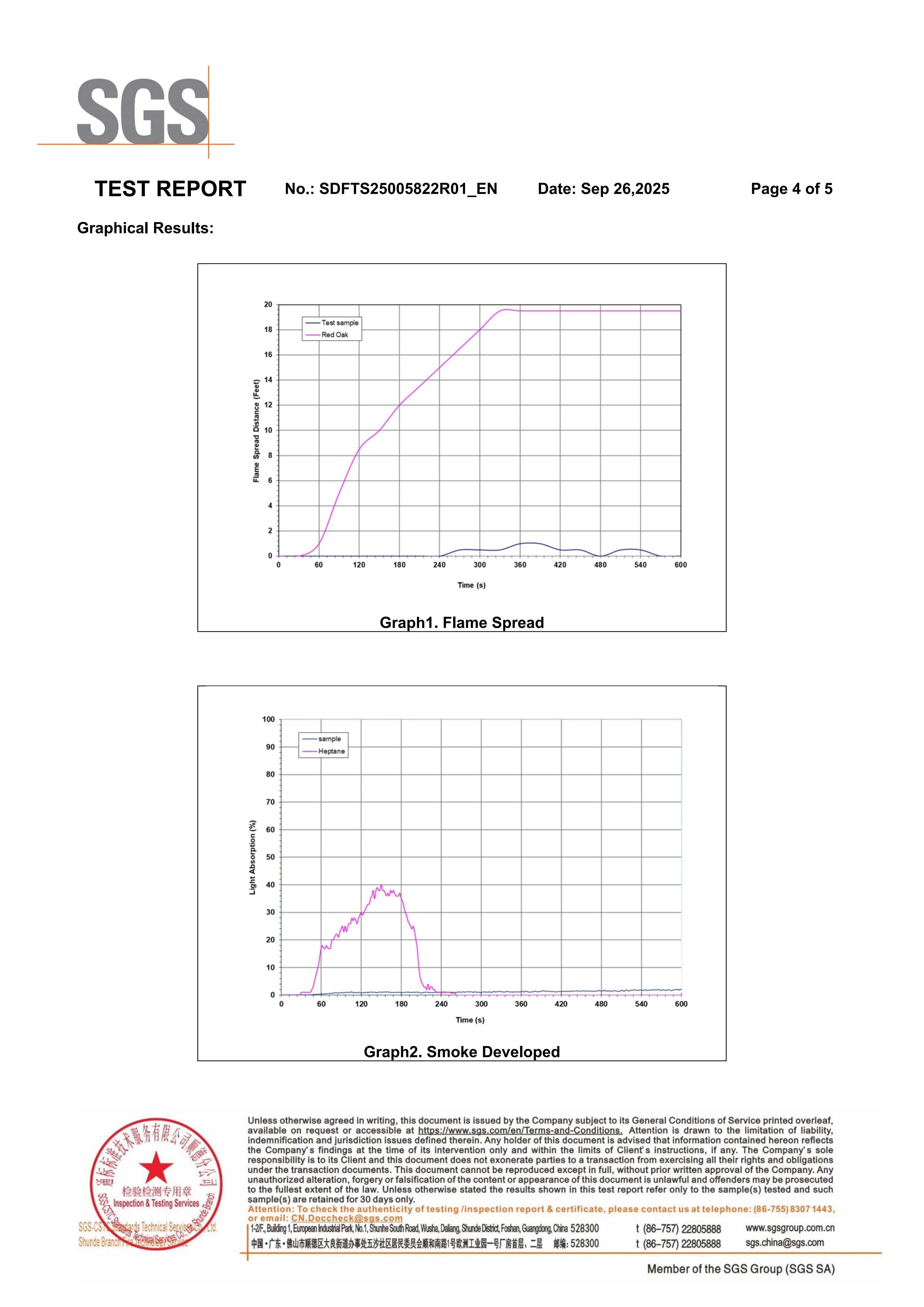
- Verify fire and indoor air quality compliance. Request the test report rather than a certificate summary. Relevant documentation includes the ASTM E84-24 surface burning characteristics report issued by SGS-CSTC Standards Technical Services Co., Ltd. Shunde Branch under report number SDFTS25005822R01_EN, the A1 non-combustible rating for the MC-7690 system, the EU Grade A+ indoor air quality certification, the China Green Building Material certification, and the group standard T/CECS 10192-2022 Polymer Microcement, which defined the Type I and Type II microcement application boundaries. In the EU, EN 13813:2002 sets the reference framework for screed material compressive strength and wear resistance.
- Test the wet-area claim against a duration. A general statement of water resistance is not enough. Ask for the soak duration and the conditions — for example, no abnormalities after more than 72 hours of immersion for the MC-7690 floor type, or the 168-hour chlorinated water immersion at 0.3–0.5 mg/L passed by MC-7860.
- Confirm the installation window. Coating systems constrain the programme. The MC-7690 system has a drying time of 4–8 hours, which affects how many coats can be completed per day and how quickly a trading area can be returned to service. Compare this against the cure schedule of any epoxy alternative and the adhesive and grout cure times of a tile installation.
- Check commercial terms before comparing price. Simon's capability data records OEM production with customization of colour, packaging, custom formula and private label, a monthly capacity of 660 tons, a lead time of 30–45 days, a minimum order quantity of one 20-foot container, 100% testing, global export markets, and remote after-sales support. Comparing unit prices without normalising MOQ and lead time produces a misleading comparison.
- Plan maintenance and repair. Decide in advance how a damaged area will be treated. Microcement and epoxy are both patched as coatings, whereas tiles are replaced as units — which is an advantage only if matching units remain available.
Use Cases: Matching the Material to the Service Condition
Heavy-duty industrial and factory floors
A textile and clothing factory in Egypt specified factory-floor microcement using the MC-9000 system. The recorded requirement was high wear resistance, a dust-free surface, easy cleaning, oil stain resistance, high load-bearing capacity, anti-slip performance, and compatibility with underfloor heating. Two 40-foot containers were supplied. The installation has been in stable operation for ten years, with the reported highlight being resistance to heavy pressure and stain resistance.
This case illustrates why the 50 MPa tier exists. Where forklifts and pallet traffic are involved, the difference between a floor-grade and a wall-grade microcement is not a matter of degree — it is the difference between a specification that fits the service condition and one that does not.
Wet rooms, pools, and chlorinated environments
Bathrooms, spas, and swimming pools are the clearest case where the choice is decided by test data rather than appearance. A 72-hour soak test supports a bathroom-floor claim; a 168-hour chlorinated immersion test at 0.3–0.5 mg/L supports a swimming pool claim. Because chlorine resistance and bubble resistance are formulation-specific, a general-purpose floor product is not a substitute for a pool-series product such as MC-7860.
Underfloor heating and temperature cycling
The MC-9000 system operates across -40°C to 130°C with a thermal conductivity of 0.8 W/(m·K), and is described as specially adapted to underfloor heating systems. For projects in cold-store, hot-kitchen, or externally exposed conditions, this temperature envelope is one of the more useful specification figures to compare, because it reflects how the coating behaves under thermal cycling rather than only under load.
Renovation without demolition
Where an existing floor is ceramic tile or marble, microcement can be applied directly to the base surface. This removes the demolition and disposal phase from the programme and reduces the interruption to a trading space. It also keeps the existing floor level, which matters in buildings where raising the finished floor height would conflict with door thresholds or fixed joinery.
Commercial interiors where continuity is a design requirement
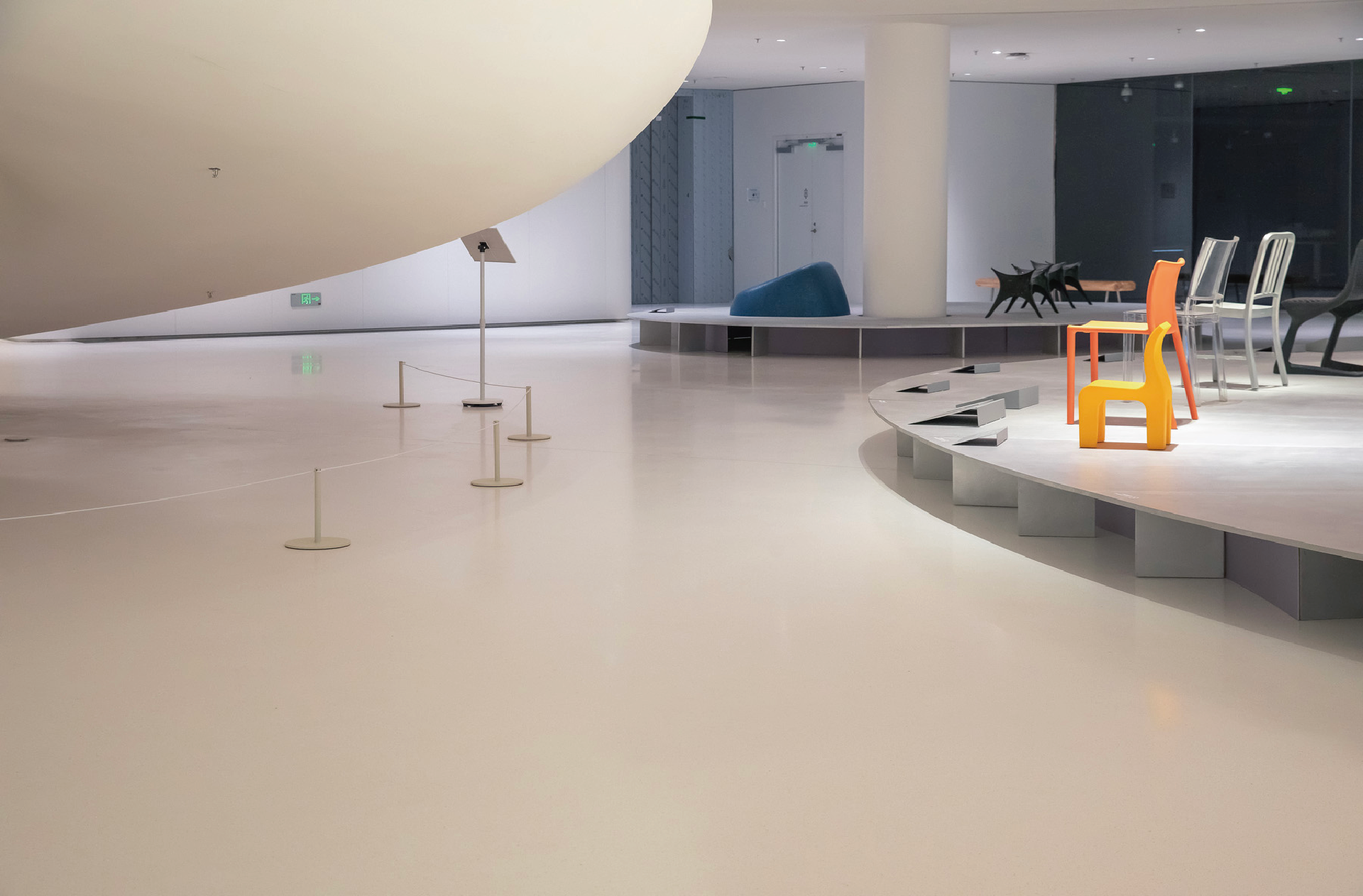
Commercial applications represented approximately 42.7% of microcement market revenue in 2025. In retail, hospitality, museums, and schools, the seamless surface is functional rather than purely decorative: fewer joints means fewer places for soil and moisture to accumulate, and easier cleaning routines for facility teams. Simon's design flexibility here is supported by 120 basic colours and more than 1,000 colour mixing formulas.
Where the alternatives are more appropriate
Epoxy is often the more practical specification where aggressive chemical exposure is routine and a seamless finish is acceptable, provided the substrate moisture is controlled and UV exposure is limited. Ceramic or porcelain tiles are often the more practical specification where individual unit replacement matters, where the design intent includes a jointed pattern, or where a rigid, highly abrasion-resistant surface is preferred and grout maintenance is acceptable.
Side-by-Side Comparison Table
| Decision criterion | Microcement (Simon published data) | Epoxy (general category characteristics) | Tiles (general category characteristics) |
|---|---|---|---|
| Surface continuity | Seamless; wall, floor and ceiling can be finished as one continuous surface | Generally seamless as a coating; joints only at construction and control joints | Modular; grout joints between units are inherent to the system |
| Compressive strength | MC-7690: >13.0 N/mm² (wall), >30.0 N/mm² (floor, 28 days); MC-7860: ≥40.5 MPa at 7 days; MC-9000: ≥50 MPa, heavy-duty version tested at 65 MPa | Varies with resin type and filler loading; verify on the manufacturer datasheet | Depends on body type; verify on the manufacturer datasheet |
| Reaction to fire | A1 non-combustible (MC-7690); ASTM E84-24 surface burning characteristics report for the microcement product (SGS-CSTC Shunde Branch, SDFTS25005822R01_EN) | Organic resin systems are combustible; classification depends on formulation and build-up | Fired mineral body is non-combustible; adhesives, grouts and sealants vary |
| Wet-area behaviour | MC-7690 floor: no abnormalities after >72 h immersion; MC-7860: passes 168 h chlorinated immersion at 0.3–0.5 mg/L with no blistering, peeling, cracking or discoloration | Generally moisture-sensitive during application and cure; substrate moisture can cause blistering | Water-resistant as a material; joints and grout are the practical weak point |
| Indoor air quality | Formaldehyde-free, low VOC / near-zero VOC, EU Grade A+, China Green Building Material; MC-7860 is VOC-free and heavy-metal-free | Varies by formulation; solvent-free and low-VOC options exist | Fired body is inert; adhesives, grouts and sealants determine emissions |
| Anti-slip | MC-9000: R11 or higher when wet; MC-7860: dry friction coefficient 0.77 (standard ≥0.6) | Depends on aggregate or broadcast applied during installation; smooth finishes can be slippery when wet | Depends on finish (polished vs. textured); verify the R rating of the exact product |
| Underfloor heating | MC-9000: -40°C to 130°C, thermal conductivity 0.8 W/(m·K), specially adapted to underfloor heating; MC-7690 floor type suitable for wet areas | Often compatible with heated slabs where the formulation allows; verify with the supplier | Generally compatible; adhesive and grout must be flexible-rated |
| Installation over existing floors | Can be applied directly onto ceramic tile and marble base surfaces | Typically requires a sound, dry, prepared substrate, often with profiling or priming | Generally requires removal of the existing floor or the addition of a leveling layer |
| Drying / return to service | 4–8 hours between coats (MC-7690); MC-7860 reaches ≥30.4 MPa at 24 hours | Cure schedules vary by system and are typically longer before full chemical resistance is reached | Adhesive and grout cure times apply before the floor can be grouted and used |
| Cleaning and stain behaviour | Water absorption <0.2%; stains can be wiped clean within 10 minutes (MC-9000); surface wear after 5 years less than 0.1 mm in a tested commercial project | Easy to clean; damaged areas can typically be patched as a coating | Grout cleaning is routine; individual tiles can be replaced if matching units remain available |
Note on how to read this table: all microcement values are drawn from Simon's published product specifications and from third-party test documentation referenced in this article. The epoxy and tile columns describe general characteristics of those material categories and are included to frame the comparison; they are not measurements of any specific product and should be verified against the datasheet and test reports of the exact system being quoted.
Frequently Asked Questions
Is microcement compliant with fire safety and indoor air quality requirements?
The MC-7690 microcement system carries an A1 fire rating, meaning non-combustible, and the microcement product is certified to ASTM E84-24 for surface burning characteristics of building materials, with the test report issued by SGS-CSTC Standards Technical Services Co., Ltd. Shunde Branch under report number SDFTS25005822R01_EN. On indoor air quality, Simon's microcement products are formaldehyde-free and low in VOC, holding EU Grade A+ and China Green Building Material certification. The MC-7860 swimming pool system is additionally formaldehyde-free, VOC-free and heavy-metal-free. For EU projects, EN 13813:2002 remains the reference standard for screed material compressive strength and wear resistance.
Can microcement be installed directly over existing tiles or concrete instead of being demolished?
Yes. Simon's microcement products can be applied directly onto base surfaces such as ceramic tiles and marble, which avoids demolition and keeps the existing floor level. This also shortens the construction period compared with a full tile replacement. For concrete and other substrates, the determining factors are whether the surface is sound, level and dry, and which series is being applied — wall type, floor type, swimming pool type, or the MC-9000 commercial floor system. The build-up is also used to achieve a seamless integrated decorative effect across walls, floors and ceilings.
What actually drives the cost difference between a microcement system, epoxy, and tiles?
There is no single price band that applies across all three categories, because the cost is set by the system build-up rather than by the coating alone. For microcement, the main drivers are which product tier is required (a wall-grade system at >13.0 N/mm², a floor-grade system at >30.0 N/mm², or the ≥50 MPa MC-9000 commercial floor), whether the substrate needs preparation or can be coated directly, how many coats the specification requires, and the total area. For epoxy, the drivers are usually substrate preparation and moisture control plus the cure schedule. For tiles, the drivers are unit removal, leveling, adhesive and grout, and the labour content of a jointed installation. Because MOQ and lead time also affect landed cost, buyer teams should normalise those terms before comparing quotations. Simon's production data records a minimum order quantity of one 20-foot container, a lead time of 30–45 days, and a monthly capacity of 660 tons.
How should a buyer validate a microcement system before placing a full production order?
Validation should test the specification items that carry the project risk. Confirm the compressive strength figure that applies to the exact product type and the age at which it is measured. Confirm the fire classification of the complete build-up. Confirm the wet-area claim against a stated soak duration — for example the >72-hour immersion result for the MC-7690 floor type, or the 168-hour chlorinated immersion result for MC-7860. Confirm the slip rating in the wet condition, where MC-9000 is rated R11 or higher. Finally, confirm the colour and finish against the approved reference, since Simon offers 120 basic colours and more than 1,000 colour mixing formulas. Customisation of colour, packaging, custom formula and private label is available under the OEM production mode.
What are the typical lead time and minimum order quantity for a commercial microcement project?
Simon's capability data records a lead time of 30–45 days and a minimum order quantity of one 20-foot container, supported by a monthly capacity of 660 tons and 100% testing. After-sales support is provided remotely. Buyers should factor the 30–45 day production window into the programme alongside the on-site drying time of 4–8 hours per coat, and should confirm the required series and colour before the order is released, because formula and packaging customisation are part of the OEM scope. Requests for pricing, technical datasheets or a system recommendation can be directed to the Simon team via the published contact channels.

Conclusion: Decide on Constraints, Then on Appearance
Microcement, epoxy, and tiles each solve a different problem, and the comparison only becomes useful once the service condition is fixed. If the project requires a seamless surface, documented compressive strength from >13.0 N/mm² for wall applications up to ≥50 MPa for the MC-9000 commercial floor, an A1 non-combustible rating, verified wet-area performance, and formaldehyde-free low-VOC indoor air quality, then a microcement flooring system with published test data belongs on the shortlist. If the dominant constraint is aggressive chemical exposure on a moisture-controlled, UV-protected substrate, epoxy may be the more practical specification. If individual unit replacement and a jointed design intent matter most, tiles remain the familiar answer.
The discipline that separates a good decision from an expensive one is small: ask for the strength figure by product type, the fire report by document number, the soak test by duration, and the commercial terms by MOQ and lead time. Simon's documentation — including the T/CECS 10192-2022 Polymer Microcement group standard the company led, the ASTM E84-24 report, and the EU Grade A+ certification — is structured to answer those questions directly. The company's four microcement series and its OEM capability allow a project to be specified by constraint rather than by catalogue number.
Next step
If you are comparing microcement against epoxy or tile quotations for a commercial, industrial, or wet-area project, the fastest way to close the comparison is to test the specification rather than the brochure. Request a sample or a technical quotation covering your substrate type, traffic load, and wet-area conditions, and validate the fire, VOC, and strength documentation before the order is released. Simon supplies overseas markets including Africa, the Middle East, Australia, and Southeast Asia, and offers OEM colour, packaging, custom formula, and private label options.
Download the full product brochure: Simon Microcement Product Brochure (PDF)
More technical information: en.webstucco.com and pufloor.com
Contact: Susie — Email: meidafu@126.com — Tel / WhatsApp: +86 183 1904 6545
Have Questions or Need More Details?
Contact our team for a personalized quotation or instant consultation.
Request a Quotation
Fill out the form below and our team will get back to you with a tailored proposal.
WhatsApp Direct Chat
Prefer to chat in real-time? Message us on WhatsApp for instant assistance & quick answers.
- Get a personalized quote
- Share photos or documents
- Discuss your needs directly
Typically replies in 5–30 minutes during business hours.