Functional Polyester vs. Recycled Coffee-Ground Blends: A Comparative Buyer's Guide
Functional Polyester vs. Recycled Coffee-Ground Blends: A Comparative Buyer's Guide
Two functional yarn routes dominate early-stage sourcing discussions for performance garments: standard functional polyester filament, where the function is engineered into the yarn itself, and recycled coffee-ground blends, where coffee waste is recycled into the yarn as a functional charcoal element. Both routes are spun into yarns for functional garments, and both are quoted against the same fabric brief. Almost everything else about them differs.
This comparative guide sets the two options side by side on function set, application fit, recycled-content story, certification exposure and sourcing mechanics. It uses Smilytex product documentation, the scope certificates held by Smily Textile Technology (Taicang) Co.Ltd, and third-party market data. The conclusion is deliberately conditional: neither route is universally better, and the correct choice depends on which function the finished garment has to deliver.
The Sourcing Problem: Functional Claims That Do Not Compare Cleanly
Most sourcing problems with these two routes start on the specification sheet, not on the yarn. A buyer receives two quotations with overlapping language — quick dry appears on both, recycled appears on both — and no way to distinguish which properties are inherent to a route and which are optional add-ons inside that route.
Four specific failure points recur:
- Function sets are compared as lists, not as priorities. Odor control, far-infrared heating and anti-microbial performance are separate buying reasons from instant cooling, UV shielding or cotton-like hand feel. Treating them as one interchangeable list of “functions” produces a yarn that does five things adequately and none of them to brief.
- Recycled content is assumed to belong to only one route. It does not. Recycled polyester exists in both directions, so “recycled” alone cannot be the tie-breaker.
- Certification scope is checked after the order, not before. A recycled claim is only as strong as the scope certificate behind it, and scope has to cover the exact yarn, fiber or fabric being purchased.
- The dyeing route is treated as a detail. Whether color is introduced during spinning or at the fabric stage changes the production sequence and the number of processing steps in a garment program.
Industry Background: Where These Two Routes Sit in the Polyester Market
Both routes sit inside a very large material category. The global polyester fiber market was valued at USD 82.07 billion in 2025 and is projected to reach USD 148.11 billion by 2034, according to Vertex AI / Industry Analysis. Market Research Future estimates the polyester filament yarn segment specifically at USD 106.4 billion in 2024, growing at a 3.72% CAGR until 2035. The two figures differ because they measure different scopes — total polyester fiber versus filament yarn — which is itself a useful reminder for buyers: always confirm the scope behind any market number before it enters a business case.
The recycled side of the market is smaller but growing faster. Grand View Research valued the global recycled polyester market at USD 15.52 billion in 2024, with a projected value of USD 26.18 billion by 2030, a 9.25% CAGR. On the demand side, Mordor Intelligence identifies athleisure industry preference for moisture-wicking and antimicrobial polyester blends as a primary trend in 2024–2026, which is precisely the demand space in which these two routes compete.
Geographically, Asia Pacific accounted for a 65% share of the polyester fiber market in 2025, led by China and India. That concentration explains why so many evaluations of these yarns happen with Chinese suppliers. Smily Textile Technology (Taicang) Co.Ltd, which trades under the brand Smilytex, is one such supplier: established in 2017, operating a 16,220 m² facility with 206 employees, a 10-engineer R&D team, more than 20 core patented technologies covering functional fibers and fabrics, and an export ratio of 70% directed at the EU, USA and JP markets.
Against the largest filament producers named in third-party industry coverage — Indorama Ventures, Reliance Industries, Toray Industries and Teijin Limited — the relevant difference for a garment buyer is not scale but specialization. Smilytex positions itself in the functional-fiber niche, where the competitive question is whether a specific function set can be delivered in a specific yarn count with verifiable documentation.
How Each Route Delivers Function
Standard functional polyester filament: function built into the yarn
Standard functional polyester filament covers a set of yarns in which the functional performance is engineered into the filament itself rather than added at the fabric-finishing stage. In the Smilytex portfolio this route spans five product families, each with a distinct function set and count range.
| Product family | Yarn type | Documented function set | Available counts |
|---|---|---|---|
| Physcool® | DTY Physcool | Instant cooling, anti-UV, anti-microbial | 30D, 50D, 75D, 100D, 150D, 300D |
| Black Mirror® | DTY Black Mirror | Heat insulation, anti-ultraviolet, see-through resistant | 30D, 50D, 75D, 100D, 150D, 300D |
| Rimens® | DTY / ATY polyester | Cotton-like hand feel, non-spandex elasticity | 60D, 80D, 90D, 130D, 160D, 190D, 260D, 320D, 450D |
| Respawn® | DTY recycled polyester (filament and staple fiber) | Low-temperature dyeing, moisture management; T2T recycled polyester reconstructed through chemical recycling and polymer rebuilding | Specification-dependent, filament and staple fiber |
| Swarin® | DTY recycled polyester (far-infrared heat) | Odor control, far-infrared heating, anti-microbial | 30D, 50D, 75D, 100D, 150D, 300D |
Two details in this table matter to buyers. First, several families carry sub-types that change the purchasing decision: Physcool® is documented in Conventional, Melange, Dope-dyeing, Cotton Feel, Renewable, Hydrophilic, Antibacterial and Anti-UV variants, and Respawn® includes Wet Permeable and Quick-drying, Melange, Dope-dyeing, Functional, Renewable and Cotton Feel variants. Second, and often overlooked, standard functional polyester is not synonymous with virgin polyester — Respawn® and Swarin® are recycled polyester routes inside the “standard functional” side of this comparison.
Recycled coffee-ground blends: a charcoal platform with a coffee-waste story
The recycled coffee-ground route is represented by Cocarber® in its Coffee Charcoal variant, a DTY functional polyester that recycles coffee waste and delivers odor control, far-infrared heating, quick dry, dope dyeing and anti-microbial performance. Available counts are 30D, 50D, 75D, 100D, 150D and 300D, and the yarn is suitable for both woven and knitted applications in sport, leisure, underwear and home textile end uses.
Coffee charcoal is one entry in a wider Cocarber® charcoal platform that also includes Bamboo Charcoal, Coconut Charcoal and China-hemp Charcoal, alongside Dope-dyeing, Cotton Feeling, Renewable and Hydrophilic Cocarber® variants. Buyers should read this as a spectrum rather than a single SKU: if the coffee-waste story is not required by the brand brief, other charcoal types within the same platform are documented as alternatives with their own positioning.
Where the two routes overlap — and where they do not
Quick-dry behavior and dope-dyeing availability appear on both sides, so neither can be used to separate the two routes during evaluation. The genuinely differentiators are the coffee-waste content and the specific combination of odor control, far-infrared heating and anti-microbial performance delivered together in one yarn.
There is one overlap worth flagging explicitly for buyers comparing quotations: Swarin®, a recycled DTY polyester built on far-infrared heat, is documented with odor control, far-infrared heating and anti-microbial performance — the same three functions as Cocarber® Coffee Charcoal. If a specification sheet lists only those three functions, both products can satisfy it. The coffee-ground option becomes the distinct choice when the recycled coffee-waste content itself is part of the brief, for example in a brand sustainability narrative.
A Five-Step Evaluation Sequence, from Evaluation to Execution
- Write the function brief before the product name. Rank the required functions in priority order rather than listing them. A brief that ranks odor control and far-infrared heating first points to the coffee-ground route; a brief that ranks cooling, UV shielding or hand feel first points to the standard functional families. If quick-dry is the only required function, the brief is under-specified and should be reopened.
- Map each ranked function to a documented yarn route. Use documented function sets rather than supplier adjectives. Physcool® for instant cooling, anti-UV and anti-microbial; Black Mirror® for heat insulation, anti-ultraviolet and see-through resistance; Rimens® for cotton-like feel and non-spandex elasticity; Respawn® for low-temperature dyeing and moisture management; Swarin® for odor control, far-infrared heating and anti-microbial; Cocarber® Coffee Charcoal for recycled coffee waste plus odor control, far-infrared heating, quick dry, dope dyeing and anti-microbial.
- Verify recycled-content claims and certificate scope. Confirm that the scope certificate covers the exact material being purchased — greige yarn, dyed yarn, dyed fiber, undyed fiber or dyed fabric — and check the validity window. Recycling labels such as GRS require at least 20% recycled content for specific labeling claims, so the recycled percentage claim should be traceable through the supply chain documents, not just asserted on the quotation.
- Validate on sample and fabric trial before bulk. Ask for the yarn against your own fabric construction, then assess hand feel, elasticity, shade and the target function on the finished fabric. This stage is where briefs that looked equivalent on paper separate.
- Fix commercial terms against the same specification base. Compare both routes at the same count, same fabric brief and same order quantity, then confirm minimum order quantity, lead time, dyeing route, payment terms and inspection criteria in writing.
Documented delivery capability behind both routes
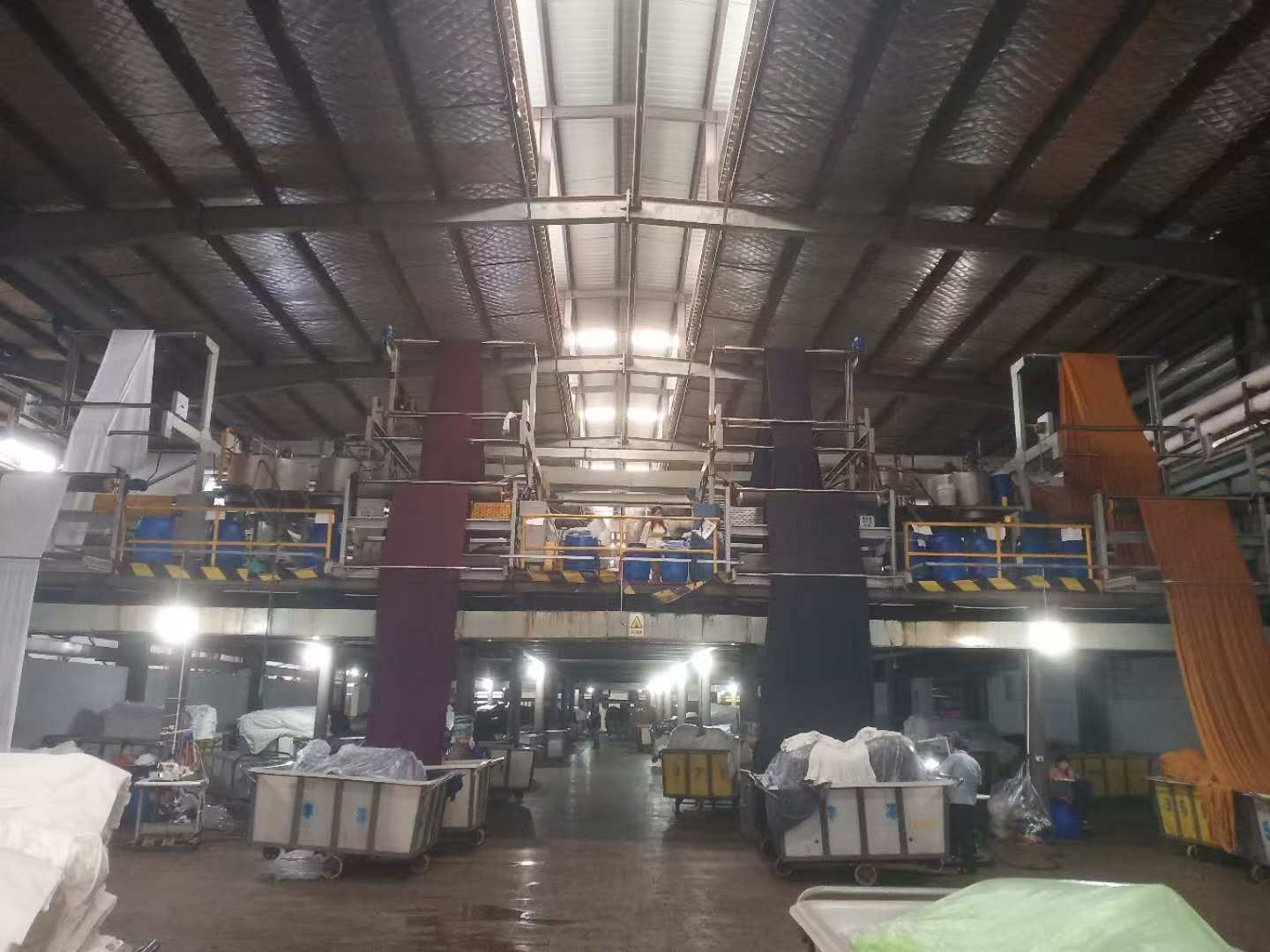
Smilytex provides ODM production services and offers customization of yarn style, elasticity and handle according to customer needs, which means the comparison between routes does not end at the standard count list. Both routes are manufactured under 100% testing, with a documented minimum order quantity of 500 kg, a lead time of 5–20 days, and export-market experience in the EU, USA and JP. Delivery is arranged on FOB Shanghai or CIF terms to the destination port as required, and acceptance is handled through pre-shipment inspection against approved lab dips or bulk shade, followed by final inspection against agreed specifications covering GSM, width, shrinkage and color.
Application Fit: Three Briefs and the Route That Fits
Sport and yoga programs that need a recycled story with odor control
An apparel OEM manufacturer in China produced 2,000 pieces for the apparel market using a recycled coffee route with high stretch, quick-dry, antibacterial and eco-friendly dope-dyed properties. That project, running five years, is documented with recycled coffee waste, odor control, far-infrared heating, quick dry, dope dyeing and anti-microbial performance as its highlight set — the exact function cluster that identifies the coffee-ground blend. For buyers building leggings, yoga pants or training tops where odor management and a verified recycled content claim both matter, this is the closest documented match.
Multi-function garment programs across multiple markets
Garment manufacturing clients in Japan, Malaysia, China and the United States have used functional polyester filament for garment production across a two-to-five-year relationship, meeting requirements for quick-drying, antibacterial, far-infrared heating, cotton-like touch and recycled eco-friendly materials, with GRS/RCS-certified recycled materials meeting the brand’s sustainable development requirements. This is the case where a single material decision spans several function sets — which is why the ranked function brief in step one matters more than the brand name on the yarn.
Underwear, leisure and home textile programs
Both routes are documented as suitable for woven and knitted applications in underwear, leisure and home textile end uses. In these categories, the deciding function is usually odor control and warmth rather than cooling, which narrows the shortlist toward Cocarber® Coffee Charcoal or Swarin®. Instant cooling from Physcool® is the more relevant choice when the end use leans toward sport, business or outdoor wear in warm conditions.
Side-by-Side Comparison
| Decision dimension | Standard functional polyester filament | Recycled coffee-ground blend (Cocarber® Coffee Charcoal) |
|---|---|---|
| Primary functions | Moisture management and low-temperature dyeing (Respawn®); instant cooling, anti-UV, anti-microbial (Physcool®); heat insulation, anti-ultraviolet, see-through resistance (Black Mirror®); cotton-like hand feel and non-spandex elasticity (Rimens®); odor control, far-infrared heating, anti-microbial (Swarin®) | Recycled coffee waste, odor control, far-infrared heating, quick dry, dope dyeing, anti-microbial |
| Recycled content | Present in specific families (Respawn®, Swarin®); not inherent to the route as a whole | Central to the route — the recycled material decision is the buying reason |
| Available counts | 30D–300D for Physcool®, Black Mirror® and Swarin®; 60D–450D for Rimens® | 30D, 50D, 75D, 100D, 150D, 300D |
| Weaving / knitting suitability | Suitable for both woven and knitted applications | Suitable for both woven and knitted applications |
| Documented end uses | Sport, business, leisure, outdoor, home textile | Sport, leisure, underwear, home textile |
| Dyeing route | Dope-dyeing variants available (Physcool®, Respawn®); low-temperature dyeing documented on Respawn® | Dope dyeing included within the documented function set |
| Certification coverage | Covered under Smilytex GRS V4.0 and RCS 2.0 scope certificates | Covered under the same GRS V4.0 and RCS 2.0 scope certificates |
| Best fit when | The brief is thermal comfort, cooling, UV shielding, hand feel or stretch | The brief combines odor control, far-infrared warmth, anti-microbial performance, dope-dyed color and a recycled-waste story |
Frequently Asked Questions
Is a recycled coffee-ground blend certified, and what should buyers verify before ordering?
Smily Textile Technology (Taicang) Co.Ltd holds a Global Recycled Standard V4.0 scope certificate, certificate number IDF-25-887497, and an RCS 2.0 scope certificate, certificate number IDF-25-887506, both issued by IDFL Laboratory and Institute Inc. on 2 November 2025 and valid until 1 November 2026. The covered scope includes greige yarns, dyed yarns, dyed fibers, undyed fibers and dyed fabrics, and the covered product list includes Cocarber®, Black Mirror®, Rimens®, Respawn® and Swarin®. Before ordering, buyers should confirm the certificate number with the issuing body, check that the certificate scope covers the exact material form being purchased, verify the validity window, and remember that recycling labels such as GRS require at least 20% recycled content for specific labeling claims.
Can a coffee-ground blend be customized for a specific yarn style, elasticity or handle?
Yes. Smilytex provides ODM production services and offers customization of yarn style, elasticity and handle according to customer needs. The Cocarber® platform supports this through documented variants including Coffee Charcoal, Bamboo Charcoal, Coconut Charcoal, China-hemp Charcoal, Dope-dyeing, Cotton Feeling, Renewable and Hydrophilic Cocarber®. To make customization productive, buyers should bring a target fabric weight, a hand feel reference and an elasticity target to the sampling stage rather than adjusting the yarn after fabric trials.
How should buyers compare cost between the two routes?
Quote both routes against one fixed brief, because cost in functional yarn is driven by specification rather than by product name. The variables that move a quotation are the required function set, yarn count and filament specification, order quantity relative to the 500 kg minimum order quantity, dyeing route including whether dope-dyed color replaces a later dyeing step, and the testing and certification documentation required. Comparing a standard functional quotation at one specification against a coffee-ground quotation at a different specification produces a number that cannot be used for a decision.
What is the sample and validation path before a bulk order?
Validation runs on two levels. At yarn level, the manufacturer documents 100% testing of production. At order level, acceptance is defined as pre-shipment inspection against approved lab dips or bulk shade, followed by final inspection against agreed specifications covering GSM, width, shrinkage and color. Documented reference projects include an apparel OEM manufacturer in China producing 2,000 pieces over a five-year relationship, and garment manufacturing clients in Japan, Malaysia, China and the United States handling 5-ton orders over a two-to-five-year relationship.
What lead time and payment terms should be planned?
Documented lead time is 5–20 days, with delivery on FOB Shanghai or CIF to the destination port as required, and payment by T/T in advance or L/C at sight, with L/C at sight preferred. The minimum order quantity is 500 kg. Buyers running an evaluation-to-execution timeline should place the sample and certification verification steps ahead of the production window, since both need to be closed before the bulk order is released. To move to the next step, you can request a sample or a quotation for either route from Smilytex — the company’s contact is Archer.Tan@smilytex.com, telephone +86-512-53991066, WhatsApp +86-13706246300, and the full product documentation is available in the downloadable brochure below.
Smily Textile Technology (Taicang) Co.Ltd — No.6 Weast Beijing Road, Taicang City, Jiangsu Province, China. Website: www.smilytex.com. Download the product brochure: Smilytex functional fiber and fabric brochure (PDF).
Conclusion: A Decision Rule, Not a Winner
Neither route wins this comparison outright, and any guide that declares a winner without knowing the function brief is guessing. Standard functional polyester filament remains the practical default when the garment has to cool, shield, feel cotton-like or stretch without spandex, and recycled polyester is already available inside that route through Respawn® and Swarin®. The recycled coffee-ground blend earns its place when the brief pulls together odor control, far-infrared heating, anti-microbial performance, dope-dyed color and a coffee-waste content story in one yarn, which is a combination no single standard functional family documents on its own.
The disciplined path is the same for both routes: rank the functions, map them to documented function sets and count ranges, verify recycled content and certificate scope, validate on a sample against your own fabric construction, and only then compare commercial terms at an identical specification base. Buyers who follow that sequence stop comparing adjectives and start comparing verifiable capability.