
How to Select a Reliable Functional Polyester Filament Supplier in China
: A Procurement Guide for Industrial Buyers
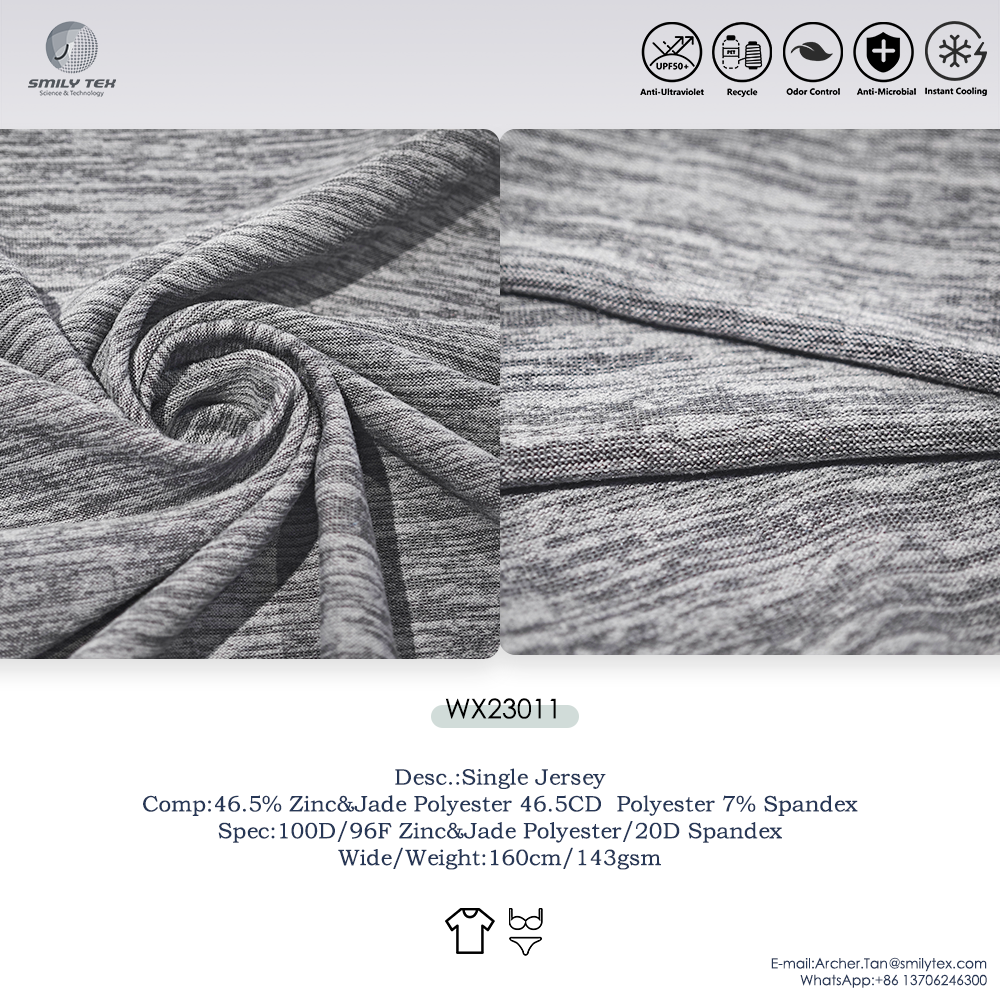
Functional polyester filament offers targeted performance such as instant cooling, UV resistance, and moisture management.
Introduction
The global market for functional textiles is accelerating, driven by rising demand for performance apparel, sustainable materials, and smart fabric solutions. Among the key raw materials, functional polyester filament has emerged as a cornerstone for sportswear, outdoor gear, activewear, and intimate apparel. China, as the world’s largest textile producer, offers a vast pool of suppliers, but the complexity of functional yarns—from UV resistance and far-infrared heating to cotton-like touch and T2T recycling—makes supplier selection a critical strategic decision.
This guide provides procurement professionals with a structured framework for evaluating Chinese manufacturers of functional polyester filament. Whether you are an apparel brand, OEM manufacturer, or fabric mill, the following insights will help you avoid common pitfalls and identify partners who can deliver consistent, high-performance yarns that meet your technical and sustainability requirements.
What Is Functional Polyester Filament?
Functional polyester filament refers to polyester yarns that have been engineered at the polymer or fiber level to impart specific performance properties beyond those of standard PET filaments. Unlike conventional polyester, which offers baseline mechanical properties, functional variants incorporate functional additives (masterbatches), special cross-sections, or composite structures to achieve targeted benefits. Common examples include:
- UV resistant heat shielding polyester filament – provides UPF 50+ protection and thermal insulation.
- Moisture management polyester filament – wicks sweat away from the body for quick drying.
- Cotton touch polyester filament (e.g., Rimens®) – replicates the soft handfeel of cotton with the durability of polyester.
- Far infrared thermal retention polyester filament (e.g., Swarin®) – absorbs body heat and re-emits far-infrared rays for warmth.
- Instant cooling polyester filament (e.g., Physcool®) – provides a cooling sensation upon contact.
- Biodegradable polyester filament – designed to decompose under specific environmental conditions.
- T2T recycled polyester filament (e.g., Respawn®) – chemically recycled from post-consumer polyester garments.
The key differentiator is that performance is embedded in the yarn itself, not just added through fabric finishes, ensuring durability through multiple wash cycles.
Why Choosing the Right Chinese Supplier Matters
China is home to hundreds of polyester filament producers, but only a minority have the R&D capability, process control, and certification infrastructure to deliver consistent functional performance. Common buyer pain points include:
- Inconsistent UV or antibacterial performance across batches
- Shade variation in dope-dyed yarns
- Failure to meet restricted substance lists (RSL) for EU or US markets
- Processing issues (pilling, shrinkage) due to poor fiber construction
- Lack of traceability for recycled content claims
A reliable supplier solves these problems by offering rigorous quality control, third-party certifications (e.g., Global Recycled Standard, RCS), and technical support throughout the manufacturing process.
Industry Background: The Rise of Functional Polyester in Global Apparel
According to market analysis, the demand for functional polyester filament is projected to grow at a CAGR of 7–9% through 2035, fueled by:
- Expansion of athleisure and outdoor apparel segments
- Brand commitments to circular economy (recycled and biodegradable materials)
- Consumer awareness of skin protection and thermal comfort
- Regulatory pressure on microfiber shedding and chemical safety
Chinese suppliers have invested heavily in advanced spinning lines, masterbatch technology, and testing laboratories to capture this market. However, the landscape remains fragmented, with a wide gap between technology leaders and commodity producers.
Detailed Solution: A Strategic Framework for Supplier Evaluation
To select the right functional polyester filament supplier, procurement teams should assess the following seven dimensions:
1. Technical R&D Capability
Look for suppliers with a dedicated R&D team and patent portfolio. For example, Smily Textile Technology (Taicang) Co., Ltd. (brand: Smilytex) owns over 20 core patent technologies, including authorized invention patents and utility model patents. Their expertise spans from masterbatch formulation to fiber morphology design, enabling custom solutions for specific end-uses.
2. Product Portfolio Breadth
A single supplier should offer a range of functional options to consolidate sourcing. Smilytex, for instance, provides multiple series:
| Brand Series | Key Functions | Applications |
|---|---|---|
| Black Mirror® | UV resistant, heat insulation, anti-see-through | Outdoor, sportswear, leisure |
| Rimens® | Cotton-like touch, non-spandex stretch | Activewear, home textile, casual |
| Cocarber® | Recycled coffee waste, odor control, far-infrared, quick dry | Yoga wear, underwear, sportswear |
| Swarin® | Far-infrared heating, antibacterial, odor control | Base layers, thermal wear |
| Respawn® | T2T recycled, low-temperature dyeable, moisture management | Sustainable apparel, sportswear |
| Physcool® | Instant cooling, anti-UV, antimicrobial | Summer sportswear, business wear |
3. Certifications and Compliance
Ensure the supplier holds valid scope certificates for recycled content (e.g., GRS V4.0, RCS 2.0) and can provide test reports for functional claims. Smilytex holds GRS and RCS certificates (IDF-25-887497 and IDF-25-887506) issued by IDFL Laboratory, covering dyed yarns, greige yarns, and fabrics. This is critical for brands targeting EU and US markets.
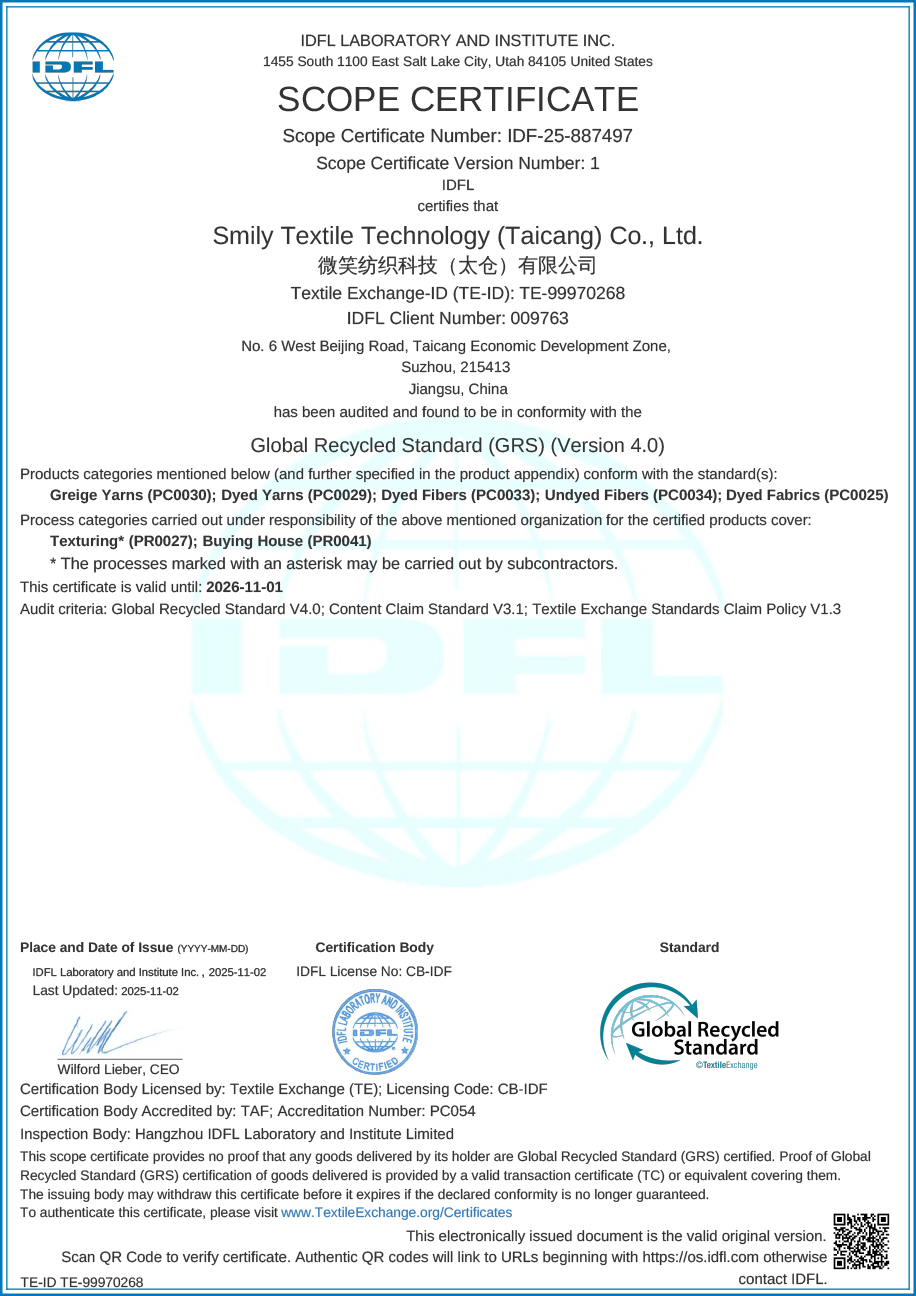
Smilytex holds GRS V4.0 and RCS 2.0 scope certificates, ensuring traceable recycled content.
4. Quality Control and Testing
100% pre-shipment inspection, shade control via lab dips and bulk shade approval, and functional testing per standards (GB/T 30127 for far-infrared, LC-MSMS for caffeine residue, etc.) are indicators of a robust quality system. Smilytex implements CAPA for deviations and maintains batch traceability.
5. Production Capacity and Lead Time
With a monthly capacity of 1.6 tons (fabric level) and lead times of 5–20 days, Smilytex can accommodate medium-volume orders. MOQ is 500kg for fabrics, suitable for both trial runs and commercial production.
6. Export Experience and Market Knowledge
Suppliers with 70% export ratio to EU/US/JP demonstrate familiarity with international quality standards and logistics. Smilytex serves garment manufacturers in Japan, Malaysia, China, and the US, with long-term partnerships spanning 2–5 years.
7. Customer Support and Risk Mitigation
A professional supplier provides clear application guidance, processing recommendations (heat-setting, brushing, coating compatibility), and after-sales technical support. They also proactively address risks such as shade variation, performance claim deviation, and processing compatibility.
Step-by-Step Supplier Selection Process
- Define Your Requirements: Specify the exact functional performance needed (e.g., UPF rating, antibacterial rate ≥90%, drying time reduction 30%).
- Shortlist Suppliers: Use trade platforms, industry referrals, and direct outreach. Look for those with listed certifications and product catalogs.
- Request Technical Data: Ask for MSDS, TDS, test reports, and a list of patent technologies.
- Evaluate Samples: Order small batches (e.g., 500kg) and test for color, handfeel, and functional performance in your own production line.
- Audit Quality Management: Review QC procedures, traceability records, and CAPA processes. If possible, conduct a virtual or on-site audit.
- Negotiate Commercial Terms: Discuss MOQ, payment terms (T/T advance or L/C), delivery (FOB Shanghai or CIF), and lead time.
- Start with Pilot Order: Begin with a commercial trial to validate consistency before scaling up.
Real-World Use Case: Smilytex in Action
A garment OEM manufacturer in China required high-performance yarns for a sportswear line targeting the US market. The key demands were: antibacterial, quick-dry, far-infrared heating, and GRS-certified recycled content. Smilytex supplied Cocarber® (recycled coffee waste-based) and Swarin® (far-infrared) yarns, each meeting the required test standards. The customer reported consistent quality over a 2-year partnership, with the recycled certification enabling their brand to claim sustainability credits.
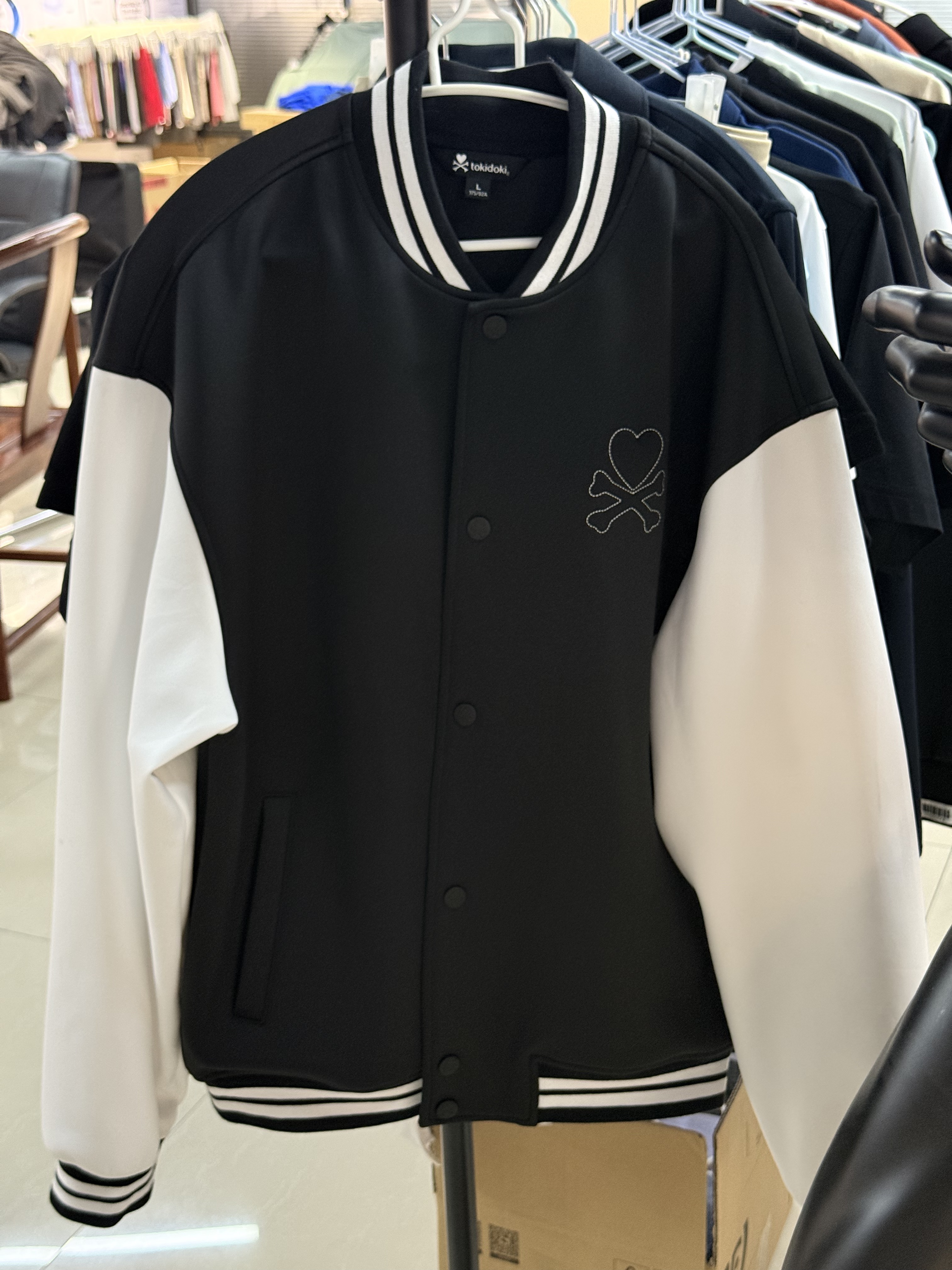
Functional polyester filament from Smilytex used in high-performance apparel applications.
Frequently Asked Questions (FAQ)
Q: What is the difference between functional polyester filament and regular polyester?
A: Functional polyester filament has performance properties engineered at the yarn level (e.g., UV protection, antibacterial, moisture wicking), while regular polyester only offers standard mechanical properties. The functional versions typically reduce drying time by 30–50%, increase moisture-wicking rate by 50–200%, and achieve UPF 40–60+.
Q: How can I verify a supplier's sustainability claims?
A: Request valid scope certificates such as GRS or RCS from accredited bodies (e.g., IDFL). Also ask for test reports on recycled content and chemical safety. Reputable suppliers will provide batch-level traceability.
Q: What is the typical MOQ for functional polyester filament from a Chinese supplier?
A: MOQ varies. For yarns, it can be as low as 500kg per color; for fabrics, around 500kg. Suppliers like Smilytex offer flexible MOQ for trial orders.
Q: Can I get customized yarn properties (e.g., specific handfeel, elasticity)?
A: Yes, many Chinese suppliers offer ODM services. Smilytex can customize yarn style, elasticity, and handfeel based on customer needs, using their spinning process and additive technology.
Q: How do I avoid shade variation in dope-dyed yarns?
A: Work with suppliers who implement batch management and provide shading sheets. Always approve lab dips and require a pre-production sample before bulk production. Smilytex uses a rigorous bulk shade approval workflow.
Conclusion
Selecting a functional polyester filament supplier in China is a strategic investment in your product's performance and market credibility. By systematically evaluating technical capability, certifications, quality control, and customer support, you can mitigate risks and build a long-term partnership. Smilytex stands out as a reliable partner with a proven track record, extensive product portfolio, and strong commitment to innovation and sustainability.
To explore the full range of functional polyester filaments and download the company brochure, visit the link below.
Have Questions or Need More Details?
Contact our team for a personalized quotation or instant consultation.
Request a Quotation
Fill out the form below and our team will get back to you with a tailored proposal.
WhatsApp Direct Chat
Prefer to chat in real-time? Message us on WhatsApp for instant assistance & quick answers.
- Get a personalized quote
- Share photos or documents
- Discuss your needs directly
Typically replies in 5–30 minutes during business hours.