Securing Long-Term Functional Polyester Filament Supply
Functional polyester filament is an engineered material category used in sportswear, outdoor apparel, underwear, and home textiles. Unlike commodity polyester yarn, its performance — UV protection, moisture management, antibacterial activity, thermal regulation, and specialized hand-feel — is built into the yarn itself. For brands and manufacturers moving from supplier evaluation to program execution, the decisive question is whether a supplier can maintain that engineered performance across repeated orders. This article explains what a long-term functional polyester filament supply relationship requires, and how Smilytex is organized to meet those requirements.
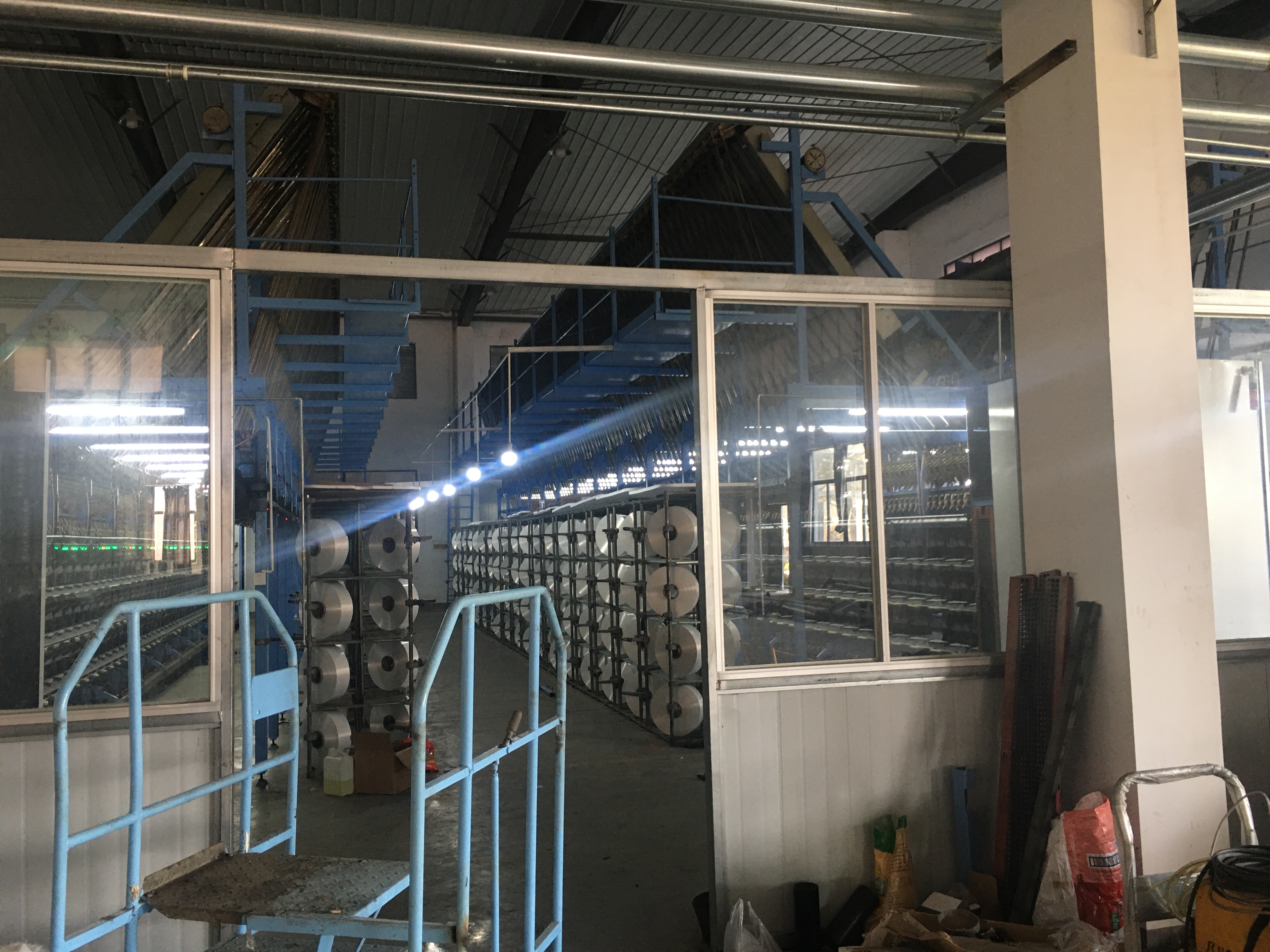
Smilytext factory operations support R&D, production, and export of functional polyester filament and functional fashion fabrics.
Why long-term functional polyester filament sourcing is difficult
Regular polyester is a standard PET filament with basic performance; its functionality depends mainly on fabric construction and finishing. Functional polyester, by contrast, has performance engineered at the yarn or material level through additives, masterbatch, and structure design. This enables targeted functional benefits such as UV protection, antibacterial options, far-infrared (FIR) properties, moisture management, and enhanced opacity or coverage — with supporting lab data available by item.
The practical consequence for procurement teams is that the yarn supplier, not the fabric mill, controls most performance outcomes. Six recurring risks define why long-term sourcing of functional filament fails when suppliers are not adequately controlled:
- Performance claim risk — UV, antibacterial, and FIR results vary by fabric construction and test method.
- Shade variation risk — batch-to-batch differences occur in dope-dyed series, and dye-lot differences in piece-dyed series.
- Processing compatibility risk — heat-setting, brushing, coating, or lamination can alter hand-feel, color, and performance.
- Compliance risk — restricted substances (RSL), specific market regulations, and customer standards must be screened continuously.
- Skin sensitivity risk — infant and sensitive-skin end uses demand material safety confirmation before launch.
- Microfiber shedding or pilling risk — depends on yarn construction, filament count, and fabric structure.
Each of these risks is manageable, but only when the supplier operates defined controls: validated test standards, batch traceability, pre-production approvals, and corrective action processes. These are the building blocks of a long-term functional polyester filament partnership.
Industry background: a growing market with functional and sustainable demand
The global polyester fiber market was valued at USD 82.07 billion in 2025 and is projected to reach USD 148.11 billion by 2034. Polyester filament yarn alone was estimated at USD 106.4 billion in 2024, growing at a projected 3.72% CAGR until 2035. The Asia Pacific region dominated the polyester fiber market with a 65% share in 2025, led by China and India.
Two demand shifts matter for functional filament buyers. First, the athleisure industry has an established preference for moisture-wicking and antimicrobial polyester blends, making performance a standard requirement rather than a premium option. Second, sustainability is reshaping material specification: the global recycled polyester market was valued at USD 15.52 billion in 2024 and is expected to reach USD 26.18 billion by 2030, reflecting a 9.25% CAGR. Certification schemes such as GRS and OEKO-TEX Standard 100 can require at least 20% recycled content for specific labeling, which makes yarn-level recycled content a procurement consideration.
In this landscape, major global players in the polyester filament yarn industry include Indorama Ventures, Reliance Industries, Toray Industries, and Teijin Limited. These groups dominate commodity-scale production. For brands seeking engineered functionality and long-term product development support, specialized manufacturers with dedicated R&D teams offer an alternative sourcing route that is easier to align with specific garment programs.
Smilytex: a functional fiber and fabric partner for long-term programs
Smily Textile Technology (Taicang) Co.Ltd (brand: Smilytex) is a functional fiber and fabric technology company established in 2017 with a registered capital of 6 million yuan. The company is an innovative technology enterprise engaged in R&D, design, and manufacture of functional fiber and functional fashion fabrics, operating from a 16,220 m² facility in Taicang City, Jiangsu Province, China, with a team of 206 employees.
Smilytex's R&D capability is anchored by a professional core R&D team of 10 engineers and more than 20 core patented technologies, including authorized invention patents, authorized utility model patents, and design patents. Approximately 70% of output is exported, primarily to the EU, USA, and Japan — markets with strict compliance and documentation expectations. The company's business scope covers technology R&D and transfer, technical consultation and service in the textile field, wholesale and retail of clothing, apparel, sports equipment, fabric, accessories, and textile materials, as well as import and export of related commodities and technologies.
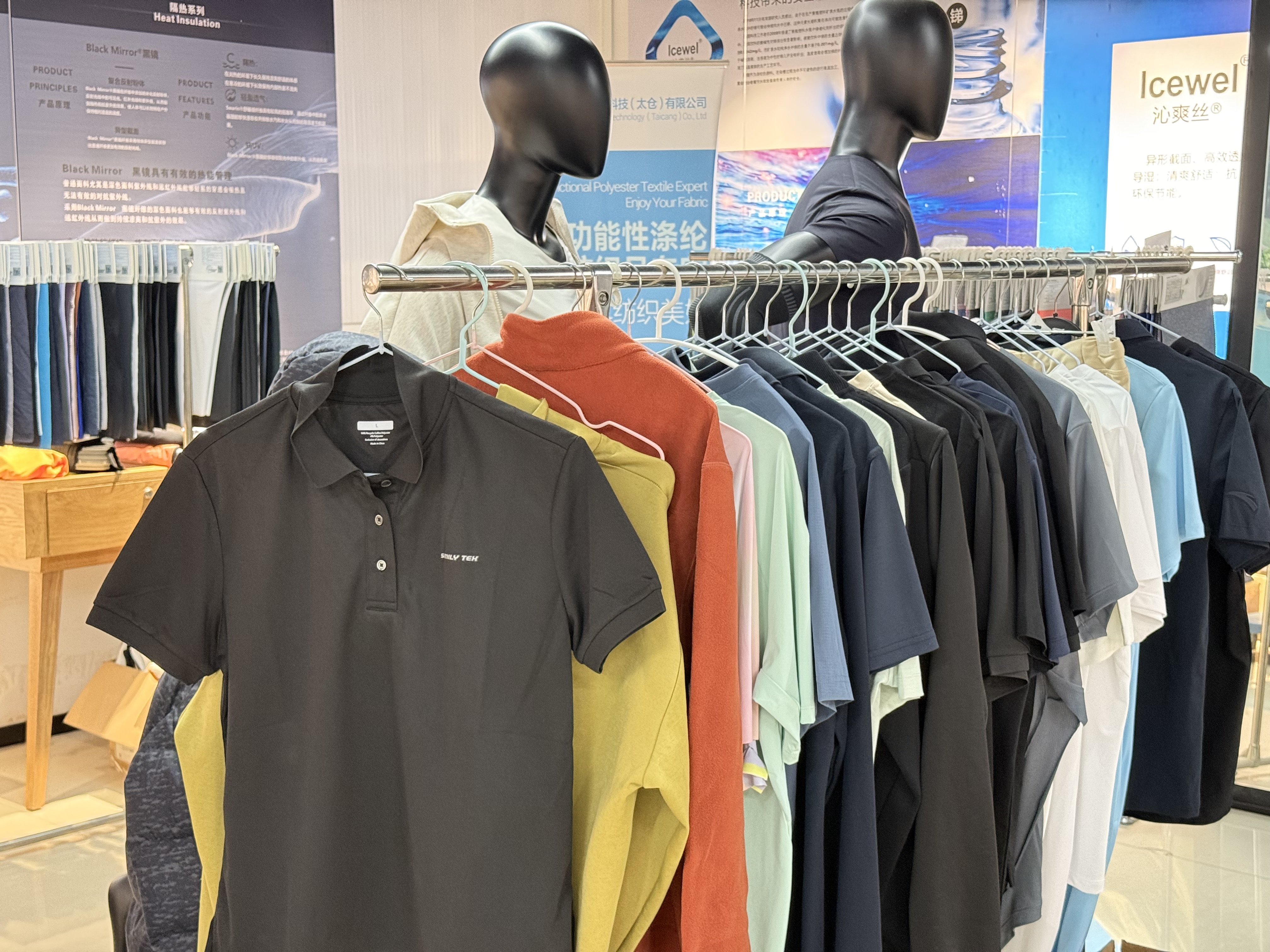
Smilytex's office and R&D environment support technical consultation, product development, and export coordination.
The functional polyester filament portfolio: four series, distinct functions
Smilytex's functional polyester filament range is organized into four product series: Black Mirror®, Cocarber®, Rimens®, and Respawn®. Each series addresses a defined set of performance requirements and is available in specified yarn counts.
Black Mirror®: UV-resistant, heat-shielding polyester filament
Black Mirror® is a multifunctional composite fiber (DTY) developed for UV protection and heat shielding. Available counts are 30D, 50D, 75D, 100D, 150D, and 300D. Its functions include heat insulation, anti-ultraviolet performance, and see-through resistance. Black Mirror® is suitable for both woven and knitted applications in sports, leisure, and outdoor apparel.
Cocarber®: coffee charcoal antibacterial polyester filament
Cocarber® is a DTY filament available in 30D, 50D, 75D, 100D, 150D, and 300D. Its function set includes recycled coffee waste utilization, odor control, far-infrared heating, quick-dry performance, dope-dye capability, and antimicrobial activity. Material variants include bamboo charcoal, coconut charcoal, china-hemp charcoal, coffee charcoal, dope-dyeing, cotton feeling, renewable, and hydrophilic versions. Cocarber® is suitable for sport, leisure, underwear, and home textile applications.
Rimens®: cotton-touch, non-spandex stretch polyester filament
Rimens® is a cotton-like polyester available as DTY or ATY in counts of 60D, 80D, 90D, 130D, 160D, 190D, 260D, 320D, and 450D. Its functions are a cotton-like hand-feel and non-spandex elasticity, providing stretch and recovery without elastane. Rimens® is suitable for sport, leisure, and home textile applications, offering an alternative for programs that require a natural hand-feel together with polyester's durability and quick-drying behavior.
Respawn®: T2T recycled polyester filament
Respawn® is a recycled polyester line available as filament and staple fiber, reconstructed through chemical recycling and polymer rebuilding (T2T). Its functions include low-temperature dyeing and moisture management. Variants include wet-permeable quick-drying, melange, dope-dyeing, functional, renewable, and cotton-feel versions. Respawn® is suitable for both woven and knitted applications in sport, leisure, and home textile programs.
Functional vs. regular polyester filament: what the performance gap means
Comparing functional polyester to regular polyester requires evaluating performance origin, measurable KPIs, cost, and maintenance. The table below summarizes the verified differences.
| Metric | Regular Polyester | Functional Polyester (Smilytex series) |
|---|---|---|
| Performance origin | Standard PET filament; functionality depends mainly on fabric construction and finishing | Engineered at yarn/material level (additives, masterbatch, and structure) |
| UPF | 15–20 | 40–60+ (up to UPF 50+, depends on fabric construction and color; tested per standard) |
| Antibacterial rate | None | ≥90% (per ISO 20743 / AATCC 100, as applicable) |
| Moisture-wicking rate | Baseline | ↑ 50%–200% (by specific yarn design) |
| Drying time | Baseline | ↓ 30%–50% |
| Flame retardancy (LOI) | 20%–22% | ≥28% |
| Wash durability | — | 30–50+ washes |
| Cost position | Baseline | Premium, depending on function, construction, and MOQ |
Functional polyester typically carries a premium over regular polyester. Smilytex provides a cost-optimized proposal after target specifications and volume are confirmed. Daily maintenance, however, is comparable to regular polyester: machine washable, quick-drying, and easy to maintain. Certain functional options can be more forgiving in daily wear — for example, improved UV resistance, optional antibacterial performance that helps reduce odor-causing bacteria, and reduced visible sweat marks or staining in some constructions. Actual maintenance benefits depend on the specific fabric construction and application.
There is also an efficiency dimension. Compared with conventional piece-dyed polyester, dope-dyed options can reduce dyeing steps and the related water and energy use. For specific yarn designs, improved moisture management can support faster drying in wear. These benefits depend on fabric construction and testing method, so they should be validated in the target fabric during development.
Application scenarios: where each series fits
Smilytex functional polyester filament is specified across apparel categories where measurable performance is required. The best-fit applications are:
- Activewear and athleisure — UV, opacity, and comfort-focused programs benefit from Black Mirror® and moisture-management variants.
- Workwear and outdoor apparel — UV and durability-focused programs use Black Mirror®'s heat insulation and anti-ultraviolet properties.
- Base layers and intimate apparel — moisture management and comfort options support next-to-skin wear.
- Hygiene-sensitive apparel — Cocarber® antibacterial variants address odor control and antimicrobial requirements.
- Sustainable apparel programs — Respawn® T2T recycled filament and biodegradable options support recycled-content objectives; GRS and OEKO-TEX labeling can require at least 20% recycled content.
- Home textiles and leisurewear — Rimens® cotton-touch, non-spandex stretch filament delivers comfort without elastane.
All Smilytex series are suitable for both woven and knitted applications, with sport, leisure, underwear, home textile, and outdoor segments explicitly covered by the product range.
Step by step: establishing a long-term partnership with Smilytex
Moving from decision to execution with a functional polyester filament supplier involves a defined workflow. Smilytex supports the following process:
- Define performance claims and test standards. Specify which functional KPIs the finished fabric must meet. Because UV, antibacterial, FIR, and wicking results vary by fabric construction and test method, claims should be aligned to validated standards before any commitment is made.
- Request samples and benchmark testing. Smilytex offers sample and benchmark testing to align test standards before bulk production. This stage validates hand-feel, dyeability, and functional KPIs in the actual fabric construction.
- Complete pre-production approval. Lab dips or bulk shade approval and a pilot run precede full production. For dope-dyed series, shade is compared by production batch; for piece-dyed series, by dye lot. A shading sheet is provided when required.
- Set quality inspection criteria. Pre-shipment inspection is based on approved lab dips or bulk shade, and final inspection follows agreed specifications covering GSM, width, shrinkage, and color. Performance testing is available as requested.
- Plan for traceability and deviation handling. Smilytex maintains traceability records by batch or lot, keeps retain samples for verification, and implements a CAPA (Corrective and Preventive Action) process for any quality or performance deviation, with support for re-testing.
- Confirm logistics and payment terms. Monthly production capacity is 1.6 tons, with typical lead times of 5–20 days. Delivery is FOB Shanghai or CIF to destination ports as required. The minimum order quantity for fabric is 500 kg, and payment is by T/T in advance or L/C at sight.
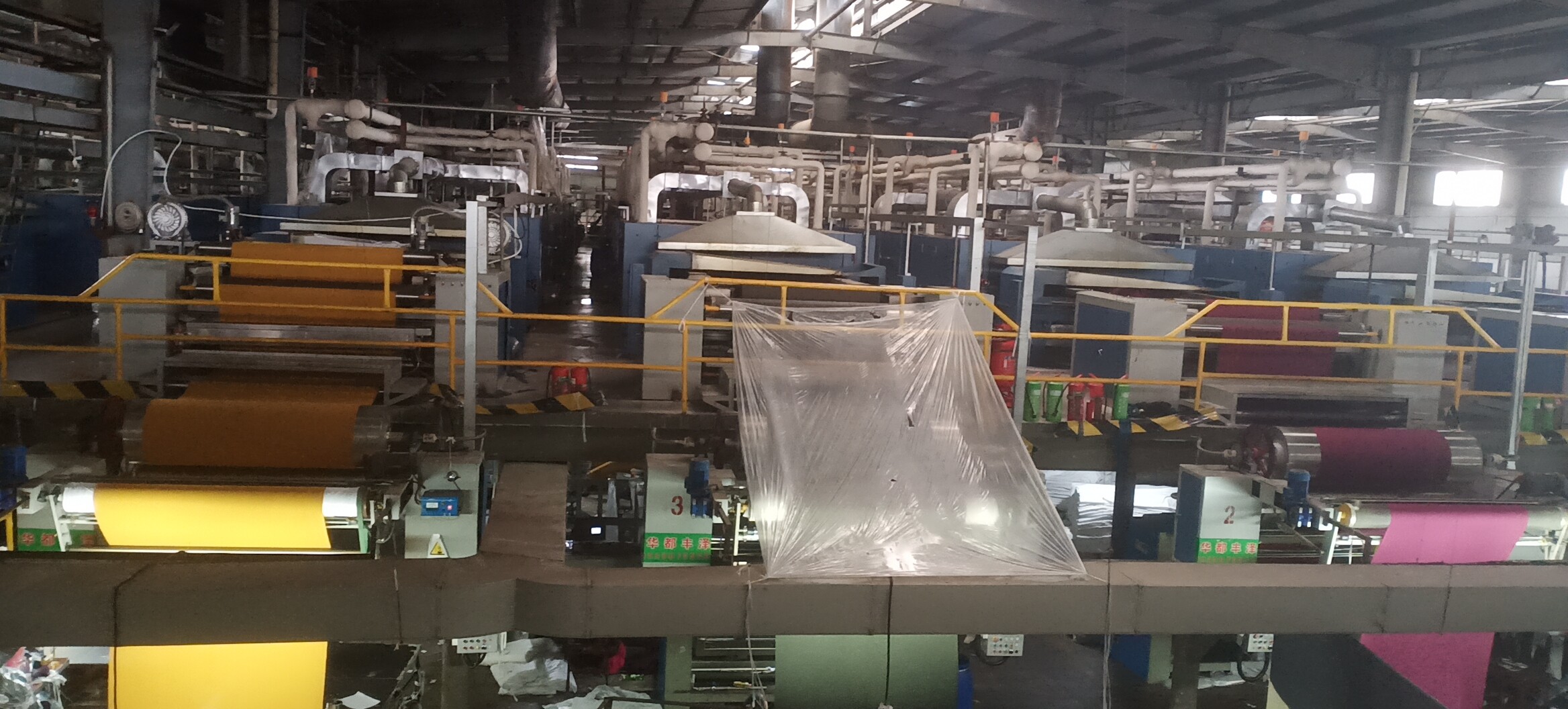
Smilytex's production and quality-control environment supports consistent functional filament output for long-term programs.
Risk management in long-term supply relationships
Even with an established supplier, long-term programs face recurring risks. Smilytex addresses each category with defined controls and enterprise-level measures:
- Performance claim risk. Claims are defined based on validated test standards; construction and test methods are confirmed before any performance commitment. Sample and benchmark testing are offered, and standards are aligned with the customer before bulk production.
- Shade variation risk. Shading sheets are provided by production batch (dope dye) or dye lot (piece dye). Lab dips and bulk shade approval precede production, and quality inspection covers GSM, width, shrinkage, and strength.
- Processing compatibility risk. Recommended processing windows — including heat-setting temperature, brushing parameters, and coating suitability — are provided so that hand-feel, color, and performance survive downstream finishing.
- Compliance risk. Material safety screening against customer RSL requirements is performed, and MSDS or TDS is provided when applicable. For high-risk end uses such as babywear, medical, and protective workwear, standards and third-party lab testing are confirmed before launch.
- Skin sensitivity risk. For infants or sensitive skin, material safety screening and standard confirmation precede any production decision.
- Microfiber shedding or pilling risk. Smilytex provides clear application guidance and limitations in specifications — stating what a construction can and cannot achieve — so that claims remain defensible.
The unifying principle is honest capability communication. Smilytex documents limitations alongside functions, maintains retain samples, and supports verification at every stage. For a long-term partnership, this transparency is as important as the performance data itself.
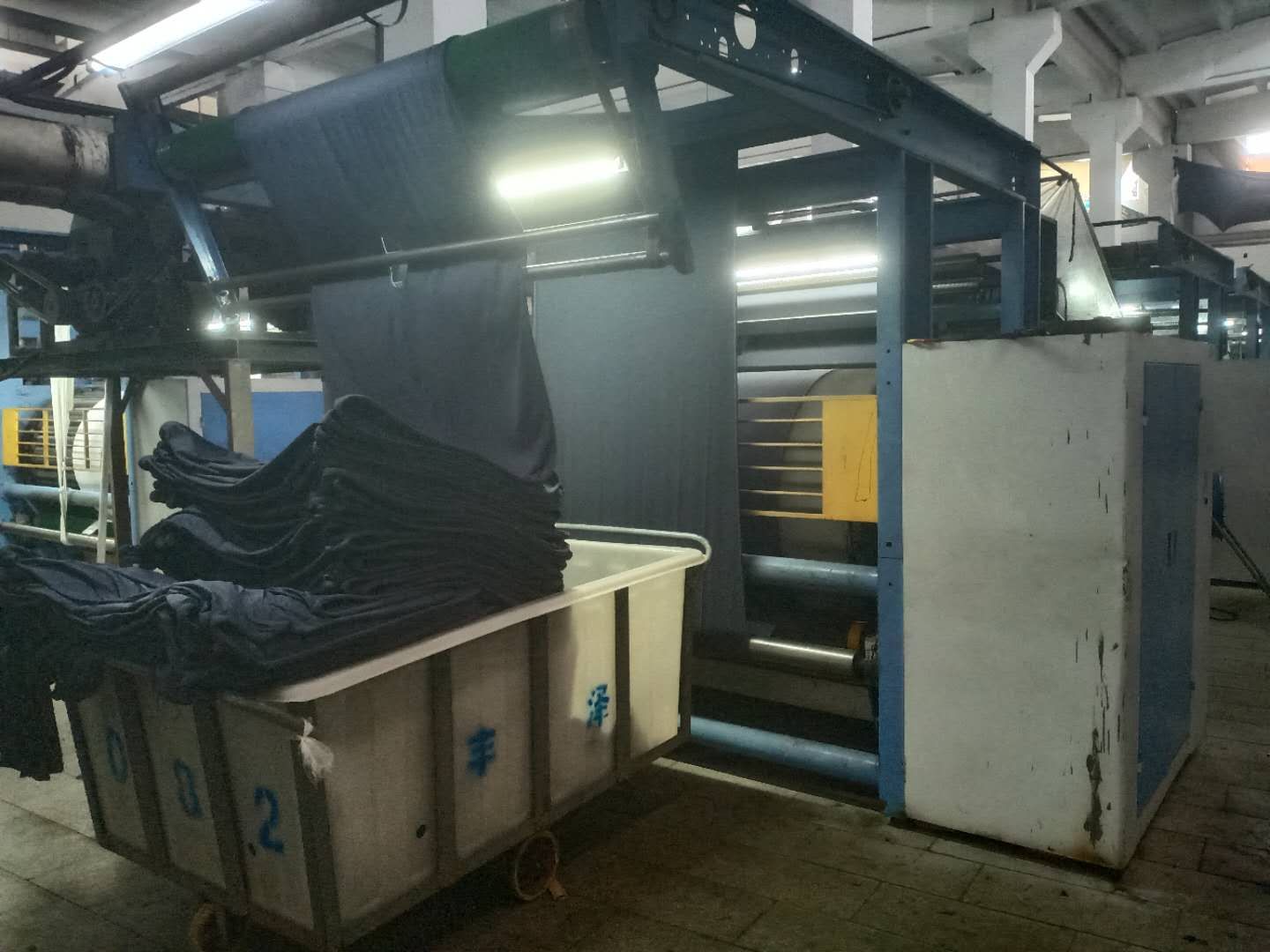
Manufacturing operations at Smilytex support batch-level traceability and quality inspection for exported functional polyester filament.
FAQ
How does Smilytex ensure consistent quality for long-term functional polyester filament orders?
Smilytex maintains traceability records by batch or lot and keeps retain samples for verification across orders. Quality inspection covers key parameters — GSM, width, shrinkage, and strength — plus performance testing as requested. Pre-shipment inspection is based on approved lab dips or bulk shade, and final inspection follows agreed specifications. If a deviation occurs, a CAPA (Corrective and Preventive Action) process is triggered with support for re-testing.
What functional polyester filament products and customization options does Smilytex offer?
Smilytex's portfolio includes four functional polyester series: Black Mirror® (UV-resistant, heat-shielding), Cocarber® (coffee charcoal antibacterial), Rimens® (cotton-touch, non-spandex stretch), and Respawn® (T2T recycled, low-temperature dyeable). Available counts range from 30D to 450D depending on series. Customization is supported by a professional R&D team of 10 engineers and more than 20 core patented technologies, including authorized invention, utility model, and design patents.
How does functional polyester filament compare in cost with regular polyester?
Functional polyester typically carries a premium over regular polyester, depending on the required function, construction, and MOQ. In exchange, it delivers measurable KPIs that regular polyester does not guarantee: UPF 40–60+ (versus 15–20), antibacterial rate ≥90%, moisture-wicking improvement of 50–200%, wash durability of 30–50+ cycles, and flame retardancy with LOI ≥28% (versus 20–22%). Smilytex provides a cost-optimized proposal after target specs and volume are confirmed.
How can I request functional polyester filament samples for evaluation?
Samples can be requested by emailing Archer.Tan@smilytex.com, calling +86-512-53991066, or contacting Smilytex via WhatsApp at +86-13706246300. After you confirm target fabric construction, performance standards, and volume, Smilytex provides filament samples, supports benchmark testing, and runs lab dips to align standards before bulk production.
What are Smilytex's production capacity and lead times for ongoing supply?
Smilytex's monthly production capacity is 1.6 tons of functional fibers and fabrics, with a typical lead time of 5–20 days. Delivery is available FOB Shanghai or CIF to destination ports as required. The fabric MOQ is 500 kg, and payment terms are T/T in advance or L/C at sight. For an updated production schedule, current capacity allocation, and a tailored quote for your program volumes, contact Smilytex directly — email Archer.Tan@smilytex.com or send an inquiry via the company website at www.smilytex.com.
Conclusion: moving from evaluation to execution
Functional polyester filament is a strategic category, not a commodity spot purchase. The supplier's R&D depth, quality system, traceability, and communication discipline determine whether engineered performance survives repeated production runs. Smilytex combines more than 20 patented technologies, a 10-engineer R&D team, four functional polyester series, batch-level traceability with a CAPA framework, and export experience to EU, USA, and Japanese markets. For brands finalizing their supplier decision, the practical next step is to align performance standards and request benchmark samples in the target fabric construction.
Start your long-term functional polyester filament program
Smily Textile Technology (Taicang) Co.Ltd — brand: Smilytex — is a functional fiber and functional fabric R&D company in Taicang, Jiangsu, China. For samples, quotes, or OEM and customization discussions:
Email: Archer.Tan@smilytex.com
Tel: 86-512-53991066
WhatsApp: +86-13706246300
Website: www.smilytex.com
Address: No.6 Weast Beijing Road, Taicang City, Jiangsu Province, China
Download the Smilytex company brochure (PDF) for product details, specifications, and contact information.
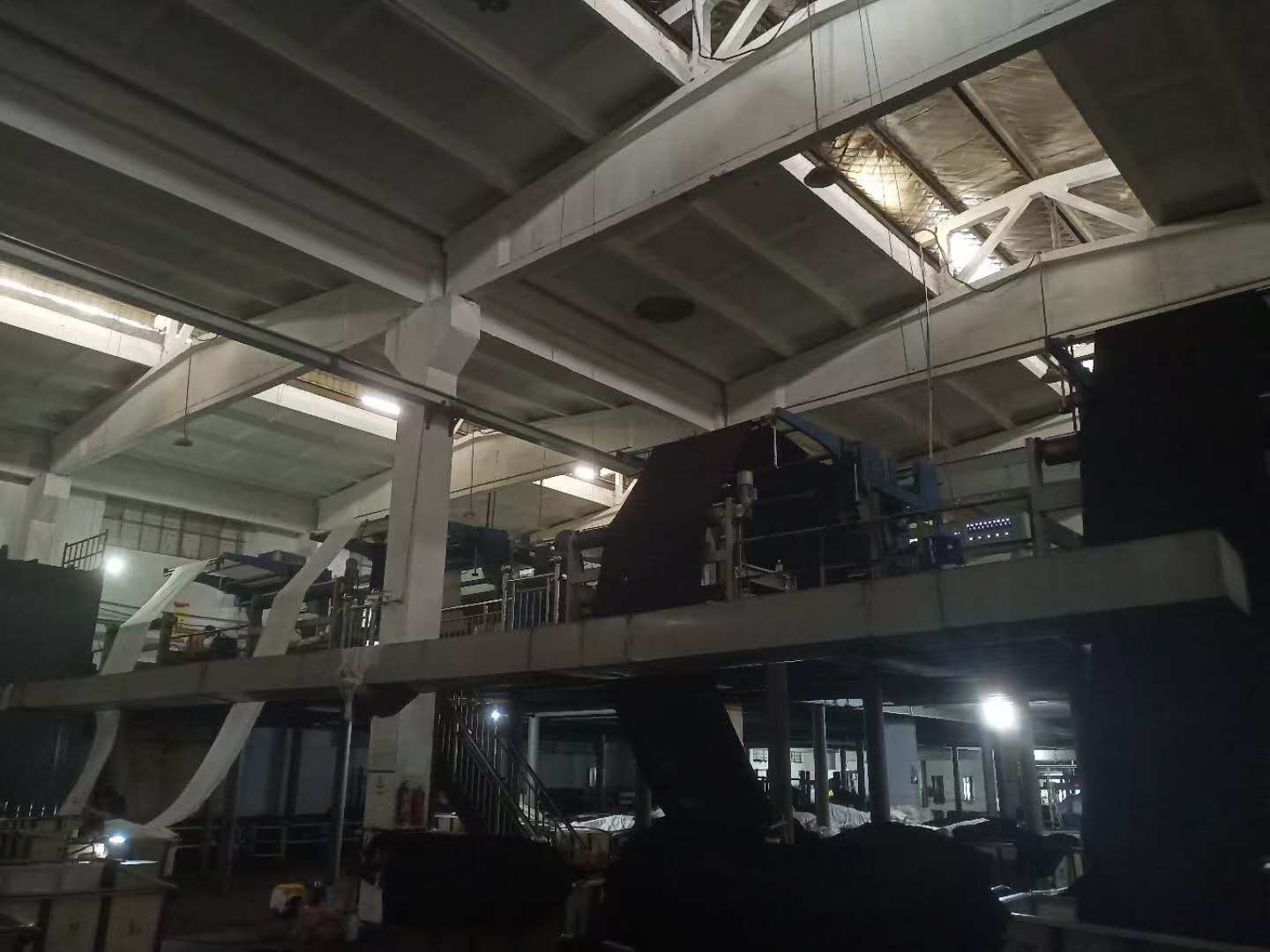
Smilytex supports global buyers with FOB Shanghai and CIF delivery, fabric MOQ of 500 kg, and 5–20 day typical lead times.