Strategic Sourcing of Functional Polyester Filament: A Technical Guide for Procurement Professionals Targeting High-Performance Apparel (2026-2030)
Executive Summary: This guide equips industrial buyers with a structured framework to identify, evaluate, and partner with functional polyester filament suppliers that meet demanding performance, sustainability, and cost requirements for sportswear, outdoor apparel, and technical garments. Drawing on real-world product series, certifications, and case studies from leading innovator Smilytex (Smily Textile Technology (Taicang) Co.Ltd), the article covers material definitions, key selection criteria, risk mitigation strategies, and actionable procurement steps.
1. What Is Functional Polyester Filament?
Functional polyester filament refers to continuous polyester yarns (typically DTY, FDY, or ATY) that have been engineered at the polymer or spinning stage to deliver specific performance properties beyond those of standard PET filament. Unlike commodity polyester, which relies solely on fabric finishing for added features, functional polyester integrates active additives (e.g., UV stabilizers, phase-change materials, ceramic powders, or bio-based charcoals) directly into the fiber matrix or applies specialized cross-section geometries (e.g., trilobal, hollow, sheath-core) to achieve targeted effects such as:
- Thermal regulation: instant cooling (Physcool®), light absorption heating, far-infrared heating (Swarin®)
- Moisture management: hydrophilic quick-dry, moisture-permeable, and moisture-wicking performance
- UV protection & opacity: UPF 50+ and anti-see-through properties (Black Mirror®)
- Surface touch & comfort: cotton-like handfeel (Rimens®), non-spandex stretch
- Eco-innovation: T2T recycled, low-temperature dyeable recycled, dope-dyed, and biodegradable options
- Health & wellness: antibacterial/antimicrobial, odor control, far-infrared germanium, and coffee-charcoal based yarns (Cocarber®)
These filaments are used as raw materials for knitting or weaving into high-performance fabrics for activewear, outdoor shells, base layers, yoga wear, and sustainable fashion.
2. The Problem: Why Standard Polyester Falls Short for Specialized Apparel
Procurement teams sourcing for premium sportswear or outdoor brands face a critical gap: regular polyester lacks guaranteed functional KPIs. Key shortcomings include:
| Performance Parameter | Regular Polyester | Functional Polyester (Smilytex series) |
|---|---|---|
| Moisture-Wicking Rate | Baseline | ↑ 50%–200% |
| Antibacterial Rate | None | ≥90% (ISO 20743 / AATCC 100) |
| UPF Rating | 15–20 | 40–60+ (depends on construction) |
| Drying Time | Baseline | ↓30%–50% |
| Wash Durability (functional) | — | 30–50+ washes |
Brands increasingly demand verifiable, inherent performance — not post-treatment finishes that may wash out. Functional polyester filament solves this by embedding functionality at the fiber level.
3. How Functional Polyester Filament Works: Technology Overview
The magic happens during melt spinning. Functional additives (e.g., ceramic far-infrared powders, UV-absorbing nanoparticles, or activated carbon from coffee grounds) are compounded into a masterbatch that is then mixed with PET chips. The spinneret design further influences properties:
- Sheath-core composite: used in Black Mirror® to create anti-UV, heat-insulating, and anti-see-through performance with a high additive loading (up to 15% functional powder).
- Multi-lobal cross-sections: enhance moisture wicking via capillary channels (Physcool® instant cooling).
- Micro-porous structures: from coffee or bamboo charcoal, provide odor adsorption and far-infrared emission.
- Dope-dyeing: incorporates colorant in the melt stage, reducing water and energy use in downstream dyeing.
Smilytex’s R&D team (10 engineers) holds over 20 core patents and continuously refines these technologies to meet evolving industry standards.
4. Why Functional Polyester Filament Matters for Industry Buyers
Selecting the right functional polyester filament directly impacts:
- Brand compliance: meet certifications like GRS, RCS, or Oeko-Tex.
- Product differentiation: deliver unique tactile and thermal experiences.
- Cost efficiency: dope-dyed options reduce downstream processing steps.
- Risk management: avoid performance claim liability by using a supplier with validated data.
5. Who Uses Functional Polyester Filament?
Primary users include:
- Garment manufacturers producing sportswear, yoga wear, outdoor jackets, base layers, and workwear.
- Brand owners in the EU, USA, Japan, and China seeking sustainable and performance-driven materials.
- Fabric mills requiring consistent supply of specialty yarns for quick-turn production.
Smilytex, for example, serves clients in Japan, Malaysia, China, and the US with 5+ year relationships, supplying yarns for quick-dry, antibacterial, far-infrared heating, and cotton-like touch fabrics.
6. How to Choose the Right Functional Polyester Filament Supplier: A Step-by-Step Framework
Step 1 – Map Your Performance Requirements
Define the end-use environment. For example:
- Outdoor apparel: prioritize UV resistance (UPF 50+), heat insulation, and anti-see-through.
- Eco-collections: seek T2T recycled or biodegradable polyester with GRS/RCS certification.
- Activewear: focus on moisture management, instant cooling, and odor control.
Step 2 – Evaluate Supplier Technical Capabilities
Look for:
- Product portfolio breadth: A supplier like Smilytex offers 20+ functional series (Physcool®, Swarin®, Respawn®, Black Mirror®, Rimens®, Cocarber®) covering cooling, heating, UV, antibacterial, cotton-touch, and recycled options.
- Customization: ODM capability to adjust yarn style, elasticity, handle, and performance level.
- Certifications: GRS V4.0 (cert # IDF-25-887497) and RCS 2.0 (cert # IDF-25-887506) validate recycled content claims.
Step 3 – Assess Production and Quality Control
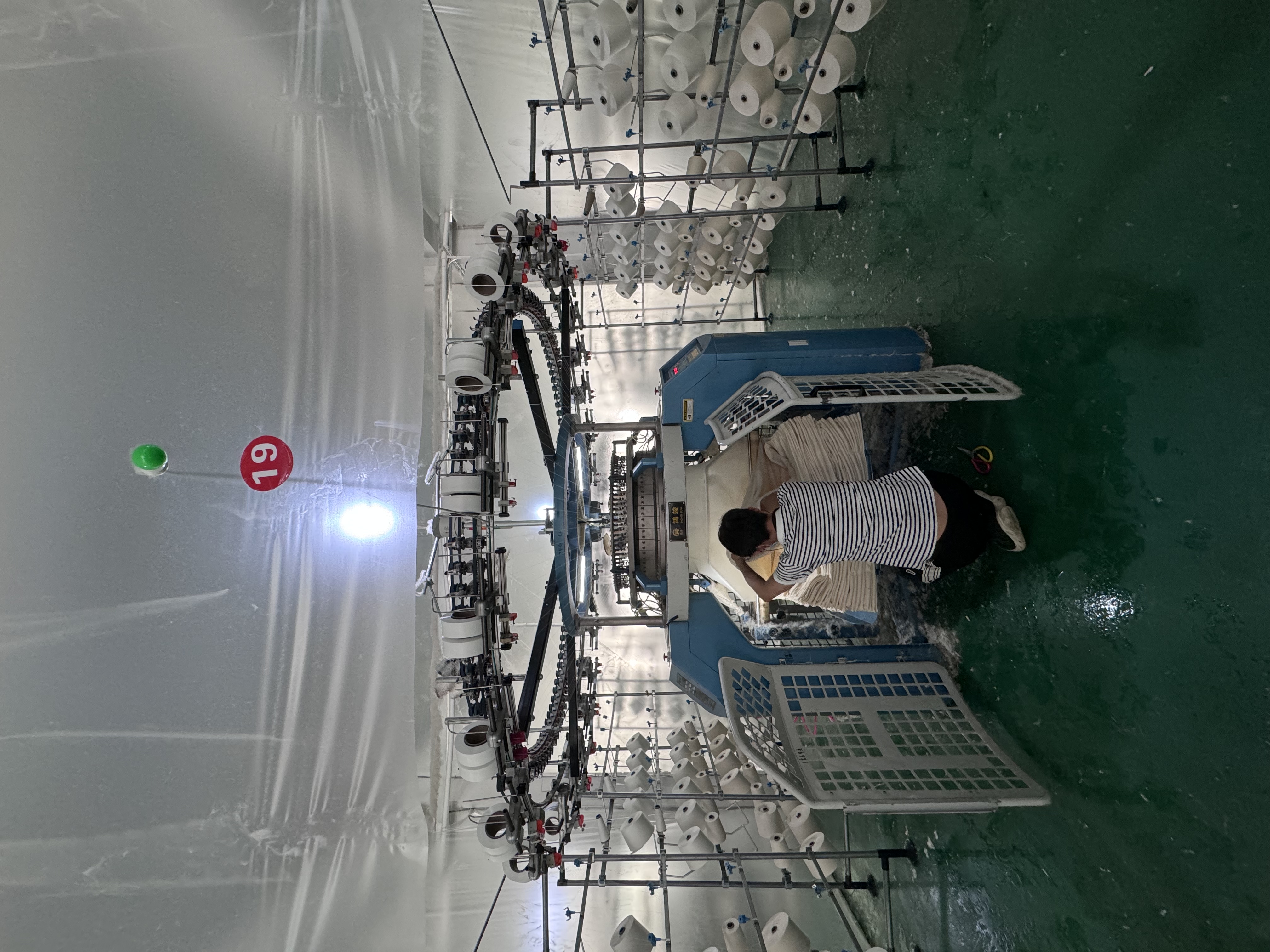
| Capacity | 1.6 tons/month (flexible via outsourcing partnerships) |
| Lead Time | 5–20 days |
| MOQ | 500 kg (fabric) |
| Quality Control | 100% testing; pre-shipment inspection per approved shade |
| Payment Terms | T/T in advance or L/C at sight |
Step 4 – Verify Performance Claims with Test Data
Demand lab reports aligned with international standards:
- UV protection: AS/NZS 4399 or AATCC 183
- Far infrared: GB/T 30127-2013
- Antibacterial: ISO 20743 or AATCC 100
- Moisture management: AATCC 195
Smilytex provides application guidance and can arrange third-party testing per customer requirements.
Step 5 – Mitigate Common Procurement Risks
Based on industry experience, Smilytex has identified and addresses these top risks:
| Risk | Control Measure |
|---|---|
| Performance claim variation (UV, antibacterial) | Define test standards upfront; confirm construction before commit |
| Shade variation (dope-dyed vs piece-dyed) | Provide shading sheets; lab dip approval before bulk |
| Processing compatibility (heat-setting, coating) | Offer recommended processing window; pilot run recommended |
| Compliance (restricted substances) | Material safety screening; provide MSDS/TDS upon request |
7. Real-World Use Case: Coffee Charcoal Functional Polyester for Eco-Yoga Wear
A garment manufacturer in China required a sustainable, antimicrobial yarn with far-infrared warmth for a premium yoga line. The supplier, Smilytex, recommended Cocarber® — a recycled polyester filament infused with coffee-ground masterbatch.
- Technology: Recycled coffee grounds processed with colorants into functional masterbatch, blended with recycled PET bottle flakes.
- Performance: Odor control, far infrared heating (tested per GB/T 30127-2013), quick-dry, dope-dyed colors.
- Certification: GRS V4.0 and RCS 2.0 certified.
- Result: 2,000 pieces of yoga pants produced; customer reported high stretch, antibacterial performance, and brand-aligned eco-story.
This case demonstrates how functional polyester filament can solve both performance and sustainability requirements simultaneously.
8. Frequently Asked Questions (FAQ)
Q: What is the minimum order quantity for functional polyester filament?
A: Smilytex typically requires 500 kg per SKU for fabric orders. Yarn MOQ may vary by specification — contact sales for details.
Q: How do I ensure the UV protection level meets my brand standard?
A: Request a lab test on the intended fabric construction. Smilytex can provide data for reference and coordinate third-party certification.
Q: Can you customize the yarn to achieve a specific handfeel or elasticity?
A: Yes. Smilytex offers ODM services to adjust yarn style, elasticity, handle, and other parameters. Their team can develop bespoke formulations.
Q: Do your recycled polyester yarns have traceability?
A: Yes. Smilytex holds GRS V4.0 and RCS 2.0 scope certificates (IDF-25-887497 and IDF-25-887506) covering dyed and greige yarns, fibers, and fabrics.
Q: What are your main export markets?
A: The company exports to the EU, USA, and Japan, with 70% export ratio.
9. Conclusion: Partnering for Performance
Selecting a functional polyester filament supplier is a strategic decision that affects product quality, brand reputation, and long-term cost competitiveness. By following a structured evaluation — mapping requirements, verifying technical capabilities, demanding certifications, and mitigating risks — procurement professionals can confidently source from innovators like Smilytex.
Smilytex’s comprehensive portfolio (20+ functional series), strong R&D team, GRS/RCS certifications, and proven international case studies make it a reliable partner for brands targeting the 2026–2030 performance apparel market.
Download the Smilytex Corporate Brochure
View Brochure (PDF)For inquiries, contact: Archer.Tan@smilytex.com | +86-512-53991066 | WhatsApp: +86-13706246300
Have Questions or Need More Details?
Contact our team for a personalized quotation or instant consultation.
Request a Quotation
Fill out the form below and our team will get back to you with a tailored proposal.
WhatsApp Direct Chat
Prefer to chat in real-time? Message us on WhatsApp for instant assistance & quick answers.
- Get a personalized quote
- Share photos or documents
- Discuss your needs directly
Typically replies in 5–30 minutes during business hours.