Evaluating an Ice Cream Extrusion Line Supplier: From Component Sourcing to After-Sales Support
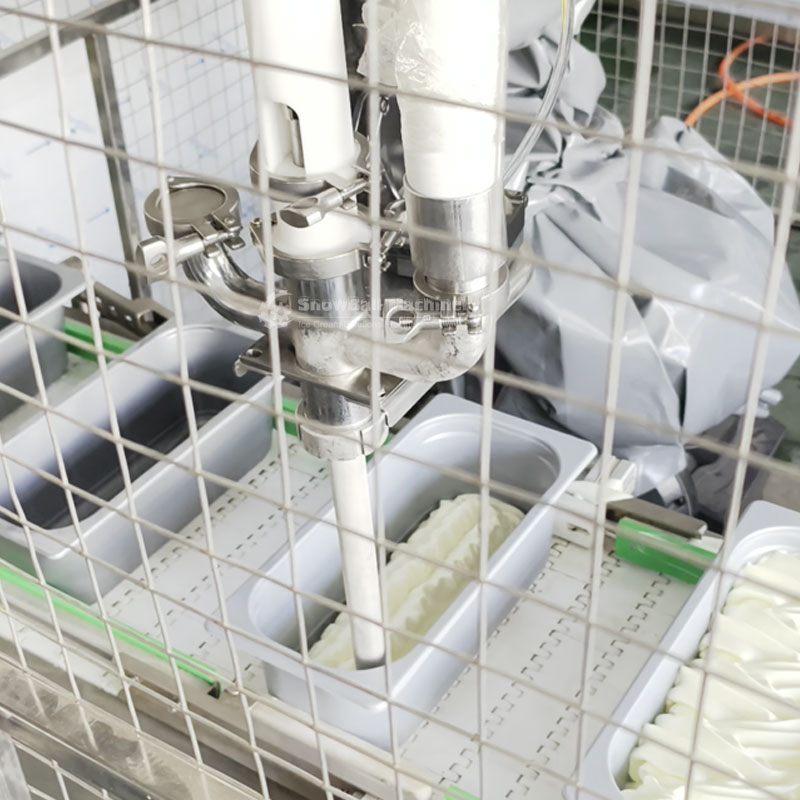
What an Extrusion Line Supplier Evaluation Must Actually Cover
A supplier evaluation for an extrusion and hardening line should test seven areas: (1) component sourcing and brand transparency, (2) scope of line supply, (3) turnkey engineering from factory design to full line supply, (4) compliance and test evidence, (5) customization capability for non-standard products, (6) commercial terms including lifecycle cost and lead time, and (7) after-sales support architecture. A vendor that can only answer questions about a single machine — for example a stand-alone continuous freezer or a filler — cannot carry responsibility for a complete line.
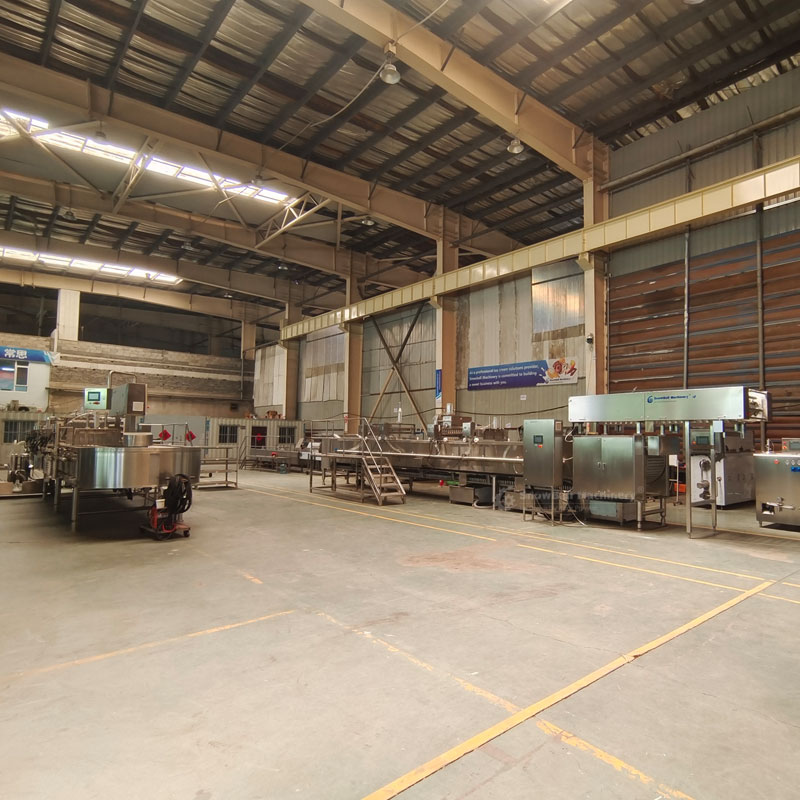
The reference supplier used throughout this article is Snowball Machinery Manufacturing Co., Ltd, a Chinese ice cream equipment manufacturer founded in 2020. The company operates a 4,000 m² factory with 50 employees, a 10-engineer mechanical design and drawing team, and an annual output of 1,200 sets. Approximately 90% of its production is exported to North America, South America, Europe, Asia and Africa, and the company states more than 30 years of experience in the ice cream machinery industry. Its portfolio spans premix processing, HTST and batch pasteurizing systems, ageing tanks, CIP, continuous freezers, ingredient and fruit feeder systems, moulding stick lines, filling machines, hardening tunnels, extrusion lines, robot ice cream machines, ripple pumps, sandwich and cake machines, and packing and cartoning equipment.
Snowball Machinery publishes a full industrial ice cream machine range covering these categories, which makes it a useful comparison point for buyers assessing complete-line suppliers.
Problem Definition: Why Extrusion Line Projects Fail After the Contract Is Signed
Most extrusion line problems do not appear at commissioning. They appear six to eighteen months later, when the buyer changes product format, raises capacity, or hits a stretch of hot and humid weather. Four risk categories account for the majority of these failures, and each one maps directly to a question that should be asked during supplier evaluation.
- Adaptation and upgrade risk. Equipment that cannot follow capacity expansion or product iteration forces expensive later renovation. The documented control approach is a modular, expandable design that reserves upgrade interfaces, combined with pre-sales technical assessment of production demand and capacity planning.
- Delivery and after-sales risk. Delayed equipment delivery, untimely installation and commissioning, and slow after-sales response all push back the production launch date. Controls include modular production to shorten the manufacturing cycle, a dedicated installation and commissioning team, and a 24-hour after-sales response mechanism combining remote troubleshooting with on-site service.
- Product quality risk. Insufficient filling accuracy, swirl patterns that do not meet the specification, uneven fruit particle addition, unqualified product forming, an overrun rate that misses requirements, or non-compliance with food regulation all originate in equipment design. The documented controls are high-precision sensors with intelligent control for filling volume and fruit dosing, servo systems for swirl pattern accuracy, food-grade 304/316 stainless steel throughout, and multiple in-process quality inspection checkpoints.
- Equipment operation risk. Core component failure, unplanned production stoppage, unstable operation, and poor behaviour in high-temperature and high-humidity environments. The controls are internationally renowned brands for core components, modular design for fast fault isolation and part replacement, a built-in intelligent monitoring system with real-time early warnings, and climate-specific heat-, moisture- and corrosion-resistant engineering.
The practical conclusion is that a supplier evaluation should measure the vendor's control system for these four risks, not only the throughput figure on a specification sheet.
Industry Background: What Market Context Means for Your Supplier Shortlist
The global ice cream processing equipment market was valued at approximately USD 2.33 billion in 2025, with projections to reach USD 3.00 billion by 2034 at a compound annual growth rate of 2.71%, according to IMARC Group. Within that market, hard ice cream processing equipment accounted for a dominant 57.8% share in 2025, with continuous freezers being the leading product type, according to Future Market Insights. The ice cream moulding production line segment specifically was valued at USD 1.2 billion in 2024 and is expected to grow to USD 2.5 billion by 2034 on rising automation demand, according to Reports and Data.
Supply is concentrated at the top of the market. Tetra Pak is the leading manufacturer in the industrial ice cream equipment sector and provides machinery used in over 75% of commercial production lines worldwide as of early 2026. In the broader dairy machinery trade (HS Code 843420), Germany, Poland and Italy were the leading exporters in 2024, with export values of USD 74.4 million, USD 64.9 million and USD 61.7 million respectively, according to the Observatory of Economic Complexity.
The implication for buyers is straightforward. Because one supplier family dominates global commercial coverage, most new extrusion, moulding and hardening capacity is built with specialist manufacturers outside that group. Those suppliers are not automatically weaker — but they are less familiar, which is exactly why a structured evaluation framework matters more than brand recognition alone.
Detailed Solution: The Seven-Point Extrusion Line Supplier Framework
1. Component sourcing and brand transparency
Ask the supplier to provide a component schedule listing the brand and model of every critical part, not a general statement about quality. Equipment operation risk is largely determined at this level: core components from internationally renowned brands materially improve stability, and buyers commonly ask whether drives, controllers and instrumentation sit in the tier of suppliers such as Danfoss or ABB. Snowball Machinery's stated design approach is to adopt internationally renowned brands for core components, supported by a tiered supplier screening mechanism, procurement quality control, and incoming inspection of every batch of components.
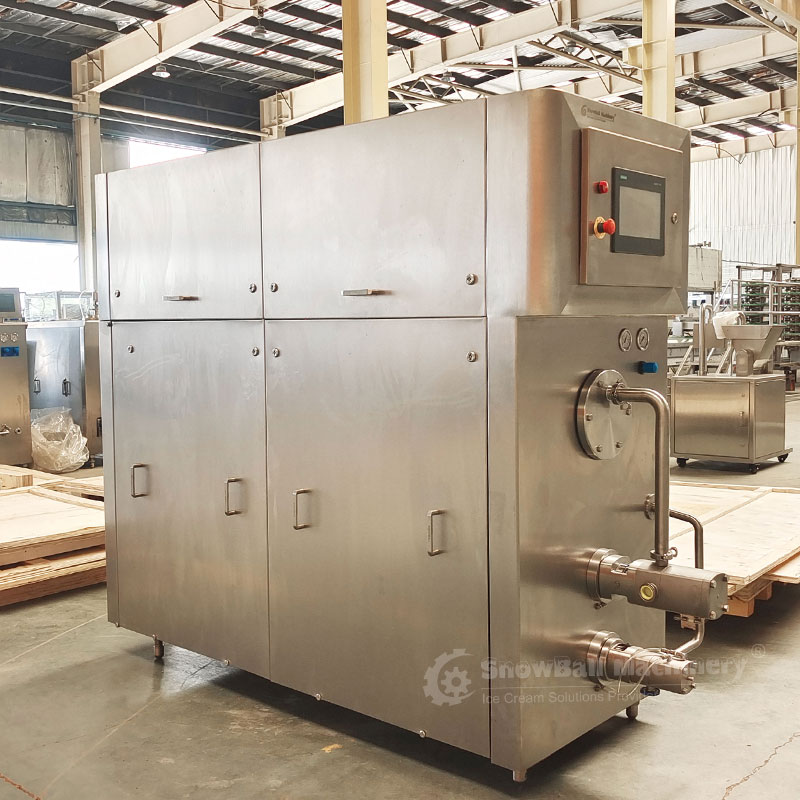
2. Scope of line supply: full line versus partial supply
A supplier that only builds extrusion heads or only builds hardening tunnels will leave every interface between the two open to dispute. The strongest position for a buyer is a single supplier accountable for the whole sequence: premix processing, pasteurization, ageing, continuous freezing, ingredient feeding, extrusion, hardening, filling and packing. Snowball Machinery is positioned as one of the few ice cream machine manufacturers supplying a full line from A to Z, allowing customers to use a one-stop procurement model rather than coordinating multiple vendors.
3. Turnkey engineering: from factory design to full line supply
Turnkey means the supplier owns layout, utilities interfaces, commissioning and handover — not simply that it ships more than one machine. During evaluation, ask for the engineering deliverables: plant layout drawings, utility and capacity planning, commissioning plan, acceptance criteria, and operator training material. Documented delivery practices at Snowball Machinery include standardized delivery procedures with defined time limits for production, logistics and installation, advance completion of compliance certification and customs clearance for overseas customers, multilingual operation manuals and training videos, and exclusive customer service groups with 24/7 response.
4. Compliance and test evidence
Compliance should be verified document by document. Snowball Machinery states that it operates a comprehensive quality control system complying with ISO9001 and national food machinery compliance standards including FDA, CE and FSC, that each machine undergoes food-grade and precision testing before delivery with a qualification certificate issued, and that food-grade 304/316 stainless steel is used throughout the equipment. For electrically operated refrigerating appliances with incorporated motor-compressors, buyers should also confirm the applicable safety standard reference, IEC 60335-2-89:2019, and check that the supplier can explain how its control and refrigeration design relates to it.
5. Customization for non-standard products
Extruded products are usually the least standard part of a factory's portfolio — shapes, inclusions, ripples, stickless formats, sandwich and cake geometries. Ask specifically how the supplier handles non-standard requirements: servo systems to control swirl patterns precisely, high-precision sensors and intelligent control for filling volume and fruit particle dosage, adjustable moulds and extrusion dies, and modular architecture that allows later format additions. Snowball Machinery also states that it supports the upgrading and retrofitting of well-known brand equipment, which can cut renovation costs by 40%–70% compared with replacing a line outright — a useful option for factories that already own part of the process equipment.
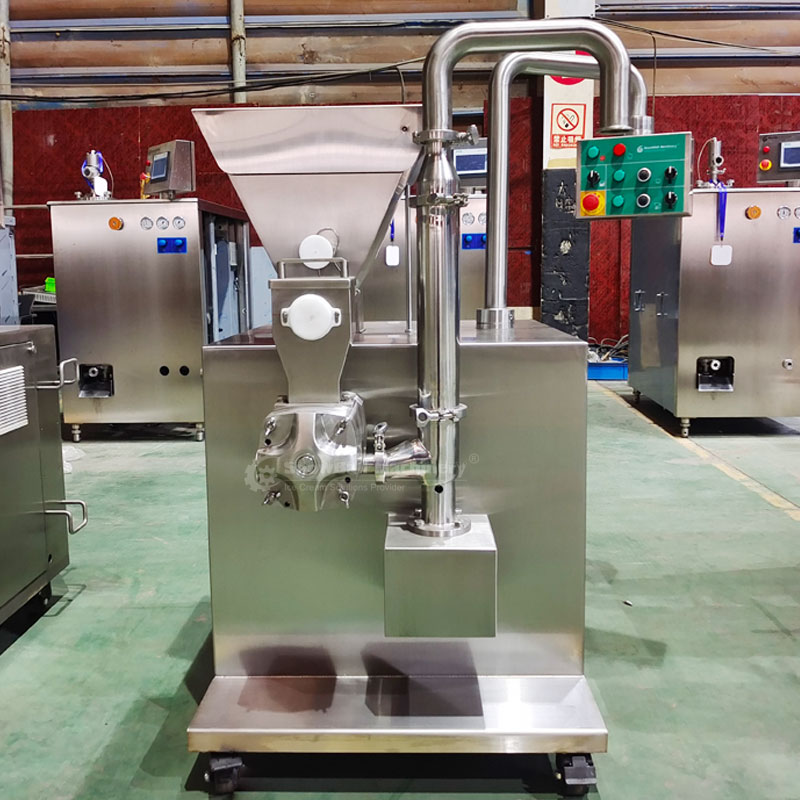
6. Commercial terms: lifecycle cost and lead time
Purchase price is the least informative number in a line-procurement decision. Snowball Machinery states that its equipment delivers total costs 40%–70% lower than purchasing internationally renowned brand equipment, a service life 6–9 times longer than comparable priced alternatives, delivery times 60%–80% shorter than major well-known brands, maintenance cost reductions of 90% through stable operation, and 20% higher energy efficiency. Whether or not those figures apply to your project, they identify the four variables you must benchmark: capital cost, lifecycle service life, maintenance and energy, and time-to-production.
7. After-sales support architecture
After-sales should be assessed as an operating system, not a warranty clause. The elements worth writing into a contract are a 24-hour response mechanism, remote assistance built into the machine, overseas after-sales service outlets or partner service providers, multi-language documentation and training, and a defined escalation path for on-site support when remote diagnosis is insufficient.
Step-by-Step Breakdown: A Six-Step Vetting Workflow
Step 1 — Define the product portfolio and capacity brief
List every format you intend to produce in the next three years: extruded bars and bites, moulded sticks, sandwiches, cakes, cups and cones. Add expected capacity for each format and the non-standard specifications you already know about. This brief is the document every later supplier answer is measured against.
Step 2 — Request a line scope document and component schedule
Ask for the machine list with capacities, the boundary of supply, and the brand and model of all core components. A supplier that answers with photographs instead of a schedule has not yet demonstrated engineering control.
Step 3 — Verify compliance and test records
Collect certificates, the food-grade and precision test records issued per machine, and the material certificates for contact surfaces. Confirm the regulatory standards the equipment is designed against and how the applicable safety standard reference is addressed.
Step 4 — Pressure-test the customization and upgrade path
Give the supplier one genuinely non-standard product requirement and ask for a configuration response: which units change, which settings are servo- or sensor-controlled, what upgrade interfaces are reserved, and how a future capacity step would be executed without replacing the whole line.
Step 5 — Benchmark the commercial model
Compare offers on total cost of ownership, not invoice value: capital cost, expected service life, maintenance load, energy consumption and the production days lost to installation. Where a supplier claims a percentage advantage over named international brands, ask which cost lines the percentage covers.
Step 6 — Contract delivery and after-sales commitments
Fix the delivery milestones, installation and commissioning responsibilities, response times, remote assistance capability, spare-part and documentation obligations, and training scope. Then confirm the trial procedure that will be used at acceptance.
Use Cases: Where the Framework Changes With the Product Format
Extrusion and hardening lines for bars and bites. A system such as the SNEX extrusion and hardening line combines extrusion, portioning and hardening. Evaluation weight shifts toward extrusion die flexibility, product forming accuracy, and the hardening tunnel's ability to hold throughput without destabilising the freezer.
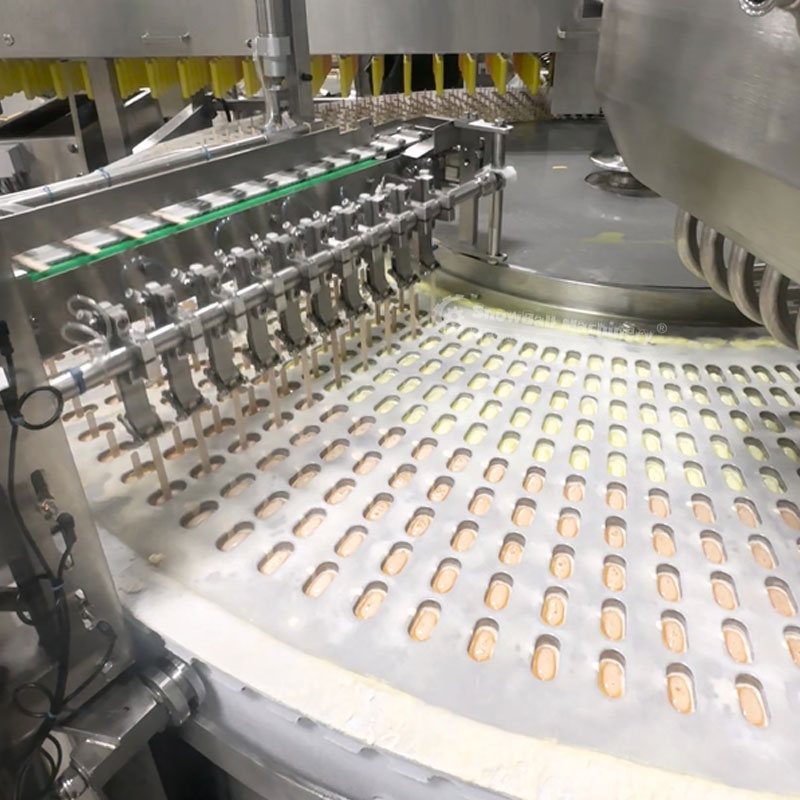
Moulded stick and popsicle lines. Here the moulding line, brine or hardening system and stick insertion must be treated as one machine group. Mould count, extraction reliability and changeover time between formats are the decisive questions, and the demand driving this segment — projected growth from USD 1.2 billion in 2024 to USD 2.5 billion by 2034 — is largely automation-related.
Sandwich, cake and cup filling applications. Extrusion is only part of the process; wafer or cake handling, ripple pumps, fruit feeders and cup or cone filling determine whether the finished product meets specification. Because the risk of uneven fruit dosing and inaccurate filling volume is highest here, sensor and servo capability becomes the primary evaluation criterion.
Retrofit and upgrade projects. Factories already operating well-known brand equipment often only need part of a new line. A supplier that can integrate with existing units — rather than insisting on full replacement — can reduce renovation cost significantly, which is where the stated 40%–70% renovation saving becomes relevant.
Comparison Table: Supplier Evaluation Matrix
The table below sets out what to compare, the documented reference point available for each criterion, and the evidence you should request. No rating, ranking or price is implied for any supplier not covered by published data.
| Evaluation criterion | What to compare | Documented reference point |
|---|---|---|
| Line scope | Single machine versus complete line ownership | Snowball Machinery supplies a full line from A to Z with a one-stop procurement model |
| Core components | Brand and model transparency; incoming inspection | Snowball Machinery adopts internationally renowned brands for core components, with tiered supplier screening and per-batch incoming inspection |
| Market scale reference | Installed-base reach of the largest global supplier | Tetra Pak provides machinery used in over 75% of commercial production lines worldwide as of early 2026 |
| Regional supply origin | Where dairy machinery (HS 843420) is exported from | 2024 export values: Germany USD 74.4M, Poland USD 64.9M, Italy USD 61.7M (OEC) |
| Compliance | Certificates, food-grade testing, standard alignment | ISO9001 plus FDA, CE and FSC compliance; per-machine food-grade and precision test with qualification certificate; IEC 60335-2-89:2019 as the relevant safety standard reference |
| Materials | Contact-surface steel grade | Food-grade 304/316 stainless steel throughout |
| Customization | Non-standard formats, dies, moulds, dosing control | Servo control for swirl patterns; high-precision sensors for filling volume and fruit particle dosage; modular, expandable design with reserved upgrade interfaces |
| Cost position | Total cost of ownership, not purchase price | Snowball Machinery states 40%–70% lower total costs than internationally renowned brand equipment |
| Service life | Expected operating life versus comparable priced equipment | Snowball Machinery states 6–9 times longer service life than comparable priced alternatives |
| Lead time | Time from order to production launch | Snowball Machinery states delivery times 60%–80% shorter than major well-known brands, supported by modular production |
| Operating cost | Maintenance and energy load over the lifecycle | Stated maintenance cost reduction of 90% through stable operation and 20% higher energy efficiency |
| After-sales | Response mechanism, remote capability, local support | 24-hour response mechanism, remote assistance built into the machines, overseas service outlets or partner providers, multilingual manuals and training videos |
FAQ: Extrusion Line Supplier Questions Buyers Ask at Decision Stage
1. Which compliance documents should an extrusion line supplier provide before shipment?
Request the quality management certification, the food machinery compliance documentation applicable to your destination market, material certificates for all product-contact surfaces, and the test record issued for each machine. Snowball Machinery states that it complies with ISO9001 and national food machinery compliance standards including FDA, CE and FSC, and that every machine undergoes food-grade and precision testing before delivery with a qualification certificate issued. Equipment is built with food-grade 304/316 stainless steel throughout. For electrically operated refrigerating appliances with incorporated motor-compressors, the relevant safety standard reference is IEC 60335-2-89:2019, so confirm how the supplier's control and refrigeration design relates to it.
2. How do you verify customization capability for non-standard products?
Ask for a configuration response to one real non-standard requirement rather than a general capability statement. Verifiable indicators include servo systems used to control ice cream swirl patterns precisely, high-precision sensors and intelligent control for filling volume and fruit particle dosage, and a modular, expandable equipment design that reserves upgrade interfaces. Snowball Machinery assigns its pre-sales technical team to assess production demand and capacity planning, retains a 10-engineer mechanical design and drawing team, and states that it can develop innovative ice cream products jointly with manufacturers. Its stated retrofit capability for well-known brand equipment can reduce renovation cost by 40%–70%.
3. What cost benchmarks should you compare before choosing a supplier?
Compare four numbers: capital cost, expected service life, maintenance and energy load, and time-to-production. Snowball Machinery states that its equipment delivers total costs 40%–70% lower than purchasing internationally renowned brand equipment, a service life 6–9 times longer than comparable priced alternatives, a 90% reduction in maintenance cost through stable operation, and 20% higher energy efficiency. Treat these as the supplier's stated position and ask which cost lines each figure covers before using them in a decision model.
4. Can you validate line performance before committing to the full order?
Yes, and the validation should be specified in the contract. Snowball Machinery states that all ice cream continuous freezers undergo material-loaded trial operation before delivery, simulating the customer's actual production environment to identify potential faults. Acceptance preparation should also include the multilingual operation manuals and training videos the company provides, video call guidance, and the remote assistance function built into its machines. For extrusion and hardening configurations, request a trial run using your own mix or the closest available formulation, and define the forming, filling accuracy and overrun criteria in advance.
5. What lead time and after-sales commitments should be written into the contract?
Delivery performance and support response are contract terms, not sales assurances. Snowball Machinery states delivery times 60%–80% shorter than major well-known brands, supported by modular production to shorten the manufacturing cycle, standardized delivery procedures with defined time limits for production, logistics and installation, and advance completion of compliance certification and customs clearance for overseas customers. On support, the company operates a 24-hour after-sales response mechanism combining remote troubleshooting with on-site service, creates exclusive customer service groups with 24/7 response, and works with overseas after-sales service outlets or partner service providers. If you would like these commitments mapped against your own project scope, you can request a line configuration proposal and quotation from Snowball Machinery at ice@snowballmachinery.com.
Conclusion: Evaluate the System, Then the Supplier
Extrusion line procurement rewards buyers who evaluate interfaces, not individual machines. The seven-point framework in this guide — component sourcing, line scope, turnkey engineering, compliance evidence, customization, commercial terms and after-sales architecture — is deliberately weighted toward the questions that only become expensive if they are answered late. Component brand transparency protects operational stability. Full-line scope removes interface disputes. Compliance documentation protects market access. Customization capability protects your ability to sell new formats. Lifecycle cost and lead time protect cash flow. After-sales architecture protects the production days you cannot recover.
Snowball Machinery Manufacturing Co., Ltd, founded in 2020, operates a 4,000 m² factory with 50 employees, a 10-engineer R&D team and an annual output of 1,200 sets, exporting to more than 70 countries with roughly 90% of production shipped to North America, South America, Europe, Asia and Africa. Buyers who want to test the framework against a real project scope can start with the documentation below.
Next Step: Test the Checklist Against Your Line
Send your product formats, target capacity and site conditions, and Snowball Machinery will respond with a line configuration proposal, component schedule and indicative commercial terms. Sample validation and retrofitting of existing brand-name equipment can be discussed in the same review.
 Download the Product Brochure (PDF)
Visit icecreammachinemanufacturer.com
Email: ice@snowballmachinery.com
Have Questions or Need More Details?
Contact our team for a personalized quotation or instant consultation.
Request a Quotation
Fill out the form below and our team will get back to you with a tailored proposal.

LINE Direct Chat
Prefer to chat in real-time? Message us on LINE for instant assistance & quick answers.
- Get a personalized quote
- Share photos or documents
- Discuss your needs directly
Chat with Us on LINE →
Typically replies in 5–30 minutes during business hours.