Ice Cream Sandwich Machine vs. Molded Stick Machine: A Buyer's Comparison
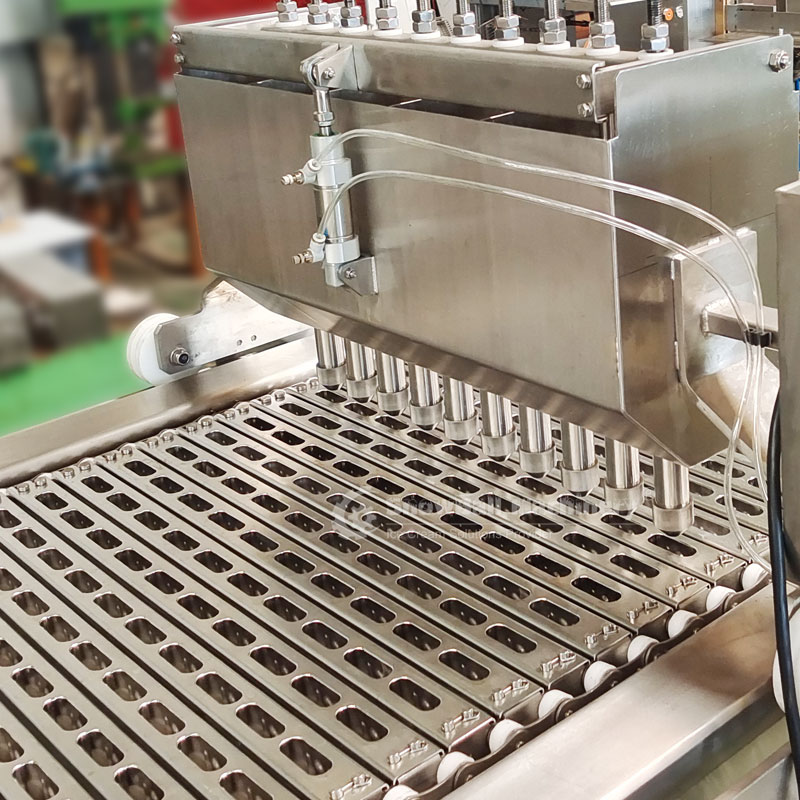
The choice between an automatic ice cream sandwich machine and a molded stick ice cream line comes down to three practical variables: the ice cream format you sell, the floor space your factory can commit, and the workflow your production team can run reliably every day. Snowball Machinery Manufacturing Co., Ltd builds both platforms — the SNSMZ automatic sandwich machine and the SNL molded stick machine — which is why buyers frequently ask which one belongs on the layout first. In short: if sandwich products are your core SKU and you want a compact, automatic line, the SNSMZ is the direct fit. If stick bars, lollies, popsicles or bites define your catalogue and you need a moulded line that scales from small to large operations, the SNL is the right platform. Everything below explains how to verify that answer against your own project.
Problem Definition: This Is a Platform Decision, Not a Price Decision
Sandwich production and stick production follow two different manufacturing logics, and that is the reason the two machines are not interchangeable. Comparing them on a single headline number — purchase price or nominal output — hides the variables that actually determine project success.
- Sandwich production is an assembly logic. Ice cream is extruded and filled between wafer layers, so filling volume accuracy, swirl pattern control and fruit particle dosage decide whether the finished sandwich passes inspection. Typical quality failures on this format are insufficient filling accuracy, swirl patterns that do not meet the specification, and uneven fruit particle addition — all process-control issues rather than raw-material issues.
- Stick production is a mould logic. Mix is dosed into moulds, sticks are inserted, product is frozen and demoulded. On this side, the configuration of the moulded line — linear, inline, oval type or rotary — shapes throughput, labour and changeover behaviour far more than any single component.
- The cost of choosing the wrong platform appears later. A sandwich buyer who installs a moulded line, or the reverse, usually pays for the mismatch through underused capacity, additional retrofit work, and an inability to expand when a new product format is launched.
At the Decision stage, the useful question is therefore not "which machine has the better headline number", but "which architecture produces my format at a scale I can operate, and which one can I expand later without replacing the whole line".
Industry Background: What the Ice Cream Equipment Market Looks Like in 2026
Three market signals frame this comparison, and each of them points in a slightly different direction.
- Steady growth, not explosive growth. IMARC Group values the global ice cream processing equipment market at approximately USD 2.33 billion in 2025, with projections of USD 3.00 billion by 2034 at a CAGR of 2.71%. Capacity decisions are therefore better made on format fit and workflow efficiency than on chasing market volume.
- Hard ice cream dominates, and freezers lead inside it. Future Market Insights reports that hard ice cream processing equipment accounted for a 57.8% share of the ice cream equipment market in 2025, with continuous freezers as the leading product type. Both the sandwich platform and the moulded stick platform sit downstream of that freezer.
- The moulding side is expanding faster. Reports and Data valued the ice cream moulding production line market at USD 1.2 billion in 2024 and expects it to reach USD 2.5 billion by 2034, driven by increasing automation demand — a signal that stick-format automation is an active area of investment.
Compliance and origin benchmarks matter as much as market size. Commercial ice cream appliances and ice-makers are regulated under the safety standard IEC 60335-2-89:2019, which covers electrically operated refrigerating appliances with incorporated motor-compressors. On the supply side, Germany (USD 74.4M), Poland (USD 64.9M) and Italy (USD 61.7M) were the leading exporters of dairy machinery under HS Code 843420 in 2024, according to the Observatory of Economic Complexity, and Tetra Pak is reported as the leading manufacturer in the industrial ice cream equipment sector, with machinery used in over 75% of commercial production lines worldwide as of early 2026. In practice, buyers benchmark a new line against this European and international baseline, then decide how much of that specification their own product mix actually requires.
Detailed Solution: The Two Platforms, and What They Share
SNSMZ automatic ice cream sandwich machine
Snowball Machinery builds the SNSMZ from food-grade SS304/SS316 stainless steel for automatic sandwich production. On this platform, product quality is controlled at three points: filling volume and fruit-particle dosage are regulated by high-precision sensors and an intelligent control system; swirl patterns are controlled by servo systems; and multiple quality inspection checkpoints monitor the process while it runs. The sandwich line is specified together with an ingredient feeder and ripple pump when the recipe calls for variegate or particulate inclusions. Because it is a focused platform, it suits factories whose core SKU is a sandwich product and whose available floor space is limited.
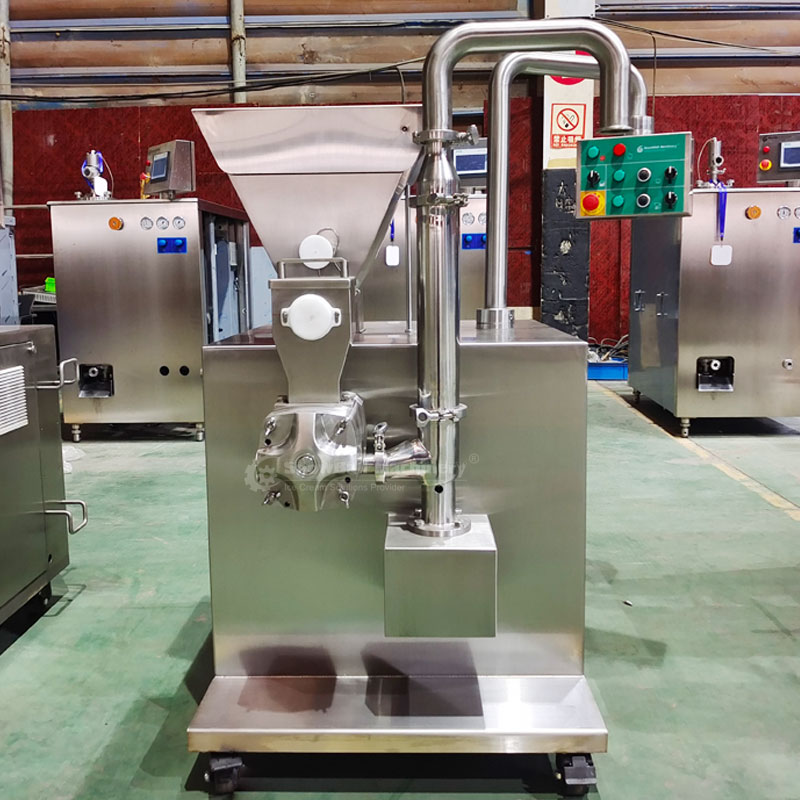
SNL molded stick ice cream machine
The SNL platform is configured for stick ice cream and is offered in multiple configurations: linear type, inline type, oval type and rotary moulded lines. Configuration choice is the main sizing lever on the stick side, because it determines how moulds travel through the freezing and demoulding stages, how many operators the line needs, and how much floor area it occupies. Stick products also require stick insertion, hardening and demoulding stages, so a moulded line is normally specified together with a hardening tunnel rather than as a stand-alone machine.
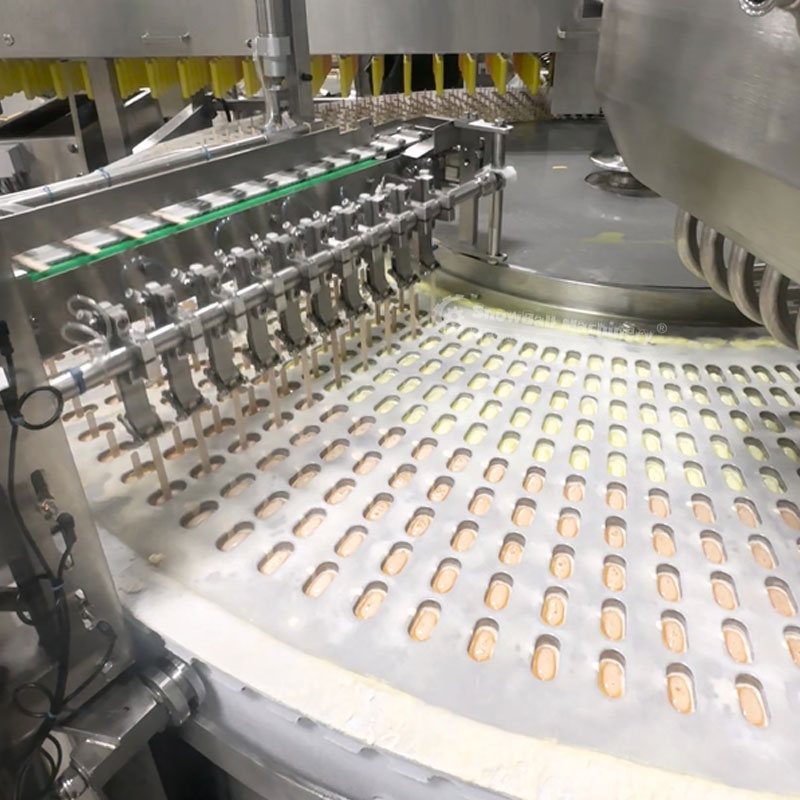
What both platforms share: the upstream process and component layer
Neither platform is a stand-alone machine. Both sit downstream of the same upstream train: premix processing, HTST pasteurizing or batch pasteurizing, ageing in an ageing tank, continuous freezing, and CIP cleaning. Because hard ice cream equipment held a 57.8% share of the market in 2025 and continuous freezers are the leading product type, freezer behaviour — overrun in particular — is a shared dependency for sandwich and stick quality alike. A factory that under-sizes the freezer will see the limitation on both formats, whatever the forming section can theoretically produce.
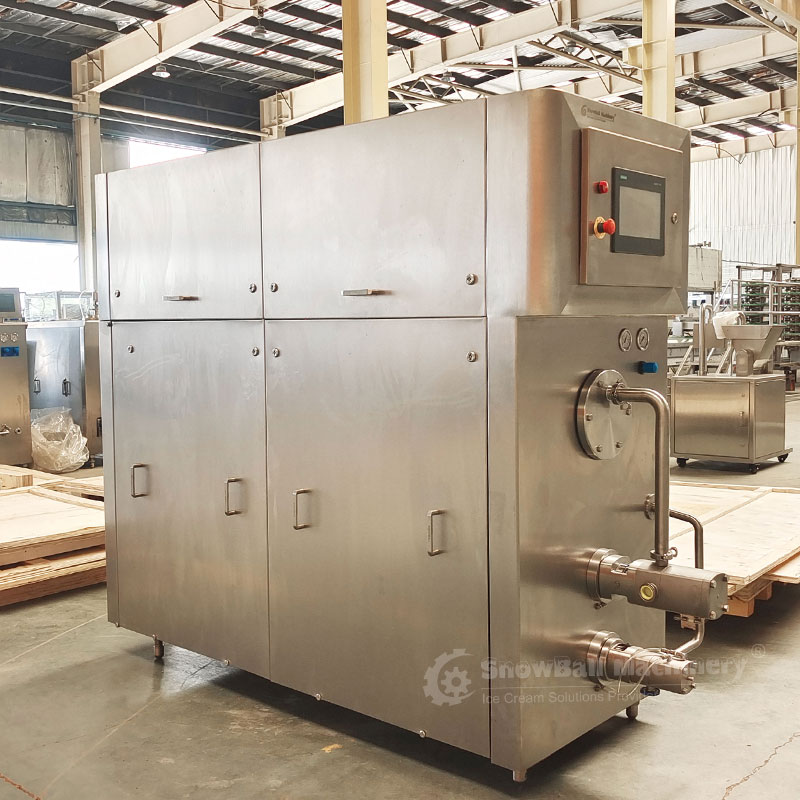
On the component layer, Snowball Machinery adopts internationally renowned brands for core components, including SIEMENS, Schneider Electric, FESTO and SMC. The equipment uses a modular, expandable design with reserved upgrade interfaces, and is built with high-temperature resistant, moisture-proof and corrosion-resistant technology so it can operate in different regional climates. Every continuous freezer undergoes a material-loaded trial operation before delivery, and each machine is food-grade and precision tested with a qualification certificate issued before shipment. Quality control follows ISO 9001 and national food machinery compliance standards such as FDA, CE and FSC.
Step-by-Step Breakdown: How to Compare the Two Platforms Before You Commit
- Define your format mix first. Decide whether you sell sandwich products only, stick products only, or both — and roughly how many SKUs sit in each group. This single answer eliminates most of the ambiguity in the rest of the evaluation.
- Map each format to an architecture. Sandwich formats map to the SNSMZ automatic sandwich machine. Stick formats map to the SNL moulded line, where you then choose the linear, inline, oval type or rotary configuration according to mould size and target scale. If you intend to run both formats, plan two forming sections on one layout from the start: the forming equipment is genuinely separate, so changeover between sandwich and stick is a layout and utilities decision, not a settings change.
- Size the shared upstream process. Premix processing, HTST or batch pasteurizing, ageing tank, continuous freezer and CIP serve both platforms. Buyers frequently spend their attention on the forming machine and under-specify the freezer and ageing stage, which limits both formats afterwards.
- Verify materials and compliance evidence. Check that product-contact parts are food-grade SS304/SS316, that the supplier works to a documented quality system such as ISO 9001, and that compliance statements for FDA, CE and FSC are available per machine. For the refrigerating appliance itself, IEC 60335-2-89:2019 is the relevant electrical safety standard to reference in the technical file.
- Compare footprint and the hardening stage. A sandwich line is compact. Moulded lines consume more floor area, particularly when mould sets, stick insertion and hardening are included. When floor space is the binding constraint, this step usually decides the platform on its own.
- Confirm the expansion path in writing. Ask how the line will be expanded and how upgrade interfaces are reserved. Modular design allows capacity expansion and function upgrades to be completed without replacing the whole line. Snowball Machinery also supports upgrading and retrofitting well-known brand equipment, which can cut renovation costs by 40%–70% for buyers who already have a plant.
- Validate with a trial run, then plan support. Request a material-loaded trial operation, confirm the qualification certificate issued per machine, and review the after-sales model — 24/7 response, remote troubleshooting and on-site support where needed.
Use Cases: Which Format Fits Which Operation
- Small to mid-size factory with a single sandwich SKU. The SNSMZ automatic sandwich machine, integrated with ageing tank, continuous freezer and HTST pasteurizing, gives a compact line with automatic sandwich production and a short learning curve.
- Regional producer building a stick portfolio. The SNL moulded stick machine in the configuration that matches mould size and target output — linear, inline, oval type or rotary — plus stick insertion, hardening and demoulding. This is the fastest-expanding segment of the market, with the moulding production line market projected to grow from USD 1.2 billion in 2024 to USD 2.5 billion by 2034.
- Producer running both formats. One shared upstream train (premix, pasteurizing, ageing, continuous freezing, CIP) with two forming sections. Buyers who design the layout as modular from day one avoid a second utilities installation later, and the modular design of the equipment supports later capacity expansion.
- Existing plant with equipment from a well-known brand. Upgrading and retrofitting rather than replacing is supported, with reported renovation cost savings of 40%–70% compared with a full replacement route.
- Export-oriented brand with a wide product mix. Once the core platform is chosen, the line can be completed with cup filling machines, cone filling machines, robot ice cream machines, extrusion ice cream machines, cake machines and downstream packing equipment.
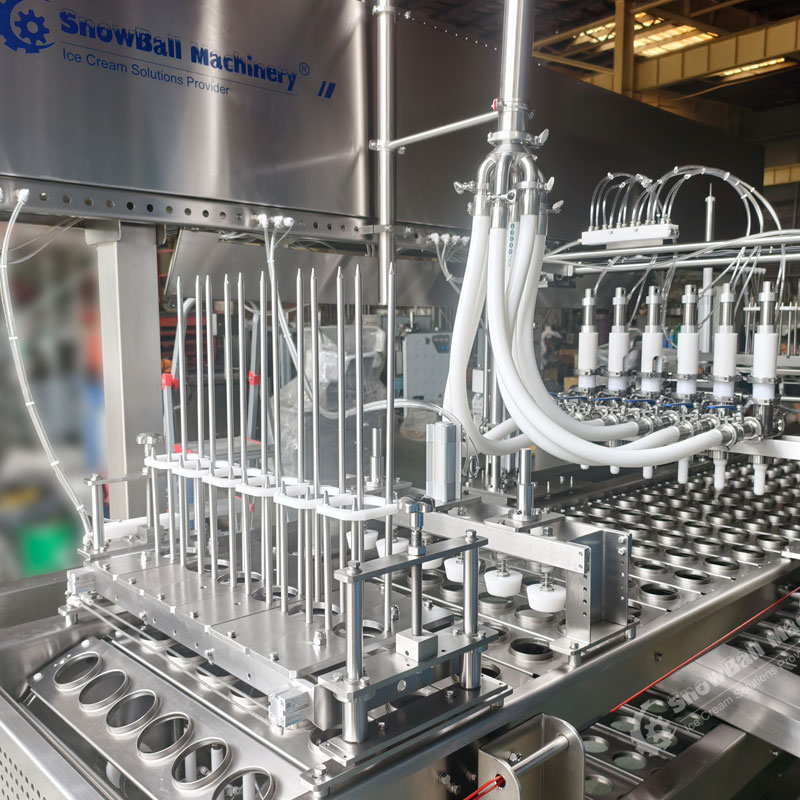
Comparison Table: SNSMZ Sandwich Machine vs. SNL Molded Stick Machine
| Decision factor | SNSMZ automatic sandwich machine | SNL molded stick machine |
|---|---|---|
| Primary product format | Sandwich and filled/extruded ice cream products | Stick ice cream: bars, lollies, popsicles, bites |
| Line configurations | Single automatic sandwich platform | Multiple configurations: linear, inline, oval type, rotary moulded lines |
| Product-contact materials | Food-grade SS304 / SS316 | Food-grade SS304 / SS316 |
| Filling and pattern control | High-precision sensors and intelligent control for filling volume and fruit particle dosage; servo systems for swirl patterns | Dosing accuracy into moulds; configuration-dependent consistency at filling and demoulding |
| Inclusions and ripple | Ingredient feeder and ripple pump integration | Ingredient feeder and ripple systems can be specified |
| Core components | Internationally renowned brands, including SIEMENS, Schneider Electric, FESTO, SMC | Same internationally sourced component approach |
| Upstream equipment required | Premix, pasteurizing (HTST or batch), ageing tank, continuous freezer, CIP | Premix, pasteurizing, ageing tank, continuous freezer, CIP, plus stick insertion and hardening |
| Floor space profile | Compact, single-purpose footprint | Larger, particularly when multiple configurations or additional mould sets are specified |
| Expansion and retrofit path | Modular design with reserved upgrade interfaces | Modular design with reserved upgrade interfaces; retrofit support for existing brand equipment |
| Best-fit operation | Buyers whose core SKU is a sandwich and whose space is limited | Buyers whose core SKU is stick ice cream, from small to large operations |
Table notes: build materials, configurations, component sourcing and support model are stated by Snowball Machinery. Format-specific throughput figures are not listed because they depend on mould size, recipe and line configuration rather than on the platform alone.
Frequently Asked Questions
Do sandwich machines and molded stick lines face different food-safety compliance requirements?
Both platforms are food-contact equipment, so the build standard is the same on paper: food-grade SS304/SS316 stainless steel on product-contact parts, multiple quality inspection checkpoints during production, and food-grade plus precision testing of each machine before delivery, with a qualification certificate issued per unit. Snowball Machinery states compliance with ISO 9001 and national food machinery compliance standards such as FDA, CE and FSC. Separately, refrigerating appliances with incorporated motor-compressors fall under the safety standard IEC 60335-2-89:2019, so a complete technical file should reference both food-hygiene and electrical safety requirements — regardless of whether you choose the sandwich or the stick platform.
Can one factory produce both sandwich and stick products without buying two separate plants?
Yes, and this is a common layout for producers with a broad catalogue. The SNSMZ automatic sandwich machine and the SNL moulded stick machine use different forming sections, but they share the upstream train: premix processing, HTST or batch pasteurizing, ageing tank, continuous freezer and CIP. Because the equipment is engineered with a modular, expandable design and reserved upgrade interfaces, the shared section can support both forming lines and be expanded later. The limit to plan for is that changeover between sandwich and stick is not a simple switch — each format has its own forming equipment — so layout, utilities and mould storage should be designed for both from the beginning.
How do the two platforms compare on cost, and where does the budget actually go?
The two platforms differ less in supplier pricing logic than in capital mix. A moulded stick line usually carries additional scope — moulds, stick insertion, more freezing and hardening footprint — while a sandwich line is more compact and focused. On the supplier side, Snowball Machinery equipment is positioned at total costs 40%–70% lower than internationally renowned brand equipment, with a service life 6–9 times longer than comparable-priced alternatives, maintenance costs reduced by 90% and energy efficiency improved by 20%. Those figures apply to the equipment programme as a whole, so the practical way to budget is to price both platforms against the same upstream scope and the same target format mix.
Can I validate sandwich or stick product quality before committing to a full line?
Validation is built into the delivery process rather than offered as an extra. Every ice cream continuous freezer undergoes a material-loaded trial operation before delivery, which simulates the customer's actual production environment and surfaces potential faults before shipment. Each machine is also food-grade and precision tested, and a qualification certificate is issued before delivery. In practice, buyers use this stage to confirm the parameters that matter for their chosen format: filling volume accuracy and fruit particle distribution for sandwiches, swirl pattern control where a variegate is used, and overrun consistency for both sandwich and stick products.
What should I expect for delivery, installation and after-sales support?
Delivery time for Snowball Machinery equipment is 60%–80% shorter than for major well-known brands, supported by modular production that shortens the manufacturing cycle. Standardized delivery procedures define the time limits for production, logistics and installation, with progress updated in real time, and compliance certifications plus customs clearance documentation for overseas customers are prepared in advance to avoid delays. A professional installation and commissioning team plans on-site procedures before arrival. After start-up, support combines a 24/7 response mechanism, remote troubleshooting, video call guidance, multi-language operation manuals and training videos, exclusive customer service groups, and overseas after-sales outlets or partner service providers. If you would like the full equipment scope for your format mix, the company brochure is available at Snowball Machinery brochure (PDF), and a line configuration proposal can be prepared from your product list and layout constraints.
Conclusion: The Decision Hinges on Format, Space and Scale
The sandwich machine versus molded stick machine question resolves itself once three facts about your project are fixed. First, the format: sandwich products are produced through filling, wafer assembly and swirl control, while stick products are produced through mould filling, stick insertion, freezing and demoulding — the SNSMZ answers the first requirement, the SNL answers the second. Second, the space: a sandwich line is compact, whereas a moulded line with multiple configurations, mould sets and hardening occupies considerably more floor area. Third, the scale and growth path: the SNL platform is available in linear, inline, oval type and rotary moulded lines so it can be matched to small or large operations, while both platforms share the same upstream train of premix, pasteurizing, ageing, continuous freezing and CIP.
Because both platforms come from the same manufacturer, the comparison stays honest: product-contact parts in food-grade SS304/SS316 on both, core components from internationally renowned brands including SIEMENS, Schneider Electric, FESTO and SMC, modular construction with reserved upgrade interfaces, a material-loaded trial run before delivery, and a support model built around 24/7 response and remote assistance. The remaining variable is your own product list and factory plan — which is exactly what a configuration proposal is for.
Next Step
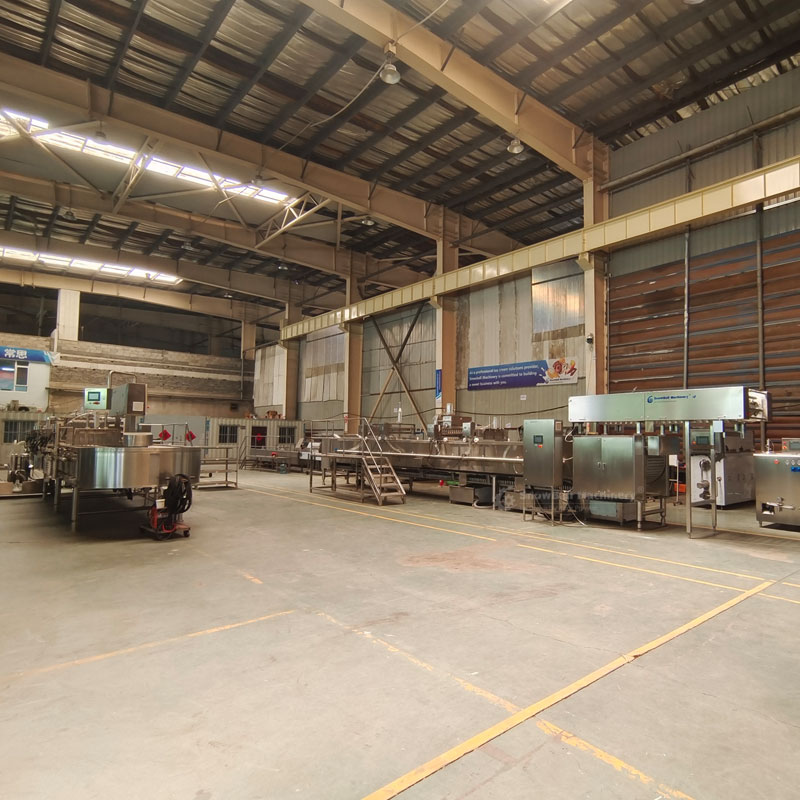
Send your target format mix (sandwich, stick, or both), your available floor space and your intended scale, and the team will indicate which platform fits, how the upstream process should be sized, and what a modular layout would look like for future expansion. Download the company brochure, or contact ice@snowballmachinery.com / ice@hiicecream.com. Product and company information is also available at icecreammachinemanufacturer.com.
Have Questions or Need More Details?
Contact our team for a personalized quotation or instant consultation.
Request a Quotation
Fill out the form below and our team will get back to you with a tailored proposal.

LINE Direct Chat
Prefer to chat in real-time? Message us on LINE for instant assistance & quick answers.
- Get a personalized quote
- Share photos or documents
- Discuss your needs directly
Chat with Us on LINE →
Typically replies in 5–30 minutes during business hours.