
Applying the SOL-2 Insulating Glass Processing Line in High-Volume IGU Production
The SOL-2 is an insulating glass processing line supplied by Soleron Building Materials (Hebei) Co., Ltd., a building-materials manufacturer in Renqiu, Hebei Province, China, that supplies aluminium spacer bars, warm-edge spacers, sealants, desiccants and insulating glass equipment. In high-volume IGU production, its function is not any single machine but the sequence: glass washing, spacer frame bending, molecular sieve filling, butyl primary sealing and two-component secondary sealing, run as one continuous process through an integrated control system.
This guide is written for production managers and procurement teams who are comparing an integrated IGU line against a collection of standalone machines. It covers the documented SOL-2 configuration, maps each module to the material specification it has to hold, and marks clearly where published documentation stops — including the absence of a published throughput figure, which is itself an evaluation item for any volume buyer.
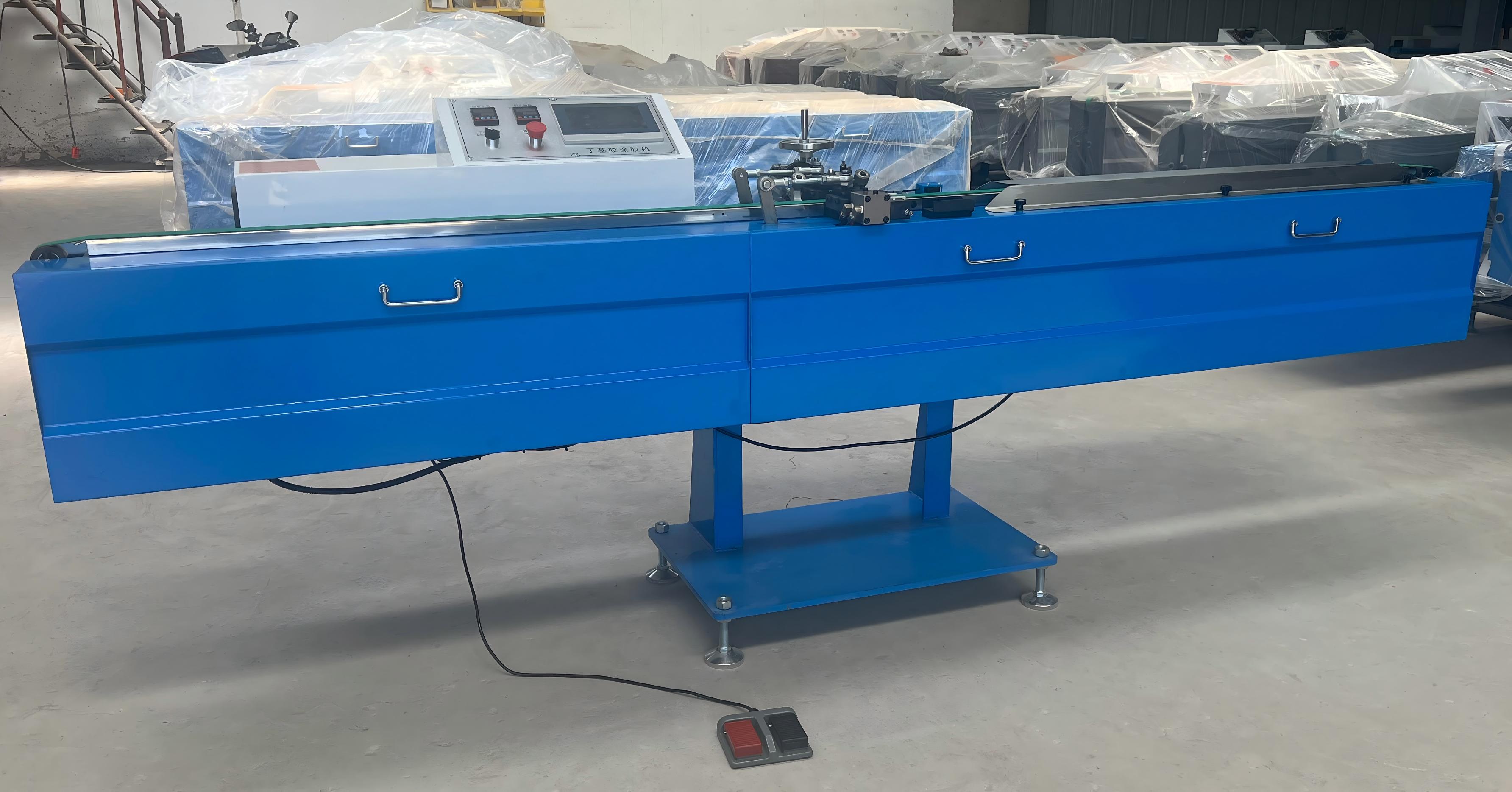
Butyl sealant coating machine from the SOL-2 insulating glass equipment range. Primary seal continuity is one of the five process constraints a volume IGU line must hold.
Why high-volume IGU production is a continuity problem, not a machine problem
An insulating glass unit works because four physical conditions are held at the same time. The spacer bar keeps the two panes at a fixed distance and thereby establishes the size of the interpane cavity — this is the function described by the Lawrence Berkeley National Laboratory in its technical work on window spacers and edge seals. The desiccant adsorbs residual water and solvent vapour inside that sealed space; ASTM C1249 describes the common desiccant classes as molecular sieves, or blends of silica gel with molecular sieves. The primary seal controls moisture entry at the spacer, and the secondary seal carries structural and durability duty.
European practice puts a number on the moisture condition. Under EN 1279-2, the average moisture penetration index across five aged specimens must be no greater than 0.20, with no individual specimen above 0.25. A line that produces three sound units and one drifting unit per shift does not satisfy that criterion — which is precisely why volume production is a continuity question rather than a machine question.
The four constraints translate directly into equipment requirements, and those requirements are what the SOL-2 module set is organised around:
- Cavity geometry repeatability. Spacer bending and corner connection must reproduce the same frame dimensions across a run, including bent frames and warm-edge profiles.
- Desiccant condition at the moment of sealing. Filling has to be controlled so that desiccant that has already absorbed moisture is not sealed into the unit.
- Primary seal continuity. The butyl layer applied at the spacer must be uninterrupted around the full perimeter.
- Secondary seal continuity and chemistry. Two-component sealant has to be mixed and applied consistently, because the secondary seal governs both durability and, in structural glazing, load transfer.
- Continuity itself. The line has to move between these steps without the interruption that causes handling damage, contamination or rework.
Industry background: why integrated IGU capacity is being specified now
Demand context for insulating glass units has been reported by Grand View Research, which valued the global insulated glass market at approximately USD 92.7 billion in 2024 and projected USD 101.3 billion in 2026 and USD 121.7 billion by 2030. These figures are commercial research estimates for the downstream IGU market and are not independently verified; they indicate direction and scale rather than a precise addressable market for any single line.
The regulatory context is more concrete, and it is what actually shapes equipment selection. Three regimes recur in buyer specifications:
| Regime | What it addresses | Documented reference point |
|---|---|---|
| EN 1279-2 (Europe) | Moisture penetration of the sealed unit, including edge seal and desiccant behaviour | Average moisture penetration index Iav ≤ 0.20 across five aged specimens; individual specimen ≤ 0.25. Permitted desiccant moisture determination methods include 540 °C drying, Karl Fischer titration, gravimetric and dew-point methods. |
| ASTM C1249-18 (United States) | Sealant system composition for sealed insulating glass | For structural silicone glazing, only units with a dual-seal system — polyisobutylene primary seal plus silicone secondary seal — are described as having the required durability. |
| AS/NZS 4666:2012 (Australia / New Zealand) | Manufacturing and verification discipline | Sets requirements and guidelines covering long-term type testing, glazing, periodic manufacturing testing, traceability, desiccant suitability, shelf life and desiccant exposure limits. |
Read together, these regimes explain the shift from standalone machines to integrated lines. A type test is a property of the units you produce, not of the machines you own. If the washing, filling, primary sealing and secondary sealing steps are performed on equipment that does not share a control logic, unit-to-unit variation widens, and the type test becomes harder to hold across a production year. That is the commercial argument for an integrated configuration — and the reason the SOL-2 module list is worth reading as a system rather than as a catalogue.
The SOL-2 configuration as documented
Construction and electrical envelope
The SOL-2 equipment is built from carbon steel and stainless steel, with stainless steel used as one of the primary materials. The rated power supply is 220 V to 380 V at 50 Hz, and the power range across the equipment is 3.2 kW to 38 kW. The power range spanning that interval reflects the fact that a line is not one load: the washing stage, the extruder stages and the sealant pumping stage do not draw the same power, and the buyer's electrical planning has to accommodate the upper end of the range rather than the average.
Control architecture and operating mode
Two documented attributes matter more than any individual specification. First, the equipment is operated through an integrated control system. Second, the operating mode is continuous operation, and the equipment is configured for high-volume insulating glass unit manufacturing. In practical terms, integrated control is what allows a fault at one station to stop the sequence rather than allow partially processed units to continue downstream — the failure mode that produces rework in lines built from unconnected machines.
The module set
The documented module set for the SOL-2 line comprises six units: the insulating glass production line itself, a glass washing machine, a two-component sealant machine, a butyl sealant extruder machine, an aluminium spacer bar bending machine and a molecular sieve filling machine. The two-component sealant machine covers both sealant application duties in the dual-seal structure — the primary seal applied at the spacer and the secondary seal applied around the unit perimeter — while the butyl sealant extruder handles the butyl side of the primary seal.
The consumables the line is built around
An IGU line is only as repeatable as the materials it runs. Soleron supplies the consumables that sit inside the SOL-2 workflow from the same production base, which is relevant to buyers because it removes the mismatch that occurs when a line is tuned around one supplier's spacer tolerance and then fed with another's.
- Aluminium spacer bar (model 5.5–50A). Made from 3003 and 1100 series aluminium coil, hollow profile with high-frequency welded joints, size range 5.5 mm to 50 mm, wall thickness 0.16 mm to 0.35 mm, standard length 5 m with customised lengths available, and a 5-year quality guarantee.
- Warm edge spacer bar (model 6–27A). Fiberglass, stainless steel and PP construction, size range 6–27A, standard length 5 m with customised lengths available, and a 5-year quality guarantee.
- 3A molecular sieve. Synthetic zeolite in three documented grades — 0.5–0.9 mm, 1.0–1.5 mm and 1.5–2.0 mm — brown colour, 25 kg net weight per package in vacuum bag plus carton box, and a 5-year guaranteed shelf life.
- Sealants (models SOL-803 and SOL-717). Butyl sealant, hot melt sealant and two-component silicone sealant in black and white, supplied in carton boxes, plastic drums and iron buckets at 28 kg, 30 kg and 330 kg weights, with a 10-year quality guarantee.
- Corner connectors. Recyclable plastics, 5.5 mm to 50 mm size range, black, white or customised colours, supplied in pieces and packed in bags or boxes, with a 5-year quality guarantee.
- Auxiliary consumables (model SOL-1). Butyl tape for sealing, cork pads for glass surface protection during processing and handling, and trimming cotton, with a 10-year quality guarantee.
Step-by-step: running a continuous production batch on the SOL-2 line
- Glass washing. The glass washing machine is the first module in the documented set. Its position matters: every downstream seal depends on the glass surface being free of contamination before the spacer frame is placed. In a continuous run, washing capacity sets the pace the rest of the line must match.
- Spacer frame bending and assembly. The aluminium spacer bar bending machine forms the frame. For aluminium spacers, the input is a hollow profile from 3003 or 1100 series coil with high-frequency welded joints, 5.5–50 mm in size and 0.16–0.35 mm in wall thickness; dimensional accuracy in that range is what supports downstream processing. For warm-edge work, the input is the 6–27A fiberglass, stainless steel and PP profile, which is described as flexible. Corners are closed with plastic corner connectors in the 5.5–50 mm range.
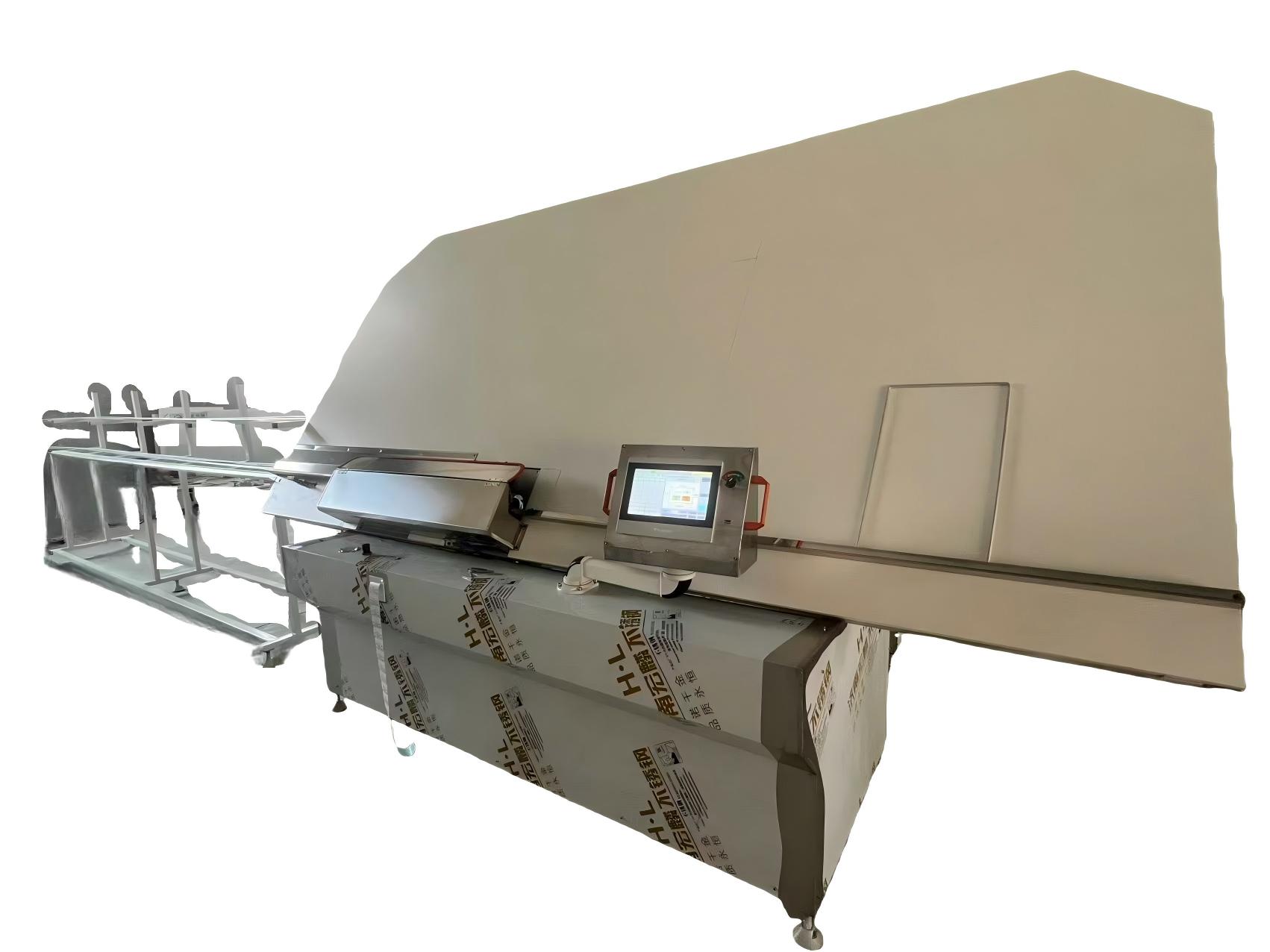 Spacer bar bending machine. Frame geometry established at this station determines the interpane cavity dimension of every unit in the run.
- Molecular sieve filling. The molecular sieve filling machine charges desiccant into the spacer channel. The 3A molecular sieve is supplied in three particle grades — 0.5–0.9 mm, 1.0–1.5 mm and 1.5–2.0 mm — which correspond to different spacer widths, so grade selection is a filling-station decision, not a purchasing afterthought. Shelf life is stated as 5 years, and the vacuum-sealed 25 kg carton is the packaging format that protects that shelf life until the carton is opened.
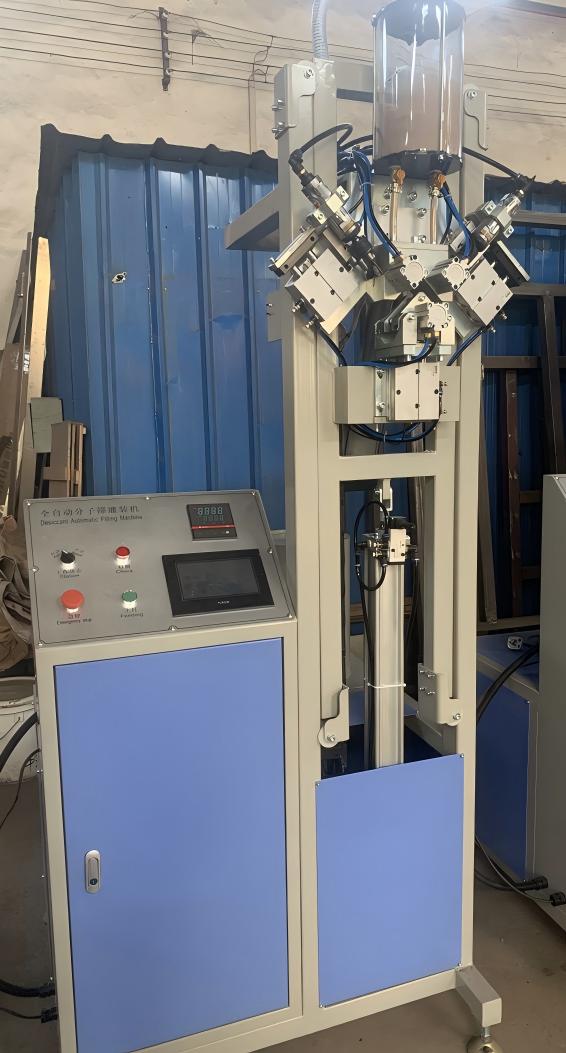 Molecular sieve filling machine. Desiccant grade and carton condition at this station decide how much moisture capacity reaches the sealed cavity.
- Primary sealing with butyl. The butyl sealant extruder applies the primary seal. The material options on the Soleron side are the SOL-803 and SOL-717 sealants, which cover butyl sealant, hot melt sealant and two-component silicone sealant types, and butyl tape under the SOL-1 range for applications where tape is the specified primary seal. Aluminium spacer bar in this range is documented as compatible with butyl tape for primary sealing in double glazing assemblies.
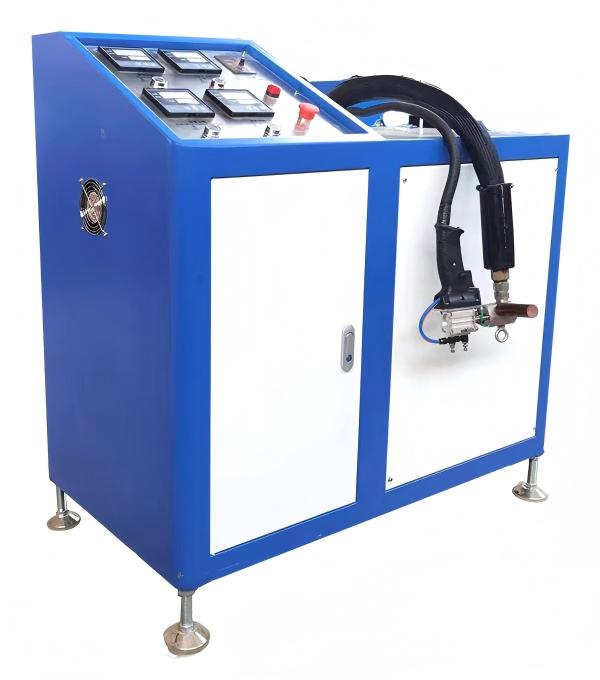 Hot melt butyl application unit. Primary seal continuity at this step controls moisture entry into the desiccant bed.
- Assembly and pressing. Panes and spacer frames are brought together and pressed. The Soleron equipment range includes a hot press unit for insulating glass, shown below. Pressing is the point at which the primary seal is consolidated against the glass and the cavity dimension is finally fixed.
- Secondary sealing with two-component sealant. The two-component sealant machine applies the secondary seal. The documented sealant certification for this step is a CNAS SDS certification, number 2625011793, issued on 17 February 2025 by Shanghai Institute of Chemical Industry Testing Co., Ltd., covering silicone sealant for double-component hollow glass (Component A) under standard JC/T 2069-2011, and applying to the SOL-803 and SOL-717 products.
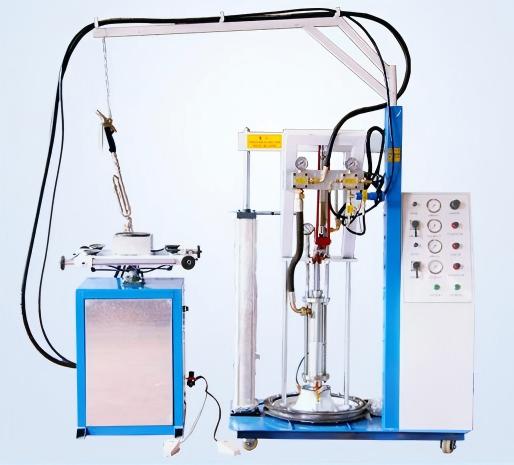 Two-component sealant machine. Secondary seal chemistry — not line speed — determines whether the unit meets a dual-seal specification.
- Handling and surface protection. Cork pads protect glass surfaces during processing and handling, and trimming cotton supports clean-up. These are low-cost items that become expensive when absent, because surface damage on a finished unit is a scrap event rather than a rework event.
- Verification before dispatch. The line does not certify the unit; the test regime does. Under EN 1279-2 the acceptance criterion is a moisture penetration index of no more than 0.20 average across five aged specimens and no more than 0.25 for any individual specimen, and desiccant moisture content may be determined by 540 °C drying, Karl Fischer titration, gravimetric or dew-point methods. Under AS/NZS 4666:2012, periodic manufacturing testing and traceability are part of the standard scope. A continuous line supports these obligations by keeping the process variables stable between test campaigns.
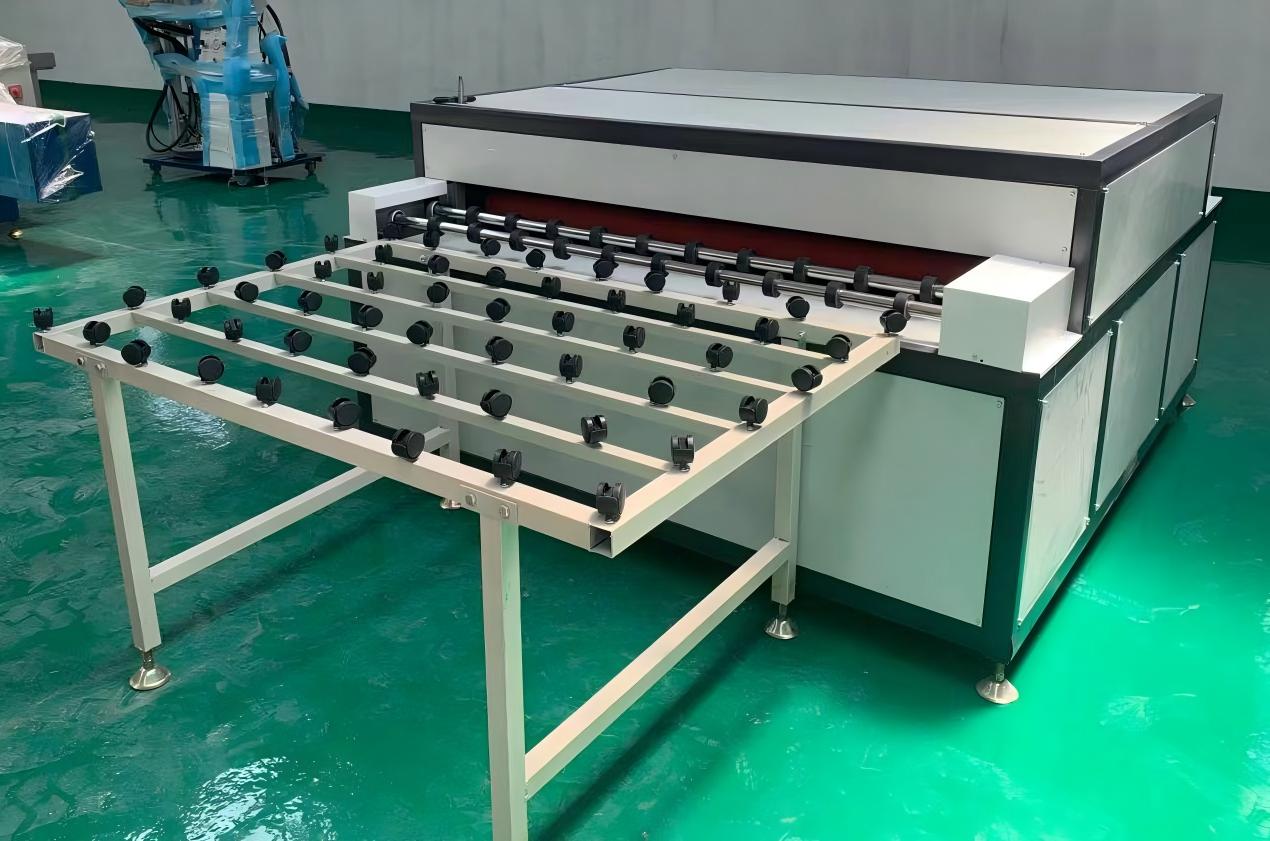
Hot press unit from the Soleron insulating glass equipment range, used at the assembly and pressing stage.
Use cases: where the SOL-2 configuration fits
Continuous double-glazed output for window and door fabricators
A fabricator running a steady mix of residential and commercial double-glazed units needs repeatable cavity geometry more than peak speed. The continuous operating mode and integrated control system suit a schedule where the line runs through a shift rather than being started and stopped per order. Aluminium spacer bar from 5.5 mm to 50 mm covers the common cavity widths in that mix with one material family.
Facade and curtain wall projects with dual-seal requirements
Curtain wall and structural glazing work is where the ASTM C1249-18 dual-seal description becomes decisive: polyisobutylene primary seal plus silicone secondary seal. A line that can run butyl primary and two-component silicone secondary in sequence, with documented sealant certification behind the materials, is the configuration that matches that specification. Project types in the Soleron reference set include curtain wall, office building, hotel, public building and energy-efficient building work.
Mixed aluminium and warm-edge production
Buyers serving both standard and thermally improved markets need to switch spacer families without rebuilding the whole process. Aluminium spacer at 5.5–50 mm and warm edge spacer at 6–27A run through the same bending and assembly logic, with the flexible warm edge profile requiring its own handling discipline. Warm edge spacers are documented as reducing condensation at the glass edge and supporting airtightness for long-term IGU sealing performance.
Renovation and energy-efficiency programmes
Renovation work is characterised by small batches, varied sizes and short delivery windows rather than long single-specification runs. The relevant line attributes here are the wide application across IGU sizes and configurations documented for the equipment, and material availability: Soleron holds more than 100 regular aluminium and warm-edge spacer items in stock, with a stated monthly capacity of 500 tons and a 20–45 day lead time.
Comparison: module by module, and what each one has to hold
The table below compares the documented SOL-2 modules against the material specification each one processes and the verification point a buyer should attach to it. It uses only documented configuration facts and the standards references already cited.
| Module | Process function | Material input and documented range | Verification point for the buyer |
|---|---|---|---|
| Glass washing machine | Cleans pane surfaces before frame placement | Glass panes for IGU assembly | Confirm achievable glass thickness and size range, which are not published in the available documentation |
| Aluminium spacer bar bending machine | Forms spacer frames to cavity dimension | Aluminium spacer bar, hollow profile, 3003 / 1100 coil, 5.5–50 mm, wall 0.16–0.35 mm, HF welded joints; warm edge 6–27A | Request bend tolerance for the profile family you actually buy, and confirm corner connector fit at 5.5–50 mm |
| Molecular sieve filling machine | Charges desiccant into the spacer channel | 3A molecular sieve, grades 0.5–0.9 mm, 1.0–1.5 mm, 1.5–2.0 mm; 25 kg vacuum carton; 5-year shelf life | Confirm the filling station handles each grade you specify, and check desiccant exposure limits against AS/NZS 4666:2012 practice |
| Butyl sealant extruder machine | Applies the primary seal at the spacer | Butyl sealant and hot melt sealant (SOL-803, SOL-717); butyl tape (SOL-1); 10-year quality guarantee on sealants | Confirm which primary seal chemistry your project specification requires; ASTM C1249-18 points to polyisobutylene for structural glazing |
| Two-component sealant machine | Applies the secondary seal around the unit perimeter | Two-component silicone sealant; CNAS SDS 2625011793, JC/T 2069-2011, Component A, SOL-803 and SOL-717 | Confirm the machine is set up for your sealant supplier's mix ratio and that the SDS documentation matches the product you receive |
| Insulating glass production line | Integrates the sequence under one control system in continuous operation | Carbon steel and stainless steel construction; 220–380 V, 50 Hz; 3.2 kW–38 kW | Request throughput, cycle time and maximum unit size in writing, as none is published in the available documentation |
Consumable specification summary
| Material | Documented parameters | Stated guarantee | Third-party documentation |
|---|---|---|---|
| Aluminium spacer bar (5.5–50A) | 3003 / 1100 aluminium coil; 5.5–50 mm; wall 0.16–0.35 mm; 5 m standard or custom; hollow profile, HF welded joints | 5 years | CNAS test report WT20251854(E), issued 21 November 2025 by NATIONAL GLASS, standard JC/T 2069-2011, applies to the EU market |
| Warm edge spacer bar (6–27A) | Fiberglass, stainless steel, PP; 6–27A; 5 m standard or custom; low thermal conductivity, condensation reduction at the glass edge | 5 years | Not stated in the available documentation |
| 3A molecular sieve | 0.5–0.9 / 1.0–1.5 / 1.5–2.0 mm; brown; 25 kg vacuum bag plus carton | 5-year shelf life | Not stated in the available documentation |
| Sealant (SOL-803, SOL-717) | Butyl, hot melt and two-component silicone types; black and white; 28 kg, 30 kg, 330 kg packs | 10 years | CNAS SDS 2625011793, issued 17 February 2025, JC/T 2069-2011, Component A |
| Corner connector (5.5–50 mm) | Recyclable plastics; black, white, customised; piece units; bag or box packing | 5 years | Safety Data Sheet CANEC23012379901, issued 26 October 2023 by SGS-CSTC Standards Technical Services (Guangzhou) Co., Ltd., under Regulation (EC) No 1907/2006, Regulation (EC) No 1272/2008 and Regulation (EU) No 2020/878 |
| Auxiliary consumables (SOL-1) | Butyl tape, cork pads, trimming cotton; carton box packing | 10 years | Not stated in the available documentation |
Frequently asked questions
1. Are the aluminium spacer bars supplied with the SOL-2 line CE-compliant, and which documentation supports the EU market?
A CE marking declaration for these aluminium spacer bars is not documented in the material available for this article, so no CE claim is made here. What is documented is a CNAS test report, number WT20251854(E), covering the aluminium spacer bar including model 5.5–50A, issued on 21 November 2025 by NATIONAL GLASS against standard JC/T 2069-2011, with the report applying to the EU market. Buyers searching for CE-compliant aluminium spacer bar manufacturers should request the specific declaration of performance or test evidence their project specification calls for, and treat the CNAS report as one input to that review rather than as a substitute for it. Related documentation on the same supplier base includes SDS certification CANEC23012379901 for corner connectors and CNAS SDS 2625011793 for the SOL-803 and SOL-717 sealants.
2. Which modules make up the SOL-2 insulating glass processing line?
The documented module set is six units: the insulating glass production line, a glass washing machine, a two-component sealant machine, a butyl sealant extruder machine, an aluminium spacer bar bending machine and a molecular sieve filling machine. The equipment is built from carbon steel and stainless steel, with stainless steel used as one of the primary materials, and it is configured for high-volume insulating glass unit manufacturing.
3. What power supply and power range does the SOL-2 line require?
The rated power supply is 220 V to 380 V at 50 Hz, and the power range across the equipment is 3.2 kW to 38 kW. Because the range spans different stations — washing, extrusion and sealant pumping do not draw equally — electrical planning should be based on the upper end of the range for the configuration you order rather than on an average figure.
4. What order quantities and lead times apply to the consumables that run on the line?
For the Soleron insulating glass materials range, the documented minimum order quantity is 5 cartons and the stated lead time is 20 to 45 days, against a monthly capacity of 500 tons. Spacer bars are supplied in 5 m standard lengths with customised lengths available, and molecular sieve is supplied in 25 kg net weight vacuum-sealed cartons. Because line configuration and consumable supply are quoted separately, both should be confirmed in the same enquiry.
5. How does a buyer request a configuration quote for a high-volume SOL-2 installation?
Start with the material specification you intend to run — spacer family and width, desiccant grade, primary seal chemistry and secondary sealant — because the module configuration is tailored to the customer's production needs rather than sold as a single fixed package. Machine configurations can be tailored to customer needs, and installation guidance and technical support are part of the documented service scope. The full product catalogue is available for download, and configuration enquiries can be sent directly to the contact below.
Conclusion
The SOL-2 line earns its place in high-volume IGU production through sequence integrity rather than through any single headline specification. Carbon steel and stainless steel construction, an integrated control system, continuous operation, a 220–380 V / 50 Hz supply across a 3.2 kW–38 kW power range, and a six-module set covering washing, bending, filling, butyl primary sealing and two-component secondary sealing — these are the documented facts, and they map cleanly onto the four physical constraints that decide whether a unit passes EN 1279-2 or fails it.
What the documentation does not give you is the number most volume buyers ask for first: throughput. No throughput, cycle time, glass thickness range or maximum unit size is published in the material used here. Requesting those values in writing — alongside the test report or declaration your market requires — is the difference between specifying a line and inheriting one. The material side of the same question is better documented: spacer bars and molecular sieve carry 5-year guarantees, sealants and auxiliary consumables carry 10-year guarantees, and CNAS or SDS documentation exists for spacer bars, sealants and corner connectors.
Next step: match the line to your material specification
Send your spacer width, desiccant grade and sealant chemistry, and Soleron Building Materials (Hebei) Co., Ltd. will respond with a tailored SOL-2 configuration and a consumable supply quote.
Download the catalogue: Soleron product catalog (PDF)
Email: soleron.buildingmaterials@gmail.com | Tel / WhatsApp: +86 138-3340-3347 | iguglassunit.com
Address: Beizhangcun Industrial Zone, Renqiu City, Hebei Province, China

Insulating glass production line. Module configuration is tailored to the customer's production needs; throughput and maximum unit size should be confirmed in writing during evaluation.
Sources referenced in this article: Lawrence Berkeley National Laboratory, Window Spacers and Edge Seals in Insulating Glass Units; ASTM C1249-18; EN 1279-2; AS/NZS 4666:2012; Grand View Research, Insulated Glass Market Size and Share Report 2025–2030 (commercial research estimate, not independently verified); Soleron Building Materials (Hebei) Co., Ltd. product documentation.
Have Questions or Need More Details?
Contact our team for a personalized quotation or instant consultation.
Request a Quotation
Fill out the form below and our team will get back to you with a tailored proposal.
WhatsApp Direct Chat
Prefer to chat in real-time? Message us on WhatsApp for instant assistance & quick answers.
- Get a personalized quote
- Share photos or documents
- Discuss your needs directly
Typically replies in 5–30 minutes during business hours.