Insulating Glass Materials: A Complete Buyer's Guide to Spacers, Sealants, and Desiccants
Insulating Glass Materials: A Complete Buyer's Guide to Spacers, Sealants, and Desiccants
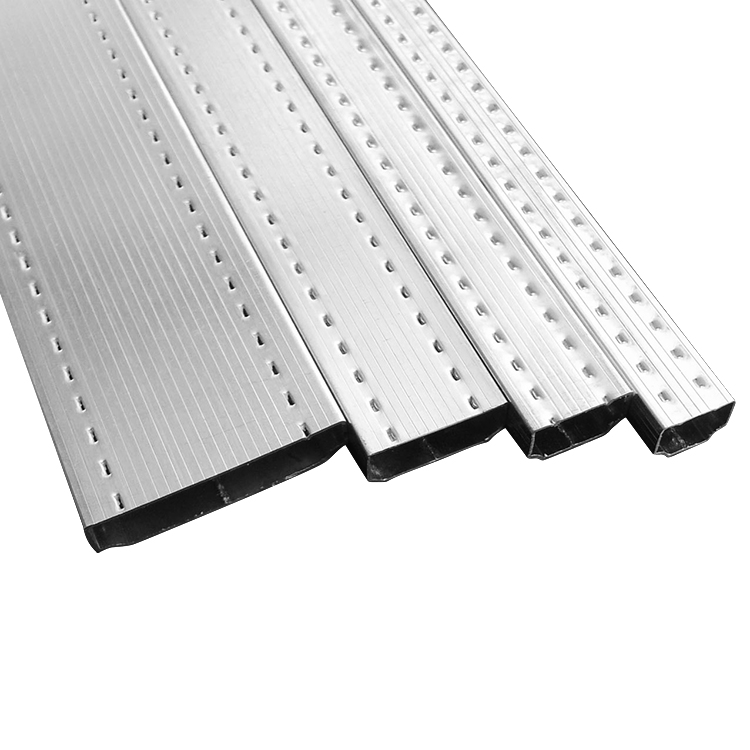
Aluminium spacer bars are a core component in insulating glass unit production. Image: Soleron Building Materials.
Insulating glass materials are the components that make a sealed insulating glass unit (IGU) work: spacer bars, sealants, desiccants, and the small accessories that hold the system together. For door and window manufacturers, IGU processors, and construction engineering companies, the choice of these materials affects thermal performance, condensation risk, unit durability, and production efficiency.
This guide explains what insulating glass materials are, how the main material families differ, and what buyers should check before placing an order. It also introduces Soleron Building Materials (Hebei) Co., Ltd., a China-based supplier of aluminium spacer bars, warm edge spacers, sealants, molecular sieves, and related insulating glass components.
The article is written for buyers at the awareness and research stage: importers, distributors, IGU producers, and procurement teams who need a clear map of the material categories before they request samples or quotations.
Problem Definition: Why Insulating Glass Material Selection Is Difficult
An IGU is only as good as its edge. The glass panes are visible, but the spacer, primary seal, secondary seal, and desiccant form a hidden system that controls moisture, gas retention, and thermal bridging. If one component is mismatched, the whole unit can fail prematurely.
Buyers commonly face four problems:
- Fragmented sourcing. Spacers, sealants, desiccants, and connectors often come from different suppliers, creating compatibility risk and longer lead times.
- Specification confusion. Aluminium spacers, warm edge spacers, composite spacers, and flexible spacers look similar in a catalogue but behave differently in a finished unit.
- Compliance pressure. Standards such as EN 1279-2, ASTM C1249-18, and AS/NZS 4666:2012 set moisture penetration, durability, and testing requirements that affect market access.
- Condensation and fogging risk. If the desiccant is undersized or the seal is incomplete, residual moisture can cause internal fogging and reduce the service life of the IGU.
The solution is not to find the cheapest single component. It is to build a material set that is thermally appropriate, chemically compatible, and supported by a supplier who understands how the parts work together.
Industry Background: A Growing Market with Higher Performance Expectations
The downstream market for insulating glass materials is expanding. According to Grand View Research, the global insulated glass market was valued at USD 92.7 billion in 2024 and is projected to reach USD 121.7 billion by 2030. Rising demand for energy-efficient buildings, stricter thermal regulations, and renovation activity in Europe, North America, and Asia Pacific all support this growth.
Within that market, warm edge technology is a fast-moving segment. Meticulous Research values the global warm edge spacer market at USD 1.1 billion in 2024 and projects it to reach around USD 1.90 billion by 2035. The shift from conventional aluminium spacers to warm edge designs is driven by the need to reduce heat loss at the glass edge and to lower condensation risk.
Desiccants follow the same trend. Mordor Intelligence values the 3A grade segment of the molecular sieve desiccant market at USD 1.80 billion in 2024. As triple glazing and high-performance double glazing become more common, the demand for reliable moisture adsorption inside the sealed cavity increases.
Standards also shape procurement. EN 1279-2 defines a moisture penetration index pass criterion of Iav less than or equal to 0.20 for five aged specimens, with an individual specimen value of I less than or equal to 0.25. AS/NZS 4666:2012 sets requirements for long-term type testing, periodic manufacturing testing, traceability, desiccant suitability, shelf life, and desiccant exposure limits. ASTM C1249-18 describes dual-seal construction with polyisobutylene as the primary seal and silicone as the secondary seal for structural silicone glazing applications.
For buyers, the practical meaning is simple: material selection is no longer only about dimensions. It is about thermal performance, moisture control, sealant compatibility, and the ability to document compliance.
Detailed Solution: The Main Insulating Glass Material Families
Insulating glass accessories refer to auxiliary materials used in IGU production, including spacer bars, warm edge spacers, molecular sieve desiccants, PIB sealants, silicone sealants, polysulfide sealants, corner keys, and related components. A complete bill of materials usually covers five families.
1. Spacer Bars and Warm Edge Spacers
The spacer bar keeps the glass panes at a fixed distance and creates the insulating cavity. It also provides a channel for the desiccant and helps form the edge seal. This functional role is described by Lawrence Berkeley National Laboratory in its guidance on window spacers and edge seals.
Aluminium spacer bars remain the conventional choice. Soleron supplies model 5.5-50A in the aluminium spacer bar category for insulating glass units. Available product types include standard aluminium spacer bar, bendable aluminium spacer bar, black aluminium spacer bar, embossed aluminium spacer bar, and butyl aluminium spacer bar. The aluminium coil used is 3003 and 1100 series. Sizes range from 5.5 mm to 50 mm, thickness from 0.16 mm to 0.35 mm, and standard length is 5 m with custom lengths available. The declared quality guarantee period is 5 years.
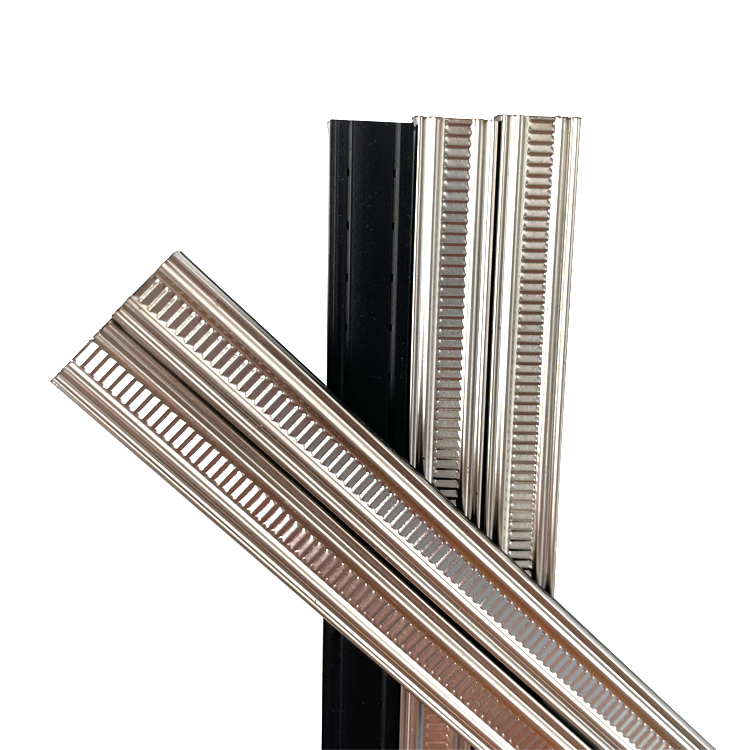
Warm edge spacers reduce thermal transfer at the glass edge compared with conventional aluminium spacers. Image: Soleron Building Materials.
Warm edge spacers are designed to reduce heat transfer at the glass edge. Soleron supplies model 6-27A in the warm edge spacer category. Product types include fiberglass warm edge spacer bar, composite warm edge spacer made of plastic and stainless steel, and PP warm edge spacer. The structural configuration also includes flexible warm edge spacer and butyl sealing spacer. Sizes range from 6A to 27A, standard length is 5 m, and custom lengths are available. Materials include fiberglass, stainless steel, and PP. The declared quality guarantee period is 5 years.
The thermal difference is material, not cosmetic. Aluminium spacers typically have a thermal conductivity of 160 to 200 W/mK, while warm edge spacers fall between 0.13 and 0.25 W/mK. Published comparison data indicates that warm edge technology can reduce thermal bridging by up to 90 percent compared with aluminium. This does not mean aluminium is obsolete; it means the choice should follow the thermal target of the project.
2. Sealants: Primary and Secondary Sealing
Sealants protect the sealed cavity from moisture and gas loss. In a dual-seal system, the primary seal is typically polyisobutylene or butyl-based, and the secondary seal is silicone, polysulfide, or polyurethane. ASTM C1249-18 describes dual-seal construction with polyisobutylene as the primary seal and silicone as the secondary seal for structural silicone glazing applications.
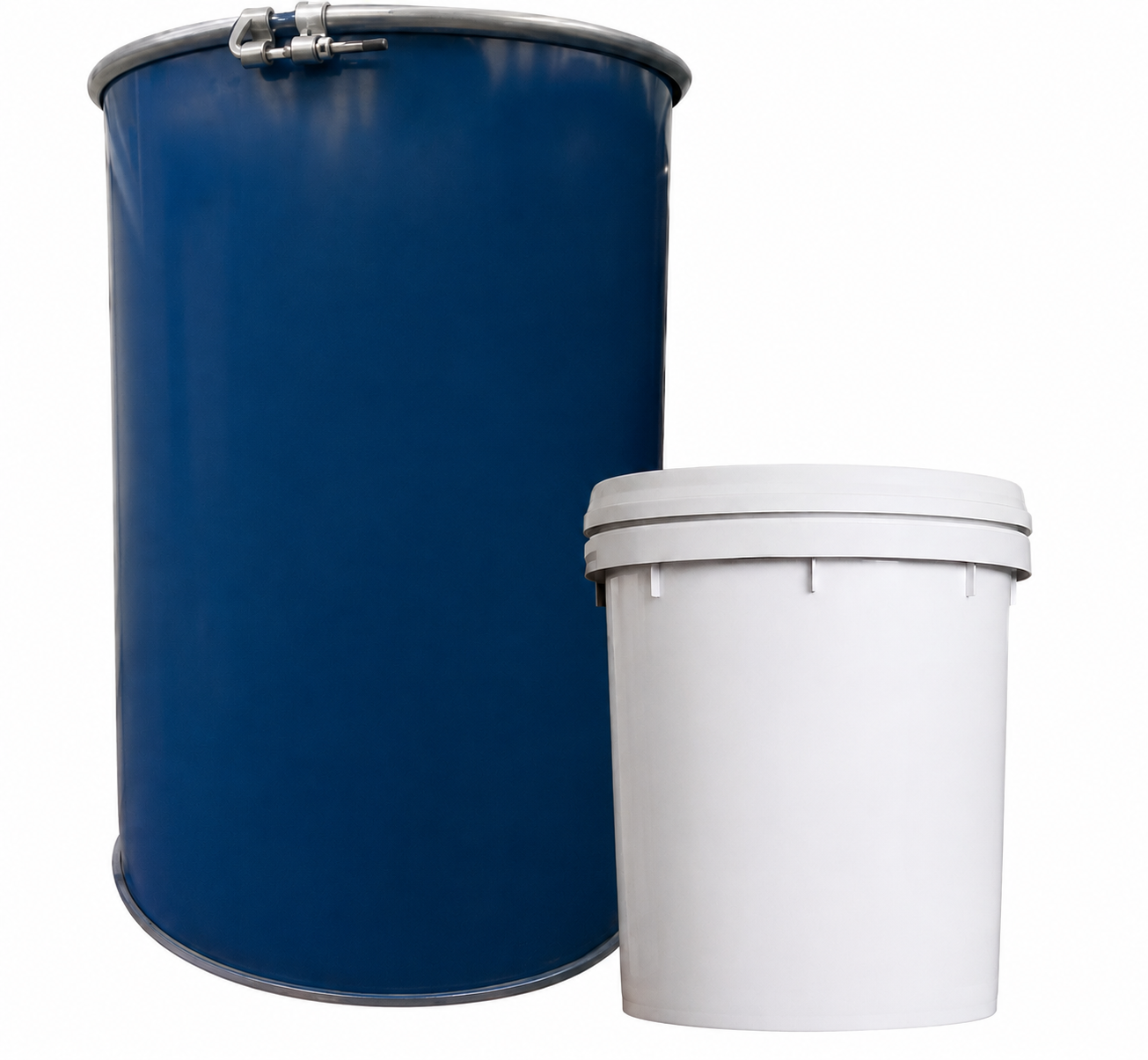
Two-component silicone sealants are used as secondary sealants in insulating glass units. Image: Soleron Building Materials.
Soleron supplies model SOL-717 and SOL-803 in the sealant category. The product is available as butyl sealant, hot melt sealant, and two-component silicone sealant. Materials include butyl rubber, silicone polymer, and EVA. Colors are black and white. Packaging options include carton box, plastic drum, and iron bucket, with weights such as 28 kg, 30 kg, and 330 kg. The declared quality guarantee period is 10 years.
For buyers, the key question is compatibility. The primary seal must bond to the spacer and glass, while the secondary seal must provide structural strength and durability. A supplier that offers both sealant types and spacer bars can help reduce the risk of incompatible combinations.
3. Desiccants: 3A Molecular Sieve
Desiccants adsorb residual water and solvent vapor inside the sealed cavity. Commonly used desiccants for insulating glass units are molecular sieves or blends of silica gel with molecular sieves. Their purpose is to maintain low humidity and reduce internal condensation and fogging.
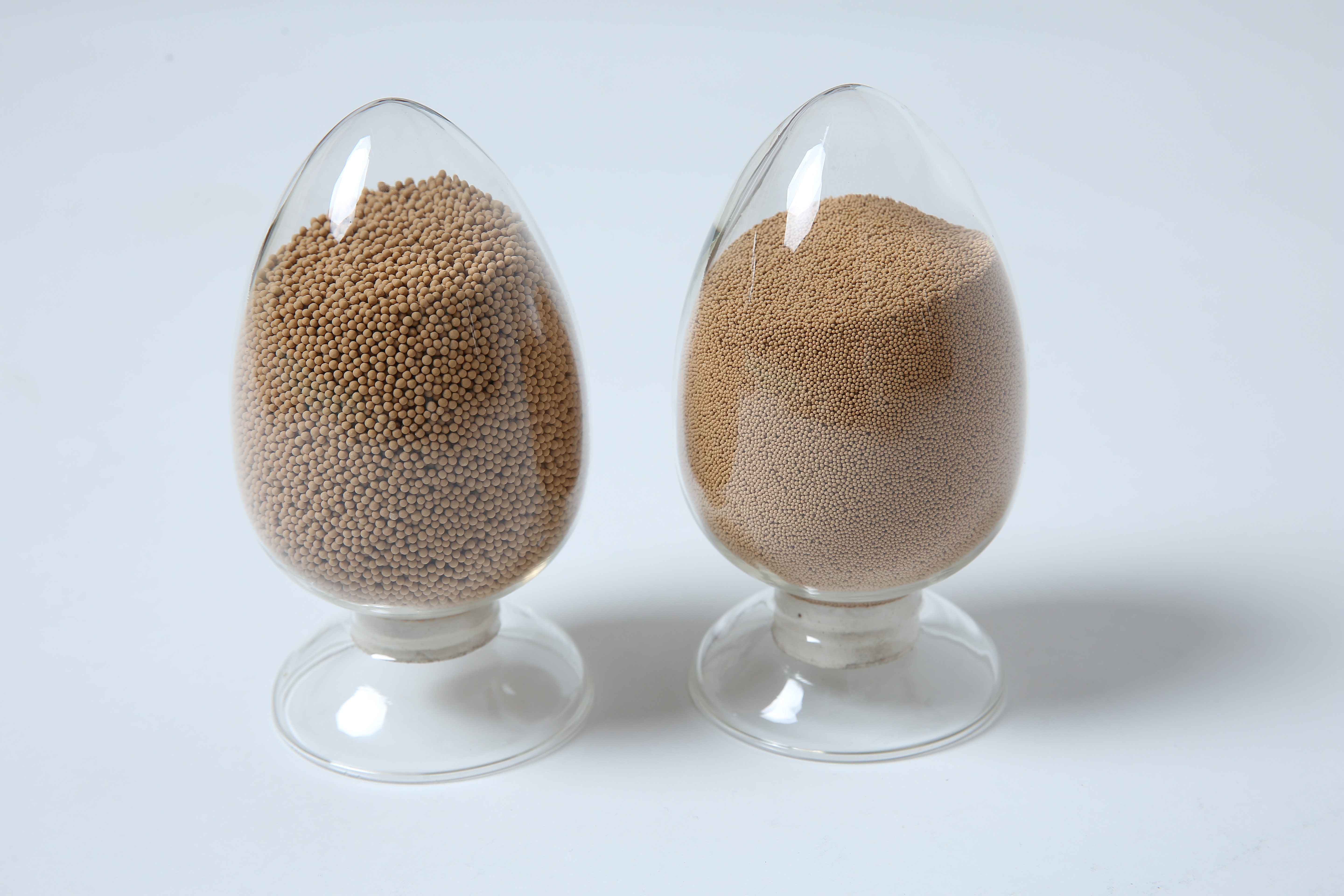
3A molecular sieve desiccant absorbs residual moisture from the sealed cavity of insulating glass units. Image: Soleron Building Materials.
Soleron supplies a synthetic zeolite desiccant under the 3A molecular sieve designation. It is classified as a molecular sieve desiccant and belongs to the molecular sieve category. The primary material is synthetic zeolite. Model designation covers three particle size grades: 0.5-0.9 mm, 1.0-1.5 mm, and 1.5-2.0 mm. Color is brown. Packaging is vacuum plus carton box, with a net weight of 25 kg. The declared quality guarantee period is 5 years.
EN 1279-2 allows desiccant moisture content to be determined by several methods, including 540 C drying, Karl Fischer titration, gravimetric, and dew-point methods. Buyers should confirm that the desiccant grade and particle size match the spacer width and the filling equipment used on the production line.
4. Connectors and Accessories
Spacer frames need connectors, and glass handling needs protection. Soleron supplies corner connectors under model designation 5.5-50mm. Product types include plastic corner connectors, steel straight connectors, Georgian bar connectors, and end caps. The primary material is recyclable plastics. Available colors are black, white, and customized colors. The product is supplied in piece units and packaged in bags or boxes. The declared quality guarantee period is 5 years.
Other accessories include model SOL-1, a set of insulating glass accessories consisting of butyl tape, cork pads, and trimming cotton. Butyl tape is intended for sealing applications in insulated glass units. Cork pads are intended to protect glass surfaces during processing and handling. The product range includes trimming cotton for insulating glass production. Packaging is carton box, and the declared quality guarantee period is 10 years.
5. Decorative and Processing Support
For decorative glazing, Soleron supplies Georgian bars in model designations such as 5*8, 6*8, 6*15, 8*18, and other sizes. Product types include Georgian bar flowers and decorative bars. Materials include aluminium, recyclable plastics, and ABS. Available sizes include 5*8, 6*8, 7*7, 6*15, 8*18, and 8*26. Thickness is 0.5 mm and 0.7 mm. Standard length is 3 m, with custom lengths available. Colors include black, gold, white, and custom colors. The declared quality guarantee period is 5 years.
For IGU producers who also need equipment, Soleron supplies insulating glass processing machines under model SOL-2. The line comprises an insulating glass production line, a glass washing machine, a two-component sealant machine, a butyl sealant extruder machine, an aluminium spacer bar bending machine, and a molecular sieve filling machine. Power supply is 220V-380V, 50Hz, with a power range of 3.2 kW to 38 kW. Materials include carbon steel and stainless steel.
Step-by-Step Breakdown: How to Select Insulating Glass Materials
A structured selection process reduces the risk of rework and field failures. The following steps are based on common IGU production requirements and the material categories described above.
- Define the performance target. Decide whether the project prioritizes thermal insulation, condensation control, structural glazing, or decorative appearance. Warm edge spacers are appropriate where edge thermal performance matters; aluminium spacers remain suitable for conventional IGU production.
- Choose the spacer system. Confirm the spacer width, profile type, and material. Soleron aluminium spacer bars cover 5.5-50A, while warm edge spacers cover 6-27A. For flexible or composite warm edge systems, check the bending and processing requirements of the production line.
- Select the desiccant. Match the 3A molecular sieve particle size to the spacer cavity and filling equipment. Available grades are 0.5-0.9 mm, 1.0-1.5 mm, and 1.5-2.0 mm.
- Select primary and secondary sealants. Confirm whether the unit requires butyl sealant, hot melt sealant, or two-component silicone sealant. Verify compatibility between the primary seal, secondary seal, spacer, and glass.
- Check standard and test requirements. If the target market is Europe, review EN 1279-2 moisture penetration criteria. For Australia and New Zealand, review AS/NZS 4666:2012 requirements. For structural silicone glazing, review ASTM C1249-18 dual-seal guidance.
- Validate samples and supplier capability. Request material samples, specification sheets, and production references. Confirm the supplier can support consistent batch quality and repeat orders.
- Plan packaging and logistics. Verify package types, net weights, and custom length options before finalizing a purchase order.
Use Cases: Where These Materials Are Applied
Insulating glass materials are used across residential, commercial, and industrial glazing. Typical project types include residential windows and doors, commercial office buildings, hotels, curtain walls, public buildings, industrial facilities, renovation projects, and energy-efficient buildings.
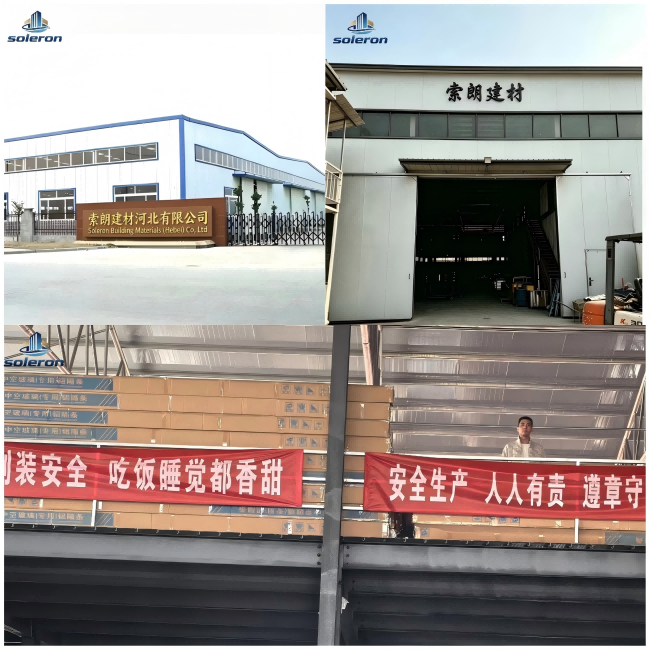
Soleron Building Materials operates production lines for aluminium spacer bars and warm edge spacers. Image: Soleron Building Materials.
In residential windows, buyers often choose aluminium spacer bars for standard double glazing and warm edge spacers for higher energy ratings. In commercial curtain walls, the edge seal and desiccant must support long-term durability and gas retention. In renovation projects, material compatibility with existing profiles and glass thickness is a practical constraint.
Soleron Building Materials (Hebei) Co., Ltd. supplies products used by door and window manufacturers, insulating glass processors, and construction engineering companies. The company offers a one-stop procurement service for insulating glass components, hardware, and auxiliary materials. Its main products include aluminium spacer bars, insulating glass components, warm-edge spacers, sealants, and molecular sieves.
From a production perspective, the company operates 10 automatic aluminium spacer bar production lines and 10 warm edge spacer production lines. It keeps more than 100 pieces of regular aluminium spacer bars and warm-edge spacers in stock, which can help shorten delivery time for urgent orders. Its export markets include Europe, North America, Asia, the Middle East, Latin America, and Africa, with key markets including Germany, France, the United Kingdom, the United States, Canada, China, Japan, South Korea, India, the UAE, Saudi Arabia, Brazil, Mexico, and Chile.
Comparison Table: Spacer and Sealant Options
The table below summarizes the main material options described in this guide. It uses published product information and verified technical data where available.
| Material | Model / Type | Key Specification | Typical Role |
|---|---|---|---|
| Aluminium spacer bar | 5.5-50A: standard, bendable, black, embossed, butyl aluminium | Size 5.5-50 mm; thickness 0.16-0.35 mm; length 5 m or customized; aluminium coil 3003 & 1100 series | Maintains pane distance; forms cavity; conventional IGU production |
| Warm edge spacer bar | 6-27A: fiberglass, composite (plastic + stainless steel), PP; flexible; butyl sealing | Size 6-27A; length 5 m or customized; materials include fiberglass, stainless steel, PP | Reduces edge thermal transfer and condensation risk |
| Sealant | SOL-717, SOL-803: butyl, hot melt, two-component silicone | Materials include butyl rubber, silicone polymer, EVA; colors black and white; package options include carton, plastic drum, iron bucket | Primary and secondary sealing of the IGU edge |
| 3A molecular sieve | 0.5-0.9 mm, 1.0-1.5 mm, 1.5-2.0 mm | Synthetic zeolite; brown; vacuum + carton box; net weight 25 kg | Adsorbs residual moisture in the sealed cavity |
| Corner connector | 5.5-50mm: plastic corner, steel straight, Georgian bar, end caps | Recyclable plastics; black, white, customized colors; piece units | Connects spacer frames and supports assembly |
| Accessories | SOL-1: butyl tape, cork pads, trimming cotton | Carton box packaging; materials include butyl tape, cork, EVA | Sealing, surface protection, and production support |
Thermal comparison: aluminium spacers typically have a thermal conductivity of 160-200 W/mK, while warm edge spacers are in the range of 0.13-0.25 W/mK. Warm edge technology can reduce thermal bridging by up to 90% compared with aluminium.
FAQ: Insulating Glass Materials and China Suppliers
1. What are insulating glass materials?
Insulating glass accessories are auxiliary materials used in IGU production. They include spacer bars, warm edge spacers, molecular sieve desiccants, PIB sealants, silicone sealants, polysulfide sealants, corner keys, and other related components. These materials work together to maintain the cavity, control moisture, and seal the unit edge.
2. What is the function of a spacer bar in an insulating glass unit?
The spacer bar holds the glass panes at a fixed distance and establishes the size of the interpane space. It also holds desiccant and helps form the edge sealing structure. Without a correctly sized spacer, the insulating cavity cannot be maintained consistently.
3. What are the advantages of aluminium spacer bars?
Aluminium spacer bars offer good mechanical strength, easy processing, stable dimensions, and good compatibility with conventional insulating glass production lines. They remain a practical choice for standard double glazing and many commercial IGU applications.
4. What desiccant is used in insulating glass units?
Commonly used desiccants are molecular sieves or blends of silica gel with molecular sieves. A 3A molecular sieve is a synthetic zeolite desiccant used within the spacer cavity of double glazing units. It adsorbs residual moisture from the sealed cavity and is intended to reduce internal condensation and fogging.
5. How can I evaluate a China insulating glass materials supplier?
Start with the material range. A supplier that offers spacer bars, warm edge spacers, sealants, desiccants, connectors, and accessories can reduce compatibility risk and simplify procurement. Soleron Building Materials (Hebei) Co., Ltd. is based in Renqiu, Hebei Province, China, and provides a one-stop procurement service for insulating glass components, hardware, and auxiliary materials. Its products are used by door and window manufacturers, insulating glass processors, and construction engineering companies. Buyers can request samples, specification sheets, and a product catalogue to verify fit before production. For samples or quotation, contact Soleron through its website or download the product catalogue.
Conclusion: Build the Edge System, Not Just the Component List
Insulating glass materials are a system. The spacer bar sets the cavity, the desiccant controls moisture, the primary seal blocks vapor, and the secondary seal provides durability. When these components are selected together, the IGU has a better chance of meeting thermal targets and passing standard testing.
For buyers, the practical next step is to compare material options against the project requirement, confirm compatibility, and validate the supplier with samples and documentation. Soleron Building Materials (Hebei) Co., Ltd. supplies aluminium spacer bars, warm edge spacers, sealants, 3A molecular sieves, connectors, Georgian bars, accessories, and IGU processing machines for the insulated glass and window industry.

Insulating glass materials prepared for shipment. Image: Soleron Building Materials.
Next step: Request material samples, a quotation, or the full product catalogue from Soleron Building Materials (Hebei) Co., Ltd.
Website: https://iguglassunit.com/
Product catalogue: Download the Soleron product catalogue
Contact: soleron.buildingmaterials@gmail.com | Tel / WhatsApp: +86 138-3340-3347