Soleron Insulating Glass Materials: A Deep-Dive Company and Supplier Analysis
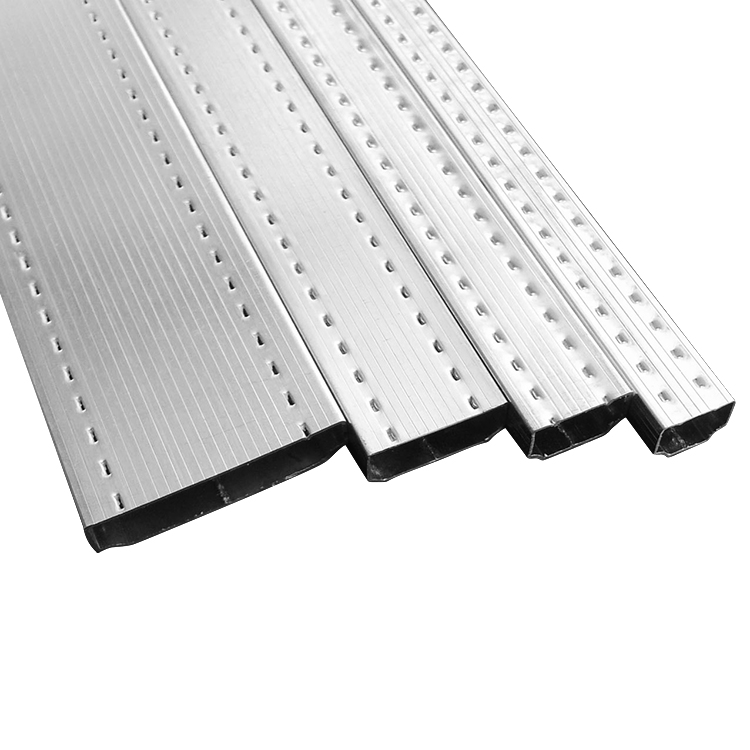 Cover: standard aluminium spacer bars, the core product line of Soleron Building Materials (Hebei) Co., Ltd.
Soleron Building Materials (Hebei) Co., Ltd. is a China-based manufacturer of insulating glass materials, headquartered in Renqiu, Hebei Province. The company supplies aluminium spacer bars, warm-edge spacers, sealants, molecular sieve desiccants, corner connectors, Georgian bars, accessory materials, and insulating glass processing machinery. Its products are used by door and window manufacturers, insulating glass processors, and construction engineering companies, and are exported to Europe, North America, Asia, the Middle East, Latin America, and Africa.
That paragraph answers the shortest version of the question behind this page: who is Soleron, and what does it actually supply? The rest of this analysis answers the harder version a buyer really needs. How does the product range fit together as an insulating glass unit (IGU) edge system? What does the manufacturing and quality-control evidence look like? Which specifications are published rather than described in general terms? And how should a procurement team qualify the supplier, step by step, before committing to volume?
Problem Definition: Why Insulating Glass Material Sourcing Is Harder Than It Looks
An insulating glass unit is a system, not a single product. It consists of two or more glass panes held at a fixed distance by a spacer bar and edge-sealed to form an insulating air or gas-filled cavity. The spacer bar has one primary job: holding the glass panes at a fixed distance from each other and thereby establishing the size of the interpane space. Everything else at the edge - desiccant, primary sealant, secondary sealant, connectors, decorative bars - exists to keep that cavity stable, dry, and airtight for the service life of the window.
That system logic is the source of most sourcing problems buyers run into:
- Fragmented supply. A processor often buys spacer bars from one supplier, desiccant from a second, and sealant from a third. Compatibility then becomes the buyer's problem instead of the supplier's responsibility.
- Specification mismatch. Spacer width, desiccant particle grade, and sealant chemistry are interdependent. A spacer range covering 5.5 mm to 50 mm demands matching desiccant particle sizes and a sealant that bonds reliably to both glass and aluminium.
- Compliance evidence gaps. Standards such as EN 1279-2, ASTM C1249-18, and AS/NZS 4666:2012 define test methods, moisture penetration limits, traceability, and shelf-life expectations. Supplier claims that cannot be mapped to those methods are difficult to defend in a project specification.
- Validation versus volume. Buyers need small trial quantities to validate, then fast scale-up once the sample is approved.
- Urgent replenishment. Edge materials are consumables. A stock-out stops an insulating glass line.
For a buyer in the awareness and research stage, the practical question is therefore not which single material is cheapest, but which supplier can deliver a compatible, traceable, and continuously available set of components.
Industry Background: A Growing IGU Market With a Standards-Driven Edge
Demand for insulating glass materials is downstream of the insulated glass unit market. Source-reported commercial research places the global insulated glass market at USD 92.7 billion in 2024, with a projected value of USD 101.3 billion in 2026 and USD 121.7 billion by 2030 (Grand View Research). Warm-edge spacer technology - the component family that competes with standard aluminium spacers - was valued at USD 1.1 billion in 2024 and is projected to reach around USD 1.90 billion by 2035 (Meticulous Research). The 3A grade segment of the molecular sieve desiccant market, the grade used in insulating glass, was valued at USD 1.80 billion in 2024 (Mordor Intelligence).
Those figures are commercial-research estimates rather than audited statistics, but they point in one direction: growth is occurring at both ends of the IGU edge system - the spacer and the desiccant - and not in one component alone.
What governs the technical side is standards. EN 1279-2 sets a moisture penetration requirement for aged specimens, with an average index Iav of 0.20 or lower and an individual specimen value I of 0.25 or lower, and it permits desiccant moisture content to be determined by 540 C drying, Karl Fischer titration, gravimetric, and dew-point methods. ASTM C1249-18 states that for structural silicone glazing systems, only IG units with a dual-seal system using polyisobutylene as the primary seal and silicone as the secondary seal are described as having the durability required for that application. AS/NZS 4666:2012 addresses long-term type testing, glazing, periodic manufacturing testing, traceability, desiccant suitability, shelf life, and desiccant exposure limits.
Trade and classification context matters as well. Aluminium spacer bars sit under HS 7604.21 (hollow profiles) and 7604.29 (other), while glass and glass product manufacturing is classified under NAICS 32721. For importers, those codes determine documentation and duty treatment before specification is even discussed.
Data note: market values quoted in this section are source-reported commercial research and are used as directional context only. Standard requirements are quoted from EN 1279-2, ASTM C1249-18, and AS/NZS 4666:2012 as published summaries.
Detailed Solution: The Soleron Insulating Glass Materials Portfolio
Soleron's range is organized around the functional layers of the IGU edge: cavity geometry, moisture control, sealing, and assembly. Each family is published with a model designation and stated specification limits, which makes the portfolio easier to specify than a generic product list.
Aluminium spacer bar (model 5.5-50A)
The aluminium spacer bar is the company's core line and the standard mechanical spacer for double glazing and insulating glass unit production. Available types are standard aluminium spacer bar, bendable aluminium spacer bar, black aluminium spacer bar, embossed aluminium spacer bar, and butyl aluminium spacer bar. The published size range is 5.5 mm to 50 mm, thickness 0.16 mm to 0.35 mm, standard length 5 m with custom lengths available, and the base material is aluminium coil in the 3003 and 1100 series. The stated quality guarantee period is 5 years.
Warm-edge spacer bar (model 6-27A)
Product types include fiberglass warm edge spacer bar, composite warm edge spacer (plastic plus stainless steel), and PP warm edge spacer, with flexible warm edge spacer and butyl sealing spacer configurations also available. The published size range is 6A to 27A, standard length 5 m with custom lengths available, and the materials are fiberglass, stainless steel, and PP. The stated quality guarantee period is 5 years. Warm-edge spacers are designed to reduce heat transfer at the edge of an insulating glass unit, which is where heat loss and condensation concentrate in a conventionally spaced unit.
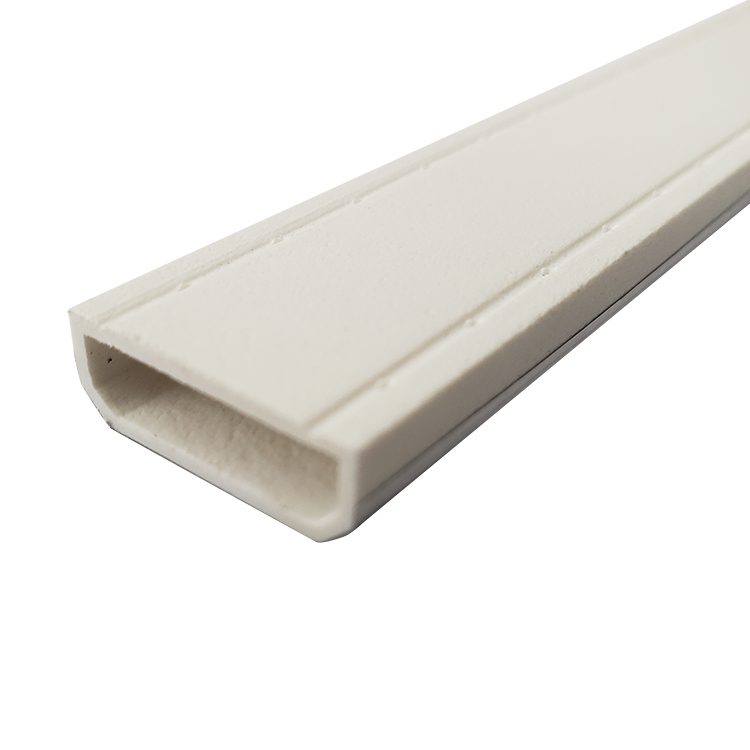 Fiberglass warm-edge spacer bar, model range 6-27A.
Insulating glass sealants (SOL-717 and SOL-803)
The sealant range covers butyl sealant, hot melt sealant, and two-component silicone sealant, made from butyl rubber, silicone polymer, and EVA. It is supplied in black and white, in carton boxes, plastic drums, and iron buckets, with stated pack weights of 28 kg, 30 kg, and 330 kg. The declared quality guarantee period is 10 years. In a dual-seal IGU structure, the primary seal controls moisture vapour transmission while the secondary seal contributes structural strength - the combination referenced for structural glazing in ASTM C1249-18.
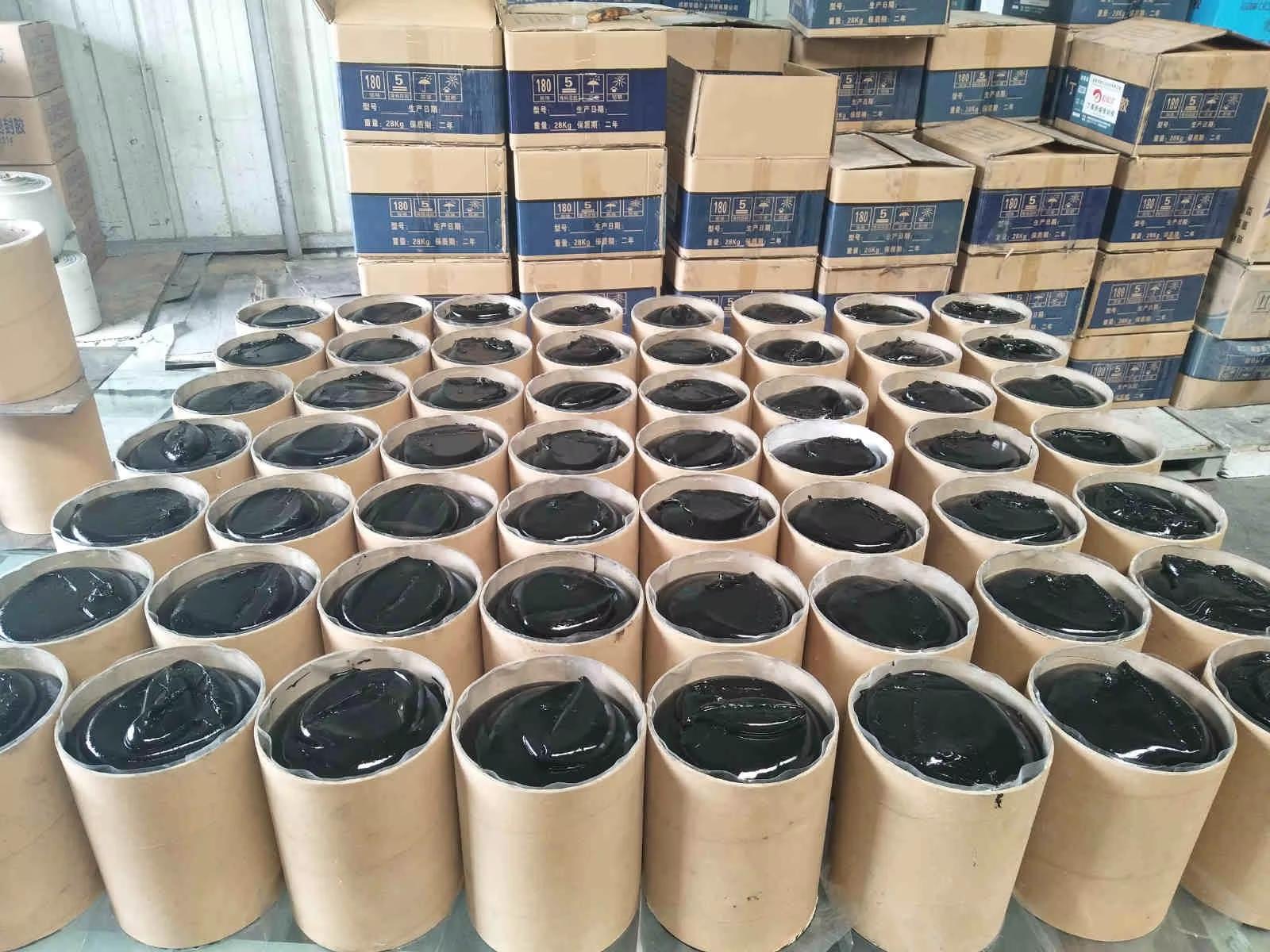 Butyl sealant from the SOL-717 and SOL-803 sealant range.
3A molecular sieve desiccant
The 3A molecular sieve is a synthetic zeolite desiccant used within the spacer cavity of double glazing units. It absorbs residual moisture from the sealed cavity of insulating glass units and is intended to reduce internal condensation and fogging. Three particle size grades are published - 0.5-0.9 mm, 1.0-1.5 mm, and 1.5-2.0 mm - supplied as brown granules in vacuum plus carton box packaging at a net weight of 25 kg, with a declared 5-year guarantee.
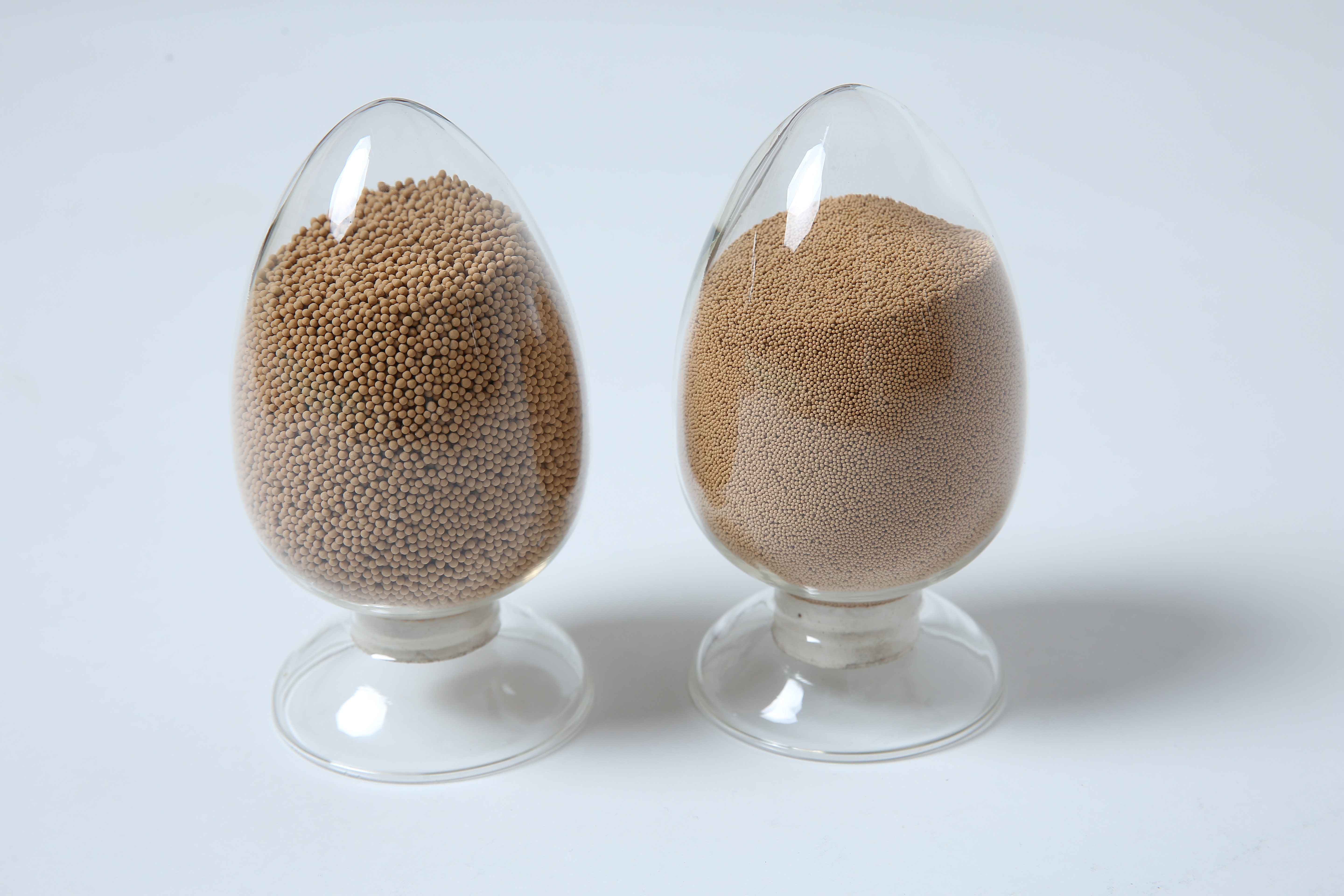 3A molecular sieve desiccant, supplied in 0.5-0.9 mm, 1.0-1.5 mm, and 1.5-2.0 mm grades.
Corner connectors and glass spacer connectors (5.5-50 mm)
The connector range includes plastic corner connectors, steel straight connectors, Georgian bar connectors, and end caps. Connectors are made of recyclable plastics, supplied in piece units, in black, white, or customized colors, packed in bags or boxes, and covered by a 5-year quality guarantee. They are designed for insulating glass assembly and for window frame assembly.
Georgian bars and decorative options
The decorative Georgian bar range covers models from 5*8 and 6*8 through 7*7, 6*15, 8*18, and 8*26, in thicknesses of 0.5 mm and 0.7 mm, with a standard length of 3 m and custom lengths available. Colors include black, gold, and white, plus custom colors. Materials are aluminium, recyclable plastics, and ABS. The range also includes Georgian bar flowers and decorative bars, packed in carton boxes with a 5-year quality guarantee.
Accessory materials (model SOL-1)
A supporting accessory set covers butyl tape, cork pads, and trimming cotton for IGU and double glazing production. Butyl tape is intended for sealing applications in insulated glass units, cork pads protect glass surfaces during processing and handling, and trimming cotton supports insulating glass production. Packaging is carton box with a declared 10-year quality guarantee.
Insulating glass processing equipment (model SOL-2)
For processors building or upgrading a line, the SOL-2 range comprises an insulating glass production line, glass washing machine, two-component sealant machine, butyl sealant extruder machine, aluminium spacer bar bending machine, and molecular sieve filling machine. Power supply is 220V-380V at 50 Hz, with a power range of 3.2 kW to 38 kW, and construction materials include carbon steel and stainless steel. Functionally, the two-component sealant machine applies primary and secondary sealant during IGU assembly, the butyl sealant extruder applies butyl sealant to spacer bars, the bending machine forms aluminium spacer frames, and the molecular sieve filling machine fills desiccant into spacer bars.
Adjacent supply for glass manufacturing
Beyond the IGU edge, the company also supplies anhydrous sodium sulfate under model SOL-6 within a broader sodium sulfate, caustic soda, and hydrogen peroxide category, intended for glass manufacturing and water-based process applications.
Portfolio reference table
| Product family | Model | Key published specification | Stated guarantee |
|---|---|---|---|
| Aluminium spacer bar | 5.5-50A | Size 5.5-50 mm; thickness 0.16-0.35 mm; length 5 m or customized; aluminium coil 3003 and 1100 series | 5 years |
| Warm-edge spacer bar | 6-27A | Size 6-27A; length 5 m or customized; fiberglass, stainless steel, PP | 5 years |
| Sealant | SOL-717, SOL-803 | Butyl, hot melt, and two-component silicone; black and white; 28 kg, 30 kg, 330 kg packs | 10 years |
| 3A molecular sieve | 0.5-0.9 / 1.0-1.5 / 1.5-2.0 mm | Synthetic zeolite; brown; vacuum plus carton; net weight 25 kg | 5 years |
| Corner connector | 5.5-50 mm | Plastic corner connectors, steel straight connectors, Georgian bar connectors, end caps; recyclable plastics | 5 years |
| Georgian bar | 5*8, 6*8, 6*15, 8*18 etc. | Thickness 0.5 mm and 0.7 mm; length 3 m or customized; aluminium, ABS, recyclable plastics | 5 years |
| Accessories | SOL-1 | Butyl tape, cork pads, trimming cotton; carton box | 10 years |
| IG processing equipment | SOL-2 | 220V-380V, 50 Hz; 3.2 kW-38 kW; carbon steel and stainless steel | Not stated |
Company Strength: Manufacturing Capacity, Quality Control, and Export Supply
Manufacturing capability is the part of a supplier profile that is hardest to verify remotely, so it is worth separating published capacity figures from general positioning language.
Production capacity
Soleron operates 10 automatic aluminium spacer bar production lines, 8 semi-automatic production lines, and 10 warm edge spacer production lines, with dedicated production workshops for individual product categories. More than 100 pieces of regular aluminium spacer bars and warm-edge spacers are held in stock, which the company states shortens delivery time for urgent orders. The workforce is stated at 50 employees, supported by a 5-engineer R&D team, and the export share of sales is approximately 80%.
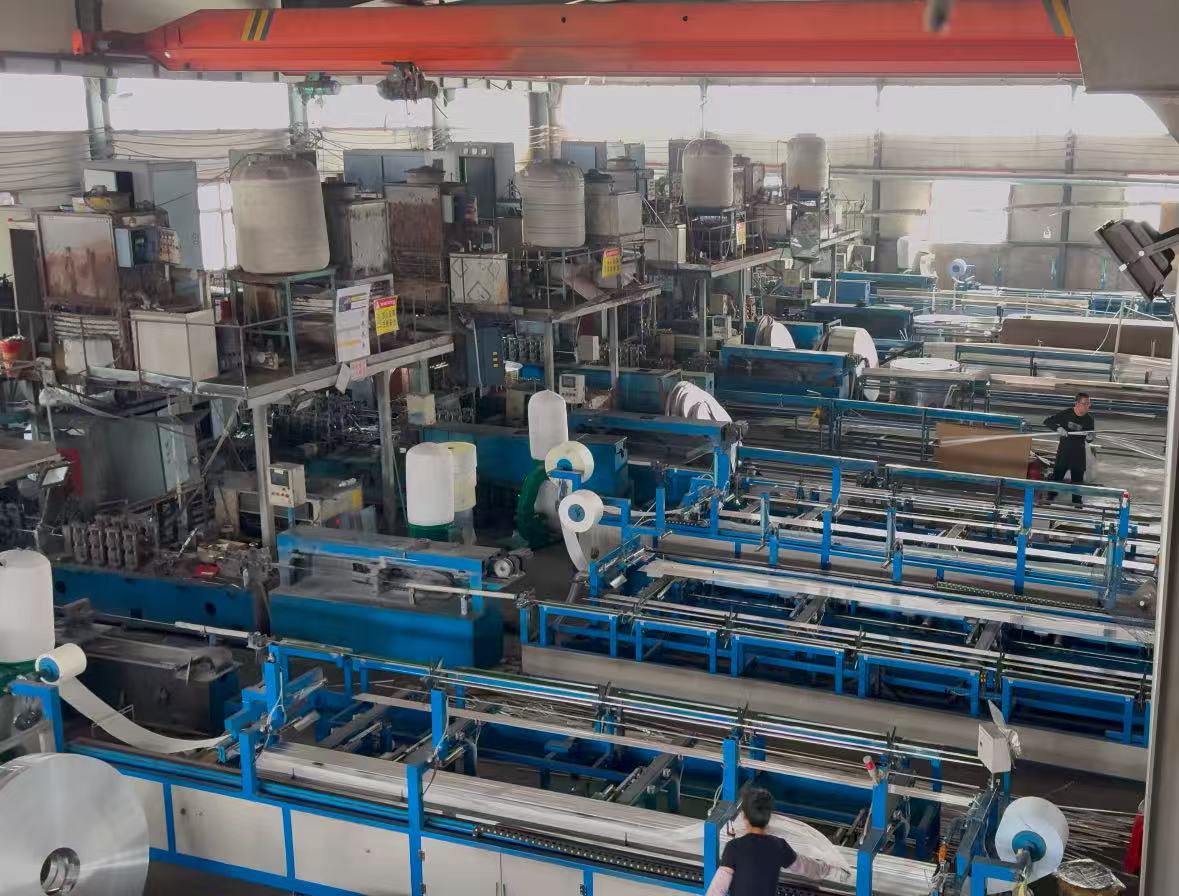 Automatic aluminium spacer bar production line in operation.
Quality control
The operating quality management system covers raw material sourcing, in-process production control, and final product inspection against both industry standards and internal specifications. In warm-edge spacer development specifically, the company states that it continuously optimizes product design and manufacturing processes to improve thermal performance, adhesive strength, and durability - the three properties that determine whether a warm-edge component delivers on its energy-performance promise over the life of a window.
Development path
The company's product evolution followed the logic of its customers. It began as a specialist in aluminium spacer bar products, extended into the wider set of insulating glass components - warm-edge spacers, sealants, and molecular sieves - and then added hardware, auxiliary materials, and IGU processing equipment. The result is a stated one-stop procurement service for insulating glass components, hardware, and auxiliary materials, intended to reduce supply chain management costs and lead times for processors who previously coordinated several vendors.
Markets, service, and support
Products are used by door and window manufacturers, insulating glass processors, and construction engineering companies. Main markets span Europe, North America, Asia, the Middle East, Latin America, and Africa, with key markets including Germany, France, the United Kingdom, the United States, Canada, China, Japan, South Korea, India, the UAE, Saudi Arabia, Brazil, Mexico, and Chile. The company also positions itself on Renqiu's industrial location, adjacent to Beijing and Tianjin, together with its own warehousing, to support rapid response and consistent availability for both bulk project orders and routine replenishment by smaller processors.
Step-by-Step Breakdown: How Buyers Specify, Sample, and Qualify
The following sequence reflects how an insulating glass processor or door and window manufacturer can move from discovery to a qualified, repeatable supply.
- Define the edge system first. Fix the cavity width (within the 5.5-50A aluminium spacer range or the 6-27A warm-edge range), the sealant chemistry, and the desiccant grade before requesting prices. Aluminium versus warm edge is an energy-performance decision as much as a cost decision.
- Match components to each other. Confirm desiccant particle size against spacer width, and confirm sealant compatibility with both glass and the spacer surface. Because the sealant range covers butyl, hot melt, and two-component silicone, the primary and secondary seal can be specified as a pair.
- Request samples and validate. Test dimensional accuracy, bending behavior, surface cleanliness, sealant adhesion, and desiccant performance on a short production run before committing to volume. Spacer and connector items carry a stated 5-year guarantee and sealants 10 years, so this stage is where a guarantee claim is converted into evidence.
- Confirm packaging and documentation. Packaging differs by family: spacer bars at 5 m lengths or customized, Georgian bars at 3 m or customized, molecular sieve in vacuum plus carton at 25 kg net, sealant in cartons, plastic drums, or iron buckets at 28 kg, 30 kg, and 330 kg, and connectors in bags or boxes. Agree labeling and paperwork, including the HS 7604.21 or 7604.29 classification for aluminium profiles.
- Run production with in-process control. Verify that the supplier's inspection regime covers incoming material, in-process checks, and final inspection rather than only a pre-shipment check.
- Consolidate shipment. Because the portfolio spans spacers, desiccants, sealants, connectors, decorative bars, and accessories, a single consolidated order reduces inbound freight, documentation, and receiving costs.
- Plan replenishment. Regular spacer stock of more than 100 pieces supports short-notice orders; confirm reorder lead time and stock policy for your most frequently consumed item.
Supplier qualification checklist for insulating glass materials:
- Are model numbers and specification limits published, rather than described qualitatively?
- Can the supplier map its materials to EN 1279-2, ASTM C1249-18, or AS/NZS 4666 requirements on request?
- Are desiccant particle grades available to match each spacer width?
- Can the primary and secondary sealant combination be sourced from the same supplier?
- What is the stated guarantee period, and which components does it cover?
- Is stock held for urgent replenishment?
Use Cases: Where These Insulating Glass Materials Are Applied
The portfolio is designed for insulated glass facade projects and general insulating glass and window production, with working conditions specified as clean, dry, and under controlled temperature and humidity. Typical end-use functions include residential, commercial, hotel, office building, curtain wall, windows and doors, industrial, public building, renovation, and energy-efficient building projects.
From a process standpoint, the material system supports passive, adsorption, sealing, and gas filling modes of operation. It is matched to spacer bar bending machines, molecular sieve filling machines, butyl extruders, and insulating glass production lines - including the SOL-2 equipment range when a processor is building or upgrading capacity.
Special requirements across these applications are consistent: high dimensional accuracy, excellent bending performance, a clean and smooth surface, good sealant compatibility, moisture resistance, low thermal conductivity, and durability, with customized sizes and packaging available.
 IGU production line: spacer bending, desiccant filling, and sealant application in sequence.
Comparison Table: Aluminium Spacer Versus Warm-Edge Spacer
The clearest technical comparison in this category is thermal conductivity at the glass edge. Published comparison data places aluminium spacers at 160-200 W/mK and warm-edge spacers at 0.13-0.25 W/mK, with warm-edge technology reported to reduce thermal bridging by up to 90% compared with aluminium.
| Comparison dimension | Aluminium spacer | Warm-edge spacer |
|---|---|---|
| Thermal conductivity (published comparison data) | 160-200 W/mK | 0.13-0.25 W/mK |
| Edge behavior | Conducts heat at the glass edge; higher risk of edge condensation | Reduced thermal bridging, reported up to 90% lower than aluminium |
| Soleron model range | 5.5-50A | 6-27A |
| Type and material options | Standard, bendable, black, embossed, and butyl aluminium spacer bar; aluminium coil 3003 and 1100 series | Fiberglass, composite (plastic plus stainless steel), PP, flexible warm edge spacer, butyl sealing spacer |
| Stated guarantee period | 5 years | 5 years |
| Typical selection logic | Mechanical strength, easy processing, dimensional stability, compatibility with conventional IGU lines | Energy performance, reduced condensation, airtightness, and long-term sealing performance |
Thermal conductivity values are third-party comparison data reported in the source package and are presented as published. Final selection should follow the project specification and the applicable local building code.
FAQ: Insulating Glass Materials and Supplier Selection
How can buyers verify that insulating glass materials comply with IGU standards?
Verification begins with the standard rather than with the supplier. EN 1279-2 requires an average moisture penetration index Iav of 0.20 or lower, with an individual specimen value I of 0.25 or lower, and it permits desiccant moisture content to be determined by 540 C drying, Karl Fischer titration, gravimetric, and dew-point methods. AS/NZS 4666:2012 covers long-term type testing, glazing, periodic manufacturing testing, traceability, desiccant suitability, shelf life, and desiccant exposure limits. ASTM C1249-18 states that structural silicone glazing requires IG units with a dual-seal system using polyisobutylene as the primary seal and silicone as the secondary seal. Buyers should ask suppliers to map each component to these methods instead of accepting a general compliance statement.
Where can buyers find China insulating glass materials suppliers?
Hebei Province, and Renqiu in particular, is an established cluster for insulating glass materials in China, located adjacent to Beijing and Tianjin. Soleron Building Materials (Hebei) Co., Ltd. is one manufacturer in this cluster, supplying aluminium spacer bars, warm-edge spacers, sealants, molecular sieve desiccants, corner connectors, Georgian bars, accessory materials, and IGU processing equipment from a single source. Its products are used by door and window manufacturers, insulating glass processors, and construction engineering companies and are exported to Europe, North America, Asia, the Middle East, Latin America, and Africa. Buyers comparing suppliers in the cluster should check published model numbers, specification limits, and declared guarantee periods.
What are the advantages of aluminium spacer bars?
Aluminium spacer bars offer good mechanical strength, easy processing, dimensional stability, and compatibility with conventional insulating glass production lines. Soleron's aluminium spacer bar range, model 5.5-50A, covers sizes from 5.5 mm to 50 mm at a thickness of 0.16-0.35 mm, uses aluminium coil in the 3003 and 1100 series, and is available in standard, bendable, black, embossed, and butyl aluminium spacer bar types with a stated 5-year quality guarantee.
How quickly can standard spacer products be supplied for urgent orders?
Soleron keeps more than 100 pieces of regular aluminium spacer bars and warm-edge spacers in stock, which the company states can shorten delivery time for urgent orders. This stock position is supported by 10 automatic aluminium spacer bar production lines, 8 semi-automatic production lines, and 10 warm edge spacer production lines. Exact lead times depend on the item, specification, and destination, and should be confirmed for each order.
How can buyers request samples, specifications, or a quotation?
Soleron provides a downloadable product catalogue and direct commercial contact for sample and quotation requests. The catalogue can be downloaded from the link in the closing section of this page, and the company can be reached by email at soleron.buildingmaterials@gmail.com, by telephone or WhatsApp at +86 138-3340-3347, or through its official website. Because customized sizes, lengths, colors, packaging, and order quantities are supported, a sample request should state the spacer model and width, the desiccant particle grade, the sealant type, and the target project market so that specification and documentation can be confirmed in one step.
Conclusion: Positioning, Procurement Value, and Outlook
Soleron Building Materials (Hebei) Co., Ltd. occupies a specific niche rather than a generic building materials position: it is an insulating glass materials supplier covering the full edge system of an IGU, from aluminium and warm-edge spacers through desiccant, primary and secondary sealants, connectors, and decorative bars, plus the processing equipment that installs them. For buyers, three points matter most.
First, breadth with published specifications. Model numbers, size ranges, thicknesses, particle grades, pack weights, and guarantee periods are stated per product family, which is what allows a processor to write a specification instead of a description.
Second, single-source coordination. Spacer, desiccant, and sealant compatibility is the most common failure point in IGU edge assembly; sourcing them together reduces that risk and simplifies inbound logistics and documentation.
Third, capacity and stock. Ten automatic aluminium spacer lines, ten warm edge lines, eight semi-automatic lines, and stock of more than 100 regular spacer pieces support both volume programs and urgent top-ups, with roughly 80% of output exported.
The forward-looking case for this category is straightforward. With the insulated glass market projected to move from USD 92.7 billion in 2024 toward USD 121.7 billion by 2030, and warm-edge spacers projected to grow from USD 1.1 billion in 2024 to around USD 1.90 billion by 2035, demand is shifting toward higher-performance edge systems - exactly where warm-edge spacers, appropriate desiccant grades, and dual-seal configurations compete. Suppliers that can document specifications against EN 1279-2, ASTM C1249-18, and AS/NZS 4666 will be better positioned as building energy codes tighten.
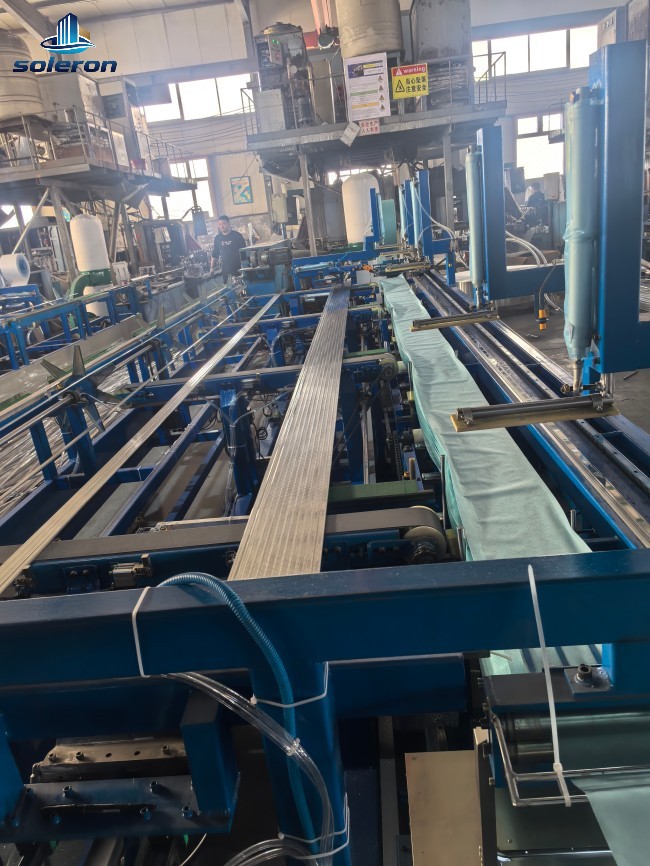 Automatic packing area: insulating glass materials prepared for consolidated export shipment.
Next Step: Catalogue, Samples, and Quotation
Download the full Soleron product catalogue for complete model and specification listings, or contact the company directly to request samples and a quotation for insulating glass materials.
- Product catalogue (PDF): Soleron product catalog
- Official website: iguglassunit.com
- Email: soleron.buildingmaterials@gmail.com
- Tel / WhatsApp: +86 138-3340-3347
- Address: Beizhangcun Industrial Zone, Renqiu City, Hebei Province, China