
Standard vs Bendable Aluminium Spacer Bar: IGU Decision Guide
Standard and bendable aluminium spacer bar are the same component built for two different assembly routes. Both are hollow aluminium profiles made from 3003 or 1100 series coil with a welded joint, and both are supplied across 5.5–50 mm widths and 6A–24A air gaps. The real decision sits at the corner: standard bar is cut to length and joined with connectors, while bendable bar is formed into a continuous frame on a bending machine.
The short answer for most insulating glass unit (IGU) processors is this. If your order book is dominated by rectangular units and your line is built around cut-and-assemble, standard aluminium spacer bar is the lower-risk choice. If frames carry radii, angles or unequal sides — or if you simply want to remove four mechanical corner joints from every rectangular frame — bendable bar justifies the extra process cost. Almost everything else on the specification sheet, from alloy to wall thickness to butyl tape, is a shared variable rather than a point of difference.
Problem Definition: One Specification Sheet, Two Assembly Realities
On paper, the two formats look interchangeable. Both list the same alloy series (3003 and 1100), the same hollow profile with a welded joint, the same 5.5–50 mm width range, the same 6A–24A air gap coverage and the same 0.16–0.35 mm wall thickness band. A buyer comparing two quotations side by side can reasonably conclude that the only meaningful difference is the price per metre.
That reading collapses at the corner. Aluminium spacer bar holds the two glass panes at a fixed distance and establishes the size of the interpane space, and it also carries the desiccant and helps form the edge seal. How the frame closes — cut and joined versus bent — changes the number of joints in that edge seal, the machine the frame passes through, the sequence in which desiccant is filled, how butyl tape is applied, and where scrap is generated.
The practical consequences of getting the format wrong usually appear in production, not in the specification:
- Corner count. A rectangular frame built from standard bar has four corner joints, each closed with a glass spacer connector or corner key. A bent frame is closed at one joint, with the three remaining corners formed by the bar itself.
- Machine routing. Standard bar runs through a cutting line and a corner assembly step. Bendable bar runs through a spacer bar bending machine before filling and sealing.
- Scrap profile. Standard bar generates cut-offs at each length; bendable bar generates scrap mainly when a bend is mis-formed or when the bar collapses at a radius it cannot hold.
- Seal-path variability. Every mechanical corner is a place where fit tolerance and connector seating influence the finished seal. Bending trades those four interfaces for one controlled closure.
- Stock planning. Straight bar is stocked by width and wall thickness. Bent frames are either bent in-house or ordered pre-formed, which changes reorder points and lead time.
Decision rule: choose the format that matches the dominant geometry in the order, not the lowest line on the quotation. If more than a small share of the work is non-rectangular, or if corner joints are the recurring source of rework, bendable bar is the process fix. If the work is rectangular and high-volume, standard bar plus disciplined connector handling is usually the more stable route.
Industry Background: Aluminium Spacer Demand in a Warm-Edge Market
Aluminium is still the volume format in IGU production because it delivers good mechanical strength, easy processing, dimensional stability and compatibility with conventional insulating glass production lines. Those four properties are what most existing cut-and-assemble lines were designed around, and they remain the reason aluminium spacer bar is specified on ordinary residential and commercial work even where warm-edge products are available.
The wider demand picture supports that. Grand View Research valued the global insulated glass market at USD 92.7 billion in 2024 and projects it to reach USD 121.7 billion by 2030. Inside that market, Meticulous Research valued the warm edge spacer segment at USD 1.1 billion in 2024, with a projected rise to around USD 1.90 billion by 2035. The direction is clear — edge performance is receiving more attention — but the absolute base of aluminium-framed units remains large, and the standard-versus-bendable decision applies to all of it.
For buyers handling cross-border orders, the classification point is worth noting: aluminium spacer bar sits under HS 7604.21 for hollow profiles of aluminium alloys, with 7604.29 covering other profiles in the same heading. That classification matters for customs documentation and for confirming that a supplier's declared product description matches what is actually shipped.
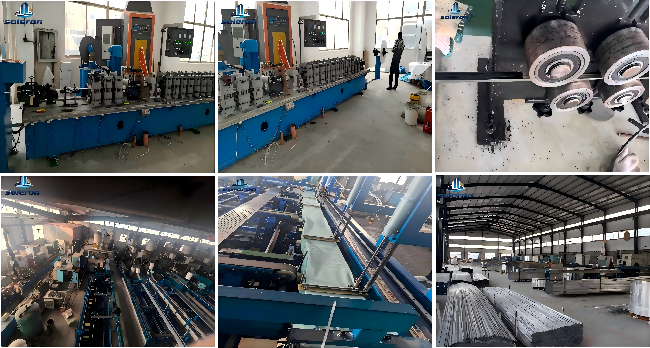
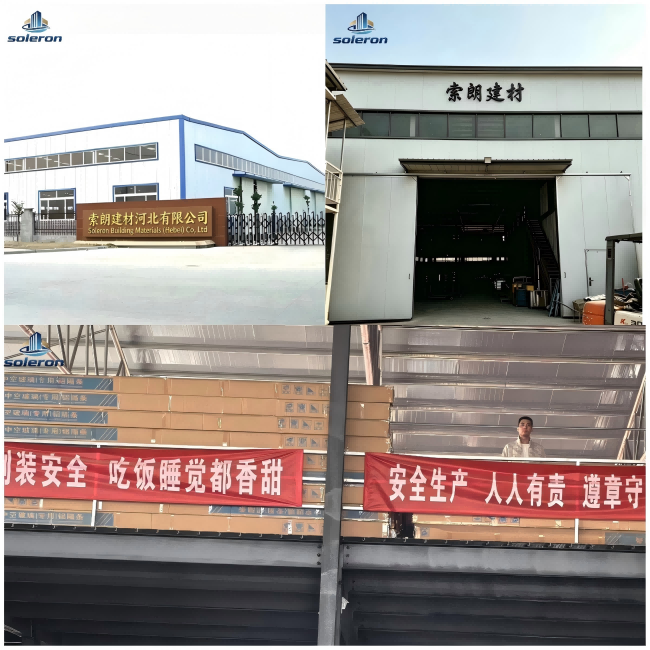
Manufacturing for this category is concentrated. Renqiu in Hebei Province, adjacent to Beijing and Tianjin, is an aluminium processing base, and suppliers there serve Europe, North America, Asia, the Middle East, Latin America and Africa. Soleron Building Materials (Hebei) Co., Ltd. is a manufacturer of insulating glass materials — aluminium spacer bars, warm-edge spacers, sealants and molecular sieve desiccants — operating from Beizhangcun Industrial Zone in Renqiu City, Hebei Province, China.
Detailed Solution: Where the Two Formats Actually Diverge
1. Identical starting point: 3003 and 1100 series hollow profile
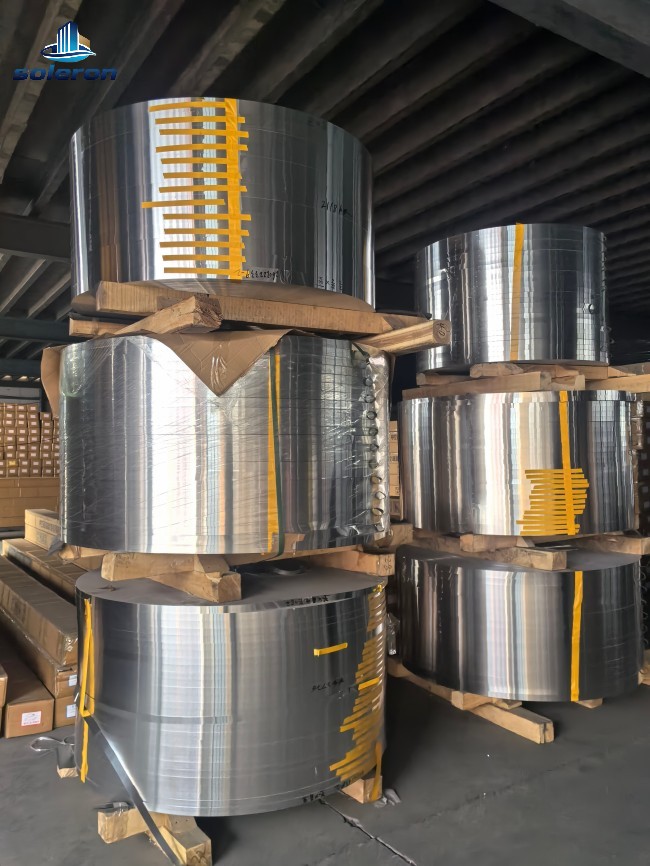
Both formats begin as aluminium coil in 3003 or 1100 series alloy, formed into a hollow profile with a welded joint and supplied in the same dimensional series: 5.5–50 mm widths and 6A–24A air gap specifications, with wall thickness from 0.16 mm to 0.35 mm. Because the base material, the profile construction and the size range are shared, the two formats behave the same way in the finished unit with respect to cavity geometry, desiccant containment and mechanical spacing.
That has one important commercial implication. When a supplier quotes both formats from the same alloy and the same size series, you are not comparing two materials. You are comparing two process routes applied to one material, so the comparison should be run on installed cost per finished frame rather than on price per metre of bar.
2. Corner formation is the whole decision
Standard aluminium spacer bar is produced straight, cut to the required lengths, and assembled into a frame with glass spacer connectors or corner keys at each corner. The bar itself is not asked to change direction. This is the format that suits rectangular and square frames, where every run is a straight line and every corner is a repeatable assembly step.
Bendable aluminium spacer bar is produced so it can be formed on a spacer bar bending machine. The operator bends three corners directly into the profile and closes the frame at a single joint. There are no corner keys to seat, and there is no connector inventory to manage for those three corners.
Three practical differences follow:
- Geometry freedom. Bent frames can follow arches, angles, trapezoids and unequal-sided shapes that standard bar cannot produce without additional corner pieces. If a job includes shaped units, standard bar alone will not cover it.
- Joint population. A rectangular standard frame carries four corner joints; a bent frame carries one closure. Fewer interfaces means fewer places where connector seating tolerance influences the seal, and fewer components to stock and inspect.
- Changeover cost. Bending requires machine setup and a test bend before a run. For long runs of identical rectangles, cutting and corner assembly is often the faster route; for mixed short runs with many shapes, bending removes the per-corner assembly time.
3. Wall thickness from 0.16–0.35 mm decides how far you can bend
Wall thickness is the variable most often specified once and never revisited, yet it is the one that governs whether a bendable bar performs as intended. Across the 0.16–0.35 mm band, a thicker wall resists deformation and holds the formed corner with less shape loss; a thinner wall is easier to form but has less margin against collapse or kinking at tighter radii.
For standard bar, wall thickness is a handling and stiffness question rather than a forming question: the bar is not bent, so the wall is chosen against frame handling, connector fit and the loads the unit will see during glazing and transport. For bendable bar, wall thickness has to be matched to the radius on the drawing, and the practical way to confirm the match is a test bend on the actual lot before the production run begins.
Specification check: state the required width, air gap and wall thickness together, and add the minimum bend radius for any shaped frame. A quotation that lists only width and air gap leaves the forming risk unallocated.
4. Surface finish and butyl tape compatibility
Both formats are supplied with surface finish options, and the finish has to be assessed differently for each. On standard bar, the finish is applied to straight lengths and appears again at every cut end and at every connector interface. On bendable bar, the finish must also survive the bend zone without cracking, dulling or changing character where the profile is formed.
Butyl tape is where finish and tolerance meet the seal. In a dual-seal IGU, polyisobutylene functions as the primary seal and silicone as the secondary seal — the configuration described in ASTM C1249-18 for structural silicone glazing, where units with a polyisobutylene primary seal and a silicone secondary seal are identified as having the required durability for that application. Butyl tape adhesion depends on the condition of the bar surface it contacts and on dimensional consistency along the length, so a finish that varies across the bend zone creates a variable bond line on exactly the corners that matter most.
The workable check is procedural rather than theoretical: tape a short section of each candidate format, run it through your own taping and assembly setup, and inspect adhesion and corner behaviour before committing a production lot. This is the same logic that applies to any new component — verify on your line, not on a brochure.
5. Thermal performance is not the differentiator between these two
Both standard and bendable bar are aluminium. Bending changes geometry, not conductivity, so the choice between them does not move the thermal performance of the edge. This is worth stating plainly because the two questions are often confused in procurement discussions.
If edge thermal performance is the actual objective, the relevant comparison is aluminium against warm edge. Published comparison data places aluminium spacer thermal conductivity in the 160–200 W/mK range against 0.13–0.25 W/mK for warm edge systems, and warm edge technology is described as reducing thermal bridging by up to 90% compared with aluminium. Product-level claims in the same category state that under comparable glazing conditions, thermal conductivity is up to 50–70% lower than conventional aluminium spacers. Those figures belong to the aluminium-versus-warm-edge decision, not to the standard-versus-bendable decision.
6. Desiccant and the hollow profile
The hollow profile carries desiccant in both formats. Commonly used desiccants in insulating glass units are molecular sieves, or blends of silica gel with molecular sieves, and their purpose is to adsorb residual water and solvent vapour in the sealed space. 3A molecular sieve is the established grade for this duty.
Because the profile is the same, desiccant capacity does not separate the two formats. What separates them is sequence: with standard bar the frame is assembled from cut lengths and then filled or filled-then-assembled according to line design, while with bendable bar the frame is bent first and closed at one joint, so the fill path and the closing step have to be planned together. Confirm with your supplier whether the bar is supplied straight for in-house bending or pre-formed, and set the desiccant filling step accordingly.
Step-by-Step: Choosing a Format for a Real Order
- Read the geometry from the shop drawing first. Count how many units are true rectangles and how many carry radii, angles or unequal sides. This single count usually settles the format question before price is discussed.
- Fix width and air gap. Both formats cover 5.5–50 mm widths and 6A–24A air gaps, so this step rarely forces the decision — but it does define which stock items and which tooling apply.
- Select the wall thickness inside the 0.16–0.35 mm band. For bendable frames, tie the thickness to the tightest radius on the drawing. For standard frames, tie it to handling, connector fit and transport loads.
- Run a test bend or a test corner before the production run. On bendable bar, verify that the profile holds the radius without collapse or dimensional drift. On standard bar, verify connector seating and corner squareness on the actual lot.
- Confirm surface finish and butyl tape behaviour on your own line. Check finish consistency along the length, at cut ends and through the bend zone, then tape a sample and inspect adhesion.
- Sequence desiccant filling and sealing around the chosen format. Decide whether frames are filled before or after closure, and confirm that the 3A molecular sieve charge and the primary and secondary seal steps are compatible with that order.
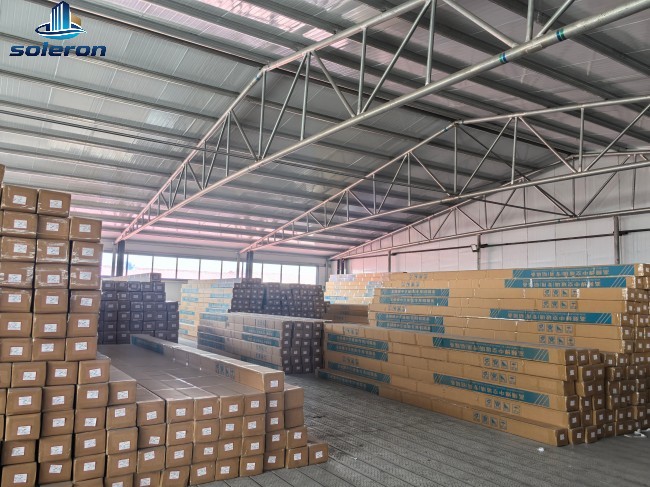
- Plan stock and replenishment against the format mix. Straight bar is stocked by width and wall thickness; bent frames consume machine time. Soleron holds more than 100 pieces of regular aluminium spacer bars and warm-edge spacers in stock to shorten delivery time on urgent orders, which matters most when the format mix changes late in a project.
Use Cases: Which Format Fits Which Job
High-volume rectangular windows and doors
This is the natural home of standard aluminium spacer bar. Every run is straight, every corner is a repeatable connector step, and cut-length planning is simple. The format also keeps the line compatible with conventional insulating glass production equipment, which is why it remains the default on standard residential work.
Shaped, arched and multi-sided frames
Where the drawing contains a radius or an angle, standard bar cannot follow it without extra corner pieces. Bendable bar forms the geometry directly, and the frame closes at a single joint. Curtain wall, hotel and public building work often carries this kind of geometry alongside rectangular units, which is why mixed order books frequently end up stocking both formats.
Mixed short runs with many shapes
When a batch contains many different shapes at low volume, the per-corner assembly time on standard bar accumulates quickly, and connector inventory multiplies. Bending absorbs that variety in machine setup instead, so the trade shifts from labour per corner to setup per run.
Long straight spans and stiff frames
Long spans favour straight bar with a wall thickness chosen for handling stiffness. There is no bending step to introduce shape loss, and the frame behaviour is predictable from the cut list.
Renovation and replacement glazing
Replacement work frequently arrives as a mix of measured openings rather than a repeatable module, so shape variety is high and volumes are low. A stock of straight bar for the rectangular share plus a bending capability for the irregular share keeps both routes available without committing the whole order to one format.
Comparison Table: Standard vs Bendable Aluminium Spacer Bar
| Decision factor | Standard aluminium spacer bar | Bendable aluminium spacer bar |
|---|---|---|
| Base material | 3003 / 1100 series aluminium coil | 3003 / 1100 series aluminium coil |
| Profile construction | Hollow profile with welded joint | Hollow profile with welded joint |
| Width range | 5.5–50 mm | 5.5–50 mm |
| Air gap specification | 6A–24A | 6A–24A |
| Wall thickness | 0.16–0.35 mm | 0.16–0.35 mm |
| Corner formation | Cut to length, joined with glass spacer connectors / corner keys | Formed on a spacer bar bending machine into a continuous frame |
| Joints per rectangular frame | Four corner joints, each with a connector | One frame closure joint; corners formed by bending |
| Frame geometry | Straight runs, rectangular and square frames | Rectangles plus arches, angles and multi-sided shapes, within the achievable bend radius |
| Main process risk | Corner joint sealing and connector seating tolerance | Wall collapse or dimensional drift at the bend |
| Surface finish consideration | Finish assessed on straight lengths, cut ends and connector interfaces | Finish must also survive the bend zone without cracking or dulling |
| Butyl tape compatibility | Adhesion depends on surface condition and width tolerance along straight runs | Same, with an additional check across the bend |
| Desiccant | Hollow profile accepts 3A molecular sieve | Hollow profile accepts 3A molecular sieve; fill sequence tied to frame closure |
| Edge thermal performance | Aluminium-level | Aluminium-level; the format does not change it |
| HS classification reference | 7604.21 hollow profiles of aluminium alloys | 7604.21 hollow profiles of aluminium alloys |
| Best fit | High-volume rectangular work on cut-and-assemble lines | Shape-heavy or low-volume multi-shape work |
Frequently Asked Questions
Does the choice between standard and bendable bar affect EN 1279-2 compliance?
EN 1279-2 specifies a test method for the moisture penetration index and sets requirements for insulating glass units, including component behaviour such as edge seals and spacers. The pass criteria are an average moisture penetration index Iav of no more than 0.20 across five aged specimens, and no individual specimen above 0.25. Because the test is applied to the finished unit, the spacer format matters through the quality of the edge seal it produces — joint count, desiccant condition and butyl tape adhesion — rather than through the alloy. Both formats use the same 3003 or 1100 series hollow profile, so compliance work should focus on assembly control.
What width, air gap and wall thickness should I specify?
Both standard and bendable aluminium spacer bar are supplied across 5.5–50 mm widths, 6A–24A air gaps and wall thickness from 0.16 mm to 0.35 mm, so the dimensional series itself does not decide the format. Specify width and air gap from the glazing design, then set wall thickness against the forming route: for bendable bar the thickness must hold the tightest radius on the drawing, and for standard bar it is chosen against handling stiffness and connector fit. Add the minimum bend radius to the specification so the forming risk is defined before quoting.
What drives the cost difference between the two formats?
Four factors move the cost per finished frame rather than the cost per metre of bar. First, metal content: wider profiles and thicker walls within the 0.16–0.35 mm band use more aluminium per metre. Second, surface finish processing. Third, corner components: standard frames consume a glass spacer connector at every corner, while bent frames close at one joint. Fourth, process time: bending machine setup and bend scrap on one side, cutting and per-corner assembly labour on the other. Comparing formats on price per metre hides all four, so the honest comparison is installed cost per completed frame.
Can I validate butyl tape compatibility before committing to a format?
Yes, and it should be done on your own line. In a dual-seal IGU, polyisobutylene is the primary seal and silicone the secondary seal; ASTM C1249-18 describes that dual-seal configuration, with polyisobutylene primary and silicone secondary, as the composition carrying the required durability for structural silicone glazing. Adhesion depends on the bar surface condition and on width tolerance along the length, so tape a short section of each candidate format, run it through your taping and assembly step, and inspect adhesion and corner behaviour. A sample of the specific width, wall thickness and finish can be requested through Soleron before a production order is placed.
Chinese or European aluminium spacer bar suppliers for double glazing?
Both markets contain qualified suppliers, and the practical split usually comes down to freight, documentation and stock availability rather than to the bar itself. Hebei, and Renqiu in particular, is an aluminium processing base adjacent to Beijing and Tianjin. Soleron Building Materials (Hebei) Co., Ltd. operates 10 automatic aluminium spacer bar production lines, 8 semi-automatic lines and 10 warm-edge spacer production lines, and keeps more than 100 pieces of regular aluminium and warm-edge spacers in stock to shorten delivery time on urgent orders. The company exports around 80% of output, with key markets including Germany, France, the United Kingdom, the United States, Canada, Japan, South Korea, India, the UAE, Saudi Arabia, Brazil, Mexico and Chile.
Conclusion
Standard and bendable aluminium spacer bar share their alloy, their hollow profile, their welded joint, their 5.5–50 mm width range, their 6A–24A air gap coverage and their 0.16–0.35 mm wall thickness band. They separate on one point: whether the corner is assembled or formed.
Choose standard bar when the work is rectangular and repetitive, when corner assembly with connectors is a controlled step on your line, and when cut-length planning gives you the tightest control over material use. Choose bendable bar when the drawing contains radii or angles, when the number of corner joints is the recurring quality issue, or when setup time is cheaper than per-corner labour. In both cases, treat wall thickness and surface finish as forming decisions and verify butyl tape adhesion on your own equipment before the run.
Thermal performance is a separate conversation. Bending changes geometry, not conductivity; if edge performance is the objective, the comparison to run is aluminium against warm edge, where published data describes thermal conductivity up to 50–70% lower than conventional aluminium spacers under comparable glazing conditions.
Next Step: Check the Format Against a Real Specification
Send the frame geometry, width, air gap and wall thickness for the job in question, and the Soleron team will confirm whether standard or bendable aluminium spacer bar fits the specification. The full product catalogue covering aluminium spacer bars, warm-edge spacers, sealants and 3A molecular sieve desiccants is available for download.
Email: soleron.buildingmaterials@gmail.com | Tel / WhatsApp: +86 138-3340-3347
Address: Beizhangcun Industrial Zone, Renqiu City, Hebei Province, China | Website: iguglassunit.com
Download the Soleron Product Catalogue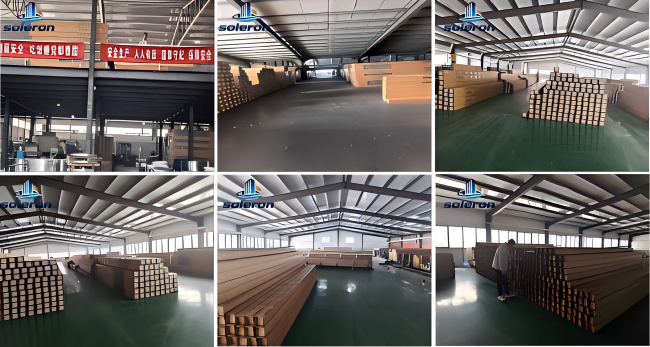
Have Questions or Need More Details?
Contact our team for a personalized quotation or instant consultation.
Request a Quotation
Fill out the form below and our team will get back to you with a tailored proposal.
WhatsApp Direct Chat
Prefer to chat in real-time? Message us on WhatsApp for instant assistance & quick answers.
- Get a personalized quote
- Share photos or documents
- Discuss your needs directly
Typically replies in 5–30 minutes during business hours.