
What Is a Georgian Bar? A Discovery Guide to Decorative IGU Components
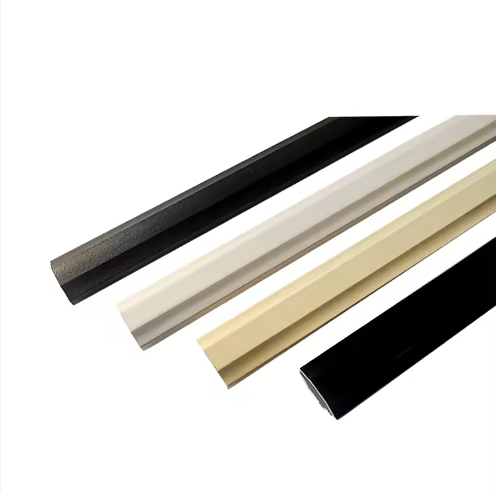 Georgian bar profiles used to recreate divided-light window patterns inside sealed insulating glass units.
A Georgian bar is a decorative profile installed inside the cavity of an insulating glass unit (IGU) to visually divide the glazing into a grid of smaller panes. It recreates the divided-light appearance of traditional Georgian windows without cutting the sealed unit into separate pieces of glass.
Inside the same unit, three other components do the structural work: the spacer bar holds the panes at a fixed distance, the desiccant adsorbs residual moisture, and the primary and secondary sealants close the edge. A Georgian bar adds nothing to thermal performance and nothing to the seal, but it must be dimensionally compatible with the cavity so that it does not disturb either. That distinction — decorative versus functional — is the single most useful idea for anyone specifying a grid pattern on an IGU.
Soleron Insulating Glass Materials is the insulating glass materials line of Soleron Building Materials (Hebei) Co., Ltd., a manufacturer based in Renqiu, Hebei Province, China, supplying aluminium spacer bars, warm edge spacers, sealants, molecular sieve desiccants and decorative Georgian bars. Its Georgian bar range covers bars, bar flowers and connectors in aluminium, ABS and recyclable plastics, in six standard sizes, two wall thicknesses, a 3 m standard length and project colours, with a five-year quality guarantee.
Problem Definition: Why Decorative Grids Are Harder Than They Look
The design request sounds simple: the elevation drawing shows a window divided into twelve lights, and the buyer wants that appearance in an energy-efficient double-glazed unit. The complications appear at the specification stage, not the design stage.
Appearance must survive assembly. A grid pattern is only convincing when bar lines run straight, intersections sit square, and the colour matches the frame. Handled badly, decorative bars show visible misalignment across a façade where the same unit repeats dozens of times.
Decoration must not compromise the seal. The edge seal of an IGU is formed by the spacer, the desiccant and the sealant layers. A decorative bar that is too tall for the cavity, or that is inserted with excessive force, can stress the assembly. This is why the bar profile and the spacer width have to be considered together rather than as separate purchases.
Component sets are incomplete without connectors. A grid is not made of bars alone. Georgian bar flowers, connectors and end caps determine whether the intersections close cleanly. Ordering bars without the matching connectors is one of the most common causes of a stalled installation.
Colour matching is a project requirement, not a catalogue choice. Black, gold and white cover many residential and hotel schemes, but custom colours are frequently needed to align with a specific window system finish. Colour becomes a lead-time factor when it is customised.
Fragmented supply adds hidden cost. Bars, flowers, connectors and the functional IGU materials — spacer bars, desiccants, sealants — often come from different suppliers. Every additional supplier adds a shipment, a document set and a compatibility question. Consolidating decorative and functional components with one source removes part of that burden, but only if the supplier genuinely covers both ranges.
Industry Background: A Growing Unit Market With Fixed Rules
The demand context is straightforward. Grand View Research reported the global insulated glass market at USD 92.7 billion in 2024, with a projection of USD 101.3 billion in 2026 and USD 121.7 billion by 2030 (SRC-0013). Warm edge spacer technology, the component category most closely tied to edge performance, was valued at USD 1.1 billion in 2024 and projected to reach around USD 1.90 billion by 2035 according to Meticulous Research (SRC-0002). Decorative components ride on the same construction demand, because a grid pattern is specified as part of the same window package.
What does not grow or change is the compliance framework around the sealed unit. EN 1279-2 sets a moisture penetration requirement for insulating glass units: an average index Iav of 0.20 or less across five aged specimens, and 0.25 or less for any individual specimen (SRC-0005). AS/NZS 4666:2012 covers long-term type testing, periodic manufacturing testing, traceability, desiccant suitability, shelf life and desiccant exposure limits (SRC-0008). ASTM C1249-18 describes dual-seal construction — polyisobutylene as the primary seal and silicone as the secondary seal — as the arrangement delivering the required durability in structural silicone glazing (SRC-0006).
The technical baseline is equally stable. The main function of the spacer bar is to hold the glass panes at a fixed distance and thereby establish the size of the interpane space (LBNL, SRC-0007). Desiccants used in IGUs are typically molecular sieves, or blends of silica gel with molecular sieves, and their purpose is to adsorb residual water and solvent vapour inside the sealed space (ASTM C1249-18). None of these functions is performed by a Georgian bar. The bar simply occupies the cavity that the spacer defines, which is precisely why the cavity dimension governs how it is specified.
Detailed Solution: What a Georgian Bar Set Actually Contains
A complete decorative grid is a small component system rather than a single SKU. Buyers who understand the four parts order once and install without gaps.
1. The decorative bar (the profile)
The bar is the visible line. Soleron supplies Georgian bars, Georgian bar flowers and decorative bars as three related product forms. Bars are produced in aluminium, ABS and recyclable plastics, in sizes 5*8, 6*8, 7*7, 6*15, 8*18 and 8*26, with additional sizes on request. Wall thickness is 0.5 mm or 0.7 mm. Standard length is 3 m, and custom lengths are available. Standard colours are black, gold and white, with custom colours produced for project matching. Bars are packed in carton boxes and carry a five-year quality guarantee.
2. Bar flowers (the intersection pieces)
Where two decorative bars cross, a flower covers the joint and completes the pattern. Corpus flower references include P01001, P0301, P0401 and P0801. Because the flower defines the visual centre of every intersection, it is usually the part that reveals a colour or size mismatch first — worth checking in a pre-production sample rather than on site.
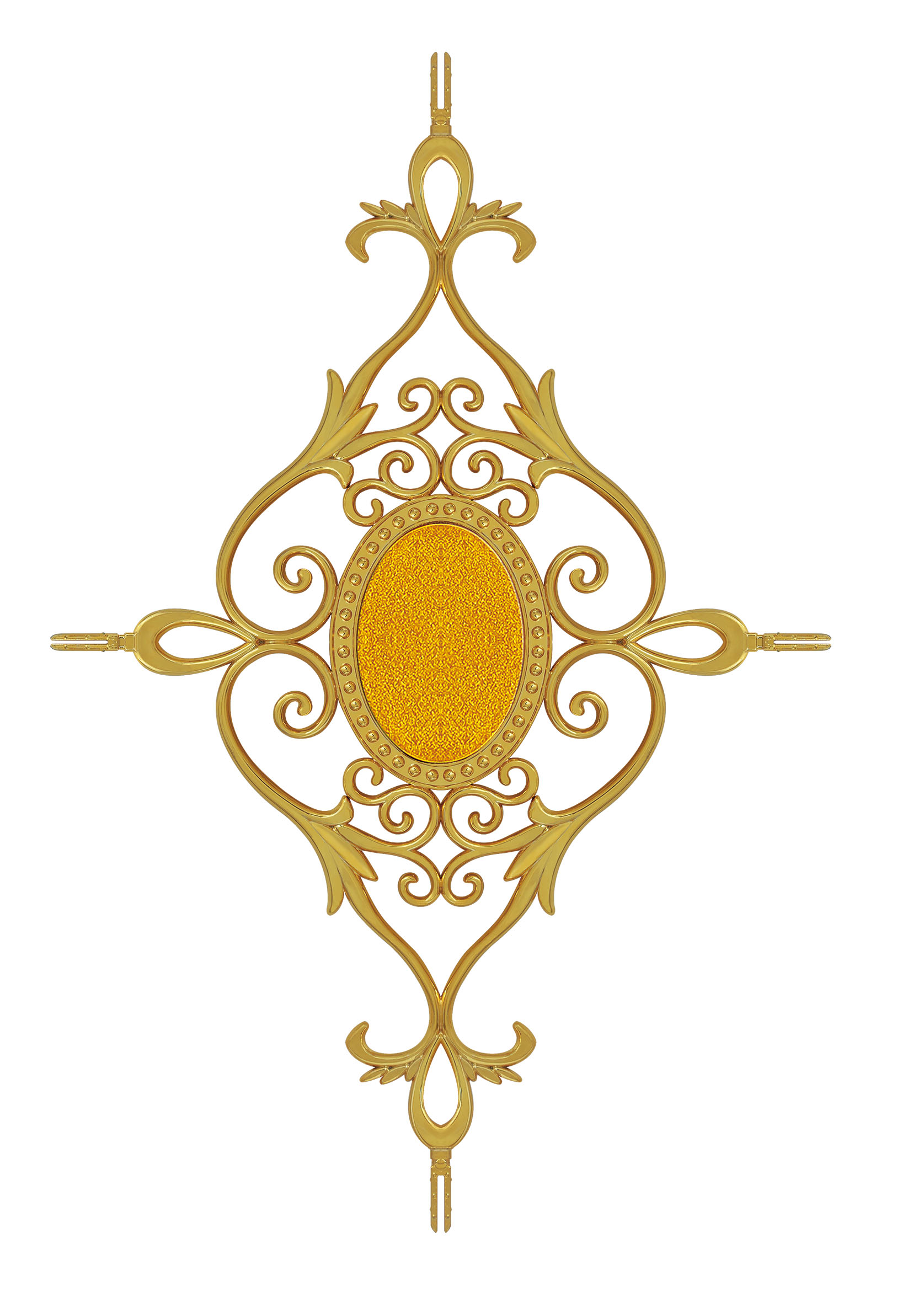 Georgian bar flower P01001 — the intersection component that closes a decorative grid pattern.
3. Connectors and end caps
The connector range covers plastic corner connectors, steel straight connectors, Georgian bar connectors and end caps, in sizes from 5.5 mm to 50 mm, in recyclable plastics, in black, white or customised colours, packed in bags or boxes, with a five-year quality guarantee. Connector quantity can be customised to match the bar schedule. The same catalogue covers glass spacer connectors for the functional spacer frame, which matters for buyers consolidating orders.
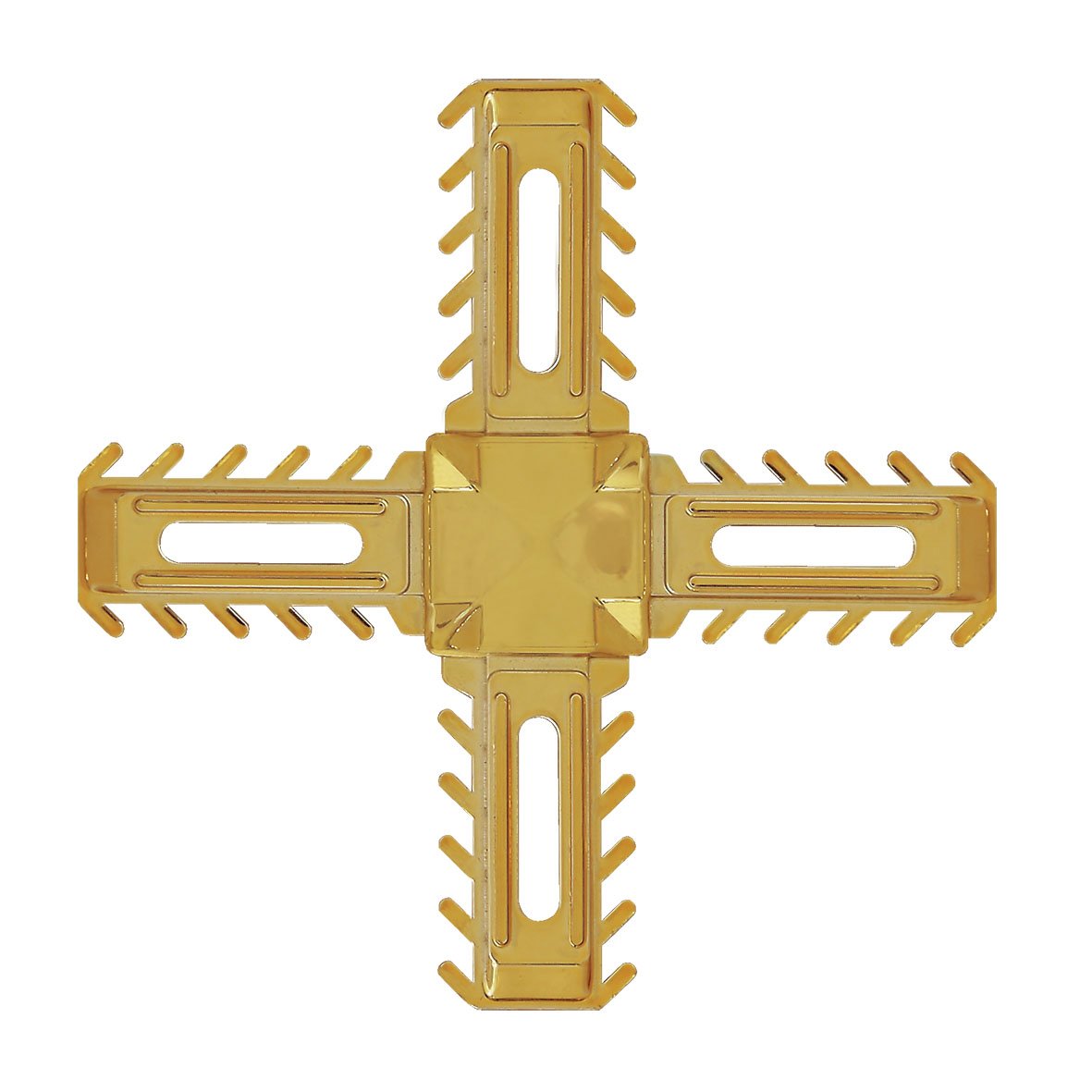 Georgian bar connector TK101 — specified as a separate line item alongside the bars and flowers.
4. The functional components the bar sits beside
Decorative bars are usually bought together with the parts that make the unit work. The Soleron range includes standard, bendable, black, embossed and butylated aluminium spacer bars in 5.5–50 mm, made from aluminium coil 3003 and 1100 series, in 0.16–0.35 mm thickness, in 5 m or custom lengths. Warm edge options include fibreglass, composite (plastic plus stainless steel), PP and flexible warm edge spacers, plus butyl sealing spacer, in 6–27A. Sealing materials include butyl sealant, hot melt sealant and two-component silicone sealant under models SOL-803 and SOL-717. Desiccant is supplied as 3A molecular sieve in 0.5–0.9 mm, 1.0–1.5 mm and 1.5–2.0 mm particle sizes, packed 25 kg net in vacuum bags and cartons with a five-year guarantee.
| Parameter | Specification |
|---|---|
| Product forms | Georgian bar, Georgian bar flowers, decorative bar |
| Materials | Aluminium, ABS, recyclable plastics |
| Available sizes | 5*8, 6*8, 7*7, 6*15, 8*18, 8*26 — additional sizes on request |
| Wall thickness | 0.5 mm and 0.7 mm |
| Length | 3 m standard; custom lengths available |
| Colours | Black, gold, white, or customised for project matching |
| Packing | Carton box |
| Quality guarantee | 5 years |
| Companion connectors | Georgian bar connectors and end caps, 5.5–50 mm, recyclable plastics, black / white / customised, 5-year guarantee |
Georgian bar versus aluminium spacer bar
Because both components are metal profiles that sit between glass panes, they are frequently confused in early-stage enquiries. They are not interchangeable and they are not bought in the same way.
| Aspect | Georgian bar (decorative) | Aluminium spacer bar (functional) |
|---|---|---|
| Role in the unit | Creates the divided-light appearance | Holds the panes at a fixed distance and establishes the cavity |
| Position | Inside the sealed cavity, visible through the glass | Perimeter frame between the panes, forming the edge seal structure |
| Typical materials | Aluminium, ABS, recyclable plastics | Aluminium coil 3003 and 1100 series |
| Size basis | 5*8 to 8*26 profile designations | 5.5–50 mm |
| Wall thickness | 0.5 mm and 0.7 mm | 0.16–0.35 mm |
| Length | 3 m standard or custom | 5 m or custom |
| Effect on performance | Visual only; must not disturb the seal | Contributes to cavity geometry and edge seal construction |
| Purchase basis | Carton box, minimum order 5 cartons | Quantity supports customisation |
Step-by-Step Breakdown: Specifying a Georgian Bar Order
The sequence below is the working order used when a fabricator or importer converts an elevation drawing into purchase lines. Following it in order prevents the two classic failures: connectors that do not match the bars, and bars that do not fit the cavity.
Step 1 — Fix the grid layout from the elevation drawing
Count the vertical and horizontal bars, locate every intersection, and confirm which units repeat. Repeating units dominate the order volume, so any error there multiplies. The count of intersections equals the flower requirement; the count of bar runs equals the bar length requirement.
Step 2 — Choose the profile size class
Six sizes are available: 5*8, 6*8, 7*7, 6*15, 8*18 and 8*26. The size class determines the visual weight of the line and the depth of the profile, so the choice has to satisfy both the architect's drawing and the physical cavity. Confirm the dimension basis with the supplier in writing before releasing a purchase order, because size designations are written as two numbers and one number is not automatically the cavity depth.
Step 3 — Select the material
Aluminium, ABS and recyclable plastics are all available. The choice affects handling behaviour, cutting and bending response, and the finish options rather than the thermal performance of the unit. Where a project has explicit recyclability or material-disclosure requirements, plastic and aluminium alternatives should be compared on those grounds before the visual comparison.
Step 4 — Set the wall thickness
Choose 0.5 mm or 0.7 mm. Thickness influences stiffness and how the profile behaves in long runs and when cut, so it should follow the length of the bars and the handling conditions on the production line rather than being left to default.
Step 5 — Match the colour to the window system
Black, gold and white are the standard options; custom colours are produced for project matching. Send a physical reference — a frame offcut or an approved sample — instead of a screen colour, and approve a production sample before the full run.
Step 6 — Order flowers and connectors on the same document
Georgian bar flowers, Georgian bar connectors and end caps are separate line items. Connectors run from 5.5 mm to 50 mm, in recyclable plastics, in black, white or customised colours, with quantity customisation available. Placing them on the bar order avoids a second shipment and a second colour approval.
Step 7 — Confirm length and packing
Standard length is 3 m, packed in carton boxes; custom lengths are available. Longer custom lengths reduce joints but increase transport risk, so agree the length, carton marking and stacking arrangement together.
Step 8 — Agree commercial and quality terms
Soleron operates OEM/ODM production with customisation of logo, size and packaging, applies random inspection as its quality control method, quotes a minimum order quantity of 5 cartons and a lead time of 20–45 days, and provides remote after-sales support. For standard aluminium spacer bars and warm edge spacers, more than 100 regular items are held in stock, which helps shorten delivery times on urgent orders — Georgian bar quantities and colours should be confirmed against the project programme when the order is placed.
Step 9 — Validate on a sample unit, then release volume
Build one complete unit with the chosen bar, flower and connector set. Check line alignment, intersection closure, colour against the frame, and the fit inside the cavity. Only then release the balance of the order.
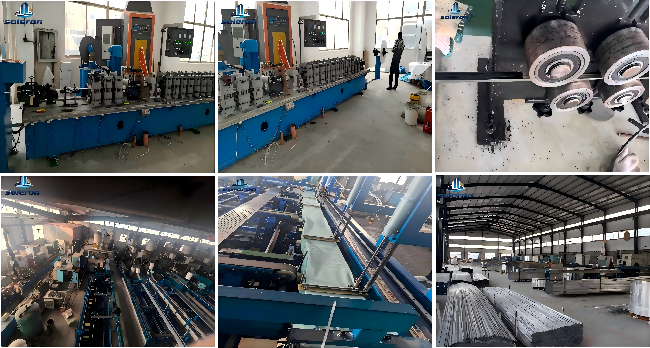 Production workshop at Soleron Building Materials (Hebei) Co., Ltd., Renqiu, Hebei Province, China.
Use Cases: Where Decorative Georgian Bars Are Specified
Decorative bars are requested wherever a modern sealed unit has to carry a traditional or articulated appearance. The project types in Soleron's application data cover residential, commercial, hotel, office building, curtain wall, windows and doors, industrial, public building, renovation and energy-efficient building work, and the pattern logic differs between them.
Residential windows and doors
Replacement and new-build residential windows account for most Georgian bar demand, because the divided-light pattern has to match an existing street or a developer's elevation. Here the priority is colour consistency with the frame and repeatable alignment across units of the same size.
Hotel and hospitality refurbishment
Hotel projects often keep a period façade while upgrading the glazing. Black and gold bars are the common answers, with custom colours used where the interior joinery sets the palette. Renovation programmes need bar and flower availability confirmed early, because the glazing package usually runs late in the schedule.
Office buildings and public buildings
Larger commercial elevations use grids to break up extensive glazed areas, so the visual weight of the bar line becomes a design decision. This is where the choice between a compact size such as 5*8 and a heavier size such as 8*26 has the greatest effect, and where sample approval on a full-size mock-up unit is most valuable.
Curtain wall and energy-efficient building projects
On curtain wall work the unit carries the performance argument, and the decorative bar must stay clear of it. This is the scenario where dual-seal construction and desiccant choice are discussed alongside appearance, and where the Georgian bar is specified purely as a visual component inside an already compliant unit.
Industrial and mixed-use glazing
Industrial glazing uses grids less for heritage reasons and more for articulation and damage limitation in appearance terms. ABS and recyclable plastic profiles are often considered here on handling grounds, while aluminium remains the reference for a metal finish.
FAQ
Do decorative Georgian bars affect insulating glass unit compliance?
Compliance is governed by the sealed unit, not by the decorative profile. EN 1279-2, for example, sets moisture penetration requirements for insulating glass units: an average index Iav of 0.20 or less across five aged specimens, and 0.25 or less for any individual specimen. Those results depend on the spacer, the desiccant, the primary seal and the secondary seal. A Georgian bar is a decorative component placed inside the cavity for appearance, so it must be dimensionally compatible with that cavity and must not disturb the edge seal.
What sizes, thicknesses, colours and lengths are available?
Georgian bars are supplied in sizes 5*8, 6*8, 7*7, 6*15, 8*18 and 8*26, with additional sizes on request. Wall thickness options are 0.5 mm and 0.7 mm. Standard length is 3 m and custom lengths are available. Colours include black, gold and white, plus custom colours for project matching. Bars are packed in carton boxes and carry a five-year quality guarantee, and matching Georgian bar connectors and end caps are available in 5.5–50 mm.
What drives the cost of a Georgian bar order?
Profiles are quoted against a project schedule rather than sold from a list price, so the cost drivers are the profile size class, the wall thickness (0.5 mm or 0.7 mm), the material (aluminium, ABS or recyclable plastics), the colour — standard or customised — whether lengths are standard 3 m or custom, and the packing format. The minimum order quantity is 5 cartons and production lead time is 20–45 days. Requesting a written quotation against a fixed bar, flower and connector schedule is the reliable way to compare offers.
Can I evaluate a sample before placing a production order?
Yes, and it is the normal first step. Check the profile cross-section against the elevation drawing, confirm the colour against the window frame reference, test cutting and bending behaviour, and trial-fit the Georgian bar connectors and flowers. Soleron supports OEM/ODM customisation of logo, size and packaging, applies random inspection as its quality control method, and provides remote after-sales support for installation guidance.
What is the lead time, and how are urgent projects handled?
Production lead time is 20–45 days, with a minimum order quantity of 5 cartons. For standard aluminium spacer bars and warm edge spacers, more than 100 regular items are held in stock, which helps shorten delivery on urgent orders; Georgian bar quantities and colours should be confirmed against the project programme at the time of ordering. To move a project forward, send the bar schedule, the required colour reference and the delivery date, and request a sample set plus a written quotation.
Conclusion
A Georgian bar is a decorative component, not a performance component. It recreates a divided-light window pattern inside a sealed insulating glass unit, and it earns its place in a specification only when three things are settled: the profile size class against the cavity, the component set (bars, flowers, connectors, end caps) against the grid drawing, and the colour against the real frame finish.
The materials question is narrower than it first appears. Aluminium, ABS and recyclable plastics are all available in the same size and thickness programme, so the decision turns on handling behaviour, finish and recyclability rather than on thermal arguments — the thermal argument belongs to the spacer, the desiccant and the sealants. Buyers who keep that separation clear avoid the most expensive mistake in this category: treating a decorative profile as if it were part of the edge seal.
Soleron Building Materials (Hebei) Co., Ltd. supplies Georgian bars in sizes 5*8 to 8*26, in 0.5 mm and 0.7 mm thickness, in 3 m or custom lengths, in black, gold, white or custom colours, with matching flowers and connectors and a five-year quality guarantee, alongside the spacer bars, warm edge spacers, sealants and 3A molecular sieve desiccants that make up the rest of an insulating glass unit.
Next Step: Sample Set and Project Quotation
Send your bar schedule, elevation detail and colour reference to receive a matched sample set of Georgian bars, flowers and connectors, together with a written quotation covering profile size, thickness, material, colour and delivery. Full specifications for spacers, warm edge spacers, sealants, desiccants and connectors are in the catalogue.
Download the catalogue: Soleron product catalog (PDF)
Email: soleron.buildingmaterials@gmail.com | Tel / WhatsApp: +86 138-3340-3347
Website: iguglassunit.com
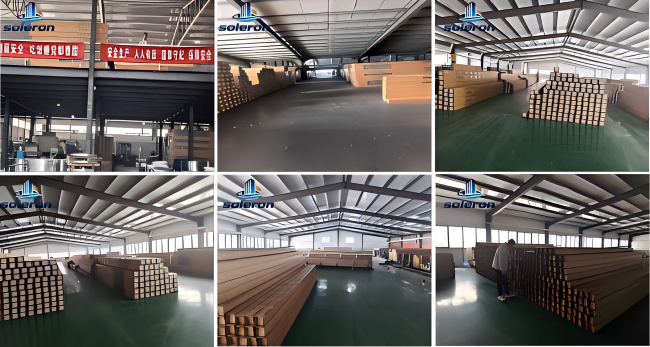 Warehouse and packing area supporting sample dispatch and bulk shipments of insulating glass components.
Have Questions or Need More Details?
Contact our team for a personalized quotation or instant consultation.
Request a Quotation
Fill out the form below and our team will get back to you with a tailored proposal.
WhatsApp Direct Chat
Prefer to chat in real-time? Message us on WhatsApp for instant assistance & quick answers.
- Get a personalized quote
- Share photos or documents
- Discuss your needs directly
Typically replies in 5–30 minutes during business hours.