
Galvanized Steel Pipe: A Buyer's Guide to Custom Steel Pipes
Galvanized steel pipe is carbon steel pipe that carries a zinc coating to resist corrosion in service. The coating is a treatment applied to a carbon steel substrate. It does not by itself define the diameter, wall thickness, length, base grade or acceptance standard, and those remain engineering decisions that have to be written into the purchase order.
Solid Steel Pipes is the steel pipe and pipe fittings brand of Shanxi Solid Industrial Co., Ltd., a manufacturer established in 2006 in Shanxi, China. Its galvanized range is supplied in hot dip galvanized and pre-galvanized types, in carbon steel, with an outside diameter of 1/2 inch to 8 inch (20–219 mm), wall thickness of 0.8–2.75 mm, standard lengths of 5.8 m and 6 m with random lengths available on request, and a zinc coating of 40–275 g/m².
This guide is written for buyers in the discovery and research stage: teams that already know galvanized pipe belongs in the project, but have not yet fixed the specification, the applicable standard or the supplier shortlist. It explains what the product actually specifies, how the market is structured, what to put into an RFQ, and how to test a supplier's claims before an order is placed.
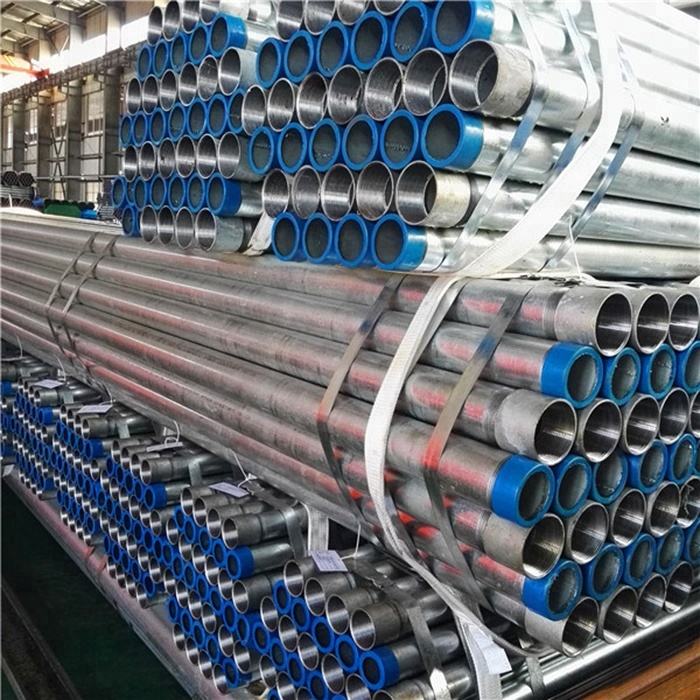
What “Galvanized Steel Pipe” Actually Specifies
Three attributes are fixed the moment the word galvanized is used. Everything else still has to be decided by the buyer, the engineer or the project specification.
- Coating route. The product is supplied in two types: hot dip galvanized steel pipe and pre-galvanized steel pipe. Both are carbon steel products; the difference lies in how the zinc is applied to the base pipe.
- Zinc mass. The stated coating range is 40–275 g/m². Because that band is wide, a purchase order should state the required figure in grams per square metre rather than an adjective such as standard or heavy.
- Base pipe geometry. Outside diameter, wall thickness and length sit underneath the coating decision and are quoted separately.
| Specification field | Stated range for the galvanized steel pipe product |
|---|---|
| Product type | Hot dip galvanized steel pipe; pre-galvanized steel pipe |
| Base material | Carbon steel |
| Outside diameter | 1/2 inch to 8 inch (20–219 mm) |
| Wall thickness | 0.8–2.75 mm |
| Length | 5.8 m, 6 m, random length can be customized |
| Zinc coating | 40–275 g/m² |
| Intended industry | Architecture and infrastructure |
The intended industry for this product is architecture and infrastructure, and typical application scenarios are architecture and infrastructure projects. That scope is a technical boundary as much as a marketing one. A structural or fluid-transport duty inside a building or an urban infrastructure network is not the same duty as a high-pressure transmission mainline, and the specification should reflect which of the two the project actually needs.
The Sourcing Problem: Coating Names Do Not Make Comparable Quotations
At the research stage, three misunderstandings generate most of the rework later in the process.
1. Treating galvanized as a material grade. Galvanizing describes a coating applied to a carbon steel substrate. Two quotations can both say galvanized and still differ on base pipe diameter, wall thickness, length, zinc mass and marking. Until those fields are fixed in writing, the prices are not comparable, and the lower one is not necessarily the cheaper one.
2. Mixing product families in one comparison. Seamless carbon steel pipe, ERW, LSAW and SSAW welded carbon steel pipe, stainless steel pipe and galvanized carbon steel pipe are different product families with different manufacturing routes and different size envelopes. A price for one family says nothing about another, and a size available in one family may be outside the range of another.
3. Interface mismatch between pipe and fittings. Galvanized pipe is normally installed with mating components. The group's application data lists steel pipe fittings as the matched equipment for its steel pipe range, and the wider product programme also covers steel flanges, couplings and dismantling joints. When pipe and fittings are bought against two different specification documents, dimensional and thread mismatches surface on site rather than in the quotation, which is the most expensive place to find them.
Industry Background: A Mainstream Carbon Steel Product
Fortune Business Insights projects the global steel pipe market to reach USD 109.72 billion by the end of 2026, and reports carbon steel pipes at 78.0% of that market in the same year. Seamless pipe held the largest technology segment share at over 66.0% in 2025. The related pipe fittings market was valued at USD 70 billion in 2024 and is projected to reach USD 100 billion by 2030.
The practical reading for a galvanized pipe buyer is that carbon steel dominates the category, so galvanized carbon pipe sits in the mainstream rather than at the edge of it. Supply is not scarce. What separates suppliers is specification discipline: whether the quotation, the certificate pack and the inspection record describe the same physical product.
The standards landscape is where that discipline becomes visible. ASTM A106/A106M covers seamless carbon steel pipe for high-temperature service and states a nominal size range of NPS 1/8 to NPS 48, with nominal wall thickness referenced to ANSI B36.10. API Specification 5L covers seamless and welded line pipe for conveying gas, water, oil and other liquefied media, and includes Product Specification Levels PSL1 and PSL2. U.S. federal pipeline regulation at 49 CFR Part 192 Appendix B identifies both API Spec 5L and ASTM A106/A106M among the incorporated pipe specifications — a United States reference that should not be generalised to other jurisdictions.
Trade classification is a separate decision that frequently confuses import planning. HS 7304 covers seamless tubes, pipes and hollow profiles of iron or steel. HS 7305 covers circular non-seamless tubes and pipes with an external diameter exceeding 406.4 mm. HS 7306 covers other non-seamless tubes, pipes and hollow profiles. A coated product such as galvanized pipe has to be classified against its base pipe, so the three headings cannot be merged into one trade figure without distorting the result.
The Detailed Solution: Custom Galvanized Steel Pipe From One Supply Base
Shanxi Solid Industrial Co., Ltd., trading as Solid Steel Pipes, was established in 2006 and has more than 19 years of operating experience. The group operates 12 factories and 286 production lines, with a manufacturing facility covering 100,000 m², annual production capacity of 300,000 tons, approximately 10,000 staff and an R&D team of around 1,000 technical personnel. Export business accounts for 95% of total sales, with annual export value of USD 130 million; products have been exported to 109 countries and regions, with main markets in Europe, the Middle East, South East Asia, Africa and South America.
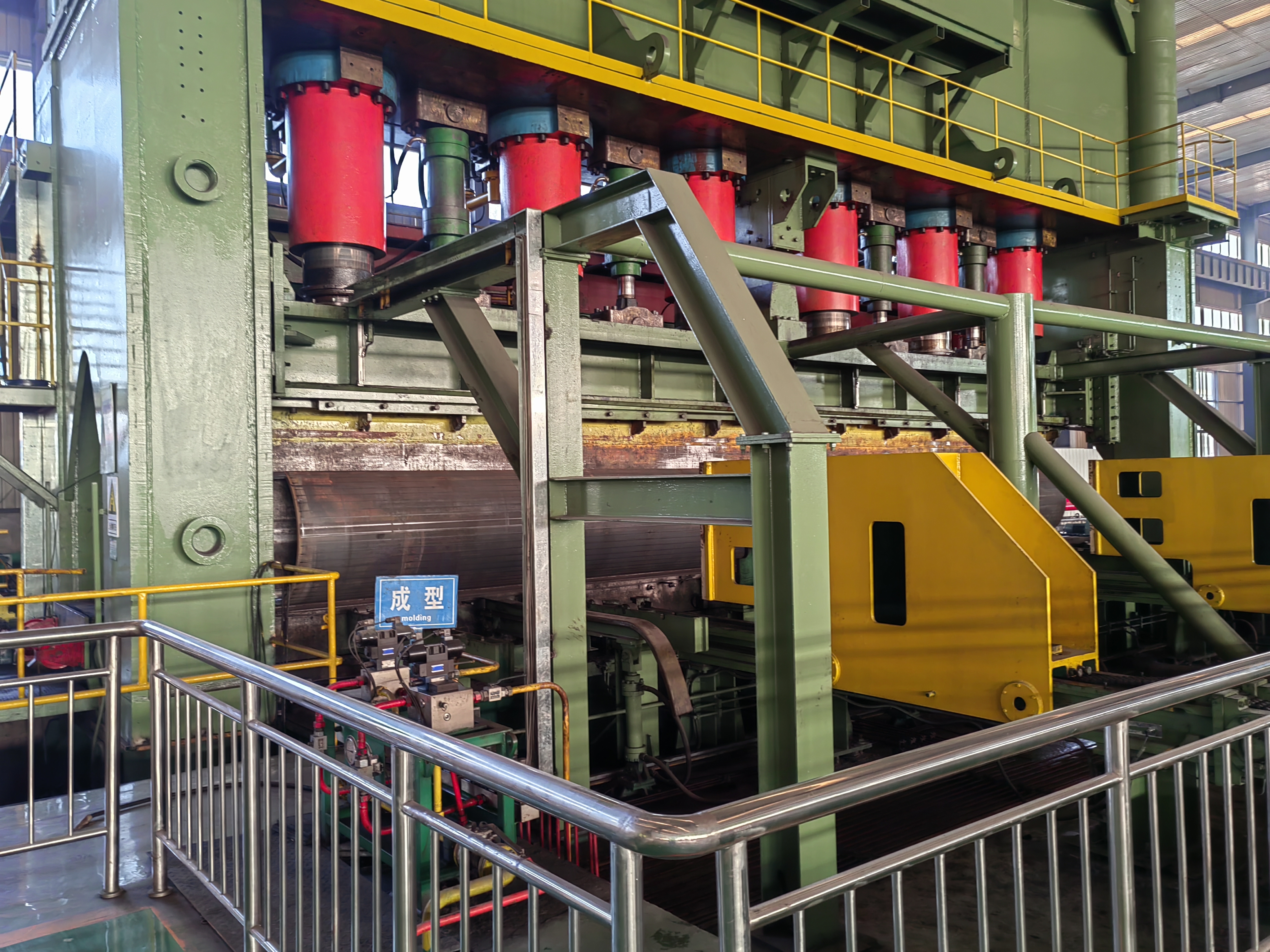
Custom work is organized around drawings and brand requirements. Customized sizes, materials, standards and markings are supported per customer drawings and brand requirements, with consistent quality, on-time delivery and full traceability stated for OEM customers. For galvanized pipe specifically, that translates into a short list of variables a buyer can genuinely control:
- Outside diameter anywhere within 20–219 mm
- Wall thickness anywhere within 0.8–2.75 mm
- Length at 5.8 m, 6 m, or random length on request
- Zinc coating figure within 40–275 g/m²
- Type: hot dip galvanized or pre-galvanized
- Standard designation and marking per drawing
Matching steel pipe fittings, steel flanges, couplings and dismantling joints can be consolidated into the same supply, which removes the interface risk described earlier. Where a project needs a size or duty outside the galvanized envelope, the same supply base lists welded carbon steel pipe from 6 mm to 3000 mm outside diameter in ERW, LSAW and SSAW types, and seamless carbon steel pipe up to 18 inch outside diameter in line pipe, large diameter, structural, precision and mechanical series. The specification conversation can therefore move to another product family without changing supplier.
Step-by-Step: How to Specify and Source Custom Galvanized Steel Pipe
Step 1 — Define the service condition before the product
The group's application data states that most steel pipes are suitable for temperatures ranging from -30 °C to 120 °C, and that strong acid media, strong alkali media and temperatures above 120 °C should be avoided. Medium, operating pressure, indoor or outdoor location, buried or exposed installation and design life all belong in this step, because they decide whether galvanized carbon pipe is the right family at all.
Step 2 — Fix the dimensional envelope
State outside diameter in both millimetres and inches, wall thickness, and length, and say whether random length is acceptable. For the galvanized product the working envelope is 20–219 mm outside diameter with 0.8–2.75 mm wall thickness. Anything outside that envelope should be raised as a separate enquiry rather than assumed.
Step 3 — Specify the zinc coating as a number
The stated range is 40–275 g/m². Put the required figure on the RFQ, together with the acceptance method, instead of relying on words like standard coating. This single field explains more price variation between galvanized quotations than any other.
Step 4 — Confirm the base standard and grade
ASTM A53 is listed as a product standard in the seamless carbon steel pipe range, and A53 and A106 Grade B are listed as available material grades, with other materials available on customer inquiry. For line pipe duties, API Specification 5L applies and the Product Specification Level — PSL1 or PSL2 — should be stated explicitly, because the level drives inspection and documentation requirements rather than the pipe geometry.
Step 5 — Add the mating components and end preparation
Fittings, flanges and couplings belong in the same enquiry as the pipe. Ends should be specified as plain or beveled where relevant, and protective measures such as plastic pipe caps should be agreed where handling damage is a risk. Buying the pipe and the fittings against two documents is the most common cause of site rework on coated pipe systems.
Step 6 — Verify supplier evidence, not supplier adjectives
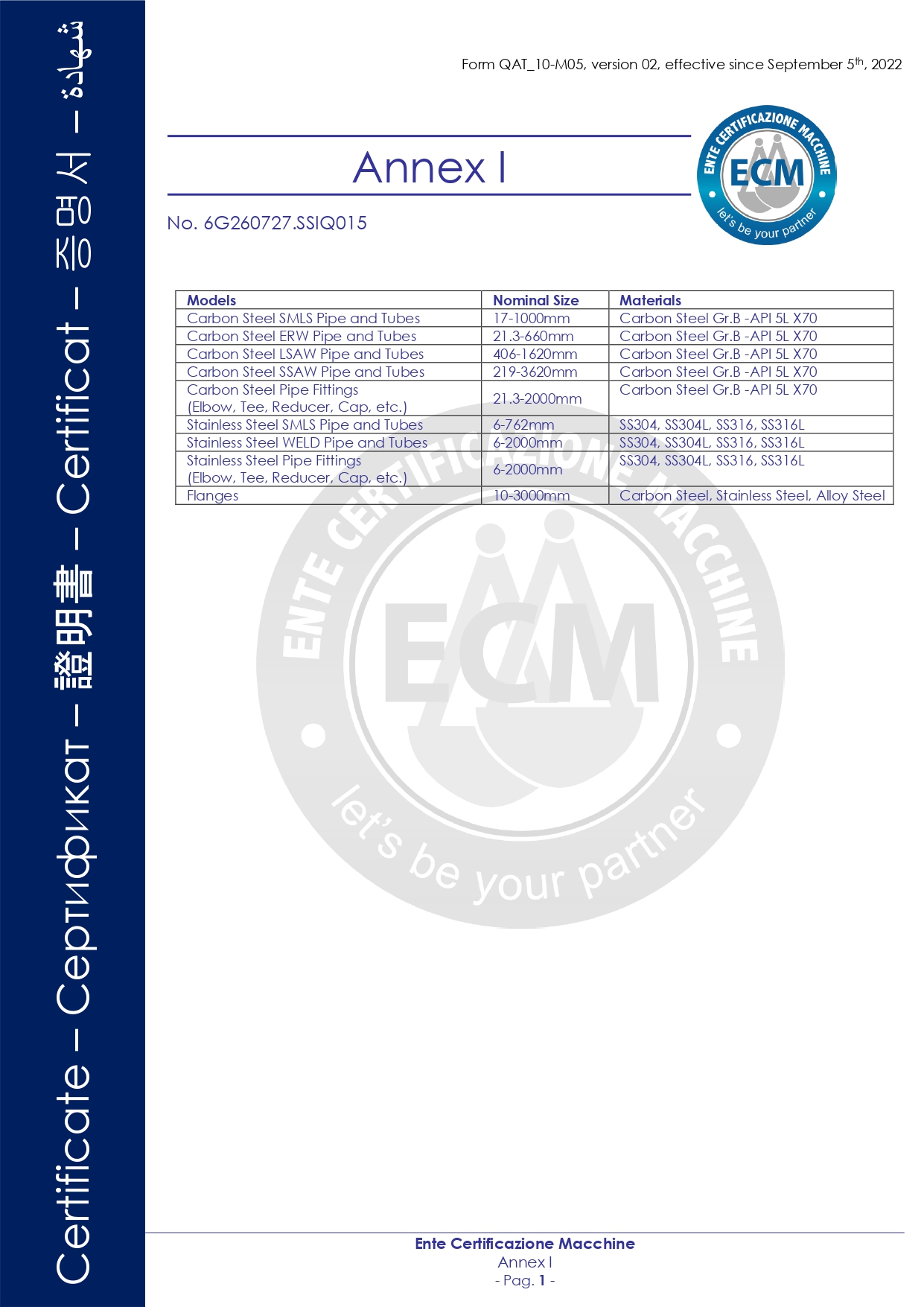
Ask for the CE certificate for steel pipeline products and check that its scope covers the product being quoted. Ask for factory evidence rather than a factory claim: the group operates 12 factories, 286 production lines and a 100,000 m² facility. Ask about inspection practice: inspectors inspect all orders during production and before shipment, and for some orders inspection takes place at the port during loading, so the goods shipped match the goods ordered.
Step 7 — Agree commercial terms and documentation
No specific minimum order quantity is stated for the range; the supplier positions MOQ as flexible in order to meet client demand. Payment terms offered are 100% T/T, 30% in advance with the balance before shipment, letter of credit, or to be discussed. The stated warranty is 12 months. Confirm the inspection documents and traceability records you need before the order is placed, not after production starts.
| RFQ field | What a complete entry looks like |
|---|---|
| Product type | Hot dip galvanized steel pipe or pre-galvanized steel pipe |
| Dimensions | Outside diameter (mm and inch), wall thickness (mm), length (m or random) |
| Coating | Zinc coating figure in g/m² within 40–275 g/m² |
| Base standard and grade | ASTM A53, ASTM A106 Grade B, or API 5L with PSL1/PSL2 stated |
| Mating components | Fittings, flanges, couplings, end finish and protection |
| Evidence pack | CE certificate scope, inspection records, marking requirement |
Use Cases: Where Galvanized Steel Pipe Is Specified
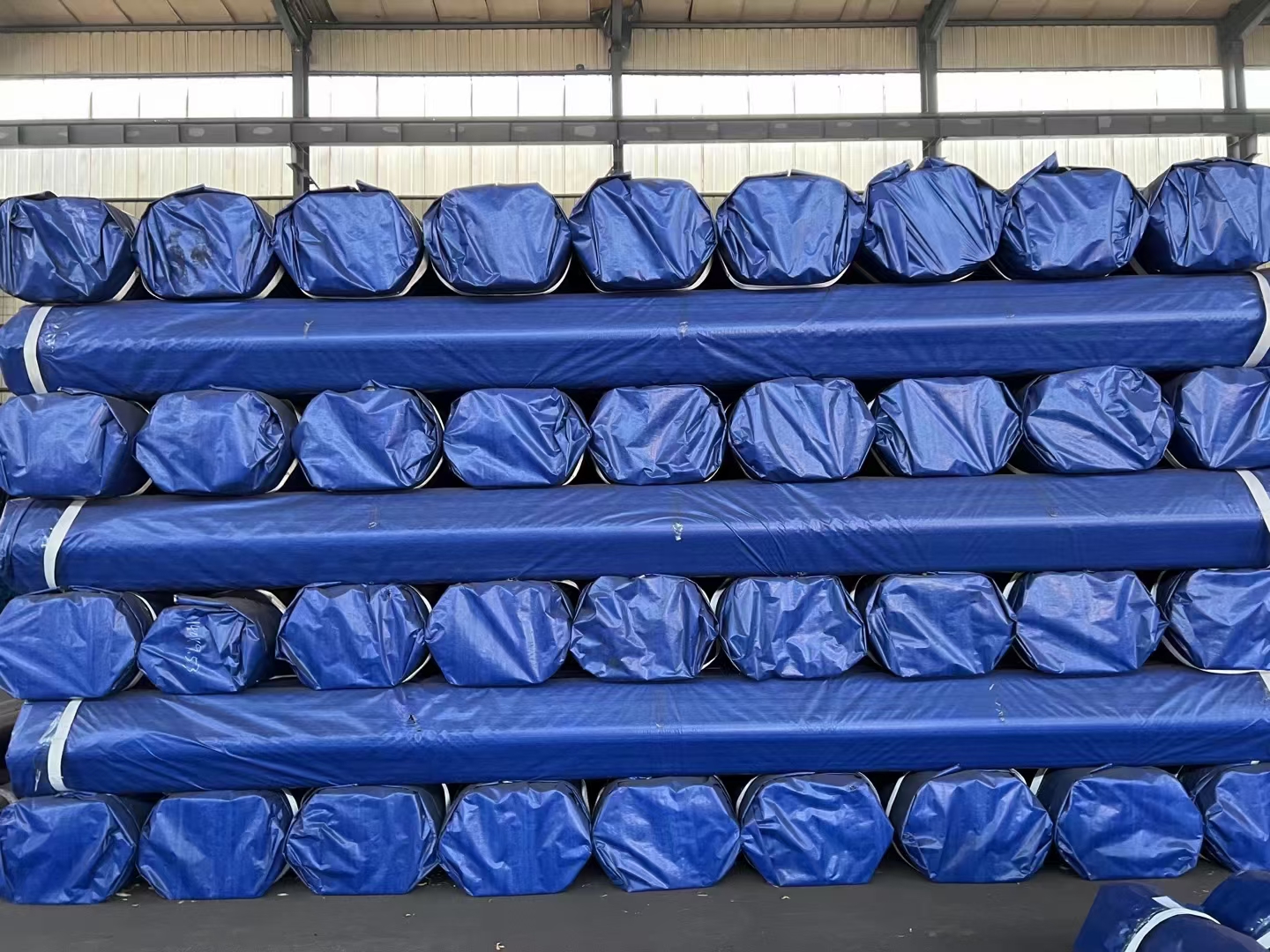
Galvanized steel pipe in the Solid Steel Pipes range is intended for the architecture and infrastructure industry. The documented application profile for the group's steel pipe range is fluid transportation for buildings and urban infrastructure, where the pipe performs two jobs at once: transporting fluid and providing structural support. Installation modes listed include horizontal transportation, vertical transportation, slope transportation and air transportation layouts, and the matched equipment is steel pipe fittings.
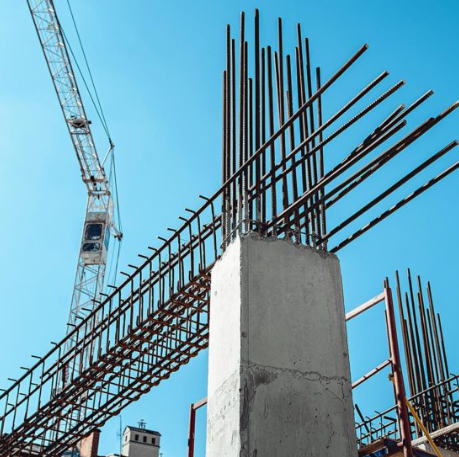
That profile produces a fairly predictable set of duties:
- Building services and urban infrastructure fluid transport, where the pipe runs horizontally, vertically or on a slope through a structure.
- Combined structural and fluid duty, where the same pipe family is used for support as well as conveyance.
- Packaged pipe-and-fittings supply, where dimensional consistency between pipe and fittings matters more than the price of either item alone.
There are also clear boundaries. Strong acid and strong alkali media, and service temperatures above 120 °C, fall outside the documented working condition for the range. Hygienic duties that call for polished stainless surfaces sit in a different product family entirely: the stainless steel pipe and sanitary stainless steel pipe range is listed at 1/2 inch to 12 inch, DN15 to DN200, with 1.5–3 mm wall thickness, mirror or matt polishing, and reference to ASTM A554, A249, A269 and A270. Recognising when the duty has moved out of the galvanized envelope is part of specifying correctly.
Comparison: Galvanized, Seamless Carbon, Welded Carbon and Stainless Steel Pipe
The four families below are all offered within the same supply base, which makes the comparison practical rather than theoretical. All values are the stated product data.
| Product family | Base material | Stated size range | Stated wall thickness | Stated length | Finish / coating |
|---|---|---|---|---|---|
| Galvanized steel pipe (hot dip / pre-galvanized) | Carbon steel | 1/2 inch to 8 inch (20–219 mm) OD | 0.8–2.75 mm | 5.8 m, 6 m, random length on request | Zinc coating 40–275 g/m² |
| Seamless carbon steel pipe | Carbon steel; A53 and A106 Grade B listed | 1/2 inch to 18 inch | 0.8–78 mm | 1 m to 12 m, by customer requirement | Not specified in product data |
| Welded carbon steel pipe (ERW / LSAW / SSAW) | Carbon steel | 6–3000 mm OD | 4–18 mm | 6 m, 9 m, 12 m or per contract | Not specified in product data |
| Stainless steel pipe / sanitary stainless steel pipe | Stainless steel | 1/2 inch to 12 inch, DN15–DN200 | 1.5–3 mm | 6 m, 12 m or as requested | Mirror or matt polishing |
Two observations follow directly from the table. First, the galvanized range is a small-diameter, thin-wall envelope, so large-diameter work naturally moves to welded carbon pipe. Second, seamless pipe covers a much wider wall thickness band, which is why it dominates high-temperature and higher-pressure duties. Neither observation is a quality judgement; they are statements about where each family physically fits.
Standards Commonly Referenced Alongside a Galvanized Pipe RFQ
| Standard | What the published scope states | What to confirm on the order |
|---|---|---|
| ASTM A53 | Listed as a product standard within the seamless carbon steel pipe range; a general-purpose pipe standard | Grade, size, and whether the base pipe is seamless or welded |
| ASTM A106/A106M | Seamless carbon steel pipe for high-temperature service; nominal size NPS 1/8 to NPS 48; wall thickness referenced to ANSI B36.10 | Grade (A106 Grade B is listed as an available grade) and inspection documents |
| API Specification 5L | Seamless and welded line pipe for conveying gas, water, oil and other liquefied media; includes PSL1 and PSL2 | PSL level, grade, and certificates; X65, X70 and X80 are cited as grades typically used for high-pressure trunk lines |
FAQ: Custom Steel Pipe Manufacturers
Does Solid Steel Pipes hold CE certification for steel pipeline products?
Yes. A CE certificate for steel pipeline products is held and available for review. Certification supports a conformity claim, but it does not replace project-specific confirmation: the certificate scope should be checked against the exact product being quoted, and any additional standards, inspection documents or marking requirements should be written into the purchase order.
What can actually be customized on a galvanized steel pipe order?
Customization covers sizes, materials, standards and markings per customer drawings and brand requirements, with full traceability stated for OEM customers. On the galvanized product specifically, the controllable fields are outside diameter within 20–219 mm, wall thickness within 0.8–2.75 mm, length at 5.8 m or 6 m with random length on request, zinc coating within 40–275 g/m², and the choice between hot dip galvanized and pre-galvanized types. Matching fittings, flanges and couplings can be supplied with the same order.
Is there a minimum order quantity, and how are payments handled?
No specific minimum order quantity is stated for the range; the position is that MOQ is set flexibly to meet client demand. Payment options are 100% T/T, 30% in advance with the balance before shipment, letter of credit, or to be discussed. Because price depends heavily on diameter, wall thickness, zinc mass and quantity, a quotation is only meaningful once those fields are fixed.
How is quality controlled, and what warranty applies?
The stated warranty is 12 months. Inspection is built into the production cycle: inspectors inspect all orders during production and before shipment, and for some orders inspection takes place at the port during loading, so that the goods shipped match the goods ordered. Buyers who need third-party inspection or specific documentation should raise it at the enquiry stage so it can be scheduled into production.
How should a buyer shortlist custom steel pipe manufacturers?
Shortlist on evidence rather than on catalogue claims. Confirm the legal entity and operating history, then check the product envelope against your specification — for galvanized pipe that means 20–219 mm outside diameter and 0.8–2.75 mm wall thickness. Verify certification scope, ask for factory evidence such as production lines and facility area, and confirm inspection practice in writing. Shanxi Solid Industrial Co., Ltd. has operated since 2006, runs 12 factories and 286 production lines, holds a CE certificate for steel pipeline products, and exports to 109 countries and regions. The next practical step is to send a complete specification for quotation or to request a sample and catalogue.
Conclusion
Galvanized steel pipe is a coating decision layered on top of a pipe specification, not a substitute for one. Buyers who get the order right tend to fix five things before contacting suppliers: the dimensional envelope, the zinc coating figure in g/m², the base standard and grade, the mating fittings and flanges, and the evidence pack they expect to receive with the goods.
Within the Solid Steel Pipes range, the galvanized product is a carbon steel pipe supplied hot dip galvanized or pre-galvanized, from 1/2 inch to 8 inch outside diameter, 0.8–2.75 mm wall thickness, in 5.8 m or 6 m lengths with random lengths available, and with a zinc coating of 40–275 g/m². Around it sits a broader supply base: seamless carbon steel pipe up to 18 inch, welded carbon steel pipe from 6 mm to 3000 mm, stainless and sanitary stainless steel pipe, plus fittings, flanges and couplings from a manufacturer operating since 2006 with 12 factories and 286 production lines.
Next step: quote, sample or catalogue
Send your galvanized pipe specification — outside diameter, wall thickness, length, zinc coating, standard and grade — and the team will confirm what is feasible and what it costs. A sample or a catalogue request works just as well as a starting point.
Website: www.solidsteelpipeline.com
Brochure download: Solid steel pipe catalogue (PDF)
Email: solidpipeline@aliyun.com / solidsteelpipeline@aliyun.com / info@cnsolid.com
Tel: +86 351 8390 369 | WhatsApp: +86 18534658608 | Skype: shanxisolid
Have Questions or Need More Details?
Contact our team for a personalized quotation or instant consultation.
Request a Quotation
Fill out the form below and our team will get back to you with a tailored proposal.
WhatsApp Direct Chat
Prefer to chat in real-time? Message us on WhatsApp for instant assistance & quick answers.
- Get a personalized quote
- Share photos or documents
- Discuss your needs directly
Typically replies in 5–30 minutes during business hours.