
SS304 Stainless Steel Pipe: A Custom Steel Pipes Guide
SS304 stainless steel pipe is a pipe produced from Type 304 austenitic stainless steel and specified by outside diameter, wall thickness, length, surface finish and end treatment — not by grade name alone. Buyers who begin researching custom steel pipes usually meet SS304 early, because it is a commonly requested grade wherever a line has to resist corrosion, stay cleanable, or outlast a painted carbon steel alternative without a repainting cycle.
In trade documents the grade appears as SS304, Type 304 or 304, and all three refer to the same austenitic stainless family. The pipe itself is a separate decision. A 304 tube for a sanitary process line, a 304 tube for exposed architectural work and a 304 tube for a wash-down header may share a grade and still differ in standard, tolerance, finish and inspection documents. That gap between "we need SS304" and a purchase order a mill can actually run is where first-time buyers lose the most time.
This guide covers four things a research-stage buyer needs: what SS304 pipe is in commercial terms, how a stainless range is dimensioned and certified in practice, how to write a specification that can be quoted without clarification emails, and where SS304 is — and is not — the sensible choice compared with the carbon steel and galvanized families that carry most steel pipe volume.
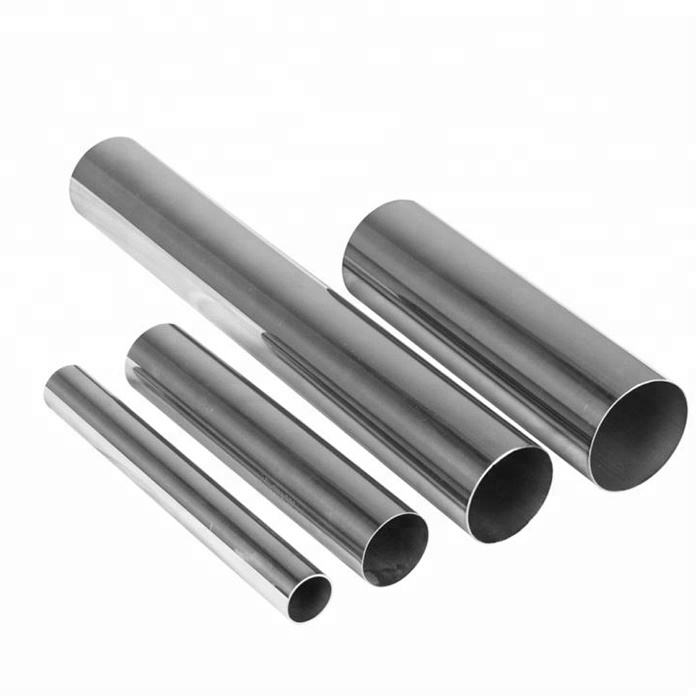
Short answer: SS304 pipe is an austenitic stainless steel pipe supplied in round and rectangular sections. In the Solid Steel Pipes stainless range it is offered from 1/2″ to 12″ (DN15–DN200) with 1.5 mm to 3 mm wall thickness, referenced to ASTM A554, A249, A269 or A270, with mirror or matt polishing, in 6 m, 12 m or customer-requested lengths. Grade, standard, size, finish and documentation must all appear on the enquiry.
The Problem: SS304 Is Easy to Name and Hard to Specify
SS304 is one of the few material grades a buyer can name before knowing anything else about the project. That is also the source of most early-stage errors. The grade answers a corrosion question, but it does not answer the dimensional, standard, finish, inspection or commercial questions that decide whether the delivered pipe actually fits.
Four specification gaps appear repeatedly at the discovery stage:
- Grade is mistaken for standard. SS304 describes the material. ASTM A554, A249, A269 and A270 describe product and testing expectations for stainless pipe and tube. Which one applies is an application decision, not a grade decision.
- Size is written as a nominal bore only. A DN or inch call-out without wall thickness leaves both pressure capability and fitting match undefined. In the stainless range above, wall thickness runs from 1.5 mm to 3 mm — a spread wide enough to change the pipe materially.
- Surface finish is left to the supplier. Mirror and matt polishing are different production routes, with different handling requirements and different visible results.
- Documentation is discussed after the price. Inspection records, certificates and traceability cost far less when they are in the original enquiry than when they are requested after production.
There is a fifth, quieter problem. Published grade-specific data is thin across the whole category. Most suppliers describe a stainless range in general terms and confirm the exact grade only at quotation. That is not automatically a warning sign — it reflects how many grade, size and finish combinations exist — but it does mean the buyer has to force the specification conversation early rather than assume the catalogue is the answer.
A specification is complete when a mill can quote it without asking a question. In practical terms that means: grade (SS304), product standard, outside diameter, wall thickness, length, surface finish, end treatment, quantity, inspection and certification requirements, marking, packing and delivery terms. Anything missing from that list returns as a clarification email — or, worse, as pipe that technically matches the order and does not match the job.
Industry Background: Where SS304 Pipes Sit in the Steel Pipe Market
Steel pipe is a carbon steel business by volume, and stainless is a specification-driven niche inside it. Fortune Business Insights projects the global steel pipes market to reach USD 109.72 billion by the end of 2026, and the same research places carbon steel pipe at a 78.0% share of that market in 2026, with seamless pipe holding over 66.0% of the technology segment in 2025. Reported market sizes for this category vary between studies because "steel pipe" and "steel pipe and tube" are scoped differently, so the useful reading is the shape of the market rather than a single decimal place.
That shape explains where SS304 wins. Carbon steel is the default for line pipe, structural tube and large-diameter transmission because it is available, weldable and economical at scale. Stainless becomes the deciding specification when the cost of corrosion, contamination or maintenance outweighs the material premium: sanitary process lines, potable and process water systems, food and beverage piping, exposed architectural tube and wash-down environments.
The standards framework around the category is well documented and worth knowing even when the current enquiry is stainless. ASTM A106 covers seamless carbon steel pipe for high-temperature service in NPS 1/8 to NPS 48, with nominal wall thickness referenced to ANSI B36.10. API Specification 5L covers seamless and welded line pipe for conveying gas, water, oil and other liquefied media, and includes Product Specification Levels PSL1 and PSL2. In the United States, 49 CFR Part 192 Appendix B lists both API 5L and ASTM A106/A106M among the pipe specifications incorporated for covered pipeline applications — a reminder that standard selection can be a regulatory question, not only a technical preference.
For importers and distributors, classification matters as well. HS 7304 covers seamless tubes, pipes and hollow profiles of iron or steel; HS 7305 covers non-seamless circular pipe with external diameter exceeding 406.4 mm; HS 7306 covers other non-seamless welded products. The three headings describe different product scopes and should not be combined into one trade figure.
The fittings market around this category is valued at USD 70 billion in 2024 and projected to reach USD 100 billion by 2030 in the same research family. That is directly relevant to SS304 buyers, because a stainless line is usually bought as a system of pipe, fittings and flanges rather than as pipe alone, and mismatched purchase channels are a common source of fit-up problems.
Against that background, the practical question for a research-stage buyer is not whether stainless is growing. It is which stainless range can be delivered to a given specification, with documents, at a predictable time. That is a supplier question, and it is answered by published range data, manufacturing capability and documentation practice rather than by market forecasts.
The Solution: The Stainless Range and Manufacturing Base Behind It
Solid Steel Pipes is the brand under which Shanxi Solid Industrial Co., Ltd. manufactures and exports steel pipe, pipe fittings and flanges in carbon steel, alloy steel and stainless steel. The company was established in 2006 in Shanxi, China — a region with resources of pig iron, coke and steel — and has more than 19 years of operating experience in the category.
Export is the core of the business: approximately 95% of products are exported, annual export value is USD 130 million, and products have been shipped to 109 countries and regions. Main markets are Europe, the Middle East, South East Asia, Africa and South America, served for more than 20 years.
Dimensions and lengths
The published stainless steel pipe range runs from 1/2″ to 12″ (DN15–DN200) with wall thickness of 1.5 mm to 3 mm. Customized pipe sizes are available within that range, and lengths are supplied at 6 m, 12 m or as customers request. Two product types are offered under the same range: Stainless Steel Pipe and Sanitary Stainless Steel Pipe.
For an SS304 enquiry, the dimensional conversation should fix outside diameter, wall thickness and length before price. A 1/2″ call-out with an unstated wall can resolve to more than one commercial tube, and the difference shows up in fitting fit-up, weight per metre and pressure capability.
Standards and surface finish
Stainless pipe in this range is referenced to ASTM A554, A249, A269 and A270, with mirror or matt polishing as the surface treatment options. Which of those standards applies depends on the service: the standard is part of the specification, and a supplier cannot responsibly choose it on the buyer's behalf without knowing the application. The workable approach is to describe the application, let the supplier confirm which referenced standard it will run, and then hold that standard in the purchase order and in the inspection documents.
Custom and OEM supply
Beyond catalogue dimensions, the company supports customized sizes, materials, standards and markings per customer drawings and brand requirements, with the stated aim of consistent quality, on-time delivery and full traceability for global OEM customers. This is where SS304 orders typically become project orders rather than stock orders: a distributor's brand marking, a fabricator's cut lengths, or a contractor's mixed pipe-and-fitting package can all be handled inside one supply relationship.
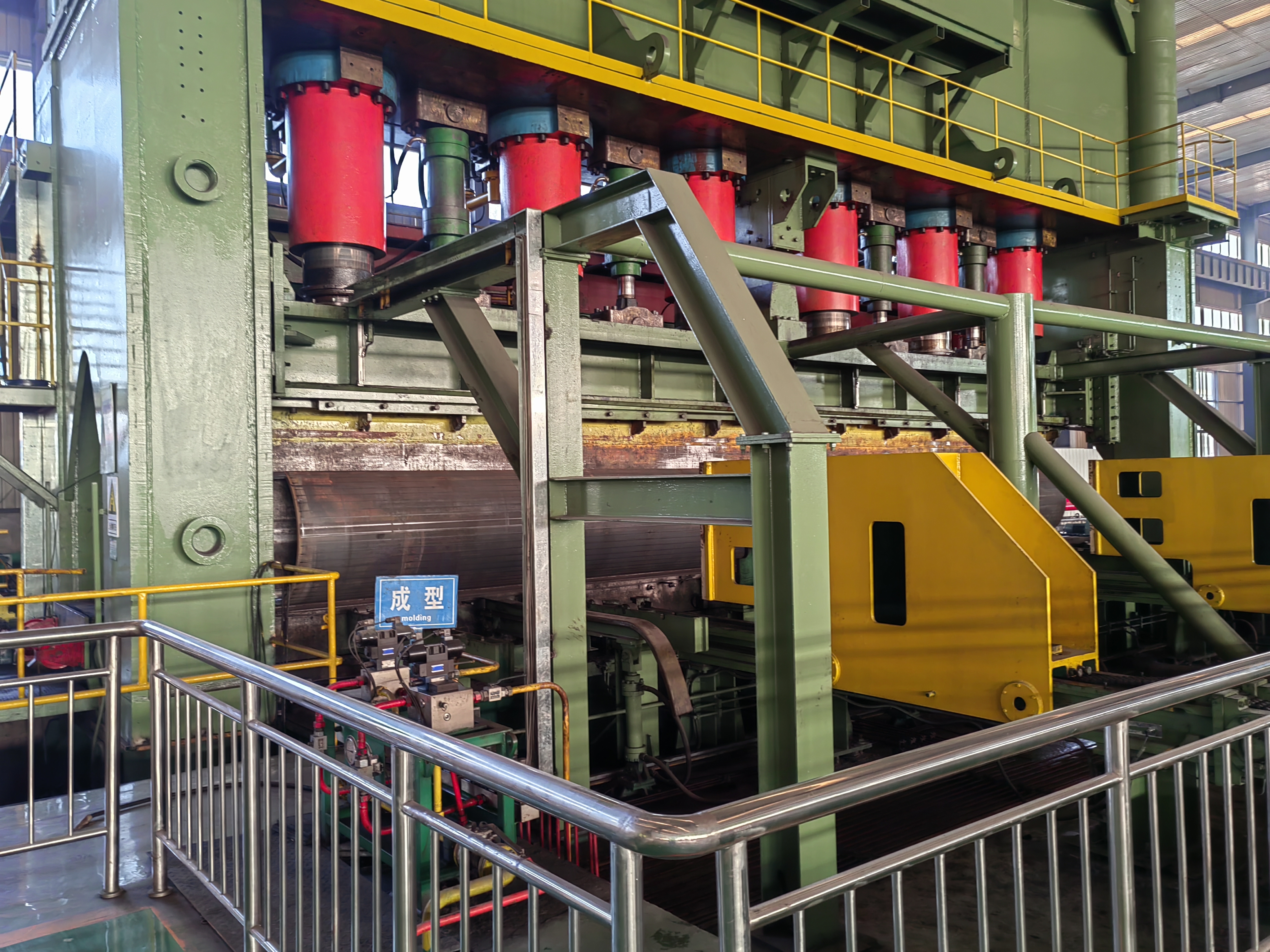
The capacity behind that offer is large by pipe standards: 12 factories, 286 production lines, a 100,000 m² manufacturing facility, annual production capacity of 300,000 tons and approximately 10,000 staff, including about 1,000 technical personnel in the R&D team. Those figures describe the group's overall manufacturing base rather than the stainless line alone, but they explain why custom runs are a routine part of the offer rather than an exception.
Where the published data stops
One boundary is worth stating plainly. The grade list for stainless pipe is not published line by line. The range, dimensions, standards and finishes are documented; confirmation that a specific order will be produced in SS304 — and which certificate will accompany it — comes at quotation. Buyers should treat that as a normal verification step and put the question in writing, rather than infer the grade from a product photograph or a category page.
Step-by-Step: Specifying and Sourcing an SS304 Pipe Order
The sequence below turns a grade name into a quotable order. Each step adds one piece of information a mill cannot guess.
- Define the service condition. Start with medium, temperature, pressure and corrosion environment. Solid's published application data for building and infrastructure piping lists a working-condition range of −30 °C to 120 °C, with the requirement to keep away from strong acid, strong alkali media and temperatures above 120 °C. If the line runs outside those conditions, say so at enquiry stage rather than after drawing approval.
- Choose grade and standard together. SS304 answers the corrosion question; ASTM A554, A249, A269 or A270 answers the product and testing question. Write both into the specification, and record which standard the supplier confirmed.
- Fix diameter, wall and length. State outside diameter, wall thickness and cut length. Within this range that means 1/2″–12″ (DN15–DN200), 1.5 mm–3 mm wall, and 6 m, 12 m or a specified length.
- Set finish and end treatment. Choose mirror or matt polishing, then state whether ends are prepared for welding, threading or flanging, and how they are protected for shipment.
- Specify fittings and flanges with the pipe. A stainless line is a system. Buying pipe from one source and fittings from another is a common cause of mismatch, and the same uncertainty applies to the fitting standard where grade-specific data is not published. Solid's product range includes carbon steel pipe fittings, steel flanges, malleable iron pipe fittings, couplings and valves, so much of the system can be quoted together.
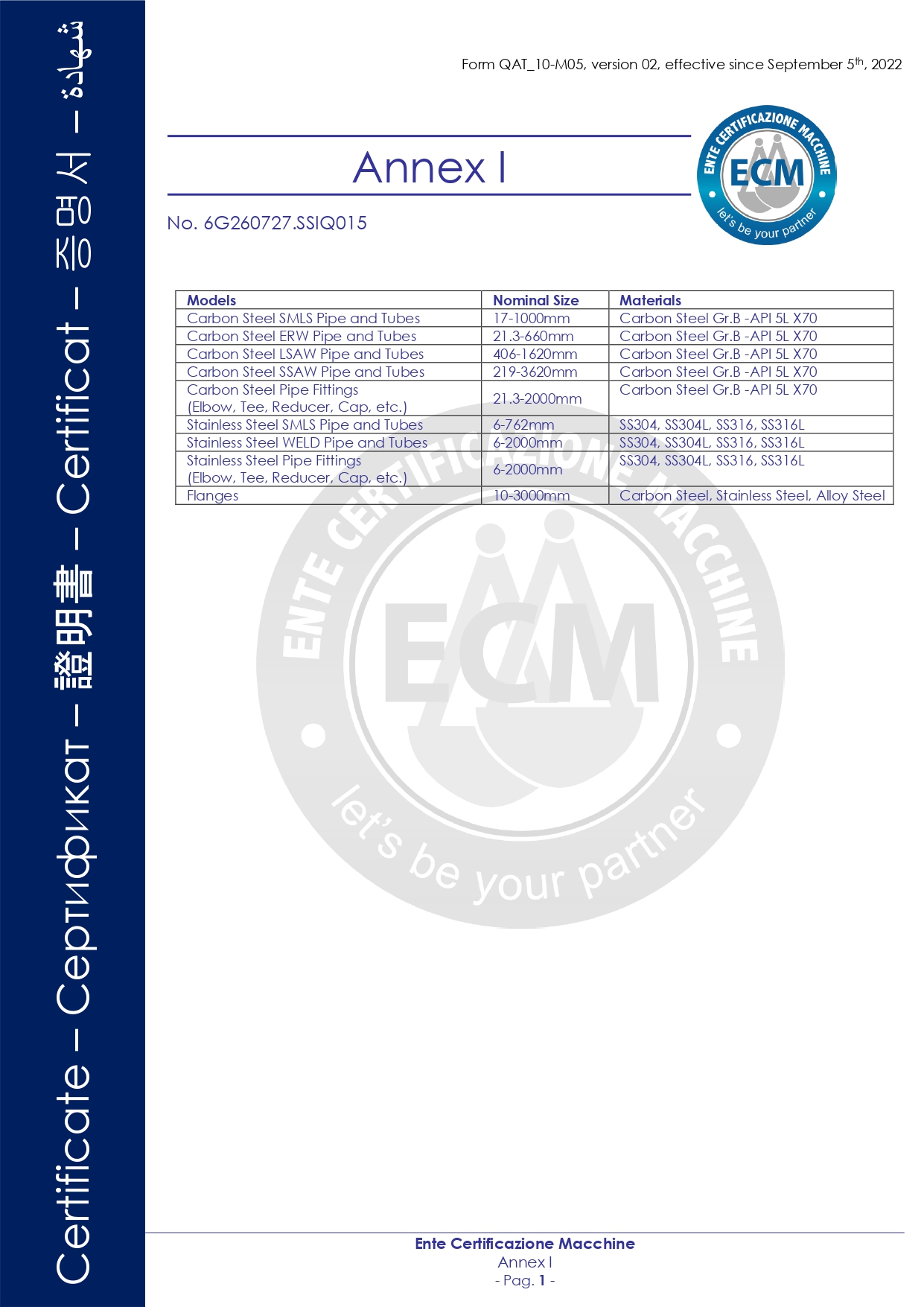
- Agree documentation before price. Ask for the certificate package, inspection records and traceability documents with the quotation. Solid holds CE certification for steel pipeline products and states that inspectors check all orders during production and before shipment, with loading inspection at port for some orders.
- Confirm commercial terms and delivery. Published payment terms are 100% T/T; 30% in advance with the balance before shipment; letter of credit; or to be discussed. The company states that there is no specific MOQ for its products and that quality is covered by a 12-month warranty.
Steps 1 to 3 decide whether the order is technically possible. Steps 5 to 7 decide whether it arrives as specified. Most disputes that look like quality problems trace back to a step that was skipped rather than a mill that failed.
Use Cases: Where SS304 Pipe Is the Right Choice
Sanitary and process lines
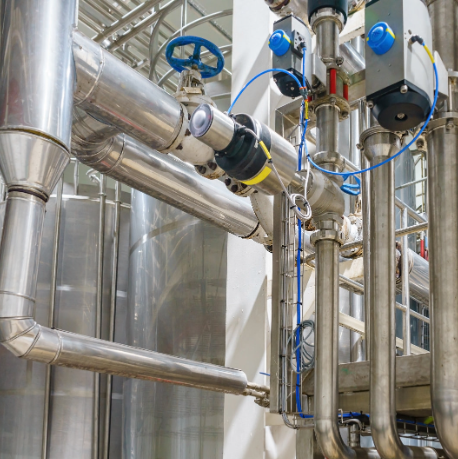
The sanitary stainless variant in this range is designed for sanitary piping scenarios, where a smooth, polished bore and a cleanable surface matter as much as pressure capability. Mirror or matt polishing is fixed at order stage, and the standard reference should follow the hygiene requirement of the process rather than the grade alone. For food, beverage and pharmaceutical-adjacent duty, the finish specification is often the detail that decides whether the line passes inspection.
Building and infrastructure fluid transport
The company's application data covers fluid transportation for buildings and urban infrastructure, with horizontal, vertical, slope and air transport modes and steel pipe fittings as the matched equipment. In these systems SS304 is normally chosen where potable water quality, condensation control or a long service life without repainting justify the material cost — for example riser lines, plant rooms and exposed service corridors.
Corrosion-exposed architectural and industrial work
Exposed tube, wash-down areas and coastal installations are the classic stainless cases: the pipe is visible, the environment is aggressive, and repainting is either impossible or expensive. ASTM A554-referenced tube is the usual starting point for visible work, with the finish selected for appearance as well as corrosion resistance.
Where SS304 is not the default
For oil and gas transmission, the governing specification is normally API 5L line pipe; for high-temperature service it is commonly ASTM A106 seamless carbon steel. Both are carbon steel families. SS304 is not a substitute for those specifications in mainline duty. It is selected where the corrosion environment, hygiene requirement or appearance — not the transmission specification — is the deciding factor. Buyers who need API 5L or A106 material should specify it directly rather than adapt a stainless enquiry, and buyers who need very large diameters should note that the stainless range ends at 12″ while the welded carbon steel range reaches 3000 mm outside diameter.
Comparison: SS304 Pipe Against Other Pipe Families
The table below uses only the materials, dimensions and standards published for Solid's pipe ranges, so it compares what can actually be quoted rather than a theoretical catalogue.
| Pipe family | Material | Standards referenced in the published range | Size range published | Typical fit | Buyer note |
|---|---|---|---|---|---|
| Stainless Steel Pipe (incl. Sanitary Stainless Steel Pipe) | Stainless steel (SS304 grade to be confirmed per order) | ASTM A554, A249, A269, A270; mirror or matt polishing | 1/2″–12″ (DN15–DN200), wall 1.5–3 mm, 6 m / 12 m / as requested | Sanitary, potable and process water, exposed architectural and corrosion-sensitive lines | State grade, standard and finish on the RFQ; confirm certificate at quotation |
| Seamless Carbon Steel Pipe | Carbon steel | ASTM A53, BS1387-1985, GB/T3091-2001, EN39, BS1139; grades A53 / A106 Grade B and other materials on request | 1/2″–18″, wall 0.8–78 mm, 1–12 m | Line pipe, large-diameter, structural, precision and mechanical service | ASTM A106 itself covers seamless pipe for high-temperature service, NPS 1/8–48 |
| Welded Carbon Steel Pipe (ERW / LSAW / SSAW) | Carbon steel | GB / SY / DIN / ASTM / ASME / ANSI / API | Outside diameter 6–3000 mm, wall 4–18 mm, 6 / 9 / 12 m or per contract | Large-diameter transmission, structural and infrastructure piping | Ends plain or beveled, with plastic pipe cap protection available |
| Galvanized Steel Pipe | Carbon steel with zinc coating | Hot dip galvanized and pre-galvanized types | Outside diameter 1/2″–8″ (20–219 mm), wall 0.8–2.75 mm, zinc 40–275 g/m² | Architecture and infrastructure piping | Zinc coating class must be stated, since it drives service life |
Reading the table: the carbon steel families carry the volume — 78.0% of the market in carbon steel and over 66.0% of the technology segment in seamless pipe in the cited research — but volume is not the same as fit. SS304 competes on corrosion resistance and cleanliness, not on price per metre, and its 12″ upper limit means large-diameter transmission work belongs to the welded carbon steel range.
Frequently Asked Questions
Solid's stainless steel pipe range is published against ASTM A554, A249, A269 and A270, with mirror or matt polishing as surface options. These are the standards documented for the range; which one applies depends on the end use, so grade, standard, size, wall thickness and finish should all appear on the purchase order and on the inspection documents. For comparison, carbon steel specifications are narrower in scope: ASTM A106 covers seamless carbon steel pipe for high-temperature service in NPS 1/8 to NPS 48, while API 5L covers seamless and welded line pipe for gas, water, oil and other liquefied media with PSL1 and PSL2 levels. Both are referenced in U.S. 49 CFR Part 192 Appendix B for covered pipeline applications. Solid also holds CE certification for steel pipeline products.
Within the stainless range, customized pipe sizes are available from 1/2″ to 12″ (DN15–DN200), with wall thickness of 1.5 mm to 3 mm and lengths of 6 m, 12 m or as requested. Beyond catalogue dimensions, Solid supports customized sizes, materials, standards and markings per customer drawings and brand requirements, with full traceability for OEM customers. The manufacturing base behind this includes 12 factories, 286 production lines, a 100,000 m² facility, 300,000 tons of annual capacity and approximately 1,000 technical personnel. Because the grade list itself is not published line by line, confirm SS304 availability and the accompanying certificate at quotation.
No public price list exists for this category, because cost is set by grade, outside diameter, wall thickness, length, surface finish (mirror versus matt), end treatment, quantity, documentation and delivery terms. Comparable quotations therefore have to be normalized on the same specification before they are compared. On commercial terms, Solid publishes payment options of 100% T/T, 30% in advance with the balance before shipment, letter of credit, or terms to be discussed, and states that there is no specific MOQ for its products.
Validation starts with documentation: request the certificate package, inspection records and traceability documents with the quotation, and confirm the SS304 grade in writing. Solid states that inspectors check all orders during production and before shipment, and that for some orders inspectors attend the loading process at the port to make sure the goods shipped match the order. A 12-month warranty applies, and CE certification for steel pipeline products is held. Because the company states there is no specific MOQ, a small validation quantity can be discussed with the sales team before a full production run — confirm size, grade, finish and documentation for that quantity in writing.
Fixed lead times are not published, because schedule depends on size, wall thickness, cut length, finish, quantity and whether fittings or flanges are bundled into the same order. Pipes are produced to 6 m, 12 m or customer-requested lengths, so the production and delivery schedule should be confirmed in the RFQ rather than assumed from a catalogue. To start, send a specification covering grade (SS304), outside diameter, wall thickness, length, surface finish, end treatment, applicable standard, quantity and destination to solidpipeline@aliyun.com or info@cnsolid.com, or contact the team on WhatsApp at +86 18534658608; the company brochure can be downloaded from the link at the end of this article.
Conclusion
SS304 stainless steel pipe is a specification, not a shorthand. The grade decides corrosion behaviour; the standard, dimensions, finish, end treatment and documentation decide whether the pipe fits the line it was bought for. Buyers who separate those decisions early get quotations they can compare, deliveries that match drawings, and an audit trail that survives inspection.
Within that framework, the practical facts are simple. The Solid Steel Pipes stainless range covers 1/2″–12″ (DN15–DN200) with 1.5–3 mm wall, ASTM A554, A249, A269 and A270 references, mirror or matt polishing, and 6 m, 12 m or custom lengths, backed by a manufacturing base of 12 factories, 286 production lines and 300,000 tons of annual capacity, an export record in 109 countries, CE certification for steel pipeline products and a stated 12-month warranty. Where the line calls for API 5L or ASTM A106 carbon steel instead, that should be specified directly — the two families solve different problems, and the right answer depends on the service condition rather than on the grade that sounds most durable.
Send your specification — grade, outside diameter, wall thickness, length, surface finish, standard and quantity — and the team will confirm technical feasibility, documentation and delivery terms in writing.
Email: solidpipeline@aliyun.com / info@cnsolid.com | Tel: +86 351 8390 369 | WhatsApp: +86 18534658608 | Skype: shanxisolid
Website: www.solidsteelpipeline.com | Brochure: Download the Solid Steel Pipes catalogue (PDF)
Company address: 1501, Building B, Dingyuan Shidai Zhongxin, Yingzenanjie, Taiyuan, Shanxi, China.
Have Questions or Need More Details?
Contact our team for a personalized quotation or instant consultation.
Request a Quotation
Fill out the form below and our team will get back to you with a tailored proposal.
WhatsApp Direct Chat
Prefer to chat in real-time? Message us on WhatsApp for instant assistance & quick answers.
- Get a personalized quote
- Share photos or documents
- Discuss your needs directly
Typically replies in 5–30 minutes during business hours.