
4-Axis Palletizing Robot vs Imported Brands: Cost, MTBF, Service
The SCH100-1950-1800 4-axis palletizing robot and an imported-brand palletizing robot are close enough in throughput that efficiency should not decide the order. The supplied comparison data for this machine describes efficiency as comparable to imported brands and places the decision in three other numbers: an MTBF of 80,000 hours against more than 100,000 hours for imported brands, an on-site maintenance response of 24 hours against 72 hours, and a purchase cost lower than imported brands with a custom lead time of 7–15 days against 20–30 days.
For a cost-sensitive manufacturer at the decision stage, that is a pricing problem rather than a specification problem. The imported machine buys a longer mean interval between failures; the SCH100-1950-1800 buys capital headroom and a shorter recovery window. The useful question is what each is worth on your duty cycle, and that can be answered with arithmetic rather than adjectives. This guide converts the stated figures into planning numbers, labels every derived value as calculated, and sets out the conditions under which each option stops being the rational choice.
What this comparison covers — and what it does not
The SCH100-1950-1800 is a four-axis palletizing robot built by South China Robotics Technology (Guangdong) Co., Ltd., an industrial robotics and automation company founded in 2017 in Huadu District, Guangzhou. The company reports a 40,000 m² manufacturing site, 180 employees, an annual output of 3,000 units and a 48-engineer R&D team, with a 40% export ratio across Europe, the Middle East, Southeast Asia, South Asia, Latin America and North America. It both manufactures robots and integrates robot cells, covering gripper design, installation, commissioning, technical training and after-sales maintenance.
Two scope limits belong at the front of this article. First, “imported brands” is a benchmark category in the supplied comparison data, not the result of a bench test on a named competitor model; the imported-side MTBF, response and lead-time values are comparison benchmarks supplied with the product data. Second, the figures for the SCH100-1950-1800 come from the same product data. Both sides therefore deserve the same verification level — datasheet, acceptance test or written warranty — before a purchase order, and the decision logic below is built so it survives a revision of any single figure during negotiation.
Definitions used throughout: MTBF (mean time between failures) is the average operating interval between failures across a population of units under stated conditions. It is not a warranty period and not a prediction for one specific machine. Response time is the interval from a reported fault to service arrival; it does not include diagnosis, spare-part lead time or repair.
Why the decision is harder than the quotation
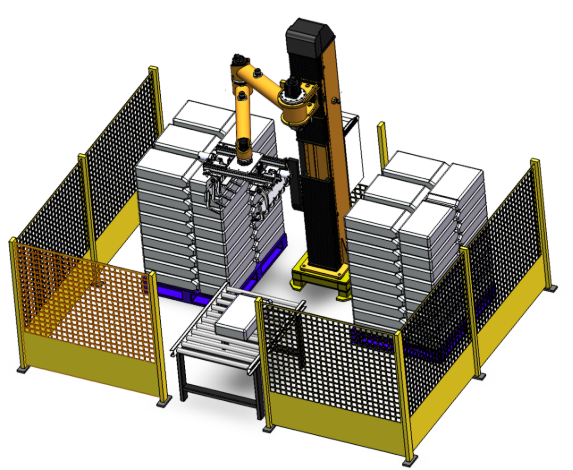
Palletizing projects are normally compared on purchase price, because that is the only number that appears on the quotation. The cost that decides the outcome is spread across three lines: capital cost, the expected cost of stoppages over the planned service life, and the cost of recovering from each stoppage — a function of service response, spare-part availability and how much of the line stops with the robot.
Cost-sensitive buyers usually err in one of two directions. The first mistake is optimizing only the capital line and accepting an open-ended recovery risk, an exposure that can exceed the price difference within one bad quarter. The second is the opposite: treating a lower MTBF as disqualifying without converting it into the duty hours the plant actually runs. A line operating 4,000 hours a year meets an 80,000-hour mean interval very differently from a line running 8,000 hours a year for twelve years.
The supplied data states that reliability is comparable to imported brands while recording a lower MTBF. Those statements describe different things — field reliability inside the intended application envelope versus one mean-interval metric. That is not a contradiction to be argued away; it is a reason to ask for the failure definition, the test population and the maintenance regime behind both numbers.
Industry background: why palletizing is a price-driven purchase in 2026
Supply conditions explain why this comparison happens at all. The International Federation of Robotics reports that China installed 295,045 industrial robots in 2024 and accounted for 54% of global installations (IFR, World Robotics 2025). The Department of Industry and Information Technology of Guangdong Province reports 246,800 industrial robots produced in Guangdong in 2024, equal to 44% of the national total. Grand View Research places the handling segment — which includes palletizing and depalletizing — at a 42.1% share of the market in 2025, and Fortune Business Insights projects the robotic palletizer and depalletizer segment at USD 4.67 billion in 2026, a commercial research projection rather than a measured outcome.
The practical reading for a buyer is narrower than the market headlines. A dense domestic supply base means several qualified bidders per project, so technical differentiation compresses and commercial competition shifts to service coverage, customization speed and total cost. It also shifts verification work to the buyer: segment-level statistics say nothing about the reliability of one model on one line.
Safety scope follows the same logic. EN ISO 10218-1 covers industrial robots and EN ISO 10218-2 covers applications such as robot systems and robot cells, so requirements exist at both the arm and the cell level. A palletizing purchase should therefore be evaluated as a cell — robot, gripper, guarding, interlock and commissioning — and the current edition and national adoption must be confirmed for the destination market before any compliance statement is made.
MTBF at 24/7: turning 80,000 hours into a planning number
The comparison states a mean time between failures of 80,000 hours for the SCH100-1950-1800 and more than 100,000 hours for imported brands, and the product is rated for 24-hour continuous operation. At that duty level the figures convert as follows (calculated, assuming uninterrupted 24-hour running and using the 100,000-hour benchmark for the imported side):
- 80,000 hours ÷ 24 = 3,333 days, about 9.1 years of continuous running between failures on average.
- 100,000 hours ÷ 24 = 4,167 days, about 11.4 years.
- Gap: at least 20,000 hours, about 833 days, or roughly 2.3 years of continuous 24/7 operation.
- Failure frequency: 12.5 events per million operating hours at 80,000 hours MTBF, against 10 events per million hours at 100,000 hours — a difference of 2.5 events per million hours (calculated as 1,000,000 ÷ MTBF).
The decision test sits in the word “mean.” A single-shift plant running 8 hours a day for 250 days a year accumulates 2,000 operating hours a year; over ten years that is 20,000 hours, a quarter of the stated MTBF. On that duty cycle the difference between 80,000 and 100,000 hours is unlikely to bind inside the planning horizon, and price plus service should dominate. A plant running 24 hours a day for 350 days a year accumulates 8,400 hours a year; over twelve years that is 100,800 hours, at which point both figures fall inside the horizon and the imported reliability advantage becomes a real, quantifiable asset rather than a datasheet line.
Two qualifiers keep this honest. MTBF is a population statistic, so a plant with a single machine may never observe the mean, and load, dust, ambient temperature and maintenance quality move the observed value substantially. A longer mean interval also reduces how often you face a stoppage; it does not shorten the stoppage once it happens. That is the separate question the next section answers.
Service response: what 24 hours and 72 hours are actually worth
The supplied comparison states an on-site maintenance response of 24 hours for the SCH100-1950-1800 against 72 hours for imported brands, and the product data states a response time 80% faster than imported brands. Using the stated hours, the response interval is one-third of the imported benchmark, and each service event begins 48 hours later on the imported machine (calculated: 72 − 24 = 48). That is why the faster response changes the service calculus rather than merely improving a service-level number: it shortens the period in which the palletizer, and whatever feeds it, is idle.
The reliability and response figures interact. At the failure frequencies above, one million operating hours produces an expected 12.5 events on the 80,000-hour machine and 10 on the 100,000-hour machine. If response time dominated repair time, and each event began 48 hours later on the imported unit, combined waiting exposure would differ by roughly 120 hours per million operating hours (calculated as 2.5 extra events × 48 hours). That is an illustration of the arithmetic, not a downtime forecast: it assumes both machines are serviced within their stated response times, that repair work after arrival takes equally long on both, and that production stops completely during the wait. Any of those assumptions may fail on a real line.
The value of the response advantage is therefore plant-specific and easy to price. Multiply the hours saved per service event by the number of events you expect per year, then by your own cost per stopped hour, and compare the result with the premium on the imported quotation. Two inputs decide the outcome: how often you expect to call service, and what an hour of stoppage costs including buffers, shift rescheduling and scrap.
The limitation that belongs in the contract. The product data states 2-hour phone support and 24-hour on-site service within domestic markets. For a buyer in Europe, the Middle East, Southeast Asia, South Asia, Latin America or North America, the service commitment needs to be written per market — what starts the response clock, the nearest service base, spare-part stock, escalation path and who performs the work. A 24-hour response that assumes a stocked local partner is a different commitment from a 24-hour response that assumes a flight.
Step-by-step: running the comparison on your own line
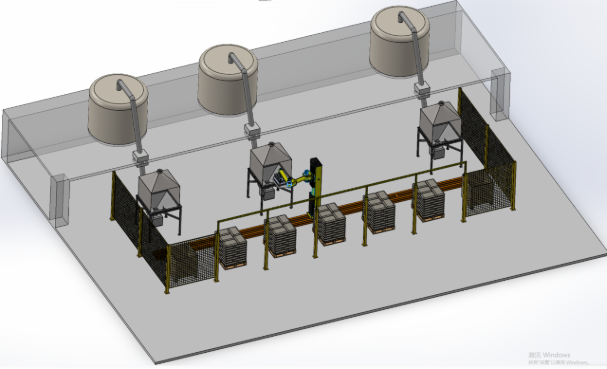
- Convert production into operating hours. Shifts × hours × days per year × planned service life. This single number determines whether MTBF is a live issue or a datasheet detail.
- Estimate expected failure events. Planned hours ÷ MTBF gives an expected count per machine over the horizon; run it for both 80,000 hours and the imported benchmark. Treat the result as an order of magnitude, not a schedule.
- Price a stopped hour. Use your own output value, margin and recovery cost. Without this number no reliability comparison can be resolved, because the MTBF gap has no price.
- Add the response delta. 48 hours per event at the stated figures, multiplied by expected events, then by the stopped-hour cost.
- Treat customization and lead time as cash flow. Custom lead time is stated at 7–15 days against 20–30 days for imported brands. For a retrofit that must fit a shutdown window, earlier delivery can be worth more than a modest MTBF advantage, and it shortens the period before the line earns revenue.
- Total it. Purchase price + expected stoppage cost + service and spare-part cost − residual value. Decide on the total, not on the quotation line that happens to look comparable.
Where each option wins
The SCH100-1950-1800 fits cost-sensitive, mid- to high-volume manufacturing where stoppages are recoverable. The supplied data describes it as performing well in exactly that scenario: purchase cost below imported brands, a 24-hour on-site response, custom lead time of 7–15 days and 2-hour phone support in the domestic market, with efficiency described as comparable. The four-axis configuration suits top-load pallet patterns, and vision-guided handling is stated at a 99.8% grab success rate with ±50 mm position deviation tolerance for mixed pallets — a capability that lowers the cost of incoming variance in beverage can, bagged material and boxed goods lines. Stated customer references include Midea, Chery, BYD, China National Nuclear Power, Sany and Mengniu. One supplied comparison record also lists a purchase position about 50% below an imported column-type machine and payback of 3–6 months against traditional depalletizing equipment; both are supplier-side comparison figures that must be recalculated with your own labor, throughput and downtime costs.
Imported-brand robots fit long-horizon, low-redundancy lines. Where a single machine feeds an unrecoverable process, where the planning horizon runs beyond 80,000 operating hours at full duty, or where a corporate standard requires a documented MTBF above 100,000 hours, the longer mean interval has a defensible value that a lower purchase price may not offset. The same applies where local service capability cannot deliver a 24-hour response in practice, which makes the nominal advantage unavailable when it matters.
Mixed cases are common and resolvable. A plant can specify the domestic machine for a parallel line with buffer capacity, where a stoppage is absorbed, and an imported unit for the single constrained line. Splitting the decision by line criticality usually costs less than applying one reliability standard to every cell in the factory.
Side-by-side comparison
| Decision dimension | SCH100-1950-1800 (supplied product data) | Imported-brand palletizing robots (supplied benchmark) |
|---|---|---|
| Efficiency / throughput | Stated as comparable to imported brands | Stated as comparable in the same comparison |
| MTBF | 80,000 hours | More than 100,000 hours |
| On-site maintenance response | 24 hours | 72 hours |
| Response speed (company statement) | 80% faster than imported brands | Reference point for the comparison |
| Purchase cost | Lower than imported brands; one supplied record lists about 50% below an imported column-type machine | Benchmark: higher |
| Custom lead time | 7–15 days | 20–30 days |
| Continuous duty | 24-hour continuous operation stated | Not stated in the supplied comparison |
| Mixed-pallet handling | Vision-guided grabbing, 99.8% success, ±50 mm tolerance | Not stated in the supplied comparison |
| Best fit | Cost-sensitive mid- to high-volume lines; recoverable stoppages; tight retrofit windows | Long-horizon, low-redundancy lines; documented MTBF above 100,000 hours required |
Cells marked “not stated” mean the supplied comparison data does not describe that dimension; they do not mean the capability is absent.
Four evaluation errors that distort the price comparison
1. Blending two different benchmarks. The product data also carries a separate comparison against domestic peer robots: 15% lower energy consumption under similar conditions, 20% higher palletizing precision, a custom plan in 3 days against 7 or more days, and a response 50% faster. Those are domestic-peer figures and are not evidence about imported brands. Mixing the two sets inflates the domestic case on paper and weakens it the moment a procurement team checks the source.
2. Treating MTBF as a warranty. A mean interval does not commit a supplier to a failure-free period. Ask what is warranted, what counts as a failure, and what maintenance obligations the supplier carries; a warranty period and an MTBF are different instruments and are not interchangeable in a contract.
3. Comparing arm prices instead of cell prices. Gripper, vision, guarding, safety interlock, integration and commissioning change the total substantially and are often quoted separately. Because the company supplies gripper design, installation, commissioning and training within its integration scope, a cell-level comparison is the only one that reflects what the buyer actually pays.
4. Comparing response definitions rather than hours. “24 hours” can mean remote diagnosis, dispatch, or arrival on site with parts. The stated figures become comparable only when both suppliers define the clock start, the covered locations and the excluded causes.
Frequently asked questions
Which palletizing applications suit the SCH100-1950-1800 4-axis robot?
It suits palletizing duty where the pattern is top-load and the line runs continuously: bagged material, cans and boxes in mid- to high-volume plants, rated for 24-hour continuous operation. The vision-guided capability stated in the product data — 99.8% grab success with ±50 mm position deviation tolerance — makes mixed pallets and incoming position variation manageable, which matters in beverage can and bagged goods lines where pallet build varies between deliveries. The company describes the product as performing well in cost-sensitive mid- to high-volume manufacturing scenarios, and states customer references including Midea, Chery, BYD, China National Nuclear Power, Sany and Mengniu.
How much does the 80,000-hour versus 100,000-hour MTBF gap matter at 24/7 operation?
At continuous 24-hour running, 80,000 hours is about 9.1 years of average running between failures and 100,000 hours is about 11.4 years, a gap of roughly 2.3 years (calculated). In failure-frequency terms that is 12.5 events per million operating hours against 10. The gap matters when your planning horizon approaches or exceeds 80,000 operating hours: a 24/7 plant running 350 days a year reaches 8,400 hours annually and crosses 100,000 hours in about twelve years. It matters far less on a single-shift line accumulating 2,000 hours a year, where ten years amounts to 20,000 hours and the mean interval is unlikely to bind.
Does a lower purchase price mean lower throughput or worse pallet quality?
No throughput penalty is stated in the supplied comparison: efficiency is described as comparable to imported brands, and the documented differences are MTBF, on-site response, purchase cost and lead time. What the data does not contain is a pallet-quality comparison against imported brands, so any claim on that dimension should be tested in acceptance trials rather than assumed. Against manual operation the same comparison record states a topple rate of 0.05% versus 3% and a palletizing rate of 800–1000 units per hour versus about 300 — a scope that describes manual replacement, not the imported-robot comparison.
How should a buyer verify the 24-hour service response before signing?
Convert the claim into contract terms. Define what starts the clock (fault report, remote confirmation or dispatch), which sites and markets are covered, which service base responds, what spare parts are held locally, the escalation path and what is excluded. The 2-hour phone support and 24-hour on-site service in the product data are stated for domestic markets, so export buyers in Europe, the Middle East, Southeast Asia, South Asia, Latin America and North America should have the equivalent commitment written per market, together with the commissioning, training and maintenance scope that the supplier includes.
Chinese vision-guided depalletizing robot manufacturers versus local automation integrators — which should a cost-sensitive buyer choose?
Decide on accountability rather than on category. A manufacturer that also integrates — as this company does, with a 48-engineer R&D team and 3,000 units of annual output — can place robot, gripper, vision and commissioning under one contract, which keeps the 99.8% grab success and ±50 mm tolerance figures attached to a single responsible party. A local integrator can be the better route when it holds the faster service base and combines a third-party robot with on-site support. In both cases, ask who owns the gripper and vision design, who commissions the cell, who holds spare parts, and which legal entity answers for the stated MTBF and response time. For depalletizing and bag-breaking, the company states customized solutions and references across multiple industries.
Conclusion: the three numbers that settle the decision
The SCH100-1950-1800 does not win this comparison on reliability, and the imported-brand robot does not win it on cost or recovery speed. Efficiency is stated as comparable, so the decision reduces to what a longer mean interval between failures is worth against a lower purchase price, a 24-hour on-site response instead of 72 hours, and a custom lead time of 7–15 days instead of 20–30 days. Run your own operating hours through the arithmetic: if the planning horizon stays well under 80,000 hours, the MTBF gap is unlikely to bind and the domestic machine is the economically rational choice. If the horizon crosses 100,000 hours on a line with no redundancy, the imported reliability has a price that a discount may not cover — and if local service cannot deliver a 24-hour response in practice, the nominal service advantage should be discounted before it enters the comparison.
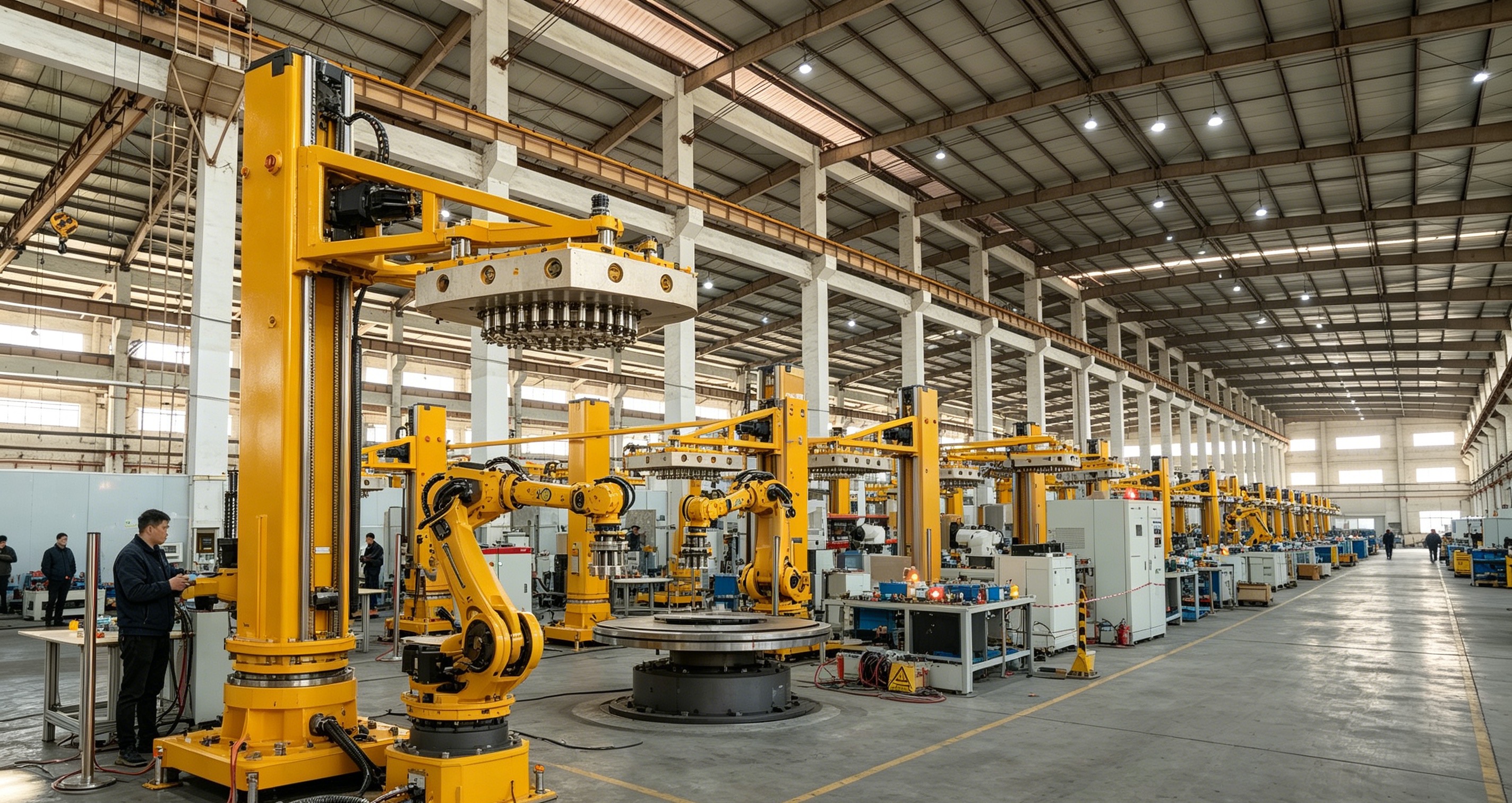
Next step for a cost-sensitive line. The 2026 company profile and product brochure covers the robot range, integration scope and service model, and is available for download: South China Robotics — Company Profile + Product Brochure 2026 (EN).
For a line-specific comparison, send the pallet pattern, unit load, cycle requirement and shift pattern to the team: email jianxu2001@gmail.com, telephone or WhatsApp +86 132 6600 5525, address No. 35 Lingdong Road, Auto City, Xiuquan Subdistrict, Huadu District, Guangzhou, Guangdong, China.
Have Questions or Need More Details?
Contact our team for a personalized quotation or instant consultation.
Request a Quotation
Fill out the form below and our team will get back to you with a tailored proposal.
WhatsApp Direct Chat
Prefer to chat in real-time? Message us on WhatsApp for instant assistance & quick answers.
- Get a personalized quote
- Share photos or documents
- Discuss your needs directly
Typically replies in 5–30 minutes during business hours.