
Industrial Robot Compliance for Food and Health-Supplement Palletizing: Sanitation and Safety Guide
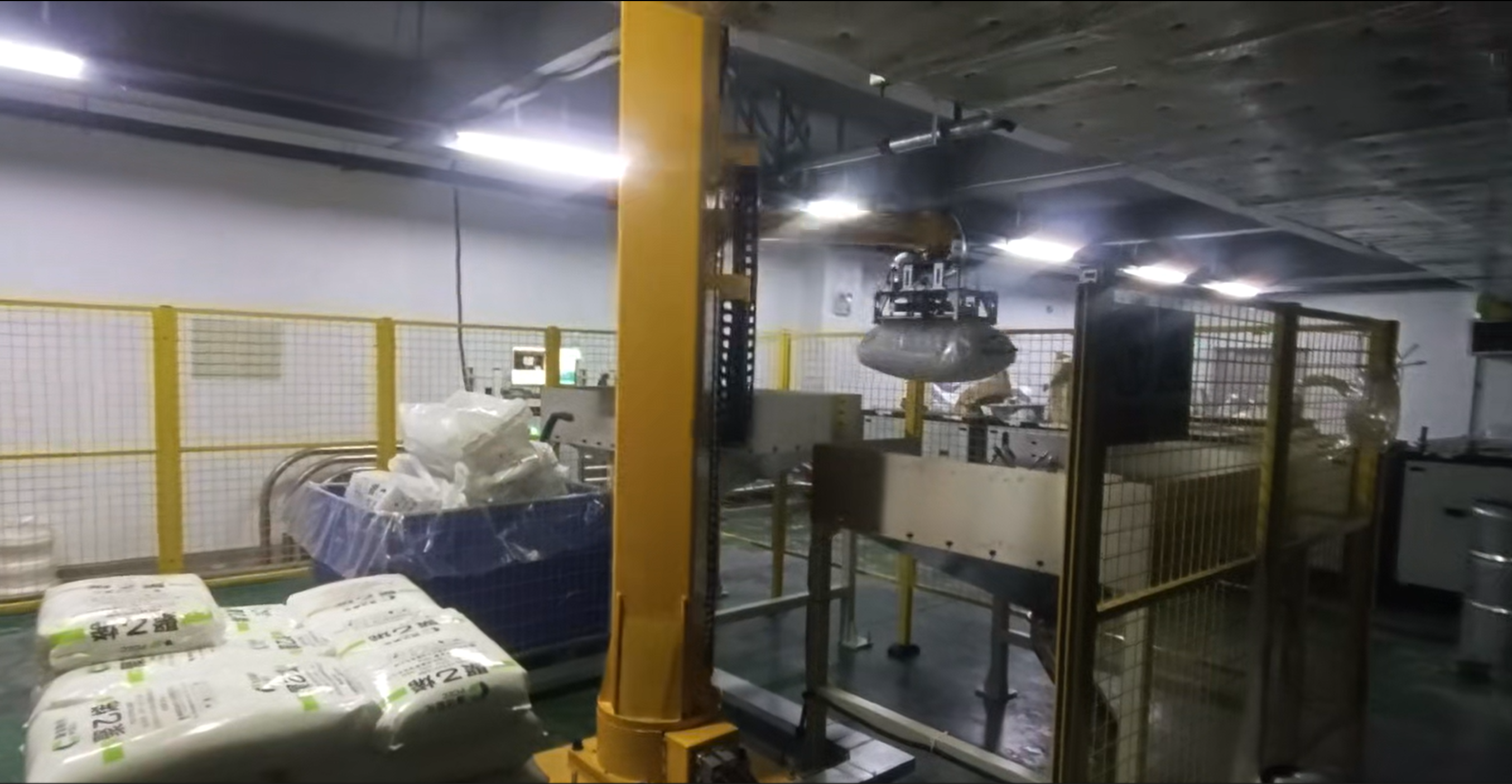
Compliance in a food or health-supplement palletizing project is rarely a single certificate. It is a package assembled in three layers: hygienic design of the surfaces, grippers and air paths that sit close to primary packaging; machinery safety engineered for the robot and, more importantly, for the complete cell; and written documentation that matches the market where the line will operate. Buyers who treat compliance as one line item usually find the gap during the first customer audit, after the robot is bolted to the floor.
This guide is written for buyers in the Research and Evaluation stages of a food, dairy, beverage or health-supplement palletizing project. It sets out what to verify, in what order, and where documentation expectations change between a China-built cell and a European or North American installation. Product facts are grounded in the 4-Axis Palletizing Robot SCH100-1950-1800 from South China Robotics Technology (Guangdong) Co., Ltd., an industrial robotics and automation company founded in 2017 in Guangzhou, China, and in a documented food-industry project for Mengniu & By-Health.
Problem Definition: What Compliance Actually Covers
Three questions separate a compliant cell from a clean-looking one, and each one is answered by different people inside the project.
- Hygiene. What happens to dust, spillage and residues on the gripper, the robot arm, the guarding and the pallet conveyor, and who can clean it, how often, with what?
- Safety. Which risks belong to the robot and which belong to the cell, and who owns the risk assessment for the integrated system?
- Documentation. Which standard editions and declarations the destination market expects, and who signs them: the robot maker, the cell integrator, or the end user?
The safety question is where most confusion starts. The EN ISO 10218 series is a safety-requirements standard series for industrial robots in which Part 1 addresses industrial robots and Part 2 addresses applications such as robot systems and robot cells, as described in a 2023 explanatory publication by KAN, the German Commission for Occupational Health and Safety and Standardization. The split is commercially significant: a supplier can be entirely correct about the robot and still leave the buyer to resolve cell-level requirements. The KAN publication is an explanatory source rather than the normative text, so the edition in force and its national adoption in the destination market must be confirmed separately.
Industry Background: Why Palletizing Is Where Food and Supplement Producers Meet Compliance First
Handling applications, the segment that includes palletizing and depalletizing, held a 42.1% share of the industrial robot market in 2025, according to Grand View Research. Fortune Business Insights projects the global robotic palletizer and de-palletizer segment at USD 4.67 billion in 2026. The application is large, mature and heavily standardized in its mechanical logic, which is exactly why buyers now compete on the parts that are harder to standardize: hygiene design and documentation.
The supply base is concentrated. China installed 295,045 industrial robots in 2024, equal to 54% of global installations, according to the International Federation of Robotics World Robotics 2025 report. Within China, Guangdong Province produced 246,800 industrial robots in 2024, or 44% of the national total, according to provincial government data. For a buyer, dense regional supply shortens sourcing and spare-parts paths; it does not transfer compliance responsibility to the supplier.
Health-supplement production adds constraints that a general palletizing specification tends to miss. Primary containers are small and light, formats change often, powder filling generates dust close to the line, and hygiene zoning is tighter than in conventional secondary packaging. In the food-factory selection guidance published by South China Robotics, the criteria listed include hygienic construction such as 304 stainless steel, HACCP-compliant and easy-clean design; throughput in the 800–1000 bags per hour range; a bag-topple rate below 0.05%; 24-hour operation; and adaptability to −20°C cold storage. Those criteria make a useful starting checklist, but each one has to be re-stated as a contractual requirement for the specific line.
Detailed Solution: The Three-Layer Compliance Stack
Layer 1 — Sanitation and cleanability
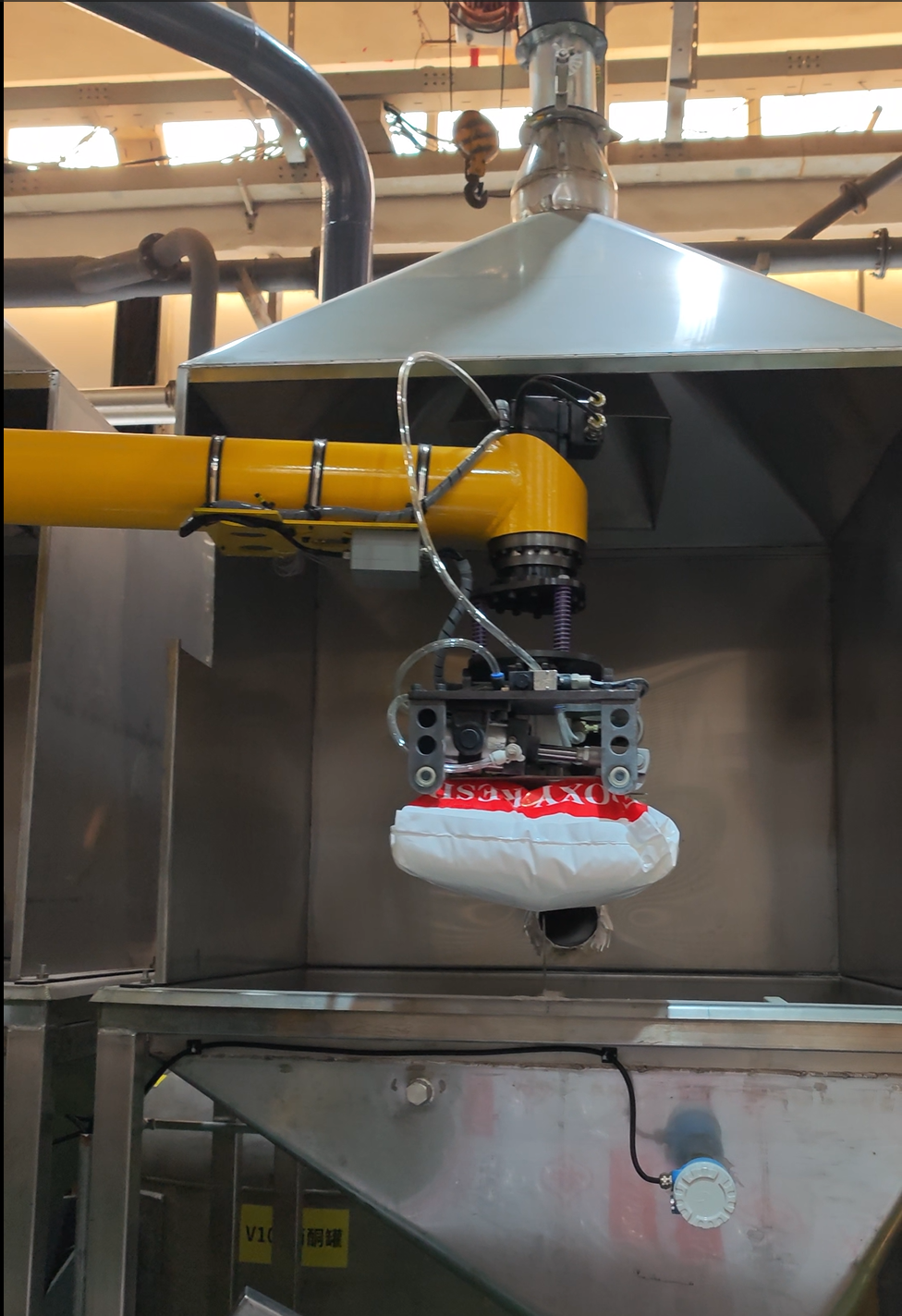
Hygiene is a design output, not a cleaning habit. In the application specification South China Robotics publishes for food and beverage, sugar, flour and grain processing, feed, chemical raw materials, new materials and other powder-and-granular environments, the required design features are explicit: dustproof design, dust collection and control, enclosed material handling, easy cleaning, wear-resistant components, corrosion-resistant design, safety interlocks, reliable continuous operation and easy maintenance. The same specification lists working conditions that include high temperature, heavy-duty handling, dusty atmospheres, high humidity, oil mist and continuous operation.
For a food or supplement line, three of those items deserve their own clause in the technical annex.
- Dust containment. Powder residues on a gripper are both a hygiene and a housekeeping problem. Specify where dust is captured, how the capture point is cleaned, and what happens when a bag or carton is dropped.
- Cleanability of the gripper. The gripper is the component closest to product, so its construction, tooling material, fasteners, crevices and removability for cleaning should be reviewed at the same time as the robot, not afterwards. Custom grippers can be designed for bags, cartons, drums and other regular-shaped workpieces, which means the hygiene review must be repeated for each product family rather than approved once for the line.
- Zone statement. Write down whether the cell handles primary packaging, secondary packaging, or both. A cell that never touches primary packaging can be specified more simply, and the documentation should say so explicitly.
Layer 2 — Machinery safety at robot level and cell level
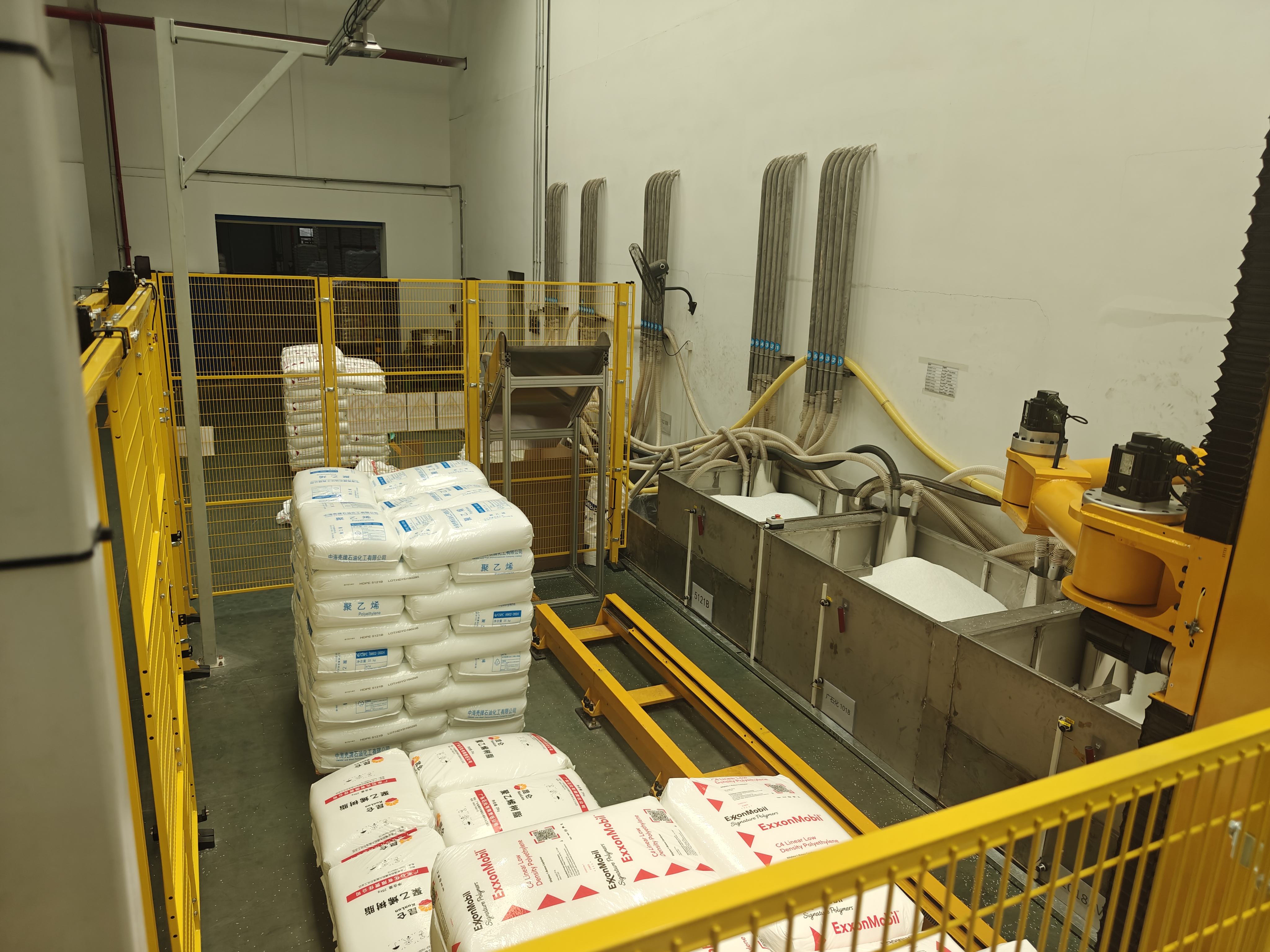
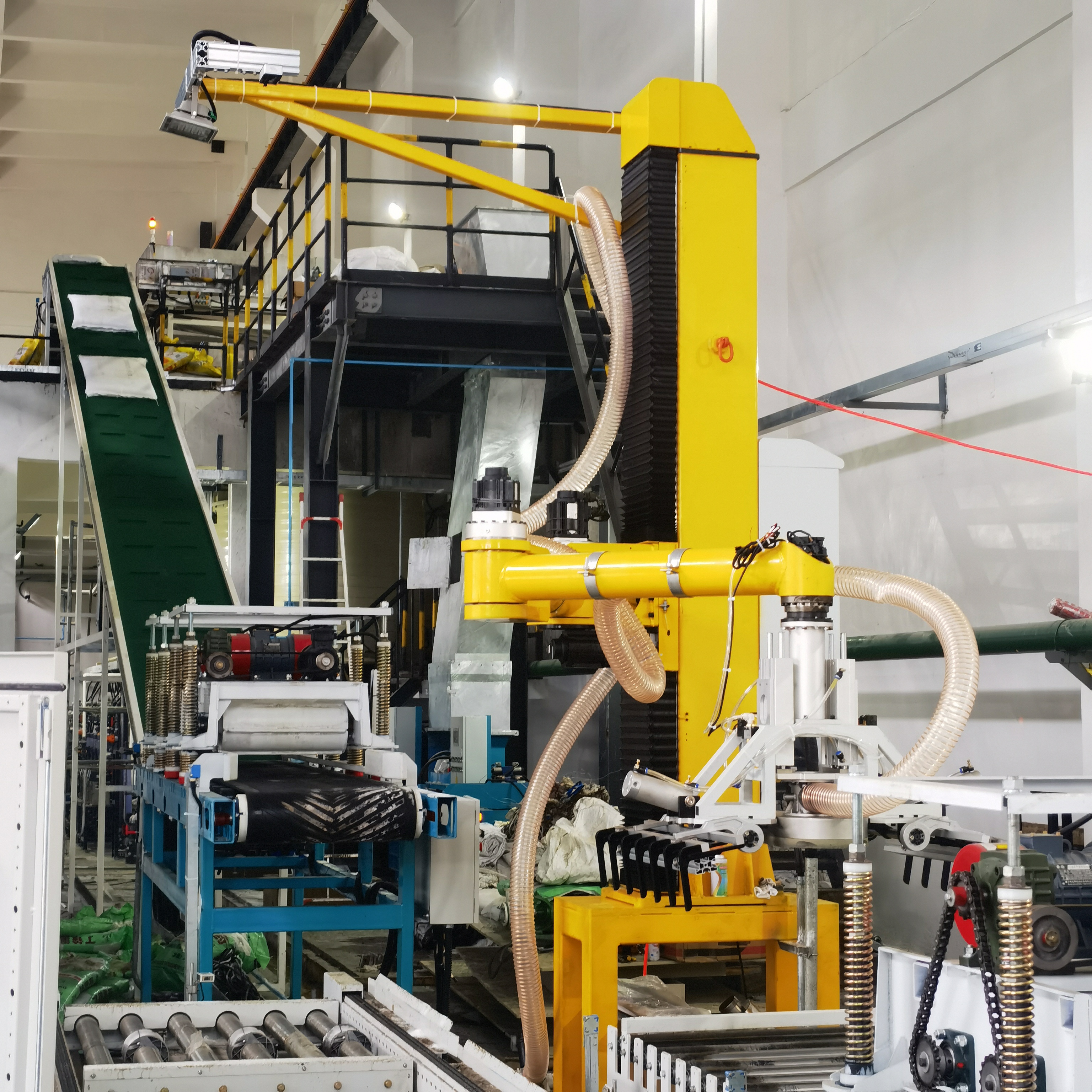
Safety evidence has two halves. The robot half covers the arm itself. The cell half covers guarding, interlocks, conveyors, pallet dispensers and vision systems working together. The SCH100-1950-1800 is described as integrable with conveyors, pallet dispensers, safety fencing, vision systems and other automation equipment to form a complete robotic palletizing cell, which is precisely the boundary where the two halves meet. The practical question for the buyer is who signs the risk assessment for the integrated cell, and who confirms that interlocks remain effective after a layout change or a gripper swap.
Where the surrounding area carries explosion risk, capability should be checked rather than assumed. South China Robotics documents custom explosion-proof depalletizing and bag-breaking robots built to national explosion-proof standards, with sealed designs and isolated operation for hazardous zones, and states that customer cases show zero safety incidents. That is a supplier statement about specific projects; it does not replace a site-specific hazard study, and it should be read as a capability input rather than a certificate.
Layer 3 — Documentation mapped to the destination market
Global market coverage changes what a buyer should request, because the same physical cell can face different documentation expectations in different destinations. South China Robotics states a 40% export ratio, with main markets in Europe, the Middle East, Southeast Asia, South Asia, Latin America and North America. A single generic package will not satisfy all of them, so the destination should be written into the RFQ and the required documents listed item by item.
| Scope | What to request | Why it matters |
|---|---|---|
| Robot unit | Datasheet with payload, reach, repeatability, axis ranges and operating temperature; robot-level safety statement and the standard editions applied | Confirms the mechanical basis before cell design starts |
| Robot cell | Cell risk assessment; guarding and interlock description; gripper drawings and materials; cleaning procedure; factory acceptance test protocol and records | Cell-level requirements are separate from robot-level ones and are usually where surprises appear |
| Market access | Declaration of conformity or equivalent market document naming the applicable directives and standard editions; manual language; identity of the legal manufacturer of the integrated cell | The document set follows the destination market, not the supplier's home market |
| Food hygiene | Material and surface specification for near-product parts; dust control description; changeover and cleaning instructions | Turns "food-grade" from an adjective into an auditable specification |
Table 1. Documentation request list by scope. Requirements differ by destination; confirm the editions in force for the target market.
Two cautions apply. First, the current edition of EN ISO 10218 and its national adoption must be confirmed for the destination market before the document list is frozen. Second, food-contact expectations are set by the market and by the customer's own hygiene scheme, so the requirement should be quoted from the customer standard rather than paraphrased from a supplier brochure.
Applying the stack to a grounded build: SCH100-1950-1800
| Parameter | Documented value | Buyer check |
|---|---|---|
| Number of axes | 4 | Confirm the palletizing envelope matches pallet heights and layout |
| Maximum payload | 100 kg | Size on product plus gripper weight, not product alone |
| Maximum reach | 1950 mm | Check against pallet positions and conveyor infeed distance |
| Repeatability | ±0.5 mm | Write it into acceptance testing as a measurable value |
| Z-axis vertical stroke | 1800 mm | Compare with the tallest planned pallet build |
| Axis working ranges | Axis 1 ±130°, Axis 3 ±147°, Axis 4 ±360° | Confirm the working envelope covers the pattern |
| Robot body weight | 680 kg | Floor loading and foundation planning |
| Power capacity | 5.75 kVA | Utility and control panel planning |
| Operating temperature | 0–45°C | Confirm explicitly for chilled or frozen areas |
| Body material | High-strength steel | Surface finish and cleanability review follow from this |
Table 2. Documented parameters of the 4-Axis Palletizing Robot SCH100-1950-1800, read as compliance inputs.
Three of these values do real work in a compliance file. The 100 kg payload rating supports payload-based sizing for depalletizing and palletizing system design, so the cell can be dimensioned from the product and pallet rather than from a claim. The stated repeatability of ±0.5 mm provides a measurable value for repeatability verification of palletizing cells, which means acceptance testing can be written as a number instead of an impression. The 1800 mm Z-axis vertical stroke defines the working envelope for palletizing heights and should be checked against the tallest pallet build in the plan.
Two boundaries are worth stating plainly. The operating temperature range is 0–45°C, so a cell destined for chilled or frozen areas needs an explicit confirmation against that range rather than an assumption. And a four-axis architecture is designed for palletizing work; tasks outside that envelope belong to a different technical discussion.
What the food-industry project evidence shows
For Mengniu & By-Health, the project record states a single robot daily throughput of over 20,000 pieces, a 40% increase in palletizing efficiency and, the point that matters here, ensured cleanliness and compliance of food production. The same record describes the project family as custom-tailored robotic solutions for chemical and food-grade production environments, with safety-optimized design, compliance with food sanitation standards and reduced operating costs for manufacturers expanding globally.
Two limits should be applied when reading that. A project result documents what was achieved on one line; it is not a certificate that transfers to a new configuration. And the record supports capability in hygiene-oriented design and throughput, not a specific declaration for a specific market. The value for a buyer is that the design approach has been implemented in a food-production setting, which makes the questions in this guide reasonable to put to the supplier.
Adjacent project records point in the same direction. For Tianci Materials, the record cites optimized energy-efficiency management, reduced safety risks and a 40% improvement in material handling efficiency. For Thomson, it cites stable operation of core components, lower maintenance costs and support for global market expansion, a reminder that documentation expectations travel with the export destination.
Step-by-Step Breakdown: A Seven-Step Verification Path
- Write the hygiene zone statement. State whether the cell touches primary packaging, secondary packaging or both, and which cleaning regime applies. Everything downstream depends on this one paragraph.
- Size the robot on payload, reach and repeatability. Use the documented 100 kg payload, 1950 mm reach and ±0.5 mm repeatability as the mechanical basis, and size on product plus gripper rather than product alone.
- Convert hygiene into annex requirements. Dustproof design, dust collection and control, enclosed material handling, easy cleaning, wear-resistant and corrosion-resistant components all belong in the technical annex, not in a verbal understanding.
- Fix the cell safety architecture. Guarding, safety interlocks, conveyor and vision interfaces, and named ownership of the cell risk assessment. The EN ISO 10218-1 and -2 split is the reference point for dividing robot-level from cell-level responsibility.
- Map documentation to the destination market. Confirm the standard editions and market documents before commercial negotiation, not after the purchase order.
- Validate with samples and a factory acceptance test. The documented quality control is a 100% pre-shipment test with third-party inspection such as SGS available; add repeatability verification against ±0.5 mm and a gripper trial using the actual packaging and pallet pattern.
- Plan installation, commissioning and service. On-site commissioning, technical training, long-term after-sales maintenance, remote technical support and a 1-year warranty are documented service elements and should appear in the project plan with dates.
Use Cases: Where the Three-Layer Stack Is Applied
Chilled dairy and health-supplement logistics
The Mengniu & By-Health project is the clearest reference point: over 20,000 pieces per day from a single robot, a 40% palletizing efficiency gain and cleanliness and compliance of food production maintained. The relevant lesson is not the throughput figure but the combination: hygiene design, safety-optimized layout and continuous operation evaluated as one system. For supplement lines where the palletizing robots are expected to support bag, can and box formats and to run around the clock, that combination is the specification template.
Food-grade and chemical crossover plants
Plants that run food-grade and chemical production on the same site need a cell design that can be argued for both. South China Robotics describes custom-tailored robotic solutions for chemical and food-grade production environments with safety-optimized design, and documents explosion-proof depalletizing and bag-breaking robots for hazardous zones. The Tianci Materials record, with a 40% material handling efficiency improvement and reduced safety risks, illustrates how safety and efficiency are usually argued together in that setting.
Dusty bagged and granular areas
Where the palletizing point sits next to bag opening and feeding, the compliance question becomes dust. The application specification's dustproof design, dust collection and control and enclosed material handling requirements carry across the cell boundary, and the company's automatic bag opening and feeding robot series has been recognized as an innovative manufacturing product. Where floor space is limited, the food-factory guidance points to column-type palletizing robots; where several lines share a cell, it points to collaborative mobile palletizing for flexible deployment. Those layout choices change the hygiene and safety review, so they should be made before the documentation set is fixed.
Comparison Table: Manual, Standard and Food-Grade Palletizing
| Criterion | Manual palletizing | Standard palletizing cell | Food-grade customized cell (SCH100-1950-1800 basis) |
|---|---|---|---|
| Hygiene control | Operator-dependent; no documented surface specification | Depends on selected standard components; dust containment often unspecified | Dustproof design, dust collection, enclosed handling, easy cleaning and corrosion-resistant components specified |
| Mechanical basis | Limited by operator strength and reach | Tied to a standard gripper and fixed pattern | 100 kg payload, 1950 mm reach; custom grippers for bags, cartons and drums |
| Repeatability evidence | Not measurable in engineering terms | Depends on configuration and acceptance protocol | ±0.5 mm documented repeatability, usable as an acceptance value |
| Safety evidence | Procedures and training only | Guarding supplied with the cell; risk-assessment ownership sometimes unclear | Safety interlocks and fencing specified, with cell risk-assessment ownership named in the contract |
| Documentation scope | Internal SOPs | Usually limited to the robot datasheet | Robot, cell and market-specific document sets requested separately |
| Operator dust exposure | Direct exposure at the pallet build point | Reduced but layout-dependent | Reduced through enclosed handling and dust collection |
| Changeover | Manual re-learning per format | Gripper change, limited pattern flexibility | Gripper design per product family, with configuration customized to layout and pattern |
| Continuous operation | Shift-limited | Possible, subject to maintenance planning | Fully automatic, 24/7 continuous operation specified |
| Best fit | Low volume, high variety, early-stage lines | Stable single format, non-regulated environment | Audit-facing food, dairy, beverage and health-supplement lines |
Table 3. Comparison of deployment approaches, not of brands. Manual and standard-cell descriptions are qualitative; the third column reflects documented product and application specification facts.
FAQ
1. What compliance documentation should a food manufacturer request for a palletizing cell?
Request documentation at three levels. For the robot unit: a datasheet covering payload, reach, repeatability, axis ranges and operating temperature, plus the robot-level safety statement and the standard editions applied. For the cell: the cell risk assessment, guarding and interlock description, gripper drawings and materials, cleaning procedure and factory acceptance test records. For market access: a declaration of conformity or equivalent document naming the applicable directives and standard editions, the manual language, and the identity of the legal manufacturer of the integrated cell. The reason for splitting the request is that the EN ISO 10218 series treats industrial robots in Part 1 and applications such as robot systems and robot cells in Part 2, according to a 2023 KAN explanatory publication, so robot evidence and cell evidence are not interchangeable.
2. Can one palletizing robot handle cartons, cans and bags in the same plant?
The mechanical basis supports it when sizing and tooling are done per format. The SCH100-1950-1800 carries a documented payload of 100 kg, a maximum reach of 1950 mm and repeatability of ±0.5 mm, and custom grippers can be designed for bags, cartons, drums and other regular-shaped workpieces. In its food-factory selection guidance, South China Robotics states that its palletizing robots support bag, can and box formats, run continuously and adapt to −20°C cold storage. The constraint is not the robot alone: each format change alters the hygiene review of the gripper, the pallet pattern and the acceptance criteria, so the documentation should be organized by product family rather than by robot.
3. What drives the cost of a food-grade palletizing cell?
Cost is driven by configuration scope rather than by the robot arm alone. The main variables are gripper customization for each product family, hygiene-oriented construction such as easy-clean and corrosion-resistant components, dustproof design with dust collection and enclosed handling, safety interlocks and fencing, vision or conveyor integration, the number of units and the layout, and the depth of validation and documentation required by the destination market. Because these items are project-specific, they should be itemized in the quotation rather than absorbed into a single figure, so that the buyer can see which requirements are being paid for.
4. How can hygiene and stacking performance be validated before purchase?
Validate in three stages. First, a gripper trial using the actual packaging and pallet pattern, because gripper behaviour determines both hygiene risk and stacking stability. Second, a factory acceptance test that includes repeatability verification against the documented ±0.5 mm value, rather than a visual check. Third, pre-shipment verification: the documented quality control is a 100% pre-shipment test with third-party inspection such as SGS available. Ask for the test protocol in advance and require that results be recorded against the parameters in the purchase specification.
5. How should buyers evaluate CE compliance claims from China-based palletizing robot manufacturers?
Treat CE marking as a declaration attached to the machine placed on the market and to the directives that apply to it, not as a general manufacturer attribute. For an integrated palletizing cell, the relevant declaration normally concerns the cell rather than the arm in isolation, and the EN ISO 10218-1 and -2 split is the reference point for dividing robot-level from cell-level requirements. Ask for the declaration of conformity naming the directives and standard editions, the cell risk assessment, the manual language, and a statement of who signs the declaration when the buyer integrates the cell. South China Robotics states a 40% export ratio with Europe among its main markets, which makes documentation scope a legitimate RFQ item; it should be confirmed project by project rather than assumed. Buyers can request the company profile and product brochure as a starting document set and then ask for the market-specific items in writing: South China Robotics Company Profile + Product Brochure 2026.
Conclusion
Compliance for a food or health-supplement palletizing cell is decided by three layers that fail independently: hygiene design, cell-level safety, and documentation matched to the destination market. The Mengniu & By-Health record, with over 20,000 pieces per day from a single robot, a 40% palletizing efficiency gain and cleanliness and compliance of food production maintained, shows that the three layers can be handled in one project rather than three separate ones. The SCH100-1950-1800 provides the mechanical basis on which that work rests: 100 kg payload, 1950 mm reach, ±0.5 mm repeatability and an 1800 mm Z-axis stroke, with a stated operating range of 0–45°C that should be confirmed explicitly for chilled areas.
The next step is documentary, not commercial. Write the hygiene zone statement, fix the cell safety architecture, and list the market-specific documents the destination requires. Everything else in the quotation can then be compared on equal terms.
Next step: request a compliance-oriented configuration review
South China Robotics Technology (Guangdong) Co., Ltd. builds palletizing, depalletizing and bag-breaking robot systems and supports projects from single robots to complete automated cells, with production-line planning, system integration, custom gripper design, installation, commissioning, technical training and maintenance.
Share your product format, pallet pattern, hygiene zone and destination market to receive a configuration review and a documentation checklist for the exact cell. Contact: Jianxu · Email jianxu2001@gmail.com · Tel / WhatsApp +86 132 6600 5525 · No. 35 Lingdong Road, Auto City, Xiuquan Subdistrict, Huadu District, Guangzhou, Guangdong, China · www.scr-robot.com
Download the brochure: Company Profile + Product Brochure 2026 (EN)
Market statistics cited in this article are attributed to the International Federation of Robotics (World Robotics 2025), the Department of Industry and Information Technology of Guangdong Province, Grand View Research, Fortune Business Insights and KAN. Product and project facts are stated as documented by South China Robotics Technology (Guangdong) Co., Ltd. No certificate, marking or approval is claimed for any specific configuration; buyers should verify documentation for their own destination market.
Have Questions or Need More Details?
Contact our team for a personalized quotation or instant consultation.
Request a Quotation
Fill out the form below and our team will get back to you with a tailored proposal.
WhatsApp Direct Chat
Prefer to chat in real-time? Message us on WhatsApp for instant assistance & quick answers.
- Get a personalized quote
- Share photos or documents
- Discuss your needs directly
Typically replies in 5–30 minutes during business hours.