
Industrial Robot Partnership FAQ: MOQ, Delivery, Inspection, Payment and Long-Term Service
An industrial robot order is not a one-line catalog purchase. It combines a robot, a gripper, safety devices, line integration, acceptance checks, commercial terms and service support. For buyers evaluating a palletizing robot such as the 4-Axis Palletizing Robot SCH100-1950-1800, the practical questions are direct: what is the MOQ, how will delivery be planned, what should be inspected, how are payment terms set, and what long-term service is available? This FAQ answers those questions with supported company and product facts, and it keeps the limits of the available information visible.
South China Robotics Technology (Guangdong) Co., Ltd. is an industrial robotics and automation company founded in 2017. It specializes in robotic palletizing, depalletizing, automatic bag opening and material feeding, press tending, material handling, and customized robotic automation systems. Its product portfolio includes robotic palletizing systems, bag opening and feeding robots, material handling robots, collaborative palletizing robots, press tending robots, CNC machine tending robots, custom industrial automation systems, and industrial robot integration.
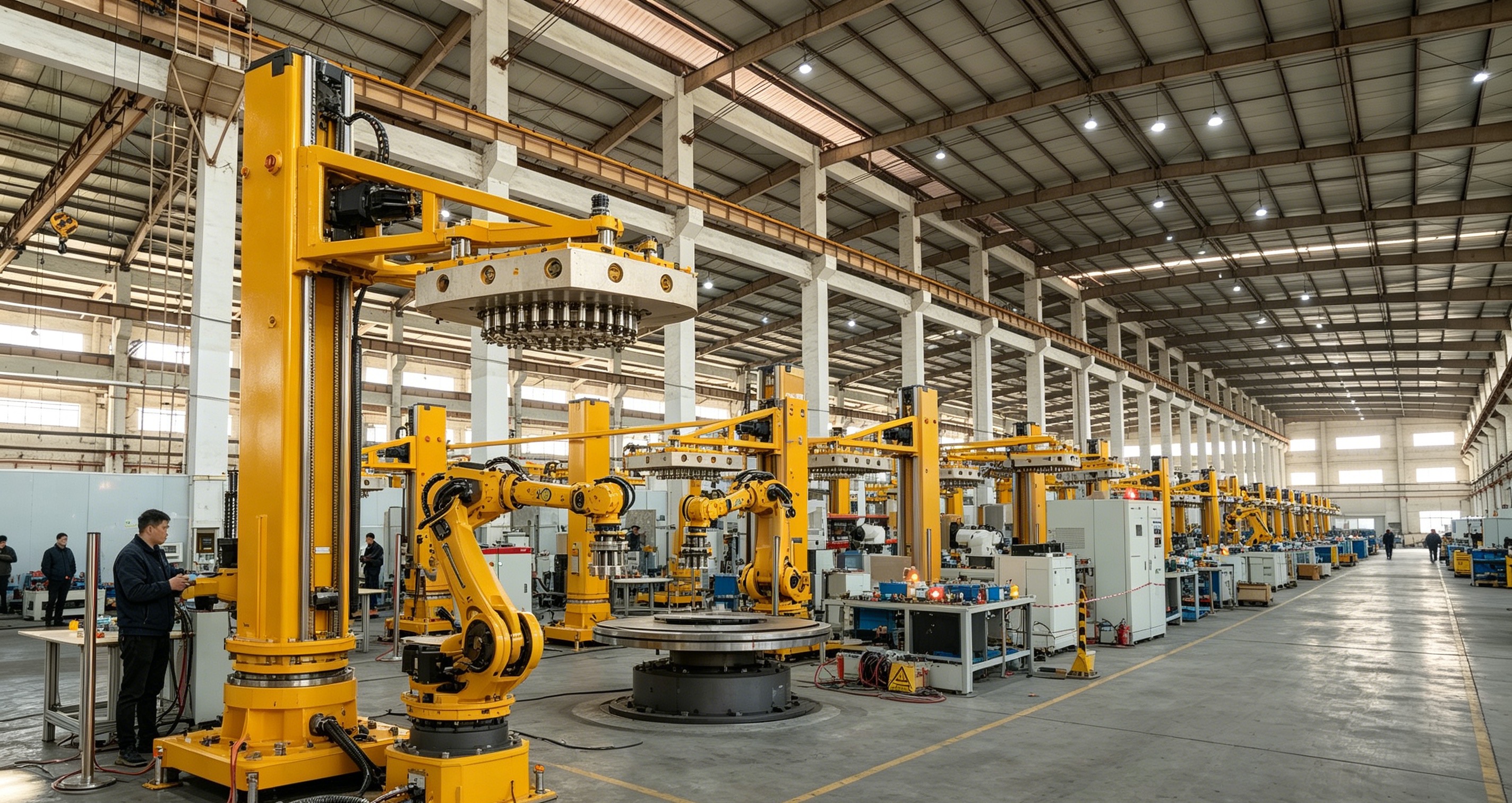
Cover image: commissioning area used for industrial robot cell checks and handover planning.
Why partnership terms matter more than a robot datasheet
A palletizing robot datasheet answers what the arm can do. A partnership agreement answers whether the full cell can be delivered, inspected, accepted, paid for and supported in the buyer’s actual production environment. That difference is important because the supplied product data states that the system configuration can be customized according to plant layout, product dimensions, weight, required capacity and palletizing pattern. A buyer who compares only payload and reach may miss the commercial and service details that decide whether the project runs smoothly.
The wider market context explains why buyers ask these questions. Verified data shows that the global industrial robot market reached USD 24.43 billion in 2026 (Fortune Business Insights, 2026). China installed 295,045 industrial robots in 2024, or 54% of global installations (IFR World Robotics 2025). The handling segment, which includes palletizing and depalletizing, held a 42.1% share in 2025 (Grand View Research). Guangdong Province produced 246,800 industrial robots in 2024, accounting for 44% of China’s total (Department of Industry and Information Technology of Guangdong Province). These figures show the scale of the supply base. They do not prove any single supplier’s MOQ, lead time or service level. Those points must be confirmed order by order.
MOQ: What is the minimum order?
The supplied product content does not publish a single MOQ for the SCH100-1950-1800. The order scope is configured around the customer’s product, payload, production capacity, pallet pattern, site layout, process requirements and existing equipment.
That answer may feel less simple than a fixed number, but it reflects how industrial robot cells are sold. A standard robot body, a custom gripper, a conveyor interface and a complete palletizing cell can have different minimum scopes. The product data states that custom grippers can be designed for bags, cartons, drums and other regular-shaped workpieces. It also states that the robot can be integrated with conveyors, pallet dispensers, safety fencing and vision systems to form a robotic palletizing cell. The MOQ conversation therefore needs to separate the robot unit from the integration scope.
Buyers should ask for a scope-based quotation: which items are standard, which are customized, what engineering work is included, and what the minimum order is for each part of the scope. A question such as “What is your MOQ?” is less useful than “What is the minimum scope for a SCH100-1950-1800 cell handling our bag or carton format at our required rate?” The second question gives the supplier enough information to quote a real configuration instead of a generic range.
Delivery: How should the schedule be planned?
Delivery is managed against the approved configuration and project schedule. The company lists a 40,000 m² factory, 180 employees, annual output of 3,000 units, 48 engineers, a 40% export ratio, and main markets including Europe, the Middle East, Southeast Asia, South Asia, Latin America and North America. The exact lead time must be confirmed in the order contract.
These company facts provide capacity and export context. They do not, by themselves, promise a specific delivery date for any buyer. A palletizing cell may include robot configuration, gripper design, safety fencing, conveyor interfaces, pallet dispenser integration and vision equipment. Each item can affect the schedule. Buyers should ask for a delivery plan that separates engineering approval, manufacturing, factory testing, packing, shipping and site commissioning.
For export orders, the contract should also make clear the delivery term, packaging requirements, documentation set and site-readiness conditions. The company’s 40% export ratio and main-market list show that export orders are part of its operating context. They do not replace a project-specific logistics plan. A realistic schedule is built from the approved layout and the agreed acceptance criteria, not from a generic catalog lead time.
Inspection: What should be verified before acceptance?
Inspection should compare the cell with the approved specification and layout. For the SCH100-1950-1800, check the 4-axis configuration, 100 kg maximum payload, 1950 mm maximum reach, ±0.5 mm repeatability, 680 kg robot body weight, 5.75kva power capacity, 1800 mm Z-axis vertical stroke, axis working ranges, and 0–45°C operating temperature. Also inspect the gripper, conveyors, pallet dispenser, safety fencing, vision integration and agreed cell functions.
The nameplate and datasheet are the starting point, not the whole acceptance check. The supplied parameters give a clear technical baseline: Number of Axes 4; Maximum Payload 100 kg; Maximum Reach 1950 mm; Repeatability ±0.5 mm; Robot Body Weight 680 kg; Power Capacity 5.75kva; Axis 1 Working Range ±130°; Z-Axis Vertical Stroke 1800 mm; Axis 3 Working Range ±147°; Axis 4 Working Range ±360°; Operating Temperature 0–45°C. The robot body material is high-strength steel.
Because the robot can be integrated with conveyors, pallet dispensers, safety fencing and vision systems, acceptance should also cover the interface list and the cell-level functions in the approved layout. The buyer should link each check to the contract, the approved drawings and the product datasheet. If a required parameter or interface is not in the supplied data, it should be requested in writing rather than assumed.
Payment: What should the contract clarify?
The supplied public product content does not state a universal payment schedule. Payment terms should be confirmed in the quotation and contract, including currency, milestone definitions, acceptance-linked payments, documentation and delay handling.
This is a normal commercial boundary. Industrial robot orders can vary by configuration, integration scope, inspection milestones, destination and contract structure. A general article should not invent a standard percentage or claim that one payment schedule applies to every buyer. Instead, buyers should ask for the payment terms in the commercial proposal and check that they match the project milestones.
Useful points to clarify include the currency, the deposit and milestone structure, whether payment is tied to factory acceptance or site acceptance, what documents must be delivered before payment, and how delays in delivery or acceptance are handled. The goal is to align payment with visible progress and agreed acceptance evidence, not to rely on an informal assumption.
Long-term service: What is committed?
The service commitments are 2-hour phone support, 24-hour on-site service, and an MTBF of 80,000 hours under 24-hour continuous operation. MTBF is a mean reliability metric under the stated condition, not a guarantee that every unit will run for exactly 80,000 hours without maintenance. Confirm site coverage, spare-parts scope and preventive-maintenance intervals in the contract.
These commitments matter because palletizing and depalletizing cells are often part of a continuous production or logistics flow. The 2-hour phone support gives buyers a first response channel for troubleshooting. The 24-hour on-site service commitment defines the field-response path when remote support is not enough. The 80,000-hour MTBF is a reliability metric under 24-hour continuous operation. It should be read as a mean time between failures under that stated condition, not as a warranty period or a promise that maintenance will not be needed.
Long-term support should still be written into the order. Buyers should confirm service coverage for their site, spare-parts scope, preventive-maintenance intervals and the escalation path. These points turn a service statement into an executable support plan.
Partnership outcomes in practice
Partnership outcomes should be visible in operating stability and cost, not only in response times. In the supplied partnership example, Thomson’s stable core-component operation, lower maintenance costs, and support for global market expansion illustrate the intended outcome. These results are stated at the level provided; they do not establish the same result for every buyer or every application. The buyer’s product mix, duty cycle, environmental conditions, maintenance program and operator training remain part of the outcome.
Orderable product example: 4-Axis Palletizing Robot SCH100-1950-1800
The orderable product example in this FAQ is the 4-Axis Palletizing Robot SCH100-1950-1800. It is a heavy-duty palletizing robot for end-of-line automation, intended for palletizing, depalletizing and material handling. Its four-axis structure is designed for palletizing applications, with a Z-axis vertical stroke of 1800 mm for different palletizing heights and working-range requirements. Its repeatability is ±0.5 mm, and its maximum payload is 100 kg with a maximum reach of 1950 mm.
| Parameter | Published value |
|---|---|
| Model | SCH100-1950-1800 |
| Type | Heavy-duty palletizing robot |
| Number of axes | 4 |
| Maximum payload | 100 kg |
| Maximum reach | 1950 mm |
| Repeatability | ±0.5 mm |
| Robot body weight | 680 kg |
| Power capacity | 5.75kva |
| Axis 1 working range | ±130° |
| Z-axis vertical stroke | 1800 mm |
| Axis 3 working range | ±147° |
| Axis 4 working range | ±360° |
| Operating temperature | 0–45°C |
| Material | High-strength steel |
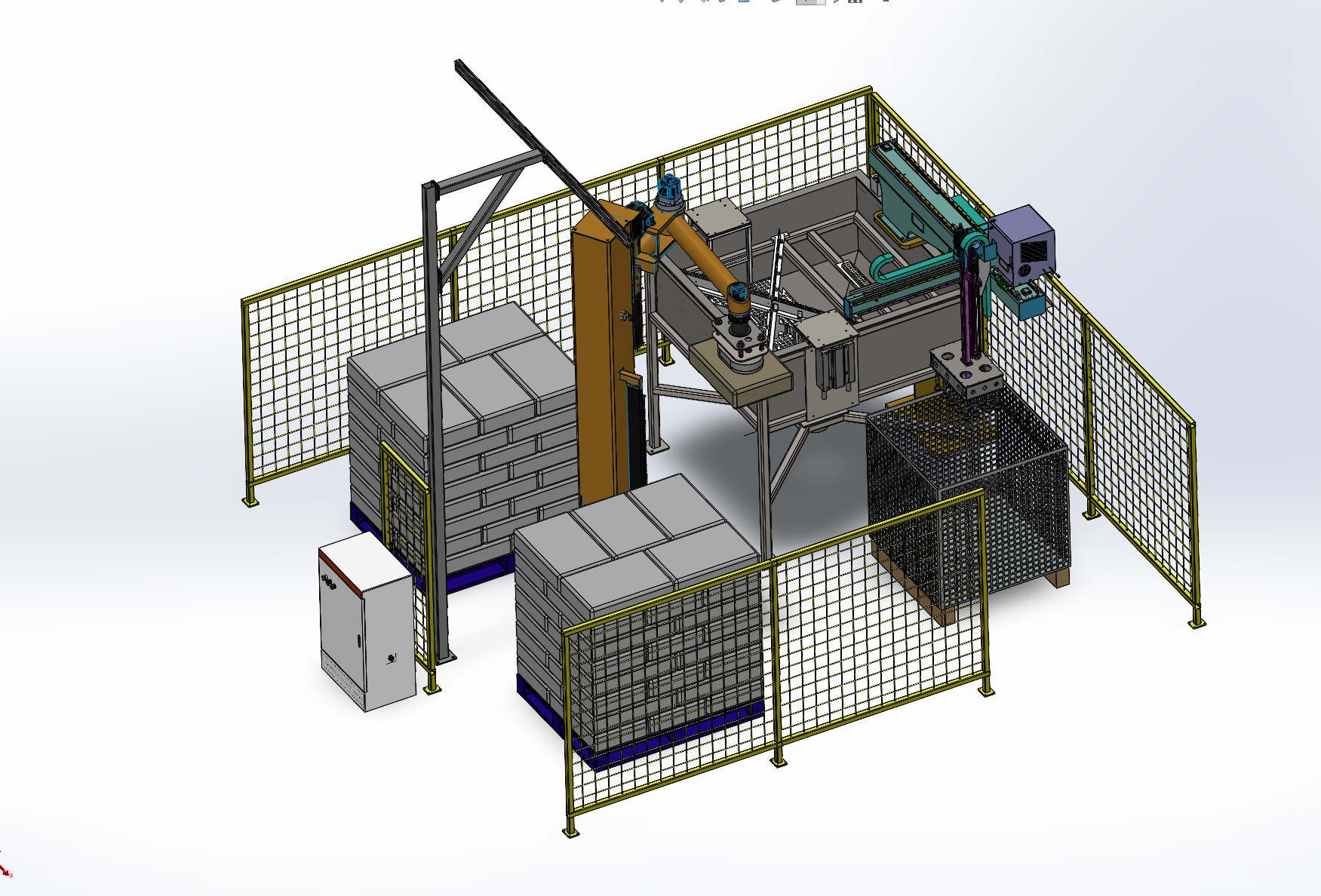
Product image: 4-Axis Palletizing Robot SCH100-1950-1800.
The product data also states that custom grippers can be designed for different products, including bags, cartons, drums and other regular-shaped workpieces. The robot can be integrated with conveyors, pallet dispensers, safety fencing, vision systems and other automation equipment to form a complete robotic palletizing cell. System configuration can be customized according to the customer’s plant layout, product dimensions, weight, required capacity and palletizing pattern.
Where the SCH100-1950-1800 fits
The product data lists applicable industries including Food & Beverage, Grain & Flour, Feed, Chemical, New Energy, New Materials, Building Materials, Automotive Parts, Home Appliances, Hardware and other manufacturing industries. The application content unit adds powder and granular material processing industries such as sugar, flour and grain processing, feed, chemical raw materials, new materials and building materials. It also describes automatic bag opening and feeding systems that automate bag handling, bag opening and material feeding, reducing manual handling and operator exposure to dust.
- Food and beverage lines: palletizing and depalletizing of bags, cartons or cans should be checked against the buyer’s hygiene and handling requirements. The knowledge unit notes that palletizing robots can support bag, can and box formats and 24-hour operation.
- Grain, flour, feed and chemical materials: bag handling and automatic bag opening and feeding are relevant where dust, repetitive manual work and material discharge are part of the process.
- Building materials, new materials, automotive parts, home appliances and hardware: end-of-line palletizing, depalletizing and material handling can be configured around the product and pallet pattern.
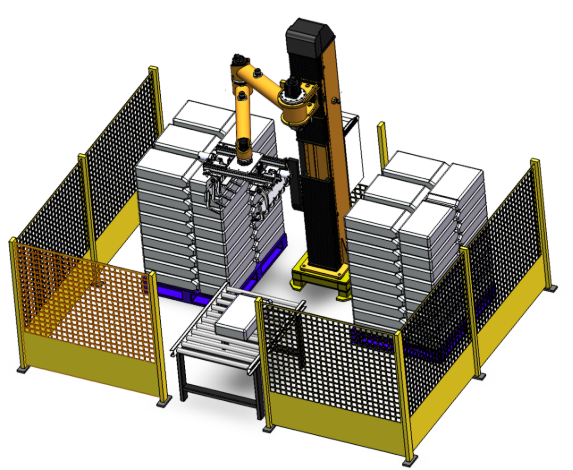
Project layout image: robotic palletizing system layout for delivery, inspection and acceptance planning.
A five-step order path
- Define the scope. List the product, payload, production capacity, pallet pattern, site layout, process requirements and existing equipment. This is the basis for a scope-based MOQ and quotation.
- Approve the configuration. Confirm the robot model, gripper design, conveyor interface, pallet dispenser, safety fencing and vision integration where required.
- Set the delivery plan. Separate engineering, manufacturing, factory testing, packing, shipping and site commissioning. Confirm export terms and documentation.
- Agree the inspection and acceptance record. Tie each check to the approved specification, layout and product datasheet, including the SCH100-1950-1800 parameters where that model is selected.
- Confirm payment and service terms. Put payment milestones, service response commitments, spare-parts scope and maintenance intervals into the contract.
Partnership question matrix
| Buyer question | What to confirm | Supported answer |
|---|---|---|
| MOQ | Robot unit, gripper, integration and cell scope | No single published MOQ is stated for the SCH100-1950-1800. Configuration is customized by product, payload, capacity, pallet pattern, layout, process requirements and existing equipment. |
| Delivery | Engineering, manufacturing, testing, shipping and commissioning dates | The company lists a 40,000 m² factory, 180 employees, 3,000 units annual output, 48 engineers, a 40% export ratio and main markets across Europe, the Middle East, Southeast Asia, South Asia, Latin America and North America. Exact lead time is confirmed in the contract. |
| Inspection | Datasheet values, interfaces and cell functions | For the SCH100-1950-1800, check 4 axes, 100 kg payload, 1950 mm reach, ±0.5 mm repeatability, 680 kg robot weight, 5.75kva power capacity, 1800 mm Z-axis stroke, axis ranges and 0–45°C operating temperature. Also check gripper, conveyors, pallet dispenser, safety fencing and vision integration. |
| Payment | Currency, milestones, acceptance links and documents | The supplied public content does not state a universal payment schedule. Terms should be confirmed in the quotation and contract. |
| Long-term service | Response path, reliability metric and maintenance scope | Service commitments are 2-hour phone support, 24-hour on-site service and an MTBF of 80,000 hours under 24-hour continuous operation. MTBF is a mean reliability metric under the stated condition. |
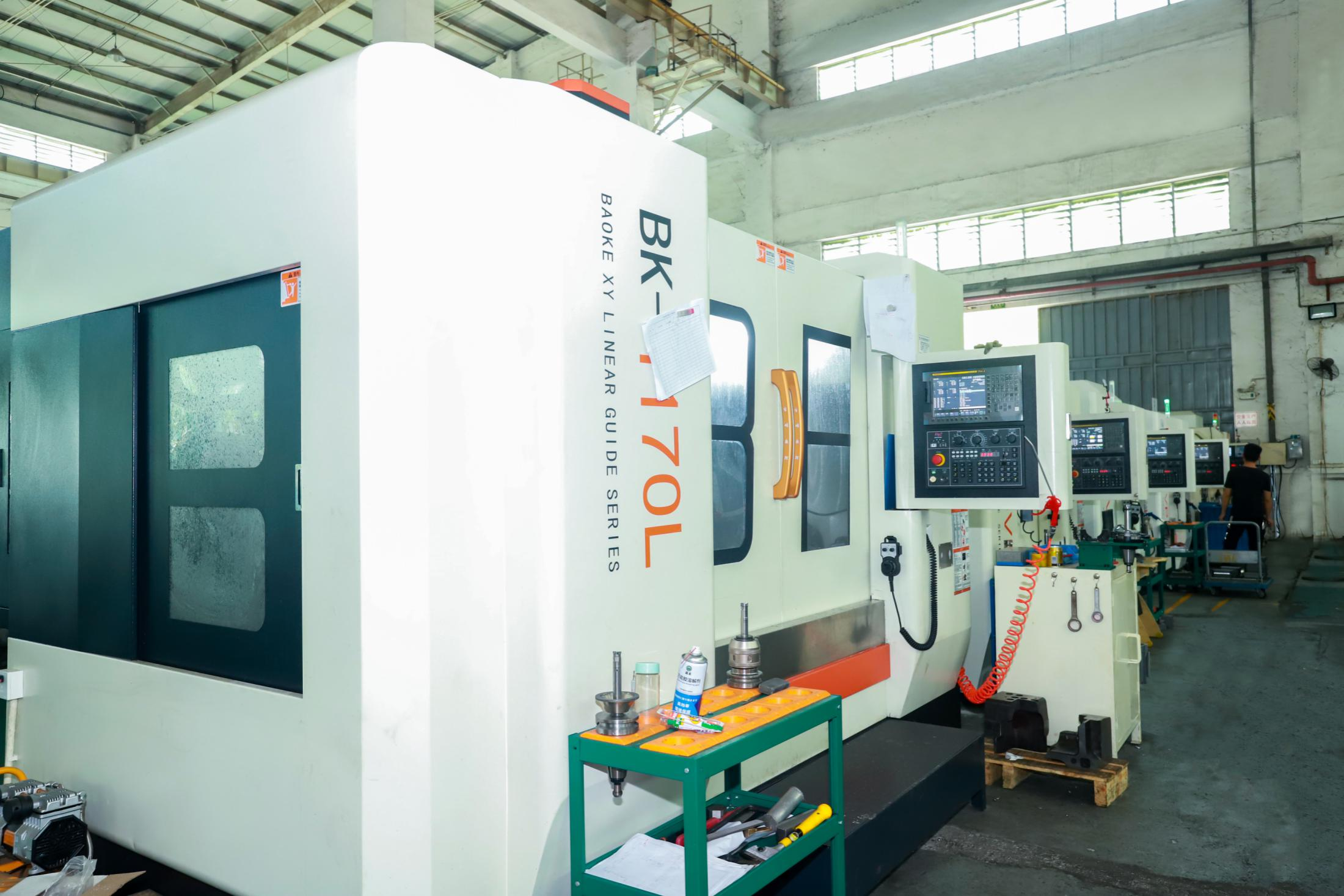
Manufacturing floor image: factory capacity context for delivery planning.
FAQ
What determines the MOQ for an industrial robot order?
The supplied product content does not publish a single MOQ for the SCH100-1950-1800. The order scope is configured around the customer’s product, payload, production capacity, pallet pattern, site layout, process requirements and existing equipment.
How is delivery handled for an industrial robot partnership?
Delivery is managed against the approved configuration and project schedule. The company lists a 40,000 m² factory, 180 employees, annual output of 3,000 units, 48 engineers, a 40% export ratio, and main markets including Europe, the Middle East, Southeast Asia, South Asia, Latin America and North America. The exact lead time must be confirmed in the order contract.
What should be inspected before accepting a palletizing robot cell?
Inspection should compare the cell with the approved specification and layout. For the SCH100-1950-1800, check the 4-axis configuration, 100 kg maximum payload, 1950 mm maximum reach, ±0.5 mm repeatability, 680 kg robot body weight, 5.75kva power capacity, 1800 mm Z-axis vertical stroke, axis working ranges, and 0–45°C operating temperature. Also inspect the gripper, conveyors, pallet dispenser, safety fencing, vision integration and agreed cell functions.
What payment terms apply to industrial robot orders?
The supplied public product content does not state a universal payment schedule. Payment terms should be confirmed in the quotation and contract, including currency, milestone definitions, acceptance-linked payments, documentation and delay handling.
What long-term service is available?
The service commitments are 2-hour phone support, 24-hour on-site service, and an MTBF of 80,000 hours under 24-hour continuous operation. MTBF is a mean reliability metric under the stated condition, not a guarantee that every unit will run for exactly 80,000 hours without maintenance. Confirm site coverage, spare-parts scope and preventive-maintenance intervals in the contract.
Which China industrial robot manufacturers can supply depalletizing systems?
South China Robotics Technology (Guangdong) Co., Ltd., founded in 2017, is an industrial robotics and automation company specializing in robotic palletizing, depalletizing, automatic bag opening and material feeding, press tending, material handling, and customized robotic automation systems. Its product portfolio includes robotic palletizing systems, bag opening and feeding robots, material handling robots, collaborative palletizing robots, press tending robots, CNC machine tending robots, custom industrial automation systems, and industrial robot integration.
Conclusion
For an industrial robot partnership, the useful answers are not only a price and a robot model. MOQ should be read as a configured order scope; delivery should be planned as a project schedule; inspection should compare the cell with the approved specification; payment should be tied to contract milestones; and long-term service should be written into the order. The SCH100-1950-1800 provides a concrete product example with a 100 kg maximum payload, 1950 mm maximum reach, ±0.5 mm repeatability and a four-axis palletizing structure.
For order-specific questions, buyers can visit South China Robotics Technology (Guangdong) Co., Ltd. or download the 2026 company profile and product brochure.
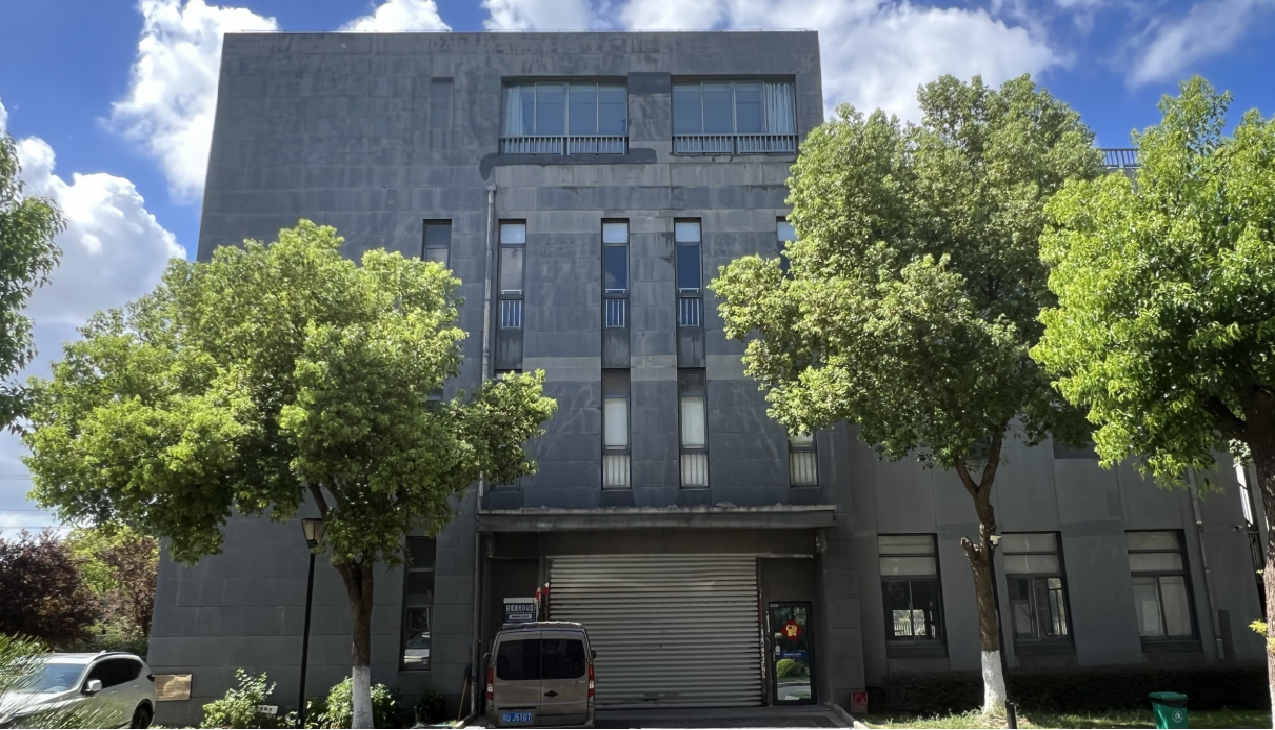
CTA image: contact point for industrial robot order and service questions.
Have Questions or Need More Details?
Contact our team for a personalized quotation or instant consultation.
Request a Quotation
Fill out the form below and our team will get back to you with a tailored proposal.
WhatsApp Direct Chat
Prefer to chat in real-time? Message us on WhatsApp for instant assistance & quick answers.
- Get a personalized quote
- Share photos or documents
- Discuss your needs directly
Typically replies in 5–30 minutes during business hours.