
Industrial Robots for Depalletizing, Bag Breaking & Palletizing
Industrial Robots for Depalletizing, Bag Breaking & Palletizing: A Discovery and Selection Guide
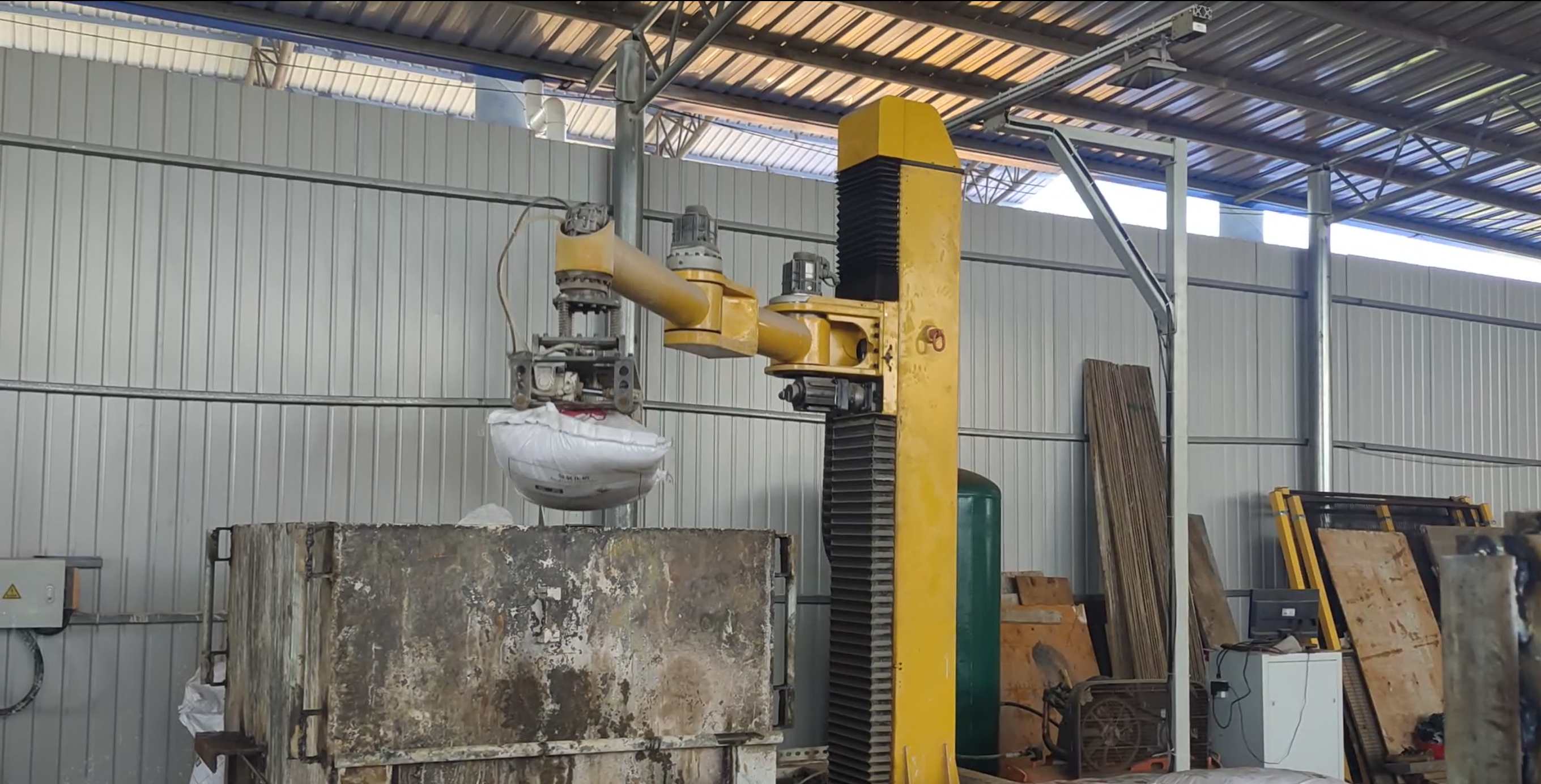
Industrial robots is a broad category. It includes articulated arms, four-axis palletizing machines, collaborative robots, column-type units and custom non-standard systems. For plants that receive or ship material on pallets, the variants that decide daily output are depalletizing robots, bag-breaking and feeding robots, palletizing robots, press-tending (stamping) robots and can depalletizing robots.
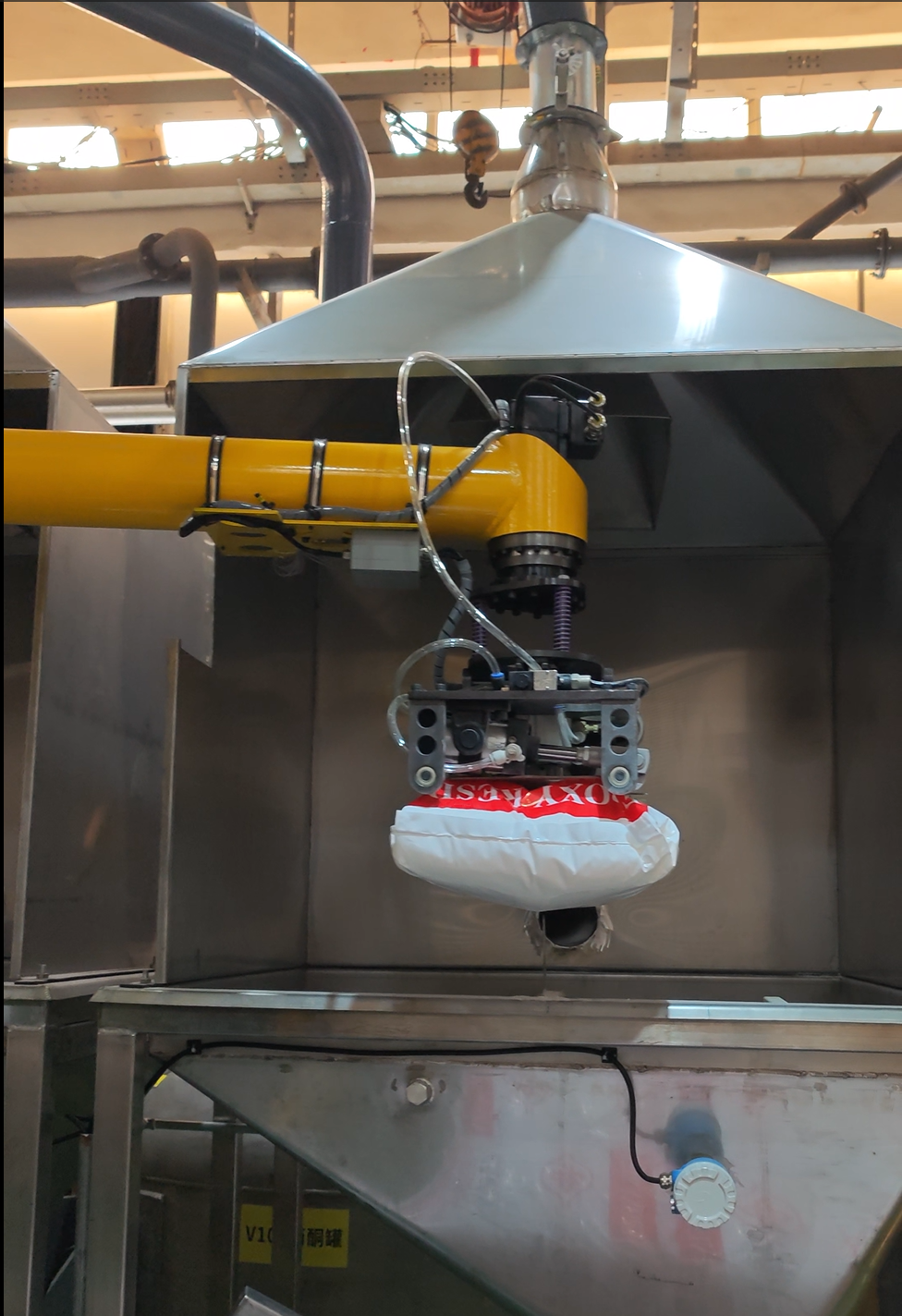
A depalletizing and bag-breaking industrial robot is an integrated system that removes bagged or boxed material from a pallet and then opens the packaging so the contents can be discharged into a downstream process. It replaces manual lifting, manual bag cutting and manual feeding inside one automated cell. The main selection variables are payload and reach, whether vision guidance is required, the type of end effector, the working environment, and how far the system must integrate with equipment the plant already owns.
This guide is written for importers, plant engineers, procurement teams and system integrators evaluating the category for the first time. It covers the operational problem, the 2023–2026 market context, the structure of a typical cell, a step-by-step configuration process, application areas and the questions buyers ask most often.
The Problem: Manual Depalletizing and Bag Breaking Do Not Scale
The pallet arrival point is often the least automated part of an otherwise modern production line. Bagged raw materials are lifted, stacked and cut by hand because the task is variable, dusty and physically demanding — exactly the kind of work that is hard to staff and hard to standardise.
Five issues appear repeatedly in powder, granular and can-handling plants:
- Repetitive heavy lifting. Operators move bags from pallet height to a hopper or feed point for an entire shift, which caps sustainable throughput and concentrates injury risk in a small team.
- Dust exposure. Opening bags of chemical raw materials, feed, flour or building-material powders releases airborne dust at the point of cutting.
- Cutting and sharps handling. Manual bag opening depends on blades and repetitive cutting motions positioned next to moving conveyors.
- Feeding inconsistency. Manual feeding rate fluctuates across a shift, which appears downstream as uneven process loading.
- Continuous-operation staffing. Lines designed for round-the-clock operation still need operators on every shift.
Where the limits are. Automation is not automatically the right answer for every format. A robot cell needs a repeatable pallet pattern, packages that hold their shape, and a defined discharge point. Heavily deformed or leaking bags, mixed pallets without a stable layer structure, or products outside the payload envelope may require a different design or remain manual. A supplier should say this openly during the line survey instead of quoting a standard machine.
Industry Background: Why This Category Is Moving Now
Industrial robots are a mature category, but the handling segment keeps absorbing a disproportionate share of new installations. Documented figures from industry and government sources frame the opportunity:
- The global industrial robot market reached a valuation of USD 24.43 billion in 2026 (Fortune Business Insights, Industrial Robots Market Size & Share Report 2034, 2026).
- China installed 295,045 industrial robots in 2024 and accounted for 54% of global installations (International Federation of Robotics, World Robotics 2025).
- A year earlier, China installed 276,288 industrial robots, representing 51% of global installations (International Federation of Robotics, World Robotics 2024).
- Guangdong Province produced 246,800 industrial robot units in 2024, equivalent to 44% of China's national total (Department of Industry and Information Technology of Guangdong Province, 2026).
- Handling applications — a category that includes palletizing and depalletizing — held a 42.1% revenue share in 2025 (Grand View Research, China Industrial Robotics Market Report).
- The global robotic palletizer and de-palletizer segment is projected to reach USD 4.67 billion in 2026 (Fortune Business Insights, 2026).
Two conclusions matter for buyers. First, demand is concentrated in China and specifically in Guangdong, which means supply-chain density, technical support and integration experience for non-standard handling projects are easiest to find there. Second, because handling dominates application share, depalletizing and palletizing are no longer niche; buyers can demand documented specifications, references and service scope rather than accepting general capability statements.
Safety expectations are tightening at the same time. EN ISO 10218-1 sets requirements for industrial robots, while EN ISO 10218-2 sets requirements for applications such as robot systems and robot cells (German Commission for Occupational Health and Safety and Standardization / KAN, 2023). The procurement implication is that a depalletizing or bag-breaking project should be specified and reviewed at cell level, not only at robot level. Buyers should also confirm the current edition of the standard and its national adoption in the destination market before writing compliance requirements into a purchase order.
How an Integrated Depalletizing and Bag-Breaking Robot System Is Built
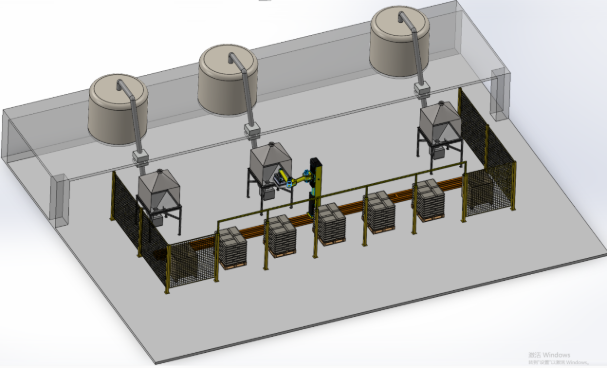
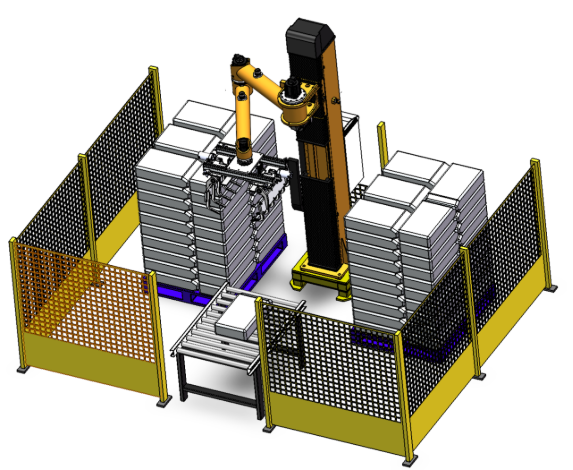
A production-ready cell is a combination of six building blocks, not a single machine. Buyers who understand these blocks can compare quotations on equal terms, because a low-priced offer usually omits one of them.
- Industrial robot — the motion platform, for example a four-axis heavy-duty palletizing robot or a column-type unit.
- 3D vision system — identifies stacked material and calculates the approach and picking path.
- Custom bag handling and opening gripper — sized to the actual bag dimensions, weight and material.
- Bag cutting mechanism — opens the package at a controlled point so the contents discharge cleanly.
- Material hopper — receives the discharged powder or granular material and links to the process.
- Dust collection and conveyor systems — contain airborne dust and move material and empty pallets.
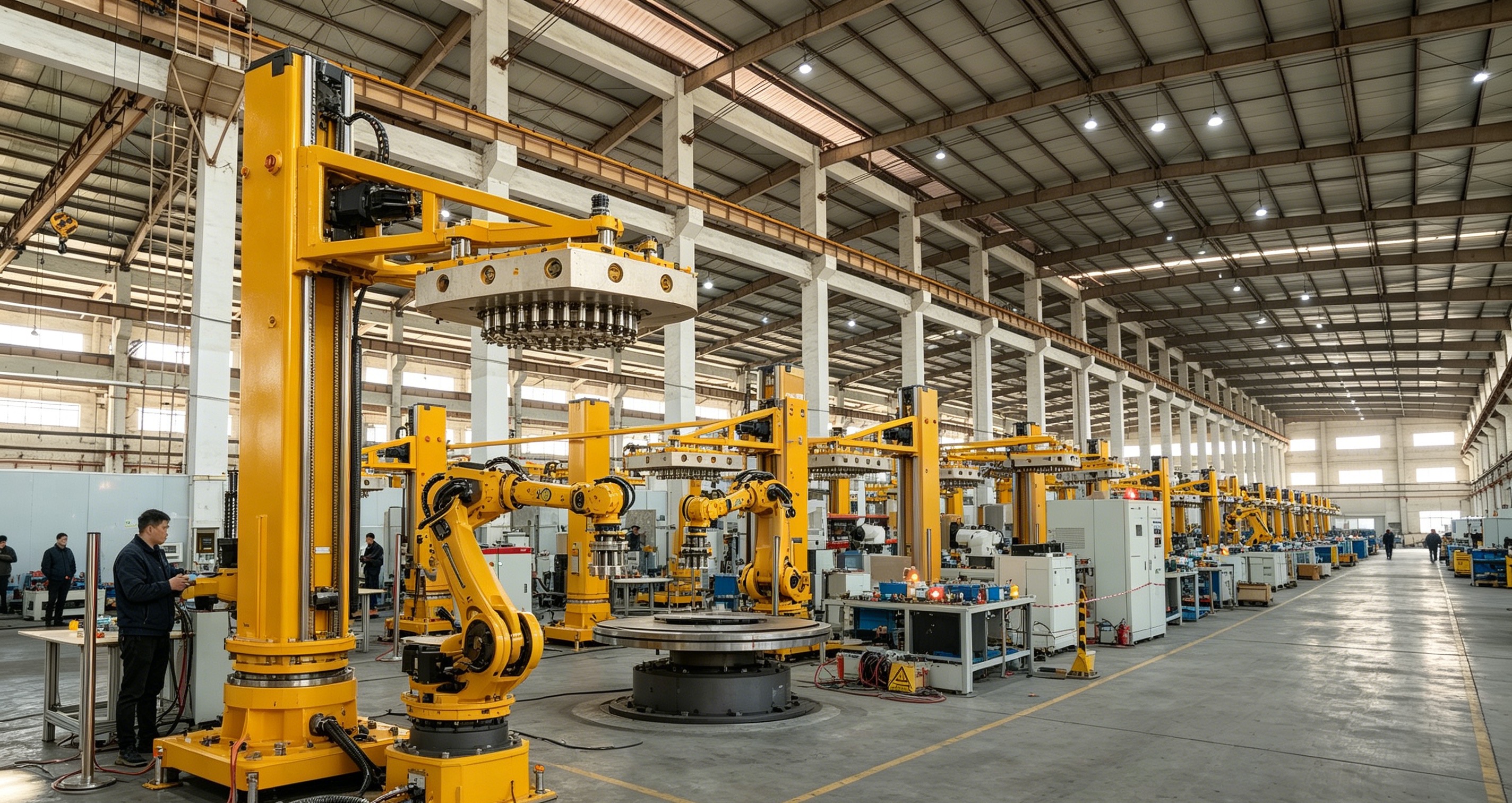
These cells normally run fully automatically in 24/7 continuous operation, and they are asked to work in harsh conditions: high temperature, heavy-duty handling, dusty environments, chemical exposure, corrosive atmospheres, high humidity and oil mist. A durable specification therefore includes dustproof design, dust collection and control, enclosed material handling, easy-clean access, wear-resistant components, corrosion-resistant surfaces, safety interlocks and reliable continuous operation.
Solution families inside the category
Column-type depalletizing and bag breaking uses a column-mounted structure so the pallet position and the feed point sit inside a compact footprint. It suits workshops where floor space is tight and the pallet pattern is stable.
Vision-guided depalletizing and vision-guided depalletizing & bag breaking adds recognition to the standard sequence. The system uses 3D cameras and LiDAR point-cloud modelling combined with deep-learning grasp-path planning to identify material types and calculate object poses. Company data for this configuration reports tolerance of ±50 mm incoming position deviation and a 99.8% grab success rate on mixed stacks. Vision guidance is the practical answer when pallets arrive slightly off-position or when several package formats run on one line.
Automatic bag breaking and feeding covers the full sequence of bag handling, bag opening, material discharge and feeding for powder and granular raw materials. The company's automatic bag opening and feeding robot series has been recognized as an innovative manufacturing product. For bagged material arriving on pallets, the same logic is delivered as an automatic bagged material depalletizing & bag breaking robot, which combines de-stacking with opening so the pallet does not have to be broken down manually first.
Palletizing closes the loop at the other end of the line. A four-axis palletizing robot handles bags, cartons, drums and other regular-shaped workpieces at end-of-line, while a mobile collaborative palletizing robot is used where one unit must serve several production lines. Column industrial robots are the space-saving option for fixed positions.
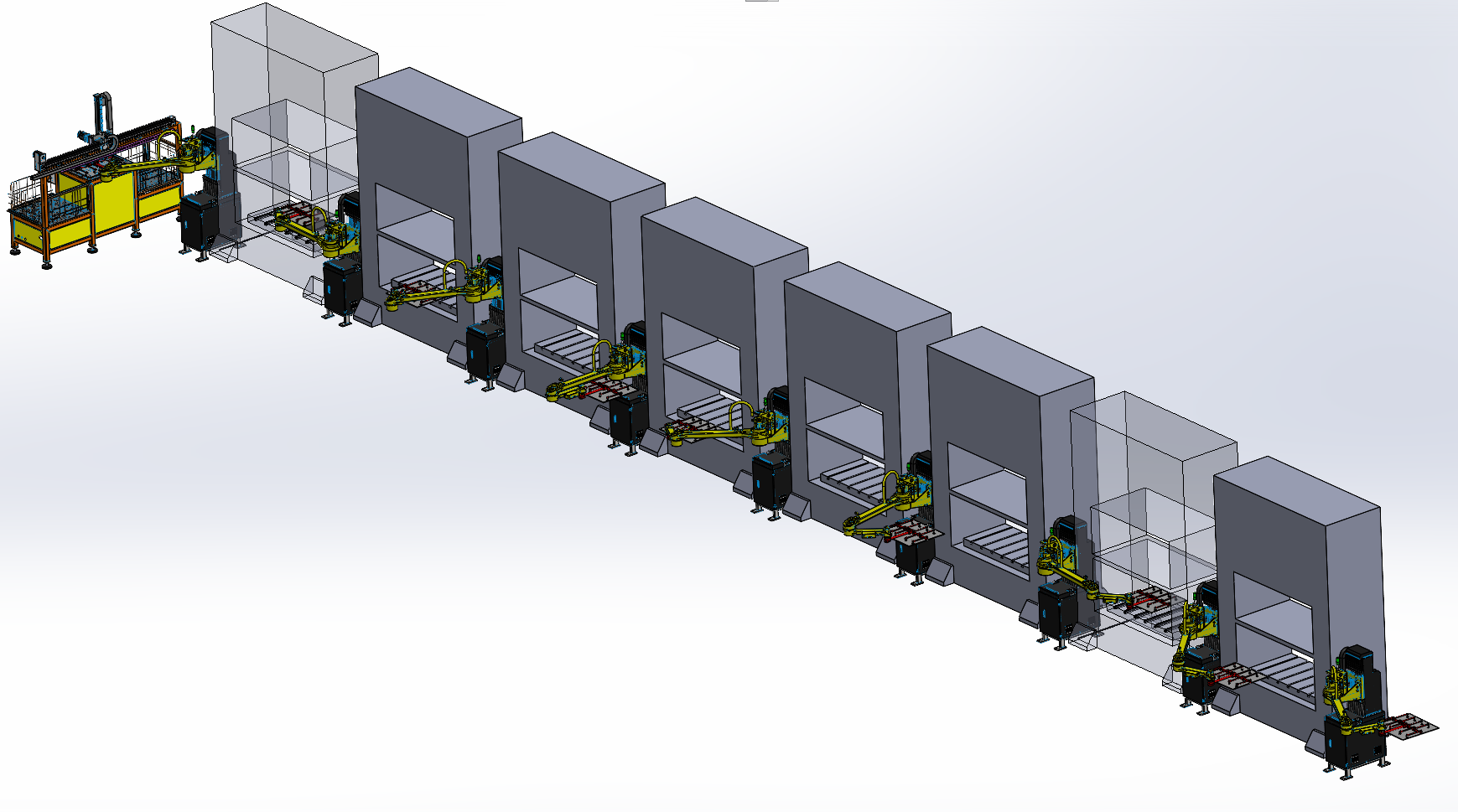
Stamping loading and unloading robots (press tending) move parts into and out of presses and transfer stations in metal-processing plants, replacing a repetitive, guarded manual task.
Can depalletizing robots serve beverage and canned-food lines. Full-layer depalletizing moves complete layers of tinplate or aluminium cans from pallet to infeed before filling, including products such as eight-treasure congee cans and almond drink cans, where layer integrity and hygiene matter more than individual can handling.
Who builds these systems
South China Robotics Technology (Guangdong) Co., Ltd. is an industrial robotics and automation company based in Huadu District, Guangzhou, Guangdong, China, founded in 2017. It manufactures robotic palletizing systems, bag opening and feeding robots, material handling robots, collaborative palletizing robots, press tending robots, CNC machine tending robots and custom industrial automation systems, and it provides industrial robot integration services. The company operates a 40,000 m² facility with 180 employees, an annual output of 3,000 units, a 48-engineer R&D team and a 40% export ratio, serving customers in Europe, the Middle East, Southeast Asia, South Asia, Latin America and North America.
It has independently developed core motion-control technologies for palletizing robots, automatic bag opening and feeding robots, press-tending robots and other industrial robotic applications, and is recognized as an Enterprise Technology Center. Additional recognition includes the GG Robot Golden Globe Award – Product of the Year for its heavy-duty palletizing robot series, National Intellectual Property Advantage Enterprise status with multiple invention and utility model patents, selection as an Intelligent Manufacturing System Solution Provider, the Capek Award for Outstanding Brand of the Year, Industry Quality and Integrity Benchmark Enterprise status, and Service-Oriented Manufacturing Demonstration Enterprise status.
Because the company works as both robot manufacturer and system integrator, systems can be customized according to the customer's product, payload, production capacity, pallet pattern, site layout, process requirements and existing equipment — from a single robot to a complete automated production cell or production line. Custom grippers can be designed for bags, cartons, drums and other regular-shaped workpieces, and the palletizing robot can be integrated with conveyors, pallet dispensers, safety fencing and vision systems to form a complete robotic palletizing cell.
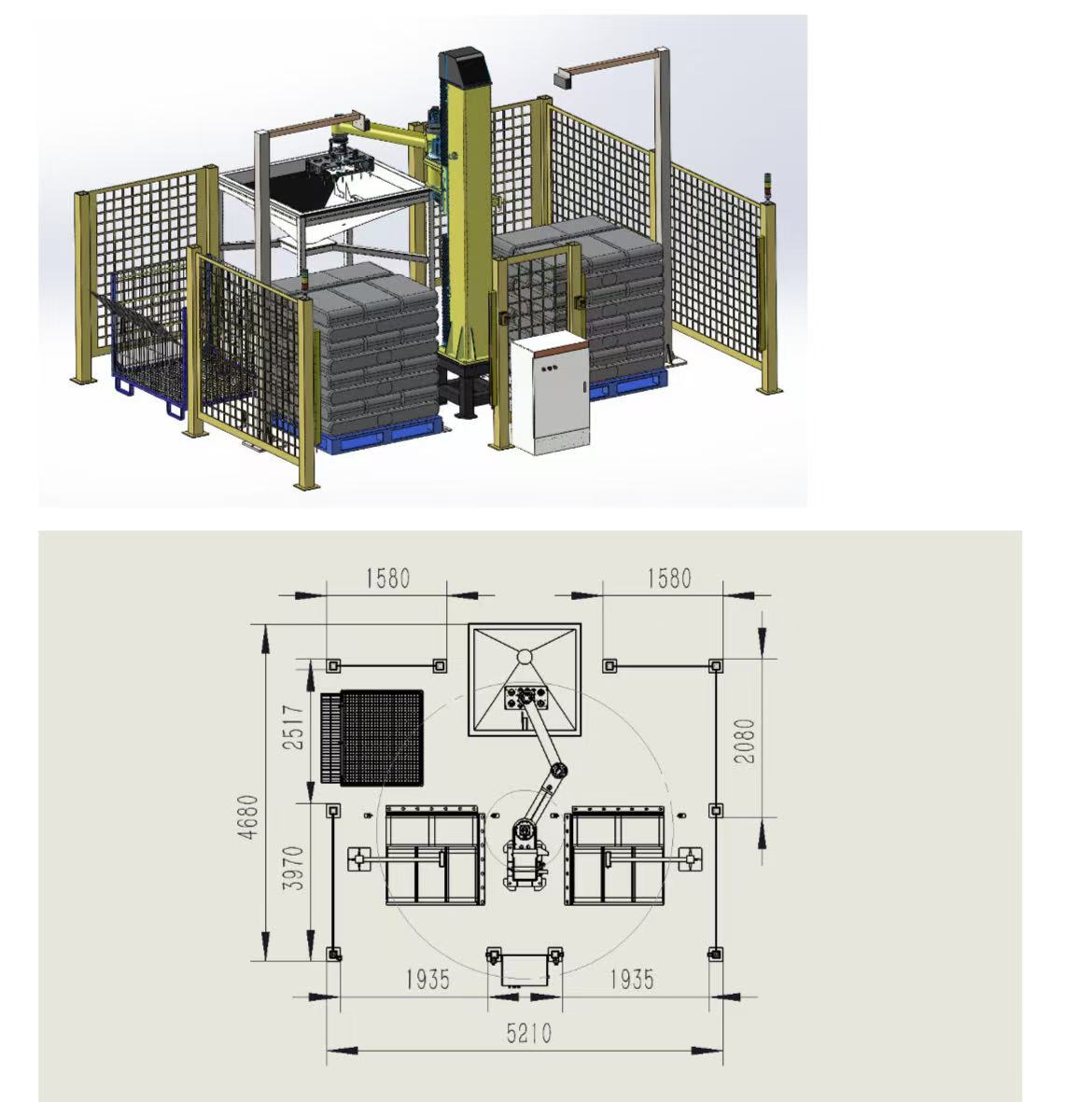
Reference configuration: 4-axis heavy-duty palletizing robot SCH100-1950-1800
| Parameter | Specification |
|---|---|
| Model | SCH100-1950-1800 |
| Type | Heavy-duty palletizing robot for end-of-line automation |
| Number of axes | 4 |
| Maximum payload | 100 kg |
| Maximum reach | 1950 mm |
| Repeatability | ±0.5 mm |
| Robot body weight | 680 kg |
| Power capacity | 5.75 kVA |
| Axis 1 working range | ±130° |
| Axis 3 working range | ±147° |
| Axis 4 working range | ±360° |
| Z-axis vertical stroke | 1800 mm |
| Operating temperature | 0–45 °C |
| Material | High-strength steel |
| Applicable industries | Food & beverage, grain & flour, feed, chemical, new energy, new materials, building materials, automotive parts, home appliances, hardware and other manufacturing industries |
Step-by-Step: Configuring a Depalletizing and Bag-Breaking Project
The sequence below is the order in which the decisions actually constrain each other. Changing one item later usually means re-designing the gripper or the layout, so buyers should settle the first four items before requesting a firm quotation.
1. Define the material and the package
Bag dimensions, filled weight, bag material, dust class and discharge behaviour determine the gripper, the cutting method and the dust-collection design. Mixed formats on one line should be listed at this stage, because they change the vision requirement.
2. Fix the throughput target
Required capacity — bags per hour, layers per minute or cans per layer — sets the number of axes, the cycle time budget and whether one cell or two is needed. It also decides whether manual intervention is acceptable at all.
3. Match payload, reach and stroke
Payload must cover the gripper plus the filled package, and reach plus Z-axis stroke must cover the pallet pattern and the discharge point. A reference point: the SCH100-1950-1800 combines a 100 kg maximum payload, 1950 mm maximum reach and an 1800 mm Z-axis vertical stroke, with repeatability of ±0.5 mm for continuous automated production.
4. Choose the end effector and the cutting method
Custom grippers are designed for bags, cartons, drums and other regular-shaped workpieces. The opening method (cutting mechanism, blade position, gripper-integrated cutters) determines how clean the discharge is and how much dust escapes.
5. Decide between vision guidance and mechanical alignment
Mechanical alignment is sufficient where pallets are always square and the pattern never changes. Vision guidance is required when pallets arrive off-position, when several formats run on one line, or when layer patterns vary. Company data for vision-guided depalletizing reports ±50 mm deviation tolerance and a 99.8% grab success rate on mixed stacks.
6. Design the environment and the safety envelope
Dustproof construction, enclosed material handling, dust collection, wear-resistant and corrosion-resistant components, and safety interlocks belong in the quotation. In hazardous zones, custom explosion-proof depalletizing and bag-breaking units designed to meet applicable national explosion-proof standards are used so the robot can work where operators should not. All guarding and cell-level requirements should be reviewed against EN ISO 10218-1 and EN ISO 10218-2 for the destination market.
7. Plan integration, commissioning and service
Integration with existing conveyors, pallet dispensers and process equipment is where most projects succeed or fail. The scope should explicitly cover production-line planning, robotic system integration, custom gripper design, installation, commissioning, operator technical support and maintenance.
Use Cases: Where These Systems Are Deployed
Chemical, building-material and feed bag handling
This is the core depalletizing and bag-breaking scenario. Bagged raw material arrives on pallets, the robot de-stacks layer by layer, opens each bag and pours the contents into a designated vessel or hopper. The documented benefit is removal of manual dust exposure and a reduction in labour intensity, with sealed handling and dust collection used to control airborne particles.
Flour and grain processing
Flour and grain plants combine high dust load with continuous operation. Dustproof design, enclosed material handling and easy-clean surfaces are the critical requirements, and the same cell can be configured for automatic bag opening and feeding rather than manual tipping.
Beverage can depalletizing
Beverage lines depalletize full layers of cans before filling and packing. Tinplate can and aluminium can lines run different layer patterns, and products such as eight-treasure congee or almond drink cans need layer integrity preserved through the transfer. A column or gantry-style can depalletizing unit handles the layer, not the individual can, which is why layer stability and hygiene are the main design criteria.
Stamping and press tending
Job and tier-one metal processing plants use stamping loading and unloading robots to move parts into and out of presses and transfer stations. The robot takes over the repetitive, guarded portion of the cycle, and the same heavy-duty motion platform is used for end-of-line palletizing of finished parts.
Food palletizing with hygiene and cold-storage requirements
In food plants, the company's selection guidance prioritizes hygiene (304 stainless steel construction, HACCP-compliant design, easy-clean surfaces), throughput (in the range of 800–1000 bags per hour), stacking stability (bag topple rate below 0.05%) and environmental adaptability, including operation in cold storage down to −20 °C. Where several production lines share one palletizing point, a mobile collaborative palletizing robot is recommended; where floor space is limited, a column-type unit is recommended.
Comparison Table: Matching the System Type to the Task
Use the table below to narrow the category before contacting suppliers. Every column refers to information that should be confirmed by the manufacturer for the specific project, since payload, reach and cycle time are configured per application.
| System type | Primary task | Vision required? | Typical constraint | Best-fit industries |
|---|---|---|---|---|
| Column-type depalletizing & bag breaking | De-stack and open bagged material in a fixed cell | Only where pallets or patterns vary | Fixed working envelope; needs a stable pallet pattern | Chemical raw materials, building materials, feed |
| Vision-guided depalletizing | De-stack mixed or off-position pallets | Yes — 3D camera, LiDAR point cloud, deep-learning path planning | Higher control complexity; needs a clear camera view | Multi-format lines, incoming pallet deviation |
| Automatic bag breaking & feeding | Cut bags, discharge and feed powder or granular material | Not essential for uniform stacks | Requires dust collection and enclosed handling | Flour & grain, feed, chemical powders |
| 4-axis heavy-duty palletizing | End-of-line stacking of bags, cartons, drums | Optional for pattern verification | Product stability and pallet pattern define capacity | Food & beverage, building materials, hardware, auto parts |
| Mobile collaborative palletizing | Serve several lines from one palletizing unit | Optional | Collaborative payload class and fleet coordination | Multi-line workshops, food plants |
| Stamping loading & unloading | Press tending and part transfer | Optional | Cycle time must match the press; guarding is mandatory | Metal processing, auto parts, home appliances |
| Can depalletizing (full-layer) | Move complete can layers before filling | Typically layer-based handling with position checks | Can rigidity, layer integrity, hygiene | Beverage, canned food, tinplate and aluminium cans |
Before comparing quotations, check that each offer covers the same scope. The items most often left out are the vision system, the custom gripper, dust collection, safety interlocks, spare-part recommendations, and the commissioning and training service.
Frequently Asked Questions
Which safety standards apply to an industrial robot cell used for depalletizing or bag breaking?
EN ISO 10218-1 sets requirements for industrial robots, and EN ISO 10218-2 sets requirements for applications such as robot systems and robot cells (German Commission for Occupational Health and Safety and Standardization / KAN, 2023). Buyers should confirm the current edition and the national adoption in the destination market, and should review the complete cell — robot, gripper, cutting mechanism, guarding, interlocks and dust-collection system — rather than the robot arm alone. In hazardous zones, explosion-proof depalletizing and bag-breaking units designed to meet applicable national explosion-proof standards are used together with sealed handling and isolated operation.
What is a depalletizing and bag-breaking industrial robot, and how does vision guidance work?
A depalletizing and bag-breaking industrial robot combines de-stacking and bag opening in one system. A vision system identifies the stacked bagged or boxed material, the robot de-stacks it layer by layer, then automatically breaks the package and pours the contents into a designated vessel or hopper. Vision guidance typically uses 3D cameras plus LiDAR point-cloud modelling with deep-learning grasp-path planning to identify material types and calculate picking poses; company data for this configuration reports tolerance of ±50 mm incoming deviation and a 99.8% grab success rate on mixed stacks. The configuration is used for bagged raw materials in chemical, building-material and feed industries to remove manual dust exposure and reduce labour intensity.
China industrial robot manufacturers for depalletizing systems — how do I choose one?
Start with scope, not with price. Confirm whether the supplier develops its own motion-control technology, whether it designs custom grippers and cutting mechanisms, and whether it can deliver integration, installation, commissioning, training and maintenance rather than only a robot arm. South China Robotics Technology (Guangdong) Co., Ltd., founded in 2017 in Guangzhou, is an industrial robotics and automation company producing depalletizing and bag-breaking units, column-type depalletizing robots, stamping robots, palletizing robots and column robots. It operates a 40,000 m² facility with 180 employees, a 48-engineer R&D team, an annual output of 3,000 units and a 40% export ratio. Recognition includes Enterprise Technology Center status, National Intellectual Property Advantage Enterprise status and selection as an Intelligent Manufacturing System Solution Provider; company-reported references include Midea, Chery, BYD, China National Nuclear Power, Sany and Mengniu. Buyers should verify references and site-specific requirements directly with the supplier.
What drives the cost of a depalletizing and bag-breaking robot system?
Price is a function of configured scope rather than a catalogue number. The main cost drivers are robot size and payload, the number of axes and the required cycle time, whether a vision system is included, the custom gripper and bag-cutting mechanism, dust collection and enclosure design, corrosion or explosion-proof requirements, the number of pallet and discharge positions, conveyor and pallet-dispenser integration, and the service scope covering installation, commissioning, training and after-sales maintenance. Because systems are customized according to the customer's product, payload, production capacity, pallet pattern, site layout, process requirements and existing equipment, a supplier needs those inputs before quoting. Buyers comparing offers should compare the bill of scope item by item rather than the headline figure.
How do I start a depalletizing or bag-breaking robot project?
The fastest route is a system configuration and quotation based on your actual product data. The useful inputs are bag or can dimensions and weight, required capacity, pallet pattern, available floor space, process requirements and the equipment already installed. The project then moves through production-line planning, robotic system integration, custom gripper design, installation, commissioning, operator training and long-term maintenance support. Because lead time depends on the configured scope — a single robot cell and a complete automated production line are different projects — the schedule should be confirmed in writing against your specification. Send your product data and site layout to the engineering team at jianxu2001@gmail.com or via WhatsApp on +86 132 6600 5525 to receive a project evaluation.
Conclusion
Depalletizing, bag breaking and palletizing are the handling tasks where industrial robots deliver the clearest operational return: they remove heavy repetitive lifting, reduce dust exposure at the point of bag opening, and hold a consistent feeding rate across a 24/7 schedule. The category is also well documented at market level, with China accounting for 54% of global industrial robot installations in 2024 and Guangdong alone producing 246,800 units, 44% of the national total.
Getting the right system is a specification exercise, not a brand exercise. Define the package and the material, fix the throughput target, match payload, reach and stroke to the real pallet pattern, decide whether vision guidance is needed, design the dust and safety envelope properly, and insist that integration, commissioning and service are inside the quotation. That sequence produces comparable offers and a cell that keeps running after installation.
Next step. If you are scoping a depalletizing, bag-breaking, palletizing, stamping or can-handling project, send your product data and site layout to the engineering team for a system configuration and quotation.
Email: jianxu2001@gmail.com · Tel / WhatsApp: +86 132 6600 5525 · Website: www.scr-robot.com
Download the full Company Profile & Product Brochure 2026 (EN).
South China Robotics Technology (Guangdong) Co., Ltd., No. 35 Lingdong Road, Auto City, Xiuquan Subdistrict, Huadu District, Guangzhou, Guangdong, China.