
Industrial Robots for Depalletizing and Palletizing: A Practical Discovery Guide for Buyers
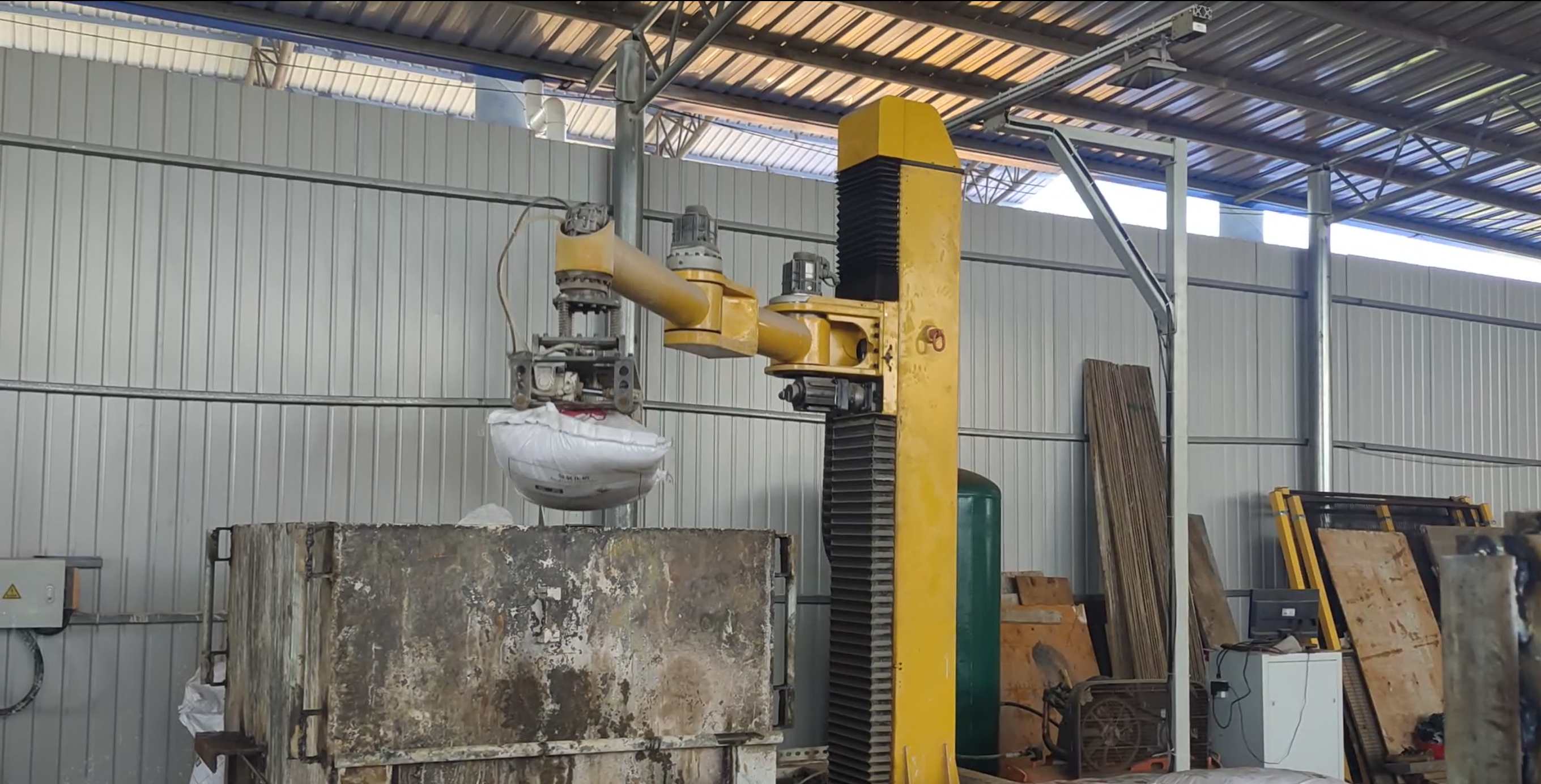
A depalletizing and bag-breaking industrial robot is a handling system that removes stacked material from a pallet, opens the package, and discharges the contents into the production process without an operator lifting the load. That one sentence answers the first question most first-stage buyers actually have, because the phrase industrial robots on its own is a category, not a purchasing decision. A chemical plant receiving one tonne of bagged raw material per shift, a beverage line running tinplate cans at full-layer speed, and a stamping shop feeding a press cell all sit inside the same category — and all need different machinery.
This guide is written for buyers at the awareness and research stage: importers, plant engineers, procurement managers and system integrators who know they need to automate manual depalletizing, bag handling or end-of-line palletizing, but have not yet decided which robot type, which specification level, or which supplier profile fits the job. It explains what these systems do, how the main solution types differ, which specification values decide the outcome, how safety and compliance responsibilities are split between the robot and the robot cell, and what a supplier needs before it can quote accurately.
The Discovery Problem: A Broad Category Hides a Narrow Decision
Searching for industrial robots returns arm manufacturers, integrators, component suppliers and trading companies in one list. The result is a shortlist that mixes organisations with completely different roles, which is why so many first-stage robotics projects stall before a specification is even written.
The practical way out is to define the task before defining the machine. Three questions narrow almost any depalletizing or palletizing project:
- What arrives on the pallet? Bagged powder and granular material, cartons, drums, tinplate cans, aluminium cans or metal blanks each require different gripper architecture and different package-opening logic.
- What happens to the material after it leaves the pallet? Feeding a reactor or mixer, filling a hopper, stacking a finished pallet and loading a press are four different downstream duties.
- What environment does the cell sit in? Dust, humidity, oil mist, high temperature, corrosive exposure and continuous operation change the enclosure, sealing and maintenance design.
A buyer who can answer those three questions can already exclude most of a general industrial robot search result list, because the answers point to a specific robot family rather than to a generic arm.
Industry Background: Where Depalletizing and Palletizing Demand Comes From
Handling is the largest single application block inside the industrial robot market. According to Grand View Research, the handling segment — which includes palletizing and depalletizing — held a 42.1% share of the market in 2025. That share explains why depalletizing is usually one of the first processes a factory automates: it is repetitive, physically demanding, dust-generating and positioned at the very start or the very end of a production line.
| Indicator | Value | Year | Scope | Source |
|---|---|---|---|---|
| Global industrial robot market value | USD 24.43 billion | 2026 | Global | Fortune Business Insights |
| Robotic palletizer and depalletizer segment | USD 4.67 billion (projected) | 2026 | Global | Fortune Business Insights |
| China industrial robot installations | 276,288 units — 51% of global installations | 2023 | China | IFR World Robotics 2024 |
| Guangdong industrial robot output | 246,800 units — 44% of the national total | 2024 | Guangdong, China | Department of Industry and Information Technology of Guangdong Province |
| Handling application share, including palletizing and depalletizing | 42.1% | 2025 | Global | Grand View Research |
Two structural facts follow from that table. First, depalletizing and palletizing are not niche applications — they are the largest functional block of an industrial robot market valued at USD 24.43 billion in 2026, with the palletizer and depalletizer segment itself projected at USD 4.67 billion in the same year. Second, supplier density is geographically concentrated: Guangdong produced 246,800 industrial robot units in 2024, equal to 44% of China's national total, and China accounted for 276,288 installations in 2023, or 51% of global installations. For an overseas buyer evaluating sourcing options, that concentration usually means shorter component supply chains, faster engineering response and a deeper pool of integration experience in powder, food and beverage handling — not automatically a lower price.
Commercial research houses publish these aggregate figures, but they do not publish performance data for bag-breaking or can-depalletizing cells. Buyers should therefore treat market reports as context for budget and timing decisions, and treat machine-level performance as something that must be verified supplier by supplier.
The Solution Landscape: Matching the Robot Type to the Task
Depalletizing is rarely one machine. It is a family of configurations, and choosing the wrong family is the most expensive mistake available at the discovery stage. The configurations below cover the majority of industrial depalletizing, bag handling and end-of-line palletizing duties.
Vision-guided depalletizing robots
A vision-guided system uses 3D cameras and LiDAR point-cloud modelling with deep-learning grasp-path planning to locate material on the pallet. The value of vision is tolerance. Where mechanical alignment requires the pallet to arrive in a fixed, repeatable position, a vision-guided configuration identifies mixed stacks and incoming position deviation, which is the normal condition in real logistics.
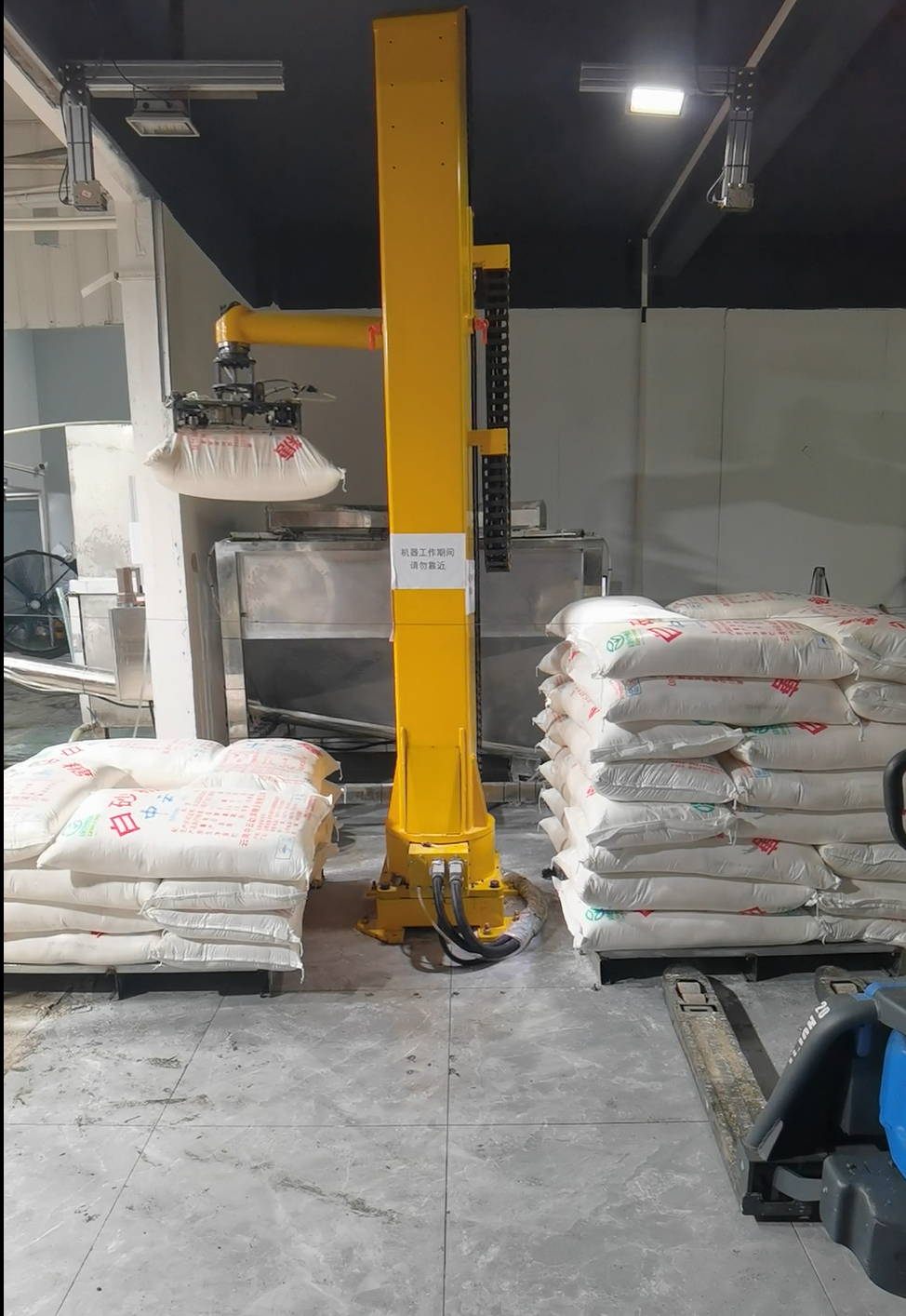
Column-type depalletizing robots
Column-type configurations mount the motion axes on a column structure rather than a full articulated arm, which saves floor area in workshops where the pallet position is fixed and the aisle is narrow. They are frequently specified in existing buildings where the depalletizing station has to fit into a footprint that was never designed for a robot cell.
Depalletizing and bag-breaking industrial robots
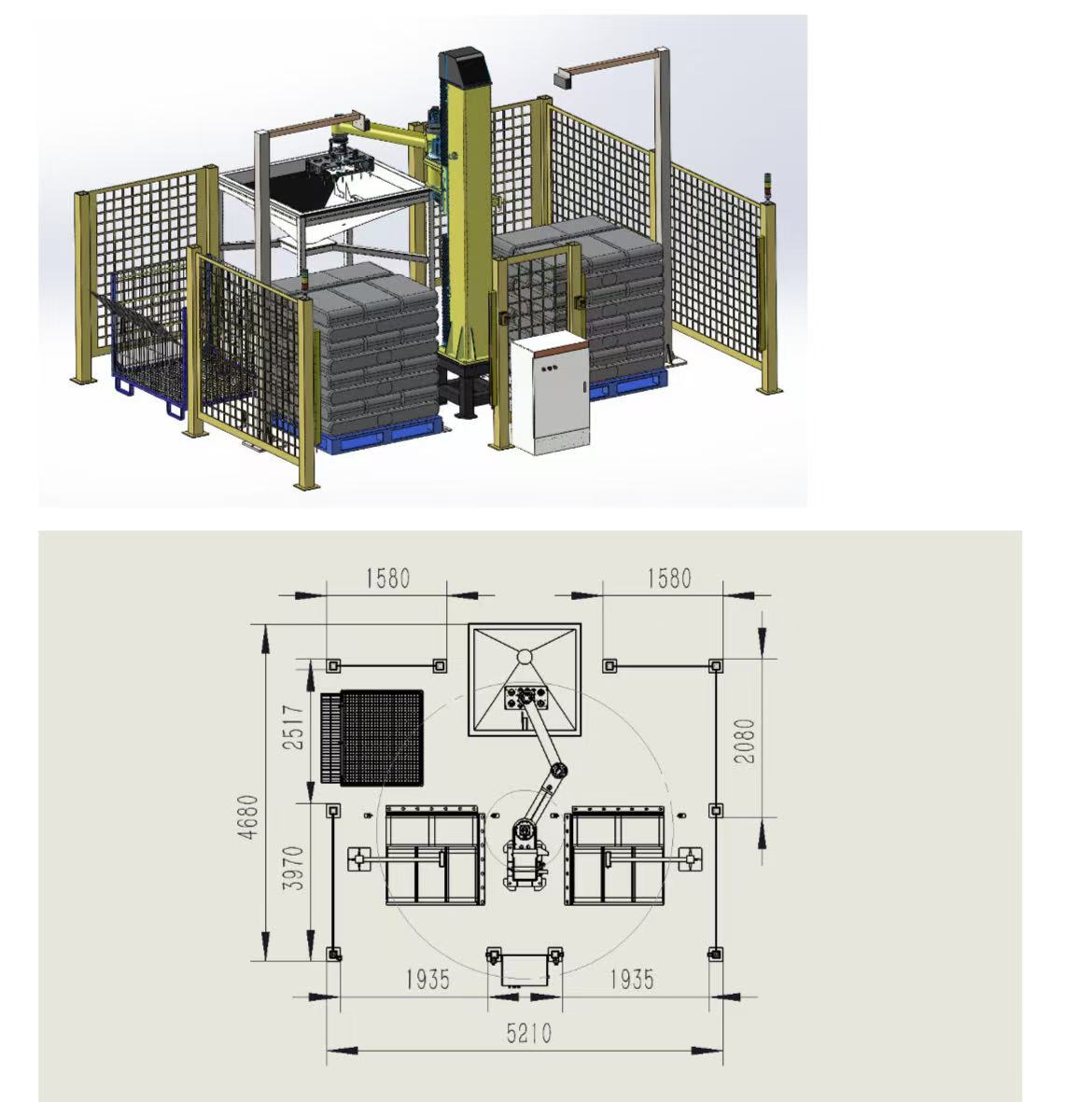
A depalletizing and bag-breaking robot integrates de-stacking with package opening. The vision system recognises the stacked bagged or boxed material, the robot removes it layer by layer, and the package is then cut open so the contents discharge into a designated vessel. This integrated function is what removes manual dust exposure in chemical, building-material and feed plants, and it is also what makes the cell harder to engineer than a plain pick-and-place unit.
Automatic bag-breaking and feeding robots
Where the bag is already presented at a feed station rather than on a pallet, an automatic bag-breaking and feeding robot handles bag transport, opening, material discharge and feeding into the process. The function is to automate powder and granular raw material intake end to end, reducing repetitive manual work on a station that is otherwise continuously staffed.
Heavy-duty palletizing robots
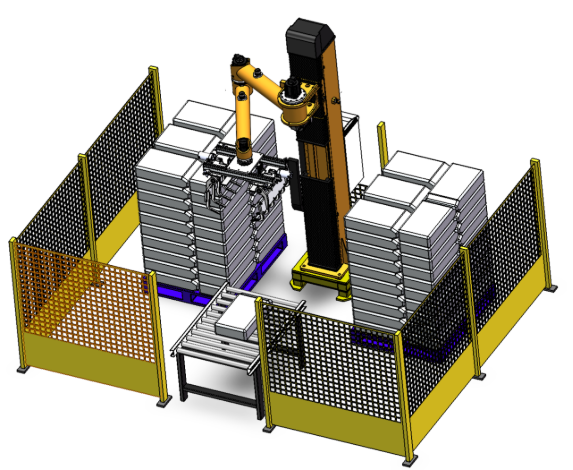
At the other end of the line, a four-axis palletizing robot rebuilds finished pallets. Four-axis structures are the standard choice for palletizing because the duty is pick, transfer and place across a defined stacking pattern, and the Z-axis stroke determines how many layers can be built without repositioning equipment. Custom grippers are normally designed for the specific workpiece — bags, cartons, drums or other regular-shaped items.
Mobile collaborative palletizing robots
Factories running multiple production lines with variable output benefit from a mobile collaborative palletizing configuration, which can be redeployed between lines instead of being fixed to a single station. This is a layout-flexibility decision more than a speed decision, and it is normally evaluated against the cost of a second fixed cell.
Stamping loading and unloading robots
Press tending is a distinct discipline: a stamping loading and unloading industrial robot moves blanks or formed parts into and out of a press, where cycle time, synchronisation with the press stroke and operator safety are the governing constraints. It shares motion-control technology with palletizing robots but the cell logic and guarding are different.
Can depalletizing robots for beverage lines
Beverage can handling adds its own constraints: lightweight aluminium cans deform easily, tinplate cans carry different mass and friction characteristics, and full-layer depalletizing is often required to keep pace with a filling line. Applications range from full-automatic can depalletizing for high-volume beverage production to specific product duties such as eight-treasure congee cans or almond drink cans, where layer integrity and can stability determine the gripper design.
Custom non-standard industrial robots
When the package, the working environment or the site layout falls outside a standard configuration, the project becomes a custom non-standard industrial robot system. Systems can be customised according to the customer's product, payload, production capacity, pallet pattern, site layout, process requirements and existing equipment — which is the practical definition of non-standard integration.
What a Heavy-Duty Palletizing Robot Specification Should Prove
The SCH100-1950-1800 is a four-axis heavy-duty palletizing robot built for end-of-line automation and for palletizing, depalletizing and material handling duties. Its published specification is a useful benchmark for what a first-stage buyer should expect to see documented before shortlisting any supplier.
| Parameter | Value |
|---|---|
| Model | SCH100-1950-1800 |
| Number of axes | 4 |
| Maximum payload | 100 kg |
| Maximum reach | 1950 mm |
| Z-axis vertical stroke | 1800 mm |
| Repeatability | ±0.5 mm |
| Robot body weight | 680 kg |
| Power capacity | 5.75 kVA |
| Axis 1 / Axis 3 / Axis 4 working range | ±130° / ±147° / ±360° |
| Operating temperature | 0–45 °C |
| Material | High-strength steel |
Three values in that table carry more decision weight than the rest. The 100 kg payload and 1950 mm reach define whether the unit can cover medium and heavy-duty palletizing, depalletizing and material handling duties at the required layer pattern. The 1800 mm Z-axis vertical stroke determines how tall a stack can be built or unloaded before the cell needs additional equipment. The ±0.5 mm repeatability defines whether the placement is stable enough for continuous automated production, which matters when cartons or drums must be stacked to a repeatable pattern for downstream automated warehousing.
The robot is only part of the deliverable. The same specification states that the unit can be integrated with conveyors, pallet dispensers, safety fencing and vision systems to form a complete robotic palletizing cell, and that the system configuration can be customised according to plant layout, product dimensions, weight, required capacity and palletizing pattern. For a buyer, that sentence is the difference between purchasing an arm and purchasing a working cell.
Vision, Tolerance and Gripper Design
Vision is where depalletizing projects are won or lost. In the configuration described for vision-guided depalletizing, 3D cameras and LiDAR scan the stacked goods and build point-cloud models of the packages, and deep-learning algorithms analyse that model data to identify material types and calculate object poses. The company specifies a position deviation tolerance of ±50 mm and a grab success rate of 99.8% for mixed stacks in this configuration.
Two engineering consequences follow. First, a tolerance figure of this order means the incoming pallet does not have to be positioned with millimetre precision by the forklift operator, which reduces the real-world failure rate more than any increase in robot speed. Second, the grab success rate is a system-level number: it depends on the vision model, the gripper, the package surface and the stack pattern together. Buyers should therefore verify how a claimed success rate was measured — on which package type, over what sample, and under what lighting conditions — rather than treating it as a robot attribute.
Grippers are almost always custom. The same product documentation notes that custom grippers can be designed for bags, cartons, drums and other regular-shaped workpieces. For bagged material, the gripper has to hold a flexible load without tearing it before the cutting mechanism opens the bag; for cans, it has to move a full layer without deforming lightweight aluminium. These are different design problems solved by the same robot platform.
Safety and Compliance: Robot Certification Is Not Cell Certification
Industrial robot safety requirements in the European standards context are split across two parts of the EN ISO 10218 series. Part 1 contains requirements for industrial robots; Part 2 contains requirements for applications such as robot systems and robot cells. This split is described in the KAN (German Commission for Occupational Health and Safety and Standardization) explanatory article on the revision of EN ISO 10218.
That distinction has direct procurement consequences. A purchasing specification should assess both the robot and the complete depalletizing, bag-breaking, palletizing, stamping or can-handling cell, rather than relying only on a robot-level declaration. A conforming arm inside a cell without the correct guarding, interlocks and commissioning records is not a conforming installation. The KAN article is explanatory rather than the normative text itself, so the current edition and the national adoption in the destination market should be confirmed before any compliance claim is included in a contract.
Where the application involves powder and granular material, dust control becomes part of the same discussion. The documented working conditions for these cells include high temperature, heavy-duty handling, dusty environments, chemical exposure, corrosive environments, high humidity, oil mist and continuous operation. The matching design requirements include dustproof design, dust collection and control, enclosed material handling, easy cleaning, wear-resistant components, corrosion-resistant design, safety interlocks and easy maintenance.
Step-by-Step: How a Depalletizing Project Moves from Discovery to Commissioning
A robotic cell is engineered, not ordered from a catalogue. The sequence below reflects how a depalletizing, bag-breaking or palletizing project is normally structured, and it also shows what information a supplier needs at each stage.
Step 1 — Define the material and the package
Identify whether the load is bagged powder or granular material, cartons, drums, cans or formed parts. Package type drives gripper design, bag-cutting logic and the dust-control requirement more than any other single input.
Step 2 — Set the required production capacity and operation mode
Capacity determines robot size, the number of pallet positions and whether the cell must run fully automatically in 24/7 continuous operation or can be buffered.
Step 3 — Define the pallet pattern and stacking requirement
Pallet dimensions, layer pattern, number of layers and stack height set the required reach and Z-axis stroke. For bag palletizing, bag-topple rate is a real acceptance criterion and should be specified explicitly.
Step 4 — Survey the site layout and existing equipment
Available floor area determines whether a column-type configuration, a standard four-axis cell or a mobile collaborative setup is realistic. Existing conveyors, hoppers and safety fencing define the interface points the new cell must match.
Step 5 — Specify vision, gripper and matched equipment
The matched equipment set for these systems typically includes the industrial robot, a 3D vision system, a custom bag handling and opening gripper, a bag-cutting mechanism, a material hopper, a dust collection system and a conveyor system. Each item is a decision point, not a default.
Step 6 — Confirm the safety and compliance scope
Agree in writing which standards apply to the robot and which apply to the cell, who supplies the risk assessment, and which national adoption applies in the destination market.
Step 7 — Plan commissioning, training and maintenance
A cell is only productive when it is commissioned correctly and maintained over time. Service scope should cover production-line planning, system integration, customised gripper design, installation, commissioning, technical support and maintenance, together with on-site commissioning, operator training and long-term after-sales maintenance.
Use Cases: Where These Systems Fit
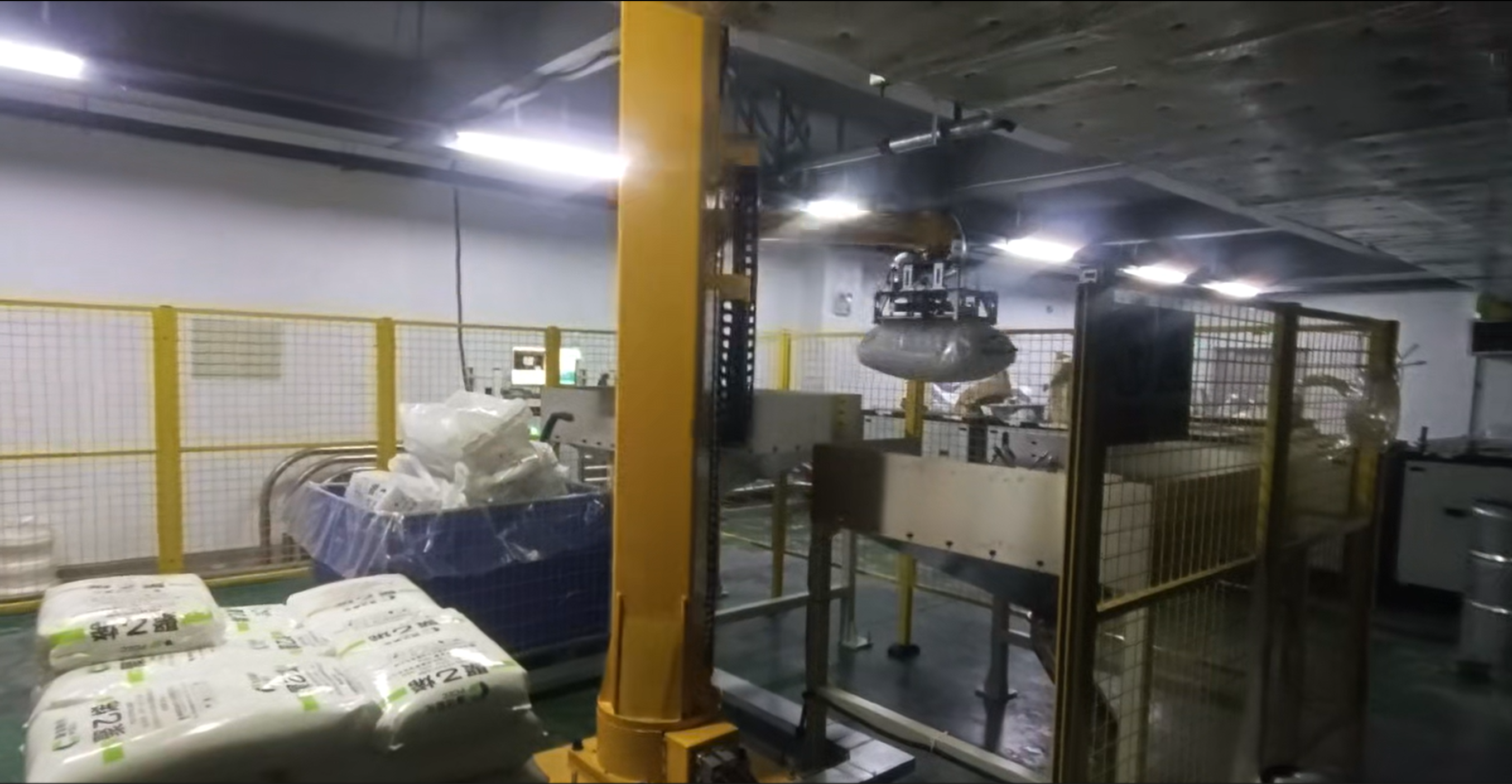
The industries documented for these applications include food and beverage, sugar, flour and grain processing, feed, chemical raw materials, new materials, building materials and other powder and granular material processing sectors. The documented project types include automatic bag opening and feeding systems, robotic palletizing systems, material handling systems, machine tending systems, press tending systems, collaborative robot palletizing systems and custom robotic automation systems. Deployment markets recorded for these applications include China, Malaysia, Saudi Arabia and Turkey.
- Chemical and building material intake: bagged raw material is depalletized, opened and discharged into a hopper or mixer, with dust collection keeping operators out of the exposure zone.
- Food and beverage can handling: full-layer depalletizing of tinplate or aluminium cans feeding a filling line, including specific product duties such as eight-treasure congee cans and almond drink cans.
- Flour, grain and feed processing: continuous bag handling where dust, humidity and 24/7 operation dominate the design requirement rather than peak speed.
- Automotive and metal processing: stamping loading and unloading, where the robot must synchronise with press cycles rather than with a pallet pattern.
- End-of-line palletizing: finished bags, cartons or drums are rebuilt into stable, transport-ready pallets for automated warehousing.
Comparison Table: Depalletizing and Handling Solutions Side by Side
| Solution type | Primary function | Load it is designed for | Best fit when |
|---|---|---|---|
| Vision-guided depalletizing robot | Recognise and unstack palletised goods | Bagged, boxed and mixed stacks | Incoming pallets vary in position or pattern |
| Column-type depalletizing robot | Unstack at a fixed station with minimum footprint | Bagged and boxed material | Floor area is limited or the aisle is narrow |
| Depalletizing and bag-breaking robot | De-stack, open the package, discharge contents | Bagged powder and granular raw material | Manual dust exposure must be removed |
| Automatic bag-breaking and feeding robot | Open bags and feed material into the process | Powder and granular bagged material | The feed station is staffed continuously |
| Heavy-duty palletizing robot | Build finished pallets to a defined pattern | Bags, cartons, drums, regular workpieces | Medium and heavy end-of-line duties are required |
| Mobile collaborative palletizing robot | Redeployable palletizing across lines | Bags, cans, boxes | Several lines share variable output |
| Stamping loading and unloading robot | Load and unload press operations | Metal blanks and formed parts | Cycle time and press synchronisation govern |
| Can depalletizing robot | Unstack full layers of cans | Tinplate and aluminium beverage cans | A filling line needs layer-level supply |
| Custom non-standard industrial robot | Purpose-built automation for a defined process | Defined by the customer process | No standard configuration covers the task |
Who Manufactures These Systems: South China Robotics Technology
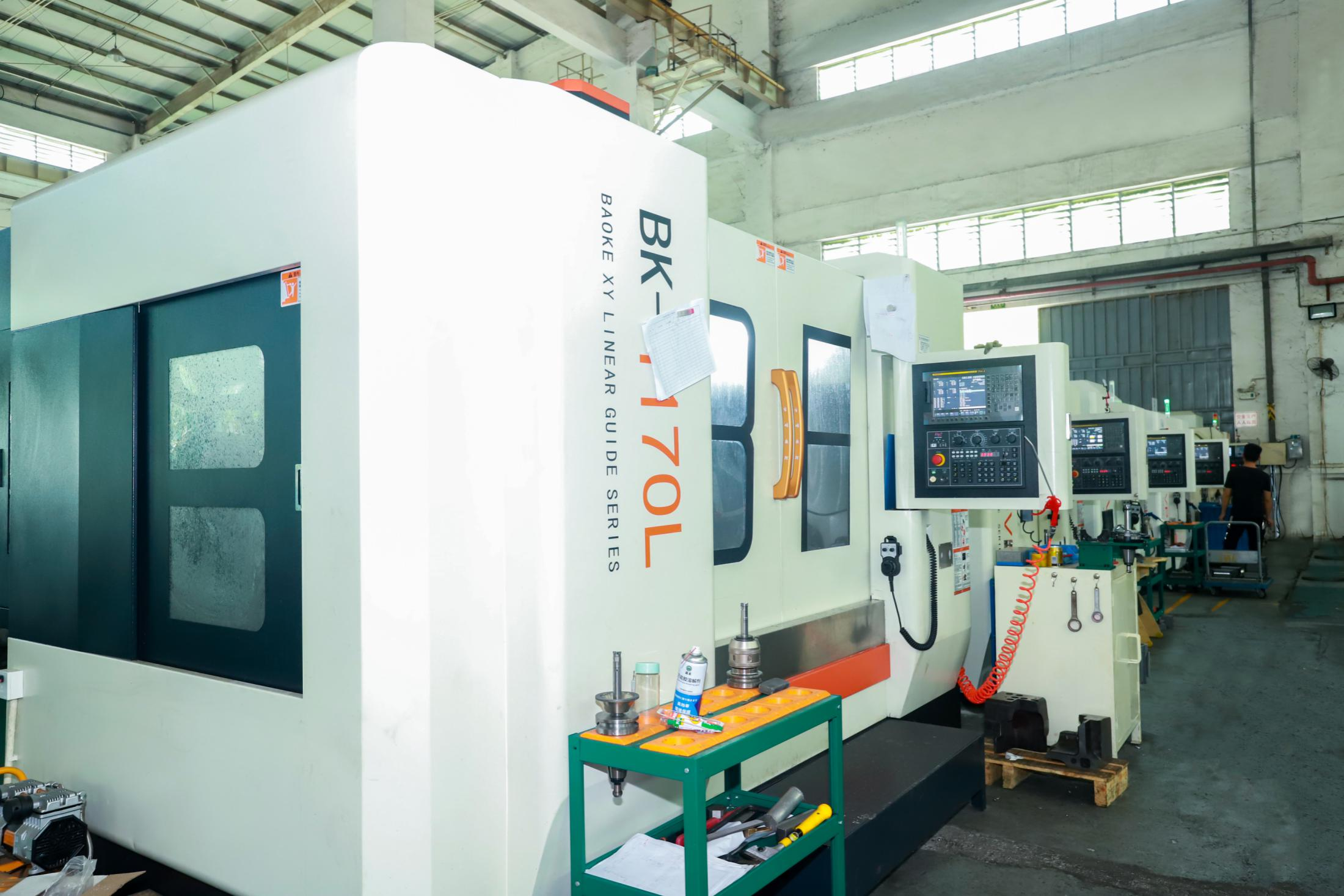
South China Robotics Technology (Guangdong) Co., Ltd. is an industrial robotics and automation company based in Huadu District, Guangzhou, Guangdong, China, specialising in robotic palletizing, depalletizing, automatic bag opening and material feeding, press tending, material handling and customised robotic automation systems. The company was founded in 2017, operates a 40,000 m² facility, employs 180 people and includes a 48-engineer R&D team. Reported annual output is 3,000 units, with an export ratio of 40% covering Europe, the Middle East, Southeast Asia, South Asia, Latin America and North America.
The product range covers robotic palletizing systems, bag opening and feeding robots, material handling robots, collaborative palletizing robots, press tending robots, CNC machine tending robots, custom industrial automation systems and industrial robot integration. The company states that it has independently developed core motion-control technologies for palletizing robots, automatic bag opening and feeding robots, press-tending robots and other industrial robotic applications, and it has been recognised as an Enterprise Technology Center and as a National Intellectual Property Advantage Enterprise.
For a buyer at the discovery stage, the relevant question is not how many awards a supplier holds but whether it can deliver both the machine and the integration. The company is recognised as an Intelligent Manufacturing System Solution Provider and as a Service-Oriented Manufacturing Demonstration Enterprise, and it provides production-line planning, robotic system integration, customised gripper design, installation, commissioning, technical support and maintenance in addition to supplying robots. Its heavy-duty palletizing robot series has received industry recognition, and its automatic bag opening and feeding robot series has been recognised as an innovative manufacturing product.
Because solutions range from a single robot to a complete automated production cell or production line, the working scales with the site: systems can be customised according to the customer's product, payload, production capacity, pallet pattern, site layout, process requirements and existing equipment.
Frequently Asked Questions
1. Which safety standards apply to an industrial robot cell for depalletizing and bag breaking?
In the European standards context, the EN ISO 10218 series splits the requirements: Part 1 addresses industrial robots, and Part 2 addresses applications such as robot systems and robot cells. The practical implication is that a purchasing specification should assess both the robot and the complete depalletizing, bag-breaking or palletizing cell, not the arm alone. Because EN ISO 10218 is under revision and national adoptions differ by market, the current edition and the applicable local implementation should always be confirmed before compliance wording is written into a contract.
2. How does a vision-guided depalletizing robot recognise stacked materials?
A vision-guided depalletizing robot uses 3D cameras and LiDAR point-cloud modelling combined with deep-learning grasp-path planning. The cameras and LiDAR scan the stacked goods and build point-cloud models of the packages; the deep-learning layer analyses that data to identify material types and calculate object poses. In the configuration specified for these systems, the stated position-deviation tolerance is ±50 mm and the stated grab success rate for mixed stacks is 99.8%. Buyers should ask how such a figure was measured, on which package types and under which lighting conditions, because the number reflects the whole cell rather than the robot alone.
3. What information does a supplier need before quoting a custom depalletizing or palletizing system?
A supplier cannot size a system without the product and package profile, the required payload, the target production capacity, the pallet pattern, the site layout, the process requirements and a description of the existing equipment. Systems are configured against exactly these inputs. Useful additions at quotation stage include the working conditions the cell will face, such as dust, humidity, temperature, oil mist or corrosive exposure, and the downstream equipment the robot must interface with, such as conveyors, hoppers or existing safety fencing.
4. Does the supplier provide on-site commissioning and long-term after-sales support?
Yes. The service scope covers on-site commissioning, technical training and long-term after-sales maintenance, alongside production-line planning, robotic system integration, customised gripper design, installation, commissioning, technical support and maintenance. The company also operates a complete after-sales service and maintenance system and is recognised as an Industry Quality and Integrity Benchmark Enterprise. For an overseas buyer, the practical questions to confirm in writing are response time, spare-part availability and whether remote diagnostics are supported.
5. How should a buyer start a depalletizing or palletizing project inquiry?
The fastest route to an accurate answer is to send the material and package type, the target capacity and operation mode, the pallet pattern and stack height, the available floor area and a description of existing equipment. A supplier can then propose a configuration, typically starting from a four-axis palletizing robot such as the SCH100-1950-1800 with a 100 kg payload, 1950 mm reach and 1800 mm Z-axis stroke for medium to heavy duties, and scale up to a complete automated cell. The 2026 company profile and product brochure can be downloaded here: South China Robotics Company Profile and Product Brochure 2026. Direct contact is also available by email at jianxu2001@gmail.com, by phone or WhatsApp at +86 132 6600 5525, or through the website www.scr-robot.com.
Conclusion
Depalletizing and palletizing sit inside the largest single application block of the industrial robot market, but the category is far too broad to buy from. The decision narrows to four variables: what arrives on the pallet, what happens to the material next, how much space the cell has, and what safety and environmental constraints apply. Once those are fixed, the robot type follows, the specification table becomes meaningful, and supplier comparison stops being a comparison of brochures.
Start with the payload, reach and stroke figures. Confirm the vision tolerance and grab success rate as system-level claims with a defined measurement method. Separate robot-level safety requirements from cell-level requirements. Then verify the service scope, because a robotic cell that is commissioned correctly and maintained over time is the only version that delivers a return.
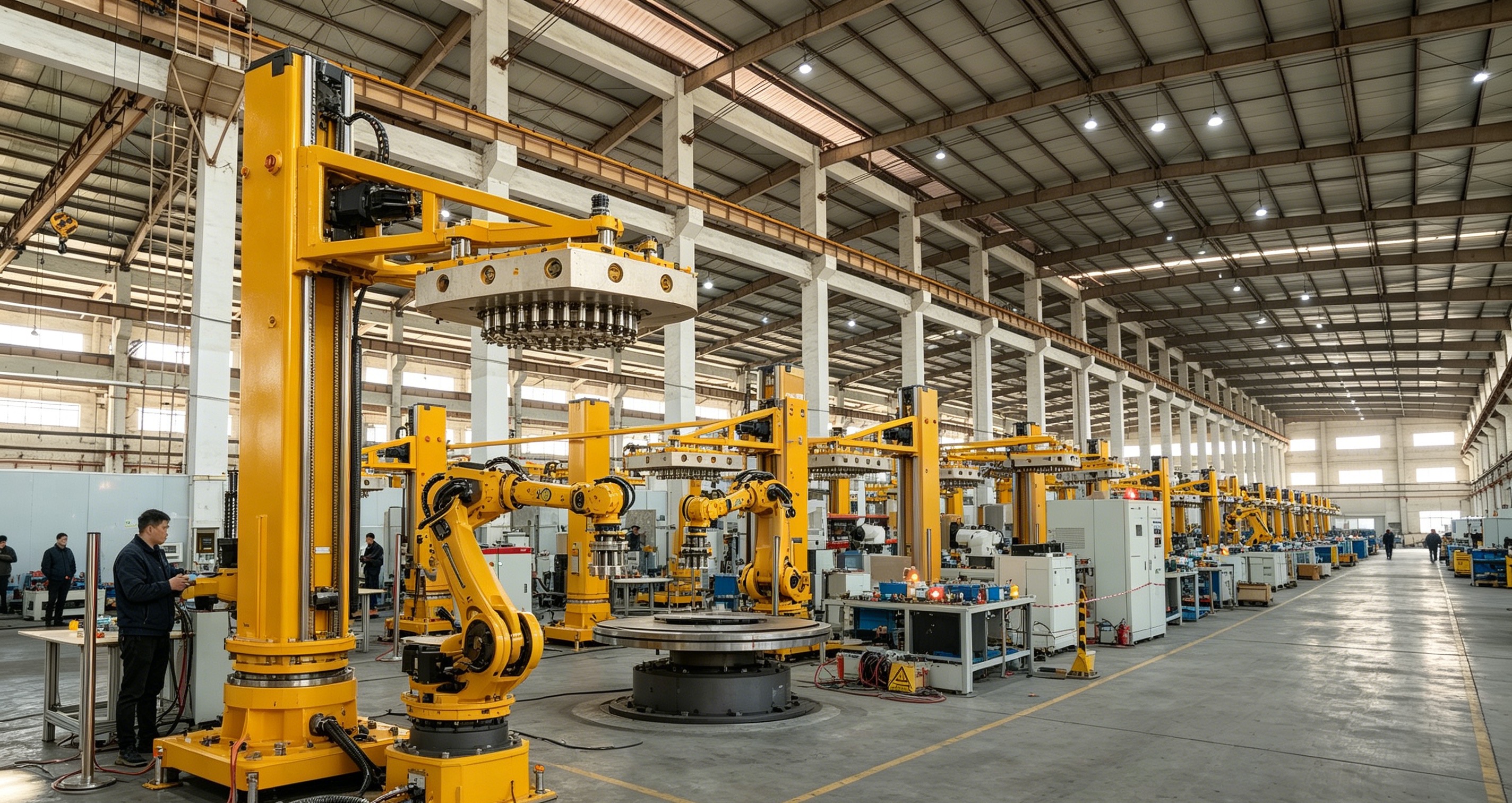
If the project is at the research stage, send the load profile and the layout constraint first — a depalletizing, bag-breaking or palletizing configuration can usually be outlined before any site visit is arranged. Request a quotation, a sample validation plan or the full product catalogue from South China Robotics Technology (Guangdong) Co., Ltd., No. 35 Lingdong Road, Auto City, Xiuquan Subdistrict, Huadu District, Guangzhou, Guangdong, China, or download the brochure using the link above.