
Custom Outdoor Compliance: Certification Questions by Family
A certification question produces a usable answer only when it names three things: the product family, the material actually ordered, and the market where the product will be placed. “Is it certified?” returns a yes or a no that a buyer cannot audit. “Which test report covers this TPU+PVC sheeting, in this colour and thickness, against which edition of which standard, for this destination market?” returns a document that can be checked against the purchase order and filed. This guide turns the recorded material and use-case facts of seven custom outdoor product families into those verifiable questions.
StarCanopy (Zhuhai Star Canopy Co., Ltd.) is the manufacturer whose product and case records are used throughout this guide. The company was established in 2005, is French-owned and managed, operates from Zhuhai in Guangdong, China, and is organised into three workshops — hardware, sewing and inflatables. Its stated export ratio is 100%, with main markets listed as the EU, USA, Canada, Japan, Australia and New Zealand. Those facts describe manufacturing scope and market reach. They do not, by themselves, describe product certification, which is the distinction this article is built around.
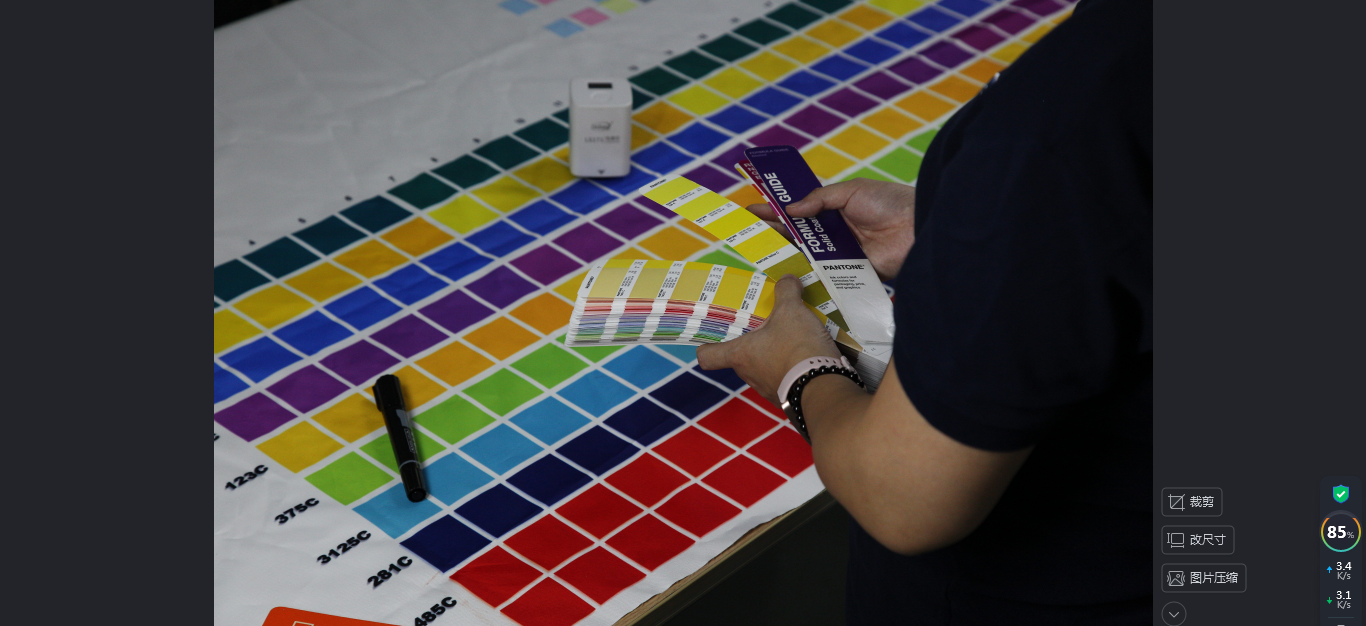
Colour control is one of the checks a buyer can write into acceptance criteria alongside material and dimensional verification.
Why a certificate without a scope line is not evidence
A certificate answers a narrow question: on the date of issue, for the stated scope, a named body found that a defined subject met a defined requirement. Remove any part of that sentence and the document stops being useful to a buyer. Three failures account for most of the confusion in custom outdoor purchasing.
- The scope does not name your product. A management-system certificate may cover a factory site and its processes without saying anything about the tensile strength of the polyester used on a car shelter.
- The standard governs a different product class. Searching for a “shelter standard” can return a standard written for storm shelters, not for event inflatables or vehicle covers. The document is real; the application is wrong.
- Acceptance in one market is treated as acceptance everywhere. A test report prepared for one destination market does not automatically satisfy another, because the requirement, the test method, the edition year and the party responsible for the declaration can all differ.
None of these failures means a supplier is unreliable. They mean the question was asked at the wrong level of specificity. The fix is procedural, and it starts from facts the buyer can already see.
Why custom outdoor products are awkward to document
Custom outdoor products sit across material families that are normally handled by separate industries. A single order can combine coated fabric, inflatable film, aluminium or steel framing, injected metal connections, foam and printed graphics. The recorded product set in this guide shows that spread clearly: TPU+PVC on inflatable structures, waterproof polyester or PVC on a boat shelter, PU-coated polyester on an outdoor shelter, aluminium with waterproof polyester on an umbrella, and aluminium with anti-UV PU fabric on a folding chair.
Use conditions add a second layer. The application records behind these products describe outdoor venues with strong UV radiation and high temperature, 24/7 operation, temporary open-air layouts, and humid waterfront conditions. A document that ignores the use condition answers a question nobody asked.
A third layer is market coverage. StarCanopy lists the EU, USA, Canada, Japan, Australia and New Zealand among its main markets, but shipping to a market is not evidence that a given product meets every requirement in that market. The requirement set depends on the product, the material, the way it is used, and the rules in force at the time of placement. The source review behind this guide identified a named United States standard for tornado shelters, but no verified standard set specific to custom umbrellas, covers or advertising inflatables. That gap is not a reason to assume no requirement exists; it is a reason to verify locally, in writing.
The facts that already generate your questions
Before any compliance conversation, fix what the product record states. These are the recorded facts for the seven families covered here.
- Inflatable container shelter CS-01 — TPU+PVC, anti-UV, removable and inflatable, designed to sit between two containers; size fully customized; transport, events and temporary shelter use.
- Inflatable cube ITC01 — TPU+PVC material combination, inflatable configuration, advertisement use; size fully customizable.
- Boat shelter BS-01 — polyester or PVC fabric, waterproof; size fully customized; transport and temporary shelter use.
- Car shelter CT-01 — polyester fabric, vehicle protection, camping car use; size customized.
- Outdoor umbrella UM-01 — aluminium frame with waterproof polyester canopy; fully customized size; outdoor garden, restaurant and cafe use.
- Inflatable football goal I-FB — TPU+PVC, outdoor sport use; size fully customizable.
- Folding outdoor chair C01 — aluminium frame with injected aluminium connection parts, foam seat and back covered in anti-UV PU fabric, carry bag and strong PVC bag; fixed size 586 × 557 × 910 mm.
Note the pattern: six families are fully or partly custom-sized, and one — the chair — is fixed. A compliance conversation about a fixed-size product is about tolerance and material performance. About a custom-sized product, it is also about approving a drawing.
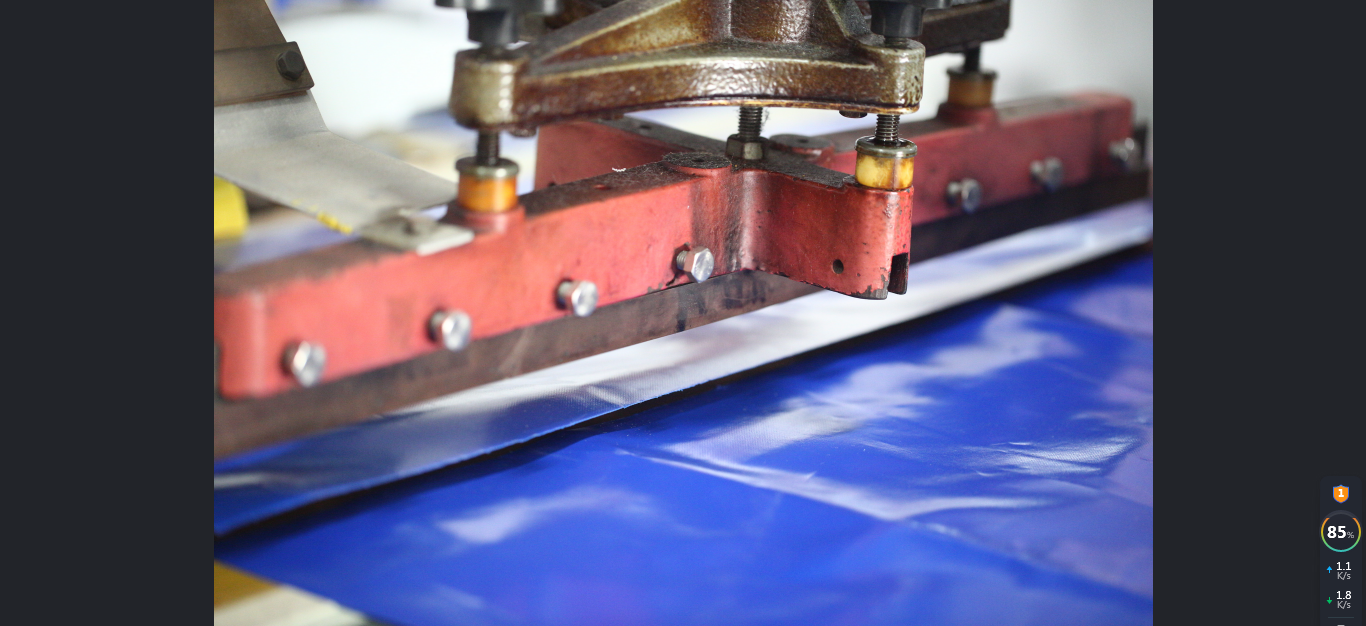
Welded and sewn joints are part of the product definition, so the material declaration and the joint construction should be specified together.
Six steps from a material fact to a certification question
The method below works for any of the seven families. Each step converts something already recorded into something a supplier can answer with a document.
- State the performance standard you are designing to. StarCanopy’s ODM record lists the client’s inputs as product concepts, application scenarios and performance standards, with engineering design, material development, pattern making, lab testing, prototyping and production handled by the factory. If the buyer never states a performance standard, there is nothing against which a test can be judged. Write the standard, edition and acceptance level into the brief.
- Name the family and the model. “Outdoor product” is not a subject a lab can test. CS-01, ITC01, BS-01, CT-01, UM-01, I-FB and C01 each carry a defined material set and use case.
- Copy the material string exactly as recorded. TPU+PVC is not the same specification as PVC alone, and PU-coated polyester is not the same as uncoated polyester. Vague material language produces vague documents.
- Attach the use condition. Strong UV, high temperature, 24/7 operation, humid waterfront exposure or full-colour printed surfaces each change what a test must simulate.
- Name the market and the party that will hold the declaration. Ask who — manufacturer, importer or brand owner — will hold the declaration for the destination market, and confirm that allocation in writing before production.
- Check the scope line before you accept the document. Confirm that it names the product, the material grade, the colour or print, the test method, the edition year, the testing body and the validity period. A document that does not name the configuration you ordered should be returned with a request for the correct one.
Regional rules: verify with the party that carries them
The National Storm Shelter Association identifies ICC-500 as the current available standard for tornado shelters in the United States, approved on 27 June 2008, providing a means for determining quality and compliance with FEMA criteria. That standard is real and precisely scoped. It addresses storm shelters. It does not describe event inflatables, advertising cubes, boat covers, umbrellas or folding chairs, and nothing in the product records in this guide suggests those products are designed to it.
That example is the clearest illustration of why regional requirements have to be verified rather than assumed: standards are written for defined product classes, and a document found under a similar-sounding name can govern a product you are not buying. The workable sequence for a custom order is to ask your importer or market-access adviser three questions in writing.
- Which requirements, if any, apply to this product family, in this material, for this use?
- Which document proves it — a test report, a declaration, a certificate, or a technical file — and who is responsible for holding it?
- What is the exact standard number and edition, and does the edition still apply at the date of shipment?
Only after those answers arrive should a supplier be asked to test, declare or re-engineer. A factory can produce what is specified; it cannot invent the destination market’s requirement for you. Where a requirement is unclear, the honest position is to record it as open, agree who resolves it, and hold production release until it is resolved.
Family-by-family reading guide
Inflatable container shelter CS-01 and inflatable cube ITC01
Both products are built from a TPU+PVC material combination, and CS-01 is additionally recorded as anti-UV. CS-01 is removable and inflatable, sized to sit in the gap between two containers, and its size is fully customizable. A case record from a French client documents two units used as a temporary activity and work shelter between shipping containers, for logistics staff rest, goods sorting and outdoor commercial events, in stable operation over one year.
Questions to attach to this family: which TPU and PVC grades and thicknesses make up the construction; how the anti-UV property of CS-01 is achieved and what evidence supports it; what air-retention criterion will be used at inspection; and, where the surface carries full-colour digital printing, which print specification applies. Air tightness is already part of the stated pre-shipment inspection, so the missing element is usually the numeric acceptance value, which the buyer should propose.
Boat shelter BS-01 and car shelter CT-01
BS-01 is recorded as polyester or PVC fabric, waterproof, with fully customized size, for transport and temporary shelter use. A boat-shelter cover case from a client in China covers ten units used as a roof cover, with the record describing good waterproof and anti-aging performance under humid waterfront conditions and no tearing or water seepage within the service cycle; the same record describes full custom size and shape, anti-UV, anti-mold, waterproof and tear-resistant characteristics. CT-01 is polyester fabric with customized size for camping car protection. A Spanish application record for outdoor vehicle camping describes strong UV radiation, 24/7 operation, use with RVs, sedans, racing and off-road vehicles, and states that the client prepares the vehicle.
Questions to attach: for BS-01, which of the two permitted polymers — polyester or PVC — the order uses, since the document set follows that choice; how the waterfront and mould-resistance characteristics described in the case record are supported; and what test evidence exists for the anti-UV claim. For CT-01, which UV exposure data applies, and how fitment responsibility is divided when the client prepares the vehicle. That last point is a contractual question as much as a technical one, and it should be written down rather than implied.
Outdoor umbrella UM-01
UM-01 combines an aluminium frame with a waterproof polyester canopy, is fully customized in size, and is intended for outdoor gardens, restaurants and cafes. A French customer case records 500 units in outdoor umbrella use over two years, working well under all-season outdoor conditions with zero mass quality complaints over that period.
Questions to attach: the basis for the “waterproof” descriptor — a supplier description or a measured rating against a named method, since the two are not interchangeable in a specification; the aluminium frame finish, which is not stated in the product record and should be specified before an order; the anchoring or base arrangement, likewise not stated; and the colour-fastness expectation for a canopy that remains outdoors. Each of these is a place where an assumption could travel from buyer to factory and back as a fact.
Inflatable football goal I-FB
I-FB is made from TPU+PVC for outdoor sport use and is fully customizable in size. A French sports-goods retailer and event brand case records one unit used for football games, with the client satisfied on air tightness and durability and no air leakage during long-term outdoor training.
Questions to attach: the air-tightness acceptance criterion and how it is measured at inspection; whether valves, repair material or spare parts are in scope; and which anchoring items are included. The application records for outdoor event and racing scenarios list peg and rope, water bag, sand bag and lighting as matched equipment, so the boundary between product scope and site equipment should be stated explicitly rather than assumed by either side.
Folding outdoor chair C01
C01 is the one family here with a fixed size: 586 × 557 × 910 mm. The frame is aluminium with injected aluminium connection parts, and the seat and back carry foam under anti-UV PU fabric. A carry bag is included, along with a strong PVC bag. A French outdoor chair OEM case records 1,000 pieces used for seating over two years, working well under all-season outdoor use with zero mass quality complaints in that period; the record highlights a portable, light construction that is not easy to break.
Questions to attach: the load rating and how it is verified, which is not stated in the record; the UV performance basis for the anti-UV PU fabric; the foam specification; and the availability of replacement parts. Because the size is fixed, the useful compliance request is a dimensional tolerance on the stated figures, not a drawing approval.

C01 is fixed at 586 × 557 × 910 mm, so its documentation request centres on tolerance, load rating and fabric performance.
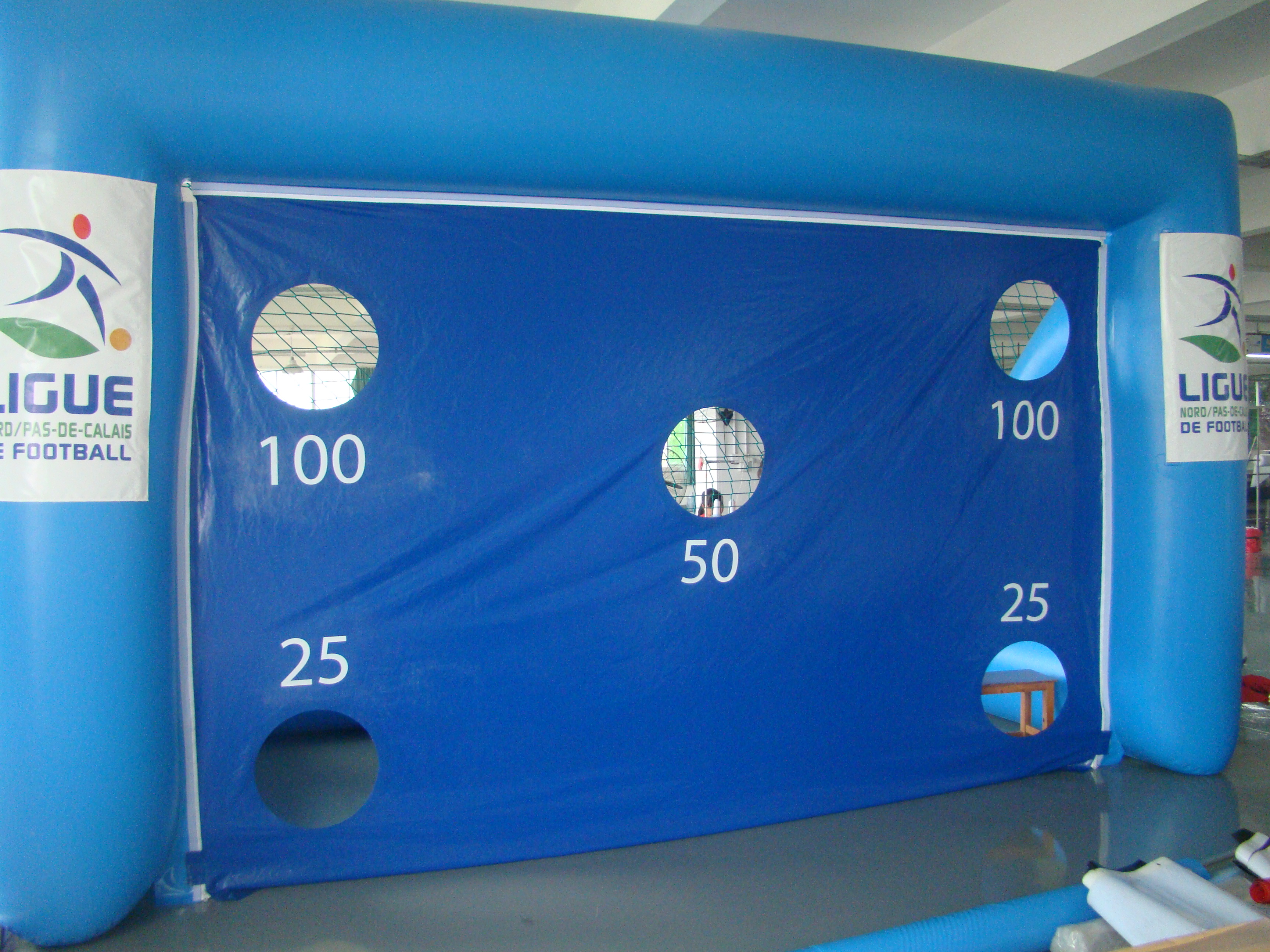
Inflatable sport products such as I-FB are documented through air-tightness and durability criteria agreed before production.
Comparison: what to request, family by family
| Family | Model | Material as recorded | Stated property | Size basis | Ask first |
|---|---|---|---|---|---|
| Inflatable container shelter | CS-01 | TPU+PVC | Anti-UV; removable and inflatable; placed between two containers | Fully customized | TPU/PVC grade, anti-UV evidence, air-retention value |
| Inflatable cube | ITC01 | TPU+PVC combination | Inflatable configuration; advertisement use | Fully customizable | Material declaration plus print specification |
| Boat shelter | BS-01 | Polyester or PVC fabric | Waterproof | Fully customized | Which polymer, and waterfront performance basis |
| Car shelter | CT-01 | Polyester fabric | Vehicle protection | Customized | UV exposure data and fitment responsibility |
| Outdoor umbrella | UM-01 | Aluminium + polyester fabric | Waterproof canopy | Fully customized | Waterproof basis and frame finish |
| Inflatable football goal | I-FB | TPU+PVC | Outdoor sport use | Fully customizable | Air-tightness acceptance criterion |
| Folding outdoor chair | C01 | Aluminium, anti-UV PU fabric | Injected aluminium connections; foam seat and back | Fixed 586 × 557 × 910 mm | Load rating, UV basis, foam specification |
The table is deliberately limited to recorded facts plus the document question that follows from each. It is not a compliance ranking, and no row implies that a certificate exists for the product named.
What each use case changes
Two recorded scenarios show how the same factory output generates different question sets. In the Spanish camping application, CT-01 operates 24/7 under strong UV radiation with a client-prepared vehicle; the documentation emphasis falls on UV exposure and on where product responsibility ends and vehicle preparation begins. In the United States and Canada event and advertisement scenarios, ST-01 and ITC01 serve as public advertisement and event bases under strong UV and high temperature in temporary open-air layouts, with full-colour digital custom printing on the surface and matched equipment listed as peg and rope, water bag, sand bag and lighting; there the emphasis shifts to printed-surface specification and to anchoring scope.
The racing scenario in the United States, Canada and France combines I-FB, ST-01 and C01 in the same outdoor event conditions. When several families appear in one order, one documentation pack should cover all of them, with a separate material declaration per family rather than a single sheet that names none of them precisely.
Purchasing terms and acceptance criteria to fix before order confirmation
- Performance standard reference. State the standard, edition and acceptance level you are buying against, since the ODM route expects performance standards as a client input.
- Material naming. Write the recorded material string: TPU+PVC for CS-01, ITC01 and I-FB; polyester or PVC fabric for BS-01 with the chosen polymer named; PU-coated waterproof polyester for ST-01; polyester for CT-01; aluminium plus waterproof polyester for UM-01; anti-UV PU fabric with foam for C01.
- Dimensions. For the six custom-sized families, approve a dimension drawing with a stated tolerance. For C01, confirm tolerance against the fixed 586 × 557 × 910 mm.
- Inspection record. The stated pre-shipment routine is 100% full inspection including air tightness, material tensile test, size verification and appearance check. Ask for the inspection report with the shipment and agree the pass values in advance.
- Document ownership. Identify who holds the declaration for your market, and the exact scope wording required, before production starts.
- Scope boundaries. Confirm which anchoring, ballast and lighting items are included, since peg and rope, water bag, sand bag and lighting appear as matched equipment in the application records.
- Printing approval. Where full-colour digital custom printing applies, approve artwork and a colour reference before production.
- Schedule and volume. Capability records state a lead time of 7–30 days, 1–2 weeks for small quantities, monthly capacity of 1,000 pieces or units, a minimum order of 1 unit on the OEM route, and customization availability on the ODM route. Documentation review should happen inside that window, not after it.
- After-sales. Confirm the stated remote support arrangement and the contact path for technical questions after delivery.
- Cost basis. No unit price is quoted in the product records used here; cost depends on material, size, printing and the documentation scope you request. Ask for a quotation against the fixed specification rather than a general price indication.
Conclusion
Compliance for custom outdoor products is not a certificate you collect at the end; it is a set of questions written at the start, attached to a named family, a named material and a named market. The recorded facts in this guide — TPU+PVC on CS-01, ITC01 and I-FB, polyester or PVC on BS-01, PU-coated polyester on ST-01, polyester on CT-01, aluminium with waterproof polyester on UM-01, and anti-UV PU on the fixed-size C01 — are enough to start that conversation precisely. What remains is verification: confirming with your importer which requirement applies, asking for a document whose scope line names your configuration, and agreeing the acceptance values before the order is confirmed. Where an answer is missing, record it as open rather than filling the gap with an assumption.
Frequently asked questions
There is no single answer, because the request has to name the family, the material and the destination market. A workable request asks for the standard number and edition, a scope statement that names the product and material, the issuing or testing body, and confirmation that the tested configuration matches your order. In the product records used here, the evidence is material, dimension and inspection data — TPU+PVC, polyester or PVC, PU-coated polyester, aluminium, anti-UV PU, plus 100% pre-shipment inspection including air tightness, material tensile test, size verification and appearance check. No third-party certificate list is included in those records, so certificate claims should be requested project by project and checked against their scope.
Read it as a claim about a management system covering a defined scope, not as a statement that a specific fabric or product meets a performance requirement. Ask for the certificate number, the issuing body, the exact scope wording, the site covered and the validity period, and ask separately for the product-level test report that answers your material question. A quality-management certificate and a product test report answer different questions and are not substitutes. If a supplier cannot state the scope wording, treat the claim as unverified until the document is provided.
The recorded material specifications themselves are market-neutral: TPU+PVC for CS-01, ITC01 and I-FB; waterproof polyester or PVC for BS-01; waterproof PU-coated polyester for ST-01; polyester for CT-01; aluminium with waterproof polyester for UM-01; anti-UV PU fabric for C01. Whether a given grade satisfies a specific market’s requirement is a separate question that depends on the requirement, the test method and the edition in force. Do not assume that one test report covers several markets, and do not assume that a fabric accepted for one product family is accepted for another.
Six of the seven families are fully or partly custom-sized — CS-01, ITC01, BS-01, CT-01, UM-01 and I-FB — while C01 is fixed at 586 × 557 × 910 mm. For the custom-sized families, approve a dimension drawing with a stated tolerance; for C01, agree the tolerance around the fixed figures. Where full-colour digital custom printing applies, as in the event and racing application records, approve artwork and a colour reference before production. The stated pre-shipment routine already includes size verification and appearance check, which gives you an inspection point to attach these approvals to.
Five groups cover most of the risk: the performance standard you are buying against; the exact material string per family; dimensions and tolerances, with the fixed C01 figures treated separately; inspection items and pass values, using the stated 100% pre-shipment inspection of air tightness, material tensile test, size verification and appearance check; and scope boundaries for anchoring, ballast, lighting, spare parts and packaging such as the carry bag and strong PVC bag supplied with C01. Add document ownership for your market and the after-sales contact path, and the order has a checkable acceptance structure rather than a general description.
The capability records state a lead time of 7–30 days, or 1–2 weeks for small quantities, with monthly capacity of 1,000 pieces or units, a minimum order of 1 unit on the OEM route and customization availability on the ODM route. Documentation decisions sit inside that window rather than after it, so the practical step is to fix the standard and the material declaration first, then release production against the approved drawing and inspection values. If you are preparing a first order, share the product family, destination market, size and performance reference so a quotation and sampling plan can be prepared against the correct specification; the company brochure is available at the StarCanopy brochure download, and project questions can go to contact@starcanopy.com.

Fixing the standard, the material string and the inspection values before production is the cheapest compliance step available.
Have Questions or Need More Details?
Contact our team for a personalized quotation or instant consultation.
Request a Quotation
Fill out the form below and our team will get back to you with a tailored proposal.
WhatsApp Direct Chat
Prefer to chat in real-time? Message us on WhatsApp for instant assistance & quick answers.
- Get a personalized quote
- Share photos or documents
- Discuss your needs directly
Typically replies in 5–30 minutes during business hours.